Overview

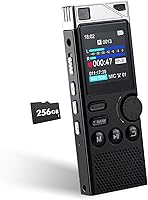
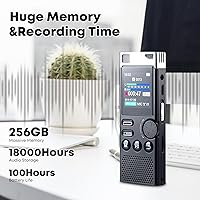
The Wucotc Z1 264GB Digital Voice Recorder is a late-2024 release from Shenzhen-based brand Wucotc, targeting buyers who want practical recording capability without committing to a high-end price. It pairs 8GB of built-in storage with a bundled 256GB TF card, adding up to a generous total that handles even prolonged projects. At under 6 ounces and fitted with a 1.44-inch screen, the device is easy to pocket and navigate on the go. USB Type-C charging is a welcome modern touch, and the included two-year warranty offers more peace of mind than you typically expect from a newer, lesser-known brand at this price point.
Features & Benefits

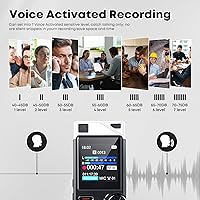
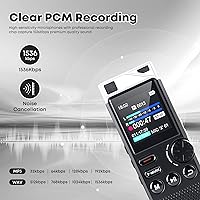
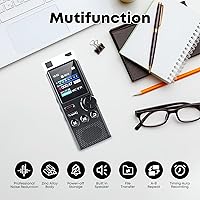
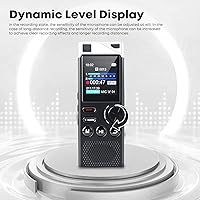
One of the more useful inclusions is a hardware noise reduction chip, which works to filter ambient sound rather than relying solely on software processing after the fact. The voice activation mode is a practical storage-saver — the Z1 recorder only starts capturing when it detects sound, so you are not sifting through long stretches of silence later. Language learners will appreciate A-B repeat and variable playback speed, which let you loop and slow down tricky passages without fuss. There is also password protection for sensitive recordings, a 3.5mm headphone jack for direct listening, and a line-in port that opens up external audio sources beyond the built-in microphone.

Best For

This little recorder is a natural fit for students and note-takers who want an affordable way to capture lectures without fumbling with a phone. Journalists conducting one-on-one interviews will find the compact size and long battery life hard to beat at this price. Language learners benefit noticeably from the A-B repeat and speed controls, while remote workers who only occasionally need to document meetings will find it a sensible backup option. It also suits anyone who would simply rather not drain a smartphone battery through a two-hour lecture or extended interview session when a dedicated device gets the job done.

User Feedback

With a 4.3-star average from nearly 400 ratings, this voice recorder earns reasonably solid marks for a newer brand. Buyers consistently praise the storage and battery life, and many note that the dial-key interface is more intuitive than it looks in photos. That said, a recurring concern involves audio fidelity — the advertised specs sound impressive, but some users feel real-world clarity falls a little short of what is implied. The bundled TF card generally performs without issue, which is reassuring. Worth noting: Wucotc is still a young brand with a modest review base, so some caution is fair before committing to daily use.

Pros

  • Bundled 256GB TF card means you are genuinely ready to record from day one, no extra purchase needed.
  • Voice activation keeps files clean and extends real-world battery life during long, intermittent sessions.
  • A-B repeat and variable speed playback are rare at this price and genuinely useful for language learners.
  • Password protection is a thoughtful inclusion for anyone recording private or professionally sensitive conversations.
  • The dial-key interface is more intuitive than it looks and most users get comfortable with it quickly.
  • USB Type-C charging is a welcome modern standard that removes the need for proprietary cables.
  • At under 6 ounces, the Z1 recorder is light enough to forget it is in your pocket during a full day out.
  • The two-year warranty is longer than most budget competitors offer and adds meaningful purchase confidence.
  • Line-in recording lets you connect external audio sources, expanding what the device can actually capture.
  • 4.3-star average from nearly 400 buyers reflects a consistently solid experience for everyday recording tasks.

Cons

  • Audio fidelity in noisy or echoey real-world environments often falls short of what the marketing implies.
  • The advertised 18,000-hour storage figure only applies at the lowest bitrate, which few users actually choose.
  • Brand history is thin, making it harder to assess long-term build reliability or consistent quality control.
  • The small screen becomes a genuine inconvenience when navigating large numbers of recorded files.
  • On-device file organization is basic — no tagging, no search, and no companion app to fill the gap.
  • Voice activation sensitivity can miss quiet or distant speakers, leading to frustrating gaps in recordings.
  • Plastic construction feels budget-grade in hand and does not inspire confidence for heavy daily use.
  • There is no password recovery option, so a forgotten code can permanently lock you out of your files.
  • Battery runtime at higher quality settings drops noticeably from the headline 100-hour claim.
  • A small number of buyers received TF cards that required reformatting before the device would recognize them.

Ratings

The Wucotc Z1 264GB Digital Voice Recorder has been scored by our AI system after analyzing verified global buyer reviews, with spam, bot-generated, and incentivized feedback actively filtered out. Scores reflect a genuine cross-section of real-world experiences — the wins and the frustrations alike — so you get a transparent picture before committing to a purchase. Overall reception leans positive for a budget-tier device, though a few recurring pain points are worth knowing upfront.
Audio Clarity
71%
29%
Most buyers recording lectures in moderately quiet classrooms or small meeting rooms report clear, intelligible playback. The hardware noise reduction does a credible job cutting out steady background hum, like HVAC systems or ambient office noise, making transcription noticeably less painful.
In noisier real-world environments — busy cafes, crowded conference halls — the audio can sound compressed and tinny compared to what the spec sheet implies. Users expecting studio-adjacent quality at this price point tend to be the most disappointed.
Storage Capacity
93%
The combination of built-in memory and the included 256GB TF card is genuinely hard to argue with for the price. Students and field researchers praise not having to constantly manage files or carry spare cards during long recording sessions or multi-day events.
A small number of buyers received cards that were slower or lower quality than expected, causing occasional file write errors. The 18,000-hour figure is technically accurate only at the lowest bitrate setting, which matters if you actually record at higher quality.
Battery Life
84%
The 800mAh cell holds up well for everyday use — most users get through full workdays of intermittent recording without reaching for a cable. The voice activation feature compounds this nicely, extending real-world battery life beyond what continuous recording tests suggest.
Claiming 100 hours of continuous recording is a stretch that a few buyers have called out directly. At the higher quality settings most people actually prefer, runtime drops considerably and may not match expectations set by the product listing.
Ease of Use
82%
18%
The dial-key interface surprised a lot of buyers who expected a confusing menu system. Navigating playback, adjusting volume, and switching modes turns out to be intuitive enough that most users report getting comfortable within an hour of first use, no manual required.
The 1.44-inch screen is functional but small, and reading fine menu text in poor lighting takes some squinting. A handful of older buyers specifically mentioned the display size as a mild but genuine inconvenience during regular use.
Build Quality & Portability
76%
24%
At under 6 ounces the Z1 recorder slips easily into a shirt pocket or small bag compartment without any bulk. The casing feels solid enough for daily carry, and several buyers mentioned it survived being tossed around in a backpack without issue.
The plastic construction does feel noticeably budget-grade in hand, and a few users question its long-term durability compared to metal-bodied competitors. It does not feel fragile, but it does not inspire confidence the way a pricier recorder would.
Voice Activation Accuracy
68%
32%
When it works well, the voice activation mode is genuinely useful for lecture recordings and interviews — the recorder kicks in when someone speaks and pauses during silences, which keeps files tidy and saves storage. Most users find the sensitivity adequate for normal speaking volumes.
Some buyers report false negatives where quiet speakers or distant voices fail to trigger recording, leading to missed content. Calibrating the activation threshold is not straightforward, and a few users abandoned the feature entirely in favor of manual recording.
Noise Reduction Performance
67%
33%
The hardware-level noise reduction chip does reduce steady-state background sounds reasonably well, which is more than can be said for purely software-based solutions at this price. Users recording in offices or quiet classrooms benefit noticeably from cleaner raw audio.
Dynamic noise — crowd chatter, rustling, sudden sounds — largely passes through unfiltered. Buyers comparing the Z1 recorder to higher-end Olympus or Sony equivalents consistently note the gap in real-world noise handling is wider than the spec language suggests.
Playback Features
81%
19%
The A-B repeat and variable speed playback stand out as genuinely practical tools, especially for language learners who need to loop a tricky phrase or slow down fast speech. These are features that typically cost more to access, and users in that niche consistently praise them.
Playback navigation across long files can feel a bit clunky — fast-forwarding to a specific timestamp is not as precise as it should be. Users managing large numbers of files also note that the organizational tools, while functional, feel basic compared to dedicated apps.
MP3 Player Functionality
63%
37%
The ability to load and play MP3 files turns the device into a passable secondary music player, which some buyers find useful for commutes or study sessions where they prefer not to use their phone. Audio through the 3.5mm jack is clean enough for spoken-word content.
Music playback is clearly a secondary function, and it shows — there is no equalizer, playlist management is rudimentary, and the small screen makes browsing a library of tracks tedious. Dedicated music player fans will find it underwhelming as a standalone audio device.
Privacy & Password Protection
79%
21%
Having a hardware-level password option is a thoughtful inclusion for professionals recording sensitive conversations, HR meetings, or legal interviews. Buyers in those use cases specifically call it out as a deciding factor, since few devices at this price offer it at all.
The password system is functional but basic — there is no hint feature or recovery option if the code is forgotten, which has caused a few buyers genuine headaches. It works as a deterrent rather than as serious encryption, so it should not be treated as enterprise-grade security.
Value for Money
88%
When judged against what comparable budget recorders typically include, the Z1 recorder punches above its weight — the bundled high-capacity TF card alone accounts for a significant portion of the value equation. Most buyers feel they received more than they paid for.
Expectations can outrun reality here. The marketing language is ambitious, and buyers who take every spec claim literally may feel let down. Those who approach it as a capable budget tool rather than a near-professional device tend to walk away far more satisfied.
Setup & Out-of-Box Experience
77%
23%
Most buyers report being up and recording within minutes of unboxing — the Type-C cable, TF card, and manual are all in the box, so there is nothing extra to source. The interface is logical enough that casual users rarely need to consult the documentation.
The included manual covers the basics but lacks depth for edge cases or troubleshooting. A small number of buyers received units where the TF card was not pre-formatted correctly, requiring a quick fix before use — minor, but annoying right out of the box.
Brand Trust & Support
61%
39%
The two-year warranty is a genuine positive for a brand at this tier, and the advertised 24-hour customer support has satisfied at least some buyers who needed help. Including a warranty longer than most budget competitors do signals some commitment to standing behind the product.
Wucotc is still a young and relatively unknown brand, and that reality shows in the review volume. Buyers used to established names like Olympus, Sony, or TASCAM may feel less confident about long-term support, firmware updates, or consistent quality control across production batches.
File Management
66%
34%
Timestamped file naming makes it reasonably easy to locate specific recordings after a busy day of meetings or lectures. Connecting via Type-C to a PC transfers files without needing proprietary software, which most buyers appreciate as a simple plug-and-play workflow.
There is no companion app, and folder organization on the device itself is limited. Power users managing dozens of recordings per week find the on-device sorting options too blunt, and there is no way to tag, search, or annotate files without moving them to a computer first.

Suitable for:

The Wucotc Z1 264GB Digital Voice Recorder is a strong match for students who record lectures regularly and want a dedicated device that does not compete with their phone battery. Language learners in particular will get real mileage out of the A-B repeat and variable speed playback — being able to loop and slow down audio without fiddling with a separate app is a small but meaningful convenience. Journalists and interviewers working on a tight budget will appreciate the long battery life and the password protection, which adds a layer of discretion when recordings are sensitive. Remote workers or office professionals who only occasionally need to document meetings will find it a practical tool that earns its keep without demanding much in return. Anyone who has grown tired of their phone overheating or dying mid-recording will find a dedicated device at this price point a genuinely sensible investment.
Not suitable for:

The Wucotc Z1 264GB Digital Voice Recorder is not the right tool for anyone who needs broadcast-ready or professionally clean audio straight out of the device. Podcast producers, oral historians, or researchers working in unpredictable acoustic environments will likely hit the ceiling of what this recorder can deliver — the noise reduction helps at the margins but does not compensate for a truly challenging room. The brand is still young and carries limited long-term reliability data, so buyers who depend on a recorder for critical daily professional work may prefer the peace of mind that comes with an established name like Olympus or Sony. The 1.44-inch screen is also a real limitation for anyone who needs to navigate large libraries of recordings efficiently in the field. If your use case demands precise audio editing metadata, advanced file tagging, or a companion app, this little recorder will feel underpowered before long.
Specifications

  • Model: The device carries the model designation Z1, manufactured by Shenzhen Meibo Electronics under the Wucotc brand.
  • Total Storage: Storage totals 264GB, combining 8GB of built-in internal memory with a 256GB TF card included in the box.
  • Audio Format: Recordings are saved in MP3 format, ensuring broad compatibility with computers, smartphones, and media players.
  • Max Bitrate: The highest available recording quality runs at 1536kbps dual-channel stereo for maximum audio detail.
  • Battery: An 800mAh rechargeable lithium battery powers the device, charged via the included USB Type-C cable.
  • Battery Life: Continuous recording life reaches up to 100 hours at lower quality settings, with real-world runtime varying by bitrate.
  • Display: A 1.44-inch color screen provides menu navigation, recording status, and file information at a glance.
  • Dimensions: The unit measures 5.47 x 3.54 x 1.46 inches, making it compact enough to fit in a shirt pocket or small bag.
  • Weight: The device weighs 5.9 ounces (approximately 167g), keeping it light for extended carry throughout the day.
  • Microphone: A built-in microphone handles standard recording, supplemented by hardware noise reduction processing for cleaner audio capture.
  • Headphone Jack: A 3.5mm headphone jack supports direct audio monitoring and playback through standard wired earphones or headphones.
  • Connectivity: The device connects to computers and Android smartphones via USB Type-C and supports line-in recording through an external input port.
  • Interface: Navigation is handled through a dial-key mechanism that controls volume adjustment and menu selection with a single rotary input.
  • Key Features: Functional highlights include voice activation, A-B repeat, variable playback speed, bookmarking, password protection, and MP3 player mode.
  • Warranty: Wucotc provides a two-year warranty alongside advertised 24-hour customer support for post-purchase assistance.
  • In the Box: Each package includes the voice recorder, a 256GB TF card, a USB Type-C charging cable, and a printed user manual.
  • Release Date: The Z1 became available for purchase in October 2024, making it a recent entry in the budget recorder market.
  • Compatible Devices: The recorder is compatible with personal computers for file transfer and Android smartphones for charging via the Type-C port.

Related Reviews
OM Digital Solutions WS-500 Digital Voice Recorder
81%
94%
Battery Life
91%
Ease of Use
78%
Sound Quality
96%
Recording Time
85%
Portability
More
ZIPCIDE 64GB Digital Voice Recorder
84%
85%
Audio Quality
92%
Battery Life
88%
Noise Reduction Effectiveness
90%
Portability
65%
Voice Activation Sensitivity
More
Vormooi O1 160GB Digital Voice Recorder
78%
93%
Battery Life
88%
Storage Capacity
81%
Audio Recording Quality
67%
Noise Reduction Performance
84%
External Microphone Usefulness
More
Voxitenus 128GB Digital Voice Recorder
87%
94%
Battery Life
89%
Ease of Use
88%
Audio Quality
92%
Portability & Size
72%
Bluetooth Connectivity
More
G L87 136GB Digital Voice Recorder
77%
91%
Ease of Use
67%
Audio Quality
83%
Battery Life
93%
Storage & Memory
74%
Build Quality & Portability
More
Xelarvex 136GB Digital Voice Recorder
88%
88%
Recording Quality
91%
Ease of Use
95%
Battery Life
90%
Storage Capacity
87%
Noise Cancellation
More
MDalong P10 128GB Digital Voice Recorder
75%
78%
Audio Recording Quality
67%
Transcription Accuracy
61%
Simultaneous Interpretation
91%
Portability & Form Factor
88%
Magnetic Attachment
More
YOXIJAC LYB-101 8GB
YOXIJAC LYB-101 8GB
75%
91%
Ease of Use
78%
Audio Quality — Quiet Environments
47%
Audio Quality — Noisy Environments
63%
Voice Activation Accuracy
69%
Battery Life
More
Holyask RM 128GB Voice Recorder
78%
91%
Ease of Use
74%
Audio Recording Quality
68%
Voice Activation
79%
Battery Life
93%
Storage Capacity
More
Escytegr Digital Voice Recorder 144GB
84%
88%
Recording Quality
92%
Battery Life
84%
Voice Activation
85%
Portability
91%
Storage Capacity
More

FAQ

It ships with the TF card included in the package, but you may need to insert it yourself depending on how the unit is packaged. A small number of buyers have noted that the card occasionally needs to be formatted before the recorder recognizes it fully, which takes about a minute through the device menu.

The recorder listens continuously at a low power state and starts capturing audio when it detects sound above a set threshold — then pauses again during silence. It works well when speakers are reasonably close and speaking at normal volume. If the speaker is soft-spoken or seated far away, the activation can occasionally miss the first word or two before kicking in.

The Z1 recorder is designed primarily for in-person recording. It does not have a phone integration feature for call recording. That said, you can use the line-in port to connect it to an external audio source, which opens up some creative workarounds for specific setups.

Unfortunately there is no password recovery option built into the device. If you forget the code, you will not be able to access the locked files without a factory reset, which erases stored recordings. It is worth writing the password down somewhere safe if you plan to use that feature for anything important.

Not quite — that figure applies at the absolute lowest bitrate setting, which produces noticeably lower audio quality. At the mid-to-high quality settings most people actually use, you will get far fewer hours of storage, though still more than enough for typical daily recording needs given the 264GB total capacity.

Direct plug-in transfers to an iPhone are not supported — the Type-C connection is primarily designed for Android smartphones and PCs. For iPhone users, the most straightforward approach is to transfer files to a computer first and then move them from there.

The hardware noise reduction handles steady background sounds reasonably well — things like air conditioning hum or a consistent ambient murmur. Dynamic noise like overlapping conversations or sudden sounds is trickier, and you may notice some audio degradation in genuinely loud spaces. It is a solid performer for its price tier, but it is not a substitute for a directional external microphone if your environment is consistently chaotic.

The device supports TF cards, so you can swap out the included 256GB card for a higher-capacity one if needed, though 264GB combined is already substantial for most use cases. Check the maximum supported card size in the manual before purchasing a replacement, as budget recorders sometimes have capacity ceilings.

Yes, most first-time recorder users find it approachable. The dial-key interface is more intuitive than it looks in product photos, and basic recording requires just a single button press. The included manual covers the essentials, though it is not exhaustive — most people get comfortable through a few minutes of hands-on exploration.

A full charge typically takes around 2 to 3 hours via the USB Type-C cable. Recording while charging is generally possible, though it is worth checking the manual for any specific cautions, as sustained use during charging can generate some heat in budget-tier devices.