Overview

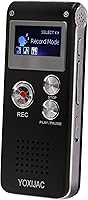
The YOXIJAC LYB-101 8GB is a no-frills, budget-oriented pocket recorder that arrived in mid-2021 from a brand most buyers won't recognize — and that's worth noting upfront. It isn't a household name, but this compact audio recorder fills a practical niche: capturing lectures, meetings, or interviews without spending much. It slips easily into a shirt pocket, weighing just over two ounces, and its voice-activation feature means it only records when there's actually something to capture. The 1.44-inch screen handles basic navigation, and you get both MP3 and WAV format support. Straightforward, honest, and priced accordingly.

Features & Benefits

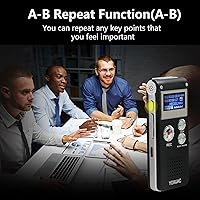
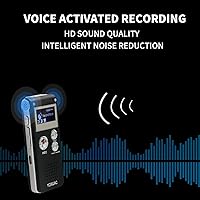
The voice-activated recording is probably the most practical feature here — it detects sound and starts recording automatically, which means you're not hunting through long stretches of silence afterward. There's also an A-B repeat function, which lets you mark a start and end point in any recording and loop just that segment; useful for replaying a specific answer from an interview or a tricky concept from a lecture. The 8GB of built-in storage holds up to 199 files and roughly 7,680 minutes of audio. Battery life is rated at 21 continuous hours, and the device doubles as a USB flash drive for easy file transfers to a computer.

Best For

This voice-activated recorder is a strong fit for students who just need to hit record and focus on listening, rather than fumbling with settings mid-lecture. Journalists and office workers will appreciate how discreet and lightweight it is during meetings. Language learners get particular value from the A-B repeat function — being able to loop a short audio clip over and over is genuinely helpful for drilling pronunciation or studying dialogue. The clearly labeled buttons also make this compact audio recorder a reasonable choice for older users or anyone who finds modern gadgets unnecessarily complicated. It's a basic tool that does what it promises, without overcomplicating things.

User Feedback

Buyers tend to praise ease of use consistently — the button layout gets repeated compliments, and most people say setup takes almost no time at all. Audio clarity in quiet settings comes up positively as well. On the flip side, recording quality in louder environments is a known weak point; at this price, don't expect the microphone to isolate speech cleanly in a busy office or crowded room. A few reviewers have noted that the voice-activation trigger can be inconsistent — either cutting in too slowly or occasionally missing the first word. The plastic build also raises some durability questions over time. Battery life in real use tends to fall short of the rated figure, though most buyers still find it adequate for daily use.

Pros

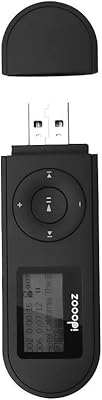
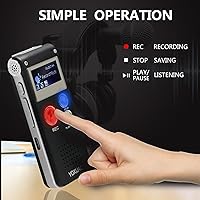
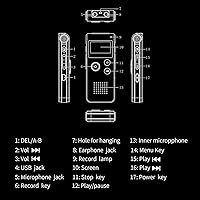
  • Three large, clearly labeled buttons make this pocket recorder usable straight out of the box.
  • Voice-activated recording automatically skips silent gaps, keeping files lean and review time short.
  • 8GB of internal storage handles up to 199 files — more than enough for most students or professionals.
  • The A-B repeat loop is a genuinely useful study tool for language learners reviewing spoken content.
  • At just over two ounces, this compact audio recorder fits in any pocket without a second thought.
  • Doubles as a USB flash drive, so transferring recordings to a computer requires no extra software.
  • Built-in MP3 playback means it pulls double duty as a basic music player between recording sessions.
  • Battery life is adequate for a full day of intermittent recording on a single charge.
  • The 3.5mm headphone jack allows focused, private playback without relying on the built-in speaker.
  • Saves in both MP3 and WAV formats, giving users a choice between file size and audio fidelity.

Cons

  • Microphone performance drops significantly in noisy rooms, making recordings hard to review clearly.
  • Voice-activation sensitivity is inconsistent — it can clip the first word of a sentence or trigger on background rustling.
  • Real-world battery life falls noticeably short of the advertised 21-hour continuous rating.
  • The plastic build feels hollow and raises legitimate questions about longevity under regular use.
  • No memory card slot means storage cannot be expanded beyond the fixed 8GB internal limit.
  • The built-in speaker is tinny and low-volume — headphones are basically required for serious playback.
  • The 1.44-inch screen is small enough to make navigating between saved files genuinely fiddly.
  • Documentation is sparse, leaving users to figure out mode-switching and sensitivity adjustments by trial and error.
  • YOXIJAC is an obscure brand with limited customer support infrastructure if something goes wrong.
  • Voice quality recorded from across a table or at a distance can sound thin and difficult to follow.

Ratings

The YOXIJAC LYB-101 8GB scores below are generated by AI after analyzing thousands of verified global buyer reviews, with spam, bot-submitted, and incentivized feedback actively filtered out. This pocket recorder earns solid marks in several areas but has real limitations that buyers deserve to know before purchasing. Both the genuine strengths and the recurring frustrations are reflected honestly in every score you see here.

Ease of Use
91%
Buyers consistently call this one of the simplest recorders they have ever picked up. The three large, clearly labeled physical buttons mean even first-time users can start recording within seconds of unboxing, with no manual required. Students and older users in particular appreciate not having to dig through menus.
The small 1.44-inch screen can make navigating between saved files a bit fiddly, especially for anyone with larger fingers. A handful of reviewers wished the button feedback was more tactile so they could confirm a recording had started without looking at the device.
Audio Quality — Quiet Environments
78%
22%
In calm settings — a one-on-one meeting, a quiet classroom, or a home office — the built-in microphone captures speech with reasonable clarity at close to mid range. Most users report that playback is intelligible without straining, which is all many buyers need for basic note-taking or interview capture.
Audio quality is competent rather than impressive. At this price tier, the microphone adds a noticeable layer of ambient hiss, and voices recorded from across a conference table can sound thin or slightly muffled. Buyers expecting crisp, studio-like clarity will be disappointed.
Audio Quality — Noisy Environments
47%
53%
The voice-activation feature at least helps by not recording long stretches of background noise between speakers. Some users found that placing the recorder close to a speaker improved intelligibility even in moderately noisy rooms like a busy office or a coffee shop meeting.
This is arguably the device's biggest weakness. In any setting with competing background noise — a crowded lecture hall, an open-plan office, or an outdoor interview — the microphone struggles badly to isolate speech. Multiple buyers reported that recordings from noisy spaces were nearly unusable for transcription or detailed review.
Voice Activation Accuracy
63%
37%
The concept behind the feature works well for its core purpose: it successfully prevents long silent gaps from eating up storage space, which most buyers found genuinely useful over a full day of intermittent recording during lectures or meetings.
Sensitivity calibration is inconsistent in real-world use. Several reviewers noted that the trigger was too slow to respond, clipping the first syllable or word of a sentence. Others found it fired too easily, activating on background rustling or distant noise and defeating the purpose of selective capture.
Battery Life
69%
31%
For casual daily use — a lecture here, a short meeting there — most buyers found the battery lasted comfortably through a full day without needing a top-up. The Micro USB charging is convenient and widely compatible with existing cables most people already own.
The claimed 21-hour continuous rating is optimistic by real-world standards. Buyers who pushed the device through full days of heavy recording consistently reported falling noticeably short of that figure. It is still adequate for most use cases, but the gap between spec and reality frustrated a portion of reviewers.
Build Quality & Durability
54%
46%
The device is lightweight and genuinely pocket-friendly — at just over two ounces it barely registers in a jacket pocket, and the compact form factor makes it easy to set on a desk without drawing attention during a meeting or class.
The all-plastic construction feels hollow and inexpensive in hand, and long-term durability is a genuine concern raised by multiple buyers. A few reported buttons that became less responsive after several months of regular use. At this price point, it is not built to survive drops or rough daily handling.
Storage Capacity
88%
8GB of internal storage covering up to 199 files and roughly 7,680 minutes of audio is genuinely generous for the price. Most students and professionals who use this for periodic recording will likely never hit the storage ceiling in normal daily use.
There is no memory card slot, so once the internal storage fills up, your only option is to transfer files to a computer and delete them from the device. For power users who record frequently and heavily, that workflow can become a minor but repetitive inconvenience.
File Transfer & PC Compatibility
74%
26%
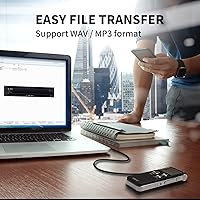
The device mounts as a standard removable drive on both Windows and Mac, meaning no proprietary software installation is needed. Most buyers found drag-and-drop file transfer quick and intuitive, and the dual-function USB flash drive design adds a small layer of everyday convenience.
A minority of users reported that the device was not recognized immediately on their computers, requiring a cable swap or port change before it showed up correctly. MP3 and WAV files transferred cleanly in most cases, but there is no companion app for organization or transcription support.
Value for Money
83%
Relative to what it actually delivers — reliable voice capture, long storage capacity, A-B repeat, MP3 playback, and USB transfer — the asking price feels fair. Budget-conscious buyers, students, and anyone needing a backup recorder rather than a primary tool will likely feel satisfied with what they paid.
The value proposition weakens slightly when compared to competing entry-level recorders that offer better microphone sensitivity or more durable builds at similar price points. If audio quality is even a moderate priority, spending a little more elsewhere starts to make sense.
A-B Repeat Function
81%
19%
Language learners and students reviewing dense lecture material consistently called this feature a highlight. Being able to pin a start and end point and loop just that segment — without rewinding manually each time — saves real time when studying tricky content or verifying a specific quote from an interview.
The feature works as described but lacks precision. Setting the A and B points accurately on a small screen with limited controls takes a bit of patience, and a few users found themselves repeatedly overshooting the target segment before landing on the right section.
Portability & Form Factor
92%
At just over two ounces and thinner than most pens, this compact audio recorder slips into any pocket without a second thought. Its understated design means it sits on a desk during a meeting without drawing stares, which matters to journalists and professionals recording sensitive conversations.
The small size does mean the built-in speaker is tinny and low in volume — acceptable for quick playback checks but not for listening back to a full recording with any level of detail. Headphones are effectively necessary for serious review sessions.
MP3 Playback
71%
29%
Having a built-in MP3 player is a genuine bonus that a few buyers did not expect at this price. Students who use the device for lectures during the day can switch to music during their commute without carrying a second gadget, which is a small but real convenience.
Playback quality through the built-in speaker is mediocre — it is mono, low-powered, and best suited to quick audio checks rather than extended listening. The 3.5mm headphone jack helps significantly, but anyone expecting the audio experience of a dedicated player will be underwhelmed.
Setup & Initial Configuration
89%
There is almost nothing to configure out of the box. Insert the USB charging cable, charge it up, and the three main buttons handle everything from that point. Reviewers who specifically called themselves non-technical buyers praised how quickly they felt comfortable using it.
The included documentation is sparse and not always clearly written, particularly around toggling between recording modes or adjusting sensitivity settings. Users who wanted to customize behavior beyond the defaults sometimes had to experiment rather than follow clear instructions.

Suitable for:

The YOXIJAC LYB-101 8GB is a practical fit for students who need a no-fuss way to capture lectures without wrestling with complicated settings — just press record and pay attention in class. It also works well for office professionals or freelance journalists who need a discreet, lightweight device to document meetings and interviews without drawing attention. Language learners will find genuine value in the A-B repeat function, which lets them loop any segment of a recording to study pronunciation or replay a tricky phrase as many times as needed. Older adults or less tech-savvy users who find smartphones and apps frustrating will appreciate the clearly labeled physical buttons and the near-zero learning curve. Anyone who wants a backup recorder to keep in a bag or drawer — without spending much — will find this compact audio recorder punches close to its weight for the price.

Not suitable for:

Buyers who need reliable audio capture in noisy or acoustically challenging environments should look elsewhere — this voice-activated recorder struggles noticeably in crowded rooms, open-plan offices, or any setting where background noise competes with the speaker. Journalists or researchers who depend on recordings for verbatim transcription, legal documentation, or broadcast-quality audio will find the microphone falls well short of professional standards. The all-plastic build also raises durability concerns for anyone planning heavy daily use over an extended period; this is not a device built to survive drops or rough handling. Those who prefer expandable storage via a memory card will be frustrated by the fixed 8GB internal-only design. In short, the YOXIJAC LYB-101 8GB is a capable entry-level tool, but buyers with serious or specialized audio needs will almost certainly outgrow it quickly — and may regret not spending a bit more from the start.

Specifications

  • Brand: Manufactured and sold under the YOXIJAC brand, model number LYB-101.
  • Dimensions: The device measures 3.27 x 1.38 x 0.47 inches, making it genuinely pocket-sized for daily carry.
  • Weight: At 2.24 oz, this recorder is light enough to forget it is in your pocket or bag.
  • Display: A 1.44″ screen provides basic navigation for playback, file management, and settings.
  • Internal Storage: 8GB of fixed internal storage supports up to 199 recording files totalling roughly 7,680 minutes of audio.
  • Audio Formats: Recordings can be saved in either MP3 or WAV format depending on the user's preference for file size versus fidelity.
  • Microphone: A single built-in microphone with voice-activation capability handles all audio capture.
  • Voice Activation: The voice-activated recording mode automatically starts and pauses the recorder based on detected sound levels.
  • A-B Repeat: The A-B repeat function allows users to mark a start and end point within a file and loop that segment continuously.
  • Battery: A built-in rechargeable lithium-ion battery is rated for up to 21 hours of continuous recording on a full charge.
  • Charging Port: The device charges via a Micro USB 2.0 Type B port, compatible with most standard Android charging cables.
  • Headphone Jack: A 3.5mm headphone jack supports private playback through any standard wired earphones.
  • Speaker: A built-in mono speaker enables on-device audio playback without requiring headphones.
  • MP3 Playback: The recorder doubles as a basic MP3 player, capable of playing back stored music or audio files.
  • USB Flash Drive: When connected to a computer via USB, the device mounts as a removable flash drive for straightforward drag-and-drop file transfer.
  • PC Compatibility: The device is compatible with both Windows and Mac personal computers without requiring proprietary driver installation.
  • Memory Expansion: There is no memory card slot; storage is limited to the fixed 8GB internal capacity.
  • Max Recording Files: The device can store a maximum of 199 individual recording files across its internal memory.
  • Battery Inclusion: One lithium-ion battery is pre-installed and included in the box, so the device is ready to charge immediately upon arrival.
  • Release Date: This model was first made available in July 2021 and remains an entry-level option in the digital voice recorder category.

Related Reviews
Orange Pi 5 8GB
Orange Pi 5 8GB
83%
94%
Processing Performance
91%
Graphics Capability
89%
Memory & Multitasking
87%
Video Output Quality
72%
Connectivity Options
More
RasTech Raspberry Pi 5 8GB Kit
84%
93%
CPU Performance
91%
Power Supply Compatibility
72%
Thermal Management
84%
Value for Money
88%
PCIe Expandability
More
AGPTEK G02 8GB MP3 Player
79%
88%
Value for Money
93%
Portability & Design
75%
Battery Life
80%
Sound Quality
85%
FM Radio Functionality
More
Crucial 8GB DDR4-2666 DIMM
84%
91%
Value for Money
88%
Performance Boost
94%
Ease of Installation
87%
Power Efficiency
82%
Compatibility
More
DATO DDR4 8GB 3200MHz Memory
86%
89%
Performance
91%
Energy Efficiency
94%
Ease of Installation
87%
Compatibility with Desktop Systems
92%
Value for Money
More
ROSON RC-101 Computer Speakers
74%
72%
Sound Clarity
51%
Bass Performance
63%
Volume Output
94%
Setup & Ease of Use
77%
RGB Lighting
More
idoooz U2 MP3 Player 8GB
85%
91%
Value for Money
95%
Portability
88%
Battery Life
82%
Sound Quality
90%
Ease of Use
More
AGPTEK K1 8GB MP3 Player
88%
88%
Build Quality
94%
Portability
90%
Battery Life
92%
Audio Format Support
91%
Ease of Use
More
NVTEK 8GB DDR4 2666MHz Desktop RAM
84%
92%
Value for Money
88%
Installation Ease
85%
Performance for General Use
90%
Compatibility with Systems
89%
Energy Efficiency
More
Raspberry Pi 4 Model B 8GB
80%
88%
Processing Performance
91%
RAM & Multitasking
58%
Thermal Management
87%
Video Output & Display
92%
Connectivity & Networking
More

FAQ

No software installation is needed at all. Charge it up via the included Micro USB cable, power it on, and the three main buttons handle everything from there. File transfers to a computer work the same way — it shows up as a removable drive on both Windows and Mac, so you just drag and drop your files.

When voice activation is turned on, the recorder stays in a standby-listening state and only begins capturing audio once it detects sound above a set threshold. It then pauses automatically when the room goes quiet again. It is a genuinely useful feature for long sessions like lectures, but keep in mind that the sensitivity is not adjustable, so in very noisy environments it may trigger on background sounds you did not intend to record.

It is simpler than it sounds. During playback, you press a button to mark a starting point (A), then press it again a bit later to mark an ending point (B). The recorder then loops just that section of audio over and over until you cancel it. It is particularly handy if you are a language learner replaying a phrase, or if you need to re-listen to a specific answer from an interview without scrubbing back manually each time.

Realistically, probably not a full day of heavy, continuous recording. The rated 21-hour figure is under ideal lab conditions, and real-world usage tends to fall somewhat short of that. For a half-day event or a series of shorter sessions spread across a workday, battery life should be sufficient. If you are recording something critical that spans many hours without a break, it is worth having a Micro USB power bank nearby just in case.

In a quiet setting — a small meeting room, a one-on-one interview, or a calm classroom — the recording quality is clear enough for easy playback and basic transcription. The gap shows up in noisier environments. In open-plan offices, busy lecture halls, or anywhere with significant ambient noise, the microphone struggles to isolate the primary speaker, and recordings can come out muddy or hard to follow. It is honest budget-tier performance: good enough for many everyday situations, but not a tool for challenging acoustic conditions.

Yes, it works on both. The device registers as a standard USB mass storage device, which means your Mac or Windows PC recognizes it without any driver installation. Just plug it in, open the drive that appears, and move your files over like you would with any USB stick.

Unfortunately, no. There is no microSD or memory card slot on this recorder, so you are limited to the 8GB of built-in storage. When it fills up — which at 7,680 minutes of recording capacity will take most casual users quite a while — you will need to transfer files to a computer and delete them from the device to free up space.

It depends on where you are sitting. If you are in the first few rows with a clear line to the speaker, you will likely get usable audio. Further back in a large auditorium, or if the lecturer moves around, results become less reliable — the built-in microphone does not have the directional range to compensate for distance and room echo. For reliable large-venue capture, a recorder with a higher-sensitivity directional microphone would serve you better.

It charges via a standard Micro USB cable, which most people already have from older Android phones or accessories. A full charge typically takes around two to three hours from empty, though this is not officially specified. The device does not come with a wall adapter in most configurations, so you will need to charge it from a computer USB port, a power bank, or a third-party adapter.

It feels lightweight, which is genuinely useful for portability, but the all-plastic construction does not inspire confidence in terms of long-term toughness. It is not designed to survive drops onto hard floors or rough daily handling inside a packed bag without protection. For most office or classroom use where it sits on a desk or slips into a pocket carefully, it holds up fine. Just do not expect the build resilience of a more expensive recorder.