




Overview

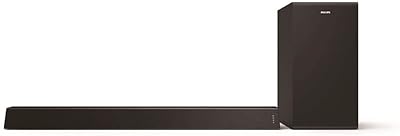
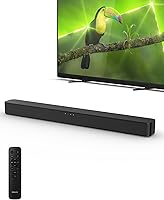
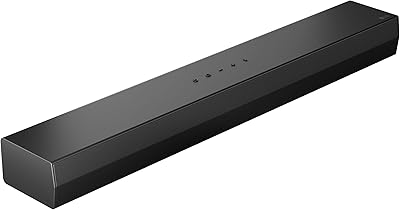
The Philips B4000 2.0-Channel Soundbar is Philips' answer to a question a lot of TV owners eventually ask: why does a screen that costs hundreds of dollars sound so flat? At 30 inches wide, this compact soundbar fits neatly under most mid-size TVs without crowding the entertainment unit. Philips has a long track record in European consumer electronics, and that heritage shows in the build quality — sturdy, no-nonsense, nothing flashy. For Roku TV owners specifically, the Roku TV Ready certification is a genuine draw. The whole point of this bar is to be an effortless first upgrade over built-in TV audio, and it targets that goal squarely.

Features & Benefits

The B4000 connects to your TV via HDMI-ARC, which means one cable handles both audio and remote-control commands — no juggling multiple inputs. Bluetooth 5.4 with LE Audio keeps wireless audio noticeably tighter than older Bluetooth versions, so music from your phone does not drift out of sync. The EasyLINK feature lets compatible TVs recognize the bar automatically, cutting setup time to minutes. There is no dedicated subwoofer here, but the built-in Bass Boost mode does add some low-end weight that makes action scenes feel more alive. A wall-mount bracket ships in the box, which is a small but practical bonus many competitors skip at this price tier.

Best For

This Philips soundbar is a strong fit for anyone whose main frustration is that their TV sounds hollow or muddy during dialogue-heavy shows. Roku TV households get the most out of it — pairing is automatic, settings appear directly in the Roku menu, and you never need to dig out a separate remote. It also suits renters or anyone who keeps their living space tidy, since the included wall-mount bracket and single-cable setup keep things clean. That said, if you are after deep bass or a cinematic surround experience, this compact soundbar's 2.0 configuration will leave you wanting more. It is best treated as a practical everyday upgrade, not a home theater foundation.

User Feedback

Because the B4000 only arrived on shelves in April 2025, the pool of real-world reviews is still thin — worth keeping in mind before leaning too heavily on any early rating. Early buyers tend to highlight quick, hassle-free setup and noticeably clearer dialogue compared to stock TV speakers as the standout wins. The Roku integration in particular draws consistent praise for just working without any extra steps. On the downside, buyers who expected fuller bass are sometimes disappointed — there is no subwoofer, and even with Bass Boost engaged, low-frequency output remains modest. Overall impressions lean positive, but it is too early to call this a proven crowd favorite with full confidence.

Pros

  • Roku TV Ready integration genuinely works — automatic pairing, one remote, no fuss.
  • HDMI-ARC single-cable setup eliminates the clutter of multiple audio connections behind the TV.
  • Dialogue clarity is a noticeable, immediate improvement over built-in TV speakers.
  • Bluetooth 5.4 with LE Audio keeps wireless audio tighter and more synchronized than older standards.
  • Wall-mount bracket ships in the box — no extra purchase or hardware trip needed.
  • Bass Boost mode adds enough low-end presence for casual TV viewing without a separate subwoofer.
  • Compact 30-inch form factor fits under most mid-size TVs without dominating the room.
  • Solid build quality reflects Philips European manufacturing standards at this price tier.
  • Remote control included out of the box, useful for non-Roku setups or as a quick fallback.
  • Setup time is consistently reported as under ten minutes by early buyers across multiple TV brands.

Cons

  • No subwoofer means bass-heavy content — action films, concerts, gaming — feels noticeably thin.
  • Bass Boost mode improves low-end marginally but cannot replicate dedicated woofer output.
  • The companion app experience is inconsistent, with some users reporting bugs on first install.
  • Roku TV Ready feature is irrelevant for the large portion of buyers using non-Roku TVs.
  • Wall-mount installation instructions are sparse and unhelpful for first-time installers.
  • Remote feels lightweight and cheap relative to the rest of the product.
  • Stereo soundstage is narrow — audio stays close to the bar rather than spreading across the room.
  • Early review pool is still small, making it harder to assess long-term reliability with confidence.
  • Some users report occasional lip-sync adjustments needed depending on TV brand and settings.
  • Volume headroom runs short in larger open-plan rooms at the top end of the output range.

Ratings

The Philips B4000 2.0-Channel Soundbar scores here are generated by AI after analyzing verified user reviews from multiple global markets, with spam, bot-submitted, and incentivized feedback actively filtered out. Since this product launched in April 2025, the review pool is still building, so scores reflect early but genuine buyer experiences rather than a long-settled consensus. Both what users genuinely appreciate and where the bar falls short are represented transparently below.

Ease of Setup
93%
Nearly every early buyer comments on how little time it takes to get the B4000 up and running. Plugging in via HDMI-ARC and having the TV automatically recognize it through EasyLINK removes the usual frustration of input-switching and audio output menus. For Roku TV owners in particular, the bar appears in the TV settings without any manual pairing steps.
A small number of users with older or non-ARC-equipped TVs found the optical or Bluetooth fallback less intuitive than the HDMI path. The quick-start guide is minimal, so anyone without an ARC-capable TV port may need to do a bit of extra searching online.
Dialogue Clarity
88%
This is consistently the most praised aspect among real users upgrading from built-in TV speakers. Voices in dialogue-heavy shows and news broadcasts come through with noticeably more presence and separation than flat TV audio. Buyers watching a lot of streaming dramas or sports commentary report a clear, immediate improvement.
At higher volumes, a handful of users notice a slight hardness or brightness in the upper midrange that can make certain voices sound a touch edgy. It is not a dealbreaker, but viewers sensitive to piercing highs during loud action sequences have flagged it.
Bass Performance
58%
42%
The Bass Boost mode does add a perceptible low-end push that makes the soundbar feel more present during action scenes compared to its flat-off default. For casual TV watching — sitcoms, reality shows, general streaming — most users find the bass adequate without any tweaking.
Buyers coming from a 2.1 system or expecting subwoofer-level impact will be disappointed. The 2.0 configuration simply cannot produce deep, room-filling bass, and even with Bass Boost engaged, explosions and heavy music tracks feel thin. This is the single most common complaint in early user reviews.
Roku Integration
94%
The Roku TV Ready certification is not just a marketing label here — users consistently confirm that the soundbar appears automatically in the Roku audio settings, responds to the Roku remote for volume and mute, and requires no additional app or pairing process. It works exactly as advertised, which in this category is worth highlighting.
The deep Roku integration is genuinely only useful if you own a Roku TV. For users with Samsung, LG, or non-Roku smart TVs, this feature is completely irrelevant, and the bar simply becomes a standard HDMI-ARC soundbar without any smart ecosystem perks.
Value for Money
84%
At its price point, the B4000 bundles in a wall-mount bracket, remote, and Roku TV Ready certification — extras that competing bars at the same tier often leave out. Buyers who just want a straightforward TV audio upgrade without spending significantly more consistently rate it as fair to good value.
A few users shopping the broader market point out that similarly priced alternatives occasionally include a basic wireless subwoofer, making the B4000 feel comparatively limited on low-end output for the dollar. If bass matters to you, the value equation shifts.
Build Quality
76%
24%
The cabinet feels solid for a bar in this segment — no hollow rattling, no flex when handled, and the matte finish resists fingerprints reasonably well. Philips' European manufacturing standards show in the overall fit and finish, which reads as a step above some budget-tier alternatives.
The plastic housing, while sturdy, does not convey a premium feel up close. A few users note the grille fabric can attract dust fairly quickly and is not easy to clean without care. It looks the part on a TV stand but would not be mistaken for a high-end product.
Bluetooth Performance
81%
19%
Bluetooth 5.4 with LE Audio is a meaningful spec upgrade over the 5.0 or 5.1 found in many competing bars. Users streaming music from phones or tablets notice tighter synchronization and fewer drop events within normal living-room distances. Reconnection after standby is quick.
Range is adequate but not exceptional — a few users report dropouts when moving to an adjacent room or when obstacles like walls and appliances are between the phone and the bar. For TV use this rarely matters, but for music-only Bluetooth streaming across a larger space it can be a limitation.
Remote Control
72%
28%
Having a dedicated remote included in the box is a genuine plus at this price, and the buttons are laid out sensibly without unnecessary complexity. Roku TV users will mostly skip it in favor of their Roku remote, but it is a useful fallback for non-Roku setups.
The remote itself feels lightweight and inexpensive, and several users wish it included direct input switching rather than requiring a button hold. Battery compartment feedback is mixed, with a couple of buyers noting it feels slightly flimsy compared to the rest of the product.
Volume Range
79%
21%
The B4000 gets plenty loud for small to medium rooms, and buyers using it in apartments or standard-size living spaces report comfortable listening levels well before hitting maximum volume. The 60W RMS output is more than enough for typical TV viewing distances.
In larger open-plan rooms or for users who like to listen at high volumes, the bar can start to lose some composure at the top end of its range. It is not distortion-heavy, but it lacks the headroom that a more powerful bar would provide for bigger spaces.
HDMI-ARC Connectivity
89%
The HDMI-ARC connection is the recommended and most reliable way to use this soundbar, and users who set it up this way report a consistently clean, low-latency audio experience. Single-cable convenience is genuinely appreciated by buyers tired of messy setups behind their TVs.
A small subset of users encountered lip-sync issues with specific TV brands before manually adjusting the audio delay in their TV settings. This is a common HDMI-ARC quirk across the industry rather than a B4000-specific flaw, but it is worth noting for buyers with finicky TV audio menus.
Wall Mount Usability
74%
26%
The fact that a wall-mount bracket ships in the box at no extra cost is a genuine differentiator at this price. Renters and minimalists who want the soundbar off the TV stand appreciate not needing a separate purchase. The bracket itself aligns the bar at a practical height.
The mounting hardware is functional but basic, and the installation instructions are sparse. A couple of users note the bracket does not offer much adjustability once installed, and getting cable management tidy behind a wall-mounted bar requires some additional planning not covered in the included guide.
Stereo Soundstage
67%
33%
For a 30-inch bar, the stereo separation is decent — left and right channels are distinguishable during movies with directional audio effects, and music playback has a reasonable sense of width for the size. It is a step up from a TV's internal downward-firing speakers.
Do not expect a wide, enveloping soundstage. The 2.0 configuration without any virtual surround processing means audio stays centered around the bar rather than filling the room. Users hoping for an immersive surround-like effect from this compact soundbar will find it falls short of that expectation.
App & Smart Features
51%
49%
The bar is compatible with the Philips Home Entertainment app, which gives users access to EQ adjustments and firmware updates from their phone. For users who want slightly more control over sound tuning than the remote allows, the app adds a useful layer.
The app experience draws mixed feedback — some users find it adds genuine value, while others describe it as buggy on first install or limited in the depth of its controls. For a bar positioned as plug-and-play, the app feels more like an afterthought than a polished companion experience.
Packaging & Unboxing
77%
23%
Everything arrives well-protected and organized, with batteries for the remote pre-included — a small but appreciated touch. The box is compact and easy to recycle, and the quick-start card is clear enough for basic HDMI-ARC setups.
The documentation does not cover alternative connection scenarios in much detail, so buyers connecting via Bluetooth only or using optical input have to rely on Philips support or online searches. A more thorough setup guide for non-ARC users would reduce friction.

Suitable for:

The Philips B4000 2.0-Channel Soundbar is a natural fit for anyone who is tired of straining to hear dialogue through their TV's built-in speakers and wants a real improvement without overthinking the purchase. Roku TV owners stand to gain the most — the bar pairs automatically, responds to the existing Roku remote, and requires virtually no configuration, making it a genuinely plug-and-play experience rather than a promise that falls apart during setup. It also suits renters, bedroom setups, and smaller living rooms where a bulky 5.1 surround system would be physically and financially overkill. If your primary use case is streaming shows, catching the news, or watching sports in a room under roughly 250 square feet, the B4000 delivers a meaningful and immediate upgrade over stock TV audio. Minimalists who hate cable clutter will appreciate the single HDMI-ARC connection and the included wall-mount bracket, which together keep the setup tidy from day one.

Not suitable for:

The Philips B4000 2.0-Channel Soundbar is not the right choice for buyers who want bass they can actually feel during action movies or music-heavy content — there is no subwoofer included, and no software trick fully compensates for that physical absence. Home theater enthusiasts or anyone currently running a 2.1 or higher system will likely find this compact soundbar a step backward rather than forward. If your living room is large or open-plan, the 60W output may not fill the space with the kind of presence you are after. Buyers heavily invested in Samsung, Sony, or LG smart TV ecosystems will also miss out on the Roku-specific perks that make this bar genuinely compelling — for them, it becomes a basic HDMI-ARC bar with no ecosystem advantage. Finally, anyone expecting a polished companion app experience should temper their expectations, as the Philips Home Entertainment app has drawn inconsistent feedback and is not a strong reason to choose this bar on its own.

Specifications

  • Channels: The soundbar operates in a 2.0 stereo configuration with no subwoofer included or required for basic operation.
  • Output Power: Maximum continuous output is rated at 60W RMS, providing adequate volume for small to medium-sized rooms.
  • Dimensions: The soundbar measures 30″ wide, 4.1″ deep, and 2.56″ tall, fitting comfortably under most mid-size televisions.
  • Weight: The unit weighs 4.89 pounds, making it light enough to wall-mount without heavy-duty hardware.
  • Bluetooth: Bluetooth 5.4 with LE Audio support is built in, enabling low-latency wireless audio streaming from compatible mobile devices.
  • Connectivity: Primary connections include HDMI-ARC for TV integration and Bluetooth for wireless device pairing; no optical input is listed.
  • Audio Driver: The soundbar uses dynamic driver technology across its internal speaker array for stereo sound reproduction.
  • Wall Mount: A wall-mount bracket is included in the box, allowing the bar to be mounted directly below a wall-hung television.
  • Remote Control: A dedicated remote control ships with the unit and requires two AAA batteries, which are included in the package.
  • Roku Ready: The soundbar carries official Roku TV Ready certification, enabling automatic setup and unified remote control on compatible Roku TVs.
  • Special Modes: Bass Boost mode is available to enhance low-frequency output, and EasyLINK enables automatic device recognition on compatible televisions.
  • Power Input: The unit runs on standard AC power at 120V input and is designed for use in North American electrical environments.
  • Model Number: The official model designation is TAB4000/37, which is useful when searching for firmware updates or Philips support documentation.
  • In the Box: Package contents include the soundbar, wall-mount bracket, remote control, two AAA batteries, a quick-start guide, and a warranty card.
  • Warranty: Philips provides a limited warranty with this product; specific duration and terms should be confirmed through the Philips support website.
  • Availability Date: The B4000 was first listed for sale in April 2025, making it a recent addition to Philips home audio lineup.
  • Certification: Beyond Roku TV Ready, the unit carries standard regulatory certifications appropriate for consumer electronics sold in the United States.
  • Compatible Devices: The soundbar is designed primarily for use with televisions and is not marketed as a standalone music speaker or PC audio solution.

Related Reviews
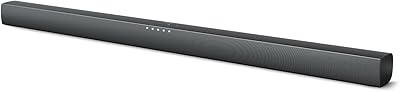
Philips B4208 2.0 Channel Soundbar
84%
85%
Sound Quality
92%
Ease of Setup
91%
Value for Money
70%
Bass Performance
88%
EQ Customization
More
Philips B5306 2.1-Channel Soundbar with Subwoofer
74%
91%
Ease of Setup
88%
Roku TV Integration
83%
Bass Performance
66%
Dialogue Clarity
61%
Wireless Subwoofer Reliability
More
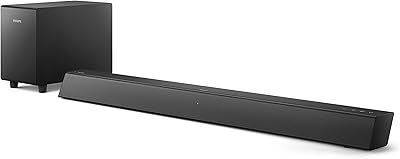
Philips TAB7305 2.1 Soundbar with Wireless Subwoofer
69%
81%
Bass Performance
67%
Dialogue Clarity
89%
Setup & Installation
62%
Wireless Subwoofer Reliability
78%
Value for Money
More
Samsung HW-T400 2.0 Channel Soundbar

78%
78%
Audio Clarity
61%
Bass Performance
94%
Ease of Setup
82%
Bluetooth Connectivity
67%
NFC Pairing
More
TCL Alto 7 2.0 Channel Soundbar with Built-in Subwoofer
84%
85%
Sound Quality
83%
Bass Performance
92%
Ease of Setup
89%
Value for Money
90%
Connectivity Options
More
ELAC Debut 2.0 C5.2 Center Channel Speaker
85%
94%
Dialogue Clarity
91%
Vocal Midrange
87%
High-Frequency Detail
83%
Off-Axis Performance
61%
Bass Extension
More
LG S20A 2.0ch Soundbar
73%
93%
Ease of Setup
88%
Dialogue Clarity
61%
Bass Performance
91%
LG TV Integration
63%
Volume Output
More
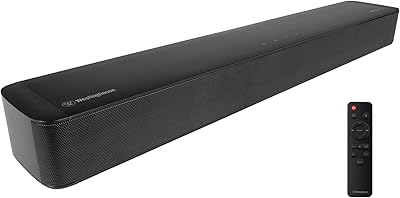
Westinghouse WS200AM 2.0 Compact Soundbar
73%
91%
Ease of Setup
88%
Roku Integration
84%
Dialogue Clarity
53%
Bass & Low-End Response
58%
Dolby Atmos Performance
More
Hisense HS214 2.1 Channel Soundbar
86%
84%
Sound Quality
88%
Bass Performance
91%
Setup and Installation
92%
Roku TV Integration
83%
Build Quality
More
Samsung HW-N300 2-Channel Soundbar
86%
85%
Sound Quality
88%
Bass Performance
92%
Setup & Installation
90%
Connectivity (Bluetooth & USB)
81%
Build Quality
More

FAQ

It works with any TV that has an HDMI-ARC port or Bluetooth. The Roku TV Ready feature is a bonus that simplifies setup and remote control on Roku TVs specifically, but the B4000 functions perfectly well as a standard soundbar with non-Roku televisions too.

Not necessarily — it depends on what you are watching. For dialogue-heavy shows, news, and everyday streaming, the built-in speakers and Bass Boost mode are genuinely sufficient. If you watch a lot of action films or listen to bass-heavy music and want that physical thump in your chest, you will eventually feel the absence of a subwoofer. The Philips B4000 2.0-Channel Soundbar is designed for everyday TV improvement, not home theater impact.

If your TV has an HDMI-ARC port (most TVs from the past several years do), you just run one HDMI cable between the soundbar and the TV. Power both on and the EasyLINK feature handles recognition automatically on compatible TVs. Most buyers report being set up and listening within ten minutes.

Yes, in most cases. Via HDMI-ARC, your TV remote's volume buttons will control the soundbar directly. On Roku TVs, the existing Roku remote takes over completely, so you genuinely do not need the included soundbar remote for day-to-day use.

It still makes a solid upgrade over built-in TV audio, especially for dialogue clarity and general stereo presence. You just lose the automatic setup perks. If your TV has HDMI-ARC and you want a fuss-free audio improvement without spending a lot, this compact soundbar is still a reasonable choice outside the Roku ecosystem.

Yes. The Bluetooth 5.4 connection lets you pair a phone or tablet and stream audio wirelessly. The LE Audio support keeps the connection stable and reduces the audio lag that older Bluetooth versions sometimes cause, so music and video stay nicely in sync.

The bracket ships in the box and is designed to position the bar flush enough to sit neatly below a wall-mounted TV. The exact standoff distance is minimal given the bar is only 4.1 inches deep. Cable management behind a wall mount will require some planning on your part since the guide does not cover that in detail.

No. This is a 2.0 stereo soundbar without Atmos or DTS:X decoding. It will play content encoded in those formats, but it will downmix to standard stereo output rather than producing any height or surround effects. If immersive audio formats are important to you, you will need to look at a higher-tier bar.

The Philips Home Entertainment app offers some sound adjustment options beyond the remote, including EQ tweaks and firmware updates. Feedback on the app is mixed — some users find it useful, others find it limited or glitchy on first launch. At minimum, the Bass Boost toggle on the remote gives you a quick way to shift the sound profile without the app.

The difference is more about quality than volume. Built-in TV speakers tend to fire downward or backward, making dialogue muddy and thin. This Philips soundbar fires forward, directly toward the listener, which makes voices noticeably clearer and gives the audio a sense of depth that cranking the TV volume alone cannot replicate.