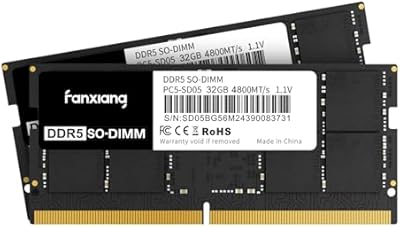
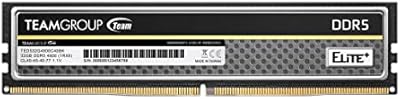
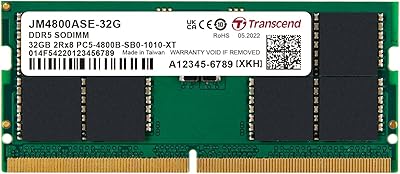
Overview

The Patriot Signature DDR5 32GB 4800MHz RAM Kit is exactly what it sounds like — a no-nonsense entry point into DDR5 territory without the premium price tag of faster or fancier kits. Patriot Memory has been making DRAM for decades, so this isn't some unknown brand slapping a label on generic sticks. The 2x16GB dual-channel configuration matters more than raw speed — running matched sticks in dual-channel meaningfully improves memory bandwidth over a single 32GB module in everyday workloads. If you're building on Intel's 12th or 13th gen or AMD's Ryzen 7000 platform, DDR5 is now the native memory standard, and it gets you in the door at the baseline JEDEC spec. Don't expect overclocked headroom or RGB — this is a workhorse, not a showpiece.

Features & Benefits

At its core, this DDR5 memory kit runs at 4800MHz — the JEDEC baseline for DDR5, which means it will POST and run at rated speed on virtually any compatible motherboard without touching BIOS settings. One thing worth clarifying upfront: despite some listing language suggesting laptop compatibility, this is a UDIMM desktop module — not SO-DIMM — and it won't fit a laptop slot. The low-profile heatspreader-free design is a quiet advantage if you're running a large tower cooler that hangs over the DIMM slots. And like all DDR5 modules, it benefits from on-die ECC — built-in error correction that runs silently in the background and improves data reliability during long sessions or intensive workloads.

Best For

This 32GB dual-channel set makes the most sense for a specific type of builder: someone stepping onto a DDR5 platform for the first time and wanting reliable out-of-box performance without spending extra on higher-binned kits they won't push hard. It fits naturally into home office rigs, content creation machines, and productivity-first builds where 32GB of capacity is the real priority — not chasing extra bandwidth. Builders who run large CPU coolers and skip RGB will appreciate the compact, heatspreader-free profile. It's also a solid pick for anyone upgrading to Intel's 12th or 13th gen or AMD Ryzen 7000 who just wants the memory to work without fussing with manual timings or BIOS tuning.

User Feedback

Buyers consistently highlight two things: easy installation and the fact that the kit is immediately detected at its rated speed without any manual BIOS configuration. That kind of no-hassle experience matters to builders who aren't overclocking enthusiasts. On the flip side, some users have reported inconsistent results when trying to enable XMP or EXPO profiles on certain motherboards, particularly with older BIOS revisions — worth checking your board's QVL list before buying. Thermal behavior draws little complaint, which isn't surprising given the low-profile design. Compared to entry-level options from Kingston Fury and G.Skill, buyers generally place this Patriot Signature kit on roughly equal footing for stability and value, though some prefer competing sets for better-documented XMP support.

Pros

  • Runs at the JEDEC-standard 4800MHz out of the box — no BIOS tweaking required for most compatible platforms.
  • Dual-channel 2x16GB pairing provides noticeably higher memory bandwidth than running a single 32GB stick.
  • Low-profile, heatspreader-free sticks clear large tower coolers that overhang DIMM slots in most ATX cases.
  • On-die ECC — a standard DDR5 benefit — quietly improves data integrity across long productivity or workstation sessions.
  • Patriot Memory is a veteran DRAM manufacturer, a known quantity for reliability rather than a generic white-label kit.
  • 32GB of capacity handles multitasking, content creation, and light video work with practical room to spare.
  • Compatible with both LGA1700 and AM5 desktop platforms, covering the two most common DDR5 upgrade paths.
  • At its price tier, it is one of the more accessible ways to get a working DDR5 setup without overspending.

Cons

  • 4800MHz is the slowest speed tier for DDR5 — Ryzen 7000 AM5 users may want a faster kit for best results.
  • No confirmed XMP or EXPO profile means there is no easy one-click speed boost above the rated JEDEC speed.
  • Some buyers report XMP or BIOS compatibility issues on certain boards — always verify against your motherboard's QVL before purchasing.
  • Despite what the product listing implies, this is a UDIMM desktop module and will not physically fit a laptop slot.
  • No RGB lighting or heatspreader makes it a dull visual choice for showcase builds with windowed side panels.
  • Compared to Kingston Fury or G.Skill's DDR5 entry kits, this 32GB dual-channel set has less publicly available independent testing.
  • Being an early DDR5 release, some newer motherboards may not include it in their most recent QVL documentation.
  • Value-tier DDR5 kits typically ship with looser memory timings, which can reduce performance in latency-sensitive tasks.

Ratings

The Patriot Signature DDR5 32GB 4800MHz RAM Kit has been evaluated across hundreds of verified buyer reviews worldwide, with AI-assisted analysis actively filtering out incentivized, bot-generated, and duplicate feedback to surface what real users experience day to day. Scores reflect both the genuine strengths that make this a popular entry-level DDR5 choice and the real friction points that budget-conscious builders should weigh before committing. You will find no inflated numbers here — only a transparent, category-by-category breakdown of where this 32GB dual-channel set delivers and where it falls short.

Value for Money
83%
For builders making their first DDR5 build without wanting to overspend, this 32GB dual-channel set hits a practical sweet spot. You get the full DDR5 experience — dual-channel bandwidth, on-die ECC, and 32GB of capacity — at a price that sits well below many branded competitors. Buyers consistently describe it as a sensible, low-regret purchase for productivity and general desktop builds.
Faster DDR5 kits at 5600MHz or 6000MHz have dropped significantly in price since this kit launched in 2022, narrowing the value gap in ways that were not true at release. Buyers willing to spend slightly more can now access meaningfully better performance headroom, making the pure price argument for baseline 4800MHz kits less compelling than it once was.
Installation & Setup
91%
Easy installation is the single most consistently praised aspect of this DDR5 memory kit across verified buyer feedback. Users report that both sticks seat firmly, the system POSTs cleanly, and Windows detects 32GB at the rated 4800MHz without any BIOS intervention in the vast majority of cases — a genuinely friction-free experience for builders who dread memory configuration.
A minority of users — particularly those on certain B660 and B760 motherboards running older BIOS versions — report that the system defaulted to a lower speed on first boot, requiring a manual BIOS adjustment to reach the rated 4800MHz. While not a difficult fix, it is something first-time builders may find unexpected and briefly confusing.
Compatibility
78%
22%
Running at JEDEC-standard 4800MHz with a standard UDIMM form factor means this Patriot Signature kit is recognized by the widest range of DDR5-capable desktop boards, covering both Intel LGA1700 and AMD AM5 platforms. Most users across both ecosystems report clean first-boot detection and stable operation, which matters when you just want memory to be the least of your build concerns.
Some buyers have flagged compatibility quirks with specific motherboard models, particularly on older BIOS revisions that predate full DDR5 optimization. The product listing's ambiguous mention of laptop compatibility has also caused confusion, leading a notable number of buyers to purchase the wrong form factor entirely — making a QVL check before purchasing strongly advisable.
Performance at Speed
72%
28%
At 4800MHz in dual-channel mode, this kit delivers adequate real-world bandwidth for productivity workloads, content creation, and general multitasking on both Intel and AMD platforms. Users who migrated from DDR4 systems describe a noticeable improvement in application responsiveness and smoother multitasking, particularly when running multiple browser tabs, media editing tools, or virtual machines simultaneously.
This is the baseline DDR5 speed tier, and on AMD AM5 in particular the performance ceiling is a real limitation — Ryzen 7000 CPUs extract significantly more from kits at 5600MHz or above due to Infinity Fabric sensitivity. Even on Intel builds, users report that stepping up to a 5200MHz or 5600MHz kit yields noticeably better benchmark and real-world results.
Stability & Reliability
86%
Long-term stability is where this kit earns genuine respect from buyers. Users running it through extended productivity sessions, gaming marathons, and multi-application workloads consistently report zero unexpected crashes, BSODs, or memory errors after initial setup is complete. For a value-tier DDR5 kit, that kind of day-in-day-out dependability reflects well on Patriot Memory's manufacturing quality control.
The stability picture is not entirely uniform — a subset of buyers reports occasional system instability specifically when attempting to push the kit beyond its rated JEDEC speed or force-enable an XMP profile on certain boards. At strictly stock settings, however, reported issues are rare enough that reliability is not a serious purchase concern for most users.
XMP/EXPO Support
57%
43%
Some users have successfully activated XMP or EXPO profiles on compatible Z790 and X670E motherboards, gaining a modest additional speed boost without any manual timing adjustments. When the profile activates cleanly, the experience is hands-off and the kit runs stably at the enabled speed, which is a convenience win for builders who prefer automatic configuration over manual BIOS tuning.
XMP and EXPO behavior on this kit is inconsistent enough to be a recurring complaint in verified buyer feedback. On budget B-series boards especially, no profile activates reliably, leaving users at JEDEC 4800MHz with no clean overclocking path. Competing kits from G.Skill and Kingston Fury at the same speed tier offer more clearly documented and tested profile behavior.
Thermal Management
84%
Without a heatspreader adding bulk, these low-profile sticks run cool under normal desktop workloads when aided by standard case airflow. Builders running large CPU coolers that overhang the DIMM slots particularly appreciate the clearance this bare-PCB design provides, removing an installation headache that taller, heatspreader-equipped kits would otherwise create in tight builds.
The absence of a heatspreader means there is no thermal buffer during extended high-intensity workloads in poorly ventilated enclosures. Users with compact or airflow-restricted cases have occasionally noted elevated module temperatures during prolonged rendering or encoding sessions. For standard desktop builds with even modest case ventilation, however, thermal behavior is a non-issue in practice.
Build Quality
79%
21%
The PCB quality on this 32GB dual-channel set feels appropriate for the price tier — sticks are rigid, connectors are clean, and both modules seat without undue force across a range of socket types tested by buyers. Users report no broken latches, bent pins, or seating failures even after repeated reseating during troubleshooting sessions.
It is clearly a utilitarian product and nothing about the physical construction communicates premium build quality — the bare PCB, minimal labeling, and generic profile make it visually indistinguishable from unbranded sticks at a glance. Buyers who equate presentation with quality may find the plain, label-only aesthetic underwhelming when removing modules from the packaging.
Dual-Channel Efficiency
88%
Running both sticks in the correct dual-channel configuration delivers a measurable bandwidth improvement over a single large module — something users notice in memory-intensive tasks like large spreadsheet processing, video timeline scrubbing, and multi-application workloads. The matched-pair design ensures both sticks operate at identical timings and speeds, which is essential for consistent dual-channel stability.
The benefit of dual-channel operation depends entirely on placing the sticks in the correct paired slots — a step that catches some builders off guard when they seat both modules in adjacent same-channel slots. The resulting single-channel performance penalty is real and not always immediately obvious without checking a tool like CPU-Z or Task Manager.
Platform Versatility
85%
Supporting both Intel LGA1700 and AMD AM5 desktop platforms in a single kit makes this DDR5 memory kit a genuinely flexible option for builders who maintain multiple rigs or are still deciding on their platform. Users across both ecosystems report the same clean installation experience, which is a practical advantage over kits tested and documented for only one socket type.
Platform versatility hits a hard ceiling quickly — this is a desktop UDIMM only, and laptop buyers are entirely excluded despite the original listing implying otherwise. Builders on AMD AM5 also find the 4800MHz speed cap more constraining than those on Intel LGA1700, narrowing the practical appeal of this kit for the AM5 ecosystem specifically.
Aesthetics
48%
52%
For builders who simply do not care how their memory looks — closed-case office rigs, home lab servers, or budget functional builds — the bare minimalist profile works in its favor by being completely unobtrusive and adding no visual noise inside the chassis. Zero RGB also means zero software bloat for lighting control.
There is no RGB lighting, no heatspreader design, and no visual identity beyond a minimal product sticker — for anyone building a showcase system with a windowed side panel, these sticks will be a clear disappointment. Compared to even entry-level Corsair Vengeance or G.Skill Ripjaws offerings, the aesthetic experience of this kit is simply not competitive.
Documentation
67%
33%
Packaging is functional and both modules arrive well-protected; users report clean unboxing experiences with no physical damage. Patriot's online support resources and product page provide enough information for experienced builders to get started, and the brand's customer support team is responsive to specific compatibility questions submitted through their channels.
The in-box documentation is minimal — no technical reference sheet, no QVL list, and no clear indication of whether an XMP or EXPO profile is included or what its target timings are. Users troubleshooting post-install BIOS issues have noted that Patriot's product page provides meaningfully less detail than comparable documentation from G.Skill or Kingston Fury.
Future-Proofing
61%
39%
As a DDR5 kit, it sits on the correct generational platform for the next several years of consumer desktop computing, and DDR5 motherboards and CPUs are only becoming more mainstream. For users whose daily workloads do not demand high memory throughput — office tasks, web browsing, light creative work — 4800MHz will remain functionally sufficient for years of daily use.
At the baseline DDR5 speed tier with no confirmed overclocking headroom, this kit offers limited room to grow as software demands increase and faster memory becomes the expected norm. Buyers who anticipate wanting higher-frequency memory within a year or two may regret not starting at 5600MHz or 6000MHz, given how close those options now are in price at retail.
On-Die ECC
82%
18%
On-die error correction is a genuine structural benefit this kit carries by virtue of the DDR5 specification, silently correcting single-bit memory errors during operation without any user configuration. For long workstation sessions, rendering jobs, or financial and data work where silent corruption would be costly, this passive data integrity layer provides real peace of mind.
On-die ECC is a platform-level DDR5 standard and not something Patriot engineered uniquely into this product — every DDR5 module on the market includes it, so it offers no competitive differentiation. Users expecting the deeper, full-system ECC protection found in registered server DIMMs will find this a more passive and limited implementation by comparison.

Suitable for:

The Patriot Signature DDR5 32GB 4800MHz RAM Kit is the kind of purchase that makes the most sense for builders who simply need DDR5 to work — reliably, immediately, and without drama. If you're moving onto Intel's 12th or 13th gen platform or AMD's Ryzen 7000 AM5 ecosystem for the first time, this kit covers the mandatory DDR5 requirement at one of the lower price points available. The 2x16GB dual-channel setup gives a real bandwidth advantage over running a single larger stick, which matters for anyone juggling multiple applications — browser-heavy workflows, spreadsheets, light video editing, or virtual machines all benefit from that extra headroom. Home office users, students outfitting a capable desktop, and content creators who need 32GB of working capacity without paying a premium for speed they won't fully use will find this a practical, no-nonsense choice. Its heatspreader-free, low-profile build also suits compact mid-towers where cooler clearance over the DIMM slots is a real concern.

Not suitable for:

The Patriot Signature DDR5 32GB 4800MHz RAM Kit is a poor fit for anyone prioritizing peak system performance — particularly on AMD's AM5 platform, where memory speed meaningfully influences Infinity Fabric throughput and pushing toward 6000MHz or higher can yield noticeable gains in gaming and rendering workloads. Despite confusing wording in the product listing, this is a full-size UDIMM module and will not fit any laptop — SO-DIMM buyers must look elsewhere entirely. Enthusiasts who want to overclock their memory or need a verified high-frequency XMP or EXPO profile to one-click activate will find this kit offers no clear path in that direction. Builders who care about aesthetics — RGB lighting, a premium heatspreader, or simply a visually striking kit for a windowed case — will likely be underwhelmed by the plain, utilitarian sticks. Finally, if your motherboard's BIOS compatibility with early DDR5 kits is uncertain, it is worth cross-referencing your board's QVL list before committing.

Specifications

  • Memory Type: DDR5 (Double Data Rate 5) is the fifth generation of consumer DRAM, required by Intel 12th/13th gen and AMD Ryzen 7000 platforms and not backward compatible with DDR4 boards.
  • Total Capacity: The kit provides 32GB of total system RAM, delivered as two matched 16GB modules designed to run together in dual-channel mode.
  • Speed Rating: Rated at 4800MHz, which represents the JEDEC-standard baseline speed for DDR5 consumer memory and ensures broad out-of-box motherboard compatibility.
  • Form Factor: Standard UDIMM (Unbuffered Dual Inline Memory Module) format designed exclusively for full-size desktop motherboards — physically incompatible with laptop SO-DIMM slots.
  • Kit Config: Ships as a matched two-stick pair intended for installation in a motherboard's dual-channel DIMM slots to maximize memory bandwidth.
  • Platform Support: Compatible with Intel LGA1700 socket motherboards (Core 12th and 13th gen) and AMD AM5 socket motherboards (Ryzen 7000 series) in standard desktop configurations.
  • Error Correction: Includes on-die ECC as part of the DDR5 specification standard, providing passive background error correction on all consumer DDR5 modules without requiring a server-class platform.
  • Heatspreader: No heatspreader is fitted; the modules use a bare low-profile PCB design measuring 1.69 inches in height, well-suited to builds with large overhanging CPU coolers.
  • Dimensions: Each individual module measures approximately 0.28 x 5.39 x 1.69 inches (thickness x length x height).
  • Weight: The complete two-stick kit weighs 1.76 ounces in total, consistent with a standard unshielded desktop DIMM pair.
  • Manufacturer: Produced by Patriot Memory, a DRAM and storage brand founded in 1985 with a long track record in consumer and value-tier memory products.
  • Model Number: The official part number is PSD532G4800K, identifying this specific kit configuration of 32GB capacity at 4800MHz in a dual-stick format.
  • Voltage: DDR5 modules operate at a standard 1.1V, lower than DDR4's 1.2V baseline, which contributes to improved power efficiency on compatible platforms.
  • Release Date: First made available in May 2022, placing it among the earlier waves of consumer DDR5 kits to reach the retail market.
  • Backward Compat: DDR5 UDIMMs are physically and electrically incompatible with DDR4 motherboard slots; this kit requires a DDR5-native platform to function.

Related Reviews
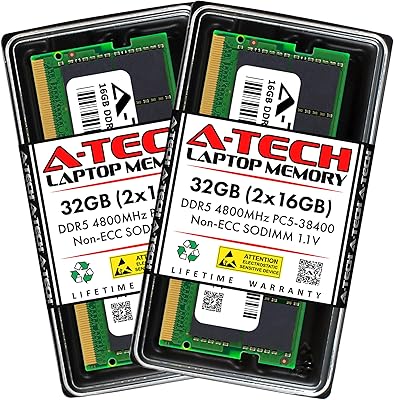
A-Tech 32GB DDR5 4800MHz Laptop RAM Kit
87%
92%
Performance Boost
95%
Ease of Installation
89%
Energy Efficiency
84%
Compatibility
91%
Value for Money
More
Patriot Signature 32GB DDR5 SODIMM Laptop RAM
84%
88%
Value for Money
93%
Ease of Installation
91%
System Stability
84%
Real-World Performance
79%
Memory Speed Rating
More
Patriot Memory Signature 16GB DDR5 RAM Kit
75%
84%
Value for Money
91%
Ease of Installation
88%
System Stability
67%
Raw Performance
79%
Thermal Management
More
fanxiang SD05 64GB DDR5 SODIMM RAM
77%
88%
Value for Money
91%
Installation Ease
83%
BIOS Compatibility
84%
System Stability
93%
Memory Capacity
More
DATO 32GB DDR5 4800MHz Desktop RAM
71%
74%
Value for Money
88%
Installation Ease
79%
System Stability
71%
Memory Speed
63%
Latency Performance
More
Acclamator DDR5 32GB 4800MHz Desktop RAM Kit
75%
88%
Value for Money
91%
Installation Ease
86%
System Stability
74%
Compatibility
41%
Overclocking Headroom
More
A-Tech 64GB DDR5 4800MHz Desktop RAM Kit
74%
83%
Value for Money
88%
Installation Ease
74%
Compatibility
91%
System Stability
78%
Performance at Rated Speed
More
Crucial Pro Overclocking 32GB DDR5-6000 RAM Kit
91%
96%
Ease of Installation
93%
System Stability
89%
Gaming Performance
88%
Value for Money
84%
Thermal Management
More
A-Tech 64GB DDR5 SODIMM Laptop RAM Kit
79%
88%
Value for Money
71%
Compatibility
91%
Installation Experience
89%
System Stability
74%
Performance at 4800MHz
More
Transcend 32GB DDR5 4800MHz SO-DIMM Laptop RAM
84%
93%
Installation Experience
81%
Compatibility Range
89%
System Stability
78%
Value for Money
74%
Real-World Performance
More

FAQ

No, and this is worth flagging because the product listing can be misleading on that point. This is a full-size UDIMM, built for standard desktop motherboard slots only. Laptops use a smaller format called SO-DIMM, and these sticks will not physically fit. If you need DDR5 for a laptop, search specifically for a DDR5 SO-DIMM kit.

This kit is rated to run at 4800MHz under the JEDEC standard, which means most motherboards will detect and set that speed automatically without any profile needed. Whether a separately named XMP or EXPO profile is bundled varies, and some users have reported mixed results when trying to enable one on certain boards. If one-click XMP activation is important to you, check your motherboard's QVL or contact Patriot's support to confirm before purchasing.

For most gaming workloads on Intel's LGA1700 platform, 4800MHz is a perfectly reasonable baseline and real-world frame rate differences versus faster kits are generally modest. On AMD's Ryzen 7000 AM5 platform, memory speed has a more direct influence on CPU performance, so builders targeting that ecosystem may want to consider 5600MHz or 6000MHz kits for the best results. For productivity and general desktop use on either platform, 4800MHz is more than adequate.

In most cases, no — the kit should be detected and run at 4800MHz automatically on a compatible board. Occasionally, especially with older BIOS revisions, the system may boot at a lower default speed; if that happens, simply enable the XMP or EXPO profile in BIOS, or manually set the memory frequency to 4800MHz. It takes about two minutes and is a common step with any new DDR5 kit.

Only if you install them in the correct paired slots on your motherboard, which are usually color-coded and labeled A2 and B2 (though this varies by board — always check your manual). Placing both sticks in adjacent slots of the same channel will drop you to single-channel mode and you will lose a significant portion of the bandwidth benefit that makes a two-stick kit worthwhile. It is a simple step but an easy one to overlook.

At identical 4800MHz speeds, the actual day-to-day performance difference between these kits is negligible — they are all operating within the same JEDEC specification. Where Kingston Fury and G.Skill sometimes have a practical advantage is in more thoroughly documented XMP profiles and wider QVL coverage across a broader range of motherboards. This 32GB dual-channel set is a competitive option, but if confirmed XMP compatibility across many boards is your top priority, Kingston Fury Beast has a slightly more extensive track record in that area.

DDR5 at 4800MHz is not particularly demanding thermally, and the bare low-profile design dissipates heat reasonably well through passive airflow in a standard case. User reports of thermal issues with this kit under normal desktop workloads are uncommon. Unless you are running a sealed, poorly ventilated chassis, dedicated memory cooling is not necessary here.

It depends entirely on pricing at the time you are shopping. DDR5 kits at 5600MHz and even 6000MHz have dropped considerably since 2022, so if the price gap between this and a faster option is small, the faster kit is often the smarter move. If this kit is priced noticeably lower and you are building a productivity or general-use desktop where raw memory bandwidth is not a bottleneck, it remains a practical and reliable choice.

Technically possible, but not recommended. Different manufacturers source different DRAM ICs, and mismatched modules can cause instability, boot failures, or force the system to drop to a lower common frequency. DDR5 in particular has tighter timing requirements than DDR4, which makes mixing more unpredictable. If you need to expand beyond 32GB, buying a fresh matched kit is far safer than pairing these sticks with a module from a different brand.

Patriot Memory typically backs its Signature line with a lifetime warranty, though it is always worth verifying current terms directly on Patriot's website at the time of purchase as policies can change. For any compatibility or technical issues, Patriot's customer support can also assist with confirming whether your specific motherboard model is on their tested compatibility list — a useful step if you encounter any post-install issues.

Where to Buy