Overview

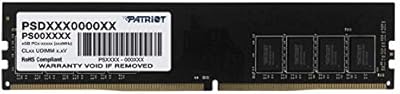
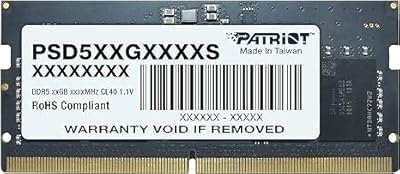
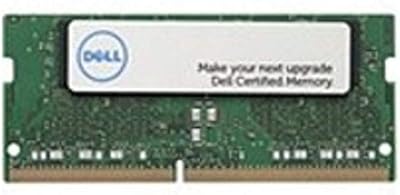
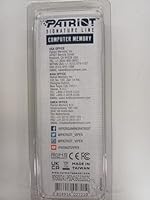
The Patriot Memory Signature 16GB DDR4 SODIMM RAM is exactly what it looks like: a straightforward, no-frills memory stick built for laptop owners who want more headroom without paying a premium. Patriot has been a dependable value-tier brand for years, and this module fits that mold. You get a single 16GB stick running at 3200MHz — solid for everyday computing — with a double-sided, dual-rank layout that has some real-world implications worth understanding before you buy. There are no RGB lights, no aggressive heat spreaders, and no XMP profiles to fuss with. This is a workhorse module, plain and simple.
Features & Benefits

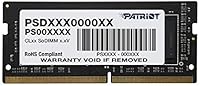
Running at 3200MHz with 22-22-22-52 timings, this 16GB DDR4 module hits the standard DDR4 sweet spot for most laptops — fast enough to keep up with productivity and light content work without demanding anything unusual from your BIOS. The dual-rank design is worth a quick explanation: it means the module uses memory chips on both sides of the PCB, allowing the memory controller to interleave operations and squeeze out slightly better bandwidth than a single-rank stick of the same capacity. The difference in daily use is modest, but it is a genuine edge. At 1.2V, it fits comfortably within the safe thermal range for slim and thin-and-light laptops. Installing one stick also leaves your second slot free for a future capacity bump.

Best For

This laptop memory upgrade makes the most sense for people crawling along on 8GB who keep running out of headroom — the kind of situation where Chrome alone is eating through your available RAM. It is a strong fit for students and remote workers who spend most of their day in productivity apps, video calls, and browser-heavy workflows. Small form factor PC builders and Intel NUC users will also find the SODIMM format exactly what they need. It also works well as a plug-and-play replacement for a failed OEM stick. What it is not built for: power users chasing dual-channel performance with matched pairs. If you just want a no-fuss memory boost, this 16GB DDR4 module covers the need well.

User Feedback

With a 4.6-star average across nearly 180 ratings, the general sentiment around this Patriot SODIMM stick is clearly positive. Most buyers point to easy installation and rock-solid stability as the main wins — drop it in, boot up, and it just works. Value for money comes up consistently, with many noting the performance-per-dollar ratio is hard to argue with at this price tier. That said, the feedback is not entirely without caveats. A handful of users ran into compatibility hiccups with specific laptop models, particularly around BIOS recognition of the dual-rank configuration. This is not a widespread issue, but it is worth cross-checking your laptop's QVL or support page before ordering. The lifetime warranty helps, though always verify your system memory specs first.

Pros

  • Stable and reliable out of the box — most users report a clean install with no BIOS issues.
  • 16GB in a single stick leaves the second slot open for a future upgrade without replacing anything.
  • The dual-rank design can offer a modest but real bandwidth advantage over single-rank alternatives.
  • Operating at 1.2V, this laptop memory upgrade runs within safe thermal limits for slim and thin-and-light machines.
  • Broad 260-pin NON-ECC SODIMM compatibility covers the vast majority of consumer laptops and mini PCs.
  • Lifetime warranty from Patriot provides meaningful long-term peace of mind for a set-and-forget upgrade.
  • Excellent value-per-gigabyte ratio makes it one of the more cost-effective 16GB SODIMM options available.
  • Installation is genuinely straightforward — no software, no drivers, just seat the module and boot up.

Cons

  • No XMP profile support means you cannot push speeds beyond the default JEDEC 3200MHz specification.
  • Dual-rank configuration has triggered compatibility problems on certain laptop models and older BIOS versions.
  • Sold as a single stick, so achieving true dual-channel requires purchasing a second module separately.
  • Timings of 22-22-22-52 are fairly loose for DDR4 at 3200MHz, trailing tighter-spec kits at similar speeds.
  • No heat spreader at all — fine for normal use, but thermal headroom is minimal in heavily throttled systems.
  • The brand carries less prestige than Kingston or Crucial, which may matter for resale or enterprise use.
  • Patriot's compatibility database is not exhaustive, making self-research necessary before buying for niche systems.

Ratings

Our ratings for the Patriot Memory Signature 16GB DDR4 SODIMM RAM were produced by AI after a systematic analysis of verified buyer reviews gathered globally, with spam, incentivized submissions, and bot-generated content actively filtered out before scoring. The resulting scores reflect a genuinely balanced view — the areas where this laptop memory upgrade earns consistent praise sit alongside the real friction points that a meaningful share of buyers encountered. Nothing is polished away; both the strengths and the caveats are transparently baked into every number below.
Value for Money
91%
For buyers prioritizing cost-effectiveness, this 16GB DDR4 module consistently ranks as one of the better deals in its tier. Reviewers frequently note that the per-gigabyte price undercuts comparable sticks from larger brands without any obvious quality trade-off. For students and remote workers on tight budgets, the math is hard to argue with.
A handful of users pointed out that slightly pricier kits from Kingston or Crucial often come with tighter timings or more robust compatibility documentation. The savings feel less meaningful if you end up returning the module due to a compatibility mismatch with your specific laptop model.
Installation Ease
88%
Most buyers report a completely painless install — pop the panel, seat the stick, and you are done. The standard 260-pin SODIMM format means no guesswork about orientation, and the module clicks into place exactly as expected. Non-technical users consistently describe feeling confident after completing it the first time.
A few users wished Patriot included clearer documentation or a short setup guide, especially for first-timers who have never opened a laptop before. The absence of any printed instructions means you are relying entirely on YouTube or third-party walkthrough guides to get the job done.
Compatibility
74%
26%
The 260-pin NON-ECC SODIMM format covers a genuinely broad range of consumer laptops, and most users installing into popular mainstream machines from Dell, HP, Lenovo, and ASUS report no issues whatsoever. For standard use cases, the module tends to be recognized immediately and boots at the rated 3200MHz without any manual BIOS adjustments.
The dual-rank layout is the sticking point — a recurring pattern in critical reviews involves specific older laptops or certain BIOS versions failing to recognize the module fully, causing POST failures or boot loops. Users with less common machines should cross-check against Patriot's compatibility list or their laptop manufacturer's QVL before purchasing.
Day-to-Day Performance
83%
Buyers consistently notice a meaningful difference when jumping from 8GB to this 16GB DDR4 module — multitasking becomes noticeably smoother, browser-heavy workflows stop grinding, and system responsiveness improves across the board. For productivity-focused users running office suites, video calls, and multiple browser sessions simultaneously, the upgrade lands exactly where it needs to.
Users who expected a dramatic transformation — particularly for gaming or GPU-intensive workloads — were underwhelmed. Running in single-channel mode when installed alone limits theoretical bandwidth, and the relatively loose 22-22-22-52 timings mean this is not a performance pick by any reasonable measure.
Stability & Reliability
87%
Long-term reliability is one of the clearest strengths of this Patriot SODIMM stick, with buyers frequently reporting months of error-free operation across varied workloads. The 1.2V operating voltage keeps the module within safe thermal parameters, and very few users report crashes, blue screens, or memory errors attributable to the module itself.
The small subset of users who did experience instability often traced the issue back to compatibility problems rather than faulty hardware, but diagnosing the root cause still takes real time and patience. Without an XMP profile, there is also no straightforward way to stress-test or validate performance beyond basic system-level memory checks.
Warranty & Support
79%
21%
The limited lifetime warranty is a genuine differentiator at this price tier — most comparable budget modules offer only one or two years of coverage, so having lifetime protection gives buyers meaningful long-term peace of mind. Users who have actually engaged the warranty process generally report a smooth and fair replacement experience.
Patriot's customer support response times have drawn criticism from some buyers, particularly those trying to troubleshoot compatibility issues rather than outright hardware failures. The warranty also does not cover damage caused by improper installation, which leaves first-timers with limited recourse if something goes wrong during setup.
Build Quality
72%
28%
The module is built to the standard SODIMM specification and does the job it was designed for without any frills. The PCB feels solid and the DRAM chips are securely mounted — in terms of what actually matters for a bare memory stick, there are no structural complaints from the user base.
There is no heat spreader, no protective casing, and no aesthetic to speak of, which is intentional for a SODIMM but disappoints buyers accustomed to desktop RAM. The exposed DRAM chips also make the module slightly more susceptible to physical handling damage if installation is rushed or careless.
Memory Bandwidth
77%
23%
The dual-rank configuration gives this laptop memory upgrade a practical edge over single-rank alternatives in memory-intensive tasks, since the memory controller can pipeline operations more efficiently. For users constantly juggling multiple heavy applications, this translates into slightly better sustained throughput — a quiet but real benefit.
Running as a single stick in single-channel mode caps the bandwidth ceiling significantly compared to a matched dual-channel kit. For bandwidth-sensitive tasks like video editing, large dataset work, or integrated graphics gaming, the dual-rank advantage alone does not fully compensate for the absence of a second channel.
Thermal Safety
85%
Operating at the JEDEC-standard 1.2V keeps heat generation low and predictable, which is particularly important in the confined thermal environments of thin-and-light laptops. Users installing this module in ultrabooks and compact mini PCs report no temperature-related throttling or system warnings tied to memory heat output.
The lack of a heat spreader means nothing assists with passive cooling under sustained heavy loads, though for a SODIMM form factor this is entirely standard practice. In heavily throttled or poorly ventilated chassis, memory temperatures can creep higher than ideal during extended productivity sessions.
Upgrade Flexibility
82%
18%
Buying a single 16GB stick rather than a matched pair is a strategically smart move for many buyers — it leaves the second SODIMM slot vacant for a future upgrade without requiring any swap-out. This approach gives users a clear, low-cost path to 32GB total capacity whenever the need arises.
Pairing this module later with a different brand or unmatched model introduces real compatibility risk, and not every laptop BIOS will handle two mismatched sticks in dual-channel mode reliably. Getting the full benefit eventually requires sourcing an identical second module, which may become harder to find as time passes.
BIOS Recognition
68%
32%
On most modern laptops, this Patriot SODIMM stick is recognized cleanly at boot — the system reads the SPD data correctly, sets the speed to 3200MHz, and requires zero manual configuration. For the majority of buyers, the out-of-the-box recognition experience is completely transparent and requires no intervention.
This is the weakest area in the user feedback record — a meaningful minority report BIOS-level issues, including POST failures or the system refusing to boot until the module is reseated or the BIOS is updated. The dual-rank layout appears to be the trigger in most cases, and the problem surfaces more often on older machines.
Brand Reputation
76%
24%
Patriot Memory has been a fixture in the consumer memory market for decades, and buyers who have used the brand before approach this purchase with a degree of earned trust. The 4.6-star rating across nearly 180 reviews supports the view that the brand's value-tier positioning is backed by real-world product quality.
Patriot lacks the brand equity of Kingston, Crucial, or Samsung in the memory space, which matters to buyers who place weight on prestige or enterprise-grade pedigree. The brand's support infrastructure is also noticeably thinner than the big players, which comes through in slower response times for edge-case compatibility troubleshooting.
Packaging
63%
37%
The module arrives in standard anti-static protective packaging, which is all that is genuinely necessary for safe transit and storage of a bare SODIMM. Buyers who ordered replacements quickly appreciated that the packaging is efficient and the module itself arrives well-protected.
Several users noted the packaging feels bare compared to competitors — no documentation, no installation guide, and nothing to help a first-time installer feel confident about the process. For a product largely purchased by non-technical laptop owners, a little more care in this area would go a meaningful distance.

Suitable for:

The Patriot Memory Signature 16GB DDR4 SODIMM RAM is the right call for anyone who needs a reliable, no-drama memory upgrade without overthinking the decision. It is particularly well-matched for laptop owners stuck on 8GB who are hitting a wall with everyday multitasking — think a dozen browser tabs, a video call, and a spreadsheet all open at once. Students and remote workers will get the most mileage here, since the jump to 16GB noticeably reduces slowdowns in productivity-focused workflows without requiring any technical fiddling. Small form factor PC builders and Intel NUC enthusiasts who need a SODIMM format will also find this a practical, cost-conscious option. It works equally well as a straightforward OEM replacement when an existing stick fails and you just need something dependable in the slot fast.
Not suitable for:

If you are building a high-performance system and care about pushing memory speeds or running tight timings, this Patriot SODIMM stick is not the right tool. Enthusiasts who want XMP or EXPO profiles, RGB aesthetics, or sub-18 CAS latency for gaming or content creation workloads should look at purpose-built performance kits instead. The dual-rank configuration, while generally beneficial for bandwidth, has caused BIOS recognition issues on a small but real subset of laptops — so anyone with an older or less common machine should check their manufacturer's qualified vendor list before purchasing. Buyers planning to run two sticks in a matched dual-channel pair are also better served by a purpose-paired kit rather than buying two individual modules separately. And if your laptop's memory is soldered to the motherboard, this 16GB DDR4 module is simply not compatible at all, so confirm your system has a free or accessible SODIMM slot first.

Specifications

  • Capacity: This module provides 16GB of memory in a single stick configuration (1 x 16GB).
  • Memory Type: DDR4 SODIMM format designed for laptops, mini PCs, and small form factor systems requiring a 260-pin module.
  • Clock Speed: Operates at 3200MHz (PC4-25600), the mainstream DDR4 frequency tier for modern consumer laptops.
  • Timings: Factory-set latency timings are 22-22-22-52, which are standard for DDR4 running at this speed grade.
  • Rank Config: Dual-rank (2Rx8) double-sided layout, meaning memory chips are populated on both sides of the PCB.
  • Error Correction: NON-ECC (no error-correcting code), which is the standard for consumer laptops and desktop replacements.
  • Pin Count: Uses the 260-pin SODIMM interface, the universal standard for DDR4 laptop memory slots.
  • Voltage: Operates at 1.2V, in line with the JEDEC DDR4 specification and safe for thermally constrained laptops.
  • Dimensions: Physical size is 0.12 x 2.72 x 1.18 inches, matching the standard SODIMM form factor.
  • Weight: The module weighs 0.317 ounces, typical for a bare SODIMM stick without a heat spreader.
  • Model Number: The official Patriot model identifier is PSD416G32002S, useful for cross-referencing compatibility lists.
  • Warranty: Backed by a limited lifetime warranty from Patriot Memory covering manufacturing defects.
  • Heat Spreader: No heat spreader is included; the module uses exposed DRAM chips, which is standard for SODIMM form factors.
  • XMP Support: Does not include an XMP profile; the module runs at JEDEC-standard speeds without overclocking configuration.
  • Brand: Manufactured by Patriot Memory, a value-tier memory brand with a long track record in consumer RAM.
  • Release Date: First made available in May 2020, with the product line remaining consistent since launch.

Related Reviews

Patriot Memory Signature Line DDR4 16GB RAM
78%
88%
Value for Money
91%
Compatibility
93%
Installation Experience
71%
Performance at Rated Speed
89%
Stability & Reliability
More
Patriot Memory Signature 16GB DDR5 RAM Kit
75%
84%
Value for Money
91%
Ease of Installation
88%
System Stability
67%
Raw Performance
79%
Thermal Management
More
Patriot Signature 32GB DDR5 SODIMM Laptop RAM
84%
88%
Value for Money
93%
Ease of Installation
91%
System Stability
84%
Real-World Performance
79%
Memory Speed Rating
More
Patriot Signature 16GB DDR4 3200MHz RAM Kit
79%
93%
Ease of Installation
88%
Compatibility
91%
Stability & Reliability
84%
Performance at Rated Speed
47%
Overclocking Headroom
More
Patriot Memory Signature 16GB DDR4 RAM Kit
80%
93%
Compatibility
91%
Ease of Installation
78%
Performance at Rated Speed
89%
System Stability
88%
Value for Money
More
Samsung 16GB DDR4 3200MHz SODIMM Laptop RAM
82%
93%
Reliability & Longevity
91%
Installation Ease
83%
System Compatibility
78%
Real-World Performance
84%
Value for Money
More
Samsung M471A2K43BB1-CPB 16GB DDR4-2133 SoDIMM Laptop Memory
78%
88%
Compatibility
92%
Reliability & Stability
91%
Installation Experience
76%
Performance Impact
79%
Value for Money
More
Crucial 16GB DDR4-2666 SODIMM Laptop RAM Kit
86%
92%
Performance Gain
88%
Compatibility
91%
Value for Money
86%
Installation Ease
93%
Reliability & Longevity
More
Crucial 16GB DDR4-2400 SODIMM Memory
84%
88%
Performance Boost
75%
Installation Ease
90%
Energy Efficiency
84%
Compatibility with Laptops
87%
System Responsiveness
More
D DUOMEIQI 16GB DDR4 2666MHz SODIMM RAM
87%
88%
Installation Ease
92%
Performance Boost
90%
Compatibility
85%
Energy Efficiency
91%
System Stability
More

FAQ

The best approach is to check your laptop manufacturer's support page or the memory QVL (qualified vendor list) for your exact model. The Patriot Memory Signature 16GB DDR4 SODIMM RAM uses a standard 260-pin DDR4 interface, which covers the majority of consumer laptops made after 2016, but the dual-rank configuration can occasionally cause recognition issues on older or less common machines. When in doubt, look up your laptop's service manual to confirm it supports user-accessible SODIMM slots and 3200MHz modules.
In plain terms, dual-rank means the module has memory chips on both sides of the circuit board, and the memory controller can access them in an interleaved fashion — essentially keeping the controller busier and improving throughput slightly. For most everyday users, the practical difference over a single-rank stick is small but real. Where it matters more is if your laptop's BIOS has quirks recognizing dual-rank modules, which is worth checking before buying.

One stick works perfectly fine — that is actually how most people buy this module. Installing a single 16GB stick will run your system in single-channel mode, which is sufficient for productivity, browsing, and general use. If you later want dual-channel performance, you can add a matching second stick in the other slot. The benefit of starting with one is that it leaves your second slot available without committing to more memory upfront.

No, this module does not include an XMP profile. It runs at the JEDEC-standard 3200MHz specification, which is what your laptop BIOS will set it to automatically. If you are specifically looking to push memory speeds beyond spec or fine-tune timings, you would need a kit designed with XMP support — and frankly, most laptop BIOS firmware does not expose those controls anyway.

Yes, as long as the system uses a 260-pin DDR4 SODIMM slot and supports 3200MHz, this 16GB DDR4 module should be compatible. Most current-generation NUCs and mini PCs use SODIMM slots by design. Always double-check the specific NUC model's memory spec sheet, since some older units are capped at 2666MHz or have their own quirks with dual-rank modules.

For most laptops, it is a manageable DIY job. You typically need a small Phillips-head screwdriver to remove the bottom panel, locate the SODIMM slot, release the existing module (if any), and slide the new one in at a 45-degree angle until it clicks flat. A YouTube search for your specific laptop model will usually find a walkthrough. That said, some ultrabooks have soldered RAM or sealed chassis, so confirm yours has an accessible slot before ordering.

Almost certainly yes. DDR4 memory is backward compatible, so this Patriot SODIMM stick will simply downclock to match whatever maximum speed your laptop supports. You will not get the full 3200MHz in that scenario, but you will still have a stable 16GB upgrade running at the speed your system allows.

Technically it can work, but mixing different brands or models is always a bit of a gamble — you may get instability, or the system may default to the slower module's speed. For the most reliable dual-channel setup, it is better to buy a matched pair of the same model. If you already have a stick installed, check its specs carefully before assuming the two will play nicely together.

Patriot's limited lifetime warranty covers manufacturing defects for the life of the product. It does not cover physical damage from mishandling or installation errors. If the module fails under normal use, you can contact Patriot support for a replacement. Keep your purchase receipt, as you will likely need proof of purchase when filing a claim.

For most everyday users — students, remote workers, general multitaskers — 16GB is genuinely comfortable and handles a full workload of browser tabs, office apps, and video calls without straining. If you regularly work with large video files, run virtual machines, or use memory-hungry creative software for extended sessions, 32GB gives you more headroom. The practical middle ground: start with this 16GB module and see how it performs. Since it occupies only one slot, adding a second stick later is always an option.