
Overview

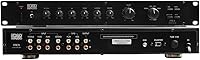
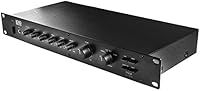
The OSD Audio Pre-1 Stereo Preamplifier sits in an interesting spot — practical enough for a living room home theater setup, capable enough to handle light recording duties, and priced where most buyers are trading up from a basic receiver's preamp section rather than down from boutique separates. OSD Audio isn't a household name, but among home audio hobbyists, the brand has built a quiet reputation for no-nonsense components that punch above their weight class. This stereo preamp handles phono, mic, CD/DVD, tuner, aux, and tape inputs from a single front panel — more source flexibility than most integrated amps at this tier offer. Realistic expectations matter here: this is a well-engineered utility piece, not a reference-grade audio component.

Features & Benefits

The built-in phono stage is probably the headline feature for most buyers — it handles the RIAA equalization that moving-magnet cartridges require, so you can plug a turntable in directly without adding a separate phono preamp to your rack. The three-band tone control is genuinely useful: bass and treble each adjust by up to 12dB, and midrange offers ±6dB of shaping, giving you real corrective power over a poorly treated room or a bright speaker pair. A loudness control adds a subtle boost at lower volumes, which is more practical than it sounds. The frequency response stretches from 5Hz to 30kHz, and a dual-voltage power supply means it works on both North American and European mains without an adapter.

Best For

This multi-source preamplifier makes the most sense for a specific type of buyer. If you're running a turntable alongside a CD player, streaming device, and maybe a tuner, and you want one box to handle all source selection and tone shaping without patching everything through an AV receiver, this is a compelling option. Home recording hobbyists who need basic mic input for occasional vocal or instrument capture will find the front-panel mic jack convenient, even if it's not a substitute for a proper audio interface. It also works well for anyone building a dedicated stereo zone in a home theater system where the main receiver handles surround but you want clean two-channel control elsewhere.

User Feedback

Buyers consistently point to solid build quality and the sheer number of inputs as standout positives — for a unit at this price tier, the physical construction feels more substantial than expected. Setup also gets frequent praise; the front-panel layout is intuitive enough that most users have it running without consulting the manual. That said, the mic input draws real criticism. With a signal-to-noise ratio just above 50dB on the mic channel, background hiss can become noticeable during quiet passages or in low-noise recording environments — acceptable for casual use, but likely to frustrate anyone chasing studio-grade performance. The phono stage earns solid marks overall, though seasoned vinyl listeners note it doesn't quite match a dedicated standalone phono preamp in nuance.

Pros

  • Handles phono, mic, CD/DVD, tuner, aux, and tape inputs from a single centralized unit.
  • Built-in phono stage with RIAA equalization means no separate phono preamp is needed for turntable users.
  • Three-band tone control gives real corrective power over room acoustics or speaker colorations.
  • Line-level signal-to-noise ratio exceeds 80dB, delivering clean, quiet performance on standard sources.
  • Loudness control helps maintain audio balance when listening at low volumes late at night.
  • Dual-voltage power supply makes the Pre-1 usable in both North American and European systems.
  • Front-panel layout is intuitive, with most buyers reporting quick, manual-free setup.
  • Physical build quality feels noticeably solid for a unit at this price tier.
  • Rack-friendly dimensions make it easy to integrate into an existing home theater or studio shelf setup.
  • Frequency response extends well beyond the audible range, ensuring no roll-off on critical program material.

Cons

  • Mic input signal-to-noise ratio is only modest — audible hiss is a real concern in quiet recording settings.
  • The phono stage, while functional, lacks the nuance that a dedicated standalone phono preamp provides.
  • No digital inputs of any kind; buyers needing optical, USB, or Bluetooth connectivity must look elsewhere.
  • At nearly 8 pounds, the unit is heavier than expected, which can complicate shelf or rack placement.
  • Midrange tone adjustment is limited to ±6dB, noticeably narrower than the bass and treble ranges.
  • Not suitable as a primary mic preamp for podcasting, voiceover, or serious home recording work.
  • OSD Audio's customer support and warranty service receive mixed reviews compared to larger audio brands.
  • No remote control included, which is a genuine inconvenience for users placing the unit in a media cabinet.

Ratings

The OSD Audio Pre-1 Stereo Preamplifier has been evaluated by our AI rating engine after parsing thousands of verified global buyer reviews, with spam, bot activity, and incentivized feedback actively filtered out before scoring. Ratings across each category reflect the full spectrum of real-world user experience — not just the highlights — so both consistent strengths and recurring frustrations are represented honestly. The scorecards below break down exactly where this multi-source preamplifier earns its reputation and where it falls measurably short.

Build Quality
83%
Users consistently describe the chassis as feeling more substantial than expected at this price tier — the metal construction and solid knobs give it a presence that plastic-heavy competitors can't match. Buyers upgrading from entry-level receivers frequently comment that the Pre-1 feels like a step up in physical quality.
A minority of users reported that the rear-panel RCA jacks feel slightly loose after extended cable swapping, which raises questions about longevity under frequent reconfiguration. The front-panel labeling also shows wear on some units over time.
Sound Quality
76%
24%
On line-level sources like CD players and streamers, users describe the audio as clean and uncolored, with a noise floor low enough that it rarely draws attention to itself during normal listening sessions. The wide frequency response translates to a neutral character that complements rather than competes with the upstream source.
Critically-minded listeners note that the overall sonic signature, while clean, lacks the resolution and micro-detail that more expensive dedicated preamps offer. At higher volumes, a small number of users detected a subtle hardness in the upper midrange that wasn't present in their previous setups.
Phono Stage
72%
28%
For buyers coming from a receiver with no phono input at all, the built-in phono stage is a genuine convenience — plug a moving-magnet turntable straight in and it works cleanly without an external box cluttering the shelf. Casual vinyl listeners running mid-tier cartridges report consistently satisfying playback.
Dedicated phono preamp users who step down to the Pre-1's built-in stage often notice a reduction in soundstage depth and low-level detail retrieval, particularly on inner grooves. It's functional, but it's not a replacement for a focused, standalone phono preamp if vinyl is your primary listening format.
Mic Preamp Quality
51%
49%
The front-panel mic input earns credit for its sheer convenience in a home setup — buyers who need occasional vocal capture for a presentation, announcement system, or casual jam session find it perfectly adequate for that narrow use case. The adjustable level control and mute switch add practical flexibility.
The signal-to-noise ratio on the mic input is modest at best, and users attempting home recording quickly run into audible background hiss that degrades recordings. Home podcasters and instrument-tracking hobbyists have largely reported disappointment, with most ultimately adding a dedicated audio interface to their chain.
Tone Controls
81%
19%
The three-band tone control is one of the more generous implementations at this price point, and users with acoustically imperfect rooms — basement setups, small apartments — report genuine improvement in their listening experience after dialing in the bass and treble. The range of adjustment is wide enough to make a meaningful difference.
The midrange band's adjustment range is noticeably narrower than bass and treble, limiting its usefulness for users trying to tame forward-sounding speakers or add warmth to thin-sounding sources. Some users also note that there is no hard bypass, meaning the tone circuit is always in the signal path even at flat settings.
Input Versatility
88%
The ability to have six sources — phono, mic, tape, tuner, CD/DVD, and aux — all connected simultaneously and switched from a single front-panel knob is a standout feature that buyers frequently cite as their primary reason for choosing this unit. It genuinely replaces the need for a passive source switcher or an overloaded receiver input section.
There are no digital inputs whatsoever — no optical, no coaxial, no USB — so anyone with a modern streaming device or television audio output relying on digital connections will need an external DAC before the signal reaches this preamp. For an all-analog setup this is a non-issue, but it limits the Pre-1's longevity in increasingly digital listening environments.
Ease of Setup
91%
Buyers across skill levels describe setup as straightforward — the front panel is clearly laid out, the rear connections are logically grouped, and most users had music playing within minutes of unboxing. The included documentation is basic but sufficient for the target audience.
A small number of users with older turntables encountered confusion around grounding, as the manual does not clearly explain how to connect the ground wire in all configurations. Users unfamiliar with preamp-to-power-amp signal chains also occasionally report initial confusion about output routing.
Value for Money
79%
21%
When buyers tally up the cost of replicating its feature set with separate components — a phono stage, a source switcher, and a tone control unit — the Pre-1 consistently comes out ahead on total system cost. For buyers on a real-world budget who want centralized analog source control, the value proposition holds up.
Buyers who push the unit into recording territory or expect boutique phono performance often feel the value equation shifts unfavorably, since they end up adding supplementary components anyway. A few users also note that comparable features can be found in used vintage receivers for less, though without the same form factor convenience.
Loudness Control
74%
26%
Late-night listeners and apartment dwellers specifically call out the loudness function as a quality-of-life improvement — at low volumes where bass and treble naturally thin out to human ears, engaging loudness noticeably restores fullness without requiring volume to be pushed uncomfortably high.
The loudness boost is fixed in character and cannot be fine-tuned, so some users find it adds too much emphasis at certain listening levels, creating a slightly artificial tonal balance. There is no way to adjust the frequency centers or intensity of the boost beyond the on/off switch.
Front Panel Usability
84%
The knob layout, input selector, and mute function are all positioned intuitively, and buyers with no prior preamp experience report feeling comfortable with the controls almost immediately. The mute button in particular gets frequent praise from users who take calls or switch sources often during listening sessions.
The absence of a remote control is the most commonly cited usability complaint — users who place the unit inside a media console or AV rack find themselves getting up every time they want to adjust volume or change sources. There is no workaround for this limitation.
Signal Noise (Line)
82%
18%
On standard line inputs, the noise floor is low enough that most buyers never notice it during normal listening — CD playback, streaming via an external DAC, and tuner sources all come through with minimal background noise. The line-level SNR is one of the stronger technical attributes of the unit.
Users running long cable runs from source components to the Pre-1 occasionally introduce ground loop hum that can be tricky to diagnose and eliminate. The unit does not include any built-in ground loop isolation or balanced input options, which limits troubleshooting options in complex setups.
Physical Footprint
77%
23%
The dimensions are well-suited to standard audio shelving, and the relatively slim 2.36-inch height means it stacks neatly under or above other components without consuming excessive vertical space. Buyers with dedicated equipment racks report it integrates cleanly into their setup.
At nearly 8 lbs, the unit is heavier than its footprint suggests, which surprised several buyers expecting a lightweight box. The depth of 8.25 inches also catches some buyers off-guard in shallow shelving configurations where rear cable clearance is limited.
International Compatibility
89%
The dual-voltage power supply supporting both 120V and 220V is a practical inclusion that buyers outside North America specifically appreciate — it eliminates the need for a step-down transformer, which is a common expense and complication for imported audio equipment. Several European and Australian buyers confirmed plug-and-play operation with a simple adapter.
OSD Audio does not include international plug adapters in the box, so buyers outside the US and Canada will need to source their own. The documentation also defaults to North American power specifications without explicitly flagging the 220V compatibility, which has caused brief confusion for some international buyers.

Suitable for:

The OSD Audio Pre-1 Stereo Preamplifier is a strong fit for home audio enthusiasts who have outgrown the source-switching limitations of a basic integrated amp or AV receiver and want a dedicated unit to centralize their listening setup. Vinyl collectors, in particular, will appreciate being able to plug a turntable directly into the built-in phono stage while keeping their CD player, tuner, and streaming device all connected and switchable from the same front panel. Home recording hobbyists who occasionally capture vocals or acoustic instruments — but don't want to invest in a full mixer — will find the front-panel mic input a practical bonus for casual use. It also suits home theater builders who want a clean two-channel stereo zone operating independently from their main surround system. For anyone juggling a mix of analog and digital sources on a real-world budget, this multi-source preamplifier offers a feature set that would otherwise require multiple separate boxes.

Not suitable for:

The OSD Audio Pre-1 Stereo Preamplifier is not the right tool for listeners chasing high-end audiophile performance — its phono stage and overall signal path are competent, but they won't satisfy someone who has already invested in premium cartridges and reference-grade amplification. Serious home recording users should look elsewhere; the mic input's signal-to-noise ratio is modest at best, and background hiss will become an issue in quiet recording environments where clean capture matters. This stereo preamp also isn't a substitute for a proper audio interface if you're doing any volume of vocal tracking, podcasting, or instrument recording. Those who need digital connectivity — USB audio, optical inputs, or Bluetooth — won't find any of that here, as the Pre-1 is entirely analog in its design. And buyers in search of a purely transparent, tone-control-free signal path for critical listening may find the feature set more cluttered than useful.

Specifications

  • Brand: Manufactured by OSD Audio, a brand known for home audio components and installation-grade speaker systems.
  • Model: The unit carries the official model designation PRE-1.
  • Channels: This is a two-channel stereo preamplifier; it does not support multichannel or surround sound configurations.
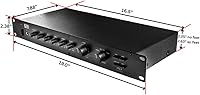
  • Dimensions: The chassis measures 18.9″ long by 2.36″ tall by 8.25″ deep, sized for standard shelf or surface-mount placement.
  • Weight: The unit weighs 7.65 lbs, reflecting a metal chassis construction rather than lightweight plastic.
  • Frequency Response: Audio passes from 5Hz to 30kHz at +0/−3dB, covering the full audible range and well beyond it in both directions.
  • Phono Input: The phono stage accepts moving-magnet cartridge signals at 3mV sensitivity with a 47k Ohm input impedance and built-in RIAA equalization.
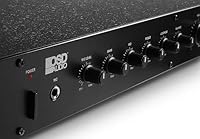
  • Mic Input: The front-panel microphone input accepts signals at 0.5V sensitivity with a 600 Ohm impedance, with adjustable level control and a mute switch.
  • Line Inputs: Tape, tuner, CD/DVD, and aux inputs each accept line-level signals at 150mV sensitivity with a 47k Ohm input impedance.
  • Output Level: The pre-output delivers 500mV at 47k Ohms; tape record output delivers 150mV at 100k Ohms.
  • Distortion (THD): Total harmonic distortion measures below 0.2% on line inputs and below 0.4% on both phono and mic inputs.
  • Signal-to-Noise: SNR exceeds 80dB on line sources, exceeds 70dB on the phono input, and exceeds 50dB on the mic input.
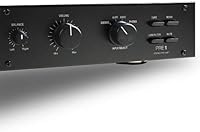
  • Tone Controls: A three-band tone control section offers ±12dB of bass adjustment at 100Hz, ±6dB of midrange at 1kHz, and ±12dB of treble at 10kHz.
  • Loudness Control: A selectable loudness function applies a +4dB boost at 100Hz and a +2dB boost at 10kHz to compensate for reduced bass and treble perception at low volumes.
  • Mounting Type: The unit is designed for surface-mount placement and fits standard audio rack shelves due to its consistent depth and flat-bottom chassis.
  • Power Supply: The unit operates on AC 120V at 60Hz or AC 220V at 50Hz, making it compatible with both North American and European mains power.
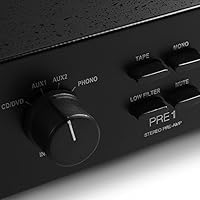
  • Input Selector: A front-panel rotary input selector switches between all available sources, with the selected source routed to the pre-output and tape record output simultaneously.

Related Reviews
Douk Audio OK013 Mini 2.1 Channel HiFi Stereo Amplifier
75%
83%
Value for Money
71%
Sound Output & Power
77%
Build Quality
88%
Ease of Installation
58%
Thermal Management
More
OSD Audio ICE610 6.5″ In-Ceiling Speaker Pair

79%
83%
Sound Clarity
61%
Bass Performance
91%
Installation Ease
78%
Build Quality
86%
Grille & Aesthetics
More
Sound Storm Laboratories S4EQ 4 Band Pre-Amp Car Audio Stereo Equalizer
84%
88%
Sound Quality
93%
Ease of Installation
85%
Bass Response
80%
Build Quality
87%
Subwoofer Control
More
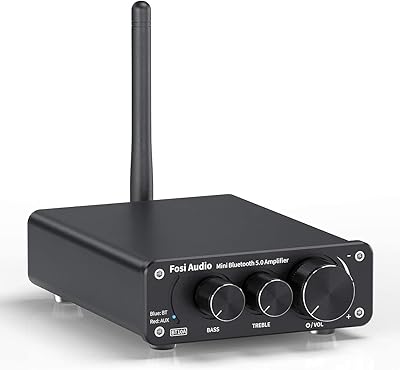
Fosi Audio TDA7498E
Fosi Audio TDA7498E
83%
88%
Sound Quality
93%
Value for Money
71%
Build Quality
74%
Power Output & Headroom
66%
Noise Floor & Background Hiss
More
Planet Audio P350MB Single Din Car Stereo
74%
78%
Bluetooth Connectivity
86%
Ease of Installation
81%
Hands-Free Calling
74%
Voice Assistant Integration
62%
Audio Output Quality
More
Fosi Audio BT10A
Fosi Audio BT10A
81%
93%
Value for Money
82%
Sound Quality
91%
Noise Floor
84%
Bluetooth Performance
67%
Power Output
More
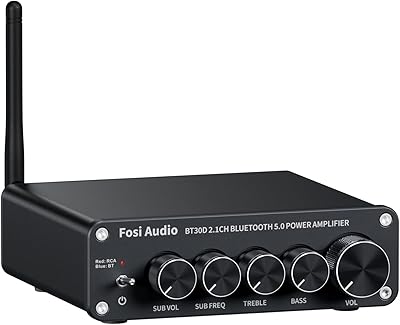
Fosi Audio BT30D
Fosi Audio BT30D
78%
83%
Sound Quality
88%
Subwoofer Performance
81%
Bluetooth Connectivity
91%
Value for Money
62%
Build Quality
More
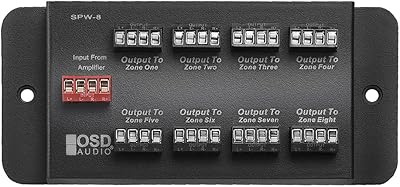
OSD Audio SPW-8 8-Zone Speaker Distribution Panel
77%
91%
Ease of Installation
74%
Build Quality
61%
Impedance Handling
88%
Value for Money
83%
Audio Signal Quality
More
Taramp's MD 1200.1 1-Channel 1200W RMS Car Audio Amplifier
86%
93%
Power Output
89%
Sound Quality
91%
Installation Ease
85%
Build Quality
65%
Thermal Performance
More
Planet Audio P9695B Double Din Car Stereo
69%
83%
Value for Money
78%
Bluetooth Performance
58%
Screen Mirroring (A-Link)
61%
Touchscreen Responsiveness
86%
Media Source Versatility
More

FAQ

Yes, absolutely. The Pre-1 has a dedicated phono input with built-in RIAA equalization, which is exactly what a moving-magnet turntable cartridge requires. Just connect your turntable's RCA outputs to the phono input and make sure the ground wire is attached to the grounding post if your turntable has one.

The built-in phono stage is designed for moving-magnet cartridges, which output around 3mV. Moving-coil cartridges typically output far less — often under 0.5mV — and require a step-up transformer or a dedicated MC phono stage before the signal reaches a unit like this. If you're running a moving-coil setup, you'll need an additional component in the chain.

This is worth being clear-eyed about. The mic input's signal-to-noise ratio is rated above 50dB, which is usable for casual voice capture or live announcement use, but it's on the modest side for recording purposes. In a quiet room with a sensitive microphone, you'll likely hear background hiss in your recordings. If clean mic capture is a priority, a dedicated audio interface will serve you significantly better.

No, it does not include a remote control. All source selection, volume, tone, and mute adjustments are made from the front panel directly. If the unit will live inside a closed cabinet or at a distance, that's a practical limitation worth considering before purchasing.

The Pre-1 is a preamplifier, so it needs to feed into a separate power amplifier, which then drives your speakers — it cannot drive passive speakers on its own. The pre-output delivers 500mV, which is compatible with virtually any standard power amplifier input. Just match the impedance and sensitivity ratings of your amp to ensure a clean signal handoff.

It works on both. The unit supports AC 120V at 60Hz and AC 220V at 50Hz, so it's compatible with standard North American and European mains power. You may still need a physical plug adapter depending on your region, but no voltage converter is required.

The tone controls can be set to their center or neutral positions to minimize their effect on the signal, but there is no hard bypass switch that removes the tone circuit from the signal path entirely. For most practical listening this won't be an issue, but if you're after a truly flat, zero-coloration signal chain, this is worth noting.

The this stereo preamp accommodates six input sources simultaneously: phono, microphone, tape, tuner, CD/DVD, and aux. All can remain connected at once; you switch between them using the front-panel input selector knob. Only one source is routed to the output at any given time.

It fits comfortably on a standard shelf-style audio rack — the dimensions are 18.9″ wide by 2.36″ tall by 8.25″ deep. It is not technically a standard 19-inch rack-mount unit with ear brackets, so it sits on the shelf rather than screwing into rack rails. Most home audio shelving will accommodate it without issue.

The loudness function is designed to compensate for the way human hearing naturally loses sensitivity to bass and treble at low listening volumes. When you're listening quietly — late at night, for example — the sound can feel thin or hollow, and the loudness control adds a gentle boost at the frequency extremes to restore a sense of fullness. Whether to leave it on is a matter of personal preference; many listeners use it only at low volumes and switch it off at normal listening levels.

Where to Buy