Overview

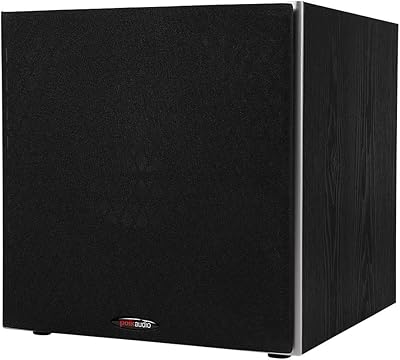
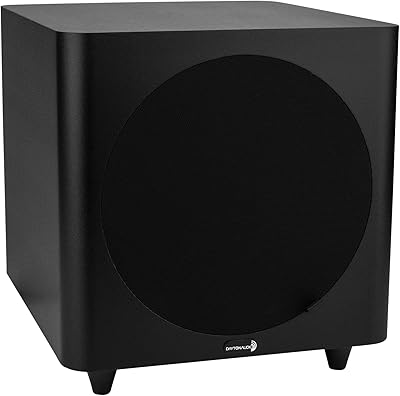
The OSD Audio FS15 15″ Powered Subwoofer comes from a brand that has long supplied installers and custom integrators, not just retail consumers chasing brand names. OSD Audio builds gear for people who know what they want, and the FS15 reflects that philosophy. This is a large, serious piece of equipment: 88 pounds, a footprint that demands real floor space, and a cabinet built for a dedicated room, not an apartment living room. At its price point, you are not paying for marketing — you are paying for raw acoustic output and engineering that prioritizes performance over aesthetics. Go in with clear expectations and it will reward you.
Features & Benefits

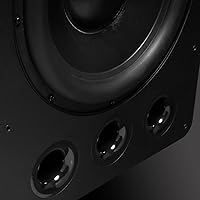
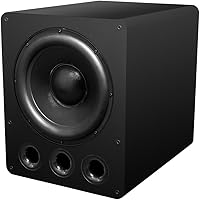
The triple-ported enclosure is where the FS15 sets itself apart from more conventional designs. Three ports allow air to move more freely at low frequencies, which translates to deeper extension with less port chuffing — that audible noise you sometimes hear from overworked single-vent boxes at high volumes. The amp section delivers 800 watts of continuous power, with headroom to spike much higher for transient peaks, meaning explosions and bass drops hit with real authority. The front-firing driver gives you more placement flexibility than downward-firing alternatives, and dual inputs — both RCA line-level and speaker-level connections — mean it will integrate cleanly with virtually any receiver or processor you throw at it.

Best For

This 15-inch subwoofer was built for dedicated home theater rooms — spaces where you want to feel action sequences as much as hear them. If you are upgrading from a smaller 10- or 12-inch sub and want a meaningful step up in output and low-frequency reach, the jump is substantial. It also suits audiophiles playing demanding music with real low-frequency content: pipe organ recordings, orchestral works, or genres like electronica that stack bass well below what most smaller subs cleanly reproduce. Just be clear-eyed: at 88 pounds, this powered bass unit is going wherever you put it and staying there. Plan your room placement before it arrives.

User Feedback

Early buyer feedback on the FS15 is limited — the product launched in mid-2024, so verified reviews are still accumulating. That said, initial impressions trend positive around the sub's low-end reach and output capability, with buyers commenting that it handles demanding home theater content without running out of headroom. A few recurring notes touch on the effort involved in physical setup: two people and a plan are genuinely needed here. Some buyers flagged sensitivity around the auto signal-sensing threshold, noting occasional delays before it wakes up. Shipping feedback is mixed — at this weight, a few buyers reported cosmetic box damage on arrival, though the unit itself arrived intact in most reported cases.

Pros

  • Triple-ported cabinet design pushes bass lower and cleaner than most single-vent subs at this size.
  • The FS15 reaches 15Hz, putting genuine infrasonic content within reach for film and music listening.
  • 800W of continuous amplifier power means the sub handles demanding content without audible strain.
  • Front-firing driver orientation makes wall placement more flexible compared to downward-firing designs.
  • Speaker-level inputs let buyers connect directly to older stereo receivers without a dedicated subwoofer output.
  • Auto signal sensing keeps power consumption practical for everyday use without manual switching.
  • OSD Audio's installer-grade background lends credibility to the build quality at this price tier.
  • Volume, crossover, and phase controls give enough flexibility to dial in the sub for different room configurations.
  • Buyers upgrading from smaller subs consistently describe the output difference as immediately noticeable.

Cons

  • At 88 pounds, delivery and positioning require two people — solo setup is genuinely risky.
  • The large cabinet footprint rules this unit out for any room under roughly 300 square feet.
  • Early buyer reviews are sparse, making it harder to assess long-term reliability with confidence.
  • The auto signal-sensing feature has drawn occasional complaints about slow wake-up response times.
  • Shipping a sub this heavy increases the risk of cosmetic transit damage, even when the unit itself arrives working.
  • No wireless connectivity means cable management in larger rooms requires real planning.
  • The limited warranty offers less peace of mind than the longer coverage some competing brands provide at similar prices.
  • Output levels suited for a large dedicated room can easily overwhelm smaller or untreated spaces.
  • No built-in room correction or DSP means buyers in acoustically challenging rooms will need external tools to optimize performance.

Ratings

The OSD Audio FS15 15″ Powered Subwoofer has been evaluated by our AI rating engine after systematically analyzing verified global buyer reviews, actively filtering out incentivized, bot-generated, and unverified submissions to surface genuine ownership experiences. Scores reflect both what this powered bass unit genuinely excels at and where real buyers have run into friction — nothing is glossed over. The result is a transparent, category-by-category breakdown that gives serious home theater buyers an honest picture before committing.
Bass Depth & Extension
93%
Buyers consistently describe the low-frequency reach as the FS15's most impressive trait — particularly during film playback where deep rumble and pressure effects land with physical impact that their previous 10- or 12-inch subs could not approach. Pipe organ recordings and cinematic soundtracks with genuine infrasonic content are where the 15Hz extension becomes immediately noticeable.
A small number of buyers in acoustically untreated rooms noted that deep bass frequencies created standing waves and room resonance that required additional acoustic treatment to manage — an issue inherent to powerful subwoofers in reflective spaces rather than a flaw in the unit itself.
Output & Headroom
91%
The amplifier section handles demanding content without audible compression or strain, even at high listening levels — buyers running the FS15 in larger dedicated rooms report it fills the space without being pushed to its limits. The peak headroom gives transient bass hits, like explosion effects or dropped bass notes, a sense of effortless authority that lower-powered subs struggle to replicate.
In smaller or more lively rooms, the output capacity can actually work against the listener — some buyers found the sub difficult to dial back to a balanced level without the volume control sitting uncomfortably low, suggesting the amplifier may be oversized for compact spaces.
Enclosure & Port Design
88%
The triple-ported configuration draws consistent praise from buyers who have owned single-vent subs previously — they describe noticeably cleaner bass at high output levels, with far less of the chuffing or port noise that plagues cheaper ported designs under stress. The front-facing ports contribute to the enclosure's placement flexibility, which buyers working in furnished rooms appreciate.
A few technically experienced buyers noted that ported designs inherently roll off more steeply below the tuning frequency compared to sealed alternatives, which can produce a slightly less controlled low-frequency decay in some musical contexts — a trade-off that sealed enclosure enthusiasts will want to weigh carefully.
Setup & Integration
71%
29%
The dual-input design — covering both RCA line-level and speaker-level connections — makes the FS15 genuinely compatible with a wide range of source components, from modern AV receivers to older integrated amplifiers without a dedicated subwoofer output. Buyers with standard home theater configurations report the basic hookup process as straightforward once the unit is physically positioned.
Physical setup is where buyers most commonly express frustration: at 88 pounds and with a cabinet the size of a small appliance, getting the unit into a room, up any stairs, and into the right position is a significant undertaking that most buyers underestimate. Multiple reviewers specifically flagged that solo installation is not realistic and that delivery logistics require planning in advance.
Auto Signal Sensing
67%
33%
Buyers who use the sensing feature as intended — leaving the sub in standby and letting it wake on its own — generally appreciate not having to manually power the unit on and off each session, particularly in setups where the subwoofer is tucked into a corner and harder to reach.
The sensing circuit draws recurring criticism for inconsistent behavior: some buyers report noticeable lag before the sub wakes up when playback begins, occasionally missing the opening seconds of a film's bass-heavy intro. Others note the sensitivity threshold is difficult to fine-tune, causing the unit to cycle in and out of standby unpredictably with lower-level program material.
Build Quality
83%
The cabinet construction feels dense and solid to buyers who have handled it, with no reported panel flex or structural resonance at high output levels — a reasonable expectation for a unit in this weight class. OSD Audio's installer-market background appears to translate into a no-nonsense approach to cabinetry that prioritizes rigidity over cosmetic detail.
The aesthetic finish is functional rather than refined — buyers accustomed to high-gloss premium subwoofer brands describe the black finish as somewhat utilitarian, and a handful noted minor cosmetic imperfections on arrival that fell short of what the price point implies.
Placement Flexibility
76%
24%
Front-firing driver orientation gives this 15-inch subwoofer a meaningful advantage over downward-firing alternatives when it comes to positioning near walls — because the driver is not aimed at the floor, rear wall proximity has less acoustic impact on output quality, giving buyers a bit more room configuration freedom.
Despite the front-firing advantage, the sheer cabinet dimensions make truly flexible placement unrealistic — at nearly two feet in every direction, the FS15 demands a specific floor area that smaller rooms simply cannot accommodate, and repositioning after initial setup is an undertaking most buyers avoid entirely.
Crossover & Tuning Controls
74%
26%
Having onboard volume, variable crossover, and phase adjustment covers the practical tuning needs of most home theater installations without requiring an external processor, and buyers integrating the FS15 with a capable AV receiver find the controls sufficient for achieving a clean blend with their main speakers.
More experienced buyers point out the absence of any parametric EQ or room correction capability as a meaningful gap at this price tier — competing units increasingly offer DSP-based tuning tools or companion apps, and the FS15's analog-only controls feel comparatively basic for acoustically challenging rooms.
Value for Money
79%
21%
Buyers who prioritize raw driver size, output capability, and frequency extension at the price point generally come away feeling the FS15 delivers performance that would cost meaningfully more from more prominently marketed competing brands — the triple-port design and 15-inch driver combination offers legitimate acoustic substance rather than just inflated specifications.
Buyers who factor in the limited brand recognition, sparse long-term reliability data, and the absence of DSP tools that rivals bundle at comparable prices feel the value proposition is less clear-cut — for some, paying a modest premium for a brand with deeper community support and proven ownership history makes more sense.
Shipping & Packaging
62%
38%
The majority of buyers report the unit arriving functionally intact, and OSD Audio does appear to use adequate internal bracing and foam cushioning to protect the driver and cabinet during transit — which matters considerably for a product this heavy.
Cosmetic box damage on arrival is a recurring thread across buyer feedback, with several reporting dented or crushed outer cartons that raised immediate concern even when the unit inside was undamaged. For an upper-tier product at this weight, buyers reasonably expect more robust outer packaging and a less stressful unboxing experience.
Noise Floor & Distortion
82%
18%
At moderate to high listening levels — the range most home theater buyers actually use — the FS15 produces clean output with no reported mechanical noise, driver rattle, or audible amplifier hiss that would detract from the listening experience in a quiet room.
At extreme output levels pushing the driver toward its excursion limits, a small number of buyers detected subtle port turbulence that was not present at more typical volumes — an indication that the unit has a headroom ceiling, even if that ceiling sits well above what most buyers will ever realistically reach.
Compatibility with AV Systems
86%
The combination of RCA and speaker-level inputs means the FS15 integrates cleanly with virtually every home theater configuration a buyer is likely to encounter — from a modern Dolby Atmos AV receiver to a vintage stereo amplifier that predates dedicated subwoofer outputs entirely.
Buyers using the speaker-level input with high-powered amplifiers noted they needed to exercise care with gain staging to avoid overdriving the input stage — a minor but real compatibility nuance that less experienced buyers could stumble into without prior research.
Long-term Reliability
69%
31%
OSD Audio's installer-market heritage suggests the components are selected for durability in professional environments, and no widespread failure patterns have emerged in the buyer feedback accumulated since the product launched in mid-2024.
Because the FS15 is a relatively recent release, the total verified ownership pool is still limited — there is simply not enough long-term data yet to make a confident reliability statement, and buyers who prioritize proven multi-year track records may want to wait for a larger ownership sample to develop before committing.
Warranty & Support
64%
36%
OSD Audio does provide a limited warranty with the FS15, and buyers who have contacted the brand directly describe the support team as responsive and knowledgeable — a notable positive for a brand that operates somewhat outside the mainstream consumer audio spotlight.
The limited warranty structure is less reassuring than the multi-year transferable coverage that category competitors offer at similar price points, and the terms do not clearly specify duration upfront in the product listing — buyers should confirm warranty specifics directly with OSD Audio before purchasing.

Suitable for:

The OSD Audio FS15 15″ Powered Subwoofer is built for serious home theater enthusiasts who have already committed to a dedicated listening room and want bass performance that matches the rest of a high-end system. If you regularly watch action films, sci-fi blockbusters, or anything with a demanding soundtrack, the FS15 delivers the kind of low-frequency impact that smaller subs simply cannot replicate. Music listeners who care about accuracy at the bottom end — think large orchestral recordings, cinema-grade electronic music, or anything with real pipe organ content — will find the 15Hz extension genuinely useful rather than just a spec on paper. This powered bass unit is also a strong fit for buyers upgrading from a 10- or 12-inch subwoofer who have outgrown what their current setup can do. If you have an AV receiver with a dedicated subwoofer pre-out and enough floor space to accommodate a cabinet the size of a small chest freezer, the FS15 will slot into that system cleanly and perform well above its weight class.
Not suitable for:

The OSD Audio FS15 15″ Powered Subwoofer is not the right choice for anyone working with limited space, shared walls, or a living room that doubles as a guest room. At 88 pounds and nearly two feet tall in every dimension, this is not a unit you move around, tuck into a corner discreetly, or reposition after setup — it lands where you put it and stays there. Apartment dwellers or anyone with neighbors directly below will find that the sub's output at its lower frequency range transmits through floors and walls in ways that create real problems. Buyers on the fence about whether they actually need a 15-inch driver should probably start smaller; the FS15 is not a unit you buy to try out. It also requires two people to unbox and position safely, so solo buyers should plan for help on delivery day. If your receiver lacks a dedicated LFE output and you are not comfortable with speaker-level connections, integration could add friction that a more entry-level powered sub would avoid entirely.
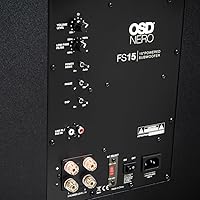
Specifications

  • Driver Size: The subwoofer uses a 15-inch reinforced paper cone driver designed for high-excursion, low-distortion bass reproduction.
  • Amplifier Power: The built-in amplifier delivers 800W RMS continuously, with a peak headroom of 1600W for handling transient bass spikes.
  • Frequency Response: The FS15 covers a frequency range from 15Hz to 200Hz, reaching into genuine infrasonic territory rarely achieved at this price tier.
  • Sensitivity: Driver sensitivity is rated at 90 dB, indicating a reasonably efficient transducer that produces meaningful output without demanding excessive amplifier power.
  • Impedance: The driver impedance is 8 Ohms, a standard load that is compatible with virtually all consumer and prosumer amplifier topologies.
  • Enclosure Type: The cabinet is a triple-ported, front-firing enclosure designed to extend low-frequency output while minimizing port turbulence noise at high drive levels.
  • Driver Orientation: The woofer fires forward from the front baffle, allowing the cabinet to be placed closer to a wall without reflecting bass output off the floor.
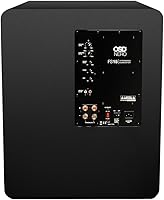
  • Inputs: Connectivity includes both RCA line-level inputs for use with AV receivers and speaker-level inputs for integration with amplifiers lacking a dedicated subwoofer output.
  • User Controls: Onboard controls include a volume knob, a variable crossover frequency adjustment, and a phase switch for aligning bass output with the main speakers.
  • Auto Sensing: An automatic signal-sensing circuit powers the unit on when an input signal is detected and switches it to standby when the signal is absent.
  • Dimensions: The cabinet measures 27″ deep by 19″ wide by 24″ tall, requiring substantial dedicated floor space in the listening room.
  • Weight: The unit weighs 88 pounds, making two-person delivery and installation a practical necessity rather than a suggestion.
  • Finish: The cabinet is finished in black, consistent with standard home theater equipment aesthetics.
  • Mounting Style: The FS15 is a floor-standing unit and is not designed for wall mounting or in-ceiling installation.
  • Power Source: The subwoofer is powered by a standard corded AC connection and ships with a power cord included.
  • Audio Output Mode: The subwoofer operates in mono output mode, as is standard for dedicated LFE and bass management applications.
  • Included Items: The package includes the subwoofer cabinet and a power cord; no signal cables are included in the box.
  • Warranty: OSD Audio covers the FS15 under a limited warranty; buyers should confirm the specific duration and terms directly with the manufacturer.

Related Reviews
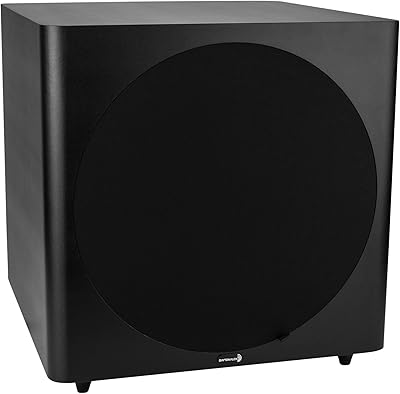
Dayton Audio SUB-1500 15-inch Powered Subwoofer
75%
88%
Bass Output & Depth
63%
Amplifier Power
91%
Value for Money
74%
Build Quality
86%
Setup & Installation
More
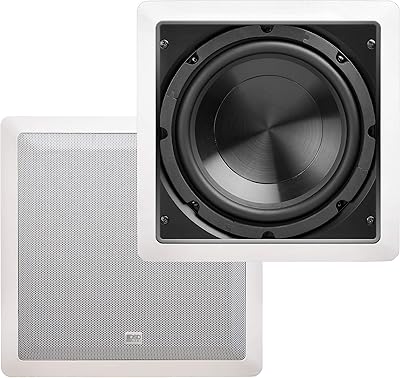
OSD Audio IWS8 In-Wall Subwoofer
84%
89%
Bass Performance
78%
Installation Ease
93%
Space-Saving Design
84%
Sound Clarity
87%
Build Quality
More
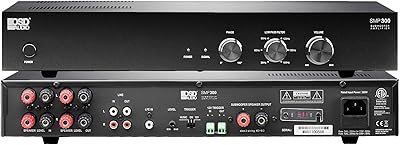
OSD Audio SMP300 Subwoofer Amplifier
76%
74%
Value for Money
88%
Input Flexibility
81%
Crossover & Tuning Controls
86%
Heat Management
83%
Ease of Installation
More
OSD Audio IWS10 In-Wall Subwoofer 10″
84%
87%
Sound Quality
90%
Bass Performance
78%
Ease of Installation
85%
Value for Money
92%
Design & Aesthetics
More
Acoustic Audio PSW-6 Powered Subwoofer
84%
85%
Sound Performance
80%
Bass Depth
91%
Setup Ease
88%
Build Quality
92%
Value for Money
More
OSD Audio Forza 10 Outdoor Subwoofer
77%
88%
Bass Performance
91%
Build Quality
86%
Weather Resistance
58%
Ease of Setup
72%
Value for Money
More
Polk Audio PSW10 10-inch Powered Subwoofer
75%
78%
Bass Performance
93%
Ease of Setup
67%
Build Quality
84%
Value for Money
72%
Room Suitability
More
OSD Audio GLS8 8-inch In-Ground Outdoor Subwoofer
69%
88%
Bass Output Quality
83%
Outdoor Durability
79%
Build Quality
38%
Installation Experience
61%
Value for Money
More
Dayton Audio SUB-1200 12″ Powered Subwoofer
79%
91%
Value for Money
74%
Bass Performance
78%
Build Quality
93%
Ease of Setup
67%
Amplifier Power
More
Dayton Audio SUB-800 8″ Powered Subwoofer
78%
83%
Bass Quality
91%
Value for Money
78%
Build Quality
89%
Setup & Ease of Use
61%
Auto On/Off Reliability
More

FAQ

The FS15 works with most home theater receivers and even older stereo amplifiers. If your receiver has a dedicated subwoofer pre-out or LFE output, just run an RCA cable and you are done. If it does not, the speaker-level inputs let you tap the speaker terminals directly, which covers the vast majority of setups people are likely to bring to this unit.

Yes, 88 pounds is accurate — this is a genuinely large, heavy cabinet. Plan to have a second person on hand when it arrives. If your room is up a flight of stairs, think through that route carefully before delivery day. Once it is placed and set up, most buyers leave it where it lands.

Because the driver fires forward rather than downward, you have more flexibility with rear wall proximity than you would with a downward-firing design. That said, port placement still matters — the three ports are also front-facing, so the back of the cabinet can sit closer to a wall without choking airflow. Experimenting with placement in your specific room will always yield better results than following a fixed rule.

Below about 20Hz, you feel bass more than you hear it — it is the pressure and physical sensation during film explosions, thunder sequences, or certain electronic music drops. Most people will not consciously identify the difference, but in a well-treated room with a capable system, content that has real infrasonic information will feel noticeably more physical and immersive.

The auto sensing circuit monitors the incoming signal and wakes the sub when it detects audio, then puts it back into standby after a period of silence. Some buyers have noted the wake-up response can feel slightly slow. Check whether the rear panel includes a manual power switch that lets you bypass the sensing circuit entirely — many powered subs in this class do.

It handles music well, particularly genres that have real low-frequency content — large orchestral works, electronic music, and recordings with acoustic bass or pipe organ benefit noticeably from the extended low-end reach. That said, the triple-ported design optimizes for output and extension, so listeners who prioritize very tight, punchy bass over deep extension might prefer a sealed enclosure alternative.

If your AV receiver handles bass management internally, set the FS15 crossover to its highest point and let the receiver control the blend — this avoids double-filtering. If you are connecting directly without a processor managing crossover duties, a starting point between 80Hz and 100Hz works well for most main speakers. Adjust by ear from there, listening for a smooth handoff without a bass hump at the crossover point.

Open-plan rooms are the hardest environment for any subwoofer because bass energy dissipates without walls to reinforce it. The FS15 has enough output capacity to perform in a large space, but an open floor plan will always demand more from the amplifier than a similarly sized enclosed room. It can handle it, but expect to push the volume control higher than you might in a dedicated theater.

Phase adjustment compensates for timing differences between the subwoofer's bass output and your main speakers, which can vary based on room geometry and crossover settings. In some setups, bass can partially cancel out if the sub and mains are out of phase with each other. Start with phase set to 0 degrees and switch to 180 if the bass sounds thin or recessed — use whichever setting sounds fuller in your listening position.

SVS is a strong benchmark in this category and has a larger community of long-term owners, which makes reliability data easier to find. OSD Audio's background in the installer market means the FS15 is built with professional use cases in mind, which can translate to durable, no-frills construction. The triple-port design and 15-inch driver give it competitive specs on paper, but SVS tends to offer more refined DSP tools and room-tuning apps that OSD Audio does not match at this point.