Overview

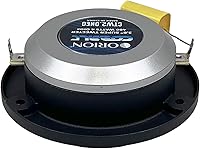
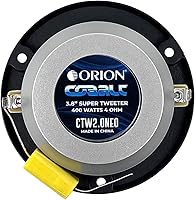
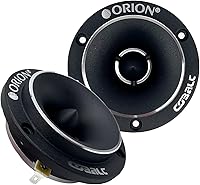
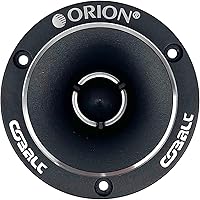
The ORION Cobalt CTW2.0NEO 3.8″ Neodymium Tweeter Pair represents Orion's entry into their Cobalt line — a series that has long served as a solid starting point for budget-conscious car audio builds rather than a flagship offering. What separates these Orion tweeters from run-of-the-mill factory replacements is the 3.8-inch bullet form factor paired with a neodymium magnet, a combination you rarely find at this price. The aluminum diaphragm is designed for tight, clear high-frequency reproduction, and the fact that you get a pair with a built-in crossover included means you're not hunting down additional components just to get up and running.
Features & Benefits

The headline power spec — 100W RMS at 4 ohms — is genuinely usable headroom for pairing with most aftermarket amps in this budget tier, though the 400W figure is a burst/peak rating, not something you'll sustain continuously. The neodymium magnet delivers stronger magnetic force in a lighter, more compact housing than ceramic alternatives, which matters when you're trying to fit these into a tight A-pillar or door panel. The 1-inch voice coil keeps transient response quick and accurate in the upper registers. At louder volumes, the stiff aluminum diaphragm handles the extra demand noticeably better than softer mylar cones would, keeping the sound from getting harsh or muddled.

Best For

The Cobalt CTW2.0NEO pair hits a clear sweet spot for DIY car audio upgrades on a tight budget. If you're pulling out factory tweeters that never had much definition to begin with, these will feel like a meaningful step up — especially for listeners who like their vocals forward and their acoustic guitar strings to ring clearly. The built-in crossover removes a real barrier for installers who don't want to spec out a separate passive crossover network. Compact vehicles benefit from the bullet profile since there's no shortage of creative mounting spots. That said, this tweeter set is not aimed at high-end audiophile builds — it fits best in a modest component system or as a standalone upgrade alongside decent full-range speakers.

User Feedback

Owners of these Orion tweeters consistently point to two things: the clarity of the high end and how straightforward the install is. A 4.8-star average across nearly 80 ratings is notably high for this category, where buyers tend to be picky. Most of the praise centers on vocal clarity and a clean top end that holds up at moderate to higher volume levels. On the critical side, a handful of users mention that sensitivity matching can take some adjustment, and those who push the system hard occasionally find the highs a touch bright for extended listening. Longevity comments are generally positive, though the sample size is small enough that long-term durability remains a question worth watching over time.

Pros

  • Noticeable clarity upgrade over factory tweeters, especially for vocals and acoustic instruments.
  • Built-in crossover simplifies installation significantly — no extra components to source or wire.
  • Neodymium magnet delivers strong performance in a compact, lightweight housing.
  • Aluminum diaphragm keeps distortion low even when the volume climbs.
  • Bullet profile offers flexible mounting options including A-pillars, doors, and kick panels.
  • Sold as a ready-to-install pair, which makes the out-of-box experience straightforward for DIYers.
  • 100W RMS power handling pairs well with most entry-level and mid-range aftermarket amplifiers.
  • 4.8-star average rating across verified buyers reflects consistently positive real-world satisfaction.
  • Compact size makes these Orion tweeters easy to fit in smaller vehicles without major panel modifications.
  • Frequency response starting at 120 Hz pairs well with a broad range of mid-range drivers.

Cons

  • Tonal brightness can become fatiguing during long listening sessions at high volumes.
  • Sensitivity matching with higher-end mid-range drivers may require tuning or level adjustment.
  • The 400W max spec is a burst figure — the real continuous rating is 100W, which can mislead buyers.
  • Long-term durability data is limited given the relatively small number of reviews available.
  • Built-in crossover is fixed and non-adjustable, which limits fine-tuning for more demanding builds.
  • Not suitable for high-power systems where a more robust, standalone crossover would be preferred.
  • No weatherproofing means installation is restricted strictly to interior cabin locations.
  • Build quality, while adequate for the price tier, does not inspire confidence for heavy daily use over years.

Ratings

Our AI rating system analyzed verified global buyer reviews for the ORION Cobalt CTW2.0NEO 3.8″ Neodymium Tweeter Pair, filtering out incentivized, duplicate, and bot-generated feedback to surface what real users consistently experienced. The scores below reflect both the genuine strengths that made buyers happy and the friction points that caused frustration — nothing is glossed over. You'll find these Orion tweeters score well where it matters most for budget car audio builds, with a few honest trade-offs worth knowing before you buy.

Sound Clarity
88%
For a budget-tier tweeter, buyers consistently report that vocal definition and instrument separation are noticeably better than factory-installed options. Listeners enjoying acoustic playlists or vocal-heavy tracks on daily commutes describe the high end as crisp and detailed without sounding thin or hollow.
At higher volumes the clarity advantage starts to fade, with some users noting the sound can become overly forward or edgy on tracks with heavy treble content. This is a limitation of the aluminum diaphragm's natural character rather than a defect, but it is worth knowing if you regularly push the volume.
Value for Money
91%
Buyers repeatedly call these Orion tweeters one of the smartest budget upgrades they've made, particularly given that the crossover is included in the box. Getting a neodymium-magnet tweeter pair with a built-in crossover at this price point is genuinely hard to match in the entry-level segment.
A small number of reviewers feel the packaging and included hardware feel a step below the price, and a few noted that long-term value depends heavily on durability — which remains somewhat unproven given the limited review volume over extended periods.
Ease of Installation
89%
The built-in passive crossover removes a significant barrier for DIY installers, eliminating the need to source or wire a standalone unit. Multiple buyers with modest car audio experience mention completing a clean install in a single afternoon without professional help.
A handful of users found that getting a snug, rattle-free mount required some improvisation depending on the vehicle's panel material. The bullet form factor, while flexible, still demands creative problem-solving in tighter door locations on some car models.
Build Quality
72%
28%
The aluminum diaphragm and neodymium magnet give the hardware a noticeably more substantial feel than the plastic-heavy tweeters typically found in this price range. Buyers generally describe the physical construction as solid enough for daily in-car use.
The housing and mounting hardware feel functional rather than refined, and a few users raised questions about how well these would hold up to years of daily vibration and heat cycling inside a car cabin. Long-term durability data is simply too limited right now to give a fully confident assessment.
High-Frequency Performance
86%
The 120 Hz to 10 kHz frequency range means these Orion tweeters cover the upper midrange as well as the treble, which pairs well with a dedicated woofer or mid-range driver. Buyers note that cymbal shimmer, string instruments, and breathy vocals all come through with good definition.
The upper-treble response has a slight brightness bias that not everyone finds neutral, particularly at louder listening levels. Buyers with a preference for warmer, more relaxed highs — typical of silk dome tweeters — may find the aluminum character a bit too sharp for extended listening.
Crossover Performance
83%
The included passive crossover does its core job reliably, rolling off the low end before it reaches the tweeter and protecting the driver from frequencies it wasn't designed to handle. Most installers find it functions cleanly without any audible filtering artifacts in normal use.
The crossover is fixed and non-adjustable, which limits tuning flexibility for buyers who want to fine-dial the crossover point to match their specific mid-range driver. Those building more advanced systems will likely outgrow it and want a proper external crossover with adjustable slope settings.
Mounting Flexibility
81%
19%
The cylindrical bullet shape genuinely opens up mounting locations that flush-mount dome tweeters can't access — A-pillars, dash corners, and kick panels are all viable options with minimal modification. Several buyers specifically mention the flexibility as a deciding factor in choosing this tweeter set.
The bullet profile, while versatile, does sit proud of the surface it mounts to, which can look bulky in some cabin contexts compared to a clean flush-mount installation. In vehicles with very limited panel depth, the protruding shape may also interfere with door panels or trim when closed.
Power Handling
79%
21%
The 100W RMS rating at 4 ohms gives this tweeter set comfortable headroom when paired with most entry-level to mid-range aftermarket amplifiers. Buyers running 50 to 80W RMS per channel report no stress or distortion issues during normal listening sessions.
The 400W peak figure misleads some buyers into pairing these with high-wattage amplifiers that push well beyond the 100W RMS ceiling, which risks driver damage over time. Clearer expectation-setting around the RMS versus peak distinction would prevent several of the reliability concerns raised in user feedback.
Tonal Balance
74%
26%
For pop, hip-hop, and acoustic music, the Cobalt CTW2.0NEO pair delivers a punchy, energetic top end that suits the character of those genres well. Buyers who listen primarily to these styles report that the tweeter handles their music with satisfying presence and energy.
Classical listeners and jazz fans who prefer a more neutral, recessed treble presentation tend to find the tonal balance too aggressive. The forward-leaning character that works well for modern pop becomes a liability when the recording itself is already bright or detail-heavy.
Sensitivity & Level Matching
68%
32%
In straightforward two-way setups with a standard aftermarket mid-range driver, most buyers report that level balancing is manageable without an external processor. The sensitivity is adequate for head-unit or modest amplifier pairings without extreme gain adjustments.
Matching these Orion tweeters to higher-sensitivity mid-range drivers can require noticeable gain reduction at the amplifier, and without a dedicated L-pad or adjustable crossover, some users end up with an unbalanced soundstage. This is a recurring friction point for buyers building more carefully tuned systems.
Packaging & Accessories
66%
34%
The inclusion of the crossover as a standard in-box accessory is a practical positive that genuinely differentiates this set from bare-tweeter competitors at the same price point. The pair format also means you're ready to install both channels without a second purchase.
Beyond the crossover, the accessory kit is minimal — mounting hardware options are limited and the documentation included is sparse, which leaves less experienced installers searching online for guidance. The packaging itself feels budget-grade and offers little reassurance about how well the product was protected in transit.
Longevity & Durability
63%
37%
Users who have owned these Orion tweeters for six months to a year generally report no functional degradation, and the aluminum diaphragm is inherently less susceptible to humidity warping than mylar alternatives under normal indoor conditions.
The overall review pool is still too small and too new to draw confident conclusions about multi-year durability. A few users have noted concerns about the mounting hardware loosening over time due to vehicle vibration, which is something to monitor after installation.
Aesthetic & Profile
77%
23%
The bullet shape has a purposeful, aggressive look that fits well in sport-oriented or modified vehicle interiors where a visible tweeter is part of the visual build. Several buyers specifically mention liking the look mounted on their A-pillars.
In stock or understated interiors, the cylindrical profile can look out of place compared to a low-profile flush-mount tweeter that blends into the panel. This is a purely subjective trade-off, but worth considering if cabin aesthetics are a priority for your build.

Suitable for:

The ORION Cobalt CTW2.0NEO 3.8″ Neodymium Tweeter Pair is a natural fit for car audio enthusiasts who are tired of flat, lifeless factory tweeters but aren't ready to spend big on a high-end component system. If you're building out a budget-to-mid-range audio setup — say, pairing a modest amplifier with aftermarket mid-range speakers — these Orion tweeters slot in cleanly without requiring a separate crossover purchase, which is a genuine time and money saver for DIY installers. Listeners who favor genres like acoustic, pop, or vocals will notice an immediate improvement in definition and presence at the top end. The compact bullet profile also makes this tweeter set a smart choice for smaller vehicles or anyone working with limited door or pillar real estate. For the value-focused builder who wants a meaningful upgrade without overcomplicating the install, this is a very sensible buy.
Not suitable for:

The ORION Cobalt CTW2.0NEO 3.8″ Neodymium Tweeter Pair is firmly an entry-level product, and buyers expecting audiophile-grade resolution or studio-accurate soundstaging will come away disappointed. These Orion tweeters are not the right tool if you're assembling a high-power, high-fidelity system around a serious amplifier — at sustained high volumes, the brightness can become fatiguing, and sensitivity matching with premium mid-range drivers may require additional tuning. The 400W figure on the box is a peak burst rating, not continuous output, so anyone doing the math for a high-wattage build needs to plan around the 100W RMS spec instead. Enthusiasts who already own a quality passive crossover network or a component set with its own dedicated crossover will find the built-in crossover redundant rather than helpful. This tweeter set is also not intended for outdoor, marine, or any non-automotive environment given its indoor-only design.
Specifications

  • Speaker Type: These are surface-mount bullet tweeters designed specifically for car audio installations.
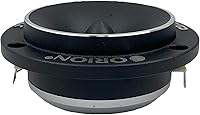
  • Driver Size: Each tweeter measures 3.8 inches in diameter, using a cylindrical bullet form factor.
  • Magnet Type: A neodymium magnet is used in each driver, providing stronger magnetic flux in a lighter package than ceramic alternatives.
  • Diaphragm Material: The diaphragm is constructed from aluminum, which is stiffer and lighter than mylar, helping reduce distortion at higher output levels.
  • Voice Coil: Each driver uses a 1-inch voice coil that supports accurate transient response across the high-frequency range.
  • Power Handling: Continuous (RMS) power handling is rated at 100W per pair at 4 ohms — this is the figure that matters for real-world amplifier matching.
  • Peak Power: The peak burst rating reaches 400W maximum, which reflects short-duration transient handling rather than sustained output.
  • Impedance: Both tweeters are rated at 4 ohms, which is compatible with the vast majority of aftermarket car audio amplifiers and head units.
  • Frequency Response: These Orion tweeters reproduce frequencies from 120 Hz up to 10 kHz, making them suitable for pairing with a dedicated mid-range driver.
  • Built-in Crossover: A passive crossover is included with the set, filtering out low frequencies before they reach the tweeter to protect the driver and simplify wiring.
  • Sold As: The package includes two tweeters sold as a pair, ready for stereo left and right channel installation.
  • Mounting Style: The bullet profile supports flexible surface mounting in locations such as doors, A-pillars, dash corners, or kick panels.
  • Power Source: These tweeters are designed to operate on a 12V DC vehicle electrical system, standard for automotive audio applications.
  • Audio Driver Type: The driver type is dynamic, which is the conventional moving-coil design common across car audio tweeters in this class.
  • Shape: The housing is cylindrical in shape, consistent with the super bullet tweeter form factor.
  • Indoor Use: These tweeters are rated for indoor use only and are not weatherproof or sealed for outdoor, marine, or moisture-exposed environments.
  • Warranty: Orion provides a limited warranty with this product; buyers should confirm current terms directly with the manufacturer or point of purchase.
  • Item Weight: The combined package weight is approximately 6.6 pounds including packaging and hardware.
  • Model Number: The official model designation is CTW2.0NEO, part of Orion's Cobalt series lineup.
  • Connectivity: These tweeters connect via standard wired automotive speaker connections with no wireless functionality included.

Related Reviews
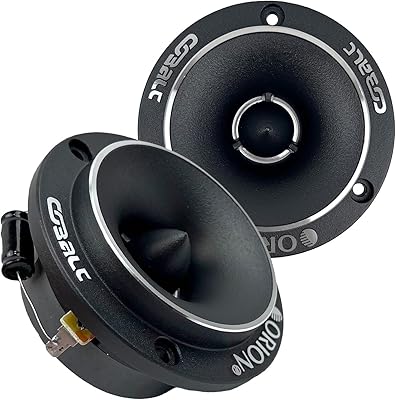
Orion CTW1.7HP 3.8″ Car Bullet Tweeter Pair
78%
91%
Value for Money
83%
Sound Clarity
86%
Build Quality
89%
Ease of Installation
68%
Power Handling
More
Rockville RT5 Tweeter Pair 2.8″
86%
89%
Sound Quality
93%
Installation Ease
91%
Clarity & High Frequencies
84%
Durability
87%
Size & Compatibility
More
Orion Cobalt CM854 8″ Mid-Range Bullet Speakers
87%
91%
Sound Clarity
94%
Power Handling
87%
Ease of Installation
88%
Durability
82%
Bass Response
More
Orion HCCA TN1 4.5″ Car Tweeter
76%
91%
Sound Clarity
93%
Power Handling
88%
Build Quality
67%
Installation Experience
63%
Value for Money
More
ORION CB693 6x9″ Coaxial Car Speakers
76%
78%
Bass Response
66%
Treble Clarity
63%
Mid-Range Performance
74%
Overall Sound Quality
88%
Installation Ease
More
DS18 PRO-TW1L RGB Bullet Car Tweeters
80%
83%
Sound Clarity
91%
RGB Lighting Quality
86%
Installation Ease
78%
Build Quality
84%
Value for Money
More
Pyle PL683BL 6x8 Car Coaxial Speakers
76%
88%
Value for Money
74%
Sound Clarity
61%
Bass Response
67%
Treble & Highs
77%
Midrange Performance
More
Orion CB35 3.5-Inch Coaxial Car Speakers
72%
78%
Sound Clarity
43%
Bass Performance
88%
Value for Money
81%
Build Quality
91%
Ease of Installation
More
Dayton Audio SAT-BK Satellite Speaker Pair

75%
86%
Sound Clarity
47%
Bass Response
91%
Value for Money
62%
Build Quality
88%
Magnetic Shielding
More
Dove Advanced Care Antiperspirant Deodorant Spray Waterlily & Sakura Blossom 3 Count 3.8 oz
88%
89%
Effectiveness in Odor and Sweat Control
84%
Fragrance Freshness and Longevity
93%
Skin Compatibility (Sensitive Skin)
91%
Moisturizing and Skin Replenishment
88%
Alcohol-Free Formula
More

FAQ

They come with a built-in passive crossover included in the box, so you don't need to purchase anything extra. It filters out the low frequencies before they hit the tweeter, which both protects the driver and keeps your wiring cleaner. For most budget builds, it works well straight out of the box.

You'll want an amplifier channel delivering somewhere in the range of 50 to 100W RMS at 4 ohms per side. The 400W figure you see in the name refers to a short-burst peak rating, not continuous output — so don't plan your amp around that number. Staying at or under the 100W RMS rating per channel is the safe approach for long-term reliability.

Yes, you can. Most aftermarket head units output 18 to 22W RMS per channel, which is well within what these Orion tweeters can handle. Just make sure to still use the included crossover in line, since running a tweeter without high-pass filtering from a full-range signal can damage the driver over time.

A-pillars and upper door corners are the most popular spots because they aim the tweeters toward the listening position, which helps with imaging and vocal clarity. Some installers also mount them in dash corners or kick panels. The cylindrical bullet shape gives you a decent amount of flexibility compared to flush-mount dome tweeters that require a specific cutout.

They work well with both, but they're particularly practical when pairing with a dedicated mid-range driver in a component-style setup. Since the included crossover handles the frequency split, you don't need an external crossover network. That said, if your component set already includes its own crossover with tweeter terminals, you'd typically bypass the built-in one and use the system crossover instead.

Aluminum is stiffer and lighter than the mylar or plastic diaphragms you find in bargain tweeters, which means it flexes less and distorts less as the volume increases. In practical terms, highs stay cleaner and more defined when you push the volume. It's not the same as a silk dome tweeter, which tends to be softer and smoother — aluminum has a brighter, more forward character.

At moderate volumes, most buyers find the sound clear and pleasant, especially for pop, acoustic, and vocal music. If you're someone who listens at high volumes for long stretches, a few users do report the highs can get a bit intense over time. This is fairly typical of aluminum-diaphragm tweeters in this price range — it's not a defect, just a characteristic of the material.

No — these are designed strictly for indoor automotive use and have no weatherproofing or moisture resistance. Exposing them to rain, humidity, or direct outdoor conditions would almost certainly damage the drivers. For marine or outdoor builds, you'd need tweeters rated specifically for those environments.

Nothing beyond basic car audio installation skills. You'll need to run speaker wire, connect the crossover in line, and mount the housing in your chosen location. The bullet form factor avoids the need for precise cutouts that flush-mount tweeters require. Most DIY installers with some prior speaker installation experience should find it manageable in an afternoon.

In this class, the main differentiators are magnet type and diaphragm material — and the Cobalt CTW2.0NEO pair holds up reasonably well on both counts with its neodymium magnet and aluminum cone. Brands like Rockford Fosgate and Pioneer have comparable options at similar price points, so it often comes down to personal preference and system matching. The inclusion of the crossover in the box is a practical advantage over some competitors that sell tweeters bare.