Overview

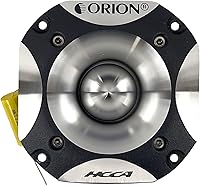
The Orion HCCA TN1 4.5″ Car Tweeter is a high-output bullet-style driver from Orion's flagship HCCA lineup, built for car audio enthusiasts who take their builds seriously. Unlike the compact dome tweeters found in most component sets, this one uses a cylindrical bullet form factor that is considerably larger and more visually assertive. It has held its ground as a respected option in competition and custom install circles since its 2015 debut. One critical detail to know upfront: this is sold as a single unit, not a pair — something that catches a surprising number of buyers off guard at checkout.

Features & Benefits

The HCCA TN1 handles 175W RMS at 4 ohms — a figure more commonly associated with mid-range drivers than tweeters — meaning this high-output tweeter can genuinely keep pace with powerful amplifiers without thermal stress. The aluminum diaphragm with flex ring keeps distortion low at the high end, producing treble that stays controlled even when pushed hard. A 1.5-inch voice coil adds thermal headroom during sustained output. The neodymium magnet structure provides a strong, focused magnetic field without excessive bulk. The built-in crossover handles frequency filtering, simplifying installation considerably and protecting the driver from signal ranges it was never designed to reproduce.

Best For

This Orion bullet tweeter is squarely aimed at SPL builders, competitors, and custom fabricators — not casual listeners hunting for a simple drop-in upgrade. If you are running a high-powered amplifier and need a tweeter that will not buckle under sustained pressure, it is a strong candidate. The cylindrical bullet housing suits A-pillar pods, custom enclosures, and fabricated mounts far better than a standard dome tweeter would. It is also a natural fit for anyone building around Orion's HCCA component speakers, keeping the signal chain consistent across the system. Straightforward stock installations are simply not what this driver was designed to accommodate.

User Feedback

Across its 67 ratings, the HCCA TN1 holds a strong 4.5-star average, and the praise is fairly consistent: buyers point to clarity at high volume, solid construction, and output capability that actually matches the specs. The review pool skews toward experienced installers who knew exactly what they were ordering. The most repeated frustration is the single-unit packaging — shoppers expecting a pair have left otherwise avoidable low-star reviews. A few users flag that the 4.5-inch housing creates real mounting limitations in tighter installs. On value, opinions diverge: seasoned enthusiasts view it as fair for the performance tier, while occasional buyers question whether a single driver justifies the investment.

Pros

  • Exceptionally high power handling for a tweeter — 175W RMS keeps pace with serious amplifier setups.
  • The aluminum diaphragm with flex ring produces clean, controlled treble even at high output levels.
  • A 1.5-inch voice coil adds meaningful thermal headroom during extended, demanding use.
  • The built-in crossover handles filtering reliably, saving time and simplifying the wiring process.
  • Neodymium magnet structure delivers a strong magnetic field without making the unit unnecessarily heavy.
  • Bullet form factor suits custom fabrication work and pod mounting far better than standard dome designs.
  • Holds a strong 4.5-star average across its rating pool, with consistent praise from experienced installers.
  • Has maintained a solid reputation in competition car audio circles since its introduction in 2015.
  • Pairs naturally with other HCCA series components for a cohesive, matched system build.

Cons

  • Sold as a single unit — buyers needing stereo coverage must purchase and budget for two separately.
  • The 4.5-inch cylindrical housing is too large for many standard factory and aftermarket mounting spots.
  • Not suitable for outdoor or marine use; zero water resistance limits installation flexibility.
  • The premium price per unit adds up quickly when two are needed for a full stereo install.
  • Requires fabrication skills or pre-built pods to mount properly — not a drop-in solution for most vehicles.
  • Casual listeners or those without high-powered amplifiers will not extract meaningful value from its capabilities.
  • At 2 pounds, the HCCA TN1 is heavier than typical tweeters, which matters in weight-sensitive custom builds.
  • Some users report needing an external crossover for optimal tuning, despite the built-in option being included.
  • The review pool is relatively small and skewed toward enthusiasts, making it harder to assess performance for everyday use cases.

Ratings

The scores below for the Orion HCCA TN1 4.5″ Car Tweeter were generated by our AI system after analyzing verified buyer reviews from multiple global sources, with spam, bot-submitted, and incentivized feedback actively filtered out before any scoring was applied. The ratings reflect the honest distribution of real user experiences — enthusiasts who got exactly what they needed, and buyers who ran into genuine friction points around sizing, packaging, and expectations. Both sides of that picture are represented here without softening.

Sound Clarity
91%
Experienced installers consistently describe the high-frequency reproduction as notably cleaner than what they were running before, particularly at sustained high volume levels. In competition and demo environments, listeners pick up on improved treble definition without harshness or sibilance creeping in.
A small subset of reviewers notes that the aluminum diaphragm can sound slightly bright or forward in certain signal chain configurations, particularly if no equalization is applied. This is manageable with tuning but worth knowing if your listening taste leans warmer.
Power Handling
93%
The 175W RMS rating is genuinely unusual for a tweeter, and buyers running high-powered amplifiers report that the HCCA TN1 keeps pace without distress. SPL builders in particular appreciate having a tweeter that does not become the weakest link in a high-output system.
For the majority of everyday listeners who are not pushing amplifier power anywhere near this range, the power handling headroom goes entirely unused — meaning this strength is only relevant to a narrow slice of the market.
Build Quality
88%
The physical construction draws consistent praise: the housing feels dense and purposeful, and the aluminum diaphragm with flex ring gives buyers confidence that the driver is engineered with real materials rather than cost-cut components. Long-term owners report no degradation in structural integrity.
At 2 pounds for a single tweeter, the weight is meaningful in custom fabrication scenarios where mount material and fastener choices need to account for vibration over time. A few builders have noted that lighter mounting solutions flex more than expected under road conditions.
Installation Experience
67%
33%
The built-in crossover is a genuine time-saver for installers who do not want to source or wire a separate passive network. Wiring terminals are straightforward, and the overall process is clean for anyone with prior car audio experience working with a prepared mount or pod.
This is where casual buyers hit a wall. The 4.5-inch cylindrical bullet form does not fit standard dome tweeter locations, requiring fabrication or pre-built pods. Without that infrastructure, installation becomes a project rather than an upgrade — and that reality is not clearly communicated at purchase.
Value for Money
63%
37%
Buyers who purchased this Orion bullet tweeter as part of a deliberate HCCA system build generally view the price as justified, pointing to the driver quality and power handling as commensurate with what they paid. In the context of a competition build, one well-matched driver is worth the investment.
For anyone who did not realize this is sold as a single unit, the value calculation shifts considerably. Needing two units to cover stereo effectively doubles the outlay, and that sticker shock surfaces repeatedly in negative reviews from buyers who felt misled by the listing.
Compatibility
74%
26%
At 4 ohms and with a built-in crossover, the HCCA TN1 integrates cleanly with most aftermarket amplifiers without requiring unusual wiring configurations. It pairs especially well with other Orion HCCA series components, where matched impedance and sensitivity make tuning straightforward.
Compatibility with factory head unit setups or entry-level amplifiers is poor — not because of wiring, but because underpowering a driver of this caliber produces no meaningful benefit. It also has no wireless or DSP integration, which limits it to traditional wired signal chains.
Mounting Flexibility
52%
48%
For builders working with custom pods, A-pillar mounts, or fabricated enclosures, the cylindrical bullet shape is actually well-suited and visually cohesive. It sits cleanly in purpose-built housings and looks intentional rather than retrofitted in a quality custom install.
Outside of custom fabrication scenarios, mounting options are genuinely limited. The 4.5-inch diameter and cylindrical form rule out virtually every standard tweeter cutout location in most production vehicles, creating a hard barrier for anyone without fabrication tools or pre-built solutions.
Crossover Performance
77%
23%
The built-in passive crossover does its core job reliably — filtering low-frequency content that would stress or damage the driver under sustained power. Most buyers using it in standard builds report clean, artifact-free integration with their mid-range drivers without additional tuning.
More advanced installers running active DSP-based systems or seeking precise crossover point adjustments find the built-in network restrictive. Some opt to bypass it entirely and use an external active crossover, which adds cost and complexity to a setup that already assumes a certain level of expertise.
Thermal Stability
86%
The 1.5-inch voice coil gives this high-output tweeter meaningful thermal headroom during extended high-volume sessions, which matters in competition and demo environments where the system runs hard for long stretches. Buyers report no instances of thermal shutdown or degradation during sustained use.
Thermal performance is only relevant when the driver is actually being pushed, and for the average user who is not running significant amplifier power, this engineering investment is functionally invisible. It is a strength, but one with a very specific and limited audience.
Packaging & Unboxing
59%
41%
The FFP flat-free packaging protects the driver adequately during shipping, and experienced buyers who know what to expect report receiving units in good condition with no damage complaints standing out as a pattern in the reviews.
The packaging itself does not prominently communicate that the product is a single unit, which directly contributes to the most common negative review theme across the listing. Better labeling at the box level would likely eliminate a meaningful portion of the one and two-star reviews entirely.
Aesthetics & Design
82%
18%
Within the car audio enthusiast community, the bullet form factor has an established visual identity that reads as deliberate and aggressive — consistent with the HCCA series positioning. Buyers who build custom pods report that the driver looks strong and purposeful once properly mounted.
Buyers expecting a low-profile or flush-mount tweeter will find the cylindrical bullet design visually intrusive in a standard interior. It is an acquired aesthetic that suits competition and show builds well, but conflicts with stock or understated interior styles.
Treble Extension
79%
21%
The rated upper frequency response extends to 28.5 kHz, and listeners with well-tuned systems do report a sense of air and openness in the upper registers that less capable tweeters struggle to convey. The aluminum diaphragm contributes to this by reducing mass-related rolloff.
The 28.5 kHz ceiling is largely academic for most listeners since human hearing rarely exceeds 20 kHz, and for older listeners that threshold is lower still. The practical benefit is real but modest, and should not be treated as a primary purchasing rationale.
Brand Reputation
83%
Orion's HCCA series carries genuine credibility in SPL competition circles, and that reputation gives buyers confidence that the driver is engineered for real-world performance demands rather than marketing benchmarks alone. The brand has maintained consistent interest in this category since 2015.
Outside of dedicated car audio communities, Orion's brand recognition drops significantly, which means casual buyers may not have a reliable frame of reference for evaluating whether the HCCA series positioning justifies the price premium compared to more mainstream alternatives.

Suitable for:

The Orion HCCA TN1 4.5″ Car Tweeter is built for a specific kind of buyer: someone who already understands car audio at a technical level and is not simply looking for a quick upgrade. SPL competitors and enthusiasts running high-powered amplifiers will find the 175W RMS power handling genuinely useful rather than just impressive on paper. Custom fabricators who build A-pillar pods, speaker enclosures, or bespoke dash mounts will appreciate the cylindrical bullet form factor, which integrates cleanly into fabricated housings in a way that a standard dome tweeter simply does not. It is also a natural choice for anyone building a full Orion HCCA system, since matching drivers across a signal chain tends to produce more coherent results than mixing brands and series. If you are stepping up from a budget tweeter and want to hear a real, audible improvement in treble clarity at high output levels, this high-output tweeter delivers that in a way that entry-level options cannot.

Not suitable for:

The Orion HCCA TN1 4.5″ Car Tweeter is not a sensible purchase for casual listeners who want a straightforward, plug-and-play audio upgrade. At 4.5 inches, the bullet housing is substantially larger than what most factory or even aftermarket mounting locations can accommodate, which means anyone without fabrication skills or pre-built pods may struggle to install it cleanly. It is sold as a single unit, so buyers expecting a stereo pair will need to purchase two separately — a detail that significantly affects the total cost calculation and one that is easy to overlook. This high-output tweeter is also not designed for outdoor, marine, or weather-exposed environments, as it carries no water resistance rating whatsoever. Anyone on a tight budget who needs a complete set of tweeters ready to install should look elsewhere; this driver rewards planning, experience, and a capable supporting system.

Specifications

  • Driver Size: The tweeter uses a 4.5″ neodymium bullet driver, considerably larger than the 1″ to 2″ dome tweeters found in most component speaker sets.
  • Power Handling: Rated at 175W RMS continuous power handling at 4 ohms, which is unusually high for a tweeter class driver.
  • Peak Power: Maximum peak power handling is 700W, intended for short-burst transients rather than sustained output at that level.
  • Impedance: The driver operates at 4 ohms, making it compatible with the vast majority of aftermarket car audio amplifiers.
  • Voice Coil: A 1.5″ voice coil is used, providing greater thermal mass and stability under sustained high-power conditions compared to smaller coil designs.
  • Diaphragm: The diaphragm is constructed from aluminum and incorporates a flex ring surround to reduce breakup distortion at high frequencies.
  • Magnet Type: A super neodymium magnet provides a strong, focused magnetic field while keeping the overall driver weight manageable.
  • Frequency Response: The upper frequency limit is rated at 28.5 kHz, extending beyond the typical range of human hearing, which tops out near 20 kHz in most adults.
  • Crossover: A built-in passive crossover network is included to filter out low-frequency content and protect the driver from signal ranges it cannot handle safely.
  • Form Factor: The driver uses a cylindrical bullet housing, which is designed for surface mounting, pod installation, or custom fabrication rather than flush dome-style cutouts.
  • Unit Count: This product is sold as a single tweeter unit; buyers requiring stereo coverage must purchase two units separately.
  • Dimensions: The overall package dimensions are 6 x 6 x 4 inches, and the driver itself measures 4.5″ in diameter.
  • Weight: The unit weighs 2 pounds, which is heavier than most compact dome tweeters and should be accounted for in custom mount fabrication.
  • Power Source: Designed for 12V automotive electrical systems, consistent with standard car audio installation requirements.
  • Connectivity: Connection is made via standard wired terminals; no wireless or Bluetooth capability is included or intended.
  • Water Resistance: The HCCA TN1 carries no water resistance rating and is not suitable for outdoor, marine, or weather-exposed installations.
  • Series: This tweeter belongs to Orion's HCCA series, which represents the brand's top-tier performance line for pro car audio applications.
  • First Available: The product was first listed in August 2015 and has remained in continuous production since that time.

Related Reviews
CT Sounds Meso-6.5-D4 6.5 Inch Dual 4 Ohm Car Subwoofer
83%
90%
Bass Performance
85%
Power Handling
88%
Build Quality
65%
Installation Ease
92%
Cooling System Effectiveness
More
Scosche HD6504 6.5″ Car Coaxial Speakers
78%
83%
Sound Clarity
61%
Bass Performance
91%
Ease of Installation
74%
Build Quality
88%
Value for Money
More
ORION Cobalt Series CB525C 5.25″ Component Car Speakers
86%
88%
Sound Quality
90%
Ease of Installation
84%
Bass Performance
85%
Build Quality
87%
High Frequency Clarity
More
Orion CB653 6.5″ 3-Way Coaxial Car Speakers
83%
86%
Sound Quality
88%
Bass Performance
90%
Ease of Installation
84%
Build Quality
82%
Durability
More
Scosche HD57684 5×7″ 4-Way Car Door Speakers Set
84%
88%
Sound Quality
72%
Bass Response
91%
Ease of Installation
85%
Durability
83%
Build Quality
More
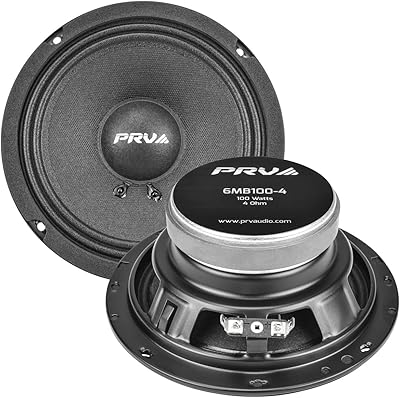
PRV AUDIO 6MB100-4 6.5 Inch Midbass Car Audio Speakers (Pair)
86%
88%
Sound Quality
84%
Bass Performance
91%
Installation Ease
89%
Value for Money
87%
Build Quality
More
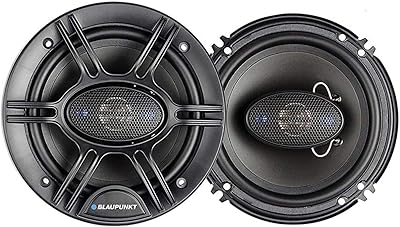
Blaupunkt GTX650 6.5-Inch Coaxial Car Speakers
72%
78%
Sound Clarity
54%
Bass Performance
88%
Installation Ease
73%
Build Quality
76%
High-Frequency Performance
More
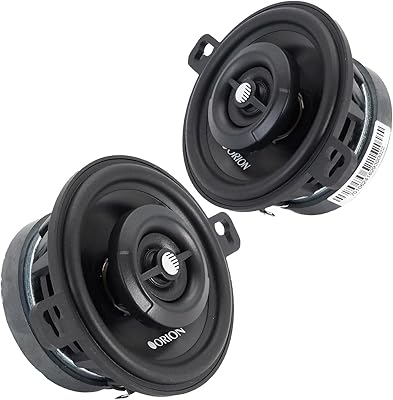
Orion CB35 3.5-Inch Coaxial Car Speakers
72%
78%
Sound Clarity
43%
Bass Performance
88%
Value for Money
81%
Build Quality
91%
Ease of Installation
More
BOSS Audio NX654 6.5-Inch Car Coaxial Speakers
72%
88%
Value for Money
76%
Sound Quality at Moderate Volume
62%
Bass Response
67%
High-Frequency Clarity
91%
Ease of Installation
More
Blaupunkt GTS655M 6.5-Inch 250W Slim-Line 4-Way Coaxial Car Audio Speakers
86%
88%
Sound Clarity
85%
Bass Performance
91%
Build Quality
89%
Ease of Installation
80%
Power Handling
More

FAQ

Just one. The Orion HCCA TN1 4.5″ Car Tweeter is sold as a single unit, so if you need tweeters for both sides of your vehicle, you will need to add two to your cart. This is probably the single most common source of frustration in the reviews, so it is worth being clear-eyed about before purchasing.

For most installs, the built-in passive crossover does its job adequately and protects the driver from low-frequency content that could damage it. That said, some experienced builders who want precise control over the crossover point prefer to bypass it and use an active crossover or DSP instead. If you are running a tuned competition system, an external crossover gives you more flexibility.

Almost certainly not. At 4.5 inches in diameter with a cylindrical bullet shape, this driver is built for surface mounting, A-pillar pods, or custom-fabricated enclosures. It will not drop into the small cutouts designed for 1-inch or 2-inch dome tweeters. Plan for fabrication work if you want a clean install.

This high-output tweeter is built to handle 175W RMS continuously, so it pairs well with high-powered amplifiers that most budget component setups cannot tolerate. You do not need to push it to its limits, but running it on an underpowered head unit without an amplifier would be a waste of its capabilities.

Yes, and that is actually one of the most logical use cases for it. Pairing it with other HCCA series mid-range drivers or component speakers keeps your system within a consistent design family, which generally makes tuning easier and produces a more coherent overall sound.

No. This tweeter has no water resistance rating whatsoever, so exposure to moisture, rain, or humidity would risk permanent damage. It is designed strictly for enclosed automotive environments.

The flex ring is part of the surround structure on the aluminum diaphragm. It allows the diaphragm to move more predictably at high frequencies without breaking up or distorting, which keeps the treble clean even when the driver is working hard. It is a common design choice in higher-quality tweeters to extend usable high-frequency response.

Not automatically. While the rated upper limit extends beyond 20 kHz, most adults cannot hear frequencies above that threshold, so the practical benefit is debatable. What matters more in real listening is how cleanly and accurately it reproduces the frequencies you can actually hear, and the aluminum diaphragm design does perform well in that regard.

Honestly, probably not. This is a purpose-built driver for enthusiasts running high-powered systems with custom installs. If you are making a first-time upgrade from factory audio, a standard component set with matched tweeters, crossovers, and mid-range drivers would give you a better all-around result at a more appropriate price point.

It weighs 2 pounds, which is notably heavier than the compact dome tweeters most people are used to. For surface mounts or factory locations, that weight is worth considering since vibration over time can stress lighter brackets. If you are building a custom pod or fabricating a mount, factor the weight into your choice of materials and fasteners.

Where to Buy