Overview

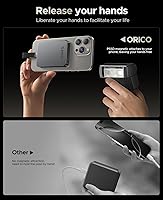
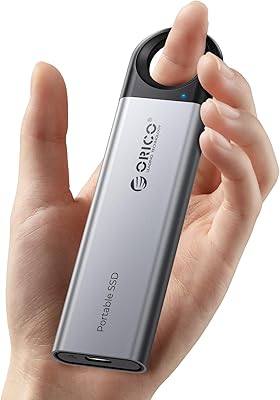
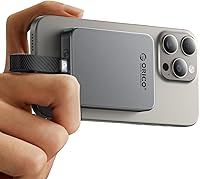
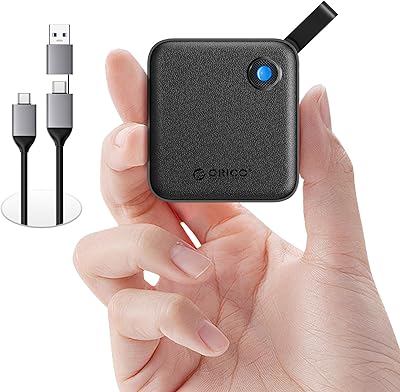
The ORICO K20 2TB Portable SSD enters a crowded market with a clear target: iPhone 16 Pro and Pro Max users who shoot serious video and constantly run out of space. The aluminum alloy shell feels genuinely sturdy — not flashy, but built to handle everyday carry without anxiety. What immediately stands out is the included magnetic attachment ring, which lets you mount the drive directly to your phone during a shoot rather than wrestling with a dangling cable. It ranks #29 in External SSDs on Amazon with 4.2 stars across 750-plus ratings — respectable, though not without caveats worth knowing before committing.
Features & Benefits

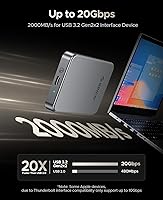
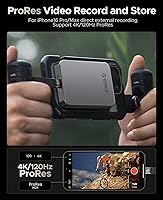
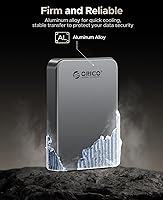
The headline spec is 2000MB/s read and write, delivered over USB 3.2 Gen 2x2 — quick enough for 4K 120fps ProRes HDR recording straight to the drive from an iPhone 16 Pro, skipping any secondary transfer entirely. That matters in real shooting situations where stopping to offload footage is not an option. The aluminum chassis acts as passive cooling, helping sustain those speeds during longer recording sessions. At 1.87 oz with a credit-card footprint, this portable solid state drive disappears into a pocket. One practical note: a USB-C cable is included, but iPhone 14 and earlier users will need the separately sold ORICO LC10 Lightning adapter — an additional purchase worth budgeting for upfront.

Best For

This magnetic SSD makes the most sense for iPhone 16 Pro videographers who record ProRes footage regularly and cannot afford to pause mid-shoot to manage internal storage. Solo travel creators and run-and-gun filmmakers will genuinely appreciate the magnetic attachment — it keeps the drive close to the phone without constant cable fumbling. It also works well as a meaningful step up from slow USB-A drives or aging flash storage. The fit is narrower if you own a pre-iPhone 15 device and prefer not to buy an extra adapter, or if your primary computer lacks a USB 3.2 Gen 2x2 port, where real-world speeds will drop considerably.

User Feedback

Most buyers single out the magnetic ring as genuinely useful rather than a gimmick — particularly solo creators who shoot handheld and value keeping gear tidy. Speed results earn consistent praise when tested on a proper USB 3.2 Gen 2x2 host, though reviewers are quick to note that older ports bottleneck performance significantly. A smaller number of users mention noticeable warmth during extended 4K sessions, though reports of actual throttling are rare. The recurring frustration is adapter compatibility confusion — several pre-iPhone 15 owners expected immediate plug-and-play and were surprised. That aside, overall sentiment runs positive, with the 2TB capacity-to-price ratio cited most often as the deciding factor.

Pros

  • Records 4K 120fps ProRes HDR footage directly to the drive from iPhone 16 Pro, no secondary transfer needed.
  • 2TB capacity handles full days of high-bitrate shooting without managing storage on the fly.
  • Aluminum alloy build feels noticeably more solid than plastic competitors at this price level.
  • The magnetic ring attachment genuinely reduces cable clutter during handheld shooting sessions.
  • At under 2 oz, this magnetic SSD fits in a pocket alongside a phone without any extra bulk.
  • USB-C cable included in the box — no hunting for accessories before your first use.
  • Speeds hold up well on compatible hosts, with real-world benchmarks tracking close to rated maximums.
  • Works across iPhones, iPads, laptops, and cameras — one drive covers multiple devices in your kit.
  • Strong capacity-to-price ratio undercuts several well-known brand alternatives by a meaningful margin.

Cons

  • Peak speeds require a USB 3.2 Gen 2x2 host — older ports deliver a fraction of the advertised performance.
  • iPhone 14 and earlier users must purchase a separate brand-specific Lightning adapter just to connect the drive.
  • No USB-C to USB-A adapter included, leaving desktop users with older ports without an obvious solution.
  • The magnetic ring can be difficult to position correctly on non-MagSafe or textured phone cases.
  • No protective pouch or sleeve is included, making loose carry risky without sourcing your own case.
  • Sustained long-format recording sessions cause noticeable heat buildup that can warm the attached phone.
  • The aluminum finish picks up visible scratches from regular pocket carry faster than expected.
  • No ruggedized or water-resistant rating — a meaningful gap compared to similarly priced rugged alternatives.
  • Quality control inconsistencies noted in a small but real share of early buyer reports, including some early failures.

Ratings

The ORICO K20 2TB Portable SSD scores here reflect an AI-driven analysis of verified global buyer reviews, with spam, incentivized, and bot-pattern feedback actively filtered out before scoring. Ratings capture both what this portable solid state drive genuinely delivers and where real users have run into friction — nothing is glossed over. The result is a balanced picture that should help you decide whether the K20 drive fits your specific workflow or whether a competing option makes more sense.
Transfer Speed
88%
On a host with USB 3.2 Gen 2x2 support, reviewers consistently hit speeds close to the advertised ceiling, making large ProRes video transfers feel nearly instant. Content creators moving multi-gigabyte footage batches after a shoot praised how dramatically this outpaced their previous USB-A drives.
Plug this into a standard USB 3.1 Gen 1 port — which many laptops and older hubs still use — and speeds drop sharply, sometimes to a quarter of the peak. Several buyers were caught off guard by this, expecting top performance from any USB-C connection.
iPhone 16 Pro Compatibility
91%
Direct 4K 120fps ProRes HDR recording straight to the drive, without any secondary transfer step, works reliably on iPhone 16 Pro and Pro Max. Solo videographers shooting events in real time cited this as the single biggest reason they chose this magnetic SSD over alternatives.
The tight optimization for iPhone 16 Pro means the experience tapers off quickly as you move to older models. iPhone 15 users get basic functionality, but anyone on iPhone 14 or earlier needs a separately purchased Lightning adapter, and some report that adapter pairing can be finicky.
Magnetic Attachment
83%
The bundled magnetic ring genuinely reduces cable clutter when shooting handheld — users attach the drive to the back of their phone and forget it is there during a take. Travel vloggers especially appreciated keeping one hand free without the drive swinging on a cable.
Positioning the ring accurately on non-MagSafe cases takes a few tries, and on particularly slim or textured cases the hold can feel marginal. A handful of reviewers noted the ring left faint adhesive residue on silicone cases after removal.
Build Quality
86%
The aluminum alloy enclosure feels noticeably more substantial than plastic-shelled competitors in this price bracket. Multiple reviewers mentioned surviving accidental drops onto hard floors or concrete without any visible damage or performance degradation.
The gray anodized finish shows fine scratches after regular pocket carry faster than expected for an aluminum body. A few users also noted the USB-C port feels slightly loose compared to pricier rivals like the Samsung T7 Shield.
Thermal Management
74%
26%
The aluminum body doubles as a passive heatsink, and for typical burst transfers or short recording sessions it does a reasonable job keeping the drive from throttling. Most users never noticed any slowdown during everyday file management tasks.
During sustained 4K recording sessions lasting 20 minutes or more, a noticeable portion of reviewers reported the drive getting warm to the touch. A smaller number saw brief speed dips in prolonged stress scenarios, which matters if you shoot long uncut takes.
Portability
93%
At under 2 oz and roughly the size of a credit card, this portable solid state drive genuinely disappears into a jeans pocket or camera bag side pouch. Photographers who travel light repeatedly highlighted the form factor as a reason they chose it over bulkier enclosures.
The slim profile does mean there is no protective sleeve or pouch in the box, so buyers who toss it loose into a bag alongside keys and cables will want to source their own case. The drive itself shows no obvious attachment point for a lanyard or clip.
Value for Capacity
84%
Two terabytes at this price point undercuts several well-known brand-name alternatives by a meaningful margin, and reviewers frequently called out the capacity-to-cost ratio as the deciding factor in their purchase. For creators who fill drives fast, the math works in its favor.
Competing drives from SanDisk and WD at similar capacities now offer ruggedized builds or longer warranty terms, which shifts the value equation depending on priorities. Some buyers felt the overall package — particularly the lack of included accessories beyond the ring — could be more generous.
Setup & Plug-and-Play Experience
79%
21%
For iPhone 16 Pro and modern USB-C laptops, setup is genuinely immediate — plug in, format if prompted, and start transferring. Most buyers reported zero driver installation or configuration steps needed, which is what you want from a drive meant for on-the-go use.
The adapter requirement for pre-iPhone 15 devices introduces a friction point that several buyers discovered only after unboxing. Additionally, the box-included documentation is sparse, and users unfamiliar with USB speed tiers sometimes struggled to diagnose why speeds seemed slower than expected.
Read Speed Consistency
82%
18%
Sequential read performance on a Gen 2x2 host holds steady across both small and large file batches, which matters when pulling raw video footage for editing. Reviewers doing real-world benchmarks found the drive tracking within a few percent of rated maximums in controlled conditions.
Random read performance on smaller files — the type of access pattern common in app caches or mixed photo libraries — is less impressive and more in line with mid-range drives. Users importing thousands of small RAW files noted it felt slower than the headline spec suggested.
Write Speed Consistency
79%
21%
Write speeds stay close to read speeds on a proper host, which is relatively uncommon at this price tier and directly enables the ProRes direct-recording workflow the drive is marketed around. Reviewers confirmed sustained write performance during multi-minute recording sessions.
A subset of reviewers using the drive for large sequential backups — full device archives exceeding several hundred gigabytes — reported a gradual write slowdown in the final portion of the transfer. This is likely a caching behavior, but it surprised buyers expecting rock-steady throughput throughout.
Cable & Accessory Inclusion
68%
32%
A USB-C to USB-C cable in the box is a welcome inclusion and is the correct cable for the iPhone 16 series and most modern laptops. Reviewers noted the cable feels adequately sturdy for daily use.
No USB-C to USB-A adapter is included, which is a real omission given how many desktop users still have primarily USB-A ports. The Lightning adapter for older iPhones is sold separately and is brand-specific — third-party alternatives are explicitly unsupported, which limits flexibility.
Compatibility Breadth
71%
29%
Beyond iPhones, the K20 drive works reliably with Windows and Mac laptops, Android devices with USB-C OTG support, iPads, and some cameras. Reviewers using it as a shared drive between a phone and a MacBook appreciated not needing separate storage for each device.
The optimized experience is clearly narrow — iPhone 16 Pro gets the full feature set, and everyone else gets a fast but ordinary external drive. Android users in particular noted that the magnetic attachment is largely pointless for them since most Android phones lack a standardized magnetic alignment target.
Durability Over Time
72%
28%
Early adopters who have owned the drive since its September 2024 release and use it daily report no failures or performance degradation after several months of regular use. The lack of moving parts means the fundamental reliability baseline is solid.
The longer-term track record is naturally limited given the relatively recent release date. A small number of buyers reported unit failures within the first few weeks, citing dead-on-arrival or early dropout issues — a quality control inconsistency that a few competitors handle better through stricter pre-shipment testing.
Heat Impact on Phone
66%
34%
Under light to moderate use the drive does not meaningfully heat the back of the phone it is attached to. Short clips and burst offloads — the most common real-world use case — generate no noticeable warmth transfer to the device.
During back-to-back long-format ProRes recordings the aluminum body can transfer enough warmth to make the phone-plus-drive combination feel uncomfortably warm. A handful of reviewers said this triggered their iPhone thermal warnings during extended outdoor shoots in already warm environments.

Suitable for:

The ORICO K20 2TB Portable SSD is purpose-built for iPhone 16 Pro and Pro Max users who shoot ProRes video and need immediate, reliable storage without stopping to offload footage mid-session. If you are a solo content creator, travel vlogger, or event videographer who works handheld and wants to keep gear minimal, the magnetic attachment ring will feel like a genuine workflow improvement rather than a novelty. The 2TB capacity means you can shoot an entire day of high-bitrate footage without rationing storage or making hard choices in the field. It also serves well as a shared fast drive between a modern laptop and a phone — plug it into a MacBook after a shoot and the same drive that recorded your footage becomes your editing source without any extra transfer step. Anyone upgrading from an older USB-A portable drive or a slow flash stick will notice an immediate and meaningful difference in daily transfer speed, provided their host device supports USB 3.2 Gen 2x2.

Not suitable for:

Buyers using iPhone 14 or earlier should know upfront that this portable solid state drive does not work out of the box — a separately purchased ORICO LC10 Lightning adapter is required, and third-party adapters are explicitly unsupported, adding both cost and a compatibility variable that some users have found unreliable. If your laptop or desktop relies primarily on USB-A ports or older USB-C controllers, you will not come close to the advertised speeds, which significantly weakens the value proposition compared to more broadly optimized alternatives from SanDisk or Western Digital. Users who shoot very long uncut takes — think 30-plus-minute continuous recordings in warm outdoor conditions — should be aware that the drive runs warm under sustained load, and in some environments that warmth can transfer to the phone and trigger thermal warnings. The K20 drive also lacks any ruggedized or water-resistant rating, so buyers who need a drive that can genuinely take rough treatment in wet or dusty environments should look at purpose-built rugged options instead. If brand-name peace of mind and long warranty terms are decision factors for you, larger established players currently offer more comprehensive coverage policies.

Specifications

  • Capacity: This portable solid state drive is available in a 2TB configuration, with smaller variants (512GB and 1TB) also offered in the product line.
  • Read Speed: Sequential read speeds reach up to 2000MB/s when connected to a USB 3.2 Gen 2x2 compatible host device.
  • Write Speed: Sequential write speeds also reach up to 2000MB/s under the same USB 3.2 Gen 2x2 host conditions.
  • Interface: The K20 drive uses a USB 3.2 Gen 2x2 interface, delivering up to 20Gbps of theoretical bandwidth over a USB-C connector.
  • Connector: Both the drive port and the included cable use USB-C, making it directly compatible with iPhone 15 and later, modern iPads, and current-generation laptops.
  • Dimensions: The enclosure measures 3.27 x 2.36 x 0.43 inches, placing it roughly in line with a standard credit card in footprint while remaining notably slim.
  • Weight: The drive weighs approximately 1.87 oz (53g), light enough to carry attached to a phone throughout a full shoot day without noticeable fatigue.
  • Body Material: The outer shell is machined from aluminum alloy, which serves both as structural protection and as a passive heatsink during data transfers.
  • Form Factor: Internally the drive uses a 2280 M.2 solid state module housed within an external USB enclosure.
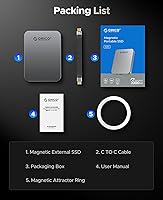
  • Magnetic Attachment: A magnetic attachment ring is included in the box, allowing the drive to be affixed to the back of a phone or compatible case during use.
  • Video Recording: The K20 drive supports 4K 120fps ProRes HDR direct-to-drive recording when paired with an iPhone 16 Pro or iPhone 16 Pro Max.
  • Compatible Devices: Confirmed compatible devices include iPhone 16 Pro and Pro Max, USB-C iPads, Windows and macOS laptops, Android phones with USB-C OTG support, and certain cameras.
  • Included Cable: A USB-C to USB-C cable is included in the box; no USB-A adapter is bundled.
  • Lightning Compatibility: iPhone 14 and earlier models require the separately purchased ORICO LC10 Lightning adapter; third-party adapters are not supported by the manufacturer.
  • Color: The drive is available in gray with an aluminum anodized finish.
  • Manufacturer: The K20 is designed and manufactured by Shenzhen ORICO Technologies Co., Ltd., based in China.
  • Release Date: The product was first made available for purchase in September 2024.
  • Amazon Ranking: As of review compilation, the K20 drive holds a position of #29 in the External Solid State Drives category on Amazon.
  • User Rating: The drive carries an average rating of 4.2 out of 5 stars based on over 750 verified ratings on Amazon.
  • Operating Temp: As an aluminum-encased SSD, the drive is rated for standard consumer operating conditions; it carries no official ruggedized, waterproof, or dustproof certification.

Related Reviews
ORICO B5PLUS 2TB Portable SSD
88%
89%
Transfer Speed
94%
Portability/Size
88%
Build Quality
92%
Compatibility
68%
Thermals (Overheating)
More
ORICO 4TB Portable SSD
88%
88%
Transfer Speed
94%
Portability
82%
Durability
91%
Compatibility
95%
Ease of Use
More
SanDisk 2TB Portable SSD
86%
94%
Performance
89%
Portability
90%
Build Quality
88%
Compatibility
85%
Ease of Use
More
Samsung X5 Portable SSD 2TB
88%
96%
Performance
92%
Build Quality & Durability
89%
Portability
91%
Ease of Setup
94%
Speed & Transfer Rate
More
SSK SD600 2TB Portable SSD
87%
89%
Performance
93%
Build Quality
92%
Transfer Speed
88%
Portability
90%
Compatibility
More
DIGIERA 2TB Magnetic Portable SSD
87%
91%
Transfer Speed
88%
Build Quality
94%
Magnetic Connection
90%
Compatibility with USB-C Devices
85%
Portability/Size
More
ADATA SE880 2TB Portable SSD
87%
95%
Performance (Speed)
91%
Portability (Size and Weight)
89%
Compatibility with Devices
88%
Build Quality
92%
Ease of Use (Setup and Setup Time)
More
ORICO C10 2TB External SSD
88%
91%
Performance
89%
Build Quality
92%
Portability
90%
Compatibility
80%
Value for Money
More
ORICO A20 1TB Portable SSD
88%
91%
Transfer Speed
89%
Compatibility
95%
Portability
88%
Build Quality
86%
Software Integration (Time Machine)
More
ORICO X7000 2TB NVMe SSD
89%
93%
Performance
96%
Read Speed
90%
Write Speed
89%
Cooling Efficiency
91%
Compatibility with PS5
More

FAQ

It genuinely works, but only on iPhone 16 Pro and Pro Max running iOS 18 or later. On those devices you can set the external drive as the recording destination in the Camera app and shoot 4K 120fps ProRes HDR without any intermediate step. On older iPhones the drive functions as normal external storage but does not support direct ProRes capture.

You will get close to those speeds only if your host device has a USB 3.2 Gen 2x2 port, which delivers up to 20Gbps. Most older laptops, desktop USB hubs, and USB-A adapters will cap your speeds well below that — sometimes at a quarter of the maximum. Before buying, check whether your Mac, PC, or tablet actually supports Gen 2x2; it is worth looking up the spec sheet for your specific model.

It is not Apple-certified MagSafe. The K20 drive uses a magnetic ring accessory that you apply to your phone or case, and the drive then attaches to that ring. It will align reasonably well with MagSafe-compatible cases because the magnet placement is similar, but it is an independent system. On non-MagSafe cases, you apply the included ring yourself and the hold is functional, though some users find positioning it precisely takes a couple of attempts.

Yes, but not out of the box. You will need to purchase the ORICO LC10 Lightning adapter separately, and it has to be the ORICO-branded one — the manufacturer explicitly states that adapters from other brands are not supported. Factor that extra cost and potential availability search into your decision before buying.

Under light use and short transfers it stays cool to the touch. During continuous 4K recording lasting 20 minutes or more, the aluminum body does get noticeably warm — that is actually the heatsink doing its job. In warm outdoor environments, the heat can transfer to the back of your phone and in some cases trigger the iPhone thermal management warning. Most users shooting typical clip lengths never hit this, but long uncut takes in the sun are where it becomes relevant.

You get the drive itself, a USB-C to USB-C cable, and the magnetic attachment ring. There is no USB-C to USB-A adapter, no protective pouch or case, and no printed setup guide beyond basic safety documentation. If you need USB-A compatibility or want to protect the drive in a bag, plan to source those separately.

The main advantages of the K20 drive are the magnetic attachment system and competitive pricing for 2TB of capacity. The Samsung T7 and SanDisk Extreme have stronger brand reputations, longer-established track records, and in some cases rugged or water-resistant builds that the K20 lacks. If your priority is maximum speed on a Gen 2x2 host or tight iPhone 16 Pro integration, the K20 is competitive. If you need durability ratings or prefer established warranty support, the alternatives are worth the premium.

It works with Android phones that support USB-C OTG, which most modern Android flagships do. You can transfer files, use it as external storage, and move media on and off the drive without any issue. The magnetic attachment ring will stick to the back of any phone you apply it to, but Android phones do not have the standardized magnet array that makes alignment intuitive the way iPhone 16 Pro does. The ProRes direct recording feature is iPhone-only.

The magnetic attachment holds reasonably well during normal handheld shooting, but it is not a locking mechanism. A sharp knock or drop could separate the drive from the phone mid-recording. Most videographers using it in the field recommend pausing recording before moving aggressively, and several use a short tethering lanyard as backup insurance. The drive itself is an SSD with no moving parts, so a short drop to the ground is unlikely to corrupt data, but the disconnection during a write is always worth avoiding.

No installation required. On macOS it mounts immediately as an external drive. On Windows it may prompt you to format it if it arrives formatted as APFS (Apple format) rather than exFAT, but that takes about 30 seconds. No proprietary software or background app is needed for basic file transfer use on either platform.