

Overview

The ORICO C5 4TB Portable SSD arrived on the market in April 2025 and has already climbed to #45 in External Solid State Drives, backed by nearly 900 user ratings — a solid early showing for a relatively new product. This portable SSD stands out physically: an aluminum alloy shell gives it a purposeful, durable feel, while a built-in hanging hook sets it apart from the sea of plain rectangular drives. It targets photographers, remote workers, and anyone who needs serious storage capacity without carrying a bag just for a hard drive. That said, buyers should understand the USB 3.2 Gen 1 interface before purchasing — it shapes real-world speed expectations.

Features & Benefits

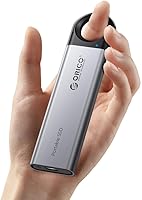
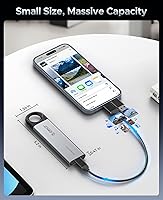
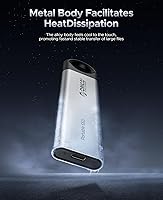
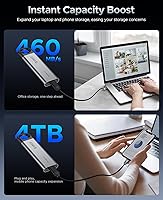
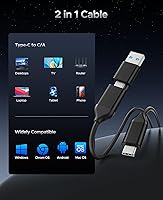
Fitting 4TB of storage into a 0.22-lb body is the headline achievement of this 4TB drive, and it genuinely feels almost weightless. In practice, a 10GB video file transfers in roughly 22 seconds at 460MB/s — quick for daily use, though buyers should know this reflects the ceiling of USB 3.2 Gen 1, not the faster Gen 2 standard. The included 2-in-1 cable covers both USB-C and USB-A without any adapter needed. There is also a small built-in hanging hook — genuinely useful if you clip it to a camera bag or backpack strap rather than tossing it loose. The aluminum chassis handles heat better than plastic rivals during sustained transfers.

Best For

This portable SSD makes the most sense for people who generate or accumulate data fast — think videographers offloading 4K footage on location, photographers with large RAW photo libraries, or remote workers who want a full local backup without paying monthly cloud fees. It also works well for Android users who need to expand phone storage or shuttle large files without a laptop nearby. The plug-and-play setup means nothing to install, which matters when you are working in the field. And for anyone currently juggling two or three smaller drives, consolidating everything into one 4TB unit is a practical, low-friction solution.

User Feedback

With a 4.5-star average across nearly 900 ratings for a drive released only in early 2025, the ORICO C5 is off to a strong start. Buyers consistently highlight how painless the initial setup is — plug in, recognized immediately, no drivers. Build quality gets regular praise too, with the aluminum housing feeling more substantial than expected. On the critical side, some users note that sustained speeds during longer transfers fall short of the peak 460MB/s figure, which is typical for drives in this interface class. The hook gets mixed reactions — functional for some, an afterthought for others. Long-term durability data remains limited given how recently this drive launched.

Pros

  • Four terabytes of storage in a body that weighs roughly as much as a few stacked credit cards.
  • The included 2-in-1 cable means you can connect to virtually any modern device without hunting for an adapter.
  • Aluminum alloy housing feels noticeably more solid than the plastic shells common on budget drives.
  • Setup is genuinely plug-and-play — no software installs, no formatting prompts on most systems.
  • The hanging hook is a practical detail that actually keeps the drive secure on a bag strap or belt loop.
  • Works across Android, iOS, macOS, and Windows without switching cables or settings.
  • A 4.5-star average across nearly 900 early ratings points to strong out-of-box satisfaction.
  • Compact enough to sit flat in a shirt pocket or disappear inside a camera bag side pouch.
  • Transferring a 10GB file in roughly 22 seconds is fast enough for everyday backup and offload tasks.
  • The aluminum chassis dissipates heat more effectively than plastic rivals during longer transfer sessions.

Cons

  • USB 3.2 Gen 1 caps sustained speeds well below what faster portable NVMe drives on the market can deliver.
  • Real-world transfer rates during large or prolonged operations often fall short of the advertised 460MB/s peak.
  • Launched in April 2025, so long-term reliability and failure rate data simply does not exist yet.
  • The hook attachment will feel unnecessary and slightly bulky to users who store drives in a case or drawer.
  • No IP dust or water resistance rating, which matters for buyers working in genuinely rugged outdoor conditions.
  • iOS compatibility can be inconsistent depending on the app and file format being used.
  • At this price tier, faster competing drives with Gen 2 interfaces are available and worth comparing directly.
  • The 2.5-inch form factor, while thin, is still larger than the credit-card-sized drives some travelers prefer.

Ratings

The scores below for the ORICO C5 4TB Portable SSD were produced by our AI review engine after processing verified global buyer feedback, actively filtering out incentivized, repeated, and bot-generated submissions to surface what real users actually experienced. Both the genuine strengths and the recurring frustrations are reflected without glossing over either side. Where trade-offs exist — particularly around interface speed and long-term reliability — the scores call them out plainly.

Storage Capacity
93%
Four terabytes in a body that weighs less than a deck of playing cards is the single feature buyers mention most enthusiastically. Photographers consolidating multiple smaller drives, videographers carrying a full shoot day, and remote workers replacing cloud subscriptions all report that 4TB hits a genuinely useful sweet spot for portable storage.
A small number of buyers note that formatted capacity is slightly less than the full 4TB label, which is normal for storage devices but occasionally surprises first-time SSD buyers. There are no capacity configuration options beyond what the C5 series offers, so users who need 6TB or 8TB must look elsewhere.
Transfer Speed
71%
29%
For everyday tasks — backing up a laptop, offloading a memory card at the end of a shoot, or moving a folder of large project files — the ORICO C5 feels quick and responsive. Most users transferring files under a few gigabytes at a time find the speed more than adequate for their workflow.
The USB 3.2 Gen 1 interface caps real-world sustained throughput noticeably below the 460MB/s headline figure, and buyers comparing this drive to NVMe-based competitors running Gen 2 or Thunderbolt will feel the gap during large batch transfers. Several reviewers flagged that speed drops perceptibly during prolonged sessions of 50GB or more.
Portability & Size
91%
At 0.22 lb and roughly the footprint of a large smartphone, this portable SSD disappears into virtually any bag, pocket, or camera case without adding meaningful bulk. Travelers and commuters specifically praise how little they notice it is there until they need it, which is exactly what a daily carry drive should achieve.
The integrated hanging hook, while useful for some, adds a slight protrusion that makes the drive sit awkwardly when laid flat on a desk or stacked with other gear. Users who prefer completely flat, minimalist drives may find the hook design mildly inconvenient in certain storage configurations.
Build Quality
84%
The aluminum alloy shell draws consistent praise for feeling substantive and well-finished compared to the plastic enclosures common on budget drives in this category. Buyers who have accidentally knocked their drive off a desk or carried it daily in a bag with keys and other hard objects report no visible damage or performance degradation.
Because the drive launched in April 2025, there is not yet a meaningful body of long-term durability data from the broader user base. A few buyers raised questions about the longevity of the hook attachment point under repeated stress, though failure reports remain rare this early in the product lifecycle.
Ease of Setup
96%
Plug-and-play performance is one of the most consistently praised aspects of this 4TB drive across all platforms. Windows, macOS, and Android users almost universally report that the drive is recognized instantly with zero configuration, driver installation, or formatting required out of the box.
A small subset of iOS users encountered compatibility quirks depending on their specific device model and the app being used to access files. This is not unique to the ORICO C5 but is worth flagging for iPhone and iPad users who expect the same frictionless experience Android users describe.
Cable & Connectivity
82%
18%
Including both a USB-C and USB-A connection in a single cable is a practical decision that eliminates a common headache — newer laptops with only USB-C ports and older desktops with only USB-A are both covered without carrying a second cable or adapter. Buyers appreciate not having to source additional accessories immediately after purchase.
The cable length, while functional for desk use, is on the shorter side for scenarios where the host device and drive need to sit apart. A small number of users also noted they would have preferred a braided cable for durability given how frequently a travel drive gets plugged and unplugged.
Heat Management
74%
26%
The aluminum enclosure does a noticeably better job of staying cool than comparable plastic-shelled drives during standard file transfers, and most buyers report the drive never becomes uncomfortable to hold during typical use. Passive heat dissipation through the metal body keeps throttling minimal during moderate workloads.
Under sustained heavy transfers — think large video library migrations running for 20 minutes or more — the body warms up enough that some users noticed a slight drop in transfer rate toward the end of the session. This is a known characteristic of the USB 3.2 Gen 1 interface class rather than a flaw unique to this drive.
Hanging Hook Design
67%
33%
Users who actively clip gear to backpack straps, belt loops, or camera rigs find the hook genuinely useful as a quick-access point that keeps the drive reachable without digging through a bag. Hikers and field photographers in particular tend to rate this feature positively, seeing it as a thoughtful design choice rather than a gimmick.
Buyers who keep their drives in a pouch, sleeve, or desk drawer find the hook adds unnecessary bulk and occasionally catches on fabric or cables. The polarizing nature of the feature shows up consistently in reviews — it is the detail that most clearly splits user opinion on the overall industrial design.
Cross-Platform Compatibility
86%
The drive handles the Mac-to-Windows handoff without issue for users working across both ecosystems, and Android connectivity for direct phone-to-drive transfers is one of the most frequently praised real-world use cases. The absence of any required software installation contributes heavily to how smoothly this works across different systems.
iOS compatibility remains the asterisk on an otherwise strong compatibility story. Depending on the iPhone or iPad model, the app being used, and the file system format, some users experience limitations that Android and desktop users simply do not encounter with this 4TB drive.
Value for Money
76%
24%
For buyers who prioritize storage capacity above all else and need a well-built drive with broad compatibility, the price-per-terabyte math is reasonable at this tier. The inclusion of the dual-interface cable and the quality of the aluminum enclosure both contribute to a sense that the product is not cutting corners where it matters.
Buyers who do some comparison shopping will find faster NVMe-based portable drives available at similar or only marginally higher prices, which makes the value calculation trickier for anyone who needs both capacity and speed. At this price point, the USB 3.2 Gen 1 interface feels like the drive's weakest justification relative to the competition.
Packaging & Unboxing
78%
22%
Most buyers describe the unboxing experience as clean and appropriately minimal — the drive, cable, and any included documentation arrive neatly presented without excessive plastic waste. The first impression of the hardware is consistently positive, with the aluminum body looking exactly as described.
A handful of reviewers noted that the packaging feels slightly plain relative to the price tier, and there is no protective pouch or sleeve included to store the drive during travel. For a product designed around portability, the absence of even a basic carrying case is a minor but noticeable omission.
Noise & Vibration
97%
As a solid-state drive with no moving parts, the ORICO C5 operates in complete silence, which buyers upgrading from spinning hard drives consistently highlight as a welcome change. There is no vibration transmitted to a laptop or desk surface, and no audible seek noise during file access.
There are essentially no meaningful cons in this category for an SSD, and buyers should not expect any. The only marginal note is that the absence of drive activity sounds can occasionally make users uncertain whether a transfer is in progress, though this is resolved by monitoring the host device.
Durability in Field Use
69%
31%
The aluminum shell and solid-state internals give this 4TB drive a reasonable baseline of resilience for everyday carry — accidental drops from desk height and minor impacts during transport are the scenarios most users describe without incident. The lack of moving parts reduces the mechanical failure risk that affects traditional HDDs significantly.
There is no official IP rating for dust or water resistance, which is a real limitation for users working in genuinely demanding outdoor environments like construction sites or rainy field shoots. Given the April 2025 launch date, long-term endurance under years of daily carry stress remains an open question.

Suitable for:

The ORICO C5 4TB Portable SSD is a natural fit for anyone whose work or hobby produces data faster than cloud storage can keep up with. Videographers shooting 4K footage on location will appreciate having four terabytes available without hunting for Wi-Fi or paying recurring subscription fees. Photographers carrying a full day of RAW files off a memory card will find the transfer speeds adequate for end-of-day offloads. Remote workers and frequent travelers who want a reliable local backup that clips to a bag strap — rather than rattling loose in a pocket — will get real value from the hook design. Android power users who want to move large files between phone and laptop without a cable mess will also find the included 2-in-1 USB-C and USB-A cable a genuinely practical touch. Students managing large project archives or anyone consolidating several aging smaller drives into one tidy unit round out the ideal audience.

Not suitable for:

The ORICO C5 4TB Portable SSD is not the right call for buyers who need the fastest possible transfer speeds for professional workflows. The USB 3.2 Gen 1 interface caps real-world throughput in a way that will frustrate anyone accustomed to NVMe-based portable drives running over USB 3.2 Gen 2 or Thunderbolt — those can hit two to four times the speed in sustained transfers. Video editors ingesting large multi-camera projects under deadline pressure will likely find the speed ceiling limiting. This 4TB drive is also a newer product with a limited track record, so buyers who require proven long-term reliability data before committing should wait for a longer review window. iOS users should verify compatibility with their specific device and workflow before purchasing, as support can vary depending on the app and file system used. Finally, buyers whose primary need is raw speed rather than capacity will get better mileage from a smaller, faster drive at a similar or lower price point.

Specifications

  • Storage Capacity: The drive offers 4TB of usable solid-state storage, suitable for large media libraries, project archives, and full system backups.
  • Max Read Speed: Rated at up to 460MB/s sequential read speed under optimal conditions via USB 3.2 Gen 1.
  • Interface: Uses USB 3.2 Gen 1 (formerly USB 3.0), which provides a theoretical bandwidth ceiling of 5Gbps.
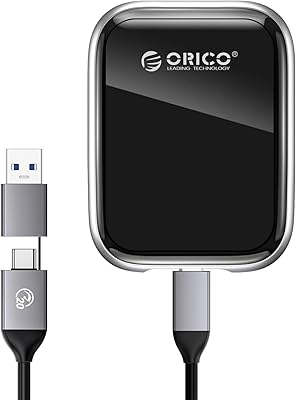
  • Included Cable: Ships with a 2-in-1 USB-C to USB-C and USB-C to USB-A cable, covering both modern and legacy port types without a separate adapter.
  • Dimensions: The drive measures 5.19 x 1.33 x 0.74 inches, making it slim enough to slip into a shirt pocket or small gear pouch.
  • Weight: Weighs approximately 0.22 lb (around 5 oz), substantially lighter than most 2.5-inch spinning hard drives of similar capacity.
  • Shell Material: Enclosure is constructed from aluminum alloy, which aids passive heat dissipation and provides better drop resistance than plastic-bodied alternatives.
  • Form Factor: Classified as a 2.5-inch external SSD in a slim, flat chassis with an integrated hanging hook on one end.
  • Hanging Hook: A built-in metal hook allows the drive to be clipped to a bag strap, belt loop, or carabiner for hands-free transport.
  • OS Compatibility: Works with Android, iOS, macOS, and Windows operating systems out of the box without requiring driver installation.
  • Installation Type: Fully plug-and-play; no software, formatting, or additional setup is required on most supported systems.
  • Drive Type: Internal storage is solid-state (SSD), with no moving parts, which reduces susceptibility to shock damage during everyday carry.
  • Series: Part of the ORICO C5 product series, available in capacities ranging from 512GB up to 4TB.
  • Model Number: Identified by the manufacturer model code 4TB-C5.
  • Manufacturer: Designed and produced by Shenzhen ORICO Technologies Co., Ltd, based in China.
  • Availability Date: First made available for purchase in April 2025, making it a relatively new entry in the portable SSD category.
  • Color: Offered in a grey and black colorway with a brushed aluminum finish on the outer shell.
  • BSR Ranking: Holds a Best Sellers Rank of #45 in the External Solid State Drives category on Amazon as of mid-2025.

Related Reviews
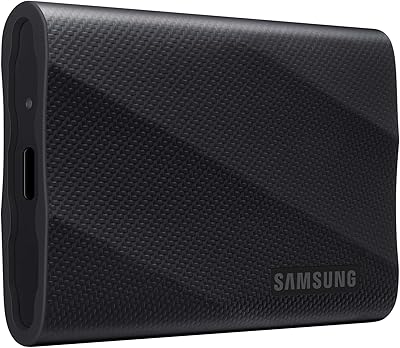
Samsung T9 Portable SSD 4TB
87%
92%
Transfer Speed
89%
Build Quality
88%
Portability
90%
Compatibility
85%
Durability
More
DIGIERA 4TB Magnetic Portable SSD
85%
91%
Performance & Speed
88%
Build Quality & Durability
90%
Portability & Size
85%
Ease of Use
89%
Compatibility
More
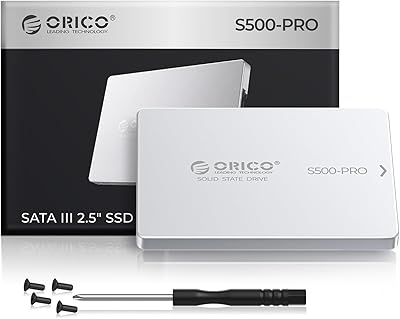
ORICO S500PRO 4TB SATA SSD
86%
91%
Performance
88%
Build Quality
90%
Value for Money
89%
Installation Ease
75%
Reliability Under Load
More
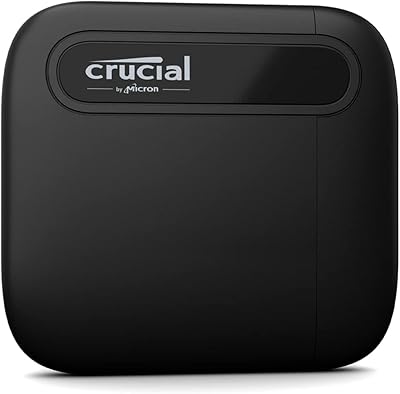
Crucial X6 4TB Portable SSD
87%
92%
Read Speed
90%
Portability
85%
Value for Money
88%
Durability
95%
Setup/Installation
More
ORICO B5PLUS 2TB Portable External SSD
74%
94%
Portability
78%
Transfer Speed
73%
Build Quality
81%
Value for Money
91%
Plug-and-Play Ease
More
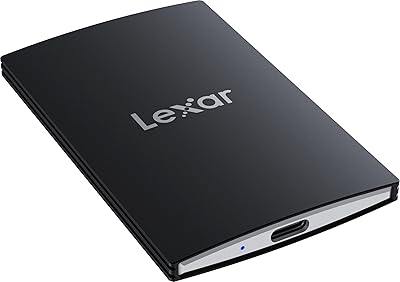
Lexar SL500 4TB Portable SSD
80%
91%
Transfer Speed
88%
Build Quality
94%
Portability
89%
iPhone Compatibility
83%
Thermal Management
More
Samsung T7 4TB Portable SSD
82%
91%
Transfer Speed
93%
Build Quality
94%
Portability
67%
Value for Money
63%
Thermal Management
More
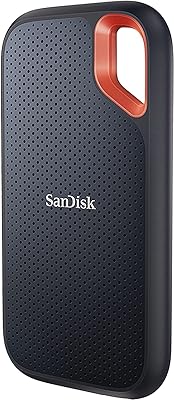
SanDisk Extreme 4TB Portable SSD
81%
88%
Transfer Speed
91%
Build Quality & Durability
89%
Water & Dust Resistance
94%
Portability & Form Factor
71%
Value for Money
More
ORICO A20 512GB Portable External SSD
78%
78%
Transfer Speed Performance
83%
Build Quality & Durability
91%
Portability & Form Factor
86%
Apple Device Compatibility
84%
Time Machine Backup Reliability
More
Lexar Armor 700 Portable SSD 4TB
83%
88%
Transfer Speed Performance
93%
Build Quality & Ruggedness
91%
IP66 Dust & Water Resistance
74%
Thermal Management
89%
iPhone ProRes Recording Support
More

FAQ

It depends on your specific device and iOS version. Apple has expanded external storage support in recent years, but file access typically requires using the Files app or a compatible third-party app. Some users report smooth operation while others encounter limitations with certain file types, so it is worth testing with your workflow before relying on it heavily for iOS use.

Not always. That figure represents the peak sequential read speed under ideal conditions. In practice, especially during sustained or mixed file transfers, speeds will often run lower. For typical tasks like offloading photos or backing up documents, the drive feels responsive, but if you are moving hundreds of gigabytes in one session, expect real-world throughput to settle below the rated maximum.

Yes, and this is genuinely one of the stronger use cases for this 4TB drive. Most modern Android phones with a USB-C port will recognize the drive immediately when connected with the included cable. You can transfer videos, photos, and large files directly without needing a laptop or cloud service in the middle.

User reactions are mixed. People who clip gear to backpack straps or camera rigs tend to find it genuinely handy — it keeps the drive accessible without digging through a bag. Those who prefer to store drives in a pouch or case find the hook an unnecessary protrusion. It is solidly built rather than flimsy, but whether it adds value really depends on how you carry your gear.

NVMe-based portable drives using USB 3.2 Gen 2 or Thunderbolt can deliver sustained speeds two to four times higher than this drive. The ORICO C5 4TB Portable SSD trades raw speed for capacity per dollar — if maximum throughput is your priority, a faster but smaller NVMe option may serve you better. If you need bulk storage and speed is secondary, this drive holds its own.

The aluminum shell does a reasonable job of managing heat passively, and it is generally more effective at this than plastic-encased drives. During extended transfers of large files, the body can become warm to the touch, but users have not widely reported it becoming uncomfortably hot or throttling significantly under normal conditions.

The drive ships formatted for broad compatibility, but if you plan to use it exclusively with macOS and want to take full advantage of Mac-native features, reformatting to APFS or Mac OS Extended is straightforward using Disk Utility. If you need it to work across both Mac and Windows systems regularly, exFAT is the practical choice and requires no special software.

ORICO typically offers a limited warranty on its storage products, though specific terms can vary by region and purchase channel. It is worth confirming warranty details directly with the seller or ORICO support at the time of purchase, especially since this drive only launched in early 2025 and long-term reliability data from the broader user base is still accumulating.

Yes, plug-and-play means your operating system will recognize it immediately. On Windows you can use built-in Backup and Restore, on macOS you can point Time Machine to it, and on both platforms manual drag-and-drop works without any additional software. It is about as low-friction a backup setup as you will find.

Roughly speaking, 4TB can hold around 1,000 hours of standard HD video, tens of thousands of RAW photo files, or several complete backups of a typical laptop. For most people, 4TB is enough to consolidate multiple older drives into one, carry a full working archive on location, or maintain years of personal media without ever feeling cramped.