Overview

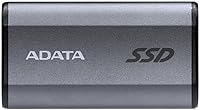
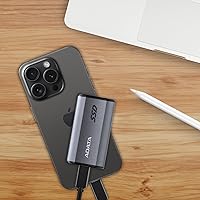
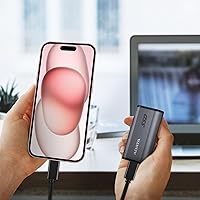
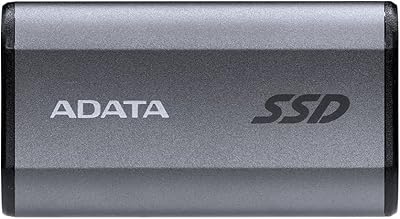
The ADATA SE880 2TB Portable SSD enters a crowded market where Samsung, WD, and Crucial already have loyal followings — but it carves a real niche thanks to its USB 3.2 Gen 2x2 interface, which pushes theoretical speeds up to 2000 MB/s. ADATA has been making storage hardware since 2001 and is well-regarded in enthusiast circles, even if they don't have Samsung's consumer recognition. The drive itself is genuinely tiny — it disappears into a shirt pocket — and weighs almost nothing. One critical caveat upfront: those headline speeds only materialize if your laptop or hub actually supports Gen 2x2. Most current computers don't, so check your specs before buying.

Features & Benefits

The SE880's party trick is its 20 Gbps bandwidth ceiling, which in practice translates to moving a 100GB folder in roughly a minute rather than three. That's meaningful if you're offloading raw footage or large photo libraries on location. The aluminum-alloy shell with its titanium finish feels sturdy and dissipates heat reasonably well, though under prolonged heavy transfers you'll notice it warming up — nothing alarming, but worth knowing. It ships exFAT pre-formatted, so it works across Windows, macOS, Android, PS5, and Xbox Series X straight out of the box. The cable-free USB-C connection is a small but welcome detail for keeping a travel bag tidy. One honest gap: no hardware encryption and no IP rating for dust or water resistance.

Best For

This ADATA drive makes the most sense for content creators and photographers who are already working with a USB 3.2 Gen 2x2 or Thunderbolt 4 host — think newer MacBook Pro users or workstations with a capable USB hub. Console gamers will also get solid value here; 2TB of expandable storage for a PS5 or Xbox Series X is genuinely useful, and setup is plug-and-play. Travelers who want a pocketable backup drive will appreciate the form factor. That said, if your laptop tops out at standard USB 3.2 Gen 2 (10 Gbps), the SE880 offers no real speed edge over drives that cost significantly less. Check your port specs — it matters.

User Feedback

Buyers generally respond well to this portable SSD, with a 4.5-star average across more than 510 ratings at time of writing. Speed and build quality get the most praise, particularly from users who have the right USB hardware to unlock full performance. The form factor consistently earns compliments — several reviewers specifically call it the most compact drive they've owned. On the flip side, the most recurring frustration is a fair one: buyers who didn't realize they needed a Gen 2x2 port to hit the advertised speeds feel misled by the marketing. A handful of lower-rated reviews also mention heat during long transfers, with some reporting slight slowdowns. No widespread reliability or firmware issues stand out at this stage, which is reassuring.

Pros

  • Genuine 2000 MB/s read speeds are achievable on compatible USB 3.2 Gen 2x2 hardware, not just a marketing ceiling.
  • 2TB of capacity handles large raw photo libraries, 4K video projects, and console game installs with room to spare.
  • The aluminum-alloy shell with titanium finish feels noticeably more solid than plastic competitors in the same price range.
  • Plug-and-play exFAT formatting works across Windows, macOS, Android, PS5, and Xbox Series X with zero setup required.
  • Cable-free USB-C design keeps travel and desk setups tidy — no extra cable to lose, tangle, or forget.
  • At roughly 1.1 oz and barely wider than a few stacked credit cards, it genuinely disappears into a shirt pocket.
  • A 4.5-star average across more than 510 verified buyers reflects strong real-world satisfaction, not just early-adopter enthusiasm.
  • Three available capacities (512GB, 1TB, 2TB) let buyers match storage needs to budget without overpaying for unused space.

Cons

  • Full-speed performance requires a USB 3.2 Gen 2x2 host port — a spec most current laptops still lack entirely.
  • No hardware encryption means lost or stolen drives expose data with no built-in protection layer whatsoever.
  • No IP dust or water resistance rating makes this a risky choice for outdoor shoots or rough travel conditions.
  • The drive warms noticeably under sustained heavy transfers, and some users have reported brief speed throttling as a result.
  • ADATA's consumer brand recognition trails Samsung and WD, which can make warranty support feel less reassuring for some buyers.
  • Speed marketing is not clearly caveated at point of sale, leading buyers with incompatible ports to feel misled after purchase.
  • No bundled backup software or drive health monitoring tool is included, unlike some rivals at this price tier.
  • USB-A users need a separate adapter — the integrated connector is USB-C only, with nothing additional in the box.

Ratings

Our AI scoring system analyzed hundreds of verified global reviews of the ADATA SE880 2TB Portable SSD, actively filtering out incentivized submissions, bot patterns, and outlier noise to surface what real buyers consistently experience. The scores below reflect both the genuine strengths this drive delivers to the right buyer and the friction points that emerge when it lands in the wrong hands. You will find no sugarcoating — every category is scored to be useful, not flattering.

Transfer Speed
88%
Users with USB 3.2 Gen 2x2-equipped machines consistently report moving large 4K project folders in a fraction of their previous time — real-world reads frequently land in the 1800–1950 MB/s range, which is close enough to the marketing figure to feel honest. For content creators on the right hardware, the speed difference over standard Gen 2 drives is immediately felt.
The headline 2000 MB/s is only accessible through a USB 3.2 Gen 2x2 host port, and the majority of laptops currently sold simply do not have one. Buyers using a standard Gen 2 (10 Gbps) port will be capped at roughly half the advertised speed — meaning they are paying for performance they cannot access.
Build Quality
91%
The aluminum-alloy enclosure with its titanium-toned finish draws consistent praise for feeling premium relative to plastic-bodied rivals. Reviewers regularly note it does not creak, flex under pressure, or pick up fingerprints easily — a meaningful detail for a drive handled constantly in the field.
While the shell handles everyday bag carry and minor drops without issue, there is no IP rating whatsoever — no protection against dust or liquid ingress. Users who shoot near water or work in sandy, wet environments have flagged this gap directly when comparing the SE880 to the rubberized, IP65-rated Samsung T7 Shield.
Portability
94%
The SE880 earns its highest praise for sheer pocketability — at roughly 1.1 oz and smaller than most business cards in footprint, it genuinely disappears into a pants pocket or the inner sleeve of a camera bag. Travelers and on-location shooters consistently name the form factor the most immediately appreciated quality of this drive.
The integrated USB-C stub, while convenient, means the drive protrudes noticeably when plugged into a laptop port — it can snag on nearby objects in cramped desk or bag setups. A small subset of users also wish a short extension cable were included for situations where the plug angle puts lateral stress on the host port.
Value for Money
74%
26%
For buyers who own a USB 3.2 Gen 2x2 or Thunderbolt 4-capable host, the SE880 offers competitive performance per dollar — especially at the 2TB tier, where fast portable storage of this caliber commands a premium across every brand. Console gamers expanding PS5 storage also find it a cost-effective alternative to pricier internal upgrade paths.
Users with Gen 1 or standard Gen 2 ports are overpaying for speed headroom they will never unlock — cheaper drives perform identically on that hardware. The absence of bundled software, hardware encryption, and an IP rating makes the asking price harder to justify against rivals that include at least one of those features at a comparable cost.
Software & Security
31%
69%
The drive works immediately without any software installation, which some users genuinely appreciate as a sign of no-fuss simplicity. For buyers who already plan to manage encryption at the OS level using tools like BitLocker or FileVault, the lack of bundled software is not a hard dealbreaker.
There is no hardware AES encryption, no backup utility, no companion app, and no secure erase function — a notably sparse package for a drive at this price tier. Security-conscious professionals storing client files or sensitive data will need to implement third-party software solutions and accept that hardware-level protection is simply absent here.
Compatibility
83%
Out-of-the-box exFAT formatting delivers genuine plug-and-play behavior across Windows, macOS, Android, PS5, and Xbox Series X — most buyers report zero setup friction regardless of which platform they connect to first. This breadth of cross-platform support is particularly valued by users who move data between different device ecosystems within a single workflow.
iPhone and iPad compatibility exists but is inconsistent — the iOS Files app can browse the drive on USB-C devices, but not all apps support direct external storage access. Android users also need to source their own USB-C OTG adapter, as nothing for mobile connectivity is included in the retail package.
Thermal Management
66%
34%
The aluminum shell does a reasonable job of passively pulling heat away from the internals during moderate use — offloading a typical camera card or a batch of RAW files rarely causes any perceptible issue. The metal body at least gives heat somewhere to dissipate, unlike fully plastic enclosures that trap warmth internally.
Under sustained heavy workloads — think continuous multi-hour backup jobs or repeated back-to-back transfers of 100GB or more — the drive gets notably warm and some users have reported speed dips consistent with thermal throttling. Buyers who regularly run long, uninterrupted transfer sessions should factor this limitation into their decision.
Ease of Setup
93%
Setup is essentially zero-effort — plug it in and it appears on the desktop or console immediately, with no drivers, no formatting steps, and no configuration menus to navigate. Reviewers across all technical skill levels, from casual users to working professionals, consistently describe the first-use experience as instant.
The only real setup friction surfaces for users with USB-A-only machines, who need to source an adapter before they can use the drive at all. Buyers expecting a Mac-native APFS or Windows-specific NTFS partition also need to reformat it themselves, which is a minor but non-zero extra step for those workflows.
Storage Capacity
87%
2TB is a genuinely practical amount for the target audience — a working photographer can archive thousands of RAW files, a video editor can keep several project timelines stored offline, and a console gamer can hold dozens of full-size titles. It hits the capacity sweet spot for most professional portable workflows without feeling like overkill.
There is currently no 4TB option in the SE880 lineup, which leaves buyers who need maximum single-drive capacity looking at competing products. The 512GB entry variant, while available at a lower entry point, feels limiting for the demanding use cases this drive is primarily marketed toward.
Cable-Free Design
86%
The integrated USB-C connector is a thoughtful design choice that frequent travelers genuinely appreciate — there is nothing extra to carry, nothing to misplace, and no cable adding clutter to a packed bag. Users who plug in for quick on-location offloads find the experience noticeably cleaner than using traditional tethered portable drives.
The fixed connector is also the design's main vulnerability — if the USB-C stub is damaged through rough handling, the drive itself becomes unusable with no straightforward repair path. Users whose laptop port sits in an awkward position also note the drive can rest at a stress-inducing angle, and with no cable option in the box, there is no easy workaround.
Brand Reliability
77%
23%
ADATA has been manufacturing storage products since 2001 and holds solid credibility among PC hardware enthusiasts who know the brand from RAM and internal SSDs. The 4.5-star average across a meaningful volume of verified buyers suggests that reliability concerns, while not entirely absent, are far from a dominant theme in overall feedback.
ADATA does not carry the same consumer-facing brand recognition as Samsung or WD, which can make warranty interactions feel less reassuring for buyers who are not deeply familiar with the storage hardware space. A handful of lower-rated reviews do cite unexplained disconnects or firmware-related quirks, though these appear to be isolated cases rather than a systematic pattern.
Marketing Clarity
51%
49%
The core speed claim is technically accurate — this ADATA drive can approach 2000 MB/s under the right conditions, and buyers who researched port compatibility before purchasing are generally satisfied with what they received. The product listing does reference Gen 2x2 in the title, which gives attentive shoppers the information they need if they look for it.
The most consistently cited frustration in negative reviews is discovering after purchase that their hardware cannot reach the advertised speeds — a problem that clearer upfront communication would prevent. Many buyers feel the 2000 MB/s figure is given far more prominence than the host port requirement, which reads as misleading to non-technical shoppers browsing quickly.

Suitable for:

The ADATA SE880 2TB Portable SSD is purpose-built for people who move fast and carry serious amounts of data. Content creators shooting 4K or 6K footage will feel the difference on location, especially when offloading hundreds of gigabytes to a USB 3.2 Gen 2x2-equipped laptop or a Thunderbolt 4 hub — transfers that might take several minutes on a slower drive can finish in roughly one. Console gamers who have exhausted their PS5 or Xbox Series X internal storage get a plug-and-play expansion solution without cracking open their console or paying for an internal upgrade. Frequent travelers will appreciate how genuinely pocketable the SE880 is; at around 1.1 oz, it adds almost nothing to a camera bag or carry-on. Power users investing in USB4 or Thunderbolt 4 setups today will also find this ADATA drive holds up well as host hardware continues to catch up to its speed ceiling.

Not suitable for:

Buyers whose laptops top out at USB 3.2 Gen 1 or standard Gen 2 (10 Gbps) — which describes the majority of computers currently in circulation — should think carefully before purchasing the ADATA SE880 2TB Portable SSD. On those machines, the headline 2000 MB/s figure is entirely out of reach, and a less expensive drive would deliver identical real-world performance for considerably less money. Security-conscious users, including IT professionals or anyone storing sensitive client files, will find the absence of hardware encryption a hard dealbreaker — there is simply no protection if this drive falls into the wrong hands. Buyers who work in wet, dusty, or rough outdoor environments should also note there is no IP rating here, so a splash of water or a sandy bag compartment presents a genuine risk. If ruggedness or built-in encryption are non-negotiable, alternatives like the Samsung T7 Shield or iStorage diskAshur deserve a closer look before committing.

Specifications

  • Capacity: The drive provides 2TB of usable flash storage, with 512GB and 1TB variants also available in the same SE880 product line.
  • Interface: It uses a USB 3.2 Gen 2x2 (20 Gbps) interface, currently the fastest broadly available USB standard for consumer portable storage.
  • Max Read Speed: Sequential read speeds reach up to 2000 MB/s under ideal conditions when connected to a compatible USB 3.2 Gen 2x2 host port.
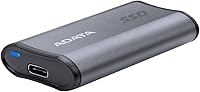
  • Connector: The drive uses an integrated USB-C connector built directly into the drive body — no separate cable is required or included in the box.
  • Dimensions: The drive measures 2.55 x 1.38 x 0.48 inches, a footprint smaller than most business cards and thin enough to sit flat in a shirt pocket.
  • Drive Weight: The bare drive weighs approximately 1.1 oz; the full packaged shipping weight is listed at 3.52 oz, which includes the retail box and any accessories.
  • Pre-Format: It ships pre-formatted in exFAT, a cross-platform file system natively readable by Windows, macOS, Android, PS5, and Xbox Series X without any reformatting.
  • Shell Material: The enclosure is aluminum alloy with a titanium-toned finish, providing structural rigidity and passive heat dissipation during sustained data transfers.
  • OS Compatibility: The drive officially supports Windows, macOS, and Android (via a USB-C OTG adapter); Linux generally works as well, though it is not listed as an officially supported platform.
  • Console Support: It is compatible with PS5 and Xbox Series X for extended storage of supported game titles and media files via direct USB-C connection.
  • Drive Type: Internally, the SE880 uses NAND flash memory in an NVMe configuration, which is what enables its high sequential throughput over the USB interface.
  • Water Resistance: No IP ingress protection rating is assigned to this drive, meaning it carries no certified resistance to water, moisture, or dust exposure.
  • Encryption: The drive does not include hardware-level AES encryption; any data protection must be handled by the host operating system or third-party software.
  • Color: The SE880 is offered in a Titanium Grey finish, with the anodized aluminum surface providing a matte, scratch-resistant appearance.
  • Customer Rating: Based on available marketplace data, the drive holds a 4.5 out of 5 star average rating across more than 510 verified customer ratings.

Related Reviews
ADATA SE880 1TB Portable External SSD
82%
83%
Transfer Speed
94%
Portability
88%
Build Quality
91%
Console Compatibility
89%
Plug-and-Play Setup
More
SanDisk Portable SSD 2TB External Drive
78%
83%
Transfer Speed
88%
Build Quality
93%
Portability
81%
Value for Money
61%
Thermal Management
More
PNY RP60 2TB Portable SSD
79%
83%
Transfer Speed
91%
Build Quality
88%
Durability & Protection
93%
Portability
62%
Host Compatibility
More
TEAMGROUP PD1000 2TB Portable External SSD
82%
86%
Read Speed Performance
67%
Write Speed Performance
91%
Build Quality
93%
Durability & Ruggedness
94%
Portability
More
fanxiang PS2100 2TB Portable External SSD
79%
83%
Transfer Speed
88%
Build Quality
91%
Durability & Protection
87%
Portability & Design
84%
Value for Money
More
ORICO B5PLUS 2TB Portable External SSD
74%
94%
Portability
78%
Transfer Speed
73%
Build Quality
81%
Value for Money
91%
Plug-and-Play Ease
More
Samsung T7 Portable SSD 2TB
87%
93%
Performance & Speed
89%
Build Quality & Durability
91%
Compatibility
88%
Security Features
90%
Portability & Design
More
Samsung T9 2TB Portable SSD
78%
91%
Transfer Speed
88%
Speed Consistency
86%
Build Quality
87%
Compatibility
83%
Thermal Management
More
ADATA Legend 900 2TB SSD
87%
94%
Performance
92%
Speed (Read/Write)
89%
Reliability & Durability
90%
PS5 Compatibility
88%
Ease of Installation
More
SSK SD600 2TB Portable SSD
78%
88%
Transfer Speed (Burst)
63%
Sustained Write Performance
84%
Build Quality & Design
93%
Portability
86%
Cross-Device Compatibility
More

FAQ

Probably not, unless your laptop specifically has a USB 3.2 Gen 2x2 port — and most current laptops do not. A standard USB 3.2 Gen 2 (10 Gbps) port caps real-world speeds at roughly 900–1000 MB/s regardless of the drive. Before buying, check your laptop's USB specification in its tech sheet or manufacturer page; it will clearly state whether Gen 2x2 is supported.

Yes — the ADATA SE880 2TB Portable SSD connects to both consoles via USB-C and is recognized immediately. On a PS5, you can store and play PS4 titles directly from it; PS5 native games need to be copied back to internal storage before launching. Xbox Series X handles external storage more flexibly, allowing you to store and play Xbox One titles or archive Xbox Series games for quick re-transfer.

No — it comes pre-formatted in exFAT, which is readable on Windows, macOS, Android, PS5, and Xbox Series X right out of the box. If your workflow specifically requires NTFS (Windows-only) or APFS (Mac-only), you would need to reformat it yourself, but the vast majority of users will never need to touch that setting.

iPhones with USB-C (iPhone 15 and later) and most recent iPads can physically connect to this drive. The iOS and iPadOS Files app can browse exFAT drives on compatible devices, so basic file access works. That said, the experience is more limited than on a desktop OS, and not all apps support direct external drive access — it really depends on your specific workflow.

The metal enclosure handles everyday bumps and scratches reasonably well — it is not going to dent from being tossed in a bag pocket. The main concern is that there is no IP rating, so it has no protection against liquids or fine dust. If you work on outdoor shoots or travel in unpredictable conditions, a small padded sleeve or zip pouch is a sensible precaution.

It does warm up noticeably during sustained heavy transfers — that is expected for any compact, fanless drive pushing data at high speeds. Some users have reported brief slowdowns during very long continuous writes, which is thermal throttling kicking in to protect the drive. For typical use like offloading a camera card or backing up a project folder, heat rarely becomes a real-world problem.

Yes, but you will need a USB-A to USB-C adapter or cable, which is not included. More importantly, a USB-A connection will limit you to USB 3.2 Gen 1 speeds — around 400–500 MB/s in practice — regardless of what the drive itself can do. You would essentially be buying a high-speed drive and using a fraction of its capability, so it is worth factoring that into your decision.

No — nothing is bundled. There is no hardware encryption, no backup utility, and no companion app of any kind. If encrypted storage is important to you, you would need to use a software solution like VeraCrypt on Windows or FileVault on macOS, or look at a different drive that includes built-in AES encryption at the hardware level.

The core trade-off is speed versus ruggedness. This ADATA drive is faster — up to 2000 MB/s versus the T7 Shield's roughly 1050 MB/s ceiling — but the Samsung has an IP65 dust and water resistance rating plus a rubberized protective shell. If you work outdoors or in wet or dusty environments, the T7 Shield is the more resilient option. If you have a Gen 2x2-capable host and work in controlled settings, the SE880 has a meaningful speed advantage.

ADATA covers the SE880 series with a 3-year limited warranty. Registering the drive on ADATA's official website shortly after purchase keeps the process straightforward if you ever need to make a claim, and holding onto proof of purchase is always advisable. ADATA's support reputation is generally solid among enthusiasts, though their consumer-facing support infrastructure is not as extensive as Samsung's.