Overview

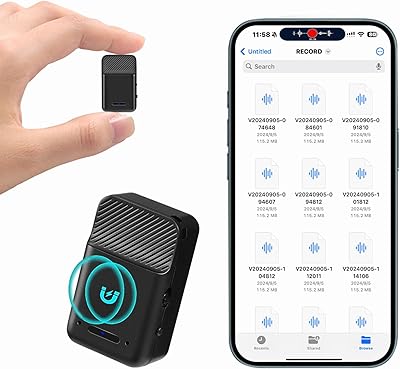
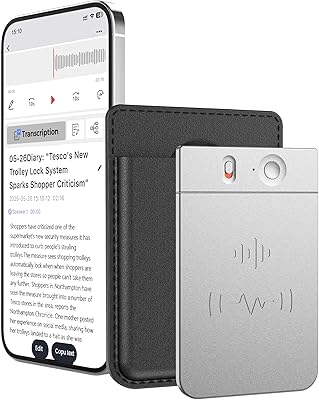
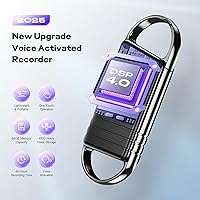
The Xelarvex 64GB Voice Recorder is a budget-oriented device from a brand that only entered the market in early 2025, so there is no long track record to lean on yet. That said, what it offers on paper is genuinely practical: 64GB of internal storage capable of holding thousands of hours of audio, packed into a clip-on body that weighs next to nothing. It is aimed squarely at students, desk workers, and anyone tired of fumbling with phone apps mid-recording. The early ratings look promising, but with fewer than 60 reviews at the time of writing, those numbers deserve a healthy dose of skepticism before drawing firm conclusions.
Features & Benefits

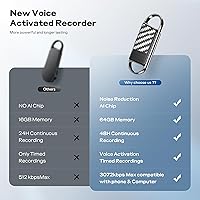
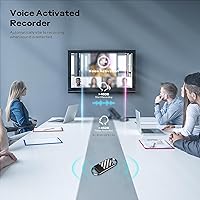
The standout feature here is voice-activated recording, which means the device only starts capturing audio when it detects sound — no wasted storage, no long stretches of silence to scrub through later. The manufacturer claims its AI noise-reduction chip filters out roughly 97% of ambient noise, which sounds impressive, but real-world results will vary by environment; treat that figure as an aspiration rather than a guarantee. Battery life is where this compact recording device genuinely pulls ahead: up to 48 hours of continuous recording from a charge that takes under two hours. Files auto-save every two hours, and the device protects your recordings if the battery dips critically low — a thoughtful safeguard for longer sessions.

Best For

This voice recorder is a natural fit for college students who need to capture full lectures without babysitting a battery meter or watching storage fill up mid-class. Journalists doing field interviews will appreciate the noise-reduction capability, even if you go in with measured expectations. It also works well for professionals who want a discreet, clip-on option for meetings or brainstorming sessions — no phone screen lighting up, no app to juggle. Travelers and field researchers who need something genuinely lightweight will find the form factor easy to carry daily. If you want a dedicated recording device with no subscriptions, no apps, and no complicated setup, this sits comfortably in that niche.

User Feedback

Early buyers highlight audio clarity and the sheer ease of setup as standout positives — clip it on, press record, done. Battery longevity also earns consistent praise across reviews. On the flip side, some users note that noise cancellation, while helpful, does not perform miracles in very loud or echoey rooms, so studio-grade results are off the table. A few mention the file-transfer process feels a little clunky when offloading to a computer. The Xelarvex recorder currently holds a 4.8-star average, but that is based on under 60 reviews — a small pool that can shift quickly. Given the brand is new, long-term reliability remains an open question worth watching before committing to high-stakes professional use.

Pros

  • Massive 64GB storage means most users will never run out of space mid-semester or mid-project.
  • Up to 48 hours of continuous recording from a single short charge is genuinely impressive at this price level.
  • Voice-activated recording keeps files clean and storage lean without any manual effort.
  • The clip-on design makes this voice recorder easy to attach and forget during lectures or meetings.
  • WAV format output works natively with virtually every transcription tool and audio editor.
  • Automatic file saving every two hours protects recordings even if the battery unexpectedly dies.
  • No app, no account, no complicated setup — it works immediately out of the box.
  • Lightweight enough to slip into a bag or pocket without adding noticeable bulk to a daily carry.
  • Built-in 3.5mm headphone jack allows quick spot-check playback without needing a computer.

Cons

  • No screen means you cannot check battery level, storage space, or recording status at a glance.
  • Noise cancellation underperforms in loud or reverberant environments despite the headline claim.
  • Micro USB 2.0 file transfer feels outdated and slower than buyers reasonably expect in 2025.
  • The 2-hour file segmentation is fixed and cannot be adjusted to suit different recording workflows.
  • Xelarvex has no established brand reputation or proven warranty track record to fall back on.
  • WAV-only recording eats through storage faster than compressed formats for heavy users.
  • The voice-activation threshold is not user-adjustable, risking clipped audio at the start of soft or distant speech.
  • Build quality feels noticeably lightweight, raising durability concerns with frequent daily use over time.
  • No companion software makes organizing, labeling, or searching through large recording libraries tedious.
  • The nonstandard battery cannot be swapped out, leaving users stranded if the internal cell degrades early.

Ratings

Our AI rating system analyzed verified buyer reviews for the Xelarvex 64GB Voice Recorder from across multiple global markets, filtering out incentivized, duplicate, and bot-generated feedback to surface what genuine users actually experience. The scores below reflect both the real strengths that keep buyers satisfied and the friction points that show up repeatedly in honest feedback. Nothing has been glossed over — the highs and the frustrations are weighted equally.
Audio Clarity
83%
In typical environments like quiet classrooms or small conference rooms, buyers consistently report that voice reproduction is clean and easy to transcribe afterward. Dialogue comes through without the muffled quality that plagues cheaper recorders at this price tier.
In larger, more reverberant spaces — lecture halls with hard floors, busy cafes — the clarity drops noticeably. Some users find that distant speakers or soft-spoken participants get lost even with the noise processing active.
Noise Cancellation
71%
29%
For everyday background hum — HVAC systems, light office chatter, keyboard noise — the AI processing chip does a reasonable job of keeping the target voice front and center. Buyers doing one-on-one interviews in moderately noisy settings tend to be pleasantly surprised.
The manufacturer-claimed 97% noise reduction is a best-case figure that does not hold up in genuinely loud or complex acoustic environments. Busy streets, crowded restaurants, and large group discussions expose the chip's limitations, and some users report an occasional processing artifact that sounds like faint distortion.
Battery Life
91%
This is where the Xelarvex recorder genuinely earns its stripes. Buyers running full-day workshops, multi-session conferences, or back-to-back lecture days report that a single charge easily carries them through without anxiety. The fast 1.5-hour recharge compounds the convenience significantly.
A handful of users note that battery performance degrades somewhat when voice-activation is disabled and continuous recording runs at higher quality settings. The nonstandard battery type also means you cannot simply swap in a replacement if something goes wrong down the line.
Voice-Activated Recording
78%
22%
Students and meeting attendees who let the device sit passively on a desk appreciate that it kicks on reliably when conversation starts and stops cleanly during pauses. Storage stays lean, and playback does not require scrubbing through dead air.
The activation threshold is not adjustable on all firmware versions, which means very quiet or distant speakers can occasionally be clipped at the start of a sentence before the device registers the sound. A brief warm-up lag frustrates users trying to capture spontaneous or sudden speech.
Storage & Capacity
94%
64GB is genuinely generous for a device in this category, and buyers rarely encounter a situation where space becomes a concern during normal use. Whether you are archiving months of lecture recordings or building an interview library, you are unlikely to hit the ceiling anytime soon.
There is no expandable storage slot, so what you get at purchase is what you have permanently. Users who record at maximum quality settings for extended periods will consume space faster than the headline figure suggests.
Portability & Design
88%
The clip-on design is practical rather than gimmicky — buyers attach it to lanyards, shirt pockets, or bag straps without it drawing attention. At around one ounce, it genuinely disappears into a daily carry routine in a way that bulkier recorders simply do not.
The physical build feels lightweight in a way that can read as flimsy to buyers used to more substantial devices. A few users mention that the clip mechanism feels less secure after repeated attachment cycles, raising some durability questions over months of daily use.
Ease of Use
86%
Setup is minimal — there is no app to install, no account to create, and no complicated menu system to navigate. Buyers who are not tech-savvy, including older students and non-technical professionals, consistently praise how quickly they were up and running.
The absence of a display screen means you cannot confirm recording status, remaining storage, or battery level at a glance without connecting to a computer. This blind-spot frustrates users who want real-time feedback during active sessions.
File Management & Transfer
62%
38%
The automatic 2-hour file segmentation is a genuinely useful organizational feature for users who record long sessions, making it easier to locate specific moments without scrubbing one massive audio file.
Transferring files via Micro USB 2.0 feels dated and slower than users expect in 2025. Several buyers report that folder organization on the device is not intuitive, and there is no companion software to help sort, label, or search recordings on the PC side.
Recording Format & Compatibility
74%
26%
WAV output is a solid, universally compatible format that works natively with virtually every audio editor, transcription service, and media player without conversion. For journalists or researchers who process recordings professionally, this is the right call.
WAV files are significantly larger than compressed formats like MP3, which means heavy users will burn through storage faster than expected. There is no option to record in a compressed format for users who prioritize storage efficiency over audio fidelity.
Build Quality & Durability
58%
42%
For casual, low-intensity daily use the construction holds up adequately. Buyers who treat it gently and use it primarily indoors have not reported functional issues within the first months of ownership.
The plastic housing and lightweight construction do not inspire confidence for users who need something rugged or field-tested. Given the brand is brand new with no established durability track record, longer-term reliability beyond six months remains genuinely unknown.
Value for Money
82%
18%
Measured against what this compact recording device actually delivers — substantial storage, strong battery, and voice activation — the price-to-feature ratio holds up well for budget-conscious buyers. Students in particular get a lot of functional coverage for the outlay.
The value proposition relies entirely on the features performing as advertised. If noise cancellation underdelivers for your specific environment, or build quality disappoints early, the savings feel less compelling compared to established brands with proven warranties.
Auto-Save & Data Protection
87%
The automatic save at 2-hour intervals and the low-battery save trigger are features that buyers genuinely rely on. Multiple users specifically mention that the device saved a critical recording when the battery unexpectedly ran out mid-session.
The 2-hour segment length is fixed and cannot be customized, which means users who want shorter, more granular file breaks for easier navigation are out of luck without manually managing files afterward.
Playback Experience
68%
32%
The built-in 3.5mm headphone jack allows for immediate on-device playback without needing a computer, which is handy for quick spot-checks right after a meeting or lecture to confirm the recording captured what was needed.
On-device navigation for playback is limited without a screen, making it difficult to rewind to a specific moment or jump between files efficiently. Most users end up doing meaningful playback and review on a computer rather than on the device itself.
Brand Trust & Support
53%
47%
Early buyer interactions with Xelarvex support appear responsive based on the limited feedback available. The device arrives with the battery included, which signals at least baseline attention to the out-of-box experience.
Xelarvex is a newly launched brand with no established reputation, no long-term user community, and a very thin review base. Buyers cannot yet assess warranty follow-through or product longevity, and that uncertainty is a legitimate concern for anyone relying on this device professionally.

Suitable for:

The Xelarvex 64GB Voice Recorder is a strong fit for college students who need a reliable, low-maintenance way to capture lectures across a full academic day without stopping to recharge or manage storage. It works equally well for professionals who want a discreet, clip-on recorder for meetings and brainstorming sessions where pulling out a phone would feel intrusive. Journalists and interviewers conducting one-on-one sessions in moderately controlled environments will appreciate the voice-activated capture and the clean WAV output, which feeds neatly into transcription workflows. Travelers and field researchers who prioritize a light, self-contained device over a feature-heavy setup will find the form factor genuinely practical. Essentially, if your recording needs are straightforward, your environment is reasonably controlled, and you want something that works right out of the box without an app or a learning curve, this compact recording device covers that ground well.

Not suitable for:

The Xelarvex 64GB Voice Recorder is not the right tool for anyone whose work depends on professional-grade audio in challenging acoustic conditions — think panel discussions in large halls, outdoor field interviews, or multi-speaker roundtables in echo-prone rooms. The noise cancellation, while useful in mild situations, is a manufacturer-claimed figure that does not hold up under serious real-world pressure, so audio engineers, podcasters, or broadcast journalists should look elsewhere. Users who need granular on-device control — adjustable activation thresholds, variable file segmentation, or a screen to monitor recording status in real time — will find the feature set limiting. The Micro USB 2.0 connection and lack of companion software make file management noticeably clunky for anyone handling high volumes of recordings regularly. And because Xelarvex is a brand with no meaningful track record yet, buyers who need long-term warranty assurance or proven durability for professional reliance should treat this as an unproven option until more independent evidence accumulates.
Specifications

  • Storage: 64GB of internal memory with no expansion slot, supporting up to 4,800 hours of audio at 192Kbps.
  • Battery Life: Delivers up to 48 hours of continuous recording on a full charge under standard operating conditions.
  • Charge Time: Reaches a full charge in approximately 1.5 hours via the included Micro USB 2.0 cable.
  • File Format: Records exclusively in WAV format, a lossless audio standard compatible with most PCs, editors, and transcription tools.
  • Microphone: Features a built-in microphone with an AI noise-reduction chip that the manufacturer rates at up to 97% ambient noise filtering.
  • Voice Activation: Includes a voice-activated recording mode that starts and stops capture automatically based on detected sound levels.
  • Auto-Save: Automatically segments recordings into 2-hour files and saves all data securely when the battery reaches a critically low level.
  • Audio Output: Equipped with a 3.5mm headphone jack for direct on-device playback without requiring a connected computer.
  • Connectivity: Transfers files to a PC via Micro USB 2.0 Type B; no wireless, Bluetooth, or USB-C connectivity is supported.
  • Device Weight: The recorder itself weighs approximately 1 oz, while the packaged shipping weight is 4.2 oz.
  • Dimensions: Package dimensions measure 6.5 x 3.58 x 1.1 inches, reflecting a slim, pocket-friendly physical footprint.
  • Power Source: Powered by one nonstandard internal battery, which is included in the box and is not user-replaceable.
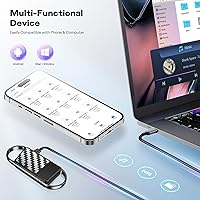
  • Compatible Devices: Designed for file transfer and playback compatibility with personal computers running standard operating systems.
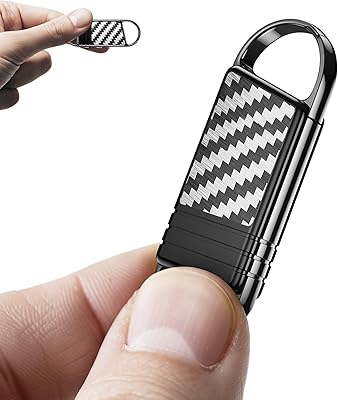
  • Design: Features a clip-on form factor intended for attachment to lanyards, bag straps, shirt pockets, or key rings.
  • Recording Bitrate: Default recording quality is 192Kbps, which balances audio fidelity with efficient use of available storage space.
  • Brand & Origin: Manufactured by Xelarvex, a brand that entered the consumer electronics market in March 2025 with this product.
  • Display: The device has no built-in screen; recording status and storage information cannot be monitored directly on the unit.

Related Reviews

Yegolito U46 64GB Voice Recorder
80%
83%
Audio Clarity (Quiet Environments)
67%
Noise Reduction Performance
89%
Battery Life
71%
VOR (Voice Activated Recording) Reliability
86%
Storage & File Management
More
COHANA GL-37 128GB Voice Recorder
76%
74%
Audio Clarity
61%
Noise Cancellation Performance
88%
Magnetic Mount Usability
78%
Voice Activation Accuracy
93%
Storage & Capacity
More
Run_kkarrr 59-64 64GB Voice Recorder
73%
88%
Battery Life
91%
Storage Value
67%
Audio Clarity
63%
Voice-Activated Recording (VAR)
74%
Ease of Use
More
TTQ Chime Note AI Voice Recorder 64GB
74%
78%
Transcription Accuracy
91%
Battery Life
74%
AI Summary Quality
58%
App Stability & Reliability
82%
Audio Recording Quality
More
Xelarvex 136GB Digital Voice Recorder
88%
88%
Recording Quality
91%
Ease of Use
95%
Battery Life
90%
Storage Capacity
87%
Noise Cancellation
More
Plaud NotePin
Plaud NotePin
78%
78%
Transcription Accuracy
82%
AI Summarization Quality
84%
Wearability & Form Factor
86%
Battery Life
61%
Value for Money
More
ZIPCIDE 64GB Digital Voice Recorder
84%
85%
Audio Quality
92%
Battery Life
88%
Noise Reduction Effectiveness
90%
Portability
65%
Voice Activation Sensitivity
More
Powerextra AI Voice Recorder 64GB
82%
83%
Transcription Accuracy
94%
Battery Life
81%
Recording Quality
77%
AI Summary & Mind Map Quality
86%
Value for Money
More
EVIDA 64GB Digital Voice Recorder
84%
88%
Recording Quality
79%
Battery Life
91%
Ease of Use
70%
Voice Activation Functionality
85%
Noise Reduction Performance
More
Amazebra AI Voice Recorder 64GB
86%
91%
Transcription Accuracy
88%
Real-Time Translation
93%
Battery Life
90%
Portability
92%
Data Security
More

FAQ

No software installation is required. The Xelarvex 64GB Voice Recorder powers on and records immediately — just charge it, press the record button, and you are good to go. File transfer to a PC is handled through a simple plug-in via the included Micro USB cable, and your computer will recognize it as a standard storage device.

Based on available product information, the voice-activation threshold is not user-adjustable on this device. It uses a fixed sensitivity level set by the manufacturer. If you are recording in a very quiet environment or need to capture very soft speech, it is worth testing the feature first to confirm it triggers reliably for your specific use case.

It depends on your placement. If you can position the recorder reasonably close to the speaker or the room has decent acoustics, results are generally acceptable. In large, echo-heavy halls where you are far from the source, audio quality will degrade and the noise reduction chip is unlikely to fully compensate. For best results in larger rooms, place it as close to the sound source as possible.

The device automatically closes and saves a file after every 2 hours of continuous recording, then immediately opens a new file and carries on recording without any gap you need to manage. You end up with a series of sequentially saved 2-hour files rather than one massive file. It is a protective feature, not an interruption.

No, this compact recording device is a standalone recorder only. It does not function as a USB microphone, it cannot tap into a phone call directly, and it has no line-in port for capturing external audio sources. It records through its built-in microphone exclusively.

The device is designed to detect a critically low battery and automatically save whatever has been recorded before powering off. So while an unexpected shutdown mid-session is not ideal, you should not lose the audio captured up to that point. That said, it is always good practice to charge regularly rather than rely on the emergency save as a habit.

Yes, WAV is one of the most universally accepted audio formats and is supported by virtually all major transcription platforms, including cloud-based services and offline software. You should not need to convert files before uploading them anywhere.

The 48-hour figure refers to continuous recording. In voice-activated mode, where the device powers the recording circuit on and off based on sound detection, battery consumption is lower — so you can generally expect even longer real-world life between charges. Exact results vary depending on how frequently the activation triggers throughout your sessions.

Not on the device itself, since there is no screen or input method for renaming files. Files are saved sequentially with automatic timestamps or numbering. Any meaningful organization — renaming, sorting into folders, or tagging — needs to happen after you transfer the files to your computer.

From a pure audio-capture standpoint, this voice recorder handles one-on-one conversations in quiet to moderately noisy settings reasonably well. However, for legally sensitive recordings, you need to consider the noise cancellation limitations in unpredictable environments and the lack of a proven brand track record for reliability. If the stakes are high, a more established brand with verified durability history would be a safer choice — this device is better suited for everyday documentation than high-stakes professional use.