

Overview

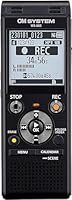
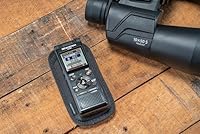
The OM System WS-883 Digital Voice Recorder arrived in early 2023 as a solid mid-range option from a brand with serious audio heritage. OM System — the company that took over Olympus's camera and audio division — carries decades of engineering credibility into this compact device. Physically, the WS-883 is unassuming: slim and lightweight at under three ounces, finished in matte black. It slips into a shirt pocket without a second thought. For everyday users who want straightforward recording without wading through complex menus or buying expensive accessories, this voice recorder strikes a practical balance between capability and simplicity right out of the box.

Features & Benefits

The WS-883 packs genuine stereo microphones, which makes a real difference when capturing a roundtable discussion or an interview — voices spread naturally across the recording rather than collapsing into a single flat channel. You can record in Linear PCM when audio fidelity matters most, or switch to MP3 to stretch the 8GB internal storage as far as possible; at the lowest MP3 setting, you are looking at an enormous amount of runtime before running out of space. A low-cut filter knocks out the low-frequency hum that plagues most indoor environments, and the USB-A connection lets you charge and pull files onto a laptop without hunting for proprietary cables.

Best For

This Olympus-lineage recorder is a natural fit for students and journalists who need to capture long sessions without babysitting a battery or storage meter. Field interviewers will appreciate the stereo pickup, which keeps voices spatially distinct in busy environments. It also works well for professionals who want an unobtrusive conference recorder that just sits on the table and does its job. Hobbyist podcasters who need a reliable backup unit will find it covers that role without much fuss. Anyone frustrated by smartphone recording — notifications cutting in, poor mic placement, unreliable storage — will find the WS-883 a genuinely practical alternative.

User Feedback

People who pick up this voice recorder consistently mention two things: audio clarity and how quickly they had it up and running. Setup is minimal, and the included batteries mean you are not making an extra trip to the store on day one. That said, some users find the menu navigation a bit dated — the interface feels like it was designed for an earlier era, and it takes a session or two to build muscle memory. A handful of buyers stepping up from older Olympus models feel the value is slightly thinner given how prices have shifted. Still, for the core audience — people who just want clean, reliable recordings — satisfaction runs high.

Pros

  • True stereo capture keeps voices naturally separated in meetings and interviews.
  • The low-cut filter handles noisy indoor environments like classrooms and offices surprisingly well.
  • USB-A connectivity means no proprietary cables needed for charging or file transfers.
  • Included AAA batteries let you start recording immediately without an extra purchase.
  • Lightweight at under three ounces, so it sits comfortably in a shirt pocket all day.
  • Dual format support lets you choose between high-fidelity PCM or storage-efficient MP3 depending on the situation.
  • Setup is minimal — most users are recording within minutes of unboxing.
  • The 3.5mm headphone jack allows real-time monitoring without any extra adapters.
  • Brand heritage from OM System brings solid build quality expectations to a mid-range price point.
  • Long maximum runtime at lower quality settings means fewer interruptions during extended sessions.

Cons

  • The menu interface feels dated and requires a learning curve before it becomes intuitive.
  • No wireless connectivity or cloud sync means file transfer is always tethered to a cable.
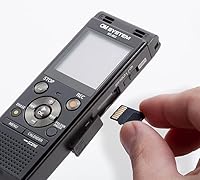
  • Fixed internal storage cannot be expanded, which may frustrate power users over time.
  • Linear PCM recordings consume storage quickly, limiting high-quality session length noticeably.
  • Button layout can feel cramped, making accidental presses more likely in a bag or pocket.
  • The WS-883 lacks any noise-reduction processing, so very loud or chaotic environments will still produce messy recordings.
  • No built-in speaker for playback means you always need headphones or a connected device nearby.
  • Buyers stepping up from older Olympus models may find fewer meaningful improvements than the price suggests.
  • No dedicated carrying case or protective pouch is included despite the premium positioning.
  • Screen size is small and can be difficult to read in bright outdoor lighting conditions.

Ratings

Our AI rating engine analyzed verified buyer reviews from around the world for the OM System WS-883 Digital Voice Recorder, actively filtering out incentivized, bot-generated, and duplicate feedback to surface what real users actually experience. The scores below reflect a balanced picture — genuine strengths are recognized, but recurring frustrations are never glossed over. Whether you are deciding between this recorder and a competitor or simply wondering if it fits your specific workflow, these scorecards are built to give you an honest, data-grounded answer.

Audio Clarity
88%
Users consistently report that voice recordings from lectures, one-on-one interviews, and small meetings come through with impressive detail and very little muddiness. The true stereo capture gives recordings a sense of depth that flat mono devices simply cannot match, which makes a real difference when reviewing multi-speaker conversations.
In louder or more chaotic environments — a crowded café, a noisy open-plan office — some users found background noise bleeds in more than expected, since the recorder lacks advanced noise reduction processing. Recordings made more than a few feet from the primary speaker also showed noticeable drop-off in clarity.
Stereo Performance
83%
The built-in stereo microphones do genuine left-right separation, not a digital simulation, which holds up well when recording roundtable discussions or capturing ambient audio for field notes. Journalists and interviewers particularly appreciated being able to distinguish speakers by their position in the recording during transcription.
The stereo field is relatively narrow compared to recorders with adjustable or outward-facing mic configurations, so the spatial effect is most noticeable in close-range recordings rather than large-room situations. Users trying to capture a wide conference table from a single central position sometimes found the outer seats sounded thinner.
Build Quality
81%
19%
The matte black plastic body feels solid and purposeful without being unnecessarily heavy, and the button feedback is tactile enough that you can operate it without looking. OM System's heritage from the Olympus era is reflected in a fit-and-finish that feels more considered than most competitors at this price tier.
It is still an all-plastic construction, so buyers expecting a metal or rubberized body may find it feels slightly less premium in hand than the brand reputation implies. A few users reported that the buttons, while functional, sit close together and can be awkward to press without accidentally triggering adjacent controls.
Ease of Use
69%
31%
Getting started — powering on, pressing record, stopping — is genuinely straightforward and most users are making their first recording within a couple of minutes of opening the box. The physical button layout means you do not need to navigate any software interface just to capture audio.
Beyond the basics, the menu system feels dated and requires patience to learn. Adjusting recording format, enabling the low-cut filter, or managing file folders involves navigating a small screen with a logic that newer users found non-intuitive, and the manual is not always the clearest guide.
Storage & File Management
72%
28%
8GB of internal memory is enough for most users to go weeks between transfers when recording in MP3 format, and the device mounts as a standard USB drive so moving files to a laptop takes seconds without installing any software. The folder and indexing system helps keep recordings organized if you use the device across multiple projects.
The lack of any memory card slot is a real limitation for power users who record frequently in PCM format, where files are considerably larger. Several users who record daily for work found themselves needing to clear the device more often than they would like, and there is no wireless transfer option to speed up that process.
Battery Life
77%
23%
AAA batteries are included out of the box, which means you can start using the recorder immediately without an extra purchase or a waiting charge cycle. Most users report getting through multiple long recording sessions — several hours each — on a single set of batteries, which suits students and professionals who need reliability across a full day.
Battery performance does vary depending on playback use and recording quality settings, and a small number of users found battery drain faster than expected when frequently using the backlit display. Unlike USB-rechargeable competitors, replacing batteries mid-trip requires having spares on hand.
USB Connectivity
84%
The USB-A direct plug eliminates the need for a proprietary charging cable, which is a genuine convenience for users who travel with a laptop and already carry a standard USB cable. File transfer is fast and the device is immediately recognized by both Windows and macOS without driver installation.
USB-A is increasingly less common on newer ultrabooks and MacBooks, which means some users need a hub or adapter that they did not anticipate needing. It also means the recorder cannot be charged from a modern USB-C wall adapter without an additional dongle.
Low-Cut Filter
79%
21%
Users who tested the recorder in rooms with persistent HVAC noise or fluorescent light hum noticed a meaningful reduction in that low-end drone when the filter was engaged, resulting in cleaner voice recordings that required less cleanup afterward. For classroom or office use, this feature alone improves the listening experience noticeably.
The filter is a fixed setting rather than an adjustable one, so it cuts across a set frequency range regardless of the environment. In some quieter rooms, users felt the filter was slightly over-aggressive and made voices sound a touch thin at the lower end of the frequency range.
Portability
91%
At under three ounces and slim enough to slip into a shirt pocket, this voice recorder genuinely disappears into your daily carry. Students who shuttle between classrooms and professionals who move between meeting rooms found it far more convenient than carrying a bulkier recording device or relying on a propped-up smartphone.
The slim profile means there is no protective case included, and the plastic corners are vulnerable to scratches and minor scuffs in a bag full of everyday items. Users who want to protect the device for long-term use typically need to source a third-party case separately.
Recording Format Flexibility
76%
24%
Having both Linear PCM and MP3 available on a single device gives users genuine flexibility to match the recording format to the situation — uncompressed quality for important interviews, compressed efficiency for casual note-taking sessions. This dual-format capability is genuinely useful rather than a superficial feature addition.
Some users expected more format options or adjustable bitrate tiers within the MP3 mode to fine-tune the quality-versus-storage trade-off. The maximum runtime figure of around 2080 hours only applies at the lowest MP3 quality setting, which left a handful of buyers feeling that the advertised number was somewhat misleading for real-world use.
Value for Money
67%
33%
For buyers purchasing their first dedicated voice recorder, the WS-883 delivers a well-rounded feature set — stereo mics, dual formats, low-cut filter, USB connectivity — at a price that justifies the outlay for regular professional or academic use. The OM System brand credibility also provides some reassurance of longevity.
Users who owned older Olympus WS-series recorders were sometimes underwhelmed by how little has changed functionally relative to the price they paid. Competing brands at similar or lower price points have started offering wireless file transfer and more modern interfaces, making the WS-883 feel slightly less compelling on pure value terms.
Headphone Monitoring
73%
27%
The 3.5mm headphone output works reliably with standard earphones and allows real-time monitoring of active recordings, which is a useful confidence check before committing to a long unattended session. Playback through headphones also gives a clear sense of the stereo separation the device captures.
There is no built-in speaker, so you cannot review a quick clip without plugging in earphones, which is inconvenient in casual use scenarios. The headphone output volume ceiling is also modest and may feel underpowered on higher-impedance over-ear headphones.
Menu & Interface Design
58%
42%
The physical button controls are durable and consistent, and users who invest the time to learn the layout generally report it becomes second nature for core recording tasks. The display, while small, shows all the essential information — recording mode, remaining time, input level — in a readable layout.
The overall interface design has not kept pace with what users now expect from modern electronics, and navigating deeper settings takes more button presses than it should. Younger users accustomed to touchscreens and app-based interfaces found the learning curve noticeably steeper than anticipated.
Out-of-Box Experience
82%
18%
Batteries included, no driver installation needed, and a setup process measured in minutes rather than hours — most buyers appreciated that the recorder was genuinely ready to use almost immediately. The packaging is functional and the device arrives fully assembled with no awkward accessory hunting required.
The included documentation is thin and does not walk new users through the more useful configuration options like the low-cut filter or folder management. Users who wanted to optimize their setup from day one often had to search for supplementary guidance online rather than finding it in the box.

Suitable for:

The OM System WS-883 Digital Voice Recorder is a strong match for anyone who needs dependable, hands-off audio capture in everyday professional or academic settings. Students who sit through hour-long lectures will appreciate that it can run for extended sessions without constantly checking storage or battery levels. Journalists and field interviewers benefit from the stereo microphone setup, which keeps voices naturally separated when two people are speaking across a table. Office professionals who attend frequent meetings will find it unobtrusive enough to leave sitting on a conference table without drawing attention. It also makes a sensible backup recorder for hobbyist podcasters who want a dedicated device rather than relying on a phone. Anyone who has wrestled with smartphone recording interruptions — a call coming in mid-session, storage warnings, mic placement issues — will find this a noticeably more reliable alternative.

Not suitable for:

The OM System WS-883 Digital Voice Recorder is not the right tool for anyone who needs studio-grade or broadcast-quality audio. If you are recording music, capturing ambient soundscapes for film, or producing content where audio fidelity is critical, the built-in microphones and format options here will leave you wanting more. Users who expect modern touchscreen interfaces or app connectivity will find the menu system feels dated and takes time to get used to. Buyers comparing it to older Olympus recorders from a few years back may feel the price-to-feature ratio has not kept pace, especially if they already own similar hardware. It is also not ideal for users who need expandable external memory, as the device relies on its fixed internal storage. Those with advanced recording workflows — multiple inputs, real-time mixing, or direct cloud backup — should look at more specialized equipment.

Specifications

  • Brand: Manufactured by OM System, the company that acquired and continues Olympus's audio and imaging product lines.
  • Model: The WS-883 is the specific model designation within OM System's WS-series voice recorder lineup.
  • Dimensions: The unit measures 6.1 x 2.5 x 2 inches, making it compact enough to fit in most shirt or jacket pockets.
  • Weight: At 2.72 oz (77 grams), this recorder is light enough to carry all day without noticing it.
  • Recording Formats: Supports both Linear PCM for high-fidelity uncompressed audio and MP3 for smaller file sizes and extended storage capacity.
  • Internal Storage: Comes with 8GB of fixed built-in memory; there is no external card slot for expansion.
  • Max Recording Time: Up to approximately 2080 hours of total recording time is achievable, but only at the lowest MP3 quality setting.
  • Microphone Type: Features built-in true stereo microphones that capture left and right audio channels independently for a more natural, spatially accurate sound.
  • Low-Cut Filter: An onboard low-cut filter can be enabled to reduce low-frequency noise such as HVAC hum, desk vibrations, and wind handling rumble.
  • Headphone Output: Includes a 3.5mm headphone jack for monitoring recordings in real time or reviewing playback through standard earphones.
  • Charging Interface: Uses a USB-A direct connection for both battery charging and file transfer to a laptop or PC, with no proprietary cable required.
  • USB Standard: Data transfer operates over USB 2.0, which is sufficient for moving audio files efficiently to a connected computer.
  • Power Source: Runs on two AAA batteries, which are included in the box so the recorder is ready to use immediately upon unboxing.
  • Compatible Devices: Designed to connect and transfer files with laptops and desktop PCs running standard operating systems via USB.
  • Release Date: The WS-883 first became available in March 2023, positioning it as a current-generation model in the mid-range recorder segment.

Related Reviews
OM System WS-882 Digital Voice Recorder
78%
88%
Audio Clarity (PCM Mode)
63%
Background Noise Handling
84%
Battery Life
74%
Ease of Use
77%
Build Quality & Durability
More
OM Digital Solutions WS-500 Digital Voice Recorder
81%
94%
Battery Life
91%
Ease of Use
78%
Sound Quality
96%
Recording Time
85%
Portability
More
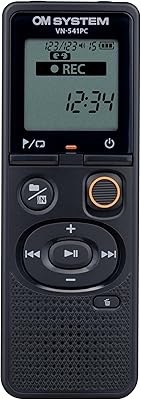
OM SYSTEM VN-541PC
OM SYSTEM VN-541PC
77%
93%
Ease of Use
71%
Audio Recording Quality
68%
Noise Cancellation
84%
Battery Life
62%
Build Quality & Durability
More
Olympus DM-720 Digital Voice Recorder
81%
88%
Audio Recording Quality
84%
Microphone Performance
82%
Build Quality
91%
Battery Life
73%
Ease of Use
More
Voxitenus 128GB Digital Voice Recorder
87%
94%
Battery Life
89%
Ease of Use
88%
Audio Quality
92%
Portability & Size
72%
Bluetooth Connectivity
More
G L87 136GB Digital Voice Recorder
77%
91%
Ease of Use
67%
Audio Quality
83%
Battery Life
93%
Storage & Memory
74%
Build Quality & Portability
More
ZIPCIDE 64GB Digital Voice Recorder
75%
76%
Audio Quality
87%
Battery Life
63%
Noise Reduction
92%
Storage Value
71%
Ease of Use
More
Vormooi O1 160GB Digital Voice Recorder
78%
93%
Battery Life
88%
Storage Capacity
81%
Audio Recording Quality
67%
Noise Reduction Performance
84%
External Microphone Usefulness
More
Xelarvex 64GB Voice Recorder
77%
83%
Audio Clarity
71%
Noise Cancellation
91%
Battery Life
78%
Voice-Activated Recording
94%
Storage & Capacity
More
Wucotc Z1 264GB Digital Voice Recorder
75%
71%
Audio Clarity
93%
Storage Capacity
84%
Battery Life
82%
Ease of Use
76%
Build Quality & Portability
More

FAQ

It records in genuine stereo using two physically separated built-in microphones. That means if someone is speaking to your left and someone else to your right, you will actually hear that separation in the recording rather than everything collapsed into one flat channel.

Linear PCM captures audio without any compression, so the file sounds cleaner and richer but takes up significantly more storage space. MP3 compresses the audio to create much smaller files, which lets you record for much longer before running out of memory. For critical interviews or legal recordings, PCM is worth the extra space; for casual lecture notes, MP3 is perfectly fine.

No, the WS-883 relies entirely on its fixed 8GB of internal memory and does not have a memory card slot. If you regularly record in high-quality PCM, you will want to transfer and clear files to your computer between heavy recording sessions.

Battery life varies depending on your recording quality settings, but most users report getting through multiple long sessions on a single set of AAA batteries. OM System includes a pair of batteries in the box, so you are not stuck waiting before you can try it out.

Yes, quite easy. You plug the recorder directly into a USB port on your laptop or PC and it shows up like a standard USB drive, so you just drag and drop the audio files. No special software is required for basic file transfer.

It connects and mounts as a standard USB storage device, which is recognized by both Windows and macOS without needing additional drivers. You can then open the audio files in any media player or editing software that supports PCM or MP3 formats.

It makes a genuine difference in indoor environments where there is a constant low-frequency hum, like air conditioning or heating systems. For most office and classroom situations, leaving it on is a good habit. If you are recording music or need to capture bass-heavy sounds accurately, you may want to turn it off.

You can plug standard earphones into the 3.5mm jack and listen while the recorder is actively capturing audio. This is useful if you want to confirm the mic is picking up what you need before a long session.

The basics — starting and stopping a recording, adjusting volume, choosing a format — are fairly intuitive once you spend a few minutes with the device. The deeper menu options, like adjusting specific audio settings or managing folders, have a steeper learning curve and the interface does feel a bit old-fashioned compared to modern devices. Most new users get comfortable with daily functions within a session or two.

It works well as a portable backup recorder or for capturing guest interviews in the field, where the stereo microphones and PCM format can deliver decent audio quality. For primary podcast production in a controlled studio setting, most podcasters eventually want something with XLR inputs and more control over the signal chain. As a travel or backup unit, though, this Olympus-lineage recorder is a reliable and practical choice.

Where to Buy

Genesis Technologies
In stock $89.99
TranscriptionGear.Com
In stock $99.99