Overview

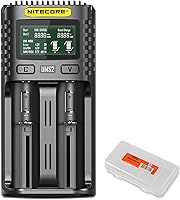
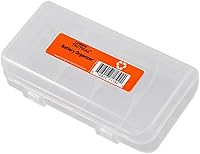
The Nitecore UMS2 Dual-Slot USB-C Battery Charger sits comfortably in the mid-range tier for anyone who regularly cycles through multiple cell types across different devices. What immediately distinguishes it from older chargers is the USB-C input — no more hunting for a micro-USB cable at the bottom of a travel bag. Whether you're running 18650 cells in a flashlight, 14500s in a camera, or just need to top off a pair of AA rechargeables, this dual-slot charger handles all of it without swapping units. A battery organizer comes bundled in, which is a small but genuinely useful addition for keeping charged and depleted cells sorted on the road.
Features & Benefits

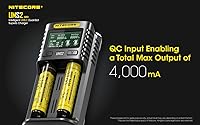
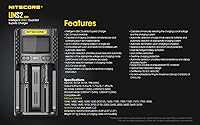
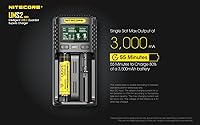
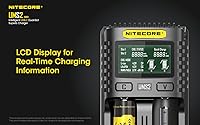
Pair the UMS2 with a QC2.0+ power adapter — not included — and the two slots together pull up to 4000mA, putting charge times well ahead of what a basic 5V/2A USB source can manage. On a standard source, you're looking at 1000mA per slot, which is fine for overnight charging but noticeably slower for quick turnarounds. The LCD display earns its keep by showing charge percentage, current, and battery health in real time, so you actually know what's happening rather than guessing by an LED color. Equally important is the automatic detection: the charger reads each cell's chemistry and adjusts current and voltage accordingly, which matters for anyone mixing Li-Ion, Ni-MH, and LiFePO4 cells in regular rotation.

Best For

This Nitecore charger is most at home in the hands of flashlight enthusiasts who rotate through multiple 18650 or 21700 cells and can't afford to wait hours on a slow charger. It's also a smart pick for travelers who'd rather carry one compact unit instead of separate chargers for lithium cells and AA/AAA batteries. EDC users will appreciate the bundled organizer for keeping fully charged cells apart from depleted ones — a small habit that saves real frustration at the wrong moment. Photographers running Li-Ion packs in older digital cameras, or hobbyists powering handheld radios, will find the broad size compatibility covers cells that dedicated single-chemistry chargers often miss entirely.

User Feedback

Across nearly 800 ratings, this dual-slot charger holds a 4.4-out-of-5 average — a score that reflects genuine satisfaction rather than a short-lived honeymoon period. Build quality and LCD clarity come up consistently in positive reviews, with buyers noting the display is readable indoors without squinting. The most common frustration is that a QC-compatible adapter isn't included; buyers who plug into a standard 5V brick and wonder why charging feels sluggish are often missing that context entirely. Long-term owners report the unit holds up well after sustained use, which is reassuring for daily cycling. The main limitation for power users is the two-slot cap — if you routinely charge four or more cells at once, this will feel like a bottleneck.

Pros

  • USB-C input means one less legacy cable to carry, and it works with modern power banks and adapters.
  • The LCD display takes the guesswork out of charging by showing real-time current, percentage, and battery health.
  • Automatic chemistry detection adjusts voltage and current per slot, reducing wear over long-term cell use.
  • Handles an unusually wide range of sizes — from compact 16340 cells all the way up to large 21700s.
  • Fast charging with a QC2.0+ adapter cuts charge times noticeably compared to budget 5V-only chargers.
  • Supports both lithium and Ni-MH/Ni-Cd chemistries, so AA and AAA rechargeables work alongside specialty cells.
  • Compact and light enough at 5.6 ounces to pack easily without adding bulk to a travel bag.
  • Build quality is consistently praised by long-term owners, suggesting it holds up well beyond the first few months.
  • The included battery organizer is a small but practical touch for anyone managing multiple charged and depleted cells.

Cons

  • No QC-compatible power adapter is included, and fast charging is impossible without one.
  • On a standard 5V/2A USB source, charging speed drops to 1000mA per slot — slow for large-capacity cells.
  • Only two slots means users who rotate through four or more cells at once will face a real bottleneck.
  • No independent slot control is documented, which may frustrate advanced users who want fine-grained current settings.
  • The organizer bundled with the UMS2 is basic and unlikely to satisfy users who need structured long-term storage.
  • At its price point, some buyers may expect the fast-charging adapter to be included rather than sold separately.
  • The LCD, while useful, is not backlit, making it harder to read in low-light conditions at a glance.
  • Users with very high-drain cells who want per-slot current adjustment may find the automatic mode limiting.

Ratings

The scores below for the Nitecore UMS2 Dual-Slot USB-C Battery Charger were generated by AI after analyzing verified global user reviews, with spam, incentivized submissions, and bot activity actively filtered out. The analysis draws on feedback from flashlight hobbyists, frequent travelers, photographers, and everyday rechargeable battery users across multiple markets. Both standout strengths and recurring frustrations are reflected transparently in every category score.
Battery Compatibility
93%
Users consistently single out the breadth of supported cell types as the UMS2's strongest asset. Being able to drop in a 21700 flashlight cell and a Ni-MH AA in the same session — without touching a single setting — is something buyers coming from single-chemistry chargers find genuinely liberating. Reviewers with diverse gear collections repeatedly describe it as the one charger that finally covers everything.
A small number of users report that certain protected 21700 cells with slightly extended length can be a snug fit, requiring careful seating before charging begins. There are also occasional mentions that very flat or non-standard prismatic cells are outside the supported range, which catches buyers by surprise if they assume universal compatibility.
Charging Speed
74%
26%
When paired with a QC2.0+ adapter, the UMS2 charges noticeably faster than most budget alternatives, and experienced users who already own a compatible adapter report satisfying results with 18650 and 21700 cells. Single-slot speeds of up to 3000mA mean a depleted high-capacity cell can be ready in a practical timeframe rather than requiring an overnight wait.
The fast charging potential is frequently undermined by the fact that a QC-compatible adapter is not included, and many buyers discover this only after plugging into a standard 5V brick and seeing sluggish results. On a conventional 5V/2A source, each slot is capped at 1000mA, which is underwhelming for 21700 cells above 4000mAh capacity and remains the most common source of buyer disappointment.
LCD Display Clarity
88%
The real-time LCD readout is one of the most praised aspects across the review pool, particularly among users who have previously relied on basic LED indicator chargers. Seeing the live charging current and estimated charge percentage removes the guesswork entirely, and several reviewers specifically mention appreciating the battery health flag that alerts them to degraded cells before a device fails unexpectedly.
The display lacks a backlight, which makes it harder to read in dim environments — a genuine nuisance for users who charge in darker workspaces or beside a bed at night. A few reviewers also note that the text size is on the small side, requiring them to pick up the unit for a closer look rather than glancing at it from across a desk.
Build Quality
86%
Long-term owners consistently report that the UMS2 holds up well after sustained daily use, with the housing showing minimal wear and the spring contacts maintaining consistent tension after hundreds of charge cycles. The overall feel is solid and purposeful rather than hollow or toy-like, which buyers notice immediately when comparing it to cheaper chargers in the same price range.
The matte plastic finish is functional but picks up scuff marks and minor scratches fairly easily during travel or bag use. A handful of reviewers note that the slot bays feel slightly loose when empty, though this does not appear to affect charging performance in practice.
USB-C Input Convenience
91%
For users who have already migrated most of their devices to USB-C, the input port is a meaningful quality-of-life upgrade over chargers that still require a micro-USB cable. Travelers in particular appreciate being able to use the same cable they carry for phones and laptops, reducing the total number of cables needed in a travel kit.
The USB-C port does not support all USB-C power delivery profiles, so users with newer USB-PD-only adapters may not hit fast-charging speeds if those adapters lack a QC2.0 compatibility mode. This is a nuanced caveat that is rarely explained clearly in the product listing and occasionally leads to confusion.
Intelligent Charging Accuracy
84%
The automatic chemistry and voltage detection works reliably in practice, with reviewers noting that the charger correctly identifies Li-Ion cells versus Ni-MH cells every time without manual input. Users who have tested charging accuracy with a multimeter generally report that termination voltages land within expected tolerances, which matters for anyone concerned about cell longevity.
A small subset of technically minded users feel the charger lacks manual current override options, which limits fine-grained control for users who prefer to charge sensitive or aging cells at reduced currents. The automatic system handles the majority of use cases well, but it is not a substitute for a fully configurable advanced charger.
Value for Money
78%
22%
For buyers who own multiple battery types and want a single reliable charger with a quality display and USB-C input, the price point reflects the feature set reasonably well. Reviewers coming from cheaper chargers without LCD displays or multi-chemistry support tend to feel the UMS2 justifies the cost differential quickly through daily convenience.
The value calculation shifts for buyers who do not already own a QC-compatible adapter, since the fast charging hardware benefit is effectively locked until a separate purchase is made. Some buyers also feel that only two slots at this price leaves them underserved compared to four-slot alternatives that occasionally approach a similar price tier.
Slot Count
58%
42%
Two independent, automatically configured slots cover the needs of most casual-to-moderate users who charge cells in pairs and rotate through a manageable number of batteries across their devices. For someone maintaining two or three flashlights and a camera, two slots rarely creates a real-world bottleneck in day-to-day use.
Users who manage larger collections — particularly flashlight enthusiasts who own six or more cells — report that two slots creates a genuine throughput problem, requiring multiple charging sessions to cycle through a full rotation. This is the single most cited structural limitation and the primary reason buyers in this category return the unit or end up purchasing a second charger.
Portability & Size
87%
At 5.6 ounces and under 6 inches long, the UMS2 fits easily into a travel organizer, backpack side pocket, or camera bag without claiming meaningful space. Several frequent travelers specifically mention it as the charger they reach for over larger four-slot alternatives specifically because it does not feel like a penalty item to pack.
A slim minority of buyers expected an even more compact form factor comparable to single-slot travel chargers and found the footprint slightly larger than anticipated. The included battery organizer adds minor additional bulk when packed together, though the two items still fit comfortably in most accessory pouches.
Ease of Use
89%
Drop in a cell, connect to power, and the charger handles everything else — there are no buttons to press, no chemistry selectors to configure, and no manual current settings to worry about for typical use cases. New users who have never owned an intelligent charger before consistently describe the setup experience as intuitive and confidence-inspiring.
The one area where ease of use stumbles is in the unclear communication around power adapter requirements; the charger offers no indication that it is operating in a reduced-speed mode when connected to a standard USB source, which leads some buyers to incorrectly assume the device is faulty.
Included Accessories
63%
37%
The bundled battery organizer is a thoughtful addition that costs nothing extra and addresses a real practical need — keeping charged and depleted cells separated in a bag or drawer is a habit that prevents both confusion and accidental short circuits. For travel-focused buyers, even a basic organizer removes a common friction point.
The organizer itself is minimal in construction and limited in capacity, fitting only a handful of cylindrical cells with no labeling or cell-type differentiation. Users who expected a robust carrying solution are generally underwhelmed, and the absence of a USB power adapter in the box remains the more significant omission for buyers expecting plug-and-charge fast performance out of the box.
Durability Over Time
82%
18%
Long-term reviewers who have used the UMS2 for one to two years report that the spring contacts remain functional and the LCD continues to display accurately without degradation. The unit shows no common failure modes that appear across multiple reviews, which suggests consistent manufacturing quality rather than a few lucky units.
There are isolated reports of the USB-C port developing a slightly looser connection after prolonged heavy use, particularly in units that are plugged and unplugged multiple times daily. This is not a widespread pattern but is worth noting for users who plan to use the charger as a daily driver for several years.
Charging Safety Features
83%
The automatic termination logic and voltage control give experienced battery users confidence that cells will not be overcharged during unattended sessions. Reviewers with a background in electronics appreciate that the charger correctly identifies and refuses to charge deeply over-discharged Li-Ion cells that could pose a safety risk if forced into a charge cycle.
The charger does not provide an audible or push notification alert when charging is complete, which means users who leave cells charging for extended periods have no way of knowing the session ended without physically checking the LCD. This is a minor but real limitation for users who charge in another room.

Suitable for:

The Nitecore UMS2 Dual-Slot USB-C Battery Charger is a strong match for anyone who regularly uses rechargeable cells across multiple devices and wants one dependable unit to handle all of them. Flashlight enthusiasts rotating through 18650 or 21700 cells will get the most out of it, especially if they already own a QC-compatible power adapter to unlock the faster charging speeds. Travelers carrying a mix of specialty lithium cells and standard AA or AAA rechargeables will also find the broad chemistry and size support genuinely useful — it removes the need to pack separate chargers for different battery types. EDC users who like to keep their gear organized will appreciate the bundled organizer for separating depleted cells from charged ones. Hobbyists running older cameras, handheld radios, or other gear that takes less common Li-Ion sizes like 16340 or 14500 will find this Nitecore charger covers ground that cheaper, single-chemistry alternatives simply cannot.
Not suitable for:

The Nitecore UMS2 Dual-Slot USB-C Battery Charger is not the right tool for users who need to charge four or more cells simultaneously — two slots is the hard limit, and there is no workaround. Anyone expecting fast charging out of the box should also know upfront that the required QC2.0+ power adapter is sold separately; plug it into a standard 5V/2A brick and speeds drop significantly, which frustrates buyers who miss that detail. Casual users who only charge a single type of battery — say, AA cells for TV remotes — will find the UMS2 overspecified and overpriced for their actual needs. It is also not a fit for users who prioritize a no-frills charging experience with minimal setup, since getting the best out of this charger requires understanding which power source to pair it with. Finally, those who need to charge proprietary battery packs for power tools or laptops will find the supported cell formats do not extend to those use cases.
Specifications

  • Brand: Manufactured by Nitecore, a brand known for flashlights and charging accessories aimed at enthusiast and professional users.
  • Model: UMS2, a dual-slot intelligent charger positioned in Nitecore's USB-powered charger lineup.
  • Slots: Two independent charging slots, each capable of detecting and charging a single cell simultaneously.
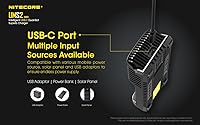
  • Input Port: USB-C input port, compatible with modern USB power adapters and power banks.
  • Max Current (2 slots): Up to 4000mA total output across both slots when paired with a QC2.0+ adapter delivering 9V output.
  • Max Current (1 slot): Up to 3000mA to a single slot when using a 9V QC2.0+ source with only one cell inserted.
  • Standard Current: 1000mA per slot when connected to a standard 5V/2A USB power source.
  • Output Voltage: 4.35V output, suitable for high-capacity Li-Ion cells that support the 4.35V charge ceiling.
  • Display: LCD screen that shows real-time data including charge percentage, charging current, and battery health status.
  • Chemistries: Compatible with Li-Ion, IMR, LiFePO4, Ni-MH, and Ni-Cd cell chemistries, with automatic detection per slot.
  • Cell Sizes: Accepts 16340, 14500, 18650, 20700, and 21700 cylindrical cells, as well as standard AA and AAA sizes.
  • Dimensions: The charger body measures 5.98″ long by 2.87″ wide by 1.57″ tall.
  • Weight: The unit weighs 5.6 ounces, making it light enough to pack without adding meaningful bulk to luggage.
  • Color: Available in black with a matte plastic housing construction.
  • In the Box: Package includes the charger unit and a battery organizer case for storing and separating cells during transport.
  • Adapter Included: No USB power adapter is included; a QC2.0+ compatible adapter must be purchased separately to achieve fast charging speeds.

Related Reviews
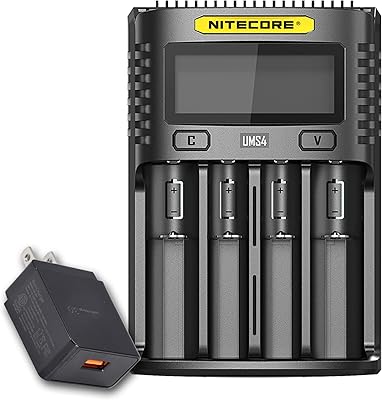
Nitecore UMS4 Intelligent USB Four Slot Quick Battery Charger
87%
91%
Charging Speed
94%
Battery Compatibility
89%
Ease of Use
88%
LCD Display Clarity
85%
Build Quality
More
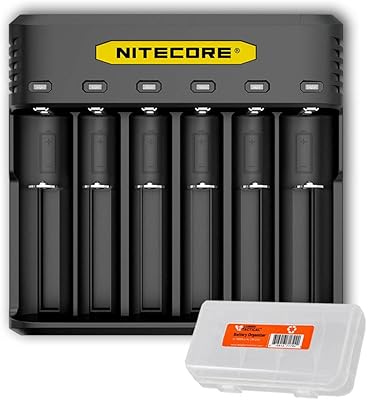
Nitecore Q6 Six Slot Battery Charger
86%
92%
Charging Performance
89%
Value for Money
88%
Build Quality
85%
Ease of Use
90%
Safety Features
More
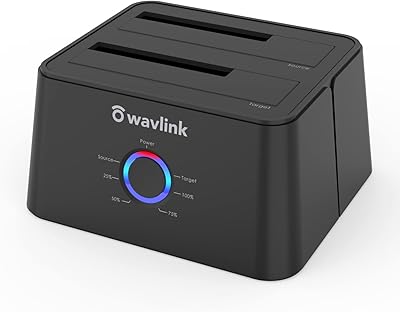
WAVLINK WL-ST334UA Dual-Bay USB 3.0 Hard Drive Docking Station
72%
83%
Offline Cloning Reliability
74%
Transfer Speed
79%
Build Quality
91%
Ease of Setup
38%
Mac Compatibility
More
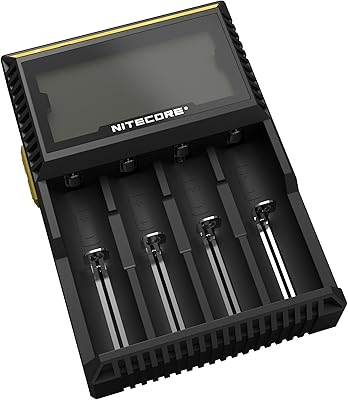
Nitecore Digicharger D4 4-Bay Battery Charger
75%
93%
Independent Slot Performance
88%
LCD Display Clarity
91%
Battery Compatibility
86%
Build Quality
89%
Safety Features
More
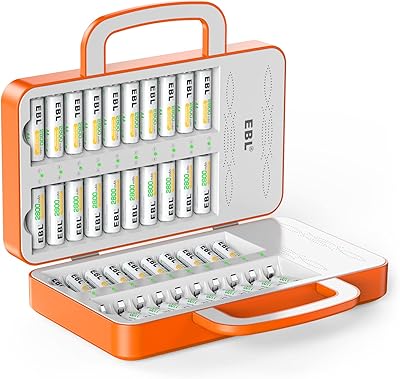
EBL C880 40-Slot Battery Charger
84%
88%
Charging Performance
82%
Build Quality
85%
Ease of Use
90%
Cooling Efficiency
91%
Safety Features
More
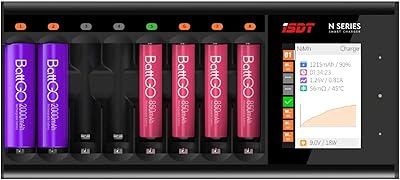
ISDT N8 8-Slot AA/AAA Battery Charger
78%
91%
Independent Channel Performance
78%
Chemistry Compatibility
84%
Build Quality
83%
Display & Interface
86%
Charging Speed
More
XTAR X2 Smart 2-Slot Battery Charger
86%
92%
Charging Speed
88%
Ease of Use
76%
Portability
85%
Build Quality
94%
Compatibility with Battery Types
More
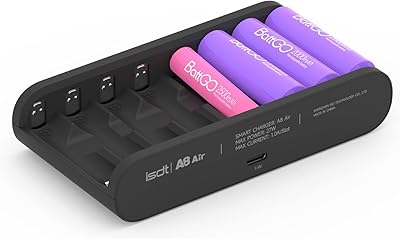
ISDT A8 Air 8-Slot Battery Charger
79%
91%
Build Quality
84%
Charging Speed
93%
Independent Channel Performance
62%
App Experience
88%
Battery Chemistry Compatibility
More
SSK SD301 Pro 512GB Dual USB-C SSD
80%
83%
Transfer Speed
91%
Dual Connectivity
86%
Build Quality
76%
Compatibility
78%
Value for Money
More
BESTEK PD 20W USB C Power Strip with Wireless Charger
87%
93%
Surge Protection
80%
Charging Speed (USB-C)
88%
Build Quality
85%
Design and Portability
87%
Wireless Charging Efficiency
More

FAQ

Yes, and this is one of the most important things to know before buying. The fast charging speeds require a QC2.0+ adapter capable of delivering 9V output, and that adapter is not included in the box. If you plug the UMS2 into a standard 5V/2A USB charger, each slot is limited to 1000mA — perfectly functional for overnight charging but noticeably slower for quick turnarounds.

Yes. Each slot operates independently and detects the inserted cell on its own, so you can charge an 18650 Li-Ion cell in one slot and a Ni-MH AA in the other simultaneously without any manual configuration.

It does. The spring-loaded contacts accommodate 21700 cells comfortably alongside smaller sizes like 18650, 20700, and even compact 16340 cells. Just make sure the cell seats properly against both contacts before connecting power.

The display shows the charging current being applied, the estimated charge percentage, and a battery health indicator for each slot. It updates in real time, so you can see at a glance whether a cell is nearly full, still early in the charge cycle, or flagged with a potential issue.

Generally yes. The automatic detection system monitors each cell and adjusts current accordingly, and the charger is designed to stop or reduce current once a cell reaches capacity. That said, leaving any lithium cell charger unattended for extended periods on a flammable surface is not recommended as a general practice, regardless of brand.

In most cases, yes, as long as the power bank delivers at least 5V/2A output through its USB-C port. For full fast-charging speeds you would need a power bank that supports QC2.0+ or a compatible high-voltage output profile, which not all power banks offer. Check your power bank specs before assuming you will hit the maximum charge rate.

The total available current is shared between the two slots, so yes — charging two cells simultaneously is slower per cell than charging one on its own. With a QC2.0+ source, the charger distributes up to 4000mA across both slots, compared to 3000mA when only a single slot is in use.

It is a simple, compact case designed to hold a few cylindrical cells separately so charged and depleted cells do not get mixed up. It is functional for travel or EDC use, but it is not a large storage solution — think of it as a modest bonus rather than a dedicated battery management case.

Most standard protected 18650 cells fit without issue due to the adjustable spring contacts. However, very long protected cells — particularly certain protected 21700s — may be a tighter fit, so it is worth checking the cell length against the maximum slot length if you are using less common protected formats.

If you regularly need to charge more than two cells at once, a four-slot charger is probably a better fit for your workflow. The UMS2 trades slot count for a more compact footprint and USB-C input, which makes it a smarter pick for travel or EDC use than for someone managing a large fleet of cells at home. Heavy users who rotate eight or more cells should plan accordingly.

Where to Buy