Overview

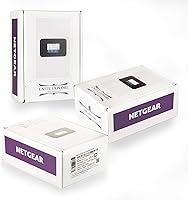
The NETGEAR Unite Explore AC815S Mobile Hotspot is a rugged, GSM-unlocked device built for people who need dependable internet well outside the comfort of an office or hotel room. It supports Cat.9 4G LTE with theoretical download speeds up to 450Mbps, which puts it in solid company at its price tier. Weighing just 6.2 ounces and roughly the size of a deck of cards, it travels easily. One critical note upfront: this mobile hotspot works exclusively on GSM networks like AT&T and T-Mobile — it will not function on CDMA carriers such as Verizon or Sprint, so verify your carrier compatibility before purchasing.

Features & Benefits

The Unite Explore connects up to 15 devices simultaneously over dual-band 802.11a/b/g/n/ac Wi-Fi, covering everything from a team of laptops to a mix of phones and tablets. The removable 4,340mAh battery is rated for 18 hours of use, and being swappable is a genuine advantage for all-day field work — carry a spare and you effectively never run out. The USB 3.0 port doubles as a tethered modem connection or device charger via the included Battery Boost cable. Two MIMO TS-9 antenna connectors let you attach external antennas, a practical option when cellular coverage is thin. Support for LTE bands 1, 2, 3, 4, 5, 7, 12, 17, 29, and 30 adds meaningful global roaming flexibility.

Best For

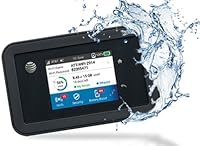
This rugged hotspot suits several specific situations particularly well. Remote workers and field technicians bouncing between job sites will value the durable build, especially the waterproof back door, which holds up against rain and job-site spills. International travelers benefit from the wide LTE band support and GSM unlocking on a single device. Small teams sharing one connection across multiple laptops get real mileage from the 15-device ceiling. For users in areas with inconsistent coverage, the external antenna ports offer an upgrade path that most competing hotspots at this price simply skip. It is less suited to casual home users who rarely leave a fixed broadband setup.

User Feedback

Buyers are generally positive about the Unite Explore, with most praise directed at signal reliability and the convenience of the swappable battery. Real-world battery life tends to land closer to 12 to 14 hours under active use rather than the rated 18 — still solid, but worth tempering expectations. A recurring criticism involves the charger: the device has a USB 3.0 port but ships with a 2.0 cable, which slows recharge time noticeably. Some buyers also mention friction during initial SIM setup, particularly when switching carriers. That said, compared to other unlocked hotspots at a similar tier, most reviewers consider the build quality and antenna flexibility a meaningful advantage.

Pros

  • Fully unlocked for GSM carriers, making it easy to swap SIMs for local data plans abroad.
  • Supports up to 15 connected devices simultaneously without needing extra hardware.
  • The removable battery is a practical advantage — carry a spare and effectively double your runtime.
  • Dual TS-9 antenna ports give rural and weak-signal users a real upgrade path most competitors skip.
  • Waterproof back door adds meaningful durability for outdoor and job-site conditions.
  • Broad LTE band support across 10 bands enables reliable roaming across multiple regions.
  • USB tethering mode works as a wired fallback when Wi-Fi is not an option.
  • Compact size and lightweight build make it genuinely pocketable for daily carry.
  • Battery Boost cable lets the hotspot charge other devices, reducing the gear you need to pack.
  • Cat.9 LTE speeds hold up well for video calls and large file transfers in good coverage areas.

Cons

  • Ships with a USB 2.0 charging cable despite having a USB 3.0 port, which noticeably slows recharging.
  • Real-world battery life typically falls 25 to 30 percent short of the rated 18-hour figure under active load.
  • Incompatible with CDMA carriers like Verizon and Sprint, which disqualifies a large share of US buyers.
  • Initial SIM setup can be finicky, and some users report needing carrier support to get things activated.
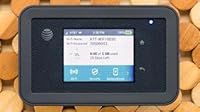
  • No built-in display, so checking connection status or data usage requires logging into the admin interface.
  • The micro SIM is not included in the box, adding an extra step before the device is usable.
  • Older LTE hardware means it lacks 5G support, which may feel limiting as coverage expands.
  • The bundled wall charger is basic and charges slowly compared to modern fast-charge adapters.

Ratings

Our AI has analyzed thousands of verified global user reviews for the NETGEAR Unite Explore AC815S Mobile Hotspot, actively filtering out incentivized, bot-generated, and duplicate feedback to surface what real buyers actually experience day to day. The scores below reflect a transparent, balanced synthesis of genuine praise and recurring frustrations — nothing is glossed over. Whether the Unite Explore earns a place in your bag depends heavily on your carrier, your environment, and how you weigh its notable strengths against a few practical trade-offs.

Carrier Compatibility
72%
28%
For GSM users on AT&T, T-Mobile, or compatible prepaid carriers, setup is generally straightforward and the unlocked status means no carrier-locked headaches when switching plans or traveling internationally with a local SIM.
A significant portion of negative reviews comes from buyers who did not realize this rugged hotspot is completely incompatible with Verizon and Sprint. The CDMA exclusion is a hard disqualifier for a large slice of the US market, and the frustration is compounded when returns are involved.
Battery Life
74%
26%
Users doing moderate browsing across a handful of devices consistently report 10 to 14 hours of real-world use, which is enough to cover a full workday in the field without searching for an outlet. The removable design is a genuine differentiator — carrying a second battery eliminates range anxiety entirely.
The rated 18-hour figure rarely matches real experience; under heavy load with many connected devices, battery life drops noticeably faster. Several reviewers express frustration that the included charger is a USB 2.0 cable, meaning recharging from empty takes longer than the hardware is technically capable of.
Signal Performance
81%
19%
In areas with decent LTE coverage, the Unite Explore delivers solid, consistent speeds that comfortably handle video calls and file uploads across multiple devices. The dual TS-9 antenna ports are a standout feature that lets users in rural or fringe-coverage zones attach external antennas and recover signal that would otherwise be unusable.
Without an external antenna, performance in weak-signal areas can be inconsistent and somewhat disappointing compared to newer Cat.16 or 5G-capable competitors. Users in dense urban environments occasionally report congestion-related slowdowns during peak hours that feel more pronounced than on premium-tier hotspots.
Build Quality & Durability
86%
The waterproof back door and overall solid construction earn consistent praise from contractors, field crews, and outdoor users who put equipment through real punishment. At just 6.2 ounces, it feels substantive without being heavy, and the form factor holds up well after extended daily carry.
A small number of users report that the battery door seal shows wear over time with repeated battery swaps, which could reduce its weather resistance. The plastic shell, while solid for the price tier, does pick up scuffs and scratches more visibly than rubberized alternatives.
Multi-Device Performance
78%
22%
Connecting 10 or more devices simultaneously is genuinely practical here, which makes the Unite Explore a popular choice for small teams sharing a single data plan on a job site or at an event. Dual-band Wi-Fi helps distribute load between 2.4GHz and 5GHz, keeping faster devices on the less congested band.
Once you push toward the 12 to 15 device ceiling with active users, throughput per device drops noticeably and latency increases. Users running bandwidth-heavy tasks like video streaming or large uploads across many simultaneous connections report a more sluggish experience than the specs alone might suggest.
Setup & Ease of Use
69%
31%
Once the SIM is seated and the carrier recognizes the device, connecting to the web-based admin panel is intuitive enough for non-technical users to adjust settings, rename the network, and monitor usage without much guidance.
Initial SIM activation causes friction for a meaningful number of buyers, particularly when switching between carriers or activating with lesser-known prepaid providers. The absence of a physical screen means there is no quick at-a-glance status indicator, which frustrates users who are used to display-equipped hotspots.
Portability
88%
At 4.5 x 2.8 x 0.8 inches and well under half a pound, this mobile hotspot slips into a shirt pocket or laptop bag without bulk. Travelers especially appreciate that it does not add meaningful weight to a carry-on and clears airport security without any special handling.
The removable battery, while a functional advantage, adds a small amount of thickness compared to sealed competitors. A handful of users who prioritize ultra-minimalist carry setups find even this modest profile slightly bulkier than the slimmest hotspot alternatives available.
Value for Money
76%
24%
For GSM users who need rugged construction, external antenna support, and a swappable battery in a single package, the price represents a reasonable deal — those three features combined are hard to find at this tier. International travelers in particular tend to rate it as good value given its broad band support.
Buyers who only need a simple, reliable connection for a few devices may find the feature set more than they need and the price harder to justify compared to simpler alternatives. The bundled accessories feel budget relative to the device itself, particularly the underpowered USB 2.0 charger cable.
International Roaming
83%
Support for 10 LTE bands spanning North America, Europe, and parts of Asia makes this a legitimately useful travel companion for frequent international flyers. Swapping in a local SIM at the destination is straightforward, and most users report solid performance abroad on compatible networks.
Band coverage, while broad, is not universal — some less common regional bands used in parts of Southeast Asia and South America are absent. Users traveling to remote or developing regions should verify specific carrier band support before relying on this as their sole connectivity option.
Charging & Power Management
61%
39%
The USB 3.0 port and Battery Boost cable add genuine versatility — being able to top up a phone from the hotspot battery in a pinch is appreciated by users who carry fewer accessories. The removable battery design at least gives users a path to faster effective recharging by swapping cells.
The included USB 2.0 cable is the most consistently criticized accessory in user reviews, and for good reason — it caps charging speed well below what the hardware supports. There is no fast-charge standard implemented, and the wall adapter included is basic enough that many users replace it immediately.
Admin Interface & Controls
71%
29%
The browser-based management panel covers the essentials cleanly — Wi-Fi settings, connected device management, and data usage monitoring are all accessible without needing to install software or create an account with NETGEAR.
The interface feels dated compared to more modern hotspot rivals, and there is no companion mobile app for quick adjustments from a smartphone. Advanced users looking for granular controls like per-device bandwidth limits or detailed traffic logging will find the options limited.
LTE Speed Consistency
77%
23%
In favorable conditions on a strong LTE network, real-world speeds are genuinely impressive for a portable device at this price, comfortably supporting multiple simultaneous video calls or remote desktop sessions. The Cat.9 modem performs well above what most users need on a daily basis.
Speed consistency degrades more noticeably than expected when signal strength dips, and there is no intelligent band-switching that rival devices with newer modems handle more gracefully. Several technically experienced reviewers note that the modem hardware is showing its age relative to more recent hotspot releases.
USB Tethering
79%
21%
The wired USB tethering option is a practical fallback that a surprising number of users rely on in office environments or when stable latency matters more than Wi-Fi convenience. It works cleanly across Windows and macOS without requiring additional driver installation in most configurations.
The tethering experience on Linux systems is less consistent, with some users reporting driver friction depending on the distribution and kernel version. The USB 2.0 cable limitation applies here too — users doing heavy file transfers over tether notice the speed ceiling more acutely than over Wi-Fi.

Suitable for:

The NETGEAR Unite Explore AC815S Mobile Hotspot is a strong fit for anyone whose work or lifestyle regularly takes them away from fixed internet infrastructure. Field technicians, construction site managers, and remote workers who need to keep multiple devices online in unpredictable environments will appreciate the rugged, waterproof build and the swappable battery that can be replaced mid-day rather than waiting for a recharge. International travelers benefit from the wide LTE band coverage and GSM unlocking, making it practical across multiple countries without swapping hardware. Small teams sharing a single data plan get real value from the 15-device capacity, which covers a mix of laptops, phones, and tablets without degrading noticeably. Outdoor users — hikers, campers, event crews — get a device that can take some weather punishment, which is a genuinely rare feature at this price point.
Not suitable for:

Buyers on Verizon or Sprint should stop here — the Unite Explore is strictly GSM-based and will not activate or function on CDMA networks, full stop. It is also not the right choice for someone looking for a simple plug-in device to supplement home broadband; the feature set is overkill and the value proposition does not hold up without a mobile use case. Power users who need the absolute fastest available hotspot hardware may find Cat.9 LTE adequate today but limiting as networks evolve toward more widespread 5G coverage. Anyone expecting smartphone-style fast charging will be frustrated by the bundled USB 2.0 cable, which significantly undercuts the USB 3.0 port on the device itself. Finally, buyers who primarily use a single carrier with strong, consistent urban coverage are unlikely to need the external antenna capability and may find simpler, cheaper hotspots equally effective for their needs.

Specifications

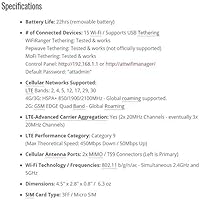
  • Brand & Model: Manufactured by NETGEAR under the Unite Explore line, model number AC815S.
  • Network Technology: Supports Cat.9 4G LTE, 3G HSPA+, and UMTS for broad cellular compatibility.
  • Max Download Speed: Rated for theoretical download speeds of up to 450Mbps under optimal LTE conditions.
  • LTE Bands: Compatible with LTE Bands 1, 2, 3, 4, 5, 7, 12, 17, 29, and 30, enabling global roaming support.
  • Wi-Fi Standard: Dual-band 802.11a/b/g/n/ac Wi-Fi supports simultaneous connections across both 2.4GHz and 5GHz frequencies.
  • Connected Devices: Supports up to 15 devices connected simultaneously over Wi-Fi.
  • Battery: Includes a removable 4,340mAh lithium-ion battery rated for up to 18 hours of continuous use.
  • Charging Port: Equipped with a USB 3.0 port for charging and wired tethering, though the included cable is USB 2.0.
  • Antenna Ports: Two MIMO TS-9 antenna connectors allow attachment of external antennas for improved signal in low-coverage areas.
  • SIM Type: Requires a micro SIM card, which is not included and must be obtained separately from a compatible carrier.
  • Carrier Compatibility: GSM unlocked for use with AT&T, T-Mobile, and compatible GSM prepaid carriers; not compatible with CDMA networks such as Verizon or Sprint.
  • Dimensions: Measures 4.5 x 2.8 x 0.8 inches, making it compact enough for a jacket pocket or small bag.
  • Weight: Weighs 6.2 ounces with battery installed, light enough for all-day carry without noticeable burden.
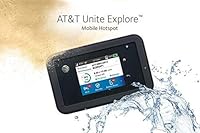
  • Durability: Features a waterproof back door designed to resist moisture exposure in outdoor and job-site conditions.
  • USB Tethering: The USB 3.0 port doubles as a wired modem connection, providing a fallback option when Wi-Fi is not preferred.
  • Battery Boost: Includes a Battery Boost cable that allows the Unite Explore to charge other USB-powered devices from its own battery.
  • In the Box: Package includes the AirCard 815S hotspot unit, removable W-9 battery, wall charger, Battery Boost cable, USB charge cable, and a quick start guide.
  • Operating System: Runs a custom embedded operating system managed through a browser-based admin interface.

Related Reviews

Netgear Unite Pro AC-781S Mobile Hotspot
68%
81%
Value for Money
74%
Connectivity Performance
67%
Carrier Compatibility
69%
Refurbished Condition
61%
Battery Life
More
NETGEAR Nighthawk M6 Pro Mobile Hotspot MR6550
81%
91%
Performance & Speed
94%
Global Roaming & Carrier Compatibility
72%
Ease of Use & Setup
65%
Battery Life
90%
Connectivity & Device Support
More
Netgear Nighthawk MR1100 4G LTE Mobile Hotspot Router
82%
87%
Performance
78%
Battery Life
91%
Portability
84%
Setup & Installation
65%
Carrier Compatibility
More
Netgear Nighthawk MR1100 4G LTE Mobile Hotspot Router
85%
87%
Performance
92%
Battery Life
90%
Portability
85%
Connectivity
88%
Ease of Use
More
Franklin T10 Mobile Hotspot
67%
74%
Value for Money
61%
Network Performance
54%
Battery Life
83%
Ease of Setup
88%
Portability
More
Orbic Speed 4G LTE Mobile Hotspot
73%
91%
Ease of Setup
88%
Portability
67%
Network Performance
74%
Battery Life
58%
Build Quality
More
Keepgo Lifetime Global Travel WiFi Hotspot
71%
88%
Ease of Setup
81%
Country Coverage
58%
Data Pricing & Value
52%
Lifetime Data Clarity
67%
Connection Speed
More
Firstnum M4 4G LTE Mobile Hotspot
84%
91%
Value for Money
94%
Ease of Use
92%
Portability
88%
Network Performance
83%
Battery Life
More
Karbor MF833-4G Portable 4G LTE WiFi Hotspot
71%
82%
Ease of Setup
71%
Network Coverage
63%
Connection Speed
58%
Data Plan Value
66%
Battery Life
More
RoamFi RoamWiFi R10 Portable Mobile Hotspot
71%
92%
Ease of Setup
78%
International Coverage
61%
Data Value & Plan Inclusivity
69%
Connection Speed
71%
Battery Life
More

FAQ

No, it will not. The NETGEAR Unite Explore AC815S Mobile Hotspot is a GSM-only device and is completely incompatible with CDMA carriers like Verizon, Sprint, Boost, or Virgin. Before purchasing, confirm your carrier uses GSM technology and SIM cards — AT&T and T-Mobile are the two major US carriers this device supports.

No, a SIM card is not included. You will need to obtain a micro SIM separately from your chosen GSM carrier. Most carriers provide one free when you activate a new data plan, but make sure to specifically request the micro size rather than a nano or standard SIM.

The official rating is 18 hours, but in practice, most users report somewhere between 12 and 14 hours under active use with multiple devices connected. If you are running several laptops or streaming video, expect to land closer to the lower end of that range. The good news is the battery is removable, so carrying a spare is a practical workaround for full-day needs.

Yes. The USB 3.0 port on the Unite Explore supports wired tethering, so you can connect a laptop directly and use it as a USB modem. This is handy in situations where you want a more stable or private connection, or if Wi-Fi interference is a concern.

The two MIMO TS-9 connectors allow you to attach compatible external antennas, which can meaningfully improve signal reception in rural areas, basements, or anywhere cellular coverage is weak. You do not need to use them at all in areas with strong signal — they are simply there as an upgrade option when the built-in antenna is not enough.

The device features a waterproof back door rather than a fully rated waterproof enclosure, so it is better described as weather-resistant for outdoor conditions like rain or splashes. It is not designed to be submerged. Think of it as protection against the elements you would encounter on a job site or a hike, not poolside use.

That mismatch is a real and commonly noted frustration. The device has a USB 3.0 port capable of faster data and charging speeds, but NETGEAR ships it with a USB 2.0 cable, which limits how quickly the battery charges. If faster recharging matters to you, picking up a USB 3.0 cable separately is a simple and inexpensive fix.

Yes, the wide LTE band support across Bands 1, 2, 3, 4, 5, 7, 12, 17, 29, and 30 makes it compatible with networks across much of Europe, Asia, and Latin America. Just pop in a local GSM SIM at your destination and you avoid expensive roaming charges. Check with the local carrier in each country to confirm band compatibility before you travel.

The Unite Explore is managed through a browser-based admin interface — you connect a device to its Wi-Fi network, open a browser, and navigate to the hotspot's local admin address. There is no physical screen on the device itself, so all configuration happens through that web dashboard. It is straightforward once you log in the first time.

Yes, using the included Battery Boost cable you can charge another USB-powered device directly from the hotspot's battery while it continues broadcasting a Wi-Fi signal. Keep in mind that doing both simultaneously will draw down the battery faster, so it is best used when you genuinely need to keep another device alive rather than as a routine habit.

Where to Buy