Overview

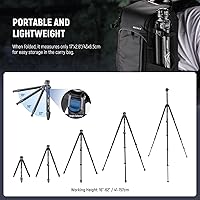
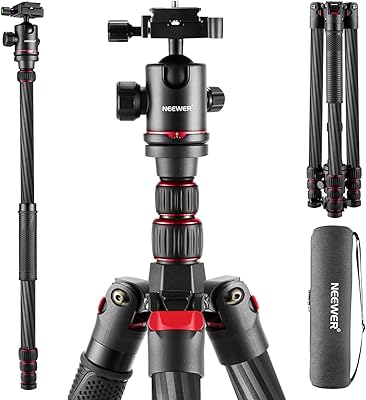
The NEEWER LITETRIP LT32 Carbon Fiber Travel Tripod enters a crowded mid-range market with a genuinely compelling argument: at 2.6 pounds and folding down to just 17 inches, it fits inside a carry-on without the usual trade-offs. Returning NEEWER shoppers may recognize this as the rebranded TP62 — the name changed, but the core design carries over with minor refinements. This is not a minimalist ultralight stick; it is a full-featured system with a leveling ball head, multiple leg angle presets, and a detachable center column. NEEWER has built its reputation on prosumer gear that punches above its price tier, and the LT32 fits that mold well.
Features & Benefits

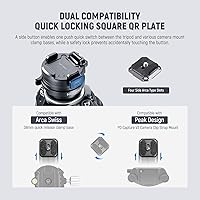
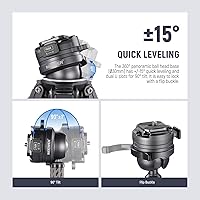
The 26mm carbon fiber legs strike a balance that aluminum simply cannot match at this weight — rigid enough to hold steady in a breeze, light enough that you will actually bring it on the hike. Setup on uneven ground is where the ±15° leveling head earns its keep: a quick adjustment and flip-buckle lock later, you are level without fighting the terrain. The spring-loaded flip buckles on the four-section legs pop open faster than twist locks, which matters when the light is fading. For hybrid shooters in the Peak Design ecosystem, the Arca-compatible QR plate works with standard Arca clamps and the PD Capture clip V3 — though not with all PD accessories. The detachable center axis also reverses for macro and low-angle work most travel tripods skip entirely.

Best For

This travel-ready tripod is a natural fit for landscape and travel photographers who want real carbon fiber performance without paying flagship prices. If your pack weight is a deciding factor — the kind of choice where something either earns its spot or gets left behind — the sub-3-pound weight and compact folded dimensions usually settle it. Hikers and backpackers will appreciate that it does not feel like a compromise once set up in the field. Solo content creators benefit from the fast leg deployment, and anyone already running Peak Design bags or clips will find the QR plate compatibility a practical convenience. One honest caveat: the LT32 is not ideal for heavy telephoto setups, where the ball head's real-world capacity becomes the limiting factor.

User Feedback

At 4.6 stars across more than 400 ratings, the overall picture is positive. Owners consistently praise the build quality and, notably, how closely the actual weight matches what is advertised — that kind of spec accuracy earns trust. Head smoothness also gets recurring compliments. On the critical side, some users report a noticeable flex at full leg extension, worth factoring in if you shoot at maximum height regularly. The included carry bag draws mild complaints for feeling underbuilt relative to the tripod itself. There is also lingering confusion around the TP62-to-LT32 rename, with a few buyers unsure whether they are ordering the same product they researched. For a mid-range carbon fiber option, though, the overall owner satisfaction holds up solidly.

Pros

  • At under 3 pounds, this carbon fiber travel tripod genuinely earns its place in a hiking pack.
  • The 17-inch folded length fits inside carry-on luggage and most camera backpack side pockets.
  • Spring-loaded flip buckles deploy all four leg sections noticeably faster than twist-lock alternatives.
  • The Arca-compatible QR plate works with Peak Design Capture V3 clips, a real plus for hybrid shooters.
  • Built-in ±15° leveling on the ball head makes uneven terrain far less of a setup headache.
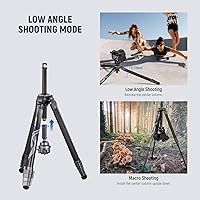
  • Reversible center column lets you shoot as low as 7.5 inches for macro and close-up work.
  • Real-world weight matches the advertised spec — a detail owners notice and consistently mention positively.
  • Removable rubber feet accept optional spikes for reliable footing on sand, loose rock, and mud.
  • Dual accessory threads on the spider leg allow magic arms or secondary mounts without extra adapters.
  • Carbon fiber construction at this price tier outperforms aluminum alternatives in the same weight class.

Cons

  • Noticeable flex at full leg extension makes this a poor choice for long telephoto or windy conditions.
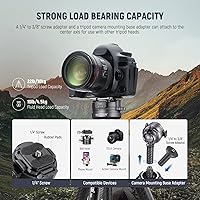
  • The ball head's practical load limit is around 10 pounds — the higher leg rating misleads some buyers.
  • Flip buckles can develop subtle play after sustained heavy use, particularly at maximum leg spread.
  • The included carry bag feels noticeably underbuilt and wears out faster than the tripod itself.
  • Peak Design compatibility is limited to Arca-type and PD QR plates only — not the full PD accessory range.
  • The QR plate release button sits close to the edge, making accidental activation a real field risk.
  • Cold weather stiffens the metal buckles, making gloved operation slower and less reliable.
  • The TP62-to-LT32 rebrand has created genuine confusion around accessories, parts, and search results.
  • Initial setup of the reversible center axis is unintuitive without reading the manual first.
  • The bubble level is small enough to be difficult to read accurately in direct sunlight.

Ratings

The NEEWER LITETRIP LT32 Carbon Fiber Travel Tripod has been scored below using AI analysis of verified global buyer reviews, with spam, bot activity, and incentivized feedback actively filtered out. The ratings reflect what real owners experienced across a wide range of shooting conditions — from alpine hikes to urban architecture sessions. Both the strengths that drive repeat purchases and the friction points that frustrated buyers are represented transparently here.
Build Quality
88%
Owners repeatedly note that the carbon fiber legs feel genuinely solid in hand — not hollow or plasticky like some budget alternatives. The metal hardware at the leg joints and head mount inspires confidence, and most buyers report no creaking or looseness after extended use in varied conditions.
A subset of longer-term owners mention that the flip buckle mechanisms can develop slight play after heavy field use, particularly when the legs are repeatedly opened to maximum spread. It is not a widespread failure, but it surfaces often enough to be worth noting for frequent travelers.
Portability & Pack Size
93%
The 17-inch folded length is genuinely carry-on friendly, and owners consistently mention that it disappears into a camera backpack side pocket without the usual overhang. At under three pounds, it is light enough that most hikers report forgetting it is even attached to their pack.
A small number of buyers note that the included carry bag, while convenient, feels thin and poorly stitched relative to the tripod itself. Those who travel with checked luggage or toss their bag around report the pouch wearing out faster than expected.
Stability at Full Extension
71%
29%
At mid-height and on solid surfaces, the LT32 holds steady under mirrorless bodies and lightweight DSLRs with no perceptible vibration. Landscape photographers using it on flat rock or packed dirt report sharp long-exposure results without needing a remote shutter.
At full 62-inch extension, particularly on the fourth leg section, several owners report a noticeable flex when shooting in wind or applying lateral pressure. For telephoto work or shooting near the maximum height in gusty conditions, this is a real limitation that the specs alone do not convey.
Ball Head Performance
82%
18%
The leveling range on the head gets consistent praise from photographers who frequently shoot on hillsides or rocky terrain — being able to dial in level without repositioning each leg saves meaningful time during golden hour. The flip-buckle lock feels decisive and holds position reliably under normal loads.
A recurring complaint involves the resistance adjustment feeling either too stiff or too loose straight out of the box, requiring some trial-and-error calibration. A few buyers also note that the ball head's effective capacity feels more limited than the stated figures when using heavier mirrorless setups with larger lenses.
QR Plate & Compatibility
84%
For photographers already using the Peak Design Capture clip system, the ability to move a camera directly from the clip to the tripod head without swapping plates is a practical daily convenience. The Arca-type compatibility also means the plate works with a wide range of third-party clamps and L-brackets.
Buyers expecting full Peak Design accessory compatibility have occasionally been caught off guard — the system works specifically with PD QR plates and standard Arca plates, not the entire PD lineup. The side release button also sits close enough to the edge that a couple of users triggered it accidentally mid-shoot.
Leg Lock Speed
86%
The spring-loaded flip buckles open with a satisfying snap and allow all four leg sections to be deployed in well under a minute. For run-and-gun landscape work where the light changes fast, this is noticeably quicker than twist-lock systems that require individual tightening.
In cold weather, a handful of buyers report that the metal buckles feel stiffer and require more deliberate force to engage. Gloved hands also make fine adjustment harder, which matters more than expected on winter hikes or early-morning frost shoots.
Low-Angle & Macro Capability
79%
21%
The reversible center axis is a feature most travel tripods skip, and macro photographers appreciate reaching down to 7.5 inches for close-up work on wildflowers, fungi, and small subjects. The three leg angle presets also allow a wide, stable low splay that feels sturdy even at the lowest position.
Getting the center column reversed requires a few deliberate steps that are not immediately intuitive without reading the manual first. Once learned it is straightforward, but first-time setup in the field — especially in low light — can feel fiddlier than it should.
Value for Money
89%
Carbon fiber at this price tier is genuinely difficult to compete with, and most buyers frame their satisfaction explicitly around what they received relative to cost. Owners who researched alternatives in the same bracket consistently report that the LT32 offers more features per dollar than most comparable options.
Buyers who push the tripod hard — frequent international travel, heavy mirrorless rigs, all-weather use — sometimes feel that a modest additional investment would have bought meaningfully better long-term durability. For light-to-moderate use, the value equation holds; for heavy daily use, it is worth considering.
Head Leveling Accuracy
77%
23%
The built-in bubble level is positioned well and readable in most lighting conditions, and the ±15° leveling range handles the majority of real-world uneven surfaces that landscape photographers encounter. Panoramic shooters particularly appreciate how quickly they can confirm level before starting a multi-shot sequence.
The bubble level is small enough that it can be difficult to read accurately in bright direct sunlight without shading it with a hand. A few astrophotographers and panorama specialists note that the leveling precision, while adequate for general work, does not satisfy stricter alignment requirements.
Terrain Adaptability
81%
19%
The removable rubber feet and optional spike inserts make a genuine practical difference for outdoor photographers. Owners shooting on sandy beaches or loose gravel report the spikes keeping the tripod planted in a way that rubber pads simply cannot, reducing camera-shake risk on soft ground.
The spikes themselves are fairly short and do not penetrate deeply into very soft or waterlogged soil. A small number of buyers who shoot in boggy or marshy terrain report that the spikes still allow slow sink on the heaviest, most saturated ground.
Ease of Setup
87%
Most owners describe the overall setup experience as fast and intuitive from the second or third use onward. The leg angle preset stops click in firmly, the buckles deploy quickly, and the head mounts without fuss — a combination that genuinely shortens the gap between arriving at a location and getting the first shot.
First-time setup involves a brief learning curve around the center axis removal process and the QR plate safety lock interaction. Buyers who skipped the manual reported spending several confused minutes on their first outing before the system clicked into place logically.
Weight vs. Rigidity Balance
74%
26%
For a sub-3-pound carbon fiber tripod, the rigidity-to-weight ratio impresses most buyers who have previously used aluminum travel tripods. The 26mm tube diameter adds measurably more stiffness than the narrower tubes common at lower price points, which owners notice when comparing stability side by side.
Buyers upgrading from heavier, more rigid professional systems find the LT32 noticeably more susceptible to vibration, particularly in the center column when extended. It is a fair trade-off for travel weight, but the compromise is real and worth acknowledging for those used to studio-grade stability.
Expansion & Accessory Mounting
78%
22%
The dual 1/4-inch threads on the tripod spider open up genuinely useful configurations — magic arms for monitors, secondary ball heads for microphones, or lighting accessories for solo video creators. It is a small detail that adds outsized utility for content creators who want to run a more complex rig from a single support.
The accessory mounting points are well-placed but do not come with any accessories beyond the basic adapter, meaning buyers who want to take full advantage of the expansion options face additional purchases. The spider threads are also close enough together that bulkier clamps can compete for the same space.
Product Naming Clarity
58%
42%
For buyers who discover the LT32 as a first-time purchase, the product listing is clear enough and the feature set is well-documented. The redesigned branding under the LITETRIP line does give the product a more distinct identity than the previous alphanumeric model code.
The TP62-to-LT32 rebrand has caused genuine confusion among returning NEEWER customers and shoppers who researched under the old name. Several verified buyers describe searching for follow-up accessories or replacement parts using the TP62 designation and landing on mismatched results, which erodes confidence in the purchase process.

Suitable for:

The NEEWER LITETRIP LT32 Carbon Fiber Travel Tripod is built for photographers and content creators who treat weight and pack size as non-negotiable — the kind of people who have left gear at home before because it was simply too heavy or too bulky to justify carrying. Landscape and nature photographers who chase early morning light across uneven terrain will appreciate the leveling head and spike-compatible feet, which together handle the kind of imperfect ground that flat parking lots never prepare you for. If you are already invested in the Peak Design Capture ecosystem, the Arca-compatible QR plate means your camera moves from clip to tripod head without any plate-swapping friction, which is a genuinely useful daily convenience rather than a marketing checkbox. Solo video creators and travel vloggers will find the fast leg deployment and accessory mounting threads on the spider practical for setting up a more capable rig without hauling a second support. Hikers and backpackers who have historically skipped bringing a tripod because of weight will find this carbon fiber travel tripod sits well below the threshold where gear stops earning its spot in the pack.
Not suitable for:

Photographers who regularly shoot heavy telephoto lenses or large-format rigs should understand upfront that the NEEWER LITETRIP LT32 Carbon Fiber Travel Tripod has a ball head capacity of around 10 pounds — the legs are rated higher, but the head is the practical ceiling, and pushing past it introduces instability that no amount of careful setup will fully compensate for. Shooters who demand maximum rigidity at full extension — particularly in wind, or when using longer exposure times with heavier glass — will likely find the flex in the upper leg sections a recurring frustration rather than an acceptable trade-off. Studio photographers or anyone who works primarily indoors on flat, controlled surfaces will not benefit much from the terrain-specific features that justify a portion of the price, making a simpler aluminum option a more sensible choice. Buyers who research extensively under the old TP62 name and then expect the LT32 to be a meaningfully upgraded successor may also be disappointed to find the changes are cosmetic and incremental rather than a substantial redesign. Finally, anyone expecting a premium carry case included in the box should set that expectation aside — the included bag is functional but clearly not built to match the quality of the tripod itself.
Specifications

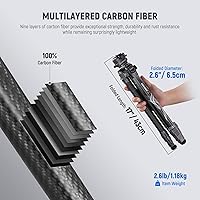
  • Leg Material: Legs are constructed from 100% carbon fiber with 26mm diameter tubes, offering a meaningful stiffness-to-weight advantage over aluminum alternatives at this size.
  • Hardware Material: All joints, buckles, and mounting components use metal hardware rather than plastic, contributing to the overall feeling of structural integrity.
  • Weight: The complete tripod with head weighs 2.6lb / 1.18kg, which matches the advertised specification according to the majority of verified buyers.
  • Folded Length: When collapsed, the tripod measures 17″ / 43cm, compact enough to fit inside a carry-on bag or the side pocket of most camera backpacks.
  • Height Range: Working height adjusts from a minimum of 7.5″ / 19cm (with center column reversed) up to a maximum of 62″ / 157cm at full extension.
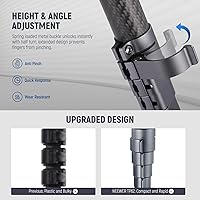
  • Leg Sections: Each leg consists of 4 sections that lock and unlock via spring-loaded metal flip buckles rather than twist-lock collars.
  • Leg Angles: Three fixed leg angle presets are available at 22°, 55°, and 70°, allowing a wide low splay for close-to-ground shooting or a standard upright working position.
  • Load Capacity: The legs are rated to support up to 22lb / 10kg, while the included ball head is rated to a more practical 10lb / 4.5kg maximum payload.
  • Ball Head Base: The panoramic ball head has a 30mm base diameter and supports full 360° rotation for panoramic sequences and composition adjustments.
  • Head Leveling: The ball head base provides ±15° of leveling adjustment and includes a bubble level to confirm horizontal alignment before locking down.
  • QR Plate Type: The included quick-release plate is Arca-type compatible and additionally supports the Peak Design Capture clip V3, though it is not universally compatible with all Peak Design accessories.
  • Center Axis: The center column is detachable and reversible, enabling the camera to be positioned inverted for macro and low-angle shooting as close as 7.5″ to the ground.
  • Mounting Threads: The QR plate carries a primary 1/4″ screw thread with a 3/8″ adapter included, and the tripod spider features two additional 1/4″ threads for magic arms or accessory mounting.
  • Foot Type: Rubber non-slip foot pads are standard and removable, with optional spike inserts available for use on sandy, rocky, or muddy outdoor terrain.
  • Lock Mechanism: Height adjustment relies entirely on spring-loaded metal flip buckles with an extended wing design intended to reduce pinching during operation.
  • Folded Dimensions: When packed, the tripod measures approximately 4.65 x 4.53 x 19.29 inches, fitting within most airline and rail carry-on size allowances.
  • Head Compatibility: The center axis accepts a tripod camera mounting base adapter, making the head interchangeable with other standard tripod heads if the included ball head does not suit a specific use case.
  • Counterweight Hook: A hook is integrated into the base of the center axis to allow counterweights to be suspended beneath the tripod, improving stability in windy outdoor conditions.

Related Reviews
Sirui Traveler 5C Carbon Fiber Tripod
85%
94%
Portability & Weight
88%
Build Quality & Durability
85%
Ease of Use
90%
Stability & Support for Larger Cameras
72%
Leg Locking System
More
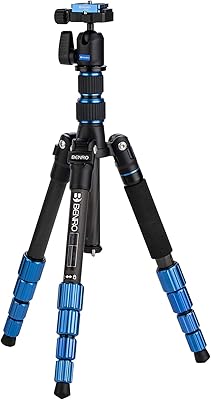
Vanguard VEO3GO265HCB Compact Carbon Fiber Travel Tripod
87%
94%
Portability & Weight
88%
Build Quality & Durability
85%
Ease of Use
91%
Versatility & Features
82%
Stability & Load Capacity
More
Benro Slim Travel Kit FSL09CN00 Carbon Fiber Tripod
87%
93%
Portability
89%
Build Quality
85%
Ease of Setup
87%
Stability on Uneven Ground
70%
Ballhead Adjustment
More
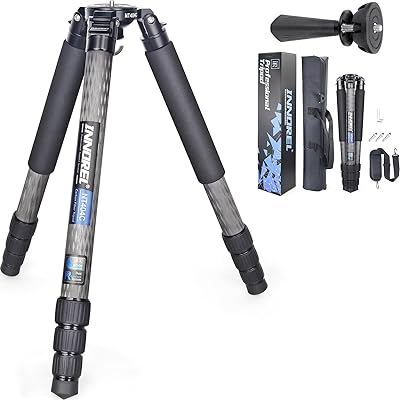
NEEWER N55CR Carbon Fiber Camera Tripod
81%
88%
Build Quality
86%
Stability at Normal Heights
67%
Stability at Maximum Extension
93%
Weight & Portability
74%
Ball Head Performance
More
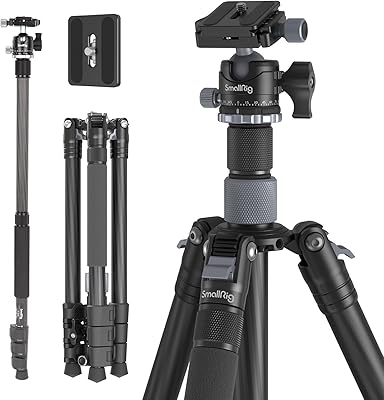
INNOREL NT404C Carbon Fiber Tripod
85%
89%
Stability
93%
Portability
87%
Build Quality
80%
Ease of Use
85%
Value for Money
More
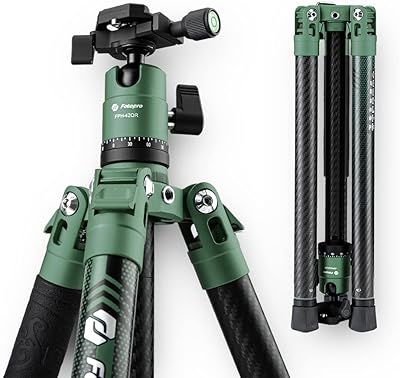
SmallRig AP-20 Carbon Fiber Tripod
78%
86%
Build Quality
92%
Weight & Portability
79%
Stability & Rigidity
74%
Ball Head Performance
88%
Ease of Setup & Height Adjustment
More
Fotopro X-Aircross 3 Carbon Fiber Tripod
89%
94%
Portability & Weight
89%
Build Quality
90%
Ease of Use
85%
Stability with Heavy Cameras
91%
Setup Speed
More
Movo GH800 MKII Carbon Fiber Gimbal Tripod Head
86%
91%
Performance in Wildlife Photography
89%
Build Quality & Durability
85%
Ease of Use
87%
Portability/Weight
92%
Stability Under Load
More
Manfrotto Element MII Mobile Bluetooth Carbon Fiber Tripod
87%
93%
Portability
88%
Ease of Setup
90%
Build Quality
62%
Stability in Wind
85%
Bluetooth Remote Performance
More
SmallRig AD-100 FreeBlazer Carbon Fiber Video Tripod
84%
94%
Build Quality & Durability
91%
Stability & Support
89%
Fluid Head Performance
72%
Portability & Weight
88%
Ease of Setup & Adjustment
More

FAQ

It genuinely fits. At 17 inches folded and under 3 pounds, the LT32 slides into the side pocket of most camera backpacks or stands upright in an overhead bin without issue. Owners who travel frequently confirm it clears typical carry-on size restrictions, though it is always worth checking your specific airline's guidelines.

The legs are rated to 22lb, but the ball head is the practical ceiling at around 10lb. Most mirrorless bodies with a standard kit or wide-angle lens will sit comfortably under that threshold. If you are shooting with a heavier telephoto or a full-frame DSLR paired with a large lens, you are likely pushing up against the head's limit and may notice instability.

The compatibility is specifically with Arca-type plates and the Peak Design Capture clip V3 — not the full range of Peak Design accessories. If you use a PD Capture clip on your bag strap, your camera can move straight onto the tripod head without swapping plates, which is genuinely useful. Just do not expect it to work with every PD product in the lineup.

At mid-height on solid, flat ground, the carbon fiber legs feel stable under lighter camera setups. At full extension — especially on the fourth leg section — there is a measurable flex, particularly when any lateral force is applied or when wind is a factor. For long exposures at maximum height with a heavier rig, you will want to use a remote shutter and keep the center column lowered if stability is the priority.

Essentially yes. NEEWER rebranded the TP62 as the LT32 under their LITETRIP product line, but the core design and specifications carried over. The changes are largely cosmetic and naming-related rather than a fundamental redesign. If you researched the TP62 and are now seeing the LT32, you are looking at the same product family.

The flip buckles are noticeably quicker once you have used the tripod a few times. Each leg section pops open with a half-motion snap rather than requiring multiple rotations of a collar. Most owners describe going from packed to shooting-ready in well under a minute after a short learning period. In cold weather with gloves on, the speed advantage narrows a bit.

Yes. The center axis includes a mounting base adapter that allows you to swap in a compatible third-party head. This is useful if you already own a ball head you prefer, or if you want to upgrade to a more capable head for heavier gear. Just confirm thread compatibility with whatever head you plan to use.

The removable rubber feet handle firm uneven terrain reasonably well, and the three leg angle presets give you some flexibility in finding a stable spread. On loose sand or soft mud, the optional spike inserts make a real difference — they grip and anchor where rubber just sinks or slides. The spikes are fairly short though, so very waterlogged ground can still be a challenge.

With the center column detached and reversed, you can get the camera down to about 7.5 inches from the ground. Spreading the legs to the widest 70° preset lowers the working height further and adds stability at that angle. It takes a few tries to get comfortable with the column reversal process, but once you have done it a couple of times it is straightforward.

It does the job for getting the tripod from your car to the trailhead, but it is one of the more consistent criticisms from owners. The stitching and fabric feel noticeably less robust than the tripod itself, and buyers who travel frequently or toss their bag around report it wearing out before the tripod shows any comparable wear. If you plan heavy travel use, a third-party case is a reasonable investment.

Where to Buy