Overview

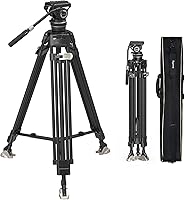
The SmallRig AD-100 FreeBlazer 78-inch Carbon Fiber Tripod immediately reads as gear built for working video shooters rather than weekend hobbyists. Pick it up and the contrast is obvious: a tripod that reaches a full 78 inches yet still tips the scale at around 11 pounds thanks to its carbon fiber legs. That balance of height and portability is the whole point here. Pricing lands it firmly in the premium bracket, which makes sense once you consider who SmallRig is actually building this for — people who need a support system to survive repeated shoots, not just look good in a single unboxing video. It is worth noting SmallRig built its name on camera cages and rigging accessories, so a full tripod system is a slightly newer lane for them, though the engineering here doesn't feel like a first attempt.
Features & Benefits

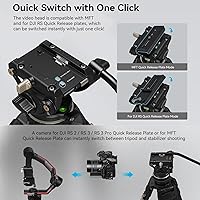
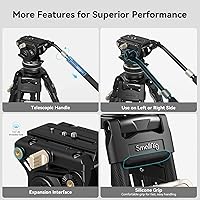
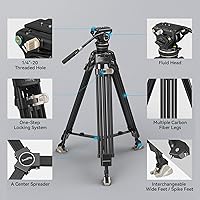
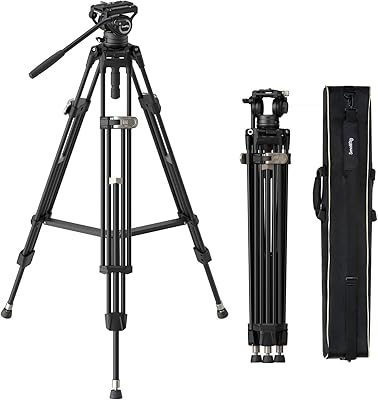
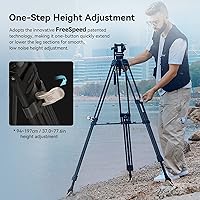
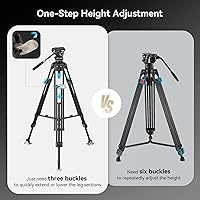
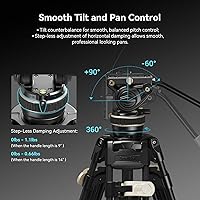
Set up this carbon fiber video tripod once and the one-step locking system stands out first — one toggle clamps both leg sections at once, so there is no fiddling with multiple twist locks at every location change. The fluid head delivers a smooth 360° pan alongside a +90°/-60° tilt range, and stepless damping lets you slow a pan down for a cinematic feel or speed through reframes when chasing a moment. SmallRig also built in a snap-on quick-release plate that doubles as a mount for several DJI gimbal setups, so swapping from handheld stabilizer work to a locked-off tripod shot takes seconds rather than a full re-rig. A detachable 75mm bowl head with swappable spike and wide feet handles uneven terrain, and the telescopic handle repositions for either hand.

Best For

The AD-100 FreeBlazer system makes the most sense for independent filmmakers and videographers covering interviews, events, or narrative scenes where a stable, repeatable shot matters more than ultra-light packing. Anyone filming concerts, sports, or live events will appreciate the extra height and the steadiness it offers when you are shooting over crowds or from a fixed position for long stretches. DJI gimbal owners get a particular advantage, since the quick-release compatibility lets you move from handheld stabilizer work to a locked tripod setup without swapping plates or carrying separate hardware. Landscape and documentary shooters who travel a lot will also find the foldable design and included carry bag useful. In short, this is built for buyers who value load capacity and build quality and are willing to pay for it, rather than those simply hunting for the cheapest tripod around.

User Feedback

Reception so far sits at a solid 4.4 out of 5 across roughly 195 ratings, which suggests most buyers are coming away satisfied rather than just lukewarm. The one-step locking mechanism shows up often in feedback as a genuine time-saver, especially for people setting up and breaking down gear multiple times daily. Not every comment is glowing, though — some buyers compare the price against tripods from longer-established video-support brands and wonder if the name on the box justifies the cost. There is also a real compatibility note worth flagging: this SmallRig tripod setup is not built to work with SmallRig's own 3912 or 3986 components, so existing SmallRig owners should double-check before assuming everything in the ecosystem connects. Long-term durability of the carbon fiber legs and locking toggle under heavy daily use remains an open question.

Pros

  • One-step locking system clamps both leg sections at once, speeding up setup and breakdown on set.
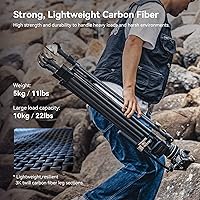
  • Carbon fiber legs keep total weight around 11 pounds despite a tall 78-inch maximum height.
  • Fluid head delivers smooth 360° pan and a wide +90°/-60° tilt range for controlled shots.
  • Stepless pan damping lets you dial in resistance for slow cinematic moves or quick reframes.
  • Snap-on quick-release plate works with several DJI gimbal mounts, simplifying handheld-to-tripod transitions.
  • Detachable 75mm bowl head with swappable feet makes leveling on uneven ground much easier.
  • Overall rating of 4.4 out of 5 across roughly 195 reviews points to solid buyer satisfaction.
  • Max load capacity of 22 pounds comfortably supports most professional camera and gimbal combinations.
  • Telescopic handle repositions for either hand, a small but genuinely useful ergonomic touch.

Cons

  • Price sits well into premium territory, which may give budget-conscious shooters pause.
  • Not compatible with SmallRig's own 3912 or 3986 accessories, limiting some existing SmallRig owners.
  • Folded length of about 39 inches is still longer than many dedicated travel tripods.
  • SmallRig is newer to full tripod systems, so long-term reliability data is still limited.
  • Snap-on quick-release design favors DJI gimbal owners more than shooters using other plate standards.
  • No counterweight or extra rigging accessories are included beyond the carrying bag.
  • Reaching the full 78-inch height still requires extra care on soft or uneven ground.
  • Long-term durability of the locking toggle under heavy daily use remains unproven.

Ratings

These scores for the SmallRig AD-100 FreeBlazer 78-inch Carbon Fiber Tripod were generated by AI after analyzing verified user reviews from buyers worldwide, with spam, bot activity, and incentivized feedback actively filtered out before scoring. Each category below reflects both what real owners praised and where they ran into friction, so the strengths and the pain points are shown side by side rather than smoothed over.
Build Quality
88%
The carbon fiber legs feel genuinely sturdy in hand, not flimsy the way some budget tripods do once you load a camera and accessories onto them. Reviewers running multi-hour shoots note the frame holds its shape well, even with a monitor or light attached.
A few buyers expected metal-tripod toughness at this price and found the plastic components around the locking toggle less reassuring than the legs themselves. It is solid, but not quite the tank-like feel some premium video tripods deliver.
Locking Mechanism
91%
The one-step toggle is the feature people mention first, since it locks both leg sections in one motion instead of twisting four or five separate joints before every shot. For run-and-gun event shooters, that shaves real minutes off setup between locations.
A handful of users needed a shoot or two to get used to the toggle tension, occasionally over- or under-locking a leg at first. It is fast once learned, but the initial feel takes slightly more deliberate pressure than a simple twist lock.
Pan & Tilt Smoothness
86%
The fluid head's 360° pan and wide +90°/-60° tilt range get praised for letting cinematic, controlled moves without jerky stops, especially during interviews and slow reveal shots. The stepless damping means one head covers both deliberate pans and quick reframes.
Some users feel the damping range, while adjustable, is not quite as buttery as dedicated cinema fluid heads costing significantly more. For casual handheld-style adjustments, a couple of reviewers found the resistance slightly stiffer than expected out of the box.
Load Capacity
89%
A 22 lb rated max load comfortably handles most mirrorless and DSLR rigs with a monitor, light, or shotgun mic attached, which matches how many working videographers actually shoot. Buyers running heavier cinema-style builds still report stable footing within that limit.
Pushing close to the rated maximum with an unbalanced top-heavy rig occasionally exposes some flex in the head, according to a few reports. It is not a complaint about failure, more a reminder that the rating is a ceiling, not a comfortable cruising weight.
Portability & Weight
83%
At roughly 11 lbs, the tripod is noticeably lighter than aluminum alternatives that reach a similar 78-inch height, which matters on long event days carrying gear across a venue. The included bag makes the folded 39-inch length easier to sling over a shoulder.
It is still a substantial piece of gear compared to compact travel tripods, so backpackers or carry-on-only travelers may find it bulkier than they would like. Carbon fiber helps the weight, not the overall size, which some buyers underestimate before it arrives.
Height & Versatility
92%
Reaching a full 78 inches makes a real difference for concert and crowd shooting, letting operators clear heads and barricades without standing on a riser. The 37-inch low end also covers tighter interview and tabletop setups without swapping gear.
At full extension, a few reviewers note the legs benefit from a bit more deliberate footing on soft ground, since height naturally raises the center of gravity. It is stable when set up correctly, but not a tripod to rush on uneven terrain.
DJI Quick-Release Compatibility
87%
Owners of DJI RS2, RS3, and RS4-series gimbals consistently call out how convenient it is to swap the same plate between handheld stabilizer work and a locked-off tripod shot. It effectively turns one plate into a shared mounting standard across two very different shooting styles.
Shooters using other stabilizer brands or older slide-on plates do not get the same benefit and may need an adapter or separate plate altogether. The snap-on design is excellent for the DJI ecosystem specifically, less universal outside of it.
Leveling & Stability
81%
19%
The detachable 75mm bowl head paired with swappable spike and wide feet makes quick leveling on grass, gravel, or uneven flooring noticeably faster than adjusting individual leg lengths. Outdoor and location shooters mention this as a real time-saver between takes.
Swapping feet does require a brief pause mid-shoot, which a few reviewers found mildly inconvenient when terrain changed repeatedly during a single event. It works well, just not as instantaneous as tripods with built-in retractable spikes.
Handle Ergonomics
76%
24%
The removable telescopic handle repositions for either hand, which left-handed operators specifically called out as a thoughtful, uncommon touch. It extends enough to give real leverage when panning heavier rigs without straining the wrist.
A small number of users wished the handle locked in place a bit more firmly during fast, aggressive pans, noting slight give under quick motion. It is a minor ergonomic quibble rather than a functional failure for most shooting styles.
Value for Money
72%
28%
Buyers who compare it against legacy video-support brands at similar price points generally feel the carbon fiber build, fluid head, and DJI compatibility justify the cost for working professionals. The combination of features is hard to match piece by piece at this price.
Casual users and hobbyists more often flag the price as steep relative to how often they would actually use a tall, heavy-duty video tripod. For occasional shooters, the premium positioning makes the value proposition noticeably weaker than for daily working videographers.
Long-Term Durability
68%
32%
Early feedback on the carbon fiber legs and locking toggle holding up over repeated daily setups has been generally positive, with no widespread reports of cracking or loosening so far. The overall 4.4 out of 5 rating across roughly 195 reviews supports that early confidence.
Because SmallRig is still relatively new to full tripod systems compared to legacy brands, there simply is not years of long-term wear data yet to fully confirm how the toggle and leg joints hold up after extended heavy use. That uncertainty understandably weighs on the score.
SmallRig Ecosystem Compatibility
61%
39%
For buyers who are not already invested in other SmallRig rigging components, this is largely a non-issue. The tripod functions as a complete, self-contained system right out of the box without needing anything else.
Existing SmallRig owners specifically run into friction here, since the listing confirms it does not work with SmallRig 3912 or 3986 components, breaking what some assumed would be a connected accessory ecosystem. That incompatibility is a real letdown for buyers expecting cross-compatibility within the same brand.

Suitable for:

The SmallRig AD-100 FreeBlazer 78-inch Carbon Fiber Tripod is built for people who shoot video for a living or close to it — independent filmmakers, wedding and event videographers, and content creators who need a support that holds up shoot after shoot. It is especially well suited to anyone covering concerts, sports, or live events, where the extra height helps clear crowds and keep framing steady over long stretches. DJI gimbal owners stand to gain the most practical value here, since the quick-release plate lets them move between handheld stabilizer work and a locked-off tripod shot without juggling separate hardware. Travel-minded documentary and landscape shooters will also appreciate that it folds down small enough to fit in the included bag despite its full height. In general, this is the right pick for buyers who have already decided they want load capacity and build quality and are not trying to spend the least amount possible.
Not suitable for:

Casual photographers who only need a tripod a few times a year will likely find the SmallRig AD-100 FreeBlazer 78-inch Carbon Fiber Tripod more tripod than they actually need, both in price and in bulk. Buyers on a tight budget should look elsewhere, since this sits well into premium pricing territory where lighter aluminum tripods or simpler video heads cost considerably less. Anyone who already owns SmallRig's 3912 or 3986 accessories should also pause, since this particular tripod is explicitly listed as incompatible with those components. People who need an ultra-packable travel tripod for backpacking or carry-on-only trips may still find the folded length and overall footprint larger than they would like, even with the carrying bag. Finally, if a stable surface is rarely an issue and you mostly shoot handheld, the added height and locking complexity here are simply more than most casual users will use.
Specifications

  • Material: The legs are constructed from carbon fiber for a strong, lightweight build.
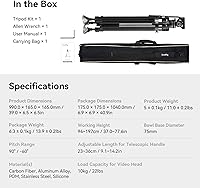
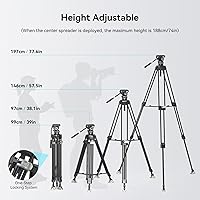
  • Height Range: The tripod extends from 37″ to 78″ (94-197cm) to suit a range of shooting heights.
  • Folded Length: When collapsed, the tripod measures 39″ (99cm) for easier storage and transport.
  • Net Weight: The tripod itself weighs 11 lbs (5kg) without a camera attached.
  • Max Load Capacity: The head and legs together support up to 22 lbs (10kg) of camera gear.
  • Leg Locking System: A one-step toggle locks both leg sections simultaneously instead of requiring separate joint adjustments.
  • Pan Range: The fluid head rotates a full 360° for unrestricted horizontal framing.
  • Tilt Range: Vertical tilt runs from +90° to -60° for a wide range of camera angles.
  • Pan Damping: Pan resistance is stepless and adjustable, allowing smooth slow pans or quicker repositioning.
  • Bowl Head: A detachable 75mm bowl head allows fast leveling independent of leg height.
  • Foot Options: Interchangeable wide and spike feet are included for stable footing on different surfaces.
  • Handle: A removable telescopic handle extends from 9.1″ to 14.2″ (23-36cm) and mounts on either side.
  • Quick-Release Plate: The fluid head uses a snap-on dual-mode quick-release plate rather than a traditional slide-on design.
  • Gimbal Compatibility: The plate is compatible with DJI RS2, RSC2, RS3, RS3 Pro, RS4, and RS4 Pro mounts.
  • MFT Compatibility: The plate also supports MFT quick-release mounts for additional camera and gimbal setups.
  • Mounting Threads: Standard 1/4″ and 3/8″ screws on the plate accommodate most DSLR, mirrorless, and camcorder bodies.
  • Accessory Mount: An extra 1/4″ threaded hole on the head allows attachment of lights, mics, or monitor arms.
  • Included Accessories: A carrying bag is included for storage and transport of the folded tripod.
  • Compatibility Note: This tripod is not compatible with SmallRig 3912 or 3986 components.
  • Color: The tripod is finished in black across the legs and head assembly.

Related Reviews

SmallRig AP-20 Carbon Fiber Tripod
78%
86%
Build Quality
92%
Weight & Portability
79%
Stability & Rigidity
74%
Ball Head Performance
88%
Ease of Setup & Height Adjustment
More
SmallRig AD-80 Video Tripod
81%
93%
Leg Lock System
89%
Fluid Head Smoothness
88%
Build Quality
74%
Counterbalance System
91%
Payload Capacity
More
INNOREL NT404C Carbon Fiber Tripod
80%
88%
Build Quality
86%
Stability Under Load
71%
Twist-Lock Usability
91%
Portability
83%
Height Range Versatility
More
Sirui Traveler 5C Carbon Fiber Tripod
85%
94%
Portability & Weight
88%
Build Quality & Durability
85%
Ease of Use
90%
Stability & Support for Larger Cameras
72%
Leg Locking System
More
Vanguard VEO3GO265HCB Compact Carbon Fiber Travel Tripod
87%
94%
Portability & Weight
88%
Build Quality & Durability
85%
Ease of Use
91%
Versatility & Features
82%
Stability & Load Capacity
More
Fotopro X-Aircross 3 Carbon Fiber Tripod
89%
94%
Portability & Weight
89%
Build Quality
90%
Ease of Use
85%
Stability with Heavy Cameras
91%
Setup Speed
More
Monoprice Alpha 10-Inch In-Wall Subwoofer
72%
83%
Bass Performance
81%
Value for Money
78%
Installation Ease
76%
Build Quality
88%
Grille & Aesthetics
More
NEEWER LITETRIP LT32 Carbon Fiber Travel Tripod
81%
88%
Build Quality
93%
Portability & Pack Size
71%
Stability at Full Extension
82%
Ball Head Performance
84%
QR Plate & Compatibility
More
Benro Slim Carbon Fiber Travel Tripod
82%
86%
Build Quality
92%
Portability & Packed Size
74%
Stability & Load Capacity
88%
Ball Head Performance
71%
Leg Lock Ease of Use
More
Movo GH800 MKII Carbon Fiber Gimbal Head
80%
83%
Build Quality
78%
Panning Smoothness
88%
Value for Money
91%
Payload Capacity
81%
Ease of Balancing
More

FAQ

Not really — thanks to the carbon fiber legs, the SmallRig AD-100 FreeBlazer 78-inch Carbon Fiber Tripod weighs about 11 lbs on its own, which is light for something that extends to 78 inches. It folds down to about 39 inches and comes with a carrying bag, so it travels reasonably well for a tripod this tall.
Yes. The fluid head uses a snap-on quick-release plate that is compatible with DJI RS2, RSC2, RS3, RS3 Pro, RS4, and RS4 Pro mounts, so you can move the same plate between handheld stabilizer work and the tripod without extra adapters.

The rated max load is 22 lbs (10kg), which covers most mirrorless and DSLR setups along with moderate accessory loads like a monitor or light. If you are running a heavily rigged cinema camera near that limit, it is worth double-checking the total weight before relying on it for an unattended shot.

No, the listing specifically notes that this tripod is not compatible with SmallRig 3912 or 3986 components, so if you already own those, plan on them not connecting here.

In practice, yes — the one-step toggle clamps both leg sections at once instead of making you twist each joint individually, which genuinely speeds up setup and breakdown when you are moving locations several times a day.

The pan damping is stepless, meaning you can dial the resistance up for slow, cinematic moves or loosen it for quicker reframing, all on the same head without swapping parts.

It comes with interchangeable wide and spike feet plus a detachable 75mm bowl head, so you can switch feet for the terrain and use the bowl head to fine-tune leveling without re-adjusting every leg.

Honestly, probably — this SmallRig tripod setup is built more for working videographers who need height, load capacity, and a fluid head for controlled shots. If you mostly do casual handheld vlogging or occasional photos, a lighter, cheaper tripod will likely serve you just as well.

Yes, the telescopic handle is removable and can be repositioned to either side of the head, so it is not built with a fixed dominant-hand orientation.

It holds its own on specs — carbon fiber build, fluid head, and DJI plate compatibility — though SmallRig is newer to full tripod systems compared to legacy video-support brands. Reviews so far average 4.4 out of 5 across roughly 195 ratings, which suggests most buyers feel it performs as expected, but long-term durability data is still less established than older brands.