Overview

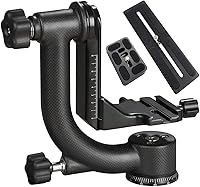
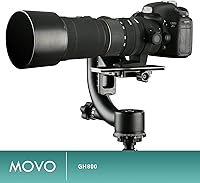
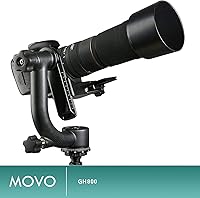
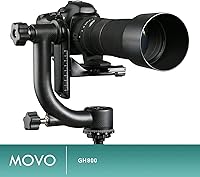
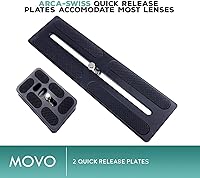
The Movo GH800 MKII Carbon Fiber Gimbal Head sits in an interesting spot in the market — capable enough for serious wildlife work, priced well below the Wimberley WH-200 or Jobu Design rigs that professionals often default to. The MKII iteration refined the earlier GH800 with tighter bearing tolerances and improved clamp geometry, making it more than a cosmetic refresh. At 2.75 lb, this gimbal head punches well above its weight class, rated to handle rigs up to 30 lb — that covers most 500mm and 600mm telephoto setups. Both long and short quick-release plates are included, which at this price tier is a genuinely useful addition rather than an afterthought.

Features & Benefits

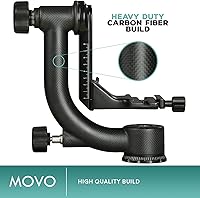
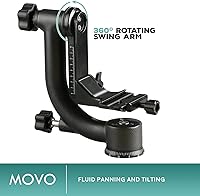
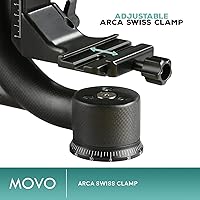
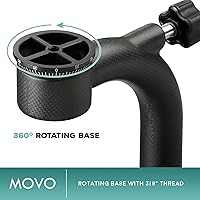
Carbon fiber is the right call for a head like this. It keeps the GH800 MKII at a manageable 2.75 lb while still feeling rigid under a heavy 500mm prime — there's no perceptible flex when you dial in tension. The precision bearings enable that sought-after weightless panning motion, which matters most when you're tracking a bird mid-flight and can't afford a jerky pivot. Both horizontal and vertical Arca-Swiss clamp positions let you fine-tune balance before a shoot, so your lens sits neutral rather than fighting gravity. The tension control knobs offer reasonably fine adjustments across different camera and lens weights, though feel can vary slightly from unit to unit.

Best For

This is a head for photographers who've outgrown ball head frustration when mounting a long telephoto. If you're shooting birds in flight, stalking herons at a wetland, or trying to hold a 500mm steady on distant wildlife, the GH800 MKII gives you the kind of smooth, counterbalanced control that a standard ball head simply can't. Hikers and field photographers will appreciate the compact folded profile — it won't dominate your pack. Mirrorless and DSLR shooters running lenses in the 300–600mm range are right in the sweet spot. If you're not ready to spend on a Wimberley-tier head but want real gimbal functionality, Movo's carbon fiber gimbal is a sound middle ground.

User Feedback

Across around 114 ratings, this gimbal head holds a 4.1 out of 5 — a solid score that reflects genuine satisfaction, though not without caveats. The most common praise centers on how naturally rigs balanced and how little setup time buyers needed, with several noting 500mm setups on full-frame bodies. On the other side, knob resistance draws repeated mention: some users found panning drag crept in after months of field use, suggesting the bearings may benefit from eventual maintenance. No consistent structural failures stand out, but a handful of buyers raise fair questions about long-term durability when stacked against higher-end alternatives.

Pros

  • Carbon fiber construction keeps the GH800 MKII light without sacrificing rigidity under heavy telephoto loads.
  • A 30 lb payload rating comfortably handles most 500mm and 600mm prime and zoom combinations.
  • Both long and short Arca-Swiss quick-release plates are included, adding practical versatility right out of the box.
  • Horizontal and vertical clamp adjustment makes balancing a wide range of lens and camera setups straightforward.
  • The compact folded profile packs neatly into a camera bag without dominating available space.
  • Build quality and bearing smoothness consistently impress buyers making their first move into gimbal-style heads.
  • US-based customer support is available, which helps with post-purchase questions or warranty claims.
  • Initial setup and lens balancing take only a few minutes, even for photographers new to gimbal mechanics.

Cons

  • Knob resistance consistency is not guaranteed — some units feel smooth immediately, others arrive noticeably stiff.
  • Panning drag can develop after months of extended outdoor use, likely requiring periodic bearing maintenance.
  • Not a realistic substitute for professional-grade options like the Wimberley WH-200 when field reliability is non-negotiable.
  • Fine tension adjustment does not match the calibrated feel of gimbal heads at significantly higher price points.
  • Long-term durability data is limited, with only a few years of real-world ownership feedback in circulation.
  • Some users report spending more time than expected fine-tuning balance compared to pricier gimbal alternatives.
  • The 1-year warranty window is shorter than what several competing brands offer at a comparable investment level.
  • Photographers running the heaviest supertelephoto primes — 600mm f/4 class — may find balance adjustment more finicky.

Ratings

The Movo GH800 MKII Carbon Fiber Gimbal Head was scored by AI after analyzing verified buyer reviews from global sources, with incentivized, bot-generated, and spam feedback actively filtered before any category was rated. Across 13 performance dimensions — from panning smoothness and build integrity to long-term durability and warranty coverage — both consistent strengths and recurring pain points are transparently reflected. The result is an honest, data-driven picture of where this head earns its price and where real-world trade-offs exist.

Build Quality
83%
Carbon fiber gives Movo's carbon fiber gimbal a rigidity that holds up confidently under heavy telephoto loads without the arm fatigue of an aluminum alternative. Field photographers consistently praise how solid the head feels relative to its price — no creaking, flex, or rattle when tension is properly dialed in, which builds genuine trust during long outdoor sessions.
A handful of buyers note that secondary components — knobs, screws, and clamp hardware — feel a step below what the carbon fiber body implies. The construction credibly outperforms aluminum alternatives at this tier but falls noticeably short of the machined precision found on professional-grade options like Wimberley or Jobu Design heads.
Panning Smoothness
78%
22%
When properly balanced, the precision bearings deliver a fluid, near-weightless panning feel that makes tracking a bird in flight genuinely manageable. Most buyers working with 300–500mm lenses report keeping subjects centered more consistently than they ever could with a ball head, especially during longer horizontal sweeps across open water or sky.
Panning quality is not perfectly consistent across all units — a meaningful minority of buyers report initial drag or resistance that does not fully resolve even after working the head through its range of motion repeatedly. Those who shoot in cold weather have also noted the bearings feel noticeably stiffer and less fluid than in moderate temperatures.
Value for Money
88%
Getting a carbon fiber gimbal head with dual Arca-Swiss quick-release plates, horizontal and vertical clamp adjustability, and a 30 lb payload rating at this price point is genuinely difficult to match. Buyers coming from cheaper aluminum alternatives consistently describe the step up in both materials and smoothness as immediately noticeable and well worth the investment.
The value equation weakens if your unit arrives with inconsistent knob tension or bearing drag, since returns and replacements consume time and effort that undercuts the initial savings. Photographers who need this head only occasionally may also question whether buying outright beats renting a higher-end head for specific trips.
Payload Capacity
91%
A 30 lb rating means the GH800 MKII handles virtually every commercially available telephoto prime and zoom — 600mm f/4s, 500mm f/5.6s, even 800mm consumer-grade superteles — without issue. Buyers mounting a Canon or Sony body on a heavy prime routinely confirm the head holds its position firmly with no sagging or drift when tension is set.
The 30 lb rating is self-reported and not independently certified, so buyers running very heavy primes stacked with teleconverters and accessory rigs should approach the upper limit cautiously. At extreme weights, any bearing inconsistency that is imperceptible at lighter loads may become more noticeable during extended tracking sessions.
Ease of Balancing
81%
19%
The dual-axis Arca-Swiss clamp — adjustable both horizontally and vertically — gives precise control over where the lens sits relative to the pivot point, making true neutral balance achievable with most common telephoto rigs. Buyers upgrading from a ball head often remark that once they grasp the process, balance takes only a couple of minutes to dial in.
First-time gimbal users sometimes find the initial balance process counterintuitive, particularly when learning which axis to adjust first for a given lens. Lenses with unusual weight distributions — such as those with built-in drop-in filter holders or unusually heavy hoods — can require considerably more trial and error before achieving proper neutral balance.
Portability & Weight
86%
At 2.75 lb with a folded profile compact enough to tuck into a padded bag divider alongside a long lens, this gimbal head does not punish photographers who reach their shooting spots on foot. Birders and nature photographers who regularly hike wetland trails or mountain ridges specifically cite its packability as a key reason they chose it.
Lighter than most aluminum gimbals but not featherweight — combined with a heavy tripod and a long prime, overall kit weight can still be significant for a full day of hiking. Photographers on ultralight backcountry setups may find that even 2.75 lb is a meaningful addition they need to plan around carefully when packing for remote locations.
Quick-Release System
84%
Including both a long and short Arca-Swiss plate in the box is a practical touch that saves most buyers an immediate additional purchase and gets them shooting sooner. The clamp also accepts third-party plates from established brands without modification, which matters for photographers who already own a collection of plates across multiple lenses and bodies.
The locking mechanism, while functional, lacks the positive tactile click-stop feel that premium Arca-Swiss clamps from manufacturers like Really Right Stuff or Kirk deliver. A small number of users have reported the plate sits with a slight amount of play before it is fully tightened, which is worth monitoring carefully during heavy use.
Tension Control
67%
33%
Separate tension adjustment knobs for panning and tilt give independent control over each axis, which is genuinely useful when you want firmer tilt resistance while keeping pan motion fluid for tracking. When a unit's knobs are well calibrated, users report reliably holding their preferred resistance setting consistently across an entire field session.
Knob resistance consistency is among the most frequently cited complaints across buyer reviews — some units arrive with knobs that feel stiff or uneven out of the box, while others develop creeping drag in the pan axis after months of use. The fine-tuning range is also narrower than what photographers used to higher-end heads would expect.
Long-Term Durability
63%
37%
Buyers who've owned the GH800 MKII for one to two years without intensive field abuse generally report no significant performance degradation — the carbon fiber body shows minimal cosmetic wear and basic mechanical function remains intact. For occasional hobbyist use in controlled conditions, the durability track record appears adequate.
The recurring pattern in longer-term reviews is increasing panning drag — a sign the bearings are collecting dust or the grease is degrading — which requires maintenance that Movo provides no official guidance on. Photographers who shoot regularly in harsh environments like beaches, marshes, or dusty trails report noticing performance changes within 12 to 18 months.
Out-of-Box Experience
79%
21%
Most buyers get a working, usable setup within minutes of unboxing — the two included quick-release plates mean there is no waiting on a separate delivery before mounting a lens. The head arrives with main structural adjustments in a usable starting position, requiring only basic balance tuning before getting out to shoot.
The included instruction documentation is minimal, which creates unnecessary friction for first-time gimbal users who are unsure which adjustments to make or in what order. A few buyers also noted the packaging could be better padded at this price point, with isolated reports of minor cosmetic scuffs on components upon arrival.
Tilt Mechanism
76%
24%
The tilt axis provides a smooth range of vertical motion that works well for tracking birds ascending from water or angling a long lens up a hillside — it does not feel notchy or restricted in normal use. Most buyers report the tilt behaves predictably and stays where it is set when tension is properly applied.
The tilt mechanism receives less consistent praise than panning in real buyer reviews, with occasional reports of it feeling slightly stiffer or less refined than the pan axis on the same unit. Users who do intensive vertical tracking — following a raptor in a steep dive, for example — may find the tilt needs more frequent tension readjustment.
Compatibility
87%
The GH800 MKII works with virtually any camera system — Canon, Nikon, Sony, Fujifilm, Panasonic — since mounting relies on the lens foot's Arca-Swiss plate rather than any camera-specific interface. Mirrorless and DSLR shooters alike report no compatibility friction, and the 30 lb payload ceiling covers essentially every current telephoto combination a hobbyist or working photographer might assemble.
Lenses without a dedicated tripod foot — typically shorter, lighter primes — are awkward to balance on a gimbal head and may require an aftermarket body plate, adding cost and setup complexity. Photographers who regularly switch between very different lens weights in the field may also find repeated rebalancing time-consuming between shooting opportunities.
Warranty & Support
72%
28%
Having a US-based support team behind the warranty is a meaningful advantage over gray-market or import-only alternatives at a similar price, since returns and troubleshooting are handled domestically without international shipping delays. Most buyers report that Movo's support team is responsive and pragmatic when genuine product issues arise within the coverage window.
A 1-year warranty is noticeably shorter than the 2- to 3-year coverage several competing brands offer at a comparable price, which matters for equipment expected to last many seasons of field use. Bearing degradation or panning drag that develops after the warranty window closes leaves buyers without recourse and facing potential out-of-pocket repair costs.

Suitable for:

The Movo GH800 MKII Carbon Fiber Gimbal Head is purpose-built for bird and wildlife photographers who've hit the ceiling of what a ball head can offer when working with long glass. If you regularly mount lenses in the 300mm to 600mm range — a Sigma 150-600mm, a Canon 500mm L, or a comparable supertele — this head delivers the counterbalanced, fluid tracking motion that makes a genuine difference when your subject is moving fast. It's also well-suited to outdoor photographers who hike to their spots: at 2.75 lb, it's notably lighter than aluminum-built competitors without giving up structural rigidity under heavy loads. First-time gimbal buyers stepping up from a basic ball head will find the learning curve short and the transition immediately rewarding. Budget-conscious enthusiasts who want carbon fiber construction and Arca-Swiss compatibility without paying flagship prices will find this head sits in a useful, well-defined middle ground.

Not suitable for:

If your work doesn't regularly involve long telephoto lenses, the Movo GH800 MKII Carbon Fiber Gimbal Head is simply not the right tool — a well-specced ball head is simpler, cheaper, and more versatile for anything shorter than 200mm. Studio photographers, portrait shooters, and event professionals will find the gimbal form factor adds unnecessary bulk and complexity to setups where it provides no real advantage. Working wildlife or nature photographers who depend on a single head for paid assignments should think carefully: some buyers report unit-to-unit inconsistency in bearing feel and knob resistance, which is a genuine risk when you're deep in the field without a backup. Those requiring the highest level of mechanical consistency and long-term reliability may be better served by investing in a Wimberley WH-200 or Jobu Design head, where the real-world track record is substantially longer. Buyers who prioritize a generous multi-year warranty will also want to compare options carefully before committing.

Specifications

  • Brand: Movo is the manufacturer, a US-based photography accessories company that provides domestic customer support.
  • Model: The official model designation is GH800-II, representing the second-generation MKII revision of the original GH800 gimbal head.
  • Head Type: This is a gimbal-style tripod head engineered for counterbalanced, fluid tracking of moving subjects using long telephoto lenses.
  • Material: Primary structural components are built from carbon fiber, selected for its high rigidity-to-weight ratio and inherent vibration-dampening properties.
  • Head Weight: The head itself weighs 2.75 lb (1.25 kg), keeping overall tripod system weight manageable during extended field sessions.
  • Max Payload: The head is rated to support camera and lens combinations weighing up to 30 lb (13.6 kg).
  • Dimensions: Fully assembled, the head measures 10″ deep × 5.9″ wide × 9.1″ tall.
  • Folded Size: In its most compact configuration the head measures approximately 3″ × 5.9″ × 4.5″, allowing it to fit into a mid-sized camera bag.
  • Clamp Type: The quick-release clamp is Arca-Swiss compatible, the most widely adopted standard among nature and wildlife photographers.
  • Included Plates: Two Arca-Swiss compatible quick-release plates are included in the box — one long and one short — to accommodate different lens foot profiles.
  • Adjustability: The Arca-Swiss clamp can be repositioned both horizontally and vertically to achieve precise balance across a variety of lens and camera combinations.
  • Bearing System: Precision bearings are used in both the pan and tilt axes to produce controlled, fluid motion when tracking subjects.
  • Color: The head is finished in black.
  • Warranty: Movo provides a 1-year limited warranty supported by a US-based customer service team.
  • Date Introduced: The GH800-II was first listed for sale in May 2020.

Related Reviews
SIRUI ST-124+VA-5 Carbon Fiber Tripod with Fluid Video Head
84%
89%
Build Quality
84%
Ease of Use
92%
Fluid Head Performance
87%
Portability
80%
Stability on Different Surfaces
More
INNOREL NT404C Carbon Fiber Tripod
85%
89%
Stability
93%
Portability
87%
Build Quality
80%
Ease of Use
85%
Value for Money
More
Sirui Traveler 5C Carbon Fiber Tripod
85%
94%
Portability & Weight
88%
Build Quality & Durability
85%
Ease of Use
90%
Stability & Support for Larger Cameras
72%
Leg Locking System
More
SmallRig AP-20 Carbon Fiber Tripod
78%
86%
Build Quality
92%
Weight & Portability
79%
Stability & Rigidity
74%
Ball Head Performance
88%
Ease of Setup & Height Adjustment
More
NEEWER LITETRIP LT32 Carbon Fiber Travel Tripod
81%
88%
Build Quality
93%
Portability & Pack Size
71%
Stability at Full Extension
82%
Ball Head Performance
84%
QR Plate & Compatibility
More
Fotopro X-Aircross 3 Carbon Fiber Tripod
89%
94%
Portability & Weight
89%
Build Quality
90%
Ease of Use
85%
Stability with Heavy Cameras
91%
Setup Speed
More
Manfrotto 290 Carbon Fiber 4-Section Monopod
82%
91%
Build Quality
94%
Weight & Portability
87%
Payload Capacity
83%
Flip-Lock Mechanism
78%
Ergonomics & Grip
More
Vanguard VEO3GO265HCB Compact Carbon Fiber Travel Tripod
87%
94%
Portability & Weight
88%
Build Quality & Durability
85%
Ease of Use
91%
Versatility & Features
82%
Stability & Load Capacity
More
Monoprice Alpha 10-Inch In-Wall Subwoofer

72%
83%
Bass Performance
81%
Value for Money
78%
Installation Ease
76%
Build Quality
88%
Grille & Aesthetics
More
IFOOTAGE Cobra 3 C180F-P Carbon Fiber Monopod
83%
93%
Build Quality
91%
Foot-Pedal Locking Mechanism
84%
Versatility & Mode Switching
94%
Weight & Portability
88%
Load Capacity & Stability
More

FAQ

Yes — the Movo GH800 MKII Carbon Fiber Gimbal Head uses a fully standard Arca-Swiss compatible clamp, so plates from Really Right Stuff, Kirk, Jobu Design, or most other reputable brands will seat and lock without any modification. Two plates are also included in the box, so you have immediate options even if you're starting from scratch.

It's built with telephoto shooters in mind — the 300mm to 600mm range on both crop and full-frame bodies is the sweet spot. A Sigma 150-600mm, a Canon 500mm f/4, or a Nikkor 200-500mm paired with a DSLR or mirrorless body are all solid fits. Lighter setups work too, but the counterbalanced gimbal design really earns its keep once you have real weight to manage.

It works just as well with mirrorless bodies. The head balances based on the combined weight and center of gravity of your full rig, so whether your body is a Sony a1, a Canon R5, or a Nikon Z9 makes no practical difference. Mirrorless shooters running large telephoto primes will find the experience identical to DSLR users.

It's more intuitive than it looks once you understand the basic principle. You slide the Arca-Swiss clamp position horizontally and vertically until the lens rests neutral — neither tipping forward nor back — when the tension knobs are released. Most users reach a workable balance within a few minutes. If you've never used a gimbal head before, a short online tutorial video will make the process much clearer before your first outing.

Most buyers report fluid, pleasing panning from the very first use. That said, bearing feel at this price tier isn't perfectly consistent unit to unit — a small number of users receive heads that feel slightly stiffer initially. If yours arrives that way, loosen the tension knobs fully and work the head through its range of motion a dozen or so times; most reported stiffness resolves with light use.

Yes, the 30 lb payload rating covers the weight of virtually every 500mm or 600mm prime currently on the market, including those paired with a full-frame body and teleconverter. The carbon fiber build keeps structural flex minimal when the tension is properly set. Just make sure the tripod legs you're using are also rated for the full combined weight.

The head attaches via a standard tripod mount, so it's compatible with most full-sized tripods. For wildlife use, a sturdy carbon fiber or magnesium alloy tripod with leg sections that lock securely and a total weight rating above your full rig is ideal. Brands like Gitzo, Benro, and Manfrotto in the mid-to-upper range are common pairings among bird and wildlife photographers.

The GH800 MKII sits meaningfully below the Wimberley WH-200 in both price and long-term field pedigree. The Wimberley has decades of proven reliability and is the head most professional wildlife photographers depend on when missing a shot isn't an option. Movo's offering delivers genuine gimbal performance and a smooth experience for the money, but if you're on paid assignments where consistency is critical, the Wimberley's track record justifies the additional investment.

Like any precision bearing system, occasional maintenance can help, especially after heavy use in sandy, dusty, or wet conditions. The most common sign it needs attention is gradually increasing panning drag — motion that was once fluid starts to feel slightly resistant. There's no published maintenance schedule from Movo, but keeping the head covered during transport and wiping it down after field use will extend its life. For bearing cleaning or regreasing, a camera repair technician familiar with tripod heads is a safer option than DIY if you're not experienced.

The folded dimensions — roughly 3″ × 5.9″ × 4.5″ — are compact enough to fit inside most carry-on camera bags alongside a body and lens, particularly if you use a padded divider system. At 2.75 lb, it won't dramatically cut into your weight allowance either. Most wildlife photographers who travel by air report packing it folded in the same bag as their primary lens without issue.

Where to Buy