Overview

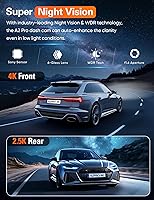
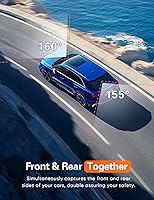
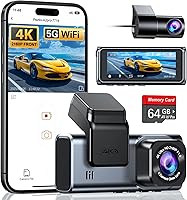
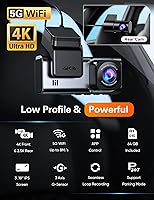
The Navycrest A2Pro 4K Dual Dash Cam arrived on the market in late 2024, slotting into the mid-range segment with a front-and-rear setup that punches above what most budget cameras deliver. The front captures at 4K resolution while the rear handles 2.5K, meaning license plates and road signs are actually legible rather than a blurry smear in a still frame. A 64GB card is included out of the box, which is a small but meaningful touch that saves an immediate accessory run. The housing is compact enough to tuck near the top of the windshield without eating into your sightlines, and 5G WiFi keeps footage transfer to your phone fast rather than frustrating.
Features & Benefits

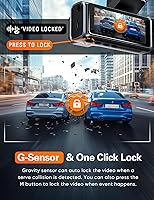
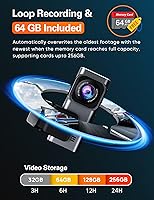
The A2Pro's most credible hardware anchor is the Sony image sensor, paired with a 6-element glass lens and Wide Dynamic Range processing that handles contrast-heavy situations — tunnels, bright afternoon glare, poorly lit lots — better than cheaper sensors typically manage. The 5G WiFi module moves clips at up to 8 MB/s, making wireless downloads genuinely quick. Loop recording handles storage management on its own, and the built-in G-sensor locks any collision-flagged files so they cannot be overwritten by newer footage. The 3-inch IPS screen lets you review clips or tweak settings without opening your phone, and the USB pass-through port on the car charger means you are not trading a charging slot just to power the camera.

Best For

This front-and-rear camera makes the most sense for drivers who want real dual-channel coverage without spending flagship money. Rideshare drivers and daily commuters who occasionally need incident footage will appreciate the wireless app workflow — no pulling the card at the roadside. The wide field of view and readable plate capture add practical value in heavy traffic. Larger vehicle owners, including SUV, truck, and minivan drivers, will find the low-profile mount unobtrusive. Anyone eyeing 24/7 parking protection can absolutely get there with this camera, but budget for the separately sold hardwire kit beforehand — that feature does not come ready to run straight out of the box.

User Feedback

Early buyers broadly report that daytime footage holds up to its advertised sharpness, with plates and signs readable at highway speeds. Night performance draws more varied reactions — most consider it strong for the price point, though a handful note it falls short of pricier Sony-sensor rivals in genuinely dark conditions. App pairing speed over 5G WiFi earns consistent praise, with a few Android users flagging occasional connection hiccups on older handsets. The included card works reliably for most people, and the mount generally stays secure. The clearest friction point is parking mode: buyers who did not notice the hardwire kit is sold separately felt caught off guard, so that detail is worth confirming before checkout.

Pros

  • Front 4K resolution captures license plates and road signs clearly, even at highway speeds.
  • The Sony image sensor and Wide Dynamic Range processing handle daytime contrast situations noticeably better than budget-tier alternatives.
  • 5G WiFi transfers footage to your phone fast enough that wireless management actually replaces card removal in practice.
  • A 64GB card is included, so there is no immediate accessory purchase needed after unboxing.
  • The G-sensor automatically locks collision footage, protecting critical evidence from being overwritten by loop recording.
  • A 3-inch IPS screen allows on-device playback and settings adjustments without requiring a paired phone.
  • The car charger includes a USB pass-through port, so powering the camera does not cost you a charging slot.
  • Compact, low-profile housing sits near the top of the windshield without blocking the driver's sightlines.
  • Parking mode supports both motion-detection wake and time-lapse options, giving flexibility for different surveillance needs.
  • Compatible with a wide range of vehicles including SUVs, trucks, and minivans.

Cons

  • Brand launched in late 2024, so long-term durability and firmware support remain unproven.
  • Parking mode requires a separately purchased hardwire kit, adding cost and installation effort not reflected in the base price.
  • Some Android users have reported intermittent WiFi pairing issues on older handsets.
  • Night performance, while decent for the price tier, does not match pricier dedicated low-light cameras in very dark conditions.
  • The rear camera records at 2.5K rather than matching the front's 4K, creating a noticeable resolution gap between channels.
  • No mention of cloud storage or built-in GPS, which some competing cameras in this segment offer.
  • The included 64GB card, while convenient, is a no-name inclusion that some users have chosen to swap out for a higher-endurance card.
  • Mount longevity over months of temperature cycling has not yet been widely validated given the product's newness.

Ratings

The scores below reflect an AI-powered analysis of verified global user reviews for the Navycrest A2Pro 4K Dual Dash Cam, with spam, bot submissions, and incentivized feedback actively filtered out before scoring. Each category is rated independently, pulling from real-world usage patterns across commuters, rideshare drivers, and everyday vehicle owners. Both what buyers love and where the camera falls short are reflected honestly in every scorecard.

Video Clarity (Daytime)
88%
In clear daylight conditions, the front channel delivers genuinely sharp footage — commuters frequently note that license plates are readable even at highway speeds, which is the practical test most buyers care about. The 6-element glass lens avoids the soft edges that cheaper plastic-lens cameras produce at the periphery of the wide-angle frame.
A handful of users have pointed out that the 4K label sets high expectations, and at compressed bitrates there can be occasional softness in fast-motion scenes. At the outer edges of the 160-degree field, some distortion is visible, which is typical for ultra-wide lenses but still worth noting.
Night Vision Performance
71%
29%
For a mid-range dual dash cam, nighttime footage in urban and suburban environments holds up well enough to be useful — street-lit roads show readable plates and recognizable detail. The Sony sensor and Wide Dynamic Range processing work visibly better than generic-sensor cameras in the same price bracket when handling mixed light and shadow.
In genuinely dark rural or unlit environments, the limitations of the sensor size become apparent and footage quality drops noticeably. Users who specifically prioritized low-light performance have found that dedicated low-light cameras from more established brands still outperform this front-and-rear camera in the darkest conditions.
Rear Camera Quality
74%
26%
The 2.5K rear channel is a clear step above the 1080p rear cameras that ship with most budget dual-channel setups, and buyers generally appreciate being able to read a plate or identify a vehicle approaching from behind. For capturing rear-end collisions and documenting tailgating incidents, the footage quality is more than adequate.
The resolution gap between the 4K front and 2.5K rear is noticeable when reviewing footage side by side, and some users feel the rear camera should match the front given the overall package positioning. Low-light rear performance lags further behind, which matters for nighttime parking lot incidents.
5G WiFi & App Experience
76%
24%
The 5G WiFi transfer speed is one of the most consistently praised aspects — users who previously dealt with slow 2.4G cameras found that wireless clip downloads are quick enough to replace card removal entirely in their workflow. The companion app makes it easy to pull a clip after a fender bender without needing a laptop nearby.
A recurring complaint involves intermittent pairing failures on older Android handsets, with some users needing to toggle WiFi off and on before a reliable connection establishes. The app interface has also drawn criticism for feeling less polished than the hardware, with occasional stability issues on both platforms that do not appear to be fully resolved.
Parking Mode
67%
33%
When properly set up with the hardwire kit, the parking mode performs reliably — motion-detection wake is responsive enough to catch vehicles approaching or bumping a parked car, and time-lapse mode keeps file sizes manageable overnight. Drivers who did invest in the wiring setup tend to rate this feature positively once it is running.
The hardwire kit is not included, which catches a meaningful number of buyers off guard despite the small-print disclosure — several reviewers described it as feeling like a hidden extra cost. Beyond the expense, installation requires accessing the fuse box, which is not a task everyone is comfortable doing, and the process adds friction that makes this feature inaccessible to less tech-confident buyers.
Build Quality & Design
73%
27%
The housing is compact and discreet enough that most drivers forget it is there after the first few days, which is genuinely useful for rideshare drivers who do not want a conspicuous camera visible to passengers. The simplified wiring design and included cable management tool make initial installation tidier than many competing setups.
Since the camera only arrived on the market in late 2024, there is a real absence of long-term data on how the housing, mount mechanism, and internal components hold up through full seasonal temperature swings. A few early buyers have noted that the overall feel of the plastic housing is functional but does not inspire confidence the way more established brand hardware does.
Mount Reliability
69%
31%
The windshield mount positions the camera neatly near the top of the glass, keeping it out of primary sightlines and making it less likely to attract unwanted attention. Initial installation reports are generally positive, with the mount staying in place under normal driving conditions without the camera shifting or vibrating loose.
Hot climates and vehicles that sit in direct sun for extended periods represent the main risk area, as adhesive-based mounts on any camera can weaken under sustained heat. Given the product's newness, there simply is not yet a substantial pool of multi-season user data to confirm how the mount holds up over a full year of thermal cycling.
G-Sensor & Incident Lock
84%
The 3-axis G-sensor is well-calibrated in practice — users report that real collision events consistently trigger the lock, and the protected files remain intact through subsequent loop recording cycles exactly as intended. This gives commuters and rideshare drivers genuine confidence that critical footage will not disappear before they have a chance to retrieve it.
A small number of users note occasional false triggers on rough roads or aggressive speed bumps, which fills locked storage with non-incident files that then need to be manually cleared. While not a frequent complaint, it is worth being aware of if you drive on particularly poor road surfaces regularly.
Included Memory Card
66%
34%
Shipping a 64GB card in the box is a genuinely buyer-friendly decision that removes one immediate friction point — most buyers can install the camera and start recording the same day without any additional purchases. For casual daily commuters, the included card is sufficient for normal recording cycles.
The included card is a generic, unbranded component rather than a high-endurance card rated for the continuous write demands of dash cam use, and a noticeable segment of users proactively swapped it out for a name-brand endurance card within the first few months. Under heavy use — especially with parking mode running overnight — generic cards have a documented history of degrading faster than purpose-built alternatives.
Loop Recording
86%
Automatic overwrite of the oldest unprotected files works reliably and transparently — users do not need to manage storage manually, and the camera handles the cycle without interrupting recording or requiring intervention. Combined with G-sensor locking, the system gives a practical, set-and-forget experience for everyday use.
There is no cloud backup or secondary redundancy option, meaning if the physical card fails or is damaged in an incident severe enough to compromise the unit, footage may be unrecoverable. This is a category-wide limitation rather than a specific flaw, but buyers expecting off-device backup will need to manage that manually.
Ease of Installation
81%
19%
The included wiring tool and simplified cable routing make the initial install approachable for most drivers without professional help — the majority of buyers report completing a clean, tuck-wired installation in under an hour. The camera's compact size also makes it easier to find a clean windshield position that does not interfere with sensors or ADAS cameras.
Enabling parking mode adds a separate hardwire installation step that involves accessing the vehicle fuse box, which is a meaningful escalation in complexity for non-technical users. Some buyers who purchased expecting a fully plug-and-play parking mode setup were surprised to learn that additional wiring work was required.
Value for Money
79%
21%
Considering the front resolution, the Sony sensor, the 5G WiFi capability, and the included card, the A2Pro delivers a feature set that would cost noticeably more from a flagship brand — buyers who compare the spec list objectively tend to rate it as a fair deal within its segment. For commuters and rideshare drivers who need credible incident documentation without flagship spending, the price-to-capability ratio is solid.
When you factor in the cost of a quality high-endurance replacement card and the hardwire kit needed for parking mode, the effective total spend climbs meaningfully above the base price, which erodes some of the initial value impression. Buyers on a strict total budget should calculate the full accessory cost before committing.
Customer Support
62%
38%
Navycrest publicly commits to a 12-hour email response target, and buyers who have contacted support for setup guidance or warranty issues report that responses are generally forthcoming within that window. For a brand this new, having a responsive email support channel is a basic but meaningful assurance.
The brand's short history means there is little accumulated evidence of how warranty claims and longer-term support requests are handled once the one-year coverage period is tested at scale. Buyers used to the established support infrastructure of brands with years of market presence may find the current support experience thinner than expected.

Suitable for:

The Navycrest A2Pro 4K Dual Dash Cam is a strong fit for everyday commuters and rideshare drivers who want solid front-and-rear incident coverage without paying flagship prices. If you spend a lot of time in stop-and-go traffic where readable plate capture actually matters, the 4K front resolution earns its keep. Drivers who prefer managing footage from their phone rather than fumbling with an SD card will appreciate the 5G WiFi app workflow, which moves clips off the camera quickly enough to be genuinely practical. Larger vehicle owners — SUVs, trucks, minivans — will find the low-profile mount unobtrusive, and the included 64GB card means you are road-ready straight out of the box. Those willing to add the separately sold hardwire kit also get a capable parking monitor, making this a reasonable all-in-one solution for drivers who want around-the-clock protection.
Not suitable for:

The Navycrest A2Pro 4K Dual Dash Cam is not the right call for buyers who need a proven, long-track-record camera from an established brand — this is a newcomer with limited long-term reliability data, and that is a fair hesitation if you are putting it on a commercial fleet or a high-value vehicle. Buyers who specifically want parking mode need to know upfront that the feature requires purchasing a hardwire kit separately, so the out-of-box price does not represent the full cost of that use-case. Night-driving purists who prioritize low-light performance above all else may find that dedicated low-light cameras from more established brands still have an edge in truly dark environments. If you are uncomfortable with app-based clip management and prefer a simple plug-and-play card extraction workflow, the camera works that way too, but the 5G WiFi advantage becomes largely irrelevant. Finally, anyone expecting a fully plug-and-play parking surveillance setup without additional wiring work or extra spend should look at cameras that include the hardwire kit in the box.

Specifications

  • Front Resolution: The front camera records at 4K (2160p), delivering enough detail to read license plates and road signage in clear conditions.
  • Rear Resolution: The rear camera captures footage at 2.5K (1440p), providing sharper coverage than standard 1080p rear cameras common in budget dual-channel setups.
  • Image Sensor: A Sony image sensor is used across the front channel, contributing to improved color accuracy and low-light performance relative to generic sensor alternatives.
  • Lens: A 6-element all-glass lens covers a 160-degree field of view, reducing the barrel distortion that plastic lens assemblies can introduce at wide angles.
  • WiFi Connectivity: The built-in 5G WiFi module supports wireless transfer speeds of up to 8 MB/s, approximately four times faster than 2.4G-based dash cam competitors.
  • Display: A 3-inch IPS screen is built into the main unit for on-device playback, live preview, and menu navigation without requiring a paired smartphone.
  • G-Sensor: A 3-axis gravity sensor automatically detects collision events and locks the corresponding footage files to prevent them from being overwritten during loop recording.
  • Parking Mode: Parking mode supports two configurations — motion-detection recording and continuous time-lapse — but requires a separately purchased hardwire kit (ASIN: B0BN829V8D) to function.
  • Loop Recording: When the inserted memory card reaches capacity, the camera automatically overwrites the oldest unprotected clips to maintain continuous, uninterrupted recording.
  • Included Storage: A 64GB memory card is included in the box, allowing the camera to be used immediately after installation without a separate card purchase.
  • Car Charger: The 12V car charger includes a USB pass-through port so a second device such as a smartphone can be charged simultaneously without occupying an additional 12V outlet.
  • Battery: A built-in lithium polymer battery provides enough onboard power to save a final clip and shut down safely if the vehicle's power supply is interrupted.
  • Mounting Type: The camera uses a ceiling-style windshield mount designed to sit low-profile near the top of the glass, minimizing obstruction to the driver's forward sightlines.
  • Vehicle Compatibility: The A2Pro is compatible with saloons, SUVs, trucks, and minivans, covering the majority of personal and light commercial passenger vehicles.
  • Image Processing: Wide Dynamic Range (WDR) technology is applied in software to balance exposure in high-contrast scenes such as tunnels, direct sunlight, and nighttime street lighting.
  • Warranty: Navycrest covers the camera with a one-year quality guarantee and states a customer support response time target of within 12 hours via email.
  • Date Available: The A2Pro was first listed for sale in December 2024, making it a relatively new entry in the dual-channel dash cam segment with limited long-term field data available.

Related Reviews
DDPAI N5 Dual Front and Rear Dash Cam
77%
88%
Video Quality (Front)
71%
Video Quality (Rear)
74%
Parking Mode & Surveillance
82%
Wi-Fi Speed & App Experience
83%
GPS Accuracy & Logging
More
Thinkware U3000 4K Dual Dash Cam
86%
93%
Video Quality (4K Performance)
90%
Night Vision Performance
88%
Ease of Installation
85%
Radar Parking Mode
70%
App Connectivity & Control
More
SUVCON M02 4K/1080P Dual Dash Cam
77%
88%
Video Clarity (Daytime)
71%
Night & Low-Light Performance
74%
Rear Camera Quality
66%
App Experience (Viidure)
91%
Ease of Installation
More
Kolvt L3 4K Dual Dash Cam
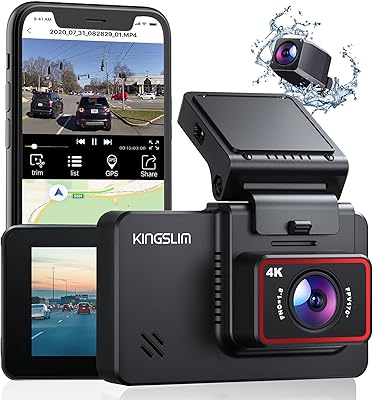
77%
86%
Front Video Quality
77%
Rear Video Quality
71%
Night Vision
74%
App and Wi-Fi
76%
Build Quality
More
Kingslim D4 Dual Dash Cam
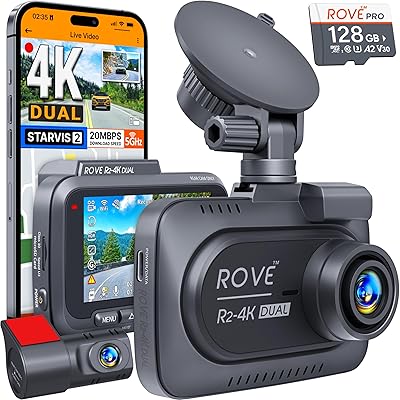
75%
88%
Daytime Video Quality
71%
Night Vision Performance
84%
GPS Accuracy
57%
App & WiFi Connectivity
76%
Ease of Installation
More
ROVE R2-4K Dual Dash Cam
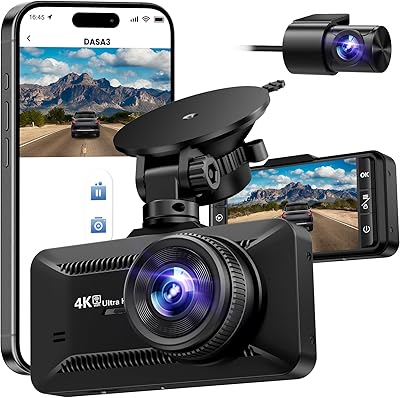
80%
91%
Video Clarity (Front)
88%
Night Vision Performance
74%
Rear Camera Quality
78%
Wi-Fi & App Experience
86%
GPS Accuracy & Logging
More
YEECORE D22 Front and Rear Dash Cam
78%
91%
Front Video Quality
67%
Rear Camera Quality
78%
Night Vision
88%
GPS Accuracy
63%
Wi-Fi & App Performance
More
Sarmert M572 4K Dual Dash Camera
75%
84%
Video Clarity (Daytime)
71%
Night Vision & Low Light
63%
App Experience
58%
Parking Mode
89%
Supercapacitor Reliability
More
IIWEY N2 4K Dual Dash Cam
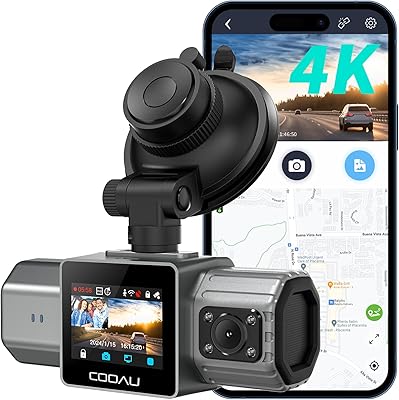
83%
92%
Video Quality
84%
Ease of Use
89%
Durability
60%
Installation Process
90%
Wi-Fi Functionality
More
Kingslim D6 4K Dual Dash Cam
84%
91%
4K Video Quality
88%
Night Vision Performance
84%
Ease of Setup
89%
WiFi & GPS Functionality
82%
Build Quality & Durability
More

FAQ

Yes — parking mode requires a hardwire kit that is not included in the box. This is fairly standard practice in the dash cam category; most cameras that offer parking surveillance require a separate hardwire connection to your vehicle's fuse box to draw low-level power when the engine is off. The compatible kit is listed under ASIN B0BN829V8D if you want to plan for that expense upfront.

For most daily commuters, the included card works fine to get started. That said, if you plan to run the camera heavily — especially with parking mode active — it is worth considering a dedicated high-endurance card rated for continuous write cycles, as standard cards can degrade faster under those conditions. Think of the included card as a solid starter option rather than a permanent long-term solution.

Night performance is generally good for its price tier, largely due to the Sony sensor and Wide Dynamic Range processing working together. In typical urban and suburban lighting conditions, footage is usable and recognizable. In genuinely dark rural environments with little ambient light, it will show its limits compared to higher-end cameras that use larger sensors, but for most everyday driving situations it performs competently.

Not at all. The 5G WiFi connection lets you pull clips directly to your phone through the companion app without touching the card. Transfer speeds are quick enough that downloading a short clip takes seconds rather than minutes. You can still remove the card and use a card reader if you prefer, but the wireless workflow is genuinely convenient once you have it set up.

Adhesive and suction mounts on any dash cam can struggle in extreme heat, particularly if the windshield gets very hot from direct sun exposure. Since the A2Pro is a newer product, there is not yet a large body of long-term user data on mount durability across full seasonal cycles. Parking in shade when possible and keeping the windshield clean at the attachment point are habits that help any dash cam mount last longer.

The app is optional, not required. The built-in 3-inch IPS screen handles playback and settings adjustments directly on the unit. The app just adds convenience — particularly for wireless clip downloads and remote live view — but the camera operates fully as a standalone device without your phone involved at all.

Not quite — the rear records at 2.5K (1440p) while the front handles 4K (2160p). In practice, 2.5K rear footage is still significantly sharper than the 1080p rear cameras common in budget dual-channel setups, so the gap is real but not dramatic. For capturing a rear-end collision or reading a plate behind you, 2.5K is more than adequate.

Yes, the companion app supports both iOS and Android devices. Most users report reliable pairing on current-generation phones. There have been occasional reports of connection hiccups on older Android handsets, so if you are using an older device, it is worth checking recent app reviews in the Play Store to see if your specific phone model has been flagged by other users.

No. The built-in G-sensor detects the impact and automatically locks the clip from that event, flagging it so the loop recording system cannot overwrite it. Those protected files stay on the card until you manually delete them, which is exactly the behavior you want if you need footage as evidence after an incident.

It is a reasonable choice for that use case. The front-facing 4K resolution is practical for capturing plate numbers in traffic disputes, and the wireless app workflow means you can pull a clip quickly after an incident without digging out a laptop. The compact mount also avoids the bulky look that some dash cams create. The main thing a rideshare driver should weigh is that the brand is relatively new, so there is less accumulated evidence of how the hardware holds up under the higher daily mileage that rideshare puts on a camera compared to a typical commuter.