Overview

The ART USB Phono Plus Phono Preamp has been quietly selling for over two decades, which says something about its staying power in a market that moves fast. It occupies the mid-range tier — a step up from the bare-bones preamp circuits built into cheap USB turntables, but well short of professional studio gear. The pitch here is practical: a box that gives you real signal control without requiring you to be a recording engineer to use it. Home users and vinyl hobbyists are the target audience, and the design reflects that — accessible physical controls and a no-fuss USB connection to your computer.
Features & Benefits

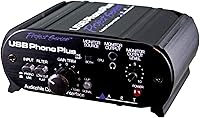
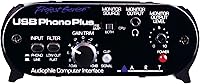
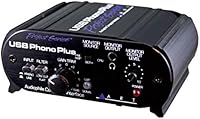
What sets this USB audio interface apart from cheaper alternatives is the degree of hands-on control packed onto the front panel. The gain knob lets you dial in your recording level before anything hits your software — a small thing that makes a real difference when your records vary widely in volume. The Signal and Clip LEDs do the quiet work of keeping distortion at bay, alerting you before a bad take is already done. A low-cut filter switch is a genuine help for older or worn vinyl, knocking out the low-frequency rumble that muddies recordings. The headphone output and monitor level control let you hear exactly what you are capturing as it happens.

Best For

This phono preamp makes the most sense for someone who already owns a turntable — particularly one without a built-in preamp — and wants a clean, controlled path to digitizing their collection. If you have been frustrated by the lack of level controls on a basic USB turntable, this is a logical next step. The line/phono input switch also makes it useful for home hobbyists who occasionally need to digitize a cassette deck or another line-level source. That said, it is not aimed at anyone chasing high-fidelity results or running a semi-professional rig. For straightforward vinyl archiving at home, it does exactly what it promises without overcomplicating things.

User Feedback

With a 4.3-star average across more than 400 ratings, the ART unit sits in solidly positive territory. Buyers consistently mention easy setup and reliable signal levels as highlights — plug it in, the LEDs tell you where you stand, and you start recording. The sticking point most reviewers hit is the bundled software: Sound Saver Express feels dated, and most people end up using Audacity or a similar free alternative instead. Driver compatibility on current versions of Windows and macOS has also surfaced in reviews — worth a quick check given the product's age. A smaller number of users report hum problems, typically traced back to turntable grounding rather than a fault with the unit itself.

Pros

  • Front-panel gain control lets you set recording levels without touching software — a real time-saver.
  • Signal and Clip LEDs actively prevent distorted takes before they ruin a full record side.
  • The low-cut filter is genuinely effective at reducing turntable rumble on older or worn vinyl.
  • Switching between phono and line-level input adds flexibility beyond just turntable use.
  • Setup is fast for most users — connect the RCA cables, plug in USB, and start recording.
  • The headphone output lets you monitor exactly what is being captured as the session runs.
  • A 4.3-star average across over 400 ratings reflects consistently solid satisfaction among home users.
  • Lightweight and compact enough to fit into a modest desktop setup without taking over the space.
  • Many buyers report years of reliable use under regular home conditions without hardware failure.

Cons

  • Driver compatibility with Windows 11 and current macOS versions is inconsistent and poorly documented.
  • The bundled Sound Saver Express software is widely considered outdated; most users replace it immediately.
  • Background hiss is noticeable on quieter recordings when compared to newer interfaces at similar prices.
  • The plastic enclosure feels utilitarian — it does the job, but does not inspire long-term confidence.
  • The gain knob lacks fine-grained resistance, making it easy to overshoot the ideal recording level.
  • Hum troubleshooting is not beginner-friendly; grounding issues leave newer users searching for answers.
  • The Clip LED can react slightly late, occasionally missing brief transient peaks in the digital capture.
  • At its current price point, newer competing products offer better software and more refined hardware.
  • Some recent buyers report inconsistent quality control, including loose knobs and intermittent USB connections.

Ratings

The scores below were generated by AI after analyzing verified buyer reviews for the ART USB Phono Plus Phono Preamp from sources worldwide, with spam, bot activity, and incentivized feedback actively filtered out. This phono preamp has accumulated a meaningful volume of real-world opinions spanning casual home users to more demanding hobbyists, giving us a well-rounded picture of where it delivers and where it falls short. Both its genuine strengths and its recurring frustrations are reflected transparently in each category.
Ease of Setup
88%
Most buyers had this USB audio interface up and running within minutes — plug the RCA cables from the turntable into the back, connect USB to the computer, and the operating system recognizes it without any manual driver hunting. For users who are not technically inclined, that near-instant recognition is a genuine relief.
A subset of users on newer Windows 11 and recent macOS versions ran into recognition issues, likely tied to the product's age and driver stack. These cases are not universal, but they are frequent enough to warrant checking compatibility before committing to a purchase.
Audio Signal Quality
74%
26%
For home archiving of vinyl, the ART unit captures a clean, listenable signal that does justice to most record collections. The phono preamp stage handles RIAA equalization reliably, and buyers consistently report that digitized tracks sound faithful to the original playback through their turntable.
Against more expensive dedicated interfaces, the noise floor is noticeably higher, and some users picking up the recordings in a DAW found a faint background hiss on quieter passages. It is not a dealbreaker for casual archiving, but anyone expecting studio-grade clarity will be disappointed.
Gain Control Usability
83%
Having a physical gain knob on the front panel means you can dial in recording levels before touching any software — a workflow advantage that buyers who have struggled with software-only level controls genuinely appreciate. Combined with the Signal and Clip LEDs, it makes level-setting intuitive even for first-timers.
The knob itself feels a little lightweight and loose on some units, and a few users noted it lacks fine-grained resistance, making it easy to overshoot the sweet spot. It works, but it does not inspire the tactile confidence you might expect at this price point.
Build Quality
66%
34%
The enclosure is solid enough for desktop use and does not feel like it will crack under normal handling. At just under a pound and a half, it sits firmly on a desk without sliding around, and the front-panel controls have held up well for users who have owned the unit for several years.
The plastic chassis is the main complaint — it feels utilitarian rather than durable, and a few long-term owners noted that the casing picks up scratches easily. For a device that sits on a desk indefinitely, it does the job, but it does not convey premium build confidence.
Hum & Noise Performance
61%
39%
When the turntable ground wire is properly connected to the unit's grounding terminal and the low-cut filter is engaged, the majority of users report acceptably quiet recordings with no audible hum during playback. The low-cut filter specifically earns praise for cleaning up the low-end rumble from older or budget turntables.
Hum issues are the single most polarizing aspect in user reviews. Many cases turn out to be grounding problems on the turntable side, but the ART unit's design does not make troubleshooting obvious for beginners, leading to frustration. A small number of users reported persistent hum even after correct grounding.
Software Bundle
48%
52%
Sound Saver Express gives a complete beginner something to open on day one without needing to research third-party tools. For users who simply want to press record and export an MP3 of a beloved album, it covers the basics without requiring any learning curve.
The software feels like it belongs to a different era of computing — the interface is dated, feature support is limited, and it does not behave reliably on current operating systems. The overwhelming consensus among experienced users is to skip it entirely and use Audacity, which is free and far more capable.
Driver & OS Compatibility
57%
43%
On Windows 10 and older macOS versions, most users report plug-and-play behavior with no driver installation needed. The class-compliant USB implementation means it works out of the box in many setups without any additional steps.
Given that this product first launched in 2001 and is still sold without significant hardware revision, compatibility with Windows 11 and current macOS releases is hit-or-miss. Several reviewers specifically flagged this, and it is a real risk for buyers using modern machines who do not verify support in advance.
Headphone Monitoring
71%
29%
The front-panel headphone output with its own monitor level knob is a practical touch that lets you listen to exactly what is being captured as you record. Users who digitize late at night or in shared spaces found this particularly useful for keeping the session quiet without losing track of what is happening in the signal.
The headphone output is functional but not high-fidelity — it is adequate for monitoring purposes but not enjoyable for critical listening. A few users noted that output volume is on the low side and does not drive higher-impedance headphones particularly well.
Input Versatility
76%
24%
The ability to switch between phono and line-level input makes this USB audio interface useful beyond just turntables. Users who also wanted to digitize cassette tapes or a CD player output appreciated not needing a separate box for line-level sources.
The switch itself is on the rear panel, which makes toggling between input types slightly inconvenient if the unit is tucked behind a shelf or integrated into a modest home setup. It is a minor ergonomic gripe, but worth noting for anyone switching sources frequently.
Value for Money
78%
22%
Relative to bare-bones phono-to-USB adapters that offer no level control or monitoring, this phono preamp provides meaningfully more functionality at a price that reflects the upgrade without going overboard. Buyers who understood what they were purchasing consistently felt they got fair value.
At its current price, the competition has grown considerably since this product launched — newer options offer better software bundles and more refined builds. For buyers doing their research, there are alternatives at a similar cost that feel more current, which slightly undermines the value case.
Low-Cut Filter Effectiveness
79%
21%
For anyone digitizing records that have seen better days — surface noise, low-frequency rumble from an older turntable bearing — flipping the low-cut filter switch makes a real, audible improvement. Users working with worn vinyl collections highlighted this as one of the most practical features on the unit.
The filter is a fixed-frequency implementation rather than an adjustable one, so it is not a perfect fix for every situation. On some recordings it trims a touch more low-end than ideal, leaving the result sounding slightly thin compared to the original playback.
Clip Indicator Reliability
81%
19%
The Signal and Clip LEDs consistently earn positive mentions from users who previously had no visual feedback during recording and ended up with clipped, distorted files. Seeing the Clip LED fire in real time gives you the chance to back off the gain before the damage is done to an entire side of a record.
A small number of users found the Clip LED reacts slightly late — by the time it lights up, a brief transient may have already clipped in the digital recording. It is responsive enough for practical use, but it is not a substitute for watching waveforms in your recording software.
Physical Footprint & Portability
72%
28%
At just over a pound and roughly the size of a paperback book, the ART unit does not demand much desk real estate and is light enough to tuck into a bag if you need to bring it to another location. Users working in small home setups appreciated that it did not add significant clutter.
The dimensions — just over 11 inches on two sides — mean it is not quite as compact as some competing single-purpose USB preamps. For a permanently installed desktop setup this is fine, but it feels oversized if you were hoping for something truly pocketable.
Long-Term Reliability
73%
27%
The volume of older reviews from buyers who have owned the unit for three to five or more years without hardware failure speaks well of its durability under light regular use. Several reviewers specifically mentioned returning to buy a replacement unit after their original finally gave out — which itself implies a fairly long service life.
Units bought recently occasionally arrive with quality-control inconsistencies — loose knobs, intermittent USB connections — suggesting that manufacturing consistency may have declined over the product's long run. It is not a widespread pattern, but it appears often enough in recent reviews to flag.

Suitable for:

The ART USB Phono Plus Phono Preamp is a practical choice for vinyl lovers who have a collection sitting in crates and want to finally get those albums into a digital library without buying into a complicated recording rig. It works particularly well for people who already own a turntable that lacks a built-in preamp or USB output, since this unit handles both the preamp stage and the analog-to-digital conversion in one box. Hobbyists who have previously used the bare-minimum adapter route and been frustrated by the lack of any level control will find the front-panel gain knob and visual LEDs a genuine upgrade to their workflow. It also suits people who need occasional flexibility — being able to switch between phono and line-level inputs means a cassette deck or other analog source can run through the same box without buying additional hardware. If your goal is a clean, organized archive of your records stored on a hard drive, this USB audio interface covers that job without demanding much technical knowledge.
Not suitable for:

The ART USB Phono Plus Phono Preamp is not the right tool for anyone expecting professional or audiophile-grade output. If you are recording vinyl with the intention of producing high-quality releases, running a podcast, or integrating into a more serious home studio setup, the noise floor and build limitations of this unit will become apparent quickly. Buyers using current machines should also be cautious — driver and compatibility issues on recent versions of Windows 11 and macOS have been flagged by enough users that it is a real risk, not just an edge case. Those who want a modern, actively maintained product with up-to-date software support would be better served by newer alternatives that have been designed with current operating systems in mind. Anyone who tends to rely on bundled software rather than installing separate tools should also temper their expectations, since the included Sound Saver Express application is widely considered outdated and unreliable on modern systems.

Specifications

  • Brand: Manufactured by ART (Applied Research and Technology), a US-based audio equipment company with a long history in affordable professional and prosumer gear.
  • Model Number: The official model designation is USB Phono Plus PS (USBPHONOPLUSPS).
  • Dimensions: The unit measures 11.4 x 11.7 x 4.7 inches, making it roughly the footprint of a standard paperback book with moderate depth.
  • Weight: At 1.34 pounds, this phono preamp is light enough to reposition easily on a desk or shelf without any effort.
  • Enclosure Material: The chassis is constructed from plastic in a matte black finish, prioritizing affordability and light weight over premium metal construction.
  • Audio Inputs: Accepts analog audio via a pair of RCA inputs, switchable between phono-level (for turntables without a built-in preamp) and line-level (for CD players, cassette decks, and similar sources).
  • Digital Output: Audio is transferred to a computer via a standard USB connection, with no separate power adapter required — the unit draws power directly from the USB port.
  • Headphone Output: A front-panel headphone jack with a dedicated monitor level knob allows real-time listening during recording sessions.
  • Gain Control: A front-mounted rotary gain knob provides manual adjustment of input recording levels without requiring software intervention.
  • Signal Indicators: Two front-panel LEDs — Signal and Clip — provide real-time visual feedback on incoming audio level and clipping status.
  • Low-Cut Filter: A rear-panel low-cut filter switch engages a high-pass filter to reduce low-frequency rumble and noise common with turntable playback.
  • Input Type Switch: A dedicated phono/line input switch allows the unit to accept either a phono-level turntable signal or a standard line-level source without any adapters.
  • Compatible Devices: Designed for use with laptops and desktop PCs; compatibility with current operating systems such as Windows 11 and recent macOS versions should be verified before purchase.
  • Max Turntable Speed: Supports turntables operating at up to 45 RPM, covering standard 7-inch singles and 12-inch LPs.
  • Included Software: Ships with Sound Saver Express recording software, though most users opt for third-party alternatives such as Audacity due to the bundled application's outdated interface.
  • Color: Available in black only; no additional color variants are offered by the manufacturer.
  • Power Source: Bus-powered via USB connection to the host computer, eliminating the need for a separate power supply or wall adapter.
  • Product Lifespan: Originally introduced in October 2001 and still actively sold without manufacturer discontinuation, reflecting an unusually long production run for a consumer audio interface.

Related Reviews
Dynasty ProAudio UA2D
87%
88%
Audio Signal Clarity
94%
Ease of Installation
86%
Build Quality & Durability
82%
Connectivity Options
91%
Value for Money
More
Pro-Ject Phono Box S2 MM/MC Phono Preamp
86%
94%
Sound Quality
92%
Adjustability (Gain & Impedance)
65%
Build Quality
88%
Ease of Use
89%
Value for Money
More
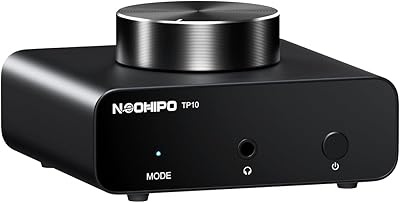
NEOHIPO TP10 Phono Preamp
87%
88%
Sound Accuracy
93%
Build Quality
91%
Signal-to-Noise Ratio
94%
Value for Money
86%
Connectivity Versatility
More
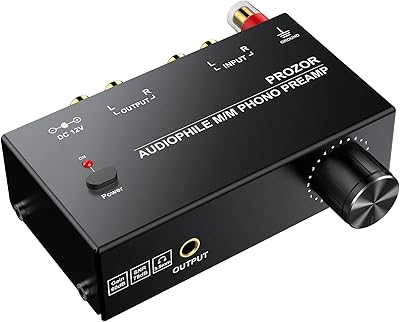
PROZOR PRR019 MM Phono Preamplifier
79%
88%
Value for Money
82%
Signal Clarity & Noise Floor
79%
Build Quality
91%
Dual Output Flexibility
68%
Volume Control Usability
More
Magewell USB Capture SDI Plus
87%
94%
Video Quality
89%
Ease of Use
92%
Latency
90%
Reliability for 24/7 Use
95%
Setup/Installation
More
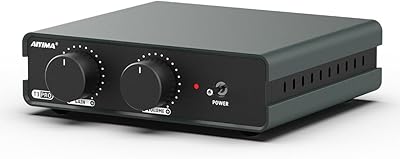
AIYIMA T3 Pro MM/MC Phono Preamp
81%
93%
Cartridge Compatibility
91%
Front Panel Usability
88%
MC Impedance Adjustment
86%
Build Quality & Housing
84%
Op-Amp Upgradability
More
Schiit Mani 2 Phono Preamplifier
80%
93%
Sound Quality
91%
Cartridge Compatibility
94%
Value for Money
89%
RIAA Accuracy
86%
Subsonic Filter
More
ART DJPRE II Phono Preamplifier
80%
88%
Signal Clarity & Noise Floor
91%
Value for Money
74%
Build Quality
93%
Variable Gain Control
86%
Cartridge Loading Flexibility
More
OKIOLABS OKIOCAM T Plus USB Camera
85%
88%
Ease of Setup
91%
Image Clarity
94%
Portability/Size
90%
Interactivity Features (Dry-Erase Board)
83%
Build Quality
More
Fosi Audio Box X2
Fosi Audio Box X2
87%
88%
Audio Warmth
92%
Gain Versatility
86%
Build Integrity
94%
Space Efficiency
89%
Tube Rolling Potential
More

FAQ

It works with turntables that do not have a built-in preamp — that is actually one of the main reasons to buy it. Set the input switch to the phono position, connect your turntable via the RCA inputs, and the unit handles the preamp stage internally. If your turntable already has a built-in preamp or a line-level output, you would switch it to the line position instead.

It works for many users on modern operating systems, but compatibility is not guaranteed due to the product's age. A meaningful number of buyers have reported issues on Windows 11 and recent macOS versions. Before purchasing, it is worth checking ART's support page or recent buyer reviews to see if your specific OS version has known issues. If you are on an older, stable OS version, the experience is generally much smoother.

You are not locked into the bundled software at all. The ART USB Phono Plus Phono Preamp shows up as a standard audio input device on your computer, so any recording application can use it. The vast majority of users skip Sound Saver Express entirely and record with Audacity, which is free, actively maintained, and significantly more capable. GarageBand on Mac also works well for those already in the Apple ecosystem.

Hum is one of the most common complaints, but in most cases it is not a fault with the preamp itself — it is a grounding issue on the turntable side. Make sure your turntable's ground wire is securely attached to the grounding terminal on the unit. If your turntable does not have a separate ground wire, that is a different problem. Also try the low-cut filter switch, which can reduce some low-frequency noise. If hum persists after proper grounding, try a different USB port or a USB hub with its own power supply.

Yes. The line/phono input switch on the rear panel lets you connect any line-level source — a cassette deck, a CD player, or even a receiver's tape output. Just set the switch to the line position rather than phono, connect your source via RCA cables, and record as normal. The gain control and LEDs work the same way regardless of the source.

USB powers it entirely — no wall adapter or external supply is needed. It draws power directly from the USB port on your computer, which keeps the setup clean and cable-light. This also means it works with laptops without needing to find a nearby outlet.

The output format depends entirely on your recording software settings, not the hardware. In Audacity, for example, you can record at 16-bit or 24-bit depth and choose your sample rate. For typical home archiving, 16-bit at 44.1 kHz is standard and more than adequate. The USB audio interface delivers a clean, listenable result at those settings — not studio-grade, but perfectly good for a personal vinyl archive.

The front-panel Signal and Clip LEDs are your primary guide. Play a loud passage from the record and watch for the Signal LED to light up — that confirms audio is coming through. If the Clip LED lights up, your gain is set too high and you risk distorted recordings; back the gain knob off slightly until clipping stops. Aim for Signal lit without Clip lighting during the loudest moments of playback.

It is designed for monitoring rather than casual listening. The output is functional and lets you hear clearly what is being captured, but the audio quality and volume output are modest — it will not drive higher-impedance headphones particularly well and is not intended as a headphone amplifier in the audiophile sense. For checking that a recording session is clean and on-level, it does the job perfectly well.

This phono preamp has been on the market since 2001, which is a long time in consumer electronics. The core hardware has remained largely unchanged, which is both its strength and its limitation. It still does the job it was designed for — getting vinyl to a computer with real level control — and the fundamentals of analog-to-digital conversion at this level have not changed dramatically. The main caveat is modern OS compatibility and the outdated bundled software. If those are not dealbreakers for your setup, it remains a functional and reasonably priced option for home vinyl archiving.

Where to Buy