Overview
The Moxa NPort 5110 Serial Device Server is a compact, single-port gateway from Moxa — a manufacturer with decades of credibility in industrial networking — designed to bridge RS-232 serial devices to standard IP networks. If you're still running legacy instruments, PLCs, or serial peripherals with no native Ethernet port, this is the kind of hardware that quietly solves that problem without requiring a full infrastructure overhaul. The single-port design keeps things focused: one device, one serial connection, done. It's not a consumer gadget and doesn't pretend to be. Holding the #1 bestseller rank in its Amazon category reflects genuine traction among professionals who know exactly what they need.
Features & Benefits
What makes this Ethernet-to-serial gateway practical for real deployments is how well-thought-out its software support is. Real COM and TTY drivers for both Windows and Linux mean your applications interact with the networked serial port as if it were physically installed — no custom middleware, no patching your code. Configuration is equally flexible: set it up via a web browser, Telnet, or the Windows utility depending on your workflow. SNMP MIB-II support lets it slot into existing enterprise monitoring setups without friction. Multiple operation modes — TCP server, TCP client, UDP — cover most integration patterns, and the 10/100 Ethernet interface handles whatever your LAN throws at it.
Best For
This serial device server is squarely aimed at professionals with a specific problem: legacy RS-232 equipment that needs to communicate with a modern IP network. That covers a surprisingly wide range of scenarios — factory automation gear, lab instruments, retail POS terminals, serial barcode scanners, and older serial printers that IT teams still need to manage remotely. The single-port format makes it ideal when you only have one device to network and don't want to pay for a multi-port chassis. It's also a solid choice for mixed Windows and Linux environments where driver compatibility causes headaches with cheaper alternatives. If you need more than one port, Moxa's broader NPort lineup is worth a look.
User Feedback
Among verified buyers — most of whom are clearly systems integrators or network administrators — the Moxa NPort 5110 earns consistent praise for long-term reliability and stable operation in always-on industrial environments. The Windows configuration utility gets specific credit for making initial setup relatively painless. On the critical side, a handful of users have noted that driver installation on newer or less common OS builds occasionally requires extra steps, so checking Moxa's support documentation before deployment is worthwhile. There are no significant complaints about build quality or hardware failure. With a 4.6-star average across nearly 60 ratings in a demanding professional niche, the picture is one of quiet, steady confidence from people who actually put it to work.
Pros
- Real COM and TTY drivers work transparently on both Windows and Linux without patching applications.
- The Windows configuration utility makes initial setup approachable even for time-pressed administrators.
- SNMP MIB-II support integrates cleanly into existing enterprise network monitoring platforms.
- Compact physical footprint fits easily in tight equipment rooms or alongside rack hardware.
- Multiple operation modes — TCP server, TCP client, UDP — cover a wide range of real-world integration patterns.
- Moxa is an established industrial networking brand with a track record of long-term product support.
- Holds the top bestseller rank in its Amazon category, reflecting consistent demand from professionals.
- Stable, continuous operation in always-on industrial environments is a recurring theme in buyer feedback.
- DB9 Male connector matches the most common RS-232 interface found on legacy equipment.
- The unit has remained in active production since 2018 with no discontinuation planned.
Cons
- Single-port design means per-device cost scales linearly when you need to network several serial instruments.
- Driver installation on newer or less mainstream OS builds can require extra troubleshooting steps.
- No support for RS-422 or RS-485 limits compatibility with many industrial serial standards.
- The price point is hard to justify for low-stakes or occasional-use scenarios where uptime is not critical.
- Web-based configuration interface is functional but not particularly modern or intuitive by current standards.
- No built-in cellular or wireless connectivity, so a wired Ethernet run to the device is always required.
- Limited to 10/100 Mbps Ethernet, which is sufficient but may feel dated in high-throughput network environments.
- Documentation and advanced configuration guidance assume professional-level networking knowledge, leaving less experienced users on their own.
Ratings
The scores below reflect an AI-driven analysis of verified buyer reviews for the Moxa NPort 5110 Serial Device Server, gathered from professional users worldwide, with spam, bot activity, and incentivized feedback actively filtered out. Each category is scored to give an honest picture of where this Ethernet-to-serial gateway genuinely excels and where real frustrations have surfaced. Both strengths and pain points are represented transparently so you can make a fully informed decision.
Reliability & Uptime
Driver Quality
Ease of Configuration
Build Quality
Value for Money
Network Integration
OS Compatibility
Operation Mode Flexibility
Form Factor & Installation
Technical Support & Documentation
Long-term Vendor Support
Package Contents
Suitable for:
The Moxa NPort 5110 Serial Device Server is the right call for network engineers, systems integrators, and industrial IT teams who need to put a single RS-232 device on an IP network without overcomplicating the infrastructure. If you're managing factory automation equipment, laboratory instruments, legacy PLC controllers, or retail POS terminals that were never designed to speak Ethernet, this Ethernet-to-serial gateway closes that gap cleanly. It fits particularly well in environments where the deployment is targeted — one device, one port, one job — and where reliability over long, unattended uptimes is non-negotiable. Mixed Windows and Linux shops will find the dual Real COM and TTY driver support genuinely useful, especially when cheaper alternatives tend to fall apart on one platform or the other. Administrators who value being able to monitor networking hardware through SNMP will also feel at home here.
Not suitable for:
The Moxa NPort 5110 Serial Device Server is not the right fit if you need to network multiple serial devices simultaneously, since the single-port design means you would need one unit per device, which adds up in cost and management overhead quickly. Buyers looking for RS-422 or RS-485 support should look elsewhere in Moxa's NPort lineup, as this model strictly handles RS-232. It is also not intended for casual home users or hobbyists who want a simple plug-and-play experience — initial configuration assumes a working knowledge of TCP/IP networking and serial communication concepts. If your budget is tight and your use case is non-critical, there are less expensive serial device servers on the market, though reliability and driver quality tend to drop accordingly. Anyone running an unusual or very new operating system variant should verify driver compatibility with Moxa's support resources before committing to a purchase.
Specifications
- Brand: Manufactured by Moxa Inc., a company with an established reputation in industrial networking and serial connectivity hardware.
- Model: NPort 5110, a single-port serial device server within Moxa's widely deployed NPort product family.
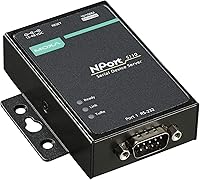
- Serial Interface: Supports one RS-232 serial port via a DB9 Male connector, compatible with the vast majority of legacy serial equipment.
- Serial Ports: One serial port is provided, making this unit appropriate for single-device network integration deployments.
- Network Interface: Connects to standard 10/100 Mbps Ethernet networks via a built-in RJ45 port.
- Driver Support: Ships with Real COM drivers for Windows and TTY drivers for Linux, enabling transparent serial port virtualization on both platforms.
- OS Compatibility: Officially supported on Windows and Linux operating systems; driver availability for specific versions should be verified on Moxa's support portal.
- Configuration: Can be configured through three methods: a web browser interface, Telnet terminal access, or Moxa's dedicated Windows configuration utility.
- Network Management: Supports SNMP MIB-II, allowing this device to be monitored and managed within enterprise-grade network management systems.
- Operation Modes: Supports multiple operation modes including TCP Server, TCP Client, UDP, Real COM, and Reverse Telnet, covering a broad range of serial-over-IP use cases.
- Dimensions: The unit measures 5.43 x 4.76 x 3.66 inches, making it compact enough for installation in tight or cluttered equipment environments.
- Weight: Weighs 9.4 ounces, light enough to mount or position without requiring additional structural support in most setups.
- Power Input: Accepts a 12–48V DC power input range, providing flexibility for deployment in industrial environments with non-standard power supplies.
- Availability: First listed in January 2018 and confirmed as not discontinued by the manufacturer, indicating ongoing production and support.
- Amazon Rank: Currently ranked #1 in the Computer Networking Device Servers category on Amazon, reflecting consistent demand from professional buyers.
- ASIN: The Amazon Standard Identification Number for this product is B0798DT6SQ, useful for verifying the correct listing before purchasing.
- Package Weight: The complete package, including accessories, ships at approximately 9.4 ounces based on listed item weight data.
Related Reviews
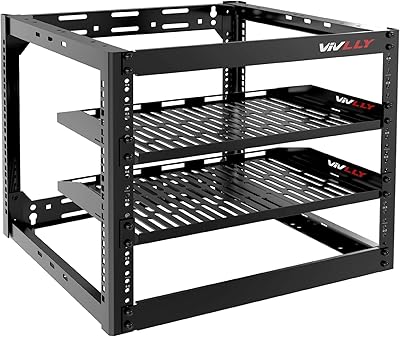
Vivlly 10U Open Frame Server Rack
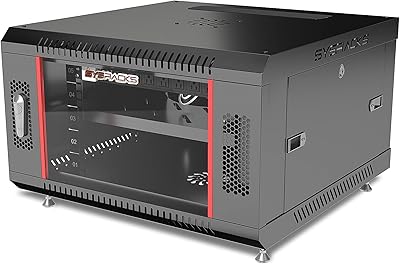
Sysracks SRW 6.600B 6U Wall Mount Server Rack
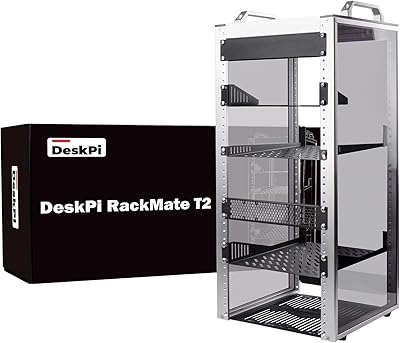
GeeekPi DeskPi RackMate T2 12U Server Rack
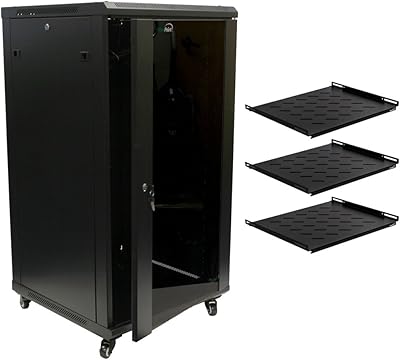
NavePoint 22U 19-Inch Server Rack Enclosure

Intermatic AG3000 HVAC Surge Protective Device
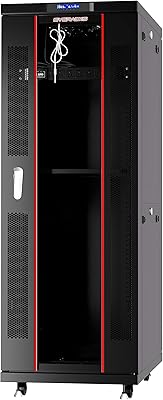
Sysracks SRF 32U Server Rack Cabinet
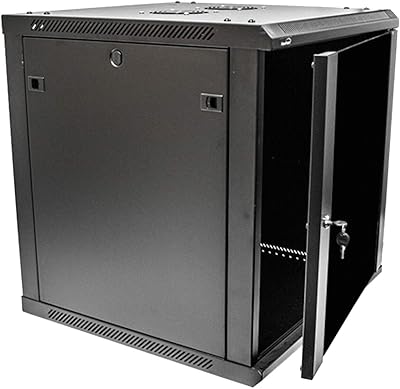
NavePoint 12U Wall Mount Server Rack (600mm)
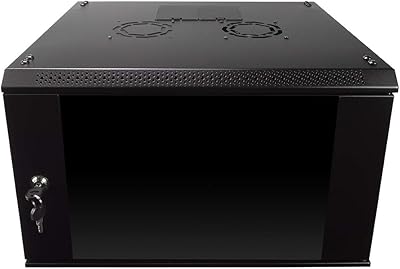
NavePoint 6U Wall Mount Server Rack Cabinet

Oralift Basic Natural Beauty Device