Overview

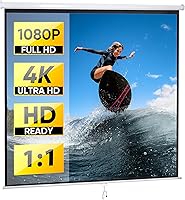
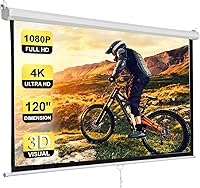
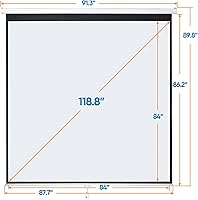
The Smartxchoices 120″ Manual Pull Down Projector Screen is a straightforward, no-frills option aimed at home theater enthusiasts and classroom users who want serious screen real estate without a serious price tag. One thing worth flagging upfront: this screen uses a 1:1 aspect ratio, meaning the viewable area is 84 by 84 inches — perfectly square. That is a deliberate choice for certain presentations and older projectors, but if you are planning to stream widescreen movies, factor that in early. The metal casing and dual wall-and-ceiling mounting options set it apart from cheaper all-plastic alternatives, and at this price tier, that added rigidity is genuinely noticeable.
Features & Benefits

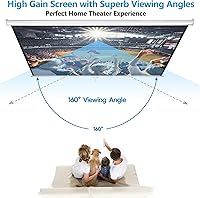
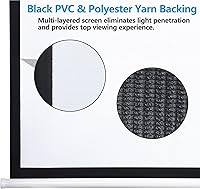
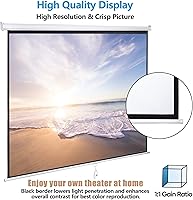
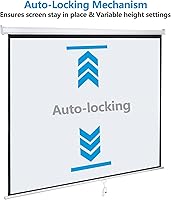
The auto-lock pull-down mechanism is one of the more practical touches here — it lets you set the screen at different heights without fumbling with separate hardware. The 1.1 gain matte white surface reflects enough light for a clean image in a dimmed room, and the black backing does a solid job preventing light from bleeding through the material. A 160-degree viewing angle means guests sitting well off to the side still get a usable picture. Four black borders frame the image neatly and add real contrast punch. The polyester screen can be wiped down with mild soap and water, which anyone running a shared classroom or office space will genuinely appreciate.

Best For

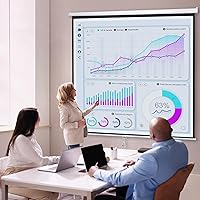
This wall-mount projection screen makes the most sense for people projecting in controlled lighting — a basement home theater, a conference room, or a classroom where you can pull the blinds. The 1:1 format is a natural fit for older projectors or presentation software that outputs in a square layout; it is less ideal if widescreen movie nights are your primary goal. Renters and budget buyers will find the setup appealing since the mounting hardware is simple and nothing about the installation is permanent. It also handles occasional outdoor use reasonably well, though you will need a projector with solid brightness output to compensate for any ambient light.

User Feedback

Across buyer reviews, the most consistent praise centers on easy installation and the sheer amount of screen you get at this price point — many buyers mention getting it up in under an hour without assistance. That said, recurring complaints point to screen tension inconsistency: some units do not retract evenly, and a handful of buyers reported light creasing that remained visible during playback. The auto-lock reliability gets mixed marks over time, with several users noting it loosens after months of repeated use. Buyers switching up from bare fabric-over-frame setups tend to rate this screen more favorably, while those downgrading from established premium brands are noticeably more critical.

Pros

  • At 120 inches diagonal, this pull-down screen delivers an impressively large viewing area for the price.
  • The metal and ABS casing feels noticeably sturdier than the all-plastic competition at this price point.
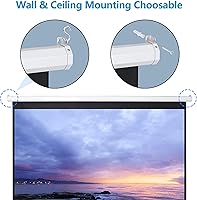
  • Wall and ceiling mounting options give buyers real flexibility in how and where they install it.
  • The auto-lock pull-down system lets you set the screen height without any extra tools or hardware.
  • Black backing on the screen material does a good job preventing light bleed-through in typical home settings.
  • Four-side black borders give the image a clean, defined edge that improves perceived picture contrast.
  • The matte white surface can be wiped down with mild soap and water, making it practical in shared spaces.
  • Most buyers report a solo installation taking under an hour, which is a real time saver.
  • The 160-degree viewing angle keeps the picture usable even for guests seated far off-center.
  • Doubles as an occasional outdoor screen, giving it more versatility than fixed-frame alternatives.

Cons

  • The 1:1 aspect ratio is a dealbreaker for anyone whose main use case is widescreen or 16:9 video content.
  • Screen tension can be inconsistent between units, leading to uneven rolling or retraction in some cases.
  • The auto-lock mechanism shows signs of loosening after several months of regular repeated use.
  • Light creasing along the screen surface has been noted by a portion of buyers and can be visible during playback.
  • Performance drops noticeably in rooms with significant ambient light — a proper darkened space is essentially required.
  • The spring and pull mechanism is not built for heavy commercial use; durability under daily high-frequency use is uncertain.
  • At nearly 16 pounds, it is not as effortlessly portable as the foldable description might suggest.
  • Buyers downgrading from established screen brands will likely notice a quality gap in surface smoothness and tension uniformity.

Ratings

The scores below for the Smartxchoices 120″ Manual Pull Down Projector Screen were generated by our AI system after analyzing verified buyer reviews from multiple global markets, with spam, bot-submitted, and incentivized feedback actively filtered out. Each category reflects the honest distribution of real user experiences — strengths and frustrations weighted equally — so you get a clear picture of where this pull-down screen genuinely delivers and where it falls short.
Value for Money
83%
Buyers consistently highlight that getting a 120-inch diagonal screen at this price point is hard to beat. For classrooms, basement theaters, and small business presentations, the combination of screen size and metal casing feels like a genuine deal compared to similarly priced all-plastic alternatives.
A handful of buyers who have owned more established screen brands feel the value proposition weakens once you factor in the inconsistent screen tension and the potential need to replace or adjust the unit within a year or two of regular use.
Build Quality
71%
29%
The metal and ABS composite casing is one of the standout physical traits of this wall-mount projection screen — users switching up from flimsy fabric-frame setups notice the difference immediately. The housing feels solid when mounted, and the end caps do not flex or creak under normal handling.
The internal rolling mechanism and spring tension are where the build quality story gets complicated. Several buyers report that the auto-lock starts to feel looser after six to twelve months of repeated use, which is a real concern for anyone who pulls the screen up and down daily.
Screen Surface Quality
67%
33%
Under good lighting conditions, the matte white surface produces clean, evenly distributed images with decent color accuracy for a budget-grade material. The black backing does its job preventing light bleed-through, which keeps projected images from looking washed out in moderately dim rooms.
Creasing is a recurring issue, particularly along the lower third of the screen where tension is most variable. Some buyers report visible horizontal waves in the surface even after the screen has been hanging for several days, which is distracting on high-contrast slides or dark movie scenes.
Ease of Installation
86%
This is one area where the 120-inch manual screen earns consistent, genuine praise. Most buyers describe a straightforward wall or ceiling mount process that one person can complete in under an hour using basic tools. The included hardware is adequate, and the instructions are clear enough to follow without frustration.
Ceiling installation is slightly trickier than wall mounting due to the unit's weight and the need to maintain precise alignment. A few buyers also note that locating studs for a secure ceiling anchor requires more planning than the instructions suggest, particularly in older homes.
Auto-Lock Mechanism
62%
38%
When it functions as intended, the auto-lock system is genuinely convenient — you can set the screen at different heights mid-presentation without fumbling with clips or latches, which is a practical advantage in classroom and office environments where the room setup changes frequently.
Longevity is the real concern here. Buyer feedback patterns suggest the lock mechanism loses holding strength after several months of regular use, and a notable portion of users report the screen slowly drifting down from its set position. This is not a dealbreaker at first, but it becomes annoying over time.
Image Clarity & Gain
74%
26%
The 1.1 gain rating means images appear slightly brighter than on a neutral-gain surface, which helps in rooms that cannot be made completely dark. Buyers using mid-range projectors in dedicated home theater spaces report sharp, bright images with good color reproduction during evening use.
In any space with ambient daylight or strong overhead lighting, the surface struggles to maintain contrast and color fidelity. The gain level is not high enough to compensate for bright environments, so buyers projecting in offices or classrooms with large windows should plan around light control carefully.
Viewing Angle
79%
21%
The 160-degree horizontal viewing angle is a tangible benefit in living room setups where seating is spread across a wide arc rather than directly centered. Guests sitting well to the sides of the room report a fully usable picture with minimal color shift, which is better than expected at this price point.
At the extreme edges of the viewing angle, some brightness falloff is noticeable, particularly with lower-lumen projectors. This is a minor issue for casual home use but could be more noticeable in a classroom where students at the far ends of front rows are still watching at steep angles.
Aspect Ratio Suitability
58%
42%
For users who specifically need a square 1:1 format — whether for legacy projectors, presentation software, or square-format content — this screen fills a genuine gap in the market. Finding a large-format 1:1 pull-down screen at this price is not easy, and that specificity has real value for the right buyer.
The 1:1 format is a significant limitation for the majority of buyers who want to watch standard widescreen video content. Black bars on both sides of a 16:9 image are inevitable, and the effective usable width for movies or streaming drops considerably, making this a poor choice for dedicated home cinema use.
Portability & Flexibility
76%
24%
Buyers who move between spaces — teachers who use it across multiple classrooms, or small business owners who present at different venues — appreciate that the screen can be uninstalled, transported, and remounted without significant hassle. The freestanding option also adds setup flexibility for outdoor or temporary use.
At nearly 16 pounds, this wall-mount projection screen is not as effortlessly portable as lighter fabric roll-up competitors. Repeated mounting and unmounting also puts stress on the casing and hardware over time, and buyers who move it frequently report more wear than those who leave it in a fixed location.
Screen Tension Consistency
54%
46%
When tension is well-calibrated from the factory, the screen hangs relatively flat and provides a smooth surface for projection. Buyers who receive a well-tensioned unit often report no meaningful issues with surface flatness during the first few months of use.
Tension inconsistency is one of the most commonly flagged complaints across buyer reviews. Some units arrive with noticeably uneven rolling, causing the screen to hang with a slight bow or warp. This is a known quality-control variability issue with manual screens in this price category and is difficult to predict before purchase.
Durability Over Time
61%
39%
For light to moderate use — a weekly movie night or occasional classroom presentation — the pull-down screen holds up reasonably well over the first year. Buyers in low-frequency use scenarios report fewer mechanical issues and less surface degradation than those using it daily.
Heavy daily use accelerates wear on the spring mechanism, auto-lock, and screen material. Buyers in high-frequency environments like active classrooms report that the screen shows functional and cosmetic wear within twelve to eighteen months, which is a notable limitation for institutional buyers expecting multi-year reliability.
Cleaning & Maintenance
81%
19%
The wipe-clean polyester surface is a practical feature that classroom teachers and shared-space users genuinely appreciate. A damp cloth with mild soap removes most smudges and dust without damaging the matte coating, and the surface dries quickly before being rolled back up.
The screen must be fully dry before rolling to avoid moisture damage to the internal mechanism and potential mold growth on the material over time. This small but important care step is not prominently communicated in the included instructions, and some buyers learn it the hard way after a hasty cleanup.
Packaging & Unboxing
72%
28%
Most buyers report the screen arriving well-protected and undamaged, with mounting hardware included and organized clearly. The packaging is functional and sturdy enough to survive standard carrier handling without denting the metal casing or arriving with pre-existing screen creases in most cases.
A recurring minority complaint involves units arriving with the screen already partially creased or unevenly rolled from the factory, suggesting that packaging consistency is not perfect across all production runs. Buyers who experience this often struggle to fully relax the creases even after extended hanging time.

Suitable for:

The Smartxchoices 120″ Manual Pull Down Projector Screen is a strong fit for budget-conscious buyers who need a large, functional display surface without the cost or complexity of a motorized setup. Teachers and corporate trainers will appreciate how the pull-down mechanism and dual mounting options translate into a screen that can go up in a classroom or conference room with minimal effort. Home theater enthusiasts working with a dedicated or darkened room will get solid image quality at a size that genuinely impresses guests. The 1:1 aspect ratio is a real advantage for anyone running square-format presentations, older projectors, or software that defaults to that layout. Renters are also a natural match here — nothing about the installation is invasive, and the screen is light enough to take down and move if needed.
Not suitable for:

Buyers who primarily want to watch widescreen movies or modern 16:9 content should look elsewhere before purchasing, because the square 1:1 format will leave noticeable black bars on either side of a standard video stream. The Smartxchoices 120″ Manual Pull Down Projector Screen is also not the right call for high-traffic commercial environments or venues where the mechanism will be pulled up and down dozens of times a week — the auto-lock system and spring tension are not built for that kind of sustained punishment. Anyone projecting in a bright room without blackout curtains will likely be frustrated; the 1.1 gain surface needs controlled lighting to really deliver. If image flatness and zero creasing are non-negotiable — say, for professional photography display or color-critical work — the manual coil mechanism introduces too much variability. Buyers expecting a perfectly taut, cinema-smooth surface out of the box may need to reset their expectations.
Specifications

  • Diagonal Size: The screen measures 120 inches diagonally, making it one of the larger options available in the manual pull-down category.
  • Viewable Area: The active viewing surface measures 84 inches wide by 84 inches tall, forming a perfectly square display area.
  • Aspect Ratio: This screen uses a 1:1 aspect ratio, which is square rather than the widescreen 16:9 format most modern displays use.
  • Gain: The matte white surface has a 1.1 gain rating, meaning it reflects slightly more light than a neutral surface while keeping hotspotting minimal.
  • Viewing Angle: The screen supports a 160-degree horizontal viewing angle, keeping the image usable for viewers seated well off to either side.
  • Screen Material: The projection surface is made from polyester with a PVC coating and includes a standard black backing to block light penetration.
  • Casing Material: The outer housing is constructed from a combination of metal and ABS plastic, providing more structural rigidity than all-plastic alternatives.
  • Mechanism: A manual pull-down system with an integrated auto-lock allows the screen to be set and held at multiple height positions without tools.
  • Mounting Options: The screen supports wall mounting, ceiling mounting, inside mounting, and freestanding setups, giving buyers significant installation flexibility.
  • Overall Dimensions: When fully assembled and mounted, the unit spans approximately 91.3 inches wide and 89.8 inches tall including the casing.
  • Weight: The complete unit weighs 15.67 pounds, which is manageable for a solo wall or ceiling installation with standard hardware.
  • Border Design: Four-side black borders frame the entire viewable area, helping to define image edges and improve perceived contrast during projection.
  • Surface Care: The screen material can be gently cleaned using a soft cloth with mild soap and water, then air-dried before rolling up.
  • Use Environments: Designed for indoor use in home theaters, classrooms, and offices, with limited suitability for occasional outdoor projection setups.
  • Brand: Manufactured by Smartxchoices, a value-focused brand producing budget-accessible AV and display accessories for home and light commercial use.

Related Reviews
Elite Screens M120H 120-Inch Manual Pull-Down Projector Screen
87%
91%
Ease of Setup
87%
Image Quality
92%
Build Quality
88%
Value for Money
89%
Compatibility with 4K/8K/3D
More
Akia Screens 100″ Manual Pull-Down Projector Screen
80%
88%
Image Quality
91%
Ease of Installation
86%
Screen Material & Coating
74%
Build Quality & Housing
71%
Auto-Lock Mechanism
More
Elite Screens M110H 110-inch Projector Screen
80%
88%
Image Quality
71%
Screen Flatness
78%
Build Quality
84%
Installation Experience
83%
Auto-Lock Mechanism
More
Elite Screens ezCinema 150-inch Manual Projector Screen
79%
88%
Image Quality
84%
Screen Flatness
71%
Ease of Setup
83%
Build Quality
57%
Portability
More
Elite Screens QuickStand QS150HD 150-inch Manual Pull Up Projector Screen
87%
94%
Ease of Setup
88%
Portability
91%
Image Quality
85%
Build Quality
72%
Screen Tension
More
Elite Screens QuickStand 180-inch Portable Projector Screen
77%
91%
Setup Speed
88%
Screen Image Quality
86%
Build Quality
58%
Portability
67%
Value for Money
More
Elite Screens ezCinema 2 70-inch Manual Floor Pull Up Projector Screen
86%
88%
Ease of Setup
90%
Portability
91%
Image Quality
84%
Build Quality
89%
Value for Money
More
Elite Screens M135XWH2 135-inch Projector Screen
78%
88%
Image Quality
83%
Screen Flatness & Tension
76%
Auto-Lock Mechanism
71%
Ease of Installation
84%
Value for Money
More
Instahibit 100″ Portable Projector Screen
75%
78%
Ease of Setup
83%
Screen Image Quality
62%
Frame Stability
71%
Portability
67%
Screen Flatness
More
VIVOHOME VH828-BK 80-Inch Pull-Down Projector Screen
79%
83%
Build Quality
88%
Mechanical Smoothness
79%
Screen Fabric Quality
81%
Image Clarity & Reflectivity
74%
Ease of Installation
More

FAQ

It depends on what you are watching. For standard widescreen or 16:9 content like most movies and streaming shows, you will see black bars on the left and right sides of the image. The 1:1 format really shines for square-format presentations, older projectors, or specific software that outputs in that ratio. If movies are your main goal, a 16:9 screen would be a better fit.

Most buyers manage it solo in under an hour. The casing includes mounting hardware, and the process is straightforward if you can locate studs or use appropriate wall anchors. The unit weighs just under 16 pounds, so having a second pair of hands for the initial lift is helpful but not strictly necessary.

It will work, but not ideally. The 1.1 gain surface performs best in a darkened or dimmed room. In a space with significant ambient or natural light, image contrast and color accuracy will suffer noticeably regardless of how bright your projector is. Blackout curtains or a room you can dim properly will make a real difference.

The auto-lock system is designed to hold the screen at multiple intermediate positions, not just fully extended or fully retracted. This is useful if you want to adjust the image height or use only part of the screen area. That said, some buyers report the lock feels less firm over time with repeated use, so it is worth checking tension occasionally.

Yes, the screen itself works with any projector — it has no electronic components and is simply a reflective surface. The main thing to verify is that your projector supports a 1:1 aspect ratio output, or that you are comfortable with letterboxing if you output in a different ratio. Projector brightness of at least 2000 lumens is recommended for a screen this size.

Light creasing is a known issue with polyester pull-down screens at this price point, and this one is no exception. Most buyers find the wrinkles relax out after the screen has been hanging for a day or two. Storing it fully rolled and avoiding sharp folds will minimize the problem over the long term.

Technically yes, though with some caveats. The mounting system is designed primarily for indoor wall or ceiling use, so for outdoor setups you would need to use it freestanding or get creative with a frame. The bigger limitation outdoors is ambient light — you will need a high-lumen projector and ideally wait until it is fully dark to get a watchable image.

The surface is designed to be wiped down with a damp cloth using a small amount of mild soap, then allowed to air dry before rolling it back up. Avoid harsh chemicals or abrasive cloths, which can damage the matte coating. For regular dust, a soft dry cloth or a gentle brush works fine.

The combination of metal and ABS plastic in the housing gives it a noticeably more solid feel than the purely plastic alternatives you will find at similar or lower prices. It is not industrial-grade by any measure, but for a permanent home or classroom installation it holds up well under normal use conditions.

With wall mounting, the unit attaches horizontally near the top of the wall and the screen drops down in front of the wall surface. Ceiling mounting positions the unit closer to the ceiling, which can give you a cleaner look and more precise placement in front of a projector. Both methods use the same mounting points on the casing and are included in the installation options.