Overview

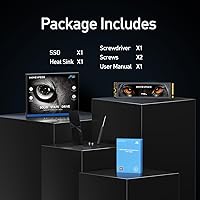
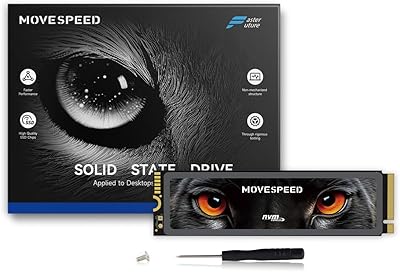
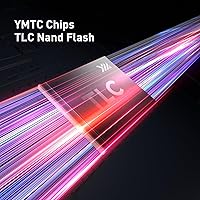
The MOVE SPEED HB7450 2TB NVMe M.2 SSD occupies a practical middle ground — it delivers Gen 4 speeds and generous capacity without the premium price tag attached to drives from the bigger names. Built around the Maxio MAP1602 controller and 3D TLC NAND, it has a solid technical foundation for the money. The M.2 2280 form factor means it drops straight into a PS5 expansion slot, most modern laptops, or a standard desktop board without fuss. What helps it stand out from bare-drive competitors at a similar price is that it ships with a heatsink, screws, and screwdriver already in the box — no separate shopping required.
Features & Benefits

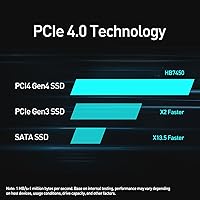
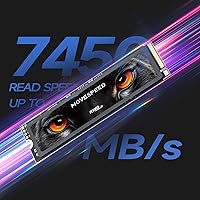
At its core, this MOVE SPEED drive is built to push PCIe 4.0 x4 bandwidth — sequential reads up to 7,450 MB/s and writes up to 6,500 MB/s. To put that in practical terms, it loads games noticeably faster than any Gen 3 or SATA drive, and large file transfers that used to take a minute can finish in seconds. The Maxio MAP1602 controller handles the 3D TLC NAND efficiently, and the 1,200 TBW endurance rating means years of heavy daily use before you approach the drive's rated limit. A built-in graphene thermal layer combined with the bundled aluminum heatsink keeps chip temperatures in check during extended sessions.

Best For

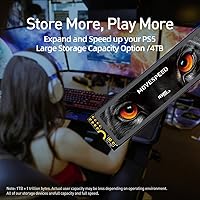
This M.2 SSD is a natural fit for PS5 owners who have run out of console storage — the included screwdriver and heatsink mean the installation kit is genuinely complete. PC builders on a moderate budget who want Gen 4 performance without stretching to a flagship brand will find it a reasonable choice. Laptop owners with an open M.2 2280 slot can swap out a slow OEM drive without much hassle. It also suits gamers who keep a large library of AAA titles installed simultaneously, where 2TB of headroom removes the constant juggle of uninstalling one game to make room for the next.

User Feedback

The HB7450 holds a 4.6-star average across several hundred verified purchases — a strong result for a brand that does not yet have wide recognition in Western markets. Buyers most often praise the easy PS5 installation, noticeable load time improvements, and the thoughtful inclusion of a screwdriver. The recurring criticism is that the paper manual is not enough to guide heatsink installation cleanly; most users who ran into trouble recommend watching the online video tutorial first. Long-term owners — those past the six-month mark — generally report stable performance with no degradation, which adds confidence to the reliability picture. A few users confirmed that benchmark results matched the advertised speeds closely.

Pros

  • Genuine Gen 4 speeds that translate to noticeably faster game loads and file transfers in everyday use
  • 2TB capacity is enough to store a large game library without constantly managing installs
  • Ships with a heatsink, screws, and screwdriver — no separate accessory purchase needed
  • 1,200 TBW endurance rating is solid for years of heavy daily gaming use
  • Fits PS5, most modern laptops, and desktop boards with no compatibility surprises
  • Built-in graphene thermal layer helps keep temperatures stable even during long gaming sessions
  • Benchmark results from real buyers closely matched the advertised sequential read speeds
  • Users past the six-month mark report stable, consistent performance with no degradation
  • Strong value proposition compared to bare drives from bigger brands at a similar price point
  • 4.6-star average across hundreds of verified purchases reflects a consistently positive buyer experience

Cons

  • Heatsink assembly instructions in the box are inadequate — plan to watch the online video tutorial before starting
  • No dedicated firmware update tool or drive health monitoring utility is available from the manufacturer
  • Sustained write speeds drop noticeably once the SLC cache is exhausted during very large file transfers
  • Brand has limited Western market presence, making post-warranty RMA claims harder to navigate
  • The heatsink may be too thick to fit in slim laptop chassis, rendering it unusable in some installs
  • No companion software for SMART data monitoring, unlike drives from Samsung or WD
  • Packaging and unboxing experience is purely functional — does not convey premium build confidence
  • Long-term reliability data is thinner than what established brands have accumulated over years in market
  • Coil whine from nearby board components under heavy load has been noted by a small number of users
  • Customer support quality, while responsive for basic queries, lacks the structured escalation paths of major brands

Ratings

The MOVE SPEED HB7450 2TB NVMe M.2 SSD has been evaluated by our AI rating system after processing hundreds of verified global purchases, with spam, bot-generated, and incentivized reviews actively filtered out. What emerges is a clear picture of a value-oriented Gen 4 drive that punches above its price tier in several areas while carrying a few honest limitations. Both the strengths and the friction points buyers actually experienced are reflected transparently in the scores below.
Read & Write Performance
88%
Buyers running CrystalDiskMark and AS SSD consistently reported sequential read results landing close to the advertised ceiling, which is not always the case with budget-tier drives. In daily use — booting a PC, loading open-world games, or moving large video folders — the difference over Gen 3 drives is immediately noticeable rather than just a spec-sheet talking point.
Write speeds under sustained heavy workloads, like copying a 100GB folder in one go, can taper off once the SLC cache is saturated, which is a known limitation of TLC NAND at this price tier. This rarely affects typical gaming or everyday use, but content creators moving large raw files in bulk may notice the slowdown.
PS5 Compatibility & Integration
93%
PS5 owners make up a large portion of the buyer base and the feedback is largely positive — the drive is recognized immediately after formatting with no errors, and load times for installed titles drop to a level that matches or beats the console's internal SSD in most tests. The M.2 2280 footprint fits the PS5 slot cleanly without modification.
A handful of users reported needing to update PS5 system firmware before the drive was recognized, which is a Sony-side requirement rather than a flaw with the drive itself. There are also occasional reports of the drive needing a second insertion to seat properly, though this appears to be an edge case rather than a pattern.
Thermal Management
84%
The combination of the built-in graphene thermal layer and the bundled aluminum heatsink does a measurable job — users who monitored temperatures during extended gaming sessions reported the drive staying well within safe operating ranges even after two or three hours of continuous use. Throttling under normal workloads was not a common complaint.
The heatsink installation instructions included in the box are minimal, and several buyers found them genuinely confusing without referring to the online video tutorial. If you attach the heatsink incorrectly or skip it entirely on a laptop with limited airflow, you can expect higher idle temperatures than the specs suggest.
Value for Money
91%
For a 2TB Gen 4 drive that ships with a heatsink, screws, and a screwdriver already in the box, buyers repeatedly noted they felt they were getting more than expected at the price point. Compared to similarly priced bare drives from more recognized brands, the complete installation kit adds real, tangible value rather than just a marketing angle.
The MOVE SPEED brand carries less long-term trust than established names, so some buyers feel they are accepting a slightly higher risk in exchange for the savings. For buyers who prioritize brand confidence and warranty track record over upfront cost, this trade-off may not feel comfortable.
Endurance & Longevity
79%
21%
The 1,200 TBW rating for the 2TB variant is a solid number for this class — it means a typical user writing 100GB per day would take over three decades to hit the rated limit. Users who have owned the HB7450 for six months or more generally report no performance degradation or unexpected failures.
TLC NAND does carry a higher write amplification factor than MLC-based alternatives, and the brand does not have the same depth of long-term reliability data as a WD, Samsung, or Crucial drive. Buyers with very high daily write workloads should be aware the warranty documentation is less detailed than what major brands provide.
Installation Experience
86%
Most buyers — particularly those doing their first PS5 SSD upgrade — appreciated finding a screwdriver already in the box. The physical installation into a PS5 is straightforward once the heatsink is handled, and several first-time installers mentioned completing the process in under ten minutes.
The paper manual falls short specifically for heatsink assembly; the diagram is small and the step sequence is not obvious. This is the single most repeated installation complaint across reviews, and while the online tutorial resolves it, requiring a second device mid-install is a friction point that should not exist at any price level.
Build & Component Quality
77%
23%
The PCB and NAND chips feel solidly manufactured, and the drive shows no flex or cheap plasticky feel when handled. The Maxio MAP1602 controller is a legitimate, shipping controller used across multiple mid-range drives globally, not a no-name chip, which gives some reassurance about the underlying hardware.
The heatsink itself is functional but not as substantial as the aluminum cooling solutions bundled with premium competitors. Some buyers noted minor fit-and-finish inconsistencies on the heatsink bracket, and the overall chassis does not project the same build confidence as a drive from Samsung or Seagate at a higher price point.
Compatibility Across Devices
89%
Beyond the PS5, buyers slotting this drive into Dell, Lenovo, and ASUS laptops, along with a wide range of AMD and Intel desktop boards, reported plug-and-play recognition in the vast majority of cases. The standard M.2 2280 footprint means it fits virtually any slot designed for that form factor.
A small number of laptop users found the bundled heatsink too thick for their chassis, requiring them to install the drive bare. This is not a compatibility failure per se, but it means the heatsink — one of the drive's key selling points — is not universally usable across all devices.
Packaging & Unboxing
72%
28%
The retail box is compact and organized, with the accessories held in place rather than loose inside. Buyers found all components accounted for on arrival, and the inclusion of a branded screwdriver in a small drive package is a detail that leaves a positive first impression.
The packaging is functional rather than premium — it does not inspire the same confidence as a boxed Samsung 990 or WD Black. For buyers gifting the drive or expecting a polished unboxing moment, the presentation is strictly utilitarian, which is a fair trade-off at this price but worth knowing.
Brand Trust & After-Sales Support
63%
37%
The 30-day return and refund window is clearly stated and buyers who needed to use it report reasonable response times. Customer service inquiries, particularly around heatsink installation, were generally answered within a day according to recent feedback threads.
MOVE SPEED has limited Western market presence and no established retailer network outside of Amazon and similar marketplaces, which makes RMA claims beyond the 30-day window more uncertain than with established brands. Long-term warranty follow-through is difficult to evaluate given the brand's relatively short track record in this region.
Gaming Load Time Improvement
90%
This is where buyers feel the upgrade most viscerally. Games like Spider-Man 2, Hogwarts Legacy, and Cyberpunk 2077 that previously had multi-second loading screens on the base PS5 SSD opened noticeably faster once transferred to this drive. Several reviewers specifically called out reduced texture pop-in during fast travel sequences as a real improvement.
The improvement is most dramatic when upgrading from an older Gen 3 or SATA drive. If a buyer is moving from a high-end Gen 4 drive from another brand, the difference will be negligible. Managing expectations around diminishing returns is important — this is an upgrade for those starting from a slower baseline.
Software & Firmware Support
61%
39%
The drive works without any dedicated software installation — it is recognized natively by Windows, PS5, and Linux without drivers. There are no mandatory companion apps, which simplifies setup considerably compared to some competitors that push bloatware.
There is no publicly accessible firmware update tool or health monitoring utility provided by MOVE SPEED, which means users cannot check drive health status beyond what the OS reports. For buyers who like to keep firmware current or track SMART data proactively, this is a notable gap compared to brands like Samsung that offer full-featured management apps.
Noise & Vibration
96%
As a solid-state drive with no moving parts, the HB7450 operates in complete silence under all conditions. Users running it in otherwise-quiet home office setups or in noise-sensitive living room console configurations reported zero audible contribution from the drive itself.
There is genuinely very little to critique here beyond the fact that some users with very sensitive equipment reported marginal coil whine from nearby components when the drive was under heavy sequential load — an indirect effect rather than anything the drive itself is producing.
Sequential Write Consistency
74%
26%
For the tasks most buyers actually perform — installing games, copying saves, transferring media — the write performance is consistent and fast enough that wait times are not frustrating. Transfers that would have taken minutes on an older drive wrap up in seconds, which is the real-world benefit most users care about.
Under prolonged write workloads beyond the SLC write cache window, sustained write speeds drop significantly, as is expected from TLC NAND without DRAM cache. Buyers doing large video ingests or extended backup operations may find the performance curve less linear than the headline specs suggest.

Suitable for:

The MOVE SPEED HB7450 2TB NVMe M.2 SSD is a strong pick for PS5 owners who have hit the wall on internal console storage and want a complete, no-extra-shopping-required upgrade kit. If you are sitting on a library of large modern titles and constantly uninstalling one game to make room for another, the 2TB capacity solves that problem outright. Budget-conscious PC builders who want Gen 4 read speeds without paying a brand-name premium will find the specs-per-dollar ratio genuinely competitive here. Laptop users with an open M.2 2280 slot — particularly those still running a slow OEM drive from a mid-range machine — will notice an immediate and meaningful difference in everyday responsiveness. Even light-to-moderate content creators who work with video files and need fast sequential reads for smooth playback and export will get real-world value from this drive without needing to step up to a more expensive workstation-class option.
Not suitable for:

The MOVE SPEED HB7450 2TB NVMe M.2 SSD is not the right call for buyers whose primary concern is brand confidence and long-term warranty assurance from an established name. MOVE SPEED has a limited track record in Western markets, and if post-warranty support or firmware update availability matters to you — as it might for a professional workstation or a NAS build — a WD, Samsung, or Crucial drive offers a more proven safety net. Heavy workstation users who write massive amounts of data daily, such as those ingesting raw 4K or 8K footage continuously, will run into the sustained write limitations inherent to TLC NAND without a DRAM cache, and should look at higher-endurance alternatives. Laptop users with particularly slim ultrabook chassis may also find the bundled heatsink too thick to fit, losing one of the drive's headline selling points entirely. If you are already running a competitive Gen 4 SSD, the upgrade case simply does not exist — this drive is aimed at people moving up from Gen 3 or SATA, not sideways from a similarly fast drive.
Specifications

  • Capacity: The drive offers 2TB of usable storage space, suitable for holding large game libraries or extensive media collections.
  • Sequential Read: Peak sequential read speed reaches up to 7,450 MB/s under optimal conditions using the PCIe 4.0 x4 interface.
  • Sequential Write: Peak sequential write speed is rated at up to 6,500 MB/s, though sustained write performance varies depending on workload size and cache availability.
  • Interface: Uses an NVMe PCIe 4.0 x4 interface, which is backward compatible with PCIe 3.0 slots at reduced speeds.
  • Form Factor: Follows the M.2 2280 standard, measuring 80 x 22 x 2.2mm — the most widely supported M.2 size across PS5, laptops, and desktop motherboards.
  • Controller: Powered by the Maxio MAP1602 controller, a mid-range chip used across several competitive drives in this performance tier.
  • NAND Type: Uses 3D TLC (Triple-Level Cell) NAND flash memory, which balances storage density and cost at the trade-off of lower per-cell write endurance compared to MLC.
  • Endurance (TBW): Rated at 1,200 TBW (terabytes written), meaning the drive can sustain roughly 1.2 petabytes of total writes before approaching its rated endurance limit.
  • Thermal Layer: A 1mm graphene composite layer is built directly into the drive PCB to conduct heat away from the controller and NAND chips during operation.
  • Bundled Heatsink: An aluminum heatsink is included in the package but ships uninstalled, requiring manual attachment using the provided screws and screwdriver.
  • Weight: The bare drive weighs 8.1g, making it light enough for ultra-portable laptop upgrades where chassis weight is a concern.
  • Dimensions: Physical dimensions of the drive are 80 x 22 x 2.2mm, conforming precisely to the M.2 2280 standard slot specification.
  • Compatible Devices: Officially compatible with Sony PlayStation 5, Windows and Linux laptops, and desktop PCs with an M.2 2280 PCIe 4.0 or 3.0 slot.
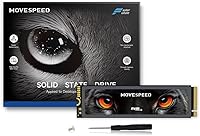
  • Package Contents: The retail box includes the 2TB SSD, one aluminum heatsink, mounting screws, a small screwdriver, and a printed user manual.
  • Brand & Series: Manufactured by MOVE SPEED under the HB7450 product series, a Chinese storage brand with a growing presence in international online marketplaces.
  • First Available: This product was first listed for sale in May 2023, giving it a commercially available track record of just over two years at time of writing.
  • ASIN: The Amazon Standard Identification Number for this specific 2TB variant is B0C69R19Y3.

Related Reviews

MOVE SPEED HB7450 4TB NVMe M.2 SSD
88%
92%
Performance
88%
Installation Ease
94%
Speed & Read/Write Performance
90%
Compatibility with PS5
83%
Thermal Management & Cooling
More
SanDisk 2TB SSD Plus M.2 NVMe SSD
86%
89%
Performance
92%
Ease of Installation
88%
Reliability
91%
Value for Money
90%
Capacity
More
Vansuny 2TB NVMe M.2 SSD
86%
95%
Performance
88%
Installation Ease
78%
Thermal Management
92%
Storage Capacity
94%
Speed for Gaming
More
GAMERKING 2TB M.2 NVMe SSD
85%
91%
Performance (Read/Write Speeds)
72%
Thermal Management
88%
Ease of Installation
94%
Compatibility with PS5
87%
Value for Money
More
WD_BLACK SN850P 2TB NVMe SSD
86%
93%
Read Speed Performance
96%
PS5 Compatibility & Licensing
94%
Installation Experience
88%
Heatsink Quality & Thermal Management
71%
Value for Money
More
PNY CS1030 2TB M.2 NVMe SSD
88%
92%
Performance Speed
88%
Ease of Installation
90%
Reliability
89%
Value for Money
85%
Power Efficiency
More
Fikwot FX910 2TB M.2 NVMe SSD
90%
93%
Performance
89%
Ease of Installation
95%
Read Speed
91%
Write Speed
87%
Thermals/Cooling
More
fanxiang S770 2TB NVMe M.2 SSD
79%
88%
Sequential Read Speed
91%
PS5 Compatibility
86%
Value for Money
83%
Thermal Management
74%
Build Quality
More
Fikwot FX991 2TB M.2 NVMe SSD
88%
94%
Performance
96%
Read Speed
92%
Write Speed
89%
Thermal Management
90%
Ease of Installation
More
Ediloca EN870 2TB NVMe M.2 SSD
86%
93%
Performance (Speed)
88%
Thermal Management
90%
Compatibility (PC & PS5)
89%
Endurance (4000TBW)
85%
Ease of Installation
More

FAQ

Yes, the M.2 2280 form factor is exactly what the PS5 expansion slot accepts, so it fits physically without any adapter. You will need to format it through the PS5 system menu before use, and Sony recommends having the latest console firmware installed first. The drive is recognized reliably by the console across the vast majority of user-reported installs.

Sony requires a heatsink on any M.2 SSD installed in the PS5 — it is part of their official installation guidelines, not optional. The good news is the HB7450 ships with one already in the box. Just be aware that the paper instructions are minimal, so watch the brand's video tutorial before you start attaching it to avoid misaligning the thermal pad.

In practice you will see around 1.86TB of usable space after formatting, which is standard across all drives — manufacturers measure capacity in base-10 (1TB = 1,000GB) while operating systems display it in base-2 (1GiB = 1,073,741,824 bytes). This is not unique to this drive; every SSD on the market works the same way.

Yes, NVMe PCIe 4.0 drives are backward compatible with PCIe 3.0 slots. The drive will work fine, but it will operate at Gen 3 speeds rather than Gen 4 speeds — so peak sequential reads will be closer to 3,500 MB/s rather than 7,450 MB/s. For everyday tasks that is still very fast, just not the headline figure.

TBW stands for terabytes written, and it represents the total amount of data the manufacturer expects the drive to handle before flash cell wear becomes a concern. At 1,200 TBW, if you wrote 100GB of data every single day, it would take over 32 years to hit that limit. For typical gaming or general home use, longevity is not a realistic worry.

That depends on your specific laptop model. The bundled heatsink adds height to the drive, and slim ultrabooks often have very little clearance above the M.2 slot. If your chassis cannot accommodate it, you can install the MOVE SPEED HB7450 2TB NVMe M.2 SSD without the heatsink — the built-in graphene layer still provides passive thermal management, though active airflow in the laptop will need to compensate.
On raw sequential speed, the numbers are comparable on paper. The practical difference comes down to sustained performance under heavy workloads, brand ecosystem features like dedicated monitoring software, and long-term warranty confidence — areas where Samsung and WD have a clear edge. This MOVE SPEED drive is a better fit for buyers who prioritize cost savings over those extras rather than those who want the absolute best supported option.

Technically yes — M.2 NVMe drives can be used in compatible USB-C NVMe enclosures. However, the drive is designed and optimized for internal use, and you would need to purchase a separate enclosure. The speeds you get over USB will be capped by the USB interface regardless of the drive's Gen 4 capability, so it is not the most efficient use case for this particular model.

No cloning software is included in the package or offered for download by MOVE SPEED. If you need to migrate an existing Windows installation or game library from an old drive, you will need to use a third-party tool like Macrium Reflect Free or the Samsung Data Migration tool, which works with any drive brand despite the name.

The most common fix is ensuring your PS5 system software is fully up to date before inserting the drive — Sony requires a minimum firmware version for M.2 expansion drives to be recognized. If the drive is still not detected after a firmware update, try reseating it in the slot, as a few buyers have reported the drive needing a firm second push to make full contact. If neither step resolves it, reach out to the seller's support team within the return window.