Overview

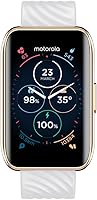
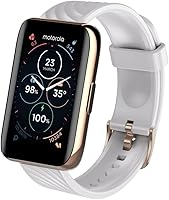
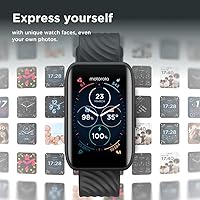
The Motorola Moto 40 Smartwatch entered the market in early 2024 as an accessible entry point into Motorola's wearable lineup, and it carries both the promise and the trade-offs that come with that positioning. The 1.57-inch rectangular display is crisp and easy to read, and the Rose Gold finish gives it a look that punches above its price. What you need to know upfront: it runs Moto Watch OS, a proprietary system that is not Wear OS, meaning third-party app support is minimal. It also carries IP67 water resistance, but Motorola explicitly rules out swimming. Think of this as a health-tracking lifestyle watch, not a full smartwatch replacement.

Features & Benefits

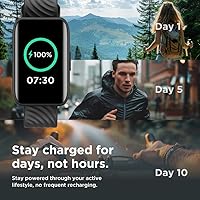
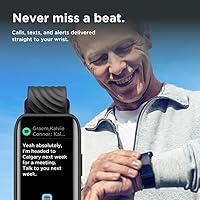
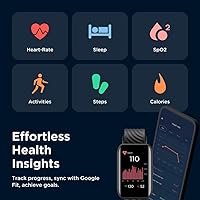
The standout advantage of this Moto smartwatch is its battery endurance — up to 10 days on a single charge, which genuinely sets it apart from most rivals at a similar price. Most budget watches struggle past four or five days, so this is a real, practical win. The always-on heart rate monitor and SpO2 sensor cover basic health tracking reliably, and the sleep tracking is detailed enough to be useful overnight. Notifications arrive for calls, texts, and app alerts, though you can only view them — not reply or interact. Android users already in the Google Fit ecosystem will find the integration straightforward out of the box. There is no GPS, so route tracking is off the table entirely.

Best For

This budget fitness watch is a strong pick for anyone stepping into wearables for the first time without wanting to navigate a cluttered app ecosystem or a steep learning curve. Android users already invested in Google Fit get the most out of it — the sync is clean and health data flows where you expect it to. Battery-conscious buyers will appreciate not hunting for a charger every other night. It also suits casual fitness tracking — daily step counts, light workouts, sleep monitoring — rather than GPS trail runs or detailed athletic performance analysis. If you want something that looks polished on the wrist and quietly does its job, the Moto 40 fits that brief well.

User Feedback

Buyers generally agree that display quality and overall build exceed expectations at this price, with the screen drawing consistent praise for readability across lighting conditions. Battery life earns positive marks too, though a handful of users find the 10-day claim optimistic under heavy notification use — real-world figures lean closer to six or seven days. On the downside, Moto Watch OS surfaces as a recurring frustration: the app selection is thin, and users accustomed to broader platforms feel the limitation. iOS notification reliability also comes up, with some iPhone users reporting inconsistent delivery. Heart rate accuracy appears acceptable for casual monitoring, but buyers with serious health tracking needs may find it falls short.

Pros

  • Battery life of up to 10 days means far fewer charging interruptions compared to most rivals in this category.
  • The 1.57-inch display is sharp and readable in most lighting conditions, which is not a given at this price.
  • Always-on heart rate and SpO2 monitoring provide a solid health snapshot without any manual activation.
  • Sleep tracking is detailed enough to give genuinely useful overnight data for health-conscious users.
  • Google Fit integration works cleanly for Android users, making onboarding straightforward.
  • The Motorola Moto 40 Smartwatch offers a polished, lightweight design that does not look out of place in professional or casual settings.
  • IP67 water resistance handles everyday splashes and sweaty workouts without concern.
  • Notification mirroring for calls, texts, and apps keeps you informed without pulling out your phone constantly.

Cons

  • Moto Watch OS has a very thin app ecosystem — you are largely limited to what comes preinstalled.
  • No GPS means route tracking for running or cycling is simply not possible without your phone.
  • Notification interaction is read-only — you cannot reply to messages or take action from your wrist.
  • iOS users may experience inconsistent notification delivery, making it a weaker pairing than with Android.
  • Real-world battery life under heavier use tends to fall noticeably short of the advertised 10-day ceiling.
  • Heart rate accuracy is adequate for casual awareness but not reliable enough for structured training or medical use.
  • The proprietary OS means no future expansion through app stores if your needs grow over time.
  • Water resistance is IP67 only — swimming or water sports will void any expectation of protection.

Ratings

The scores below reflect an AI-driven analysis of verified buyer reviews for the Motorola Moto 40 Smartwatch sourced from global markets, with spam, bot-generated, and incentivized feedback actively filtered out before scoring. Each category is rated independently based on what real users reported in their day-to-day experience, capturing both the genuine strengths and the frustrations that surfaced repeatedly across thousands of submissions. Nothing is glossed over — the ratings reflect the full picture, positive and negative alike.

Battery Life
84%
The extended battery is the single most praised aspect of this Moto smartwatch across buyer reviews. Commuters and travelers in particular highlight not needing to carry a charger for days at a stretch, which is a meaningful convenience compared to rivals that demand daily charging.
A noticeable portion of buyers report that the 10-day ceiling is only reachable under very light use — heavy notification traffic and always-on heart rate monitoring tend to cut real-world longevity to six or seven days, which can feel misleading against the marketed figure.
Display Quality
78%
22%
The 1.57-inch screen draws consistent praise for being sharper and brighter than buyers expect at this price point. Users frequently mention that reading notifications during outdoor walks or in direct sunlight is comfortable, which is not guaranteed with budget wearables.
A smaller segment of users finds the display too dim in automatic brightness mode indoors, requiring manual adjustment. The rectangular shape also divides opinion — some find it modern and clean, others prefer a rounder dial aesthetic that this watch does not offer.
Health Tracking Accuracy
63%
37%
For casual health awareness — checking resting heart rate in the morning or glancing at overnight SpO2 trends — the sensors perform adequately. Users who wear the Moto 40 to monitor general wellness find the data directionally useful and consistent enough for day-to-day habits.
Users with more precise expectations, including those cross-referencing readings against chest straps or medical devices, report noticeable drift during elevated heart rate activities. The SpO2 sensor in particular draws criticism for occasional inconsistency during restless nights.
Sleep Tracking
71%
29%
Sleep tracking is one of the more pleasant surprises of this budget fitness watch, with buyers noting that the breakdown of light, deep, and restless sleep phases is genuinely informative. Wearing it overnight is comfortable enough that most users stick with the habit long-term.
Some users flag that the watch occasionally misreads late-night reading or quiet activity as sleep onset, which skews the reported data. The sleep insights provided through the companion app are also considered fairly surface-level compared to dedicated sleep tracking platforms.
App Ecosystem
38%
62%
For buyers who only need the basics — step counting, heart rate glances, sleep summaries — the preinstalled suite on Moto Watch OS covers the essentials without overwhelming a first-time user with options they will never use.
Moto Watch OS is a closed system with no app store, and this is the most consistently cited frustration across all user reviews. Buyers who later want to add a workout tracker, music control app, or productivity tool quickly discover there is no path to do so, which limits the long-term value of the device significantly.
Notification Reliability
59%
41%
Android users on modern versions of the OS generally report reliable notification mirroring for calls and texts, with alerts arriving promptly during daily routines like commuting or desk work where the phone stays in a bag.
iOS users raise notification reliability as a recurring pain point, with some reporting delayed or missed alerts depending on the iPhone model and Bluetooth environment. Even on Android, interactive replies are absent entirely, which frustrates buyers who expected more than read-only mirroring.
Build Quality
74%
26%
The physical construction of the Moto 40 earns broadly positive sentiment — buyers describe the casing as solid and the finish as premium-feeling for the price, with the Rose Gold colorway specifically mentioned as a standout aesthetic choice that looks more expensive than it is.
A handful of users note that the watch band feels somewhat generic and prone to attracting lint and dust over time. The plastic elements, while well-assembled, do not hold up as convincingly against accidental knocks as metal-cased alternatives in a slightly higher price bracket.
Comfort & Wearability
77%
23%
At just 4.6 ounces with a slim profile, the watch disappears on the wrist for most users throughout the day. Office workers and light gym-goers mention it being unobtrusive enough to forget about entirely, which is a genuine advantage for all-day health tracking.
Users with smaller wrists occasionally report that the rectangular face feels slightly oversized, and the band adjustment range may not accommodate the thinnest wrists comfortably. Long-term wear in humid conditions also leads to minor strap irritation for some buyers.
Setup & Ease of Use
81%
19%
The initial pairing process through the Moto Watch app is consistently described as quick and painless, even by buyers who describe themselves as non-technical. Android users especially appreciate being up and running within minutes, with Google Fit connecting automatically in most cases.
Post-setup navigation on the watch itself can feel slightly sluggish, particularly when scrolling through health stats or adjusting settings. A small number of users also encountered syncing hiccups after smartphone software updates that required re-pairing the device.
Google Fit Integration
67%
33%
For Android users already embedded in the Google ecosystem, the Fit integration adds real value — health data flows into the app cleanly, and having steps, heart rate, and sleep data consolidated in one place is a practical benefit for everyday wellness tracking.
The integration is Android-centric, and iOS users gain almost nothing from the Google Fit connection. Even on Android, some buyers find the depth of data shared between the watch and the app more limited than expected, with certain metrics not populating consistently.
Water Resistance
61%
39%
The IP67 rating holds up well in practice for the scenarios it is designed to handle — handwashing, rain, and sweaty workouts are all manageable without anxiety. Buyers who simply want a watch that survives daily life without babying it find this sufficient.
Motorola is explicit that swimming is not supported, and buyers who assumed IP67 implied pool-safe use have been disappointed. The rating also creates an ambiguity around showering, which some users do without issue and others avoid out of caution — the guidance from Motorola is simply to avoid water activities altogether.
Value for Money
76%
24%
Taken on its own terms as a lifestyle tracker with strong battery life and a clean display, the Moto 40 offers a reasonable return on investment for buyers who are not expecting a full smartwatch experience. Many users state they are genuinely satisfied given the price tier.
The value proposition weakens for buyers who later discover the OS limitations and lack of GPS, as these feel like meaningful restrictions rather than reasonable trade-offs at the purchase stage. Competing options from other brands at a similar price have begun to offer more openness in their ecosystems, making the value comparison tighter than it once was.
iOS Compatibility
44%
56%
The watch technically pairs with iPhones and mirrors basic notifications, which is enough for buyers who simply want to see who is calling without pulling out their phone. Setup on iOS is functional and does not require unusual configuration steps.
iPhone users consistently rate the experience as noticeably inferior to Android — unreliable notifications, no meaningful Google Fit integration, and a general sense that the device was designed around Android and iOS support was added as an afterthought rather than a priority.
GPS & Navigation
31%
69%
For users who exercise indoors or always carry their phone outdoors, the absence of onboard GPS is genuinely irrelevant — connected GPS via a paired phone works adequately for basic route logging during casual outdoor walks.
Runners, cyclists, and hikers who go out without a phone will find this watch essentially useless for tracking distance or routes. The lack of GPS is the most objective hardware limitation of the Moto 40 and one that no software update can resolve.

Suitable for:

The Motorola Moto 40 Smartwatch is a practical choice for anyone who wants basic health tracking and wrist notifications without committing to a complex, expensive platform. It suits first-time smartwatch buyers who want something that works out of the box with minimal setup — no steep learning curve, no overwhelming app library to navigate. Android users already tracking activity in Google Fit will find the pairing natural and low-friction, with health data syncing where they already expect it. People who are tired of charging a watch every other day will genuinely appreciate the extended battery life, which removes one daily friction point from their routine. It also works well for those who want a lightweight, reasonably stylish watch for everyday wear — commuting, light gym sessions, or office use — without drawing attention to a bulky device on their wrist.

Not suitable for:

Buyers who expect a full smartwatch experience should look elsewhere before committing to the Moto 40. Moto Watch OS is a closed, proprietary system, which means you cannot download third-party apps or expand its functionality the way you could with a Wear OS or watchOS device — what you see at purchase is essentially what you get. Serious fitness enthusiasts who rely on built-in GPS for running routes, cycling tracking, or hiking will hit a hard wall, as there is no GPS of any kind. iPhone users may also find the experience underwhelming, since notification delivery can be inconsistent and the Google Fit integration is far less meaningful outside the Android ecosystem. If heart rate precision is important for medical monitoring or structured training zones, the sensor accuracy at this tier may not meet those needs reliably.

Specifications

  • Display Size: The watch features a 1.57-inch rectangular screen that delivers clear, sharp visuals suitable for reading notifications and health stats in most lighting conditions.
  • Operating System: It runs Moto Watch OS, a proprietary platform developed by Motorola that is separate from Wear OS and does not support third-party app downloads.
  • Battery Life: Motorola rates the battery at up to 10 days of use on a single charge under typical conditions.
  • Battery Capacity: The internal lithium-ion cell has a capacity of 240 mAh, which powers the always-on sensors and display throughout the day.
  • Connectivity: The watch connects to smartphones exclusively via Bluetooth; there is no Wi-Fi or cellular radio included.
  • GPS: No built-in GPS is present, so outdoor route tracking requires the watch to rely on a paired phone's location data.
  • Water Resistance: The watch carries an IP67 rating, meaning it can handle splashes and brief submersion in shallow water, but swimming and water sports are not supported.
  • Health Sensors: Onboard sensors include an always-on optical heart rate monitor, an SpO2 blood oxygen sensor, and a sleep tracking system that analyzes rest patterns overnight.
  • Notifications: The Moto 40 mirrors incoming calls, text messages, and app alerts from a paired smartphone directly to the wrist display in read-only format.
  • Compatibility: The watch is compatible with both Android and iOS devices, though Google Fit integration is optimized for Android users.
  • Google Fit: Google Fit integration allows Android users to sync health and activity data directly to the Google Fit app on their smartphone.
  • Dimensions: The watch body measures 2.68 x 6.3 x 1.14 inches, making it a mid-sized wearable that sits comfortably on most wrist sizes.
  • Weight: The total weight is approximately 4.6 ounces (0.13 kg), which is light enough for all-day wear without feeling burdensome.
  • Model Number: The Rose Gold variant carries the official model number MOSWZ40-RG as designated by Motorola.
  • Launch Date: The Moto 40 was first made available in January 2024, positioning it as part of Motorola's early 2024 wearable lineup.
  • Manufacturer: The watch is manufactured by CE Brands International Inc, the company licensed to produce Motorola-branded wearable devices.

Related Reviews
Motorola Moto Watch 120 Smartwatch
74%
88%
Display Quality
86%
Battery Life
79%
Build Quality
71%
Health Tracking Accuracy
82%
Bluetooth Calling
More
Motorola Moto Buds 065
82%
83%
Sound Quality
90%
Comfort & Fit
88%
Battery Life
80%
Bluetooth Connectivity
85%
Water Resistance
More
Corsair Vengeance RGB DDR5 64GB RAM
80%
91%
XMP Stability
86%
Raw Performance
93%
RGB Lighting Quality
72%
iCUE Software Experience
63%
Value for Money
More
Motorola CLS1110
Motorola CLS1110
85%
95%
Battery Life
91%
Signal Range
89%
Build Quality
87%
Ease of Use
78%
Frequency Options
More
Motorola MG7700 Modem Router Combo
80%
88%
Modem Performance
71%
Wi-Fi Coverage
79%
Setup & Activation
86%
Value for Money
82%
Build Quality
More
Motorola MG7540 Cable Modem Router Combo
80%
92%
Value for Money
88%
Setup & Activation
74%
Wi-Fi Performance
87%
Modem Speed & Reliability
69%
Long-term Stability
More
UAUE T60 2nd Gen Smartwatch
69%
83%
Value for Money
79%
Display Quality
86%
Battery Life
71%
Bluetooth Calling
68%
Health & Fitness Tracking
More
DIVOAZBVO TG02 1.39″ Smartwatch
70%
88%
Value for Money
83%
Display Quality
79%
Battery Life
57%
Health Tracking Accuracy
58%
App Experience
More
WMK IDW13 1.85″ Smartwatch
73%
88%
Value for Money
79%
Bluetooth Call Quality
71%
Health Tracking Accuracy
67%
Battery Life
83%
Display Quality
More
RUIMEN H1 Smartwatch
73%
91%
Value for Money
84%
Battery Life
88%
Ease of Setup
61%
App Stability
63%
Health Tracking Accuracy
More

FAQ

It does work with iPhones, so you are not locked out if you use iOS. That said, the experience is noticeably better on Android — the Google Fit sync is smooth and reliable there, while iPhone users sometimes run into inconsistent notification delivery and fewer integration perks.

No, notifications on the Moto 40 are display-only. You can see who is calling or read a text, but you cannot respond, dictate a reply, or answer a call from your wrist. It is a mirror of your phone screen, not an extension of it.

It does not. If you want to track an outdoor run or cycling route, the watch will need your phone nearby to borrow its GPS signal. For casual step counting and general activity tracking, this is not an issue, but dedicated athletes who run without their phone will find this limiting.

The IP67 rating means it can survive accidental splashes and brief exposure to water, and most users wear it in the shower without issues. However, Motorola explicitly states it is not designed for swimming or submersion during water activities, so it is best to treat that rating as splash protection rather than full waterproofing.

The 10-day figure is achievable under light use — minimal notifications, sensors checking in periodically, and the display off most of the time. In practice, with regular notification traffic and always-on heart rate monitoring, most users land somewhere between six and eight days, which is still well ahead of most watches in this category.

The watch runs Moto Watch OS, which is a closed system — there is no app store to browse or download from. The apps and watch faces it ships with are essentially what you get. If you are hoping to add workout apps, music controls, or productivity tools down the line, this watch does not support that kind of expansion.

Most users find it light enough to wear overnight without much discomfort. At 4.6 ounces and with a reasonably slim profile, it does not feel intrusive during sleep. The sleep tracking data it produces covers sleep stages and patterns in enough detail to be genuinely useful for everyday health awareness.

For general fitness tracking — a brisk walk, light gym session, or casual cycling — the heart rate readings are consistent and reasonable. If you are doing high-intensity interval training or need medically precise readings, it is worth noting that optical wrist-based monitors at this price tier can occasionally drift from true values during fast movement.

Setup is handled through the Moto Watch app, which is available on both Android and iOS. The pairing process is straightforward and does not require technical know-how — connect via Bluetooth, follow the in-app prompts, and you are ready within a few minutes. Android users get the added option of linking to Google Fit from within the setup flow.

Yes, this is one of the areas where the Moto 40 performs better than you might expect at its price point. The 1.57-inch screen is bright and crisp enough to read comfortably in direct sunlight, which is not something you can always count on with budget smartwatches.