Overview

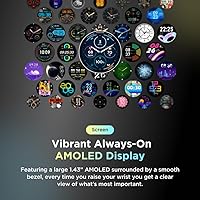
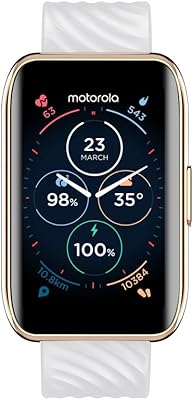
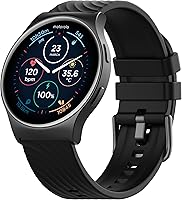
The Motorola Moto Watch 120 Smartwatch marks a confident return for Motorola in the wearables space, and at its price point, it punches harder than you might expect. The 1.43″ AMOLED display is genuinely impressive for the category — colors are vivid, contrast is strong, and it holds up reasonably well in direct sunlight. The zinc alloy case feels solid, and IP68 water resistance means you can wear it through a sweaty workout or a rainstorm without worry. One thing to set straight early: the watch runs Moto Watch OS, not Wear OS, which matters if you are hoping for Google apps or broad third-party support.
Features & Benefits

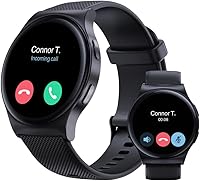
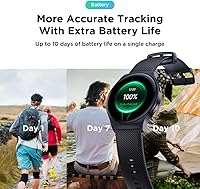
The 10-day battery life is one of the Moto Watch 120's most practical strengths. Under normal use — notifications, light workout tracking, occasional heart rate checks — most users realistically land somewhere between seven and nine days, which is still well ahead of many competitors. The AMOLED screen stays readable outdoors, something that matters when you are checking stats mid-run. Health tracking covers heart rate, SpO2, and stress levels, giving a solid everyday picture without getting overly granular. Bluetooth Calling is a genuine plus at this price tier. Just know that GPS here is assisted, meaning it leans on your phone's signal — dedicated runners wanting standalone route tracking will feel that limitation fairly quickly.

Best For

The Moto Watch 120 is a natural fit for people taking their first real step into health tracking — the interface is approachable, and you don't need to dig through dense menus to see your basics. It's also a solid upgrade for anyone moving on from a plain fitness band and wanting actual smartwatch features like call handling and notifications. iPhone users in particular may appreciate being able to take calls from their wrist without committing to the Apple ecosystem. If you travel often or simply dislike the daily charging ritual, battery endurance is a genuine draw here. It's a practical, good-looking watch for everyday wear on a realistic budget.

User Feedback

With just under 500 ratings and a 4.2-star average, this Motorola smartwatch has earned mostly positive marks from buyers. Screen quality and battery consistency come up repeatedly as highlights — people genuinely appreciate not having to plug in every other day. Criticisms tend to cluster around the app experience: Moto Watch OS is functional but limited, and iPhone users specifically note that certain features feel stripped down compared to Android. A handful of reviewers flag strap comfort during extended wear, and a few mention that GPS-assisted tracking can drift on longer routes. Build quality impressions are broadly positive, though a small number of buyers have raised durability questions after several months of continuous use.

Pros

  • The AMOLED display is genuinely vivid and sharp, standing out clearly among watches at this price level.
  • Real-world battery life consistently lands in the seven-to-nine day range, which is well above most competitors.
  • Bluetooth Calling from the wrist works reliably and is a rare feature at this price point.
  • IP68 water resistance means you can wear it through workouts, rain, or handwashing without a second thought.
  • The zinc alloy case gives the watch a solid, premium feel that belies its modest cost.
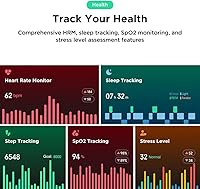
  • Heart rate, SpO2, and stress monitoring provide a useful everyday health snapshot for general wellness tracking.
  • Compatible with both Android and iPhone, making it a flexible choice for mixed-device households.
  • Quick charging means a short plug-in session can add meaningful battery life when you are in a hurry.
  • At roughly 55g, the watch sits comfortably on the wrist without feeling bulky during all-day wear.
  • Setup is approachable enough for first-time smartwatch users without a steep learning curve.

Cons

  • Moto Watch OS is a closed system with very limited third-party app support — what you see is largely what you get.
  • iPhone users lose access to several features that Android users enjoy, creating a noticeable compatibility gap.
  • Assisted GPS is not standalone, so route accuracy can drift when your phone is not nearby.
  • The companion app has been described by some users as basic and occasionally inconsistent in syncing data.
  • Health tracking lacks the depth of more advanced platforms — no detailed sleep stages or training load metrics.
  • Strap comfort during extended wear has drawn complaints from some buyers, particularly in warmer conditions.
  • A small number of long-term users have flagged durability concerns after several months of daily use.
  • No standalone GPS means this watch is a poor choice for runners or cyclists who train without their phone.

Ratings

The scores below for the Motorola Moto Watch 120 Smartwatch were generated by our AI after analyzing verified buyer reviews from multiple global markets, with spam, bot activity, and incentivized feedback actively filtered out. Ratings reflect the full picture — where this Motorola smartwatch genuinely impresses and where real users have run into friction. Both strengths and pain points are weighted transparently so you can make a confident, informed decision.
Display Quality
88%
Buyers consistently describe the AMOLED screen as one of the watch's most striking qualities, especially considering the price bracket. Colors are vivid and punchy, and the contrast holds up well for checking notifications or workout stats in most everyday lighting situations.
In very bright direct sunlight, screen visibility can become a minor challenge without cranking up brightness manually. A handful of users noted that the auto-brightness response is not always quick enough when stepping outside from indoors.
Battery Life
86%
The seven-to-nine day real-world battery endurance earns strong praise from users who are tired of nightly charging. Travelers and busy professionals in particular appreciate that a single charge can carry them across a long trip without hunting for a cable.
Enabling always-on display or heavy GPS-assisted tracking can cut battery life noticeably, dropping closer to five or six days under intensive use. A few buyers were disappointed the marketed ten-day figure required using the watch in a fairly minimal mode.
Build Quality
79%
21%
The zinc alloy case gives the Moto Watch 120 a solid heft that feels more expensive than its price suggests, and most short-term users report no cosmetic issues. IP68 water resistance adds genuine peace of mind for workouts and everyday exposure to the elements.
Some long-term verified buyers flagged surface scratching on the case after several months of daily wear, and a smaller group raised concerns about joint durability around the strap lugs. It is a well-built watch for the price, but it is not impervious to wear over time.
Health Tracking Accuracy
71%
29%
For general wellness monitoring — resting heart rate trends, blood oxygen spot checks, and daily step counts — the tracking is reliable enough to give users a useful everyday health snapshot. Casual fitness users tend to find the data consistent and actionable for basic goals.
Compared to more advanced platforms, the health data lacks depth, and accuracy during high-intensity exercise has drawn some criticism for heart rate drift. Stress monitoring in particular is seen as a rough approximation rather than a clinically meaningful metric.
Bluetooth Calling
82%
18%
Being able to take calls directly from the wrist works reliably in typical environments, and most users report clear enough audio quality for quick conversations. This feature stands out noticeably among watches in this price range, where it is often absent entirely.
Call audio quality can degrade in noisy outdoor environments, and some iPhone users report inconsistent Bluetooth connectivity that requires periodic re-pairing. The microphone pick-up is adequate but not impressive — fine for a quick chat, less ideal for longer conversations.
GPS Performance
54%
46%
For light walkers or casual users who keep their phone in their pocket during exercise, the assisted GPS delivers a reasonable route overview and distance estimate. It covers the basics for low-stakes activity logging without requiring any extra setup.
The reliance on the paired phone's signal is a real limitation that frustrates runners and cyclists who train without their phone. Route drift on longer outdoor sessions is a recurring complaint, and anyone expecting independent GPS navigation will find the experience consistently underwhelming.
Software & App Experience
58%
42%
Moto Watch OS is clean and functional for core tasks — checking notifications, viewing health stats, and managing basic settings are all handled without friction. First-time smartwatch users tend to appreciate the straightforward, low-clutter interface during initial setup.
The closed ecosystem is a hard ceiling for users who want app flexibility, custom complications, or third-party integrations. The companion app has been described as basic and occasionally unreliable when syncing workout data, and there is no path to installing apps beyond what Motorola provides.
iPhone Compatibility
61%
39%
Basic functionality — notifications, heart rate data, and general health stats — does carry over to iPhone without major issues, making it a usable option for iOS users who want a budget alternative to the Apple Watch. Initial pairing is generally straightforward on recent iOS versions.
Several iPhone users noted that Bluetooth Calling, AI assistant features, and certain health data sync functions are either limited or entirely missing compared to the Android experience. This creates a meaningful feature gap that Apple users should weigh carefully before purchasing.
Comfort & Wearability
68%
32%
At 55g, the watch sits lightly on the wrist and does not create the fatigue that heavier smartwatches can cause during long workdays or extended outdoor use. The oval case shape gives it a more traditional watch profile that many users find less intrusive than square designs.
Strap comfort during extended wear — particularly overnight or during sweaty workouts — has been a recurring criticism in verified reviews. Some users with sensitive skin reported irritation after prolonged contact, and replacement strap quality is not universally praised.
Value for Money
84%
When stacked against competing watches at a similar price, the combination of AMOLED display, Bluetooth Calling, IP68 protection, and multi-day battery life represents a genuinely strong package. Most buyers feel they received more than expected for what they paid.
The value equation shifts if you are an iPhone user or an Android user who wants a richer app ecosystem — the platform limitations make the feature set feel smaller than the hardware suggests. Buyers who discover the Wear OS gap after purchase tend to feel the trade-off more acutely.
Ease of Setup
83%
The initial setup process through the Moto Watch app is smooth and quick, with most users reporting they were up and running within a few minutes of unboxing. The onboarding experience is approachable enough for users with no prior smartwatch experience.
Occasional Bluetooth pairing hiccups during first setup have been noted by a small but consistent group of reviewers. Software update prompts immediately after setup can add unexpected time to the unboxing experience.
Notification Management
74%
26%
Notification delivery from apps and messages is timely and easy to glance at on the AMOLED screen, covering the core use case of staying connected without pulling out your phone constantly. Vibration alerts are described as noticeable without being intrusive.
Notification interaction is mostly read-only — replying or acting on alerts from the watch is limited. Users who want to dismiss, sort, or interact with notifications beyond a quick glance will find the options fairly restricted compared to more capable platforms.
Fitness Tracking Range
72%
28%
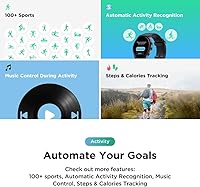
The watch covers a solid range of common workout modes including walking, running, cycling, and swimming, giving everyday fitness users enough variety for their routines. Auto-detection for some activity types reduces the need to manually log every session.
Advanced metrics like VO2 max estimation, training load, or recovery guidance are absent, which limits its appeal for users progressing beyond beginner fitness goals. Swim tracking is basic, and the lack of standalone GPS limits meaningful outdoor session analytics.
Screen Size & Readability
81%
19%
The 1.43″ display strikes a practical balance — large enough to read comfortably at a glance without making the watch feel oversized on smaller wrists. Text, icons, and health stats are well-rendered and easy to parse during workouts or while commuting.
Users with larger hands or those accustomed to bigger watch faces may find the display on the compact side for detailed data views. Scrolling through longer notification content on a 1.43″ screen can feel slightly fiddly compared to watches with larger displays.

Suitable for:

The Motorola Moto Watch 120 Smartwatch is a strong fit for everyday users who want a capable health tracker and notification hub without the complexity or cost of a flagship device. If you are new to smartwatches, the straightforward interface and accessible health metrics — heart rate, SpO2, stress — give you meaningful data without overwhelming you on day one. Frequent travelers and people with unpredictable schedules will genuinely appreciate a battery that can stretch close to ten days between charges, removing one more thing to worry about. iPhone users who want wrist-based calling but have no interest in paying Apple Watch prices will find this one of the few genuine alternatives that actually delivers that feature. Style-conscious buyers on a budget will also appreciate the AMOLED display and zinc alloy build, which look and feel more expensive than the price tag suggests.
Not suitable for:

The Motorola Moto Watch 120 Smartwatch will disappoint buyers who are expecting the depth and flexibility of a Wear OS device. If you rely on Google apps, third-party watch faces, or a broad app ecosystem on your wrist, Moto Watch OS simply cannot deliver that — it is a closed, proprietary platform with limited expandability. Dedicated runners and cyclists who depend on precise route tracking should also look elsewhere, since the assisted GPS leans on your phone's signal rather than operating independently, which can cause noticeable drift on longer outdoor sessions. Power users who want granular workout analytics, sleep stage breakdowns, or advanced training metrics will find the health tracking functional but ultimately surface-level. Finally, buyers who prioritize long-term software support or guaranteed feature updates may want to weigh the risks that come with a niche proprietary OS.
Specifications

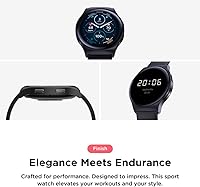
  • Display: The watch features a 1.43″ AMOLED screen that delivers strong color contrast and remains legible in most outdoor lighting conditions.
  • Case Material: The case is constructed from zinc alloy, which provides a solid, premium feel while keeping the overall weight manageable for all-day wear.
  • Dimensions: The watch measures 50.6 x 44.6 x 11mm, giving it a mid-sized oval profile that sits comfortably on a range of wrist sizes.
  • Weight: At 55g, the Moto Watch 120 is light enough for continuous wear without causing noticeable fatigue during daily activities.
  • Battery Capacity: The built-in battery is rated at 300 mAh and supports quick charging to reduce downtime between uses.
  • Battery Life: Motorola rates battery endurance at up to 10 days, with real-world usage typically landing between seven and nine days depending on active features.
  • Operating System: The watch runs Moto Watch OS, a proprietary platform that is separate from Wear OS and does not support Google apps or most third-party applications.
  • Connectivity: The watch uses Bluetooth 5.3 for primary data sync and Bluetooth 3.0 for calling, providing a stable connection to paired smartphones.
  • Water Resistance: IP68-rated water resistance allows the watch to withstand submersion in up to 1.5 meters of fresh water for up to 30 minutes.
  • GPS: The watch uses assisted GPS, which relies on a paired smartphone's signal to calculate location rather than operating as a fully independent GPS unit.
  • Health Sensors: Onboard sensors include an accelerometer, heart rate monitor, SpO2 sensor, microphone, and speaker to support health tracking and calling features.
  • Bluetooth Calling: The built-in microphone and speaker allow users to make and receive calls directly from the watch when paired to a smartphone via Bluetooth.
  • Compatibility: The Moto Watch 120 is compatible with smartphones running Android and iOS, though some features are limited or unavailable on iPhone.
  • Storage: The watch includes 32 GB of onboard storage, primarily used for system operations and locally cached data within Moto Watch OS.
  • Shape: The watch face has an oval shape, which contributes to a more traditional watch aesthetic compared to square-faced smartwatch alternatives.

Related Reviews

Motorola Moto 40 Bluetooth Smartwatch
86%
91%
Battery Life
88%
Fitness Tracking Accuracy
63%
Display Brightness
85%
Build Quality
90%
Ease of Use
More
Motorola Moto Buds 065
82%
83%
Sound Quality
90%
Comfort & Fit
88%
Battery Life
80%
Bluetooth Connectivity
85%
Water Resistance
More
CMF Watch Pro 2 Smartwatch
77%
91%
Value for Money
88%
Battery Life
84%
Display Quality
71%
Health Tracking Accuracy
63%
GPS Performance
More
Xiaomi Redmi Watch 5 Active Smartwatch
74%
88%
Battery Life
91%
Value for Money
79%
Display Quality
67%
Bluetooth Calling Quality
38%
GPS and Route Tracking
More
Samsung Galaxy Watch 6 44mm LTE Smartwatch
84%
85%
Value for Money
91%
Health & Fitness Tracking Accuracy
88%
Ease of Use & Navigation
90%
LTE Connectivity & Call Quality
87%
Build Quality & Durability
More
Samsung Galaxy Watch 8 40mm Smartwatch
80%
88%
Health & Fitness Tracking
86%
GPS Accuracy
84%
Sleep Tracking & Coaching
81%
Running Coach
91%
Design & Comfort
More
SAMSUNG Galaxy Watch FE 40mm LTE Smartwatch
86%
88%
Health & Fitness Tracking
85%
LTE Connectivity
70%
Battery Life
90%
Comfort & Wearability
85%
Build Quality & Durability
More
Samsung Galaxy Watch 6 Classic 47mm Smartwatch
79%
93%
Build Quality & Materials
91%
Rotating Bezel Navigation
84%
Health Tracking Accuracy
79%
Sleep Tracking & Coaching
58%
Battery Life
More
CMF by Nothing Watch 3 Pro Smartwatch
79%
88%
Display Quality
76%
GPS Accuracy
71%
Battery Life
82%
Health Tracking
84%
Build Quality
More
Spodus G50002 Kids Watch with GPS Tracker 4G Smart Watch
84%
88%
GPS & Location Accuracy
81%
Battery Life
78%
Voice & Video Call Quality
90%
Ease of Use
85%
Build Quality
More

FAQ

It does work with iPhone, but the experience is not fully on par with Android. Core features like notifications and heart rate tracking function fine, but Bluetooth Calling and some app-based features may be limited or unavailable depending on your iOS version and setup.

It depends on what you need. The Motorola Moto Watch 120 Smartwatch uses assisted GPS, meaning it borrows location data from your paired phone rather than calculating it independently. For casual walks or light jogs with your phone nearby, it works reasonably well. If you run without your phone or want precise route mapping, a watch with standalone GPS will serve you better.
Quick charging means you can recover a meaningful amount of battery in around 30 to 45 minutes from a low charge. A full charge from zero typically takes under two hours, which is fairly reasonable for a watch in this category.

Not in the way you might hope. Moto Watch OS is a closed system, so you cannot sideload apps or pull from the Google Play Store. Watch face options and features are limited to what comes preloaded or what Motorola makes available through its companion app.

The AMOLED display performs well in typical outdoor conditions and handles moderate sunlight reasonably. In very bright direct sunlight it can be harder to read, but it holds up better than most LCD displays at a similar price.

Most users find it fine for everyday wear, but some buyers with sensitive skin or who wear it during intense workouts have noted that the strap can feel uncomfortable after extended periods. If strap comfort is a priority for you, keep in mind that standard 22mm bands are widely available as replacements.

Yes, it tracks basic sleep data including total sleep duration and general sleep quality. It does not break sleep down into detailed stages like REM or deep sleep cycles, so the data is useful as a general guide rather than a clinical-grade sleep analysis.

Not effectively. Because the watch relies on assisted GPS rather than a built-in GPS chip, leaving your phone behind means the location tracking will be inaccurate or non-functional. This is one of its clearest limitations for serious outdoor athletes.

The watch pairs through the Moto Watch app, available on both Android and iOS. Setup is straightforward and most users have it running within a few minutes. The app covers health data, notification settings, and watch customization, though it is not as feature-rich as apps paired with more advanced smartwatch platforms.

The zinc alloy case and IP68 rating make it a solid choice for gym workouts, light outdoor use, and everyday wear in variable weather. It is not designed for extreme sports or heavy impacts, and a small number of long-term users have reported wear and durability concerns after many months of continuous daily use.