Overview

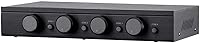
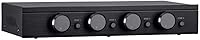
The Monoprice SSVC-4.1 Speaker Selector is a mid-range passive zone controller built for anyone who wants to run music through two to four rooms from a single amplifier or receiver. Monoprice has earned a reputation for AV hardware that punches above its price point, and this unit fits that pattern. The architecture is straightforward: one input from your amp, four independent output zones. That single-input design is worth understanding upfront — if you need to switch between sources, you handle that at the receiver, not here. Physically, it is a chunky, no-nonsense black box that sits comfortably in a rack or on a shelf.
Features & Benefits

The standout capability is automatic impedance protection, which monitors the load your amplifier sees as you switch zones on and off, guarding against the damage that occurs when too many low-impedance speakers are active simultaneously. Each zone has its own on/off button and volume knob, letting you silence the kitchen or ease off the porch without touching the amp. The heavy-duty screw terminals accept wire gauges down to 12 AWG, which matters for longer cable runs. Bridged amp users benefit from isolated left/right circuit grounds — a detail many competing boxes at this price quietly omit — making it usable in configurations that would otherwise cause problems.

Best For

This zone controller makes the most sense for homeowners who want whole-home audio without committing to a full multi-room system. If you are running speakers in two to four spaces — living room, bedroom, office, porch — from one stereo receiver, this handles distribution cleanly. Custom AV installers also find it dependable for straightforward jobs where a client wants basic zone control and nothing more. It is less suited for anyone needing to juggle multiple source components, since there is only one input. Speakers rated at 4-ohm or 8-ohm are well within its supported range, covering the vast majority of home audio setups.

User Feedback

Buyers who install this speaker selector tend to come away satisfied. The most consistent praise focuses on easy installation and the peace of mind that comes from knowing the impedance protection is quietly doing its job in the background. Build quality reads as solid rather than impressive. On the downside, a handful of owners report that volume knobs develop some looseness over extended use, and the single-input limitation catches buyers off guard who assumed source-switching was included. Against pricier alternatives, the value holds up well according to most reviewers. Bridged amp setups have occasionally caused confusion during installation, though the isolated ground design typically resolves that once users consult the documentation.

Pros

  • Automatic impedance protection reliably shields your amplifier when multiple zones are running simultaneously.
  • Individual zone on/off buttons let you silence any room instantly without touching the receiver.
  • Per-zone volume controls make balancing sound levels across different spaces genuinely practical.
  • Heavy-duty screw terminals accept wire down to 12 AWG, handling long cable runs without signal issues.
  • Isolated circuit grounds make this speaker selector compatible with bridged amplifier configurations most competitors cannot safely support.
  • The unit handles up to 100 watts continuous per channel, covering the vast majority of home audio amplifiers.
  • Installation is straightforward enough for confident DIYers without requiring a professional AV technician.
  • Compared to higher-priced competitors, the Monoprice selector box delivers strong core functionality at a mid-range price point.
  • The chassis is solid and planted, holding connections firmly once installed in a rack or on a shelf.
  • Compatible with both 4-ohm and 8-ohm speakers, covering nearly every common home audio configuration.

Cons

  • Volume knobs have a documented history of developing looseness or scratchy feel within one to two years of regular use.
  • The single-input design means all source switching must be handled at the receiver, not here.
  • Documentation is thin on edge cases like bridged amps and mixed-impedance zones, leading to installation confusion.
  • The volume controls lack fine precision at low settings, making subtle level adjustments harder than expected.
  • At nearly 7 pounds and over 9 inches deep, this zone controller requires meaningful clearance in rack installations.
  • The plain industrial finish looks out of place in open-shelf setups alongside polished consumer AV equipment.
  • No labeling improvements or backlit controls make setup and zone identification harder in low-light equipment closets.
  • Impedance thresholds may feel conservative to users with high-performance amplifiers, limiting headroom in demanding four-zone configurations.

Ratings

The Monoprice SSVC-4.1 Speaker Selector scores below reflect AI-driven analysis of verified global buyer reviews, with spam, bot activity, and incentivized feedback actively filtered out. Across hundreds of real-world installations — from DIY home audio projects to professional AV setups — this zone controller earned both clear praise and recurring frustrations. The scores honestly capture both sides so you can decide whether it fits your specific setup.
Impedance Protection Reliability
88%
Users who run multiple speaker zones simultaneously report consistent confidence that their amplifier is protected from overload. Homeowners with mixed 4-ohm and 8-ohm speakers found the automatic protection circuitry handled real-world zone-switching without any audible distortion or amp stress.
A small segment of technically advanced users found the impedance thresholds slightly conservative, noting the unit occasionally limits headroom in demanding four-zone configurations. Those running high-performance amplifiers sometimes felt the protection kicked in earlier than necessary.
Ease of Installation
83%
Most buyers with basic familiarity with speaker wire found the setup process straightforward and completed within an hour. The labeled screw terminals and clear channel layout made wiring four zones intuitive without needing professional help.
Complete beginners occasionally struggled, particularly around understanding the single-input architecture and bridged amplifier compatibility. A few users had to consult the manual or online forums before feeling confident their wiring was correct.
Build Quality
74%
26%
The chassis feels sturdy and heavier than buyers expect at this price tier, which reads as reassuring during installation. The screw terminals grip wire firmly and do not wobble when connections are made, which matters during a long installation run.
The overall finish is utilitarian rather than polished — this is a functional box, not a showpiece. Some owners noted that the panel labeling could be clearer, and the unit does not feel premium in hand despite being acceptably solid.
Volume Control Performance
67%
33%
Having independent volume knobs per zone is genuinely useful in a whole-home setup, letting you lower the bedroom without affecting the living room. For basic level balancing between spaces, the controls do the job reliably at normal listening volumes.
Several long-term owners reported that the volume knobs develop looseness or a scratchy feel after a year or more of regular use. The controls also lack fine-grained precision at lower settings, making subtle adjustments harder than they should be.
Zone Control Flexibility
81%
19%
The individual on/off buttons per zone are one of the most practically useful features in day-to-day use. Being able to cut the porch speakers or the office without touching the receiver is the kind of convenience that makes a real difference in a lived-in home.
With only one input, source switching has to happen upstream at the receiver, which frustrated buyers who expected more routing flexibility. Users coming from multi-input selectors found this limitation restrictive, even if it is clearly documented.
Value for Money
86%
Compared to competing passive speaker selectors with similar specs, this zone controller consistently lands in favorable territory among buyers who researched alternatives. The combination of impedance protection, zone control, and per-channel volume at this price point is hard to replicate elsewhere without spending significantly more.
A handful of buyers felt that some build compromises — particularly the volume knob longevity — undercut the overall value case over a multi-year horizon. If the knobs degrade, the cost to address that issue reduces the initial price advantage.
Amplifier Compatibility
79%
21%
The isolated left/right circuit grounds make this one of the few passive selectors in its class that safely supports bridged amplifier configurations. Users running bridged mono setups reported clean, problem-free operation once the wiring was correctly understood.
Bridged amp compatibility caused genuine confusion during installation for several buyers, with some reporting brief periods of incorrect wiring before consulting documentation. The manual could do more to explain this use case explicitly for non-technical installers.
Wire Connection Quality
84%
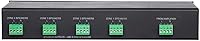
The heavy-duty screw terminals accommodate wire gauges down to 12 AWG, which is essential for buyers running speaker cables over longer distances through walls. Connections feel secure after tightening and showed no signs of loosening in long-term user reports.
The terminal spacing is workable but not generous, and users dealing with thicker 12 AWG wire in tight quarters found maneuvering the cable ends a bit awkward. A slightly wider terminal block layout would have improved the experience noticeably.
Signal Transparency
77%
23%
Most users report no perceptible coloration or noise introduced into the audio signal, which is the baseline expectation for a passive device. Switching zones on and off produces no audible pops or interference during normal operation.
Audiophile-leaning buyers who ran careful listening tests noted a very slight high-frequency rolloff compared to a direct amplifier-to-speaker connection. This is essentially inaudible in typical listening environments but worth knowing for critical listening setups.
Physical Footprint & Rack Fit
72%
28%
At 13.5 x 9 x 3.4 inches, the unit fits neatly on a shelf or inside a standard AV cabinet without dominating the space. The weight of nearly 7 pounds gives it a planted feel and prevents it from shifting when cables are connected.
The depth of 9 inches can be awkward in shallower rack enclosures, and a few installers noted the rear connector layout requires leaving extra clearance behind the unit. It is not a slim profile design by any measure.
Documentation & Support
61%
39%
The basic wiring diagrams included with the unit are adequate for standard installations and cover the most common configurations clearly enough for intermediate DIYers. Monoprice customer support receives reasonable marks for responsiveness on technical questions.
The manual falls short when it comes to edge cases — bridged amps, mixed-impedance zones, and floating-ground amplifiers all deserve more explanation than the documentation provides. Buyers with less conventional setups frequently turned to third-party forums for guidance.
Long-Term Durability
63%
37%
Users who installed this zone controller and left it in a stable, low-traffic setup report years of trouble-free operation. The core switching and protection circuitry appears to hold up well when the unit is not being physically handled frequently.
The volume potentiometers are the most cited long-term weak point, with multiple reviewers noting degraded feel or intermittent scratching after 18 to 24 months of regular use. For installations where the knobs are adjusted daily, this is a realistic concern.
Aesthetic Integration
58%
42%
The all-black finish is neutral enough to blend into most AV setups without drawing attention. For buyers tucking this inside a rack or cabinet where it will rarely be seen, the appearance is a complete non-issue.
As a visible component in an open shelf setup, the industrial look and plain labeling feel out of place alongside more refined consumer AV gear. There is no effort toward modern industrial design, which bothers buyers for whom the equipment is on display.

Suitable for:

The Monoprice SSVC-4.1 Speaker Selector is built for homeowners who want to distribute audio from a single stereo receiver or amplifier to two, three, or four separate rooms without investing in a full networked multi-room system. If you have a decent receiver in your living room and want to extend music to the kitchen, bedroom, home office, and back porch — all from that one source — this zone controller handles the job cleanly and reliably. It is also a strong fit for custom AV installers who need a dependable, no-fuss distribution solution for clients with modest but well-defined requirements. Users running standard 4-ohm or 8-ohm speakers will find the impedance management works exactly as intended, protecting their amplifier without requiring any manual configuration. Anyone comfortable stripping wire and working a screwdriver will find the setup process manageable, even without professional installation experience.
Not suitable for:

The Monoprice SSVC-4.1 Speaker Selector is a poor fit for anyone expecting to switch between multiple audio sources at the selector level — there is only one input, and source selection must happen upstream at the receiver. Buyers who want to route a turntable, TV, and streaming device independently through the selector will be immediately frustrated by this architecture. Audiophiles seeking pristine signal integrity for a critical listening room should also look elsewhere, as the volume potentiometers introduce a measurable, if subtle, limitation compared to a direct amplifier connection. If you plan to adjust zone volumes frequently and daily over many years, the knob longevity reported by real users is a legitimate concern worth factoring into your decision. Finally, anyone needing more than four zones, or expecting a compact form factor for a tight rack installation, will find this zone controller short of the mark.
Specifications

  • Output Zones: The unit provides four independent stereo output zones, each with its own on/off switch and volume control.
  • Input Channels: A single stereo input connects to your amplifier or receiver, meaning source selection must be handled upstream.
  • Continuous Power: Each output channel handles up to 100 watts of continuous power, suitable for most home audio amplifiers.
  • Peak Power: Short-term peak power handling reaches 200 watts per channel, accommodating transient audio demands without failure.
  • Min. Impedance: The amplifier sees a minimum load of 5 ohms when four 4-ohm speakers are active, and 6 ohms with four 8-ohm speakers.
  • Speaker Impedance: Compatible with both 4-ohm and 8-ohm speakers, covering the full range of common home audio loudspeakers.
  • Wire Gauge: The screw terminals accept speaker wire in the 12 to 18 AWG range, supporting both short and extended cable runs.
  • Connector Type: Heavy-duty screw-type binding posts are used on all input and output connections for a secure, long-term mechanical bond.
  • Impedance Protection: Automatic impedance protection circuitry continuously monitors the combined load and guards the amplifier against dangerous impedance drops.
  • Ground Isolation: Isolated left and right circuit grounds allow safe connection to amplifiers with floating grounds or bridged output configurations.
  • Dimensions: The unit measures 13.5 x 9 x 3.4 inches, fitting standard AV shelving and most open rack enclosures with adequate rear clearance.
  • Weight: At 6.94 pounds, the chassis is substantial enough to stay planted on a shelf without shifting when cables are attached.
  • Color & Finish: The enclosure is finished in matte black, giving it a neutral appearance that blends into most AV equipment setups.
  • Brand & Model: Manufactured by Monoprice under model number 138159, a brand known for functional AV hardware at accessible price points.
  • Signal Switching: Passive switching architecture means no active electronics are in the signal path, keeping noise and coloration to a minimum.
  • Zone Controls: Each of the four zones has a dedicated on/off button for instant muting without interrupting other active zones.

Related Reviews
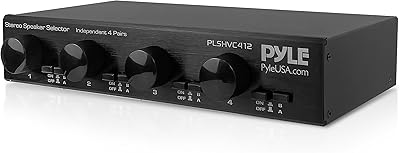
Pyle PLSHVC412 4-Channel Stereo Speaker Selector
84%
94%
Ease of Installation
88%
Volume Control Precision
85%
Compatibility with Audio Systems
89%
Build Quality
83%
Power Handling
More
Kenwood KFC-1366S 5.25-inch Car Coaxial Speakers
73%
74%
Sound Quality
58%
Bass Performance
79%
High-Frequency Clarity
88%
Value for Money
91%
Ease of Installation
More
Polk Audio DB522 5-1/4″ Coaxial Marine Speaker
86%
88%
Sound Quality at High Volumes
91%
Water Resistance & Durability
85%
Ease of Installation
72%
Bass Response
89%
Build Quality
More
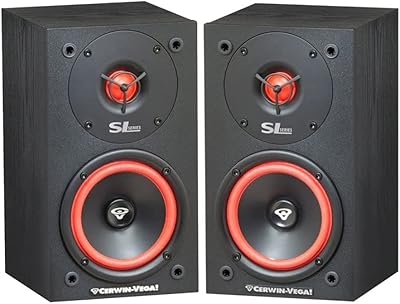
Cerwin Vega SL-5M
Cerwin Vega SL-5M
77%
83%
Bass Output
78%
Treble Clarity
71%
Midrange Performance
74%
Build Quality
86%
Value for Money
More
Harman Kardon SoundSticks 4 – White 2.1 Bluetooth Speaker System
85%
92%
Sound Quality
89%
Design & Aesthetics
80%
Bluetooth Connectivity
94%
Bass Performance
88%
Build Quality
More
Monoprice Blackbird 4x1 4K DisplayPort KVM Switch
66%
52%
Video Signal Stability
79%
USB Peripheral Switching
48%
Display Compatibility
76%
Setup & Installation
74%
Build Quality
More
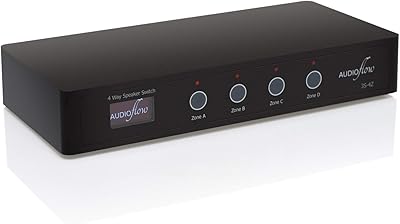
Audioflow 3S-4Z 4-Way Smart Wi-Fi Speaker Switch
76%
78%
App Experience
74%
Alexa Integration
91%
Impedance Protection
88%
Amplifier Safety (Dummy Load)
76%
Installation & Wiring
More
FERRISA 8K HDMI 2.1 Switch 4-in-1
77%
91%
Ease of Setup
78%
Auto-Switching Reliability
88%
4K@120Hz Performance
61%
8K Signal Stability
74%
Remote Control Usability
More
CT Sounds BIO-4-COX 4-Inch Coaxial Car Speakers
76%
83%
Sound Clarity
61%
Bass Performance
79%
Highs & Treble Smoothness
76%
Midrange Accuracy
91%
Installation Ease
More
TJCXELE USB 3.0 Switch Selector 4-Port for 4 Computers
88%
94%
Ease of Use
89%
Performance
91%
Remote Control Feature
76%
Power Supply and Stability
98%
Setup and Installation
More

FAQ

Yes, this zone controller supports both 4-ohm and 8-ohm speakers across its four outputs. The automatic impedance protection monitors the combined load the amplifier sees, so mixing impedance types is generally safe. That said, the minimum amplifier impedance will be determined by the lowest-impedance speakers active at any given moment, so check your amplifier's minimum rated load before running all four zones simultaneously with 4-ohm speakers.

It does, and this is one of its more notable features at this price point. The isolated left and right circuit grounds allow safe connection to bridged or floating-ground amplifier configurations that would cause problems with selectors that lack this design. If you are running a bridged mono setup, read the wiring diagram carefully before connecting — the documentation covers it, but it is worth double-checking your specific amplifier's manual as well.

No, and this is the most important limitation to understand before buying. The selector box accepts only one stereo input. If you want to route audio from, say, a turntable and a streaming device to different rooms, you need to handle that source switching at your receiver or preamplifier — the selector only handles distributing one active source to multiple zones.

Most people with basic DIY comfort can handle it themselves. If you have ever connected speaker wire before — stripping the end, inserting it into a terminal, tightening a screw — the process is essentially the same here, just repeated across multiple zones. Allow an hour or two for a clean four-zone installation. If you are routing wire through walls, that part of the job is separate from the selector itself and may warrant professional help depending on your setup.

When you activate multiple speaker zones, each additional speaker pair reduces the total impedance that your amplifier has to drive. If that load drops too low, it can overheat or damage your amp. The circuitry inside this zone controller automatically manages how the zones interact to ensure the combined impedance never falls below a safe threshold, acting like a buffer between your amplifier and your speakers.

Unfortunately, yes — this is the most consistent long-term complaint from real users. The potentiometers used in the volume controls are functional but not rated for heavy daily use over many years. If you adjust zone volumes frequently, some degradation in feel is realistic after 12 to 24 months. It does not typically affect audio quality noticeably at first, but it can worsen over time.

The screw terminals support wire down to 12 AWG, which is on the thicker end of what most home audio installations use. Thicker wire is generally better for longer cable runs because it reduces resistance, so the 12 AWG support is a genuine practical advantage if your speakers are far from your equipment rack. Make sure to strip enough insulation and keep strands tidy to avoid stray wire contact between terminals.

A passive subwoofer with its own external amplifier signal could technically be connected, but this selector is designed for full-range stereo speaker pairs — it is not a dedicated subwoofer output. Most people using a powered subwoofer connect it directly to their receiver's dedicated sub output, bypassing the selector entirely. It is not a recommended configuration for a sub.

Most users report clean, quiet switching with no audible pops during normal operation. The passive switching design generally handles zone changes without introducing noise, which is one of the practical benefits of a passive architecture over cheaper active selectors. A small number of users have noted faint clicks in specific amplifier pairings, but this appears to be the exception rather than the rule.

For most listeners in typical home environments, the difference is not perceptible. Careful A/B listening tests by technically oriented users have revealed a very slight high-frequency rolloff versus a direct connection, which is a known characteristic of passive selector designs. Unless you are setting up a dedicated critical listening room with high-resolution source material, the practical audio quality difference in everyday use is negligible.

Where to Buy