MokerLink EXT-AT13GO Outdoor Gigabit PoE Extender
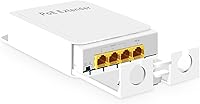
MokerLink EXT-AT13GO Outdoor Gigabit PoE Extender — image 1
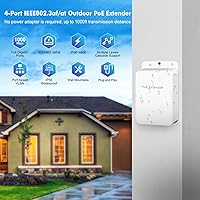
MokerLink EXT-AT13GO Outdoor Gigabit PoE Extender — image 2
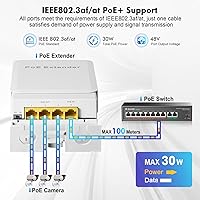
MokerLink EXT-AT13GO Outdoor Gigabit PoE Extender — image 3
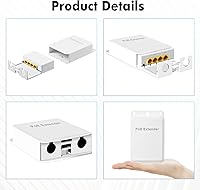
MokerLink EXT-AT13GO Outdoor Gigabit PoE Extender — image 4
MokerLink EXT-AT13GO Outdoor Gigabit PoE Extender — image 5
MokerLink EXT-AT13GO Outdoor Gigabit PoE Extender — image 6
MokerLink EXT-AT13GO Outdoor Gigabit PoE Extender — image 7
78%
22%

Overview

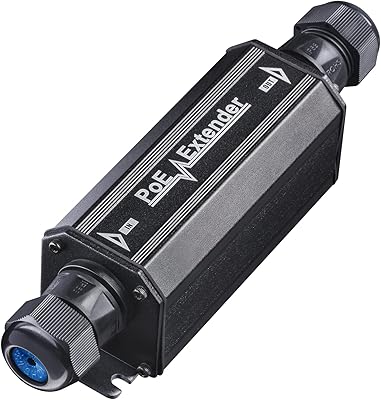
The MokerLink EXT-AT13GO Outdoor Gigabit PoE Extender solves a specific, practical problem: your Ethernet run is pushing past 100 meters, there is no power outlet nearby, and you still need to get a camera or access point online. This gigabit PoE repeater handles exactly that situation by drawing power directly from the incoming PoE cable — no adapter, no electrical conduit required. It carries an IP55 weatherproof rating, meaning it handles rain and dust comfortably, though it is not designed for submersion. Think of it as a capable, unmanaged extension device — reliable for straightforward deployments, but not a feature-rich managed switch by any measure.

Features & Benefits

The setup is refreshingly simple: one PoE-in port receives power and data from your existing switch, then distributes both across three gigabit PoE-out ports. All four ports run at up to 1,000 Mbps — fast enough for 4K IP cameras, modern access points, or VoIP systems. The power budget is worth understanding clearly: the device accepts up to 30W in but delivers a maximum of 24W out across all three downstream ports. That averages roughly 8W per port, so running three standard 802.3af cameras is fine; trying to drive three high-draw devices simultaneously will cause problems. The compact, wall-mountable housing makes installation under eaves or on a pole genuinely straightforward.

Best For

This outdoor PoE extender is a natural fit for anyone trying to reach a detached garage, shed, or far corner of a parking lot where running both a data cable and an electrical line would be impractical. It works especially well for security camera installs where each camera draws under 15W — exactly the kind of low-demand outdoor deployment this device was built around. IT installers adding wireless access points in warehouses or event spaces will also appreciate the simplicity. That said, if your project requires VLANs, traffic prioritization, or remote monitoring, this gigabit PoE repeater is the wrong tool — a managed PoE switch is the better path.

User Feedback

Buyers consistently praise the MokerLink extender for doing exactly what it promises: plug in a cable, walk away, and connected cameras or access points simply work. Setup simplicity and solid outdoor durability after months of exposure come up repeatedly. The main recurring concern is the shared power budget — when all three ports are pulling near their limits simultaneously, some users have experienced instability or devices dropping offline. A handful of reports flag compatibility issues with certain non-standard PoE switches, so testing with your specific upstream hardware before a permanent install is advisable. A few users in hot climates also mention heat buildup inside the plastic shell during prolonged direct sun exposure as a long-term consideration.

Pros

  • Truly plug-and-play — connect a cable, and downstream devices come online without any configuration steps.
  • No separate power adapter needed; the device draws everything it needs through the incoming PoE cable.
  • All four ports run at full gigabit speeds, keeping up with modern 4K cameras and dual-band access points.
  • IP55 housing holds up well against rain and dust across extended outdoor exposure.
  • Wall-mount design is compact enough to tuck under eaves or attach to a pole without drawing attention.
  • Three-level cascading support lets you chain multiple units to cover distances well beyond a single 100-meter run.
  • Compatible with both 802.3af and 802.3at standards, covering the vast majority of PoE-powered devices on the market.
  • Operating temperature range down to -10°C makes it workable across most temperate climates year-round.
  • The price point makes deploying several units across a large property genuinely affordable.

Cons

  • Total output is capped at 24W across all three downstream ports, which gets tight fast if multiple devices draw heavily.
  • No management interface means zero visibility into port status, power consumption, or connected device activity.
  • Some users have reported compatibility hiccups with certain non-standard or older PoE switches — testing before permanent install is wise.
  • The plastic enclosure can trap heat in direct sun exposure, raising concerns about long-term reliability in hot climates.
  • No protection beyond IP55 — standing water, flooding, or high-pressure washing could damage the unit.
  • Cannot be used in temperatures below -10°C, limiting its usefulness in colder northern climates during winter.
  • With only one upstream input port, you cannot aggregate bandwidth from multiple switches for increased throughput.
  • No LED indicators on individual ports make it harder to diagnose which connected device may be causing a power or link issue.

Ratings

The scores below were generated by our AI after analyzing verified global buyer reviews for the MokerLink EXT-AT13GO Outdoor Gigabit PoE Extender, with spam, incentivized submissions, and bot activity actively filtered out to ensure the results reflect genuine field experience. Both the strengths that make this outdoor PoE repeater a popular pick and the real frustrations that have pushed some buyers away are transparently reflected in every category score.

Ease of Setup
93%
Buyers consistently describe installation as one of the fastest they have experienced with any networking hardware — run a cable in, run cables out, done. No login portals, no firmware wizards, no IP addressing to configure. For homeowners mounting a camera on a shed roof or a garage corner, that simplicity is genuinely valued.
The flip side of zero configuration is zero feedback — if something does not work on first connection, there is no interface or status indicator to help you figure out why. A handful of buyers found troubleshooting a silent non-starter more frustrating than a complex setup would have been.
Power Delivery
71%
29%
For deployments built around standard 802.3af devices — typical outdoor cameras, basic access points, VoIP handsets — the power budget works out cleanly, and users running two or three low-draw cameras report perfectly stable operation over long periods. The self-powered design is a genuine advantage in locations far from any outlet.
The 24W total output ceiling becomes a real constraint the moment any connected device pulls significantly above 8W. Users who assumed each port could independently handle a full 802.3at device discovered instability or shutdowns under combined load, and the lack of any per-port power monitoring makes diagnosing the cause needlessly difficult.
Build Quality
74%
26%
The industrial ABS shell feels noticeably more substantial than competing extenders at this price tier, and buyers who have left units mounted outdoors through full seasonal cycles — including heavy rain and strong sun — generally report no cracking, warping, or seal failure. The enclosed cable entry design is a thoughtful detail that prevents water tracking into the ports.
At close range the plastic construction does feel budget-grade, and a few buyers in warmer climates have noted surface discoloration or slight softening of the casing after prolonged direct sun exposure. It is a durable device for its class, but it does not inspire the same confidence as metal-housed competitors.
Weatherproofing
77%
23%
The IP55 rating has held up well in real-world reports, with users in rainy climates — Pacific Northwest, UK, Southeast Asia — citing reliable operation through sustained wet seasons without any moisture ingress or corrosion at the ports. Mounting it with the ports facing downward adds a practical layer of additional protection.
IP55 is not a waterproof rating in any full sense, and buyers who installed units in exposed positions prone to pooling water or periodic flooding learned that the hard way. The rating is sufficient for typical outdoor residential use but leaves little margin for poorly chosen installation spots.
Gigabit Performance
88%
Network throughput tests and real-world camera feed quality both confirm that gigabit link speeds are maintained reliably across all ports under normal operating loads. Users streaming 4K feeds from multiple outdoor cameras report no visible buffering or frame dropping attributable to the extender itself.
A small subset of buyers reported that link speeds dropped to 100Mbps on one or more ports when using older or lower-quality Cat5 cable rather than Cat5e or better. The extender performs as specified, but it is unforgiving of substandard cabling in the run.
Compatibility
68%
32%
The vast majority of buyers using standard 802.3af or 802.3at upstream switches — brands like TP-Link, Netgear, Ubiquiti, and Cisco — report clean detection and stable operation without any configuration on either end. The broad PoE standard support covers almost everything a typical home or small business network would include.
A recurring minority of users with budget or older switches that claim PoE compliance but implement it inconsistently have encountered detection failures or intermittent power drops. Passive PoE systems and proprietary implementations used by some vendors are not supported, which has caught some buyers off guard.
Cascade Range
79%
21%
The three-level cascading capability is one of the more compelling practical features for users covering large properties or long perimeter runs. Buyers who have chained two units to bridge a 200-meter driveway or reach a far outbuilding confirm that the extended range works as described when quality cable and a sufficiently powerful upstream switch are used.
Each cascaded unit consumes a portion of the incoming PoE budget, leaving less available power for downstream devices at the end of the chain. Buyers who did not account for this discovered that the camera at the end of a two-unit cascade had marginally less stable power than expected, particularly with higher-draw devices.
Thermal Management
58%
42%
In moderate climates and shaded installations, the unit runs warm but within acceptable limits, and most buyers in temperate regions have not reported any heat-related failures even after a year or more of continuous operation. The compact sealed form factor works well when temperatures stay reasonable.
In hot climates or direct summer sun, the sealed plastic enclosure has no mechanism to shed heat, and surface temperatures can reach levels that accelerate component aging. A handful of buyers in southern US states and tropical climates have reported unit failures after one to two summers of unshaded mounting, suggesting thermal stress is a genuine longevity concern.
Value for Money
86%
At its price point, this gigabit PoE repeater competes with few alternatives that offer the same combination of gigabit speeds, weatherproof housing, and three output ports in a self-powered form factor. Buyers who need a straightforward extension solution and are not paying for managed features they will never use consistently find the value proposition compelling.
Buyers who purchase expecting the capabilities of a managed switch — traffic visibility, VLAN support, QoS — will feel they overpaid for what they actually received, even at this price. The value equation only holds when the buyer's needs genuinely align with what an unmanaged extender can offer.
Port Count & Layout
82%
18%
Three downstream ports on a self-powered extender is a practical count that satisfies the majority of home and small business deployment scenarios without overcomplicating the hardware or the power budget. Buyers covering a garage corner with two cameras and a wireless access point find the port count hits the sweet spot.
For larger installations where five or six devices need to branch from a single cable run, three output ports simply falls short. Some buyers have worked around this by attaching a small downstream switch, but that adds cost and complexity that somewhat undermines the simplicity of the original solution.
Mounting & Form Factor
84%
The compact dimensions and built-in wall-mount design make physical installation genuinely painless — users consistently mention being able to tuck the unit under an eave, inside a junction box, or onto a fence post in under ten minutes. The low weight means it stays secure even on lightweight mounting surfaces.
The mounting hardware included in the box is minimal, and buyers mounting into masonry, vinyl siding, or metal surfaces have generally needed to source their own appropriate fasteners. A more complete mounting kit would have added almost nothing to the cost but meaningfully improved the out-of-box installation experience.
Long-Term Reliability
72%
28%
Many buyers who installed this outdoor PoE extender twelve to eighteen months ago report that units are still running without issue in typical residential and light commercial settings, which is a reasonable track record for hardware at this price tier. Units installed in shaded, well-ventilated spots consistently show the best long-term outcomes.
The reliability picture is less consistent for units installed in thermal stress conditions — direct sun, poorly ventilated enclosures, or extreme seasonal temperature swings. Early failures within the first year appear more commonly in those environments, suggesting the hardware margins are tighter than the operating spec implies.

Suitable for:

The MokerLink EXT-AT13GO Outdoor Gigabit PoE Extender is built for a specific, common frustration: you have a PoE-capable switch, a long cable run, and no electrical outlet anywhere near where you need your device to land. It is an excellent pick for homeowners who want to cover a detached garage, a rear fence line, or a garden shed with a security camera without hiring an electrician to pull new power. Small business owners deploying IP cameras across a parking lot or warehouse floor will find the three downstream ports genuinely useful, letting a single cable run branch out to cover multiple angles. IT installers adding outdoor wireless access points to extend Wi-Fi coverage at event venues or construction sites will also appreciate how little effort the setup demands. If your connected devices each draw under 15W — standard IP cameras and most 802.3af access points fit comfortably in that range — the power budget works out cleanly without any juggling.

Not suitable for:

Anyone who needs traffic management, VLAN segmentation, quality-of-service controls, or remote monitoring should look elsewhere, because the MokerLink EXT-AT13GO Outdoor Gigabit PoE Extender offers none of those capabilities — it is a purely unmanaged pass-through device. If you plan to connect high-draw powered devices like PTZ cameras or 802.3bt devices that pull 25W or more per port, the 24W total output ceiling will cause real problems, likely resulting in devices dropping offline under load. The IP55 rating handles rain and dust well but does not make this a candidate for installation near water features, in flood-prone areas, or anywhere it might experience full submersion. Buyers in regions with extreme winter temperatures below -10°C should also reconsider, as the operating range is not built for harsh cold-climate conditions. And if you are running a network where device visibility, firmware updates, or traffic prioritization matter, a managed PoE switch is the right tool — this gigabit PoE repeater simply was not designed for that kind of oversight.

Specifications

  • Model: This device carries the official model designation EXT-AT13GO, positioned within MokerLink's outdoor networking lineup.
  • Ports: The unit provides 1 PoE-in port and 3 PoE-out ports, all using standard RJ45 connectors for Cat5e or better cabling.
  • Port Speed: Every port negotiates at 10, 100, or 1,000 Mbps, giving each connected device access to full gigabit throughput.
  • PoE Standard: All ports comply with IEEE 802.3af and IEEE 802.3at, covering the two most common PoE standards used by cameras, access points, and VoIP phones.
  • Input Power: The device accepts a maximum of 30W through its single PoE-in port from a compliant upstream switch or injector.
  • Output Power: Total downstream power delivery is capped at 24W across all three output ports combined, averaging approximately 8W per port.
  • PoE Voltage: Operating PoE voltage range is 44 to 57 Vdc, consistent with standard 802.3af and 802.3at supply requirements.
  • Waterproof Rating: The enclosure is rated IP55, meaning it is protected against dust ingress and low-pressure water jets from any direction, but is not rated for submersion.
  • Temperature Range: The unit operates reliably between -10°C and 55°C, with a storage temperature tolerance of -40°C to 85°C.
  • Dimensions: The unit measures 98 x 147 x 34mm, a compact footprint that fits under eaves, on poles, or inside weatherproof enclosures without difficulty.
  • Weight: The device weighs 150g on its own, with packaged weight coming in at approximately 181g.
  • Housing Material: The shell is constructed from industrial-grade ABS plastic, chosen for its balance of rigidity, light weight, and resistance to UV and moisture.
  • Mounting: A wall-mount design is built in, allowing the unit to be secured directly to flat surfaces, junction boxes, or mounting poles without additional brackets.
  • Backplane Bandwidth: Internal switching capacity is 10 Gbps, providing more than sufficient headroom for simultaneous gigabit traffic across all active ports.
  • Forwarding Rate: The device processes packets at up to 7.4 million packets per second, suitable for the data rates generated by typical surveillance and wireless AP deployments.
  • Cascade Distance: By chaining up to three units in series, the effective PoE network range can extend to approximately 300 meters from the originating switch.
  • Management: This is a fully unmanaged device with no web interface, CLI, or SNMP support — it is strictly plug-and-play with automatic device detection.
  • Cable Requirement: Cat5e or better UTP cable is required for all connections, supporting 10Base-T, 100Base-TX, and 1000Base-T operation up to 100 meters per segment.

Related Reviews
MokerLink POE-G041GO Outdoor Gigabit PoE Switch
81%
93%
Ease of Setup
84%
PoE Power Delivery
78%
Build Quality
76%
Weather Resistance
88%
Value for Money
More
Intellinet Outdoor Gigabit PoE+ Extender Repeater
86%
91%
Performance & Connectivity
94%
Weatherproof & Durability
85%
Ease of Installation
89%
Range Extension (Distance)
90%
Noise & Operation
More
Cudy POE15 Gigabit Outdoor PoE Extender
86%
93%
Setup and Installation
78%
Performance at Max Range
89%
Build Quality and Durability
90%
Weather Resistance (Waterproof/Ruggedness)
91%
Ease of Use
More
VIMIN 2-Port Outdoor PoE Gigabit Extender
79%
93%
Ease of Installation
88%
Network Range Extension
74%
Build Quality
61%
Thermal Management
86%
PoE Compatibility
More
MokerLink 8-Port Outdoor Gigabit PoE Switch
81%
93%
Ease of Setup
84%
Build Quality
81%
PoE Performance
77%
Weather Resistance
89%
Gigabit Throughput
More
MokerLink POE-G1604GS 20-Port Gigabit PoE Switch
85%
88%
Performance
93%
Ease of Setup
90%
Build Quality
89%
PoE Power Budget (200W)
91%
Noise Level
More
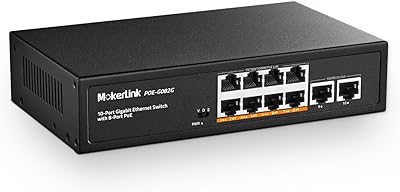
MokerLink POE-G082G 10-Port Gigabit PoE Switch
78%
94%
Ease of Setup
88%
PoE Reliability
83%
Build Quality
91%
Value for Money
71%
Thermal Management
More
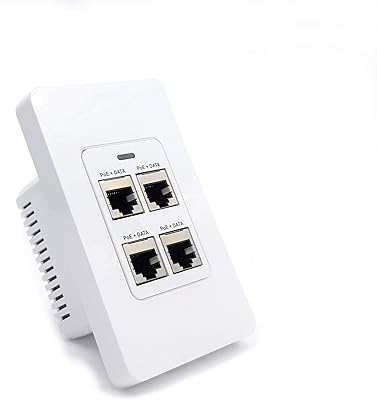
PoE Texas 4 Port in-Wall Gigabit PoE Extender Switch
87%
92%
Installation Ease
88%
Power Output & Range
90%
Aesthetic & Design
89%
Reliability & Stability
84%
Compatibility with Devices
More
MokerLink POE-G162G 18-Port Gigabit PoE Switch
77%
88%
Value for Money
93%
Port Density
94%
Ease of Setup
79%
Build Quality
76%
PoE Reliability
More
Intellinet Industrial Gigabit PoE++ Extender 80W
86%
91%
Performance
87%
Ease of Installation
94%
Build Quality
88%
Range/Connectivity
92%
Power Output
More

FAQ

No, and that is one of its most practical advantages. The device draws all of its power through the incoming PoE cable from your upstream switch or injector, so there is no need for a nearby electrical outlet. This makes it especially useful for outdoor spots like fence lines, rooftops, or garage exteriors where running power would otherwise be a major hassle.

In most cases, yes — as long as your switch outputs standard IEEE 802.3af or 802.3at PoE, this gigabit PoE repeater will work with it. Proprietary or non-standard PoE implementations, sometimes found in older or budget switches, can occasionally cause compatibility issues. If you are unsure, check that your switch is labeled 802.3af or 802.3at compliant before purchasing.

Yes, provided each camera draws a reasonable amount of power. The total output budget is 24W across all three ports combined. Three standard 802.3af cameras pulling around 7 to 8W each will run without issue. Where people run into trouble is connecting higher-draw devices — like motorized PTZ cameras that pull 20W or more — to multiple ports at once, which will likely cause instability or dropped connections.

The IP55 rating means it handles rain, splashing, and light water jets without issue, and the cable entry points are enclosed within the shell to prevent water ingress. What it is not rated for is full submersion or sustained high-pressure water contact. Mounting it under an eave or overhang for added protection is always a smart move, even with the weatherproofing in place.

Yes, up to three units can be cascaded in series, which theoretically extends your PoE network reach to around 300 meters from the source switch. Each unit adds roughly 100 meters of range. Just keep in mind that each extender in the chain consumes some power itself, so your available downstream wattage for powered devices decreases slightly with each additional unit added.

No, it is not. The device tops out at 802.3at, which supports a maximum of 30W input. High-power 802.3bt devices that require 45W, 60W, or 90W are not compatible and will either not power on or will operate unreliably. For PoE++ devices, you would need a switch or injector that natively supports the 802.3bt standard.

The rated operating minimum is -10°C, so anything colder than that is technically outside the supported range. In practice, brief dips slightly below -10°C may not immediately damage the unit, but sustained exposure to colder temperatures could affect performance and long-term reliability. If you are in a climate that regularly drops well below that threshold, a heated enclosure or a different product rated for harsher cold would be the safer choice.

It works perfectly well indoors too. Warehouses, parking garages, attics, and server rooms with dust or humidity concerns are all reasonable indoor environments for this outdoor PoE extender. The weatherproof housing is just a bonus in those cases — it does not affect indoor performance in any way.

Unfortunately, no. This is an unmanaged device with no interface, no port monitoring, no traffic statistics, and no remote management of any kind. What you see is what you get — plug in the cables and the network runs. If visibility into traffic, device health, or power draw per port matters to your setup, a managed PoE switch is the right tool instead.

It is worth being aware of, particularly if the unit will be mounted in direct sunlight with little airflow around it. The upper operating limit is 55°C, which can be reached or exceeded inside a sealed plastic enclosure sitting in full afternoon sun during summer. Mounting it in a shaded spot, or inside a vented outdoor enclosure, will go a long way toward keeping temperatures in a safe range and extending the lifespan of the device.