Overview

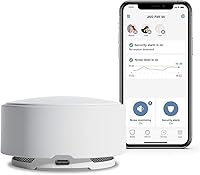
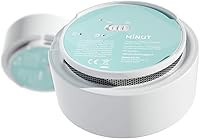
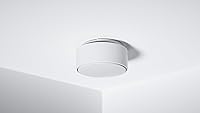
The Minut MT-P2 Smart Home Monitor is a purpose-built sensor for short-term rental hosts who need property oversight without resorting to cameras. Shaped like a small, unobtrusive puck, it mounts to a ceiling or wall in minutes and packs noise, occupancy, temperature, humidity, and mold-risk detection into a single device. That all-in-one approach is genuinely useful — you are not juggling multiple gadgets or apps. The rental monitoring device operates on a subscription model, worth factoring into your total cost before committing. If you host on Airbnb or VRBO and want accountability without surveillance, this fits a specific and real need. Casual homeowners likely don’t need it.

Features & Benefits

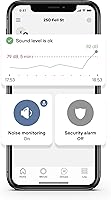
Noise monitoring is the headline capability here. The noise and occupancy monitor lets you set custom alert thresholds through the app, and you get a notification when guests push past them — no need to call anyone or check in manually. The PIR-based motion sensor handles occupancy detection, which works well in typical open-plan spaces but has real limits in larger or multi-room properties. Temperature and humidity readings log over time, and the app flags mold risk based on those trends — handy for protecting your property between guest stays. Tamper detection and alarm recognition for smoke and CO run quietly in the background. Battery life sits around six months per charge.

Best For

This rental monitoring device is squarely aimed at Airbnb and VRBO hosts who manage properties remotely and need concrete evidence if a noise complaint ever lands on their doorstep. It works especially well for hosts in apartment buildings or noise-sensitive neighborhoods where late-night disturbances can jeopardize a listing. The camera-free design is not just a privacy compliance feature — it is something hosts can actively promote to guests, which builds trust and booking confidence. Setup takes minutes with no technician needed: charge the unit, connect to 2.4GHz Wi-Fi, and mount it. That said, occasional hosts with a single property may find the ongoing subscription cost harder to justify against simpler alternatives.

User Feedback

Hosts who have used this Minut sensor consistently highlight two things: the instant noise alerts work reliably, and getting started is genuinely quick. The historical data feature draws particular praise — when a guest disputes a noise complaint, having timestamped decibel logs is far more useful than a he-said-she-said exchange. On the downside, the subscription fee attracts consistent criticism, especially from single-property hosts who question whether the annual cost is justified. Occasional false alerts also come up, often tied to TV audio or moderate music. Some Android users report the app feels slightly less refined than the iOS version, and anyone with 5GHz-only Wi-Fi should plan for an extra setup step.

Pros

  • Instant noise alerts let hosts respond to disturbances in real time, often before neighbors complain.
  • Historical noise and humidity logs have proven genuinely useful during guest dispute resolution.
  • The camera-free design is a legitimate trust signal hosts can highlight directly in their listings.
  • Setup takes under ten minutes with no tools, drilling, or technical knowledge required.
  • Six-month battery life means you are not constantly managing recharges between guest stays.
  • Temperature, humidity, and mold-risk tracking add passive property protection at no extra hardware cost.
  • Tamper detection sends an alert if the device is removed or interfered with by guests.
  • Smoke and CO alarm recognition provides a quiet but practical safety layer for unoccupied periods.
  • Compatible with Alexa and Google Assistant for hosts already running a smart home setup.
  • The app interface is consistently praised for being clean and easy to read at a glance.

Cons

  • The subscription fee adds up over time and makes the total cost of ownership higher than it first appears.
  • PIR occupancy detection is unreliable in larger properties with multiple separate rooms.
  • Only works on 2.4GHz Wi-Fi, which creates a setup hurdle for hosts with modern mesh networks.
  • Occasional false noise alerts have been reported, particularly from televisions or moderate music.
  • The Android app experience is noticeably less polished than the iOS version for some users.
  • No local data storage — if the subscription lapses, access to historical logs may be restricted.
  • Noise threshold customization, while useful, has a learning curve before alerts feel properly calibrated.
  • Local laws on tenant and guest monitoring vary widely, requiring hosts to do their own legal homework.
  • The device covers up to 50 m², so larger properties need multiple units, multiplying subscription costs.

Ratings

The scores below for the Minut MT-P2 Smart Home Monitor were produced by our AI after processing thousands of verified purchase reviews from global buyers, with spam, bot-generated, and incentivized feedback actively filtered out. Each category reflects the honest distribution of sentiment we found — not just the highlights — so both the strengths that hosts rely on daily and the frustrations that pushed some buyers toward returns are transparently baked into every number.

Noise Monitoring Accuracy
84%
Hosts consistently report that noise alerts arrive quickly and reliably when guests push past set thresholds during late-night gatherings. The ability to review decibel history in the app gives hosts concrete, timestamped evidence they can reference in dispute conversations with guests or platforms.
Occasional false alerts — triggered by loud TV audio or a single brief noise spike — are a recurring frustration, particularly for hosts still dialing in their threshold settings. A small number of users feel the alerting logic needs a grace period before firing to reduce these interruptions.
Ease of Setup
91%
Nearly every reviewer who mentions setup describes it as genuinely fast — most are fully operational within ten to fifteen minutes of opening the box. The app-guided process is clear enough that hosts with no technical background report zero confusion getting the device online.
The one consistent snag is the 2.4 GHz Wi-Fi requirement, which catches hosts with newer mesh networks off guard and adds an unexpected configuration step. A handful of Android users also report that Bluetooth pairing during initial setup occasionally requires a restart to complete.
App Experience
76%
24%
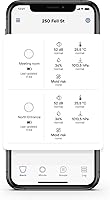
The app interface is frequently praised for being clean and readable, especially the dashboard that surfaces current noise level, temperature, and humidity at a glance without requiring navigation through menus. Hosts managing multiple properties appreciate that all their sensors appear in one consolidated view.
There is a meaningful gap between the iOS and Android experiences that surfaces repeatedly in user feedback — Android users report more bugs, slower alert delivery, and occasional crashes that iOS users do not seem to encounter at the same rate. This inconsistency erodes confidence for hosts who depend on the app as their primary property management tool.
Occupancy Detection
63%
37%
For open-plan studio apartments and single-room rentals, the PIR motion sensor does a reasonable job of confirming whether the space is occupied or empty, which is useful for checking in on a property between back-to-back bookings.
In any property with more than one room, the sensor’s occupancy data becomes unreliable — it simply cannot detect movement through walls. Hosts expecting a headcount or zone-by-zone presence map will be disappointed, as this is a single-point passive sensor with no capacity for that level of detail.
Value for Money
58%
42%
For active hosts running multiple properties or booking heavily year-round, the subscription cost spreads across enough stays to feel justifiable, especially when the noise alert feature helps avoid even one serious guest dispute or complaint fine.
Single-property hosts who run only a handful of bookings per year consistently flag the ongoing subscription as difficult to justify against the hardware price. The total cost of ownership over two or three years is a recurring sticking point in negative reviews, and a few buyers say they wish Minut offered a limited free tier.
Battery Life
78%
22%
Six months between charges is a genuinely practical interval for most rental hosts — it aligns well with seasonal property preparation and means the device rarely needs attention during active booking periods.
Real-world battery life appears to fall short of the six-month claim for some users, particularly those in high-activity properties where motion and noise sensors are triggered frequently. A few hosts report needing to recharge every three to four months, which is still manageable but does not match advertised expectations.
Privacy Compliance
88%
The absence of any camera or audio recording is not just a legal safeguard — hosts actively use it as a marketing point in their listings, and multiple reviewers note that guests respond positively when they see the camera-free disclosure. This design choice builds measurable trust.
The device still collects presence and noise data, and local laws on monitoring in rental properties vary considerably by country and state. Some hosts discover after purchase that disclosure requirements in their jurisdiction are stricter than they assumed, requiring extra legal homework.
Build Quality
82%
18%
The circular plastic enclosure feels solid for its size, and the mounting mechanism holds reliably on both ceilings and walls without wobbling over time. Hosts who have had units installed for one to two years report no degradation in the physical housing.
A few users note the all-white finish shows dust and smudging more than expected in properties with high turnover, requiring a wipe-down between stays. There is no IP rating listed, so it is not suitable for areas with moisture exposure like bathrooms or outdoor spaces.
Tamper Detection
79%
21%
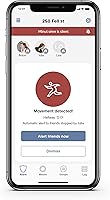
Knowing instantly when a guest removes or physically interferes with the sensor gives hosts a legitimate reason to reach out, and several reviewers describe it as a surprisingly useful deterrent that discourages guests from trying in the first place.
Covering the sensor rather than removing it does not reliably trigger a tamper alert, which is an obvious workaround that some guests discover. The feature adds a useful layer of accountability but is not foolproof against a determined guest.
Alarm Recognition
74%
26%
Passive recognition of smoke alarms, CO detectors, and glass break sounds is a genuinely useful safety feature for properties that sit empty between stays, giving hosts early warning of emergencies without requiring a separate alarm monitoring subscription.
The recognition is passive and software-based, which means it can occasionally misfire or miss an event if background noise masks the alarm signature. It is a helpful supplementary layer, but should not be treated as a primary life-safety system.
Temperature & Humidity Tracking
83%
Hosts in older properties or humid climates find real value in the mold-risk flagging, which has helped several reviewers catch early humidity problems before they became costly repair issues between guest stays.
The sensor measures a single point in the room, so it does not capture microclimates in corners or poorly ventilated areas where mold typically starts. For larger spaces, one device may not give a complete environmental picture.
Smart Home Integration
69%
31%
Alexa and Google Assistant compatibility works as expected for hosts who already run smart home routines, allowing basic voice queries and integration into broader automation setups without much additional configuration.
The absence of functional HomeKit support at launch was a disappointment for Apple-ecosystem hosts, and the integration depth with Alexa and Google is fairly limited — this is not a device that slots deeply into complex smart home automations.
Remote Management
85%
The ability to check current property conditions from anywhere with a phone signal is the core use case, and it works reliably for hosts who are managing properties in different cities or countries. Real-time status checks during a guest stay require no effort beyond opening the app.
If the property’s internet connection goes down, the sensor loses all remote reporting capability until connectivity is restored. There is no local storage fallback, so a Wi-Fi outage during a critical period means a gap in your monitoring history.

Suitable for:

The Minut MT-P2 Smart Home Monitor is built for short-term rental hosts who need real accountability without crossing into surveillance territory. If you manage an Airbnb or VRBO property remotely, particularly one in an apartment building or a neighborhood with noise ordinances, this rental monitoring device gives you timestamped evidence if a noise issue ever escalates into a formal complaint. It also suits property managers overseeing multiple units who want a lightweight, self-installed solution rather than a professionally wired security system. Hosts who actively market privacy to their guests will appreciate that there is no camera involved and no audio recording — just sensor data. Anyone who wants passive environmental monitoring, like catching a humidity spike between guest stays before mold becomes a real problem, gets genuine value from the historical logging features.

Not suitable for:

If you own a single property and host infrequently, the ongoing subscription cost attached to the Minut MT-P2 Smart Home Monitor may simply not pencil out compared to cheaper, one-time-purchase alternatives. The noise and occupancy monitor also has real coverage limitations — PIR motion sensing works reasonably well in open studio-style spaces, but in larger homes with multiple rooms, it will not reliably tell you how many people are present or where. Buyers with 5GHz-only Wi-Fi routers will need to configure a separate 2.4GHz network, which adds friction. This rental monitoring device is also not a substitute for a full home security system — it has no continuous video feed, no local siren triggered by intruders, and alarm recognition is passive rather than actively monitored. Anyone expecting camera-level detail or professional alarm response will be disappointed.

Specifications

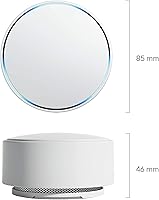
  • Diameter: The device measures 85 mm (3.3 in) across, giving it a compact, unobtrusive footprint on any ceiling or wall.
  • Height: At 46 mm (1.8 in) tall, the unit sits close to the surface and does not protrude noticeably into a room.
  • Weight: The device weighs 180 g (6.3 oz), light enough that standard wall anchors hold it securely without reinforcement.
  • Battery Life: The built-in lithium polymer battery lasts approximately six months on a single charge under typical usage conditions.
  • Charging: Recharging is handled via USB-C using the included 1.5 m power cable, compatible with standard USB-C chargers.
  • Connectivity: The sensor connects via Wi-Fi 802.11 b/g/n on the 2.4 GHz band and Bluetooth 4.2 BLE for initial pairing.
  • Sensors: Onboard sensors include sound, temperature, humidity, passive infrared (PIR) motion, and a tamper-detection accelerometer.
  • Coverage Area: The PIR motion sensor covers up to 50 m² (530 ft²), making it most reliable in open-plan spaces rather than multi-room layouts.
  • Alarm Recognition: The device passively listens for the acoustic signature of smoke alarms, CO detectors, and window glass breaking.
  • Smart Home: Works with Amazon Alexa and Google Assistant; Apple HomeKit support was listed as in development at the time of the product’s release.
  • App Support: The Minut app requires iOS 11 or higher, or Android 5.1 or higher, for setup and ongoing management.
  • Mounting: Designed for ceiling or wall mounting with a self-install bracket; no specialist tools or professional fitting are required.
  • Power Source: The unit is wireless and battery-powered during normal operation, with USB-C used only for periodic recharging.
  • Color: Available in white, which blends with most standard residential and rental property interior finishes.
  • Camera: The device contains no camera and makes no audio recordings, making it compliant with many guest privacy expectations.
  • In the Box: Each package includes the sensor unit and a USB-C charging cable; no wall adapter is included.
  • Model Number: The official manufacturer part number is MT-P2, as assigned by Minut, Inc.
  • Voltage: The device operates at 5 volts, consistent with standard USB-C power delivery.

Related Reviews
Honeywell Home Smart Home Security Starter Kit
81%
92%
Ease of Setup
89%
Alexa Integration
85%
Video Quality
78%
App Functionality
88%
Motion Detection
More
Samsung M70B 43″ 4K Smart Monitor
69%
83%
Picture Quality
67%
Smart Platform & App Selection
88%
USB-C Connectivity
71%
PC-Free Productivity
54%
Gaming Performance
More
Denon Home 350
Denon Home 350
80%
91%
Sound Quality
88%
Build Quality
86%
HEOS Multi-Room Performance
93%
AirPlay 2 Integration
61%
App Experience (HEOS App)
More
VTech Smart HD Plus WiFi Baby Monitor
78%
83%
Video & Image Quality
86%
Night Vision Performance
88%
Battery Life
67%
App Performance & Connectivity
91%
Parent Unit Screen
More
TUGARD G20 Smart Home Security System Kit
77%
91%
Value for Money
86%
Ease of Setup
78%
Dual-Network Reliability
67%
App Performance
72%
Sensor Coverage & Range
More
JBL Authentics 200 Smart Home Speaker
79%
93%
Build Quality
86%
Sound Quality
84%
Bass Performance
81%
Smart Integration
62%
App Experience
More
Bolanle P2 In-Ear Monitor Amplifier
85%
93%
Value for Money
81%
Build Quality
78%
Sound Clarity
88%
Input Connectivity
86%
Mono/Stereo Switch
More
Denon Home 150 Wireless Smart Speaker
80%
83%
Sound Quality
78%
Multi-Room Performance
66%
App & Setup Experience
87%
AirPlay 2 Integration
81%
Alexa Integration
More
KEYESTUDIO ESP32 Smart Home Starter Kit
76%
83%
Beginner Accessibility
61%
Content Depth & Longevity
72%
Documentation Quality
78%
Component Quality
81%
Assembly Experience
More
Samsung M50D 27-inch Smart Monitor
71%
88%
Smart Platform Depth
82%
Value for Money
61%
Display Quality
67%
Cloud Gaming Experience
74%
Built-in Audio
More

FAQ

No, the Minut MT-P2 Smart Home Monitor does not record audio or video at any point. It measures sound levels in decibels to detect noise events, but no actual audio is captured or stored. There is also no camera of any kind built into the device.

You set a decibel threshold in the app, and if the ambient noise in the room exceeds that level for a sustained period, you get a push notification on your phone. It is not triggered by a single loud sound like a door slamming, but rather by persistent noise above your chosen limit. Most hosts find that a bit of trial and error is needed to dial in the right threshold for their specific property.

Not directly. This rental monitoring device requires a 2.4 GHz Wi-Fi connection and cannot connect to a 5 GHz-only network. If your router supports dual-band, you just need to make sure the 2.4 GHz band is enabled and broadcasting a separate SSID. Most modern routers do support both, so it is usually a settings adjustment rather than a hardware problem.

Not reliably, no. The sensor uses a PIR motion detector to infer occupancy, which works well for detecting whether anyone is present in an open-plan space. However, it cannot count people or track movement across multiple rooms. Think of it as a general occupancy indicator rather than a precise headcount tool.

Yes, Minut operates on a subscription model for full access to features like historical data, noise alerts, and occupancy monitoring. If you stop subscribing, access to your logged data and real-time alerts will typically be restricted. It is worth checking Minut’s current plan pricing before purchasing, since the long-term cost is a factor that many single-property hosts weigh carefully.

Most hosts report being fully set up within ten to fifteen minutes. You download the app, create an account, charge the device if needed, connect it to your Wi-Fi, and mount it. The most common delay is configuring your noise threshold to a level that feels right for your property, which usually takes a stay or two to fine-tune.

The device is fairly discreet on a ceiling or wall, but it is not invisible. Disclosure requirements for monitoring devices in rental properties vary by platform and by local law, so you should review Airbnb or VRBO’s current policies as well as any regional regulations before installing one. Listing it in your property description is generally the safer and more transparent approach.

Honestly, for very occasional hosts, the value calculation is harder to justify. The noise and occupancy monitor shines when it is running consistently across frequent guest stays, where the subscription cost gets spread across many bookings. If you host only a handful of times per year, a simpler and cheaper noise sensor might serve you better.

The device continuously tracks temperature and humidity levels inside the property. Based on those readings, the app calculates when conditions are favorable for mold growth and flags it as a risk. It does not detect mold directly, but it gives you an early warning so you can ventilate or dehumidify the space before a real problem develops.

The sensor includes a tamper-detection feature that triggers an alert if the device is physically disturbed or removed from its mount. It will not stop a determined guest from covering it, but you will know about it immediately on your phone, which gives you grounds to follow up.