Overview

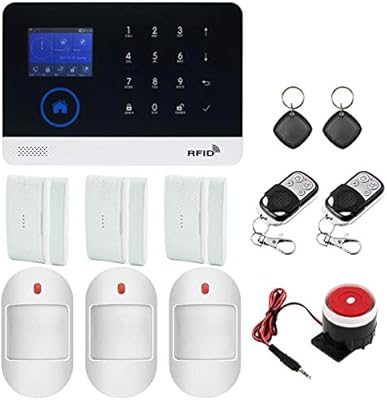
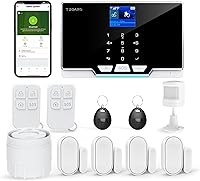
The TUGARD G20 Smart Home Security System Kit is a practical, no-frills security solution aimed squarely at renters, apartment dwellers, and small homeowners who want real protection without signing up for a monthly monitoring contract. Out of the box you get 12 pieces — a central hub, four door/window sensors, a PIR motion sensor, two remote controls, two RFID cards, and a wired siren — enough to cover the basics of a one- or two-bedroom space. The hub connects via your home WiFi or falls back on GSM/4G cellular if the internet goes down. Setup leans toward tool-free installation, with both adhesive and screw-in mounting options, and the system ties into the Tuya and Smart Life apps, plus Alexa and Google Assistant.
Features & Benefits

The standout feature here is the dual-network failover. Most budget alarm systems cut off the moment your internet goes down; this wireless security system keeps running by switching to GSM/4G cellular — though you will need to insert an active SIM card, which is not included. The 1.8-inch TFT color touchscreen on the hub is a small but genuinely useful touch, showing arm/disarm status and the time without needing to open any app. Alert options cover push notifications, SMS, and voice monitoring simultaneously, so you are unlikely to miss a triggered sensor. The architecture is also surprisingly expandable for the price: the system supports up to 100 wireless zones, 10 remote controls, and 10 RFID cards.

Best For

This alarm kit makes the most sense for renters who want solid coverage without drilling holes or locking into a contract. The adhesive mounting means you take everything with you when you move. It also works well for budget-conscious homeowners who want a starter kit to expand — the zone support means you are not capped at the included 12 pieces. If your home WiFi tends to drop out, the cellular backup adds a meaningful safety net. Existing Tuya or Smart Life users will feel at home immediately, and Alexa/Google integration makes it easy to arm or disarm by voice. Small business owners covering a garage, storage unit, or shop on a lean budget will also find this a practical fit.

User Feedback

Buyers consistently praise the straightforward setup process — most report having the hub and sensors running within 30 minutes, even without any prior security system experience. The color display gets positive mentions for being readable without needing a phone nearby. On the critical side, the 2.4GHz-only WiFi requirement catches people off guard, particularly those with newer mesh routers that broadcast primarily on 5GHz. App reliability gets mixed reviews, with some Android users noting occasional notification delays. Several buyers mention that four door sensors feel thin for larger homes, though adding more later is easy given the expandable design. Against subscription-based competitors at two or three times the price, value perception is consistently high.

Pros

  • No monthly subscription fees — all remote monitoring runs entirely through the free Tuya or Smart Life app.
  • Dual-network support means a WiFi outage does not leave your home unmonitored if a cellular SIM is active.
  • The 12-piece kit covers the basics of a one- or two-bedroom space straight out of the box.
  • Adhesive mounting makes the system fully renter-friendly and easy to take when you move.
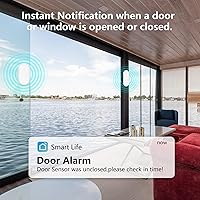
  • Push notifications, SMS alerts, and voice monitoring provide three independent ways to catch a triggered sensor.
  • Expandable to 100 wireless zones, so this alarm kit can grow with your needs over time.
  • The on-hub TFT touchscreen lets household members check arm status without needing a phone.
  • Eleven language options make it accessible to multilingual households and international buyers.
  • Alexa and Google Assistant compatibility fits naturally into existing smart-home setups.
  • Setup is straightforward enough that most buyers have everything running within 30 minutes.

Cons

  • 2.4GHz-only WiFi compatibility creates real headaches for anyone with a modern mesh or 5GHz-primary router.
  • The GSM cellular backup requires a separately purchased SIM card that is not included in the box.
  • Four door sensors is genuinely not enough for larger homes without buying additional accessories.
  • Android users frequently report push notification delays that can undermine the urgency of real-time alerts.
  • The PIR motion sensor ships with default sensitivity settings that generate noticeable false alarms, especially in homes with pets.
  • The Tuya app onboarding is unfamiliar territory for buyers not already in the smart-home ecosystem.
  • Voice assistant integration is limited to arm and disarm commands only — no sensor status queries are supported.
  • The wired siren has no volume adjustment, which can be a genuine problem in shared walls or apartment buildings.
  • RFID card read range requires close physical contact with the hub, which feels awkward near some door placements.
  • The printed user guide lacks the depth needed to troubleshoot connectivity issues during initial setup.

Ratings

The TUGARD G20 Smart Home Security System Kit has been scored below using AI analysis of verified global buyer reviews, with spam, bot-generated, and incentivized feedback actively filtered out before scoring. Ratings reflect the full spectrum of real-world experience — from standout strengths to recurring frustrations — so you get an honest picture before committing. Both the highs and the friction points are transparently baked into every number you see here.
Value for Money
91%
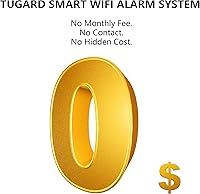
Buyers consistently single this out as the system's strongest suit. For a one-time purchase with zero ongoing subscription fees, getting dual-network connectivity, a touchscreen hub, and a 12-piece sensor kit in one box is hard to argue with at this price tier. Reviewers who had previously paid for monitored services were especially vocal about how much they appreciated owning the hardware outright.
A few buyers felt the value calculation shifts once they factor in purchasing a separate SIM card for cellular backup, which is not included. For renters who ultimately only use WiFi, some felt the GSM hardware represented cost they never actually needed.
Ease of Setup
86%
The majority of buyers report having the hub powered up and sensors paired within 30 minutes, often without reading the manual past the quick-start sheet. The adhesive mounting option makes placing door sensors genuinely hassle-free, and the on-screen pairing prompts are clear enough that non-technical users rarely got stuck.
The Tuya app onboarding tripped up a subset of buyers, particularly those unfamiliar with Chinese-developed smart-home platforms. A handful of users noted the printed user guide lacks enough detail for troubleshooting WiFi connectivity issues during initial setup.
Dual-Network Reliability
78%
22%
Having a GSM/4G cellular fallback is a genuine differentiator at this price point. Users in rural areas or homes with spotty broadband appreciate that a router outage does not render the whole system blind. When both networks are active and configured correctly, alert delivery is consistent and fast.
The cellular backup requires an active, separately purchased SIM card — something that surprises a notable share of buyers who assumed it was ready to go out of the box. The 2.4GHz-only WiFi restriction is also a recurring friction point, as many modern mesh routers broadcast primarily on 5GHz and require manual band-splitting to get this system connected.
App Performance
67%
33%
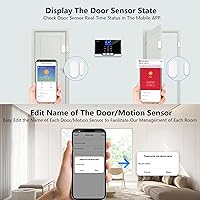
The Tuya and Smart Life apps give users remote arm/disarm, zone naming, and timed scheduling — functionality that genuinely earns its keep for people managing a home or small business remotely. iOS users in particular tend to report stable push notification delivery with minimal delay.
Android users report a more mixed experience, with some noting occasional notification delays of 30 seconds or more after a sensor triggers. The app interface itself feels utilitarian and slightly cluttered, and a few buyers flagged that firmware update prompts can interrupt normal use at inconvenient times.
Sensor Coverage & Range
72%
28%
The four included door/window sensors cover the entry points of a standard one- or two-bedroom apartment without needing any add-ons. The PIR motion sensor handles a living room or hallway corridor well, and the 433MHz wireless range is solid enough that sensors placed across a typical apartment floor rarely drop signal.
Buyers with larger homes — three bedrooms or more — consistently flag that four door sensors are not enough, and the single motion sensor leaves gaps in multi-floor layouts. While the system is designed to expand, those add-on sensors represent additional spending that some buyers did not anticipate at purchase.
Hub Display & Interface
83%
The 1.8-inch TFT color screen is a small but appreciated feature that lets you check arm/disarm status and the current time without unlocking a phone. The capacitive touch controls feel responsive, and the status layout is clean enough that household members who never interact with the app can still read the hub at a glance.
The screen is on the small side for users with poor near vision, and the brightness is fixed — no auto-dimming at night, which a few light-sensitive buyers found disruptive in bedroom placements. The display is informative but not customizable beyond what the firmware allows.
Alert Redundancy
81%
19%
Having push notifications, SMS, and voice monitoring running simultaneously means missing a triggered alert requires some unusual combination of bad luck. Buyers with elderly family members particularly valued the SMS channel as a backup for relatives who do not use smartphones regularly.
The wired siren is loud and effective but lacks granular volume control, which caused friction for users in thin-walled apartments who triggered false alarms during testing. SMS alert frequency during repeated triggers can also feel excessive without adjustment in the app settings.
Build Quality & Hardware Feel
69%
31%
The hub housing feels reasonably solid for the price tier — it does not flex under normal handling and the touchscreen surface resists light scratches well. The door sensors are compact and unobtrusive, and the remote controls have a satisfying button click that holds up after repeated daily use.
The overall plastic finish reads as budget-grade on close inspection, and a few buyers noted that the adhesive backing on the door sensors loses grip in high-humidity environments like bathrooms or laundry rooms. The wired siren cable feels thinner than expected.
Expandability
88%
Supporting up to 100 wireless zones, 10 RFID cards, and 10 remote controls gives this wireless security system genuine long-term headroom. Buyers who started with the base kit and later added window sensors reported the pairing process for new devices is quick and consistent.
Additional sensors must be sourced separately and need to use 433MHz eV1527-compatible encoding, which limits third-party options. Not all budget 433MHz sensors on the market are guaranteed to be compatible, and buyers have to do some research before purchasing add-ons.
Voice Assistant Integration
74%
26%
Alexa and Google Assistant compatibility works reliably for basic arm and disarm commands once the Tuya skill is linked in the respective app. For households already running smart lighting or thermostats through these ecosystems, folding in the alarm kit feels natural.
Voice integration is limited to arming and disarming — there is no status query or sensor-level detail available through voice commands. Users expecting deeper integration, like asking Alexa which door is open, will be disappointed by the scope of what the voice connection actually supports.
WiFi Connectivity
61%
39%
On routers that broadcast a dedicated 2.4GHz network — which includes most single-band and many older dual-band units — connection is stable and rarely drops once established. Buyers with straightforward home network setups had no complaints here.
The 2.4GHz-only limitation is the most commonly cited technical frustration across reviews. Many modern mesh systems and newer routers consolidate bands or prioritize 5GHz, requiring users to log into router settings and manually split SSID channels — a step that non-technical buyers find unnecessarily complicated for a plug-and-play security device.
Multilingual Support
87%
Eleven language options covering English, Spanish, French, German, Russian, and others make this alarm kit genuinely practical for international buyers and multilingual households. Language switching is done directly on the hub display rather than buried in a settings menu, which most non-English reviewers appreciated.
A few buyers noted that some translated menu labels feel slightly awkward, likely due to machine translation rather than localized editing. The English-language user guide is also the most complete version; translated guides occasionally omit troubleshooting steps.
Installation Flexibility
82%
18%
The choice between adhesive and screw-in mounting for both the hub and sensors is genuinely useful for renters who cannot put holes in walls. The hub also sits flat on any surface without mounting at all, making it easy to test placement before committing.
The quick-release wall bracket for the hub works well initially, but some buyers reported it can feel loose after several months if the surface behind it is not perfectly flat. Screw-in installation is more secure but obviously less renter-friendly.
RFID Access Control
76%
24%
The two included RFID cards are a convenient way to arm and disarm without reaching for a phone or remote, especially useful near a front door. Buyers with children appreciated handing off an RFID card as a simple, reliable way for kids to manage the system independently.
Only two RFID cards come in the base kit, and while the system supports up to ten, replacements add extra cost. The cards themselves are standard credit-card thickness and work reliably, but the read range is short enough that you have to hold the card quite close to the hub panel.
False Alarm Management
63%
37%
The zoning system — which includes home zone, perimeter zone, and 24-hour zone settings — gives experienced users meaningful control over which sensors trigger a full alarm versus a silent alert, reducing nuisance trips once everything is dialed in.
Out of the box, the default sensitivity settings on the PIR motion sensor generate a fair number of false alerts, particularly in homes with pets or near windows with shifting light. New users often need a few days of adjustment before the system stops crying wolf, and the instructions on tuning sensitivity are not clearly documented.

Suitable for:

The TUGARD G20 Smart Home Security System Kit is built for a specific kind of buyer, and for that buyer it genuinely delivers. Renters and apartment dwellers top the list — the adhesive mounting means no permanent holes, the system is fully removable, and there is no contract to cancel when you move out. Budget-conscious homeowners who want a starting point rather than a complete solution will also find it practical, since the expandable architecture lets you add sensors gradually as your budget allows rather than paying for coverage you do not yet need. If your home WiFi is unreliable or you live in an area prone to outages, the GSM/4G fallback adds a real layer of redundancy that most competing systems at this price simply do not offer — provided you are willing to source and activate your own SIM card. Existing Tuya or Smart Life users will feel right at home given the native app integration, and the Alexa and Google Assistant compatibility makes it easy to fold into a broader smart-home routine. Small business owners protecting a garage, storage unit, or small shop on a tight budget round out the ideal audience.
Not suitable for:

The TUGARD G20 Smart Home Security System Kit has real limitations that make it the wrong call for certain buyers, and it is worth being direct about them. If your home runs on a modern mesh WiFi system or a router that broadcasts exclusively on 5GHz, you will hit a wall immediately — this system only connects on 2.4GHz, and splitting your network bands requires router-level configuration that many non-technical users find frustrating. Buyers expecting a true plug-and-play cellular backup should know upfront that the GSM feature requires a separately purchased and activated SIM card; it does not work out of the box. Larger homes with three or more bedrooms and multiple entry points will quickly find four door sensors insufficient, meaning real additional spending beyond the initial purchase. Anyone who wants professional monitoring, a panic button to an emergency dispatch center, or camera integration will need to look elsewhere entirely, as this wireless security system handles self-monitored alerting only. Finally, Android users with older or mid-range handsets have reported inconsistent push notification delays, so if instant alert delivery is non-negotiable for your situation, the app reliability may not meet your expectations.
Specifications

  • Brand & Model: Manufactured by Shenzhen Smartrol Technology Limited under the TUGARD brand, model number G20B.
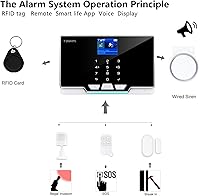
  • Kit Contents: Includes 12 pieces: one alarm hub, four door/window sensors, one PIR motion sensor, two remote controls, two RFID cards, one wired siren, and one power adapter with cord.
  • Hub Display: The central hub features a 1.8″ TFT color touchscreen with capacitive touch controls showing arm/disarm status, time, and system state at a glance.
  • Connectivity: Supports 2.4GHz WiFi (5GHz not supported) and GSM/3G/4G dual-network operation for cellular fallback when internet connectivity is unavailable.
  • Wireless Protocol: Sensors and accessories communicate at 433MHz using eV1527 encoding for compatibility with a wide range of add-on peripherals.
  • Expandability: The system supports up to 100 wireless protection zones, 10 remote controls, and 10 RFID cards, allowing incremental expansion well beyond the included kit.
  • Alert Methods: Delivers alerts via app push notification, SMS, voice monitoring channel, and a wired siren, giving four independent notification paths simultaneously.
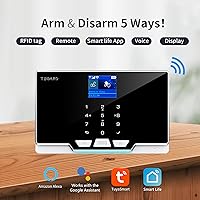
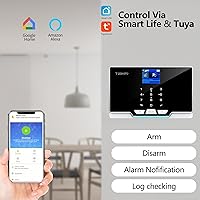
  • Compatible Apps: Works natively with the Tuya and Smart Life apps on iOS and Android for remote arming, disarming, zone naming, and timed scheduling.
  • Voice Assistants: Compatible with Amazon Alexa and Google Assistant for basic voice-controlled arm and disarm commands via linked smart-home routines.
  • Language Support: The hub menu and voice prompts support 11 languages including English, German, Spanish, French, Russian, Italian, Portuguese, Polish, Greek, Romanian, and Chinese.
  • Hub Dimensions: The alarm hub measures 6.89 x 4.32 x 0.79 inches and weighs approximately 1 pound.
  • Power Source: Operates on corded AC power at 110 volts via the included power adapter; rated at 55 watts.
  • Backup Battery: Requires one CR2032 coin cell battery for backup clock retention; battery is included in the package.
  • Sensor Technology: Uses passive infrared (PIR) detection for motion sensing and magnetic reed-switch technology for door and window sensors.
  • Installation Type: The hub and sensors can be wall-mounted using the included quick-release bracket with self-adhesive tape or screws, or placed flat on any surface without mounting.
  • Zone Types: Supports multiple configurable zone types including away zone, home zone, perimeter zone, 24-hour zone, and doorbell zone for flexible alert behavior.
  • Monthly Fees: No subscription or monitoring fees are required; all app-based remote control and notification features are available at no recurring cost.
  • SIM Card Slot: The hub includes a SIM card slot for GSM/4G cellular backup, though an active nano or micro SIM card must be sourced and inserted separately by the user.

Related Reviews

Honeywell Home Smart Home Security Starter Kit
81%
92%
Ease of Setup
89%
Alexa Integration
85%
Video Quality
78%
App Functionality
88%
Motion Detection
More
5iktery PoE-4C-01 4-Camera NVR Security Kit
73%
84%
Image Quality
79%
Night Vision
71%
AI Motion Detection
76%
Ease of Installation
88%
Value for Money
More
KEEPWORD WiFi GSM Wireless Home Security System
69%
83%
Value for Money
88%
Ease of Installation
71%
App Performance
74%
Sensor Reliability
58%
WiFi Connectivity
More
Wyze Home Security Core Kit
73%
93%
Ease of Installation
67%
App Experience
91%
Value for Money
78%
Monitoring Quality
58%
Sensor Coverage
More
Arlo SS1201 Home Security System
76%
91%
Ease of Installation
88%
Sensor Versatility
74%
App Experience
57%
Subscription & Value Transparency
82%
Build Quality & Hardware Design
More
KERUI Home Security System KR-H01
82%
92%
Value for Money
88%
Ease of Installation
90%
Siren Loudness & Effectiveness
85%
System Expandability
75%
Remote Control Usability
More
ANNKE 8CH 5MP Security Camera System
73%
88%
Image Quality
84%
Night Vision
76%
AI Detection Accuracy
41%
Installation Experience
58%
Remote Access & App
More
Abode 4-Piece Wireless Smart Security System
79%
93%
Smart Home Integration
89%
Ease of Installation
82%
App Experience
61%
Starter Kit Coverage
78%
Value for Money
More
KEYESTUDIO ESP32 Smart Home Starter Kit
76%
83%
Beginner Accessibility
61%
Content Depth & Longevity
72%
Documentation Quality
78%
Component Quality
81%
Assembly Experience
More
KEYESTUDIO KS0085 Smart Home Arduino Starter Kit
75%
83%
Build Quality
58%
Instruction Clarity
88%
Sensor Variety
62%
Bluetooth App
91%
Educational Value
More

FAQ

Yes, but only if you insert an active SIM card into the hub. The TUGARD G20 Smart Home Security System Kit is designed to fall back on GSM/4G cellular when WiFi is unavailable, but the SIM card is not included — you need to source one separately and activate it with a carrier that supports your local network bands. Without either WiFi or an active SIM, the system will still trigger the local wired siren, but you will not receive any remote app or SMS alerts.
This is the most common setup headache with this wireless security system. It only connects to 2.4GHz WiFi — it will not see a 5GHz band at all. Most modern mesh systems broadcast both bands under a single SSID and let the router decide which device gets which band. You may need to log into your router admin panel and create a separate 2.4GHz-only network with its own name, then connect the hub to that. It is an extra step, but once done it stays connected reliably.

You can absolutely add more. The system supports up to 100 wireless zones total, so the four included sensors are just a starting point. You will need to buy additional 433MHz eV1527-compatible door/window sensors separately — just make sure any sensors you purchase specifically advertise that encoding standard, since not every budget 433MHz sensor on the market uses it.

The wired siren is genuinely loud — enough to be heard clearly through closed doors and across a typical apartment floor. Unfortunately, there is no volume adjustment available either on the hub or in the app. If you live in a building with thin walls or close neighbors, this is worth factoring in before you run a test alarm. The siren can be disabled through the app if you prefer silent push-only alerts, but there is no middle-ground volume setting.

Yes, the Tuya and Smart Life apps are free to download and use on both iOS and Android. There are no hidden in-app subscription tiers needed to access the alarm features. iOS users tend to report smoother push notification delivery overall. Android performance is generally fine too, though a small percentage of Android users on older or mid-range handsets have noted occasional delays of up to 30 seconds on triggered alerts.

Yes, basic arm and disarm commands work through Alexa and Google Assistant once you link the Tuya skill in the respective app. What you cannot do is ask for sensor status — something like asking Alexa which door is open is not supported. Voice control covers the on/off commands and not much else, so think of it as a convenience shortcut rather than a full voice-controlled interface.

Most people find it manageable within 30 to 45 minutes. The hub walks you through pairing sensors with on-screen prompts, and the adhesive mounting means you do not need to drill anything. The trickiest part for most non-technical users is the Tuya app account setup and WiFi pairing, especially if your router does not have a clearly labeled 2.4GHz band. If you hit a wall there, searching for your specific router model plus the phrase 2.4GHz SSID split will usually get you a step-by-step guide for your equipment.

It can, particularly at the default sensitivity settings. The PIR sensor detects heat-based movement and does not have a pet-immune mode built in. Small pets under about 20 pounds moving low to the ground are less likely to trigger it, but larger dogs or cats that jump onto furniture at sensor height will probably set it off. Adjusting the sensor angle slightly — pointing it higher up toward the ceiling — can reduce pet false alarms, though it will also reduce its effective coverage range.

No, this alarm kit is entirely self-monitored. When a sensor triggers, you get notified through the app, by SMS, or via the local siren — but there is no call center watching your alerts or contacting emergency services on your behalf. If a dispatch integration is important to you, you would need a system from a provider that specifically offers professional monitoring as a service, typically with a monthly fee.

Yes. The Tuya and Smart Life apps support shared device access, so you can invite other household members to monitor and control the alarm from their own smartphones. Each person needs their own free Tuya or Smart Life account. There is no hard limit on how many accounts can be linked to a single device through the app, making it practical for families or housemates who all want visibility.