Overview

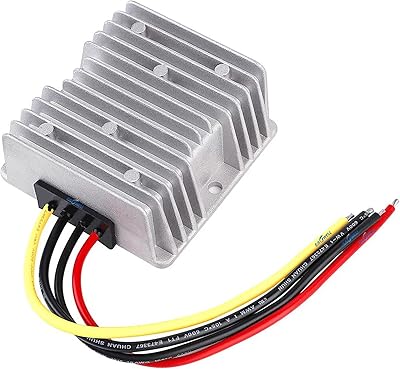
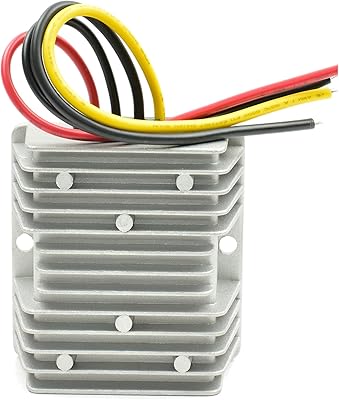
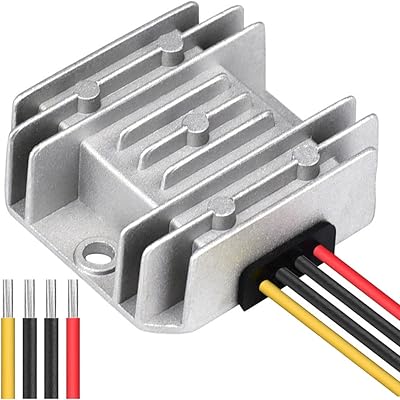
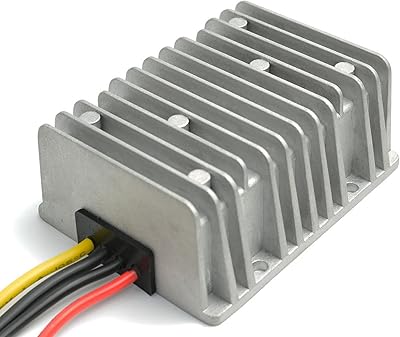
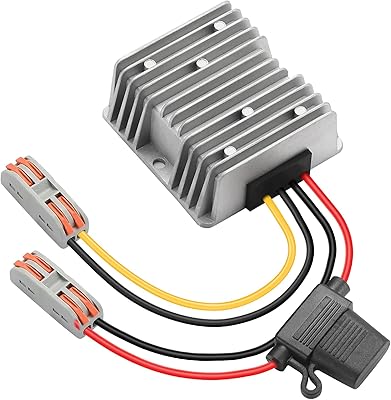
The MGGi 12V to 24V 480W Boost Converter is a compact step-up DC-DC converter built for vehicle and marine environments where drawing 24V from a standard 12V system is a daily requirement. Housed in a die-cast aluminum shell with epoxy potting, it handles rain, splashes, and underhood humidity thanks to its IP68 waterproof rating. At just over a pound and barely larger than a deck of cards, it tucks into tight installation spots cleanly. One important note upfront: this boost converter is not compatible with solar panels or battery charging applications, so if either of those is your use case, this unit is not the right fit.

Features & Benefits

What makes this 12V-to-24V converter worth considering is the pairing of a fixed 24V output with serious protection circuitry. The fixed output is a deliberate design choice — it removes any risk of accidentally dialing in the wrong voltage. Five onboard protections cover over-load, over-current, over-temperature, short-circuit, and over-voltage, all with auto-recovery once conditions normalize. Conversion efficiency reaches up to 96%, meaning minimal heat waste and more input power doing actual work. There is no cooling fan either, so operation stays completely silent — a genuine advantage for cabin or cab installs where fan noise would be an annoyance.

Best For

The MGGi step-up module fits a fairly specific set of use cases, and understanding them upfront helps set the right expectations. It shines in 12V automotive systems — cars, trucks, vans, and boats — where you need to run 24V accessories like GPS displays, audio amplifiers, LED rigs, or IP cameras without adding a secondary battery. Fleet and taxi operators powering in-cab screens around the clock will find it well-matched to that kind of always-on demand. Because the output is fixed and the housing is genuinely waterproof, it rewards anyone who wants to install it once and not think about it again. Variable-output needs, however, are better served elsewhere.

User Feedback

The most consistent praise from buyers focuses on stable output voltage and how quickly the wiring comes together — most report a clean install in under an hour. Waterproofing has held up well across marine and outdoor deployments, with few complaints about moisture-related failures after extended field use. The recurring concern is heat buildup when the unit runs near its maximum current ceiling for prolonged periods; a handful of reviewers noted it getting noticeably warm under sustained heavy loads. A few buyers also flagged that adjustable-output alternatives exist at a comparable price, which is worth knowing if output flexibility matters to you. Overall, buyer sentiment leans positive when the unit is used within its intended operating range.

Pros

  • Fixed 24V output means no manual tuning required after installation — just wire it up and go.
  • IP68 waterproofing holds up in real-world marine and outdoor installs, not just on paper.
  • Five onboard protections with auto-recovery add a meaningful layer of electrical safety.
  • High conversion efficiency keeps energy waste low and reduces heat generation under normal loads.
  • Compact, lightweight build fits easily into tight spaces where larger converters simply will not.
  • No cooling fan means completely silent operation — ideal for cab or cabin installs.
  • Wiring and installation are straightforward enough for confident DIYers without professional help.
  • The rugged aluminum and epoxy housing feels built to last, not like a budget throwaway component.
  • Auto-recovery after a fault clears means the system restores itself without manual intervention.

Cons

  • Heat buildup at sustained high loads is a recurring complaint — thermal headroom is limited without active cooling.
  • No output voltage adjustment makes this useless for applications needing anything other than exactly 24V.
  • Incompatibility with solar panels and battery chargers cuts out a large segment of off-grid buyers.
  • Real-world current output under heavy stress may fall short of the stated 20A maximum.
  • No included mounting hardware or wiring connectors means extra sourcing for a clean install.
  • Brand and manufacturer support documentation is thin, which complicates troubleshooting for less experienced users.
  • Adjustable-output competitors exist at a comparable price point, making the value proposition narrower than it first appears.

Ratings

The scores below for the MGGi 12V to 24V 480W Boost Converter were generated by AI after analyzing verified buyer reviews from multiple global markets, with spam, bot-submitted, and incentivized feedback actively filtered out. Each category reflects honest patterns drawn from real installation experiences — from marine deployments to fleet vehicle builds — and both the strengths and the genuine frustrations are weighted transparently into every score.

Output Voltage Stability
88%
Buyers consistently praised how clean and steady the 24V output remains under normal operating loads. Fleet installers running taxi display screens and GPS units around the clock reported no flickering or voltage sag that would disrupt connected electronics.
A small number of users noted minor output fluctuations when input voltage dropped toward the lower end of the 11V threshold, particularly in vehicles with aging batteries. This is worth factoring in if your 12V system is not well-maintained.
Waterproofing & Weather Resistance
91%
The IP68 rating translates well into real-world conditions — boat owners and outdoor truck installers reported the unit holding up through rain exposure, sea spray, and underhood humidity over extended periods. The epoxy potting clearly does its job where it counts.
A handful of buyers who fully submerged the unit in standing water for prolonged periods noted concerns about long-term seal integrity, suggesting IP68 is best treated as splash and rain protection rather than an invitation to permanent immersion.
Thermal Management
61%
39%
Under light to moderate loads, the passive aluminum housing keeps temperatures reasonable without any fan noise. Installers powering LED strips or low-draw cameras found the unit ran cool enough to touch after hours of continuous use.
Running near the maximum current ceiling for extended periods generates noticeable heat buildup, and with no active cooling there is no safety valve. Several buyers flagged thermal stress as a concern in enclosed mounting locations, and a few reported reduced output stability during sustained heavy-load sessions.
Ease of Installation
89%
The fixed output design genuinely simplifies wiring — there is nothing to calibrate, no potentiometer to adjust, just clean input and output connections. Most DIY installers reported getting the unit up and running in under an hour with basic tools and standard automotive wiring knowledge.
The unit ships without mounting hardware or pre-terminated connectors, which adds a small sourcing step for anyone wanting a tidy, permanent install. Beginners unfamiliar with DC wire sizing for high-current runs may also need to do extra homework before connecting.
Build Quality
84%
The die-cast aluminum shell feels reassuringly solid compared to plastic-housed alternatives at a similar price point. Buyers who have handled cheaper converters noted the MGGi step-up module feels like it belongs in a professional installation rather than a budget DIY kit.
The overall finish and labeling on some units received minor criticism for inconsistency, and the wire leads on a small number of units were reported as slightly shorter than ideal for flexible mounting positions. Nothing that affects function, but worth noting for aesthetics-conscious builders.
Conversion Efficiency
86%
At up to 96% efficiency, this boost converter wastes minimal energy as heat during normal operation, which directly benefits vehicles where alternator load matters. Users powering multiple accessories simultaneously appreciated that the unit did not noticeably increase battery drain versus expectations.
Efficiency ratings represent peak conditions, and real-world performance at higher loads and lower input voltages will fall somewhat short of that ceiling. A few technically inclined buyers who benchmarked the unit noted actual efficiency closer to 91–93% under typical automotive conditions.
Noise & Interference
82%
18%
The fanless passive cooling design means zero mechanical noise, which matters enormously for cab and cabin installs where converter hum would be intrusive. Amateur radio operators and audiophiles in the review pool specifically mentioned appreciating the low electrical noise profile.
A small number of users running sensitive RF equipment or high-end audio systems noted minor switching noise on the output at certain load levels. While not a common complaint, it is worth considering if EMI sensitivity is a priority in your specific application.
Protection Features
87%
The five-way protection suite with auto-recovery gives real peace of mind for always-on installs where you cannot monitor the converter daily. Fleet operators in particular valued knowing the unit would self-recover from a transient fault without requiring a manual reset.
Auto-recovery, while convenient, means a fault condition can cycle repeatedly if the root cause is not addressed — which could mask an underlying wiring issue. Some more experienced installers noted they would prefer a latching fault mode with a manual reset for safety-critical applications.
Value for Money
79%
21%
At its mid-range price point, the combination of IP68 waterproofing, solid build quality, and reliable fixed output offers genuine value for hobbyist and light commercial use. Comparable waterproof converters from better-known brands often cost significantly more for the same fundamental performance.
Adjustable-output alternatives exist at a comparable price, and buyers who later discovered they needed output flexibility felt the fixed-voltage design limited their long-term versatility. For single-purpose installs the value case is strong; for multi-use scenarios, less so.
Real-World Current Output
72%
28%
For loads drawing well below the maximum rated current, the unit delivers reliably and consistently. Users powering displays, cameras, and moderate LED rigs reported no noticeable shortfall between rated and actual output current in day-to-day use.
Several buyers who specifically tested the unit at or near the 20A maximum reported that real-world output fell short of the nameplate rating under sustained stress. The 20A figure appears to represent a peak rather than a guaranteed continuous ceiling for all operating conditions.
Compact Footprint
91%
At just over a pound and barely larger than a thick paperback book, this 12V-to-24V converter fits into mounting spots that would rule out larger units entirely. Motorcycle, small boat, and compact van installers repeatedly highlighted size as a deciding factor in choosing this unit.
The compact size is a genuine strength, but it does mean terminal spacing is tighter than on larger converters, which can make neat multi-wire connections slightly fiddly — particularly when using thicker gauge cable for high-current runs.
Longevity & Reliability
76%
24%
The 100,000-hour rated lifespan, combined with the sealed and potted construction, suggests a unit built for long service in demanding environments. Buyers who have run the converter for over a year in continuous fleet or marine applications generally report no degradation in performance.
The sample of long-term reviews is relatively small given the product's age, so the longevity claim remains partially unverified in the field. Units pushed consistently near thermal limits showed earlier signs of wear in a subset of reports, reinforcing the importance of conservative load sizing.
Documentation & Support
54%
46%
Basic wiring polarity and connection guidance is included with the unit, which is sufficient for experienced installers who already understand DC boost converter fundamentals. The straightforward fixed-output design also reduces the complexity of what documentation actually needs to cover.
Technical documentation is thin, and brand-level customer support is difficult to reach for users who encounter issues. Buyers who ran into installation questions or wanted to verify derating curves for their specific use case found little help beyond the sparse included sheet and online community forums.
Compatibility Range
68%
32%
The 11–16V input window covers virtually every standard 12V automotive and marine application, and the fixed 24V output suits a wide range of common vehicle accessories without any setup complexity. For its intended use case, compatibility is broad and well-thought-out.
The hard exclusions — no solar, no wind turbine, no battery charging — meaningfully narrow the buyer pool. Users who purchased the unit for an off-grid or renewable energy context and only discovered the restrictions after delivery were understandably frustrated, pointing to a need for clearer pre-purchase signposting.

Suitable for:

The MGGi 12V to 24V 480W Boost Converter is a strong match for anyone working within a 12V automotive or marine electrical system who needs to power 24V accessories reliably and without fuss. Vehicle owners — whether running a personal truck, a work van, or a boat — who want to add 24V GPS units, display screens, audio amplifiers, LED lighting strips, or IP cameras will find this converter does exactly what it promises. Taxi and fleet operators are a particularly good fit, since the fixed output and passive cooling make it well-suited for always-on, long-duration use in cab environments. DIY installers who prefer a set-and-forget solution will appreciate that there is nothing to calibrate after wiring it in. The IP68-rated housing also makes it the kind of component you can confidently mount in exposed locations — underhood, in a wheel well, or on a boat deck — without worrying about rain or spray.

Not suitable for:

The MGGi 12V to 24V 480W Boost Converter is clearly not the right tool for every situation, and a few limitations are worth understanding before buying. Anyone needing a variable or adjustable output voltage should look elsewhere — the fixed 24V design, while reliable for its intended purpose, offers zero flexibility for multi-voltage applications. The unit is also explicitly not compatible with solar panel systems or battery charging setups, so off-grid or renewable energy installers need a different converter entirely. Buyers who regularly push loads near the maximum current ceiling for extended periods should be aware that heat buildup has been a reported concern, and without active cooling there is no fan to compensate. Those running safety-critical or high-precision equipment that demands certified, industrial-grade components may also want to consider purpose-built alternatives with formal certifications beyond IP68.

Specifications

  • Input Voltage: Accepts a DC input range of 11–16V, making it compatible with standard 12V automotive and marine electrical systems.
  • Output Voltage: Delivers a fixed DC output of 24V with no user adjustment required or available.
  • Max Output Current: Rated at a maximum continuous output current of 20A under normal operating conditions.
  • Rated Power: Handles up to 480W of continuous output power, suitable for moderate to moderately demanding 24V loads.
  • Conversion Efficiency: Achieves up to 96% conversion efficiency using synchronous rectification technology, minimizing energy loss as heat.
  • Waterproof Rating: Carries an IP68 waterproof rating, meaning it is fully sealed against dust and capable of withstanding continuous water immersion.
  • Housing Material: Encased in a die-cast aluminum alloy shell for structural rigidity and passive heat dissipation.
  • Potting Material: Internal components are sealed with a combination of silicone gel and epoxy potting for vibration resistance and moisture exclusion.
  • Dimensions: Measures 4 x 3.2 x 1.5 inches, allowing installation in compact or confined spaces within a vehicle or vessel.
  • Weight: Weighs 1.12 pounds, light enough for straightforward single-person mounting in most locations.
  • Cooling Method: Uses passive air convection for cooling with no internal fan, resulting in completely silent operation.
  • Fault Protections: Incorporates five protection types — over-load, over-current, over-temperature, short-circuit, and over-voltage — each with automatic recovery once the fault condition clears.
  • Rated Lifespan: Manufacturer rates the unit for over 100,000 hours of operational life under normal conditions.
  • Brand: Sold under the MGGi brand and manufactured by XingHua.
  • Compatibility Note: Explicitly not compatible with solar panel inputs or battery charging applications; designed solely for regulated DC-to-DC step-up conversion.

Related Reviews

EAGWELL 12V to 48V Boost Converter 288W 6A
87%
94%
Performance & Efficiency
89%
Build Quality & Durability
75%
Ease of Installation
92%
Power Output Stability
90%
Protection Features (Overload, Short Circuit)
More
MGGi DC Converter 8V-40V to 12V 6A 72W
86%
88%
Performance
94%
Ease of Installation
91%
Durability
85%
Reliability in Various Environments
90%
Safety Features
More
DROK 24V Power Supply 20A 480W DC Buck Converter
85%
88%
Voltage Accuracy
85%
Cooling Efficiency
90%
Ease of Use
86%
Build Quality
91%
Safety Features
More
Cllena DC 9V-40V to 24V 6A Automatic Buck Boost Converter
87%
94%
Performance and Efficiency
91%
Build Quality and Durability
66%
Ease of Installation
93%
Waterproof and Environmental Protection
89%
Versatility and Applications
More
MGGi DC Converter Regulator 36V 48V Step Down to 12V 30A 360W
89%
94%
Power Output
91%
Waterproof Performance
88%
Ease of Installation
89%
Durability
96%
Efficiency
More
Victron Energy Orion-Tr 12V to 12V DC to DC Converter 9A
85%
89%
Value for Money
91%
Ease of Installation
85%
Build Quality & Durability
90%
Power Conversion Efficiency
88%
Compact Size
More
SDRGEEK 12V 600W AC to DC Converter
85%
88%
Power Performance
91%
Cooling Efficiency
75%
Ease of Installation
86%
Build Quality
94%
Safety Features
More
SDRGEEK 1000W 12V AC to DC Converter
76%
74%
Output Stability
81%
Build Quality
78%
Cooling Performance
83%
Ease of Connection
77%
Value for Money
More
YBBOTT DC 12V 10A Step Down Converter
86%
86%
Performance
92%
Build Quality & Durability
89%
Ease of Installation
72%
Thermals/Heat Management
91%
Protection Features
More
BOSYTRO 12V 600W AC to DC Converter
86%
88%
Performance Under Load
91%
Cooling System Efficiency
85%
Ease of Setup
90%
Build Quality & Durability
70%
Noise Level
More

FAQ

Yes, as long as your vehicle runs a 12V electrical system — which covers the vast majority of passenger cars, trucks, and SUVs — this boost converter falls squarely within its 11–16V input range. Just make sure your alternator keeps the battery voltage above 11V while the converter is running under load.

No, and this is an important one to get right before buying. This 12V-to-24V converter is not designed for battery charging and should never be connected to a battery bank for that purpose. It is a regulated DC power supply for running 24V appliances, not a charger.

The IP68 rating is a legitimate international standard, not a vague claim. IP68 means the unit is sealed against dust ingress and rated for continuous submersion in water beyond 1 meter. In practical terms, it handles rain, marine spray, and underhood moisture without issue. Multiple buyers who installed it in exposed outdoor positions have confirmed the waterproofing holds up in real-world conditions.

Under normal loads, passive cooling keeps temperatures manageable. The concern comes when you push the unit near its maximum current ceiling for extended periods — several users have reported noticeable heat buildup in those conditions. If your application consistently draws close to the full 20A, give the unit good airflow clearance and avoid enclosing it in a sealed compartment.

No — the manufacturer explicitly states it should never be connected to a solar panel or wind turbine. The input voltage from those sources can fluctuate outside the 11–16V range and may not deliver the stable DC input this converter requires. For solar applications, you need a purpose-built solar charge controller or DC-DC converter rated for that use.

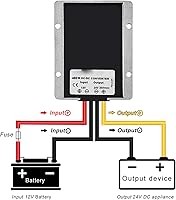
Most buyers with basic wiring experience report a clean, straightforward install. You connect the input leads to your 12V source and the output leads to your 24V load — there is no output voltage to tune or configure. Having a basic understanding of DC wiring polarity and using appropriately rated wire gauge for your load are the main things to get right.

The MGGi 12V to 24V 480W Boost Converter has built-in protection for exactly those scenarios. It will cut output in response to a short circuit, overload, or over-current condition and then automatically restore power once the fault clears — so you do not need to reset it manually in most cases.
It is designed for continuous duty. The 100,000-hour lifespan rating and the always-on use cases the manufacturer lists — taxi displays, GPS units, IP cameras — all point to a unit built for sustained operation. Just ensure it is not trapped in a space where heat can accumulate when running near full load.

That depends on your actual current draw. At full 20A output, you should use wire rated for at least that current on the output side — typically 10 AWG or heavier depending on wire run length. On the input side, current draw will be higher than output current due to step-up conversion, so size accordingly and always fuse the input close to the power source.

It can work well for that application, provided your amplifier's continuous power draw stays comfortably within the 480W output rating. The fixed 24V output is clean and stable, which audio equipment generally responds well to. Just be realistic about your amplifier's actual current consumption at listening volumes, not just its peak rating, to avoid running the converter near its thermal limits.