Overview

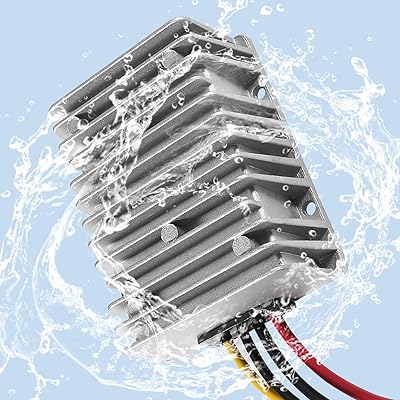
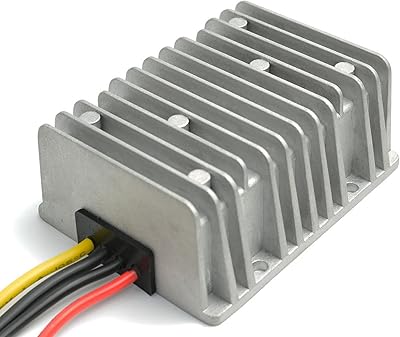
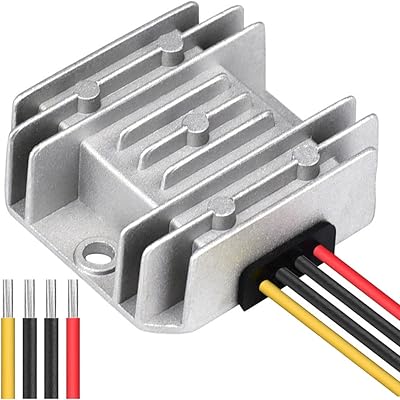
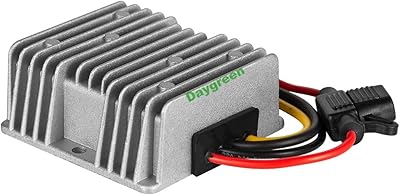
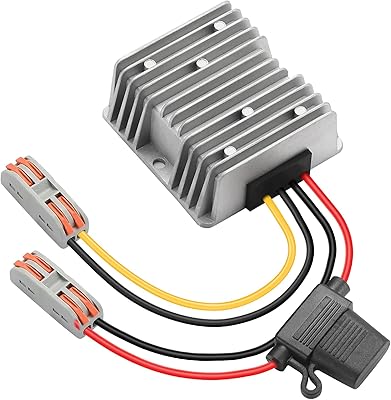
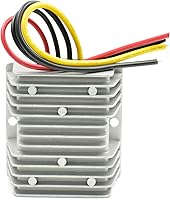
The MGGi 8V-40V to 12V 6A DC Converter is a compact buck-boost module built for vehicle owners who need a reliable 12V rail from a higher or lower voltage source. Whether you're running a 24V truck system or a 36V golf cart battery pack, this DC converter steps the voltage up or down to a steady 12V output without any manual tuning. The die-cast aluminum shell filled with epoxy potting makes it genuinely rugged — not just splash-resistant, but rated IP68 waterproof, meaning it handles rain, engine-bay moisture, and dusty outdoor conditions without issue. For a mid-market converter, the build quality punches above its weight class.
Features & Benefits

What makes this buck-boost module practical rather than just technically interesting is how thoughtfully it handles real-world use. The fixed 12V output might sound like a limitation, but skipping the adjustable trimmer means one less thing to misconfigure — you wire it in and it works. Efficiency tops out around 96% thanks to synchronous rectification, which translates to less wasted heat during long drives. It's also passively cooled, so there's no fan to burn out. The five onboard protections — covering overcurrent, overload, short-circuit, overvoltage, and over-temperature — all recover automatically once conditions normalize, which matters a lot in unattended installs like dashcams or GPS units.

Best For

This DC converter hits its stride in a few specific scenarios. Golf cart and Club Car owners wanting to run 12V accessories off a 36V pack will find it a clean, low-effort solution. Van and truck builders powering radios, backup cameras, or LED strips from a 24V circuit are another natural fit. The IP68 waterproof rating opens it up to marine installs and engine-bay mounting without worrying about moisture ingress. It's also well-suited for anyone who wants a set-and-forget solution — no dial to drift, no output to babysit. Just keep in mind: it cannot charge batteries or connect to solar panels, so don't push it outside its intended role.

User Feedback

Buyers consistently mention the compact footprint as a standout — it fits into tight spots where larger converters simply won't go, and the wiring terminals are straightforward enough that even first-timers get it right. On the positive side, most report stable voltage output confirmed with a multimeter, and the waterproofing appears to hold up in engine bays and outdoor enclosures. That said, a handful of users push the unit near its 6A ceiling and notice it runs noticeably warm — still within safe operation, but worth knowing. A few buyers also flagged polarity labeling as easy to misread, so double-checking connections before powering on is genuinely good advice.

Pros

  • Accepts a wide 8V–40V input range, covering 12V, 24V, and 36V vehicle systems with one module.
  • IP68 waterproof rating holds up in engine bays, marine environments, and outdoor enclosures.
  • Fixed 12V output means no trimmer to misconfigure — just wire it in and it works.
  • Five built-in protections with auto-recovery reduce the risk of damage in fault conditions.
  • Passive cooling design eliminates fan noise and removes a common point of failure.
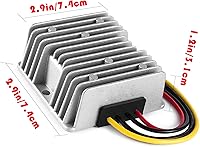
  • Tiny footprint — 1.2 × 2.9 × 1.2 inches — fits into very tight spaces most converters cannot.
  • Up to 96% efficiency keeps heat output low during normal operation.
  • Epoxy-potted aluminum shell feels genuinely robust compared to open-board alternatives at this price tier.
  • Wiring terminals are clearly laid out, making installation straightforward even for first-timers.

Cons

  • Output is locked at 12V — no flexibility for projects requiring a different target voltage.
  • Running near the 6A maximum for extended periods causes the unit to run noticeably warm.
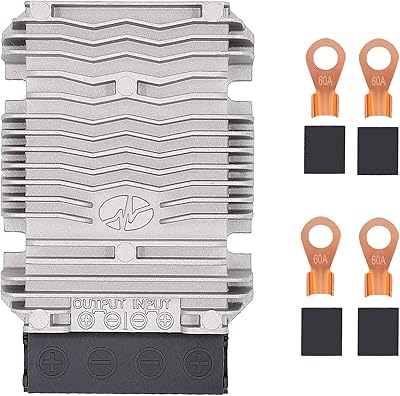
  • Polarity markings on the terminals are small and easy to misread, raising the risk of wiring errors.
  • Epoxy potting means the module is non-repairable — any internal failure requires a full replacement.
  • Cannot be used with solar panels or wind turbines, limiting off-grid application options.
  • No load indicator or status LED, so you can't confirm the unit is active without a multimeter.
  • At 9 ounces, it needs secure mounting to avoid stress on the wiring terminals over time.
  • Output voltage accuracy under heavy load can drift slightly, which matters for sensitive electronics.

Ratings

Our AI rating system analyzed verified buyer reviews for the MGGi 8V-40V to 12V 6A DC Converter from across global marketplaces, actively filtering out incentivized, bot-generated, and duplicate submissions to surface what real installers and vehicle owners actually experienced. The scores below reflect both the genuine strengths and the recurring frustrations found in that feedback — nothing is glossed over.
Build Quality
84%
The die-cast aluminum shell with epoxy potting consistently earns praise from buyers who have mounted converters in engine bays and outdoor enclosures before. Compared to open-board modules at similar price points, this one feels genuinely finished — the kind of thing you can bolt in without worrying about it crumbling in a year.
A handful of buyers noted that the terminal screws feel slightly undersized for heavier gauge wire, requiring careful torque to avoid stripping. The potted construction also means any internal defect is impossible to diagnose or repair, which frustrates buyers who prefer repairable electronics.
Waterproofing
81%
19%
The IP68 rating holds up well in practice — users mounting this module in golf cart undersides, marine consoles, and exposed truck engine bays generally report no moisture-related failures even after months of outdoor exposure. The epoxy potting clearly does its job here, and that matters a lot for buyers who need a fire-and-forget install.
A small number of buyers in very humid climates reported corrosion appearing at the wire terminals over time, suggesting the connector entry points are the weak link in the waterproofing chain. IP68 covers the body of the unit, but terminal sealing depends on how well the installer secures and protects the wiring ends.
Output Voltage Stability
76%
24%
Most buyers who tested output voltage with a multimeter under real load conditions found it sitting close to 12V, which is sufficient for powering radios, cameras, LED strips, and GPS units without issue. For typical vehicle accessory loads in the 1A–4A range, the regulation is solid enough that buyers rarely mention it as a problem.
At draws approaching the 6A ceiling, some buyers measured voltage sag beyond what they expected, which caused sensitivity issues with certain electronics. A small but vocal group reported that output wasn't perfectly stable under rapidly changing loads, suggesting the regulation isn't as tight as the spec sheet implies for demanding applications.
Installation Ease
88%
The fixed 12V output is genuinely a time-saver for installers who have previously wrestled with trimmer-adjusted modules that drift after vibration. Several buyers — including self-described beginners — mentioned completing the wiring in under fifteen minutes without consulting any external guide, which says a lot about how intuitive the terminal layout is.
Polarity labeling on the terminals is too small for comfortable reading in low-light conditions like engine bays, and a few buyers admitted to connecting wires incorrectly on the first attempt. Better silkscreen contrast or a labeled wiring diagram in the packaging would eliminate this friction entirely.
Thermal Performance
69%
31%
Under light to moderate loads — say, a radio and a couple of USB chargers — the aluminum shell barely gets above ambient temperature, which is reassuring for buyers worried about heat buildup in enclosed spaces. The passive cooling design also means there is nothing mechanical to degrade or fail over time, which experienced installers tend to appreciate.
Running sustained loads near the 6A maximum causes the shell to become noticeably warm, and some buyers in hot climates reported thermal throttling behavior during peak summer use. Without active cooling, there is a real ceiling to how hard you can push this module continuously, and that limit is lower than the rated 72W suggests in warm ambient conditions.
Conversion Efficiency
83%
The synchronous rectification design keeps heat and wasted energy low under normal operating conditions, and buyers who monitor their battery drain noticed meaningful improvements switching from older linear converters to this module. For golf cart owners running accessories all day, that efficiency margin translates to slightly extended range between charges.
The 96% efficiency figure applies at optimal load conditions, not across the entire operating range, and buyers drawing very light loads may see efficiency drop meaningfully. There is no display or indicator to confirm real-time efficiency, so most buyers are taking the specification on faith without a straightforward way to verify it.
Compact Form Factor
91%
At 1.2 × 2.9 × 1.2 inches, this is genuinely one of the smallest 72W converters buyers encounter, and that size advantage unlocks mounting locations that larger modules simply cannot fit — behind dash panels, inside junction boxes, under golf cart seats. Multiple reviewers specifically mentioned compact size as the deciding factor in their purchase.
The small footprint does create one practical challenge: there is limited surface area for heat dissipation under sustained high loads, which contributes to the thermal performance limitations noted by some buyers. Mounting it in a fully enclosed space without any airflow clearance compounds this issue.
Value for Money
78%
22%
For a waterproof buck-boost module with five onboard protections, a die-cast shell, and a credible IP68 rating, buyers generally feel the price reflects fair value rather than a cheap gamble. Those who compared it against similar-spec alternatives often noted that equivalently protected modules from other brands cost noticeably more.
Buyers who experienced early failures found the value proposition undermined by uncertainty around warranty and after-sales support from XingHua, with some reporting difficulty getting meaningful responses. The non-repairable design also means any failure, no matter how minor the root cause, results in a full replacement cost.
Durability & Longevity
73%
27%
The majority of buyers who have used this DC converter for six months or more in vehicle applications report no issues, which aligns with the 100,000-hour lifetime claim — at least in the short term. The sealed construction eliminates the moisture and dust ingress that kills most open-board converters prematurely.
Long-term reliability data is limited given the product's market age, so the 100,000-hour claim remains difficult to independently verify. A minority of buyers reported failure within the first few months, typically without clear explanation, and the epoxy potting makes failure analysis impossible — you simply never know what went wrong.
Compatibility Range
86%
The 8V–40V input window is genuinely broad and covers nearly every common vehicle battery configuration buyers encounter — 12V cars, 24V trucks, 36V and 48V golf carts all fall within range without needing separate modules. That flexibility is a real selling point for workshop owners or fleet managers who need one SKU to cover multiple platforms.
The fixed 12V output creates a hard wall for buyers who need any other output voltage, regardless of how wide the input range is. Those running mixed 12V and 5V accessories, for example, will still need a secondary converter for USB-level power, which adds cost and complexity.
Protection Reliability
82%
18%
The five-way protection suite with auto-recovery is one of the module's most practically important features, particularly for unattended installations like taxi display monitors or IP cameras that run continuously. Buyers who accidentally shorted connections during testing reported the unit recovering cleanly rather than dying permanently, which builds trust quickly.
Auto-recovery is useful, but buyers noted that repeated protection triggering — from chronic overload or poor wiring — eventually stressed the unit in ways that led to reduced performance over time. The protections also provide no feedback to the user, so there is no way to know if the module has been triggering without active monitoring equipment.
Packaging & Documentation
57%
43%
The unit arrives adequately protected and is typically ready to wire in straight out of the box, with no assembly required. Buyers who have wired converters before generally have no trouble getting started without any documentation at all.
The included documentation is minimal at best — most buyers describe a basic spec sheet rather than a wiring guide or troubleshooting section. Beginners who need polarity confirmation or load calculation help are largely left to find answers independently, which contributes to the wiring errors some buyers experienced.
Noise & Interference
74%
26%
The passive cooling design means zero fan noise, which is relevant for cab installs where acoustic comfort matters. Most buyers powering audio systems or GPS units report clean operation without noticeable electrical interference affecting their devices.
A small subset of buyers powering sensitive audio equipment noted a faint whine or interference pattern, particularly at certain load levels, suggesting that switching noise is not fully suppressed in all configurations. Proper grounding of the installation largely mitigates this, but it does add a troubleshooting step for audio-focused builds.

Suitable for:

The MGGi 8V-40V to 12V 6A DC Converter is an excellent fit for anyone working with vehicles or equipment that run on non-standard voltages but still need a dependable 12V feed for accessories. Golf cart owners are probably the most natural audience — if you've got a 36V or 48V Club Car and want to add a radio, USB charger, LED lighting, or a dashcam, this buck-boost module handles the conversion cleanly without requiring a separate step-down board. Truck and van builders running 24V electrical systems will also find it useful for powering 12V radios, backup cameras, and GPS units without tapping a separate battery. The IP68 rating makes it a strong candidate for marine installs, underhood mounting, or any outdoor enclosure where moisture and vibration are a daily reality. DIYers who just want to wire something in and move on will appreciate that the fixed 12V output removes any guesswork — there's nothing to adjust or monitor once it's installed.
Not suitable for:

This DC converter has a few hard limits that make it the wrong tool in certain situations, and it's worth being upfront about them. The output is fixed at 12V with no way to adjust it — if your project calls for 5V, 9V, or any other voltage, you'll need a different module entirely. The 6A ceiling (72W) also means it's not appropriate for high-draw loads like inverters, power tools, or larger compressors; pushing it near that limit for extended periods generates noticeable heat. Despite the IP68 waterproof claim holding up well in most user reports, the MGGi 8V-40V to 12V 6A DC Converter should never be connected to a solar panel or wind turbine, and it cannot be used to charge a battery — the manufacturer is explicit on both points, and bypassing that guidance risks damaging the unit or the load. Anyone expecting a field-serviceable or repairable module will also be disappointed; the epoxy-potted shell means it's sealed for life, so a failure is a replacement, not a repair.
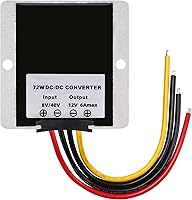
Specifications

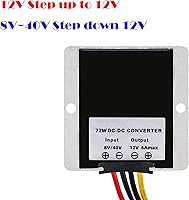
  • Input Voltage: Accepts a wide DC input range of 8V to 40V, covering 12V, 24V, and 36V nominal vehicle systems.
  • Output Voltage: Delivers a fixed DC output of exactly 12V with no user-adjustable trimmer or dial.
  • Output Current: Rated for a continuous maximum output current of 6A under normal operating conditions.
  • Output Power: Provides up to 72W of continuous rated power, calculated at full 12V × 6A capacity.
  • Efficiency: Synchronous rectification technology enables conversion efficiency of up to 96% at optimal load.
  • Waterproof Rating: Carries an IP68 waterproof certification, indicating full dust-tight protection and submersion resistance.
  • Shell Material: Housing is constructed from die-cast aluminum for structural rigidity and passive heat dissipation.
  • Potting: Internal electronics are fully sealed with epoxy potting compound, protecting against moisture and vibration.
  • Cooling Method: Uses passive free-air convection for thermal management, with no fan or moving cooling components.
  • Dimensions: Measures 1.2 × 2.9 × 1.2 inches, making it one of the more compact modules in its power class.
  • Weight: Complete unit weighs 9 ounces, light enough for secure mounting without significant chassis reinforcement.
  • Protections: Includes five onboard protections: overload, overcurrent, over-temperature, short-circuit, and overvoltage.
  • Fault Recovery: All five protection modes feature automatic recovery once the fault condition returns to normal operating parameters.
  • Claimed Lifetime: Manufacturer rates the unit for over 100,000 hours of operational life under standard conditions.
  • Conversion Type: Functions as both a step-down (buck) and step-up (boost) converter within the 8V–40V input window.
  • Brand: Sold under the MGGi brand and manufactured by XingHua.

Related Reviews

MGGi 12V to 24V 480W Boost Converter
79%
88%
Output Voltage Stability
91%
Waterproofing & Weather Resistance
61%
Thermal Management
89%
Ease of Installation
84%
Build Quality
More
DIANN DC Voltage Reducer Converter 8V/40V to 13.8V 15A
85%
94%
Power Conversion Efficiency
88%
Durability and Build Quality
82%
Ease of Use
91%
Safety Features
89%
Compatibility with Vehicles
More
Victron Orion-Tr 12/12V 9A DC-DC Converter
83%
91%
Charging Reliability
88%
Build Quality
82%
Installation Ease
64%
Value for Money
85%
Heat Management
More
MGGi 36-48V to 12V 30A Buck Converter
77%
88%
Build Quality
91%
Waterproofing
78%
Output Stability
51%
Installation Ease
83%
Value for Money
More
Cllena DC84012-3 Buck-Boost Voltage Converter
77%
88%
Voltage Stability
91%
Build Quality
86%
Waterproofing
84%
Ease of Installation
67%
Thermal Performance
More
Daygreen A7D1220 20A DC-DC Buck Converter
77%
91%
Output Voltage Stability
84%
Build Quality & Durability
63%
Thermal Management
89%
Waterproofing & Environmental Protection
78%
Ease of Installation
More
Valefod 48V/12V 60A Buck Converter
72%
77%
Build Quality
54%
Thermal Management
79%
Output Voltage Stability
86%
Ease of Installation
58%
Sustained Current Delivery
More
SDRGEEK 1000W 12V AC to DC Converter
76%
74%
Output Stability
81%
Build Quality
78%
Cooling Performance
83%
Ease of Connection
77%
Value for Money
More
YBBOTT DC 12V 10A Step Down Converter
86%
86%
Performance
92%
Build Quality & Durability
89%
Ease of Installation
72%
Thermals/Heat Management
91%
Protection Features
More
SDRGEEK 12V 1000W AC-DC Converter
78%
84%
Build Quality
71%
Heat Management
62%
Output Accuracy
88%
Ease of Installation
86%
Safety & Protection
More

FAQ

Yes, that is exactly the kind of application this DC converter was designed for. A 36V battery pack falls well within the 8V–40V input range, and the fixed 12V output will cleanly power radios, USB chargers, LED lighting, or cameras without any additional adjustment.

No, and this is important — the manufacturer explicitly warns against both uses. This buck-boost module is designed to power DC loads, not charge batteries or interface with solar panels or wind turbines. Using it that way risks damaging the unit or the connected equipment.

Then this particular module is not the right fit. The MGGi 8V-40V to 12V 6A DC Converter is purpose-built for a fixed 12V output only. If you need 5V, 9V, or an adjustable output, look for a different converter with a variable output option.
Based on user reports and the epoxy-potted construction, it holds up well in engine bays and outdoor enclosures. IP68 means it is rated for dust-tight protection and water immersion, so light rain, humidity, and occasional splashing are not a concern. Just make sure the wiring connections themselves are properly protected at your end.

Under moderate loads it stays quite cool, but if you are consistently drawing close to the 6A maximum you will notice the aluminum shell getting warm to the touch. That is expected behavior for a passively cooled module — there is no fan, so the shell itself dissipates the heat. It should not get dangerously hot within its rated range, but give it some airflow clearance if you can.

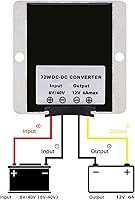
The terminals are labeled on the unit, but several buyers have noted the markings are small and worth double-checking before powering on. Take a moment to verify polarity with a multimeter before making the final connection — reversing polarity on either the input or output side can damage the module or the device you are powering.

Yes, as long as the combined current draw stays under 6A. For example, a radio drawing 3A and a camera drawing 1A totals 4A, which is well within the rated capacity. Just avoid wiring in loads that could spike above 6A total — the onboard protection will kick in, but repeated triggering is not ideal for long-term reliability.

No audible noise at all. The passive cooling design means there are no fans, and synchronous rectification keeps electrical switching noise minimal. Most sensitive electronics like GPS units and audio systems work without interference, though results can vary depending on how well your installation is grounded.

Practically speaking, no. The epoxy potting that protects the internals from moisture also makes the module impossible to open and service without destroying it. If it fails outside any warranty period, replacement is the only real option. That is the trade-off for the sealed, waterproof construction.

The unit has a mounting bracket or can be secured using the mounting holes on the shell — check what is included in the package. Because it weighs 9 ounces and has wiring terminals, it is worth mounting it firmly to avoid vibration stress on the connections over time. Zip-tying the wires a short distance from the terminals also helps relieve strain in high-vibration environments like engine bays or golf carts.