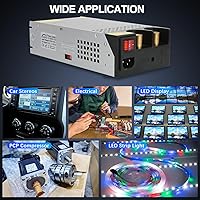
Overview

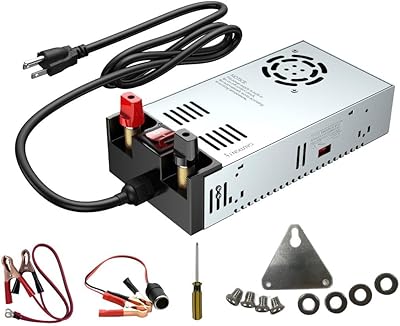
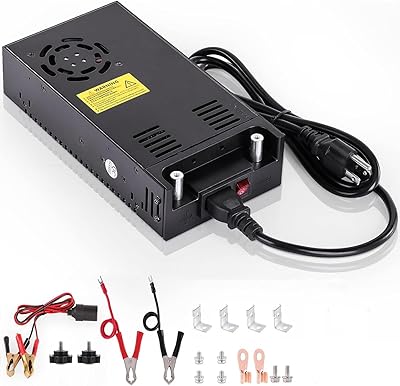
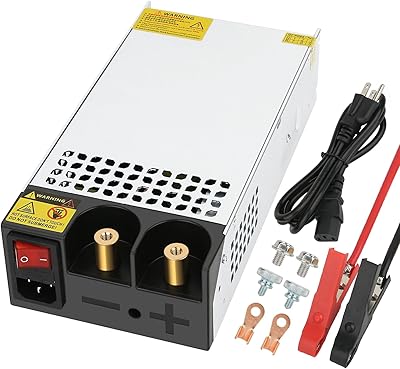
The SDRGEEK 1000W 12V AC to DC Converter is a compact switching power supply that takes standard household AC and delivers a steady 12V DC output capable of sustaining up to 50 amps continuously. That kind of headroom is genuinely useful for power-hungry setups. The aluminum alloy housing keeps things solid without adding unnecessary bulk, and the dual connection options — screw terminals or alligator clips — mean you can hook it up to most 12V devices without hunting for adapters. For a mid-range unit aimed at DIY users and light industrial work, it covers a lot of ground without overcomplicating things.

Features & Benefits

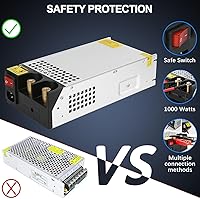
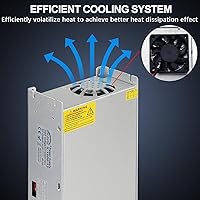
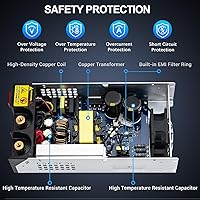
One of the more practical aspects of this 1000W power supply is its dual voltage input — it auto-switches between 110V and 240V, so you can use it in the US or abroad without fiddling with a selector switch. The built-in fan keeps internal temps manageable during extended runs, and the dust mesh helps protect the board in workshop environments where things get messy. Protection-wise, the unit covers the usual bases: overload, overvoltage, and short-circuit cutoffs that can prevent a careless wiring mistake from becoming something worse. The nickel-plated copper terminals are a nice touch, since cheaper converters often use materials that oxidize and loosen over time. UL, CE, and RoHS marks are present, which is a reasonable baseline for third-party validation — though they don't substitute for proper installation practice.

Best For

This 12V bench converter hits a sweet spot for people who need serious output without spending serious money. LED strip installers, particularly those running long runs or high-density tape, will appreciate the headroom. It also works well as a bench supply for 3D printer builds, CCTV system installations, and car audio testing — situations where you want a steady 12V source that isn't dependent on a battery. Ham radio operators often have the same requirement, especially when running transceivers indoors at higher power levels. One thing worth flagging: the listing explicitly notes this unit is not compatible with electrolysis applications, so if that is your intended use, look elsewhere. For everything else on that list, it is a capable and practical option.

User Feedback

Buyers generally report that the SDRGEEK converter delivers consistent output for lower-to-mid range loads like LED lighting and CCTV setups. The fan noise comes up fairly often — most find it acceptable for a workshop setting, though users running it in quieter spaces may notice it more. A few buyers have questioned whether the unit actually sustains its advertised peak draw under prolonged high-load conditions, so treat the top-end current figure as a ceiling rather than a comfort zone. On the quality control side, some users have noted variability in terminal tightness straight out of the box. That said, the dual connection modes and overall build quality earn consistent praise at this price tier.

Pros

  • Wide auto-switching input range works on both North American and European voltage standards without any manual adjustment.
  • Aluminum alloy housing feels solid and dissipates heat better than plastic-shell alternatives at this price level.
  • Dual connection modes — screw terminals and alligator clips — make it easy to hook up a wide variety of 12V devices quickly.
  • Built-in overload, overvoltage, and short-circuit protection adds a meaningful safety layer for DIY setups.
  • The non-slip base keeps the unit stable on a workbench during active use, which is a small but genuinely useful detail.
  • Nickel-plated copper terminals resist corrosion and maintain a secure connection better than cheaper zinc or aluminum alternatives.
  • UL, CE, and RoHS certifications provide at least a baseline of third-party safety validation that many no-name units skip entirely.
  • Compact footprint means it does not take up significant bench space even when running alongside other equipment.
  • Handles LED strip systems, 3D printers, CCTV setups, and car audio bench testing well within its practical output range.

Cons

  • The advertised peak current rating reflects a ceiling, not a sustainable operating point — plan your load accordingly.
  • Fan noise is consistent during operation and may be distracting in quieter work environments or home office settings.
  • Terminal tightness can vary between units, so checking and re-torquing connections before first use is a sensible precaution.
  • Alligator clip build quality has drawn occasional criticism, with some buyers finding them less robust than the terminals.
  • No display or output adjustment knob means you cannot monitor or fine-tune voltage at the unit itself.
  • SDRGEEK is a relatively unknown brand, and long-term reliability data from real-world users is still limited.
  • Not suitable for electrolysis applications, which is an unusual restriction that may catch some buyers off guard.
  • Lacks formal industrial certifications beyond standard consumer-tier marks, limiting its use in regulated commercial environments.

Ratings

The scores below reflect AI-assisted analysis of verified global user reviews for the SDRGEEK 1000W 12V AC to DC Converter, with spam, incentivized, and bot-flagged submissions actively filtered out before scoring. The ratings capture both what buyers genuinely praise and where real-world frustrations emerge, giving you an honest picture across the categories that matter most for this type of power supply.

Output Stability
74%
26%
For moderate loads — LED strip systems, CCTV setups, and bench-testing car audio components — users consistently report clean, steady 12V output with no significant voltage sag. Hobbyists running 3D printers and radio equipment indoors found the supply reliable enough for hours-long sessions.
At sustained high-amperage draws approaching the upper end of the current rating, some users noted the output becomes less predictable. A handful of buyers running motors or compressors reported occasional protection trips, suggesting the practical ceiling sits noticeably below the headline figure.
Build Quality
81%
19%
The aluminum alloy shell earns consistent praise for feeling substantially more robust than plastic-bodied alternatives at this price tier. Most buyers noted that the overall assembly is tight, and the unit has a purposeful, workshop-ready feel that inspires reasonable confidence for regular use.
A recurring quality-control concern centers on terminal tightness — a notable share of buyers found connections slightly loose out of the box and recommend re-torquing before first power-on. The alligator clips, while convenient, are reported as the weakest physical component on the unit.
Cooling Performance
78%
22%
The combination of perforated side vents, an active internal fan, and a dust mesh keeps operating temperatures stable during extended sessions. Workshop users running the supply for several hours reported no heat-related shutdowns or warm enclosure surfaces under normal loading conditions.
The fan is audible from the moment the unit powers on and runs continuously regardless of load level. Buyers using this in quieter settings — home offices, recording spaces, or late-night workshop sessions — flag the constant fan hum as a real annoyance that louder environments would simply absorb.
Ease of Connection
83%
Having both screw terminals and alligator clips on the same unit is genuinely practical, and buyers appreciate being able to switch between permanent wiring and quick-connect testing without rewiring anything. The clip system in particular gets positive mentions from car audio hobbyists who swap devices frequently.
The terminal block labeling has drawn occasional criticism for being small and difficult to read in low-light workshop conditions. A few users also wished for a wider terminal spacing to accommodate heavier-gauge wire without difficulty.
Value for Money
77%
23%
Buyers who needed serious current capacity at a mid-range price point generally consider this 1000W power supply a fair trade-off. For LED lighting projects, CCTV installations, or 3D printer bench power, the functional performance relative to the asking price lands in a range most users find acceptable.
Those who compared it directly against established bench supply brands felt the SDRGEEK converter lacked the refinement and long-term reliability confidence those units provide. The brand's limited track record makes it harder to justify for anyone planning continuous-duty commercial use.
Safety & Protections
79%
21%
The onboard protection stack covering overload, short-circuit, overvoltage, and leakage conditions provides meaningful peace of mind for DIY users who may not always get wiring perfect on the first try. Several buyers specifically mentioned that the short-circuit protection tripped and recovered cleanly without damaging connected equipment.
The certifications present are consumer-tier marks and do not cover industrial or medical-grade compliance standards. Users considering this for more regulated environments noted the documentation provided is thin, and the manufacturer offers limited technical support if questions arise about specific safety scenarios.
Fan Noise Level
61%
39%
For garage workshops, maker spaces, and outdoor bench setups, the fan noise barely registers against background ambient sound. Buyers in those contexts rarely mention it as an issue and appreciate that the active cooling keeps the unit from running hot.
In quieter environments the continuous fan whir is a consistent complaint. Unlike some switching supplies that ramp fan speed based on thermal load, this unit appears to run the fan at a fixed speed, meaning there is no quiet idle mode even when the load is minimal.
Terminal Quality
72%
28%
The nickel-plated copper terminals show genuine long-term corrosion resistance compared to the bare or zinc-plated alternatives found on cheaper units. Users who have had this 12V bench converter installed for extended periods report that connections remain secure and conductive without significant oxidation buildup.
Inconsistency between units is the main complaint here — while some buyers received terminals that clamped firmly, others noted slop in the screw mechanism that required immediate attention. The variability suggests batch-level quality control rather than a systematic design flaw.
Compatibility Range
86%
The automatic input voltage switching covers both North American and European mains standards without any user intervention, which is a genuine convenience for buyers who work across regions or purchase the unit internationally. The range of compatible 12V device types is broad and well-matched to real DIY use cases.
The explicit exclusion from electrolysis use is a hard limitation that catches some buyers off guard, particularly those who discovered it only after purchase. The listing makes this clear, but buyers skimming for a capable high-current 12V supply may overlook it.
Thermal Management
76%
24%
Under moderate continuous loads, the enclosure remains at reasonable temperatures and the fan keeps internal components well within safe operating range. The non-slip base pad also creates a slight air gap underneath, which contributes meaningfully to bottom-side heat dissipation during longer sessions.
At loads approaching the upper output threshold, enclosure surface temperatures climb noticeably. A few buyers running high-demand equipment for extended periods expressed concern about sustained thermal stress on internal components, especially given the limited long-term reliability data available for this brand.
Compact Footprint
88%
The dimensions make it one of the smaller options available at this power output level, and workshop users consistently appreciate being able to slot it onto a crowded bench without sacrificing significant space. The weight is manageable enough to reposition or transport without hassle.
The compact size does create tighter internal component spacing, which some technically inclined buyers noted as a potential concern for heat management at maximum load. For casual and moderate use cases this is rarely a practical issue, but it is worth noting for high-duty-cycle applications.
Protection Circuit Reliability
71%
29%
Multiple buyers confirmed the short-circuit protection engaged correctly and reset cleanly after resolving the fault, without requiring a full power cycle in all cases. For hobbyists who occasionally make wiring errors during experimentation, this behavioral characteristic reduces the risk of cascading damage.
A smaller number of users reported that the protection circuit tripped under loads that should have been within the unit's stated range, pointing to either a conservative trip threshold or unit-to-unit variation in the protection calibration. This intermittent behavior adds some uncertainty for higher-draw applications.
Brand Reliability
58%
42%
For buyers willing to accept some uncertainty in exchange for a lower price, the SDRGEEK converter has delivered acceptable day-to-day performance in the short term across a wide range of reported use cases. There are no widespread reports of immediate failure or dangerous malfunction under normal operating conditions.
SDRGEEK is a relatively obscure brand with limited independent testing data, no established warranty support infrastructure, and sparse long-term ownership reviews. Buyers prioritizing confidence in brand longevity, post-purchase support, or resale value should factor this uncertainty into their decision carefully.

Suitable for:

The SDRGEEK 1000W 12V AC to DC Converter is a strong fit for hands-on users who need a reliable, high-capacity 12V bench supply without paying industrial-grade prices. DIY electronics hobbyists running LED strip installations will find the generous current headroom useful, especially on longer runs where voltage drop is a real concern. Makers building or maintaining 3D printers, particularly those using 12V heated beds, will appreciate having a dedicated supply that does not throttle under sustained load. Home security installers centralizing power for multiple CCTV cameras can run everything from a single unit rather than juggling individual adapters. Car audio enthusiasts who bench-test head units or amplifiers before fitting them in a vehicle will also get good use out of the dual connection modes. Ham radio operators and workshop experimenters who simply need a steady, high-current 12V source indoors round out the core audience for this converter.

Not suitable for:

Buyers expecting this 1000W power supply to sustain its absolute peak output continuously under worst-case loads may find the real-world ceiling somewhat lower than the headline figure suggests, so mission-critical or safety-sensitive applications deserve a more conservatively rated and thoroughly tested unit. Anyone running precision lab equipment or sensitive analog audio gear should look at regulated bench supplies with tighter output tolerances and quieter operation. The built-in fan, while effective, produces audible noise that makes this 12V bench converter a poor choice for recording studios or quiet environments where background hum matters. Users in commercial or industrial settings who need formal compliance documentation beyond standard CE and UL marks will likely need a supply with stricter industrial certifications. It is also worth stating clearly: this converter is explicitly not designed for electrolysis use, so anyone planning electroplating or water-splitting projects should not consider it at all.

Specifications

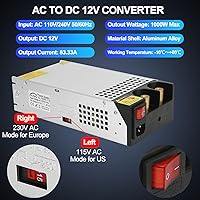
  • Input Voltage: Accepts AC input from 110V to 120V or 220V to 240V, covering standard household and international mains voltage ranges.
  • Output Voltage: Delivers a fixed 12V DC output suitable for a wide range of low-voltage devices and systems.
  • Peak Output Power: Rated at a peak of 1000W, though sustained operation at maximum load should be approached conservatively.
  • Max Continuous Current: Supports a maximum continuous current draw of up to 50A, making it suitable for multiple devices running simultaneously.
  • Enclosure Material: The outer shell is constructed from aluminum alloy, which provides structural rigidity and assists with passive heat transfer.
  • Dimensions: The unit measures 1.97 x 4.53 x 1.97 inches, keeping its footprint compact enough for most workbench setups.
  • Weight: Weighs approximately 3.98 pounds, which is typical for a switching power supply of this output class.
  • Cooling System: Cooling is handled by a built-in active fan paired with a dust-proof mesh screen to protect internal components in workshop environments.
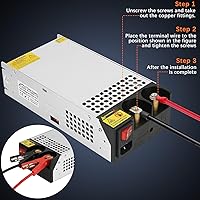
  • Connection Modes: Offers two output connection methods: a screw-down terminal block for fixed wiring and alligator clips for quick, temporary connections.
  • Terminal Material: Output terminals are made from all-copper stock with nickel plating to improve electrical conductivity and long-term corrosion resistance.
  • Base Design: A non-slip rubber pad on the underside keeps the unit stable on flat surfaces and contributes to bottom-side airflow and heat management.
  • Protection Circuits: Includes built-in safeguards for overload, overvoltage, leakage, and short-circuit conditions to help protect both the unit and connected devices.
  • Certifications: Carries UL, CE, and RoHS certifications, reflecting compliance with standard consumer electrical safety and environmental requirements.
  • Compatible Devices: Designed to power 12V devices including LED strip lights, 3D printers, CCTV cameras, LCD monitors, car stereos, radios, and air compressors.
  • Electrolysis Use: Explicitly not rated or recommended for electrolysis applications; use in such setups is unsupported by the manufacturer.

Related Reviews
SDRGEEK 12V 600W AC to DC Converter
85%
88%
Power Performance
91%
Cooling Efficiency
75%
Ease of Installation
86%
Build Quality
94%
Safety Features
More
Victron Energy Orion-Tr 12V to 12V DC to DC Converter 9A
85%
89%
Value for Money
91%
Ease of Installation
85%
Build Quality & Durability
90%
Power Conversion Efficiency
88%
Compact Size
More
BOSYTRO 12V 600W AC to DC Converter
86%
88%
Performance Under Load
91%
Cooling System Efficiency
85%
Ease of Setup
90%
Build Quality & Durability
70%
Noise Level
More
Anbull 600W 12V DC Power Supply Converter
81%
83%
Output Stability
78%
Build Quality
71%
Cooling & Fan Noise
91%
Ease of Setup
93%
Power Switch Convenience
More
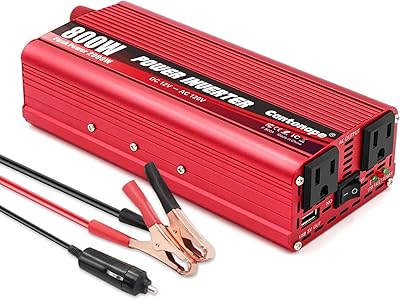
Cantonape 800 Watt Car Inverter DC 12V to 110V/120V AC Converter
85%
88%
Power Output Performance
91%
Portability & Size
87%
Durability & Build Quality
89%
Ease of Use
76%
Cooling System Effectiveness
More
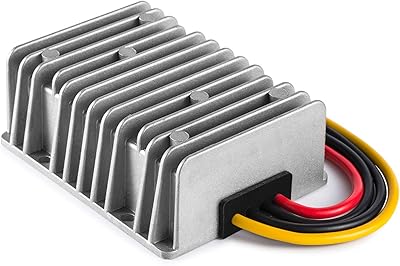
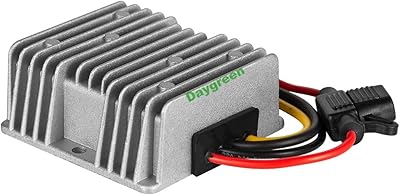
Daygreen 36V/48V to 12V 20A DC-DC Buck Converter
87%
94%
Power Efficiency
88%
Build Quality & Durability
85%
Ease of Installation
72%
Size & Form Factor
90%
Protection Features
More
MGGi 12V to 24V 480W Boost Converter
79%
88%
Output Voltage Stability
91%
Waterproofing & Weather Resistance
61%
Thermal Management
89%
Ease of Installation
84%
Build Quality
More
Valefod 36V/48V to 12V 60A 720W DC to DC Buck Converter
85%
92%
Value for Money
89%
Performance
90%
Ease of Installation
88%
Build Quality
85%
Safety Features
More
MYSWEETY 600W AC to DC Converter
84%
88%
Performance & Power Output
85%
Ease of Use
81%
Cooling System Efficiency
90%
Safety Features
83%
Build Quality & Durability
More
YBBOTT DC 12V 10A Step Down Converter
86%
86%
Performance
92%
Build Quality & Durability
89%
Ease of Installation
72%
Thermals/Heat Management
91%
Protection Features
More

FAQ

Yes, this 12V bench converter is designed to run on standard 110V to 120V AC power found in North American homes. Just plug it into a regular grounded outlet and you are good to go.

Yes, the input voltage range covers both 110V and 220V to 240V systems, so it works internationally without needing a separate step-down transformer. The switching is automatic, not manual.

That depends entirely on the wattage draw of your strips. Add up the total wattage of everything you plan to connect and make sure you stay well below the unit's practical continuous output ceiling. As a rule of thumb, do not plan a load that pushes the supply right to its stated maximum.

The fan runs continuously when the unit is on, and most users describe the noise level as similar to a modest desktop computer fan. In a workshop or garage it is barely noticeable, but in a quiet home environment you will hear it. If low noise is a priority, this may be worth factoring into your decision.

Yes, the SDRGEEK 1000W 12V AC to DC Converter includes overload, overvoltage, leakage, and short-circuit protection circuits. These are designed to cut or limit output before damage occurs, but they are not a substitute for correct wiring practice. Always double-check your connections before powering up.

It works well as a bench supply for most 12V 3D printers, particularly those with heated beds. Just confirm your printer's peak wattage requirement and make sure it falls within the converter's comfortable operating range, not just its theoretical maximum.

The terminal block involves screwing bare wire ends into a fixed connector, which is better for permanent or semi-permanent installations. The alligator clips are for quick, temporary connections where you want to attach and detach frequently without dealing with wire stripping and termination.

Yes, this is actually a common use case for this type of 1000W power supply. Head units, amplifiers, and other 12V car audio gear can be tested without needing a running vehicle or a dedicated battery, which makes troubleshooting and bench testing much more practical.

No, and this is worth taking seriously. The manufacturer explicitly states that this unit is not compatible with electrolysis applications. The output characteristics required for electrolysis differ from standard DC loads, and using it that way could damage the unit or create a safety hazard.

Calculate the total wattage of all connected devices and treat the converter's continuous output as a ceiling you should stay meaningfully below, not a target to reach. For example, if your total load comes to 700W to 800W, you are operating in a reasonable range. Running constantly at or near the absolute maximum shortens component life and increases the risk of thermal or protection-circuit trips.