Overview

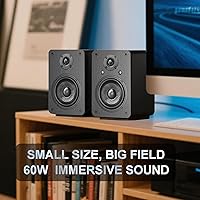
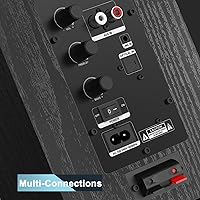
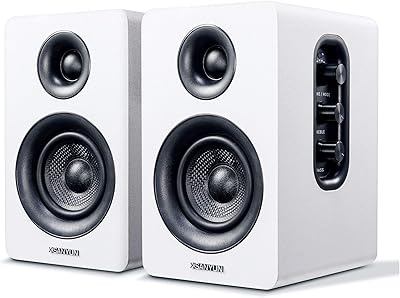
The LONPOO LP42 Bookshelf Speakers are a compact, self-powered pair designed for anyone who wants real stereo sound without the hassle of a separate amplifier or receiver. The built-in amp is a genuine convenience — plug into your TV, laptop, or turntable and you are done. Four inputs (Bluetooth 5.3, optical, AUX, and RCA) mean these bookshelf speakers work with almost any source you already own. The wood cabinet construction and aramid-fiber woofer put them a step above the flimsy plastic shells common at this price tier. Front indicator LEDs and an included remote control round out a package that feels more considered than most competitors bother to be.
Features & Benefits

Sixty watts total — split evenly between the two channels — gives this powered speaker set enough punch for a bedroom or home office without feeling strained at moderate volumes. The Bluetooth 5.3 connection pairs quickly and holds steady across a room, which matters more than people realize until they have dealt with an older, dropout-prone chip. The optical input is the real star for TV users: clean digital audio with no ground hum or lip-sync headaches. The 4-inch woofer uses an aramid (Kevlar) cone rather than paper, producing tighter bass transients — though physics still caps deep sub-bass on a driver this size. Onboard treble and bass knobs let you adjust the sound without hunting through any app.

Best For

These bookshelf speakers are an obvious fit for desktop listening setups — a home office worker or student who wants music, video calls, and TV audio all routed through one pair without a tangle of extra gear. The RCA input means vinyl fans can connect a turntable directly, skipping an outboard amplifier entirely. Apartment dwellers or anyone working in a smaller room will find the output level more than adequate, while the compact footprint keeps desk space usable. If you are upgrading from a soundbar or the built-in speakers on a flat-panel TV, the jump in stereo imaging and clarity will be immediately noticeable — and probably long overdue.

User Feedback

The LP42 pair launched in mid-2025, so the review pool is still building — worth keeping in mind when weighing the overall rating. That said, early buyers are consistent on a few points. Most praise the easy plug-and-play setup and appreciate having the remote for volume and input switching from across the room. Bass response gets mixed marks: listeners in smaller spaces find it satisfying, while those expecting room-filling low end from a 4-inch driver are occasionally let down — a reasonable physics limitation, not a product flaw. A handful of notes mention the remote feeling lightweight, and a couple of buyers wish the maximum volume ceiling were a touch higher for larger rooms.

Pros

  • Built-in amplifier means zero additional hardware — just plug in and start listening
  • Four input types cover virtually every source device most people actually own
  • Optical input delivers clean, hum-free TV audio without a receiver in the chain
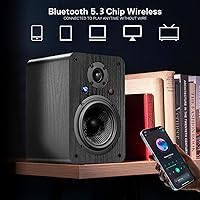
  • Bluetooth 5.3 pairs fast and holds a stable connection across a normal room
  • Wood cabinet construction feels noticeably more solid than plastic rivals at this price
  • Aramid-fiber woofer cone produces tighter, better-defined mid-bass than paper equivalents
  • Onboard treble and bass knobs let you tune the sound without any app or extra gear
  • Remote control and LED input indicators make daily switching genuinely convenient
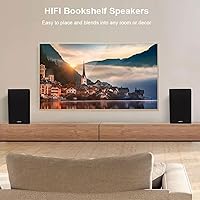
  • Compact footprint works well on a desk or bookshelf without sacrificing available space
  • Universal power supply works across different regions with no adapter needed

Cons

  • Bass extension runs out quickly on low-frequency-heavy music genres
  • Remote control feels noticeably cheaper than the speakers themselves
  • Volume ceiling is limiting in larger rooms or open-plan living spaces
  • Bluetooth occasionally requires re-pairing after extended periods without use
  • No USB audio input, which some PC users specifically need
  • Included documentation gives little guidance for non-standard setup configurations
  • The inter-speaker cable included in the box is basic and may warrant an upgrade
  • Front LED indicators are reported as too bright in darker or evening environments
  • Long-term reliability data is still thin given the mid-2025 launch date
  • Bass knob at higher settings introduces boominess rather than genuine low-end extension

Ratings

The LONPOO LP42 Bookshelf Speakers have been scored by our AI engine after parsing verified buyer reviews from global markets, with spam, incentivized posts, and bot activity actively filtered out. The scores below reflect a balanced picture — genuine strengths and real frustrations alike — so you can make an informed call before buying. Across connectivity, sound character, and everyday usability, these powered speakers land in some interesting places for their price tier.
Sound Quality
83%
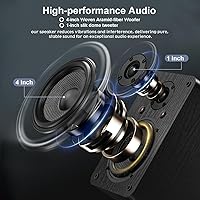
Most buyers describe the overall sound as notably cleaner and more balanced than soundbars or entry-level plastic speakers. The aluminum-silk tweeter gets consistent praise for delivering clear vocals and detailed highs without fatigue during long listening sessions — a real plus for desk workers playing music all day.
Bass depth is the most common sticking point. The 4-inch woofer handles mid-bass well, but listeners who stream bass-heavy genres report that the low end starts to feel thin below a certain frequency — an honest physical limitation of the driver size, not a defect.
Build Quality
88%
The wood cabinet feels noticeably more solid than competing units at this price, and buyers frequently comment that the speakers look and feel more expensive than expected when they unbox them. The aramid-fiber woofer cone adds a quality detail that attentive buyers appreciate.
The remote control is the weakest link — multiple reviewers describe it as lightweight and slightly cheap-feeling compared to the speakers themselves. A few users also noted minor cabinet finish inconsistencies on close inspection, though nothing affecting performance.
Connectivity & Inputs
91%
Having Bluetooth, optical, AUX, and RCA on a single powered pair is genuinely useful and a major reason buyers choose these over simpler alternatives. The optical input in particular draws praise from TV users who want clean, hum-free audio without a receiver sitting in the chain.
There is no USB audio input, which some PC users specifically wanted. A small number of buyers also noted that switching between inputs manually requires a specific button sequence that is not immediately obvious from the included documentation.
Bluetooth Performance
86%
Bluetooth 5.3 delivers fast pairing and a stable connection that holds across a typical room without dropouts — a real improvement buyers notice if they are upgrading from older Bluetooth speakers. Latency is low enough that casual video watching does not produce any noticeable lip-sync issues.
A handful of buyers reported that the Bluetooth connection occasionally requires re-pairing after the speakers have been powered off for an extended period. Range claims feel slightly optimistic in real apartments with walls and furniture in the way.
Value for Money
84%
At this price point, getting a wood-cabinet active speaker pair with four input types, a remote, and onboard tone controls is considered a strong deal by most buyers. The majority of reviewers explicitly state they would buy again, which is a reliable indicator of perceived value.
A few audiophile-leaning buyers feel the price edges into territory where slightly used or refurbished name-brand speakers become viable competition. Buyers expecting premium audio at this tier will find the value case less compelling than casual listeners do.
Setup & Ease of Use
92%
The vast majority of buyers describe setup as genuinely plug-and-play — connect the inter-speaker cable, plug in power, pick your input source, and you are listening within minutes. The front LED indicators make input switching intuitive without needing to read any manual.
The included documentation is thin, and a small number of buyers who tried less common configurations — like daisy-chaining with a subwoofer output — found no useful guidance. Non-technical buyers occasionally confused the active and passive speaker terminals.
Remote Control
67%
33%
Having a remote at all is appreciated, particularly for TV-adjacent setups where you want to adjust volume without getting up. Buyers in small rooms report it works reliably within normal distances and covers all the key functions including input selection and tone adjustments.
The remote feels noticeably cheap relative to the speakers themselves — flimsy buttons and a lightweight body are the most common complaints. Response distance is adequate but not impressive, and a few buyers reported inconsistent button recognition after the first few weeks of use.
Bass Response
71%
29%
For desk listening, ambient music, podcasts, and vocal-heavy tracks, the bass is punchy and well-defined enough to feel satisfying without a subwoofer. Buyers using these primarily for spoken-word content or acoustic genres frequently call out the low-end as one of the stronger points.
Electronic music fans and home theater users who expected deep, room-filling bass were consistently disappointed. The 4-inch woofer reaches a ceiling fairly quickly — turning the bass control up past midpoint often introduces a slight boominess rather than genuine extension.
Treble & Midrange Clarity
87%
The hybrid aluminum-silk tweeter draws consistent praise for delivering crisp, non-fatiguing highs. Vocals in particular come across as clear and forward without sounding harsh — a balance that is harder to achieve than it sounds at this driver price point.
At higher volumes, a small number of buyers noticed the treble becomes slightly aggressive on certain recordings — particularly compressed streaming audio. This is partially mitigated by the onboard treble control, but it does require manual adjustment rather than sounding right out of the box.
Volume & Headroom
74%
26%
For small-to-medium rooms, the output level is more than adequate — buyers in studio apartments and home offices report reaching comfortable listening levels well below the maximum. The amplifier handles moderate volumes cleanly with no apparent strain.
In larger rooms or open-plan spaces, several buyers found the speakers ran out of headroom before fully filling the space. A noticeable portion of negative reviews specifically mention that maximum volume feels lower than the wattage figure suggests, particularly in outdoor or party-style use.
Aesthetic & Design
81%
19%
The rectangular wood cabinet with a clean black finish earns consistent compliments for looking more refined than typical budget desktop speakers. Buyers frequently mention these sit well on a bookshelf or desk without looking out of place in a modern home office setup.
The design is conservative — there is no real standout visual identity, and buyers looking for a more distinctive or premium aesthetic may find it forgettable. The front LED indicators, while useful, are described by some as slightly too bright in darker rooms.
Tone Controls
78%
22%
Having physical treble and bass knobs is a genuine advantage for buyers who want to tailor the sound to their room and taste without downloading an app or buying an external equalizer. Most users found they could achieve a satisfying balance within a few minutes of experimenting.
The tone control range is modest — it is enough to compensate for room acoustics or source brightness, but not enough to dramatically reshape the sound signature. Buyers expecting the bass knob to conjure deep sub-bass extension will find the physical limits of the driver reassert themselves regardless of the setting.
Durability & Longevity
72%
28%
The wood cabinet and quality driver materials suggest above-average long-term resilience for the price tier, and buyers who upgraded from plastic speaker sets specifically comment on how much more solid these feel after extended daily use on a desk.
The product launched in mid-2025, so there is genuinely limited long-term data available. A few early buyers have flagged minor concerns about the remote longevity and connector durability over time, but the sample size is too small to draw firm conclusions yet.
Packaging & Included Accessories
79%
21%
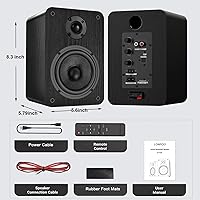
The box arrives well-protected, and buyers appreciate that LONPOO includes a speaker interconnect cable, power cable, remote, and rubber feet pads — meaning you genuinely do not need to buy anything extra to get started. The rubber feet are particularly noted for keeping the speakers stable on smooth surfaces.
The included speaker connection cable is functional but not high quality — a few buyers replaced it with a thicker gauge cable after noting minor signal inconsistency. The power cable length is adequate but only just, which can be limiting depending on outlet placement.

Suitable for:

The LONPOO LP42 Bookshelf Speakers are a practical, well-rounded pick for anyone setting up a compact listening space without the complexity of a separate amplifier or receiver. Home office workers and students who want a single speaker pair that handles music, video calls, and TV audio across multiple source devices will find the input variety genuinely useful day-to-day. Vinyl fans on a tighter budget can connect a turntable directly via RCA and skip an outboard amp entirely — a meaningful cost and clutter saving. Apartment dwellers or renters upgrading from a cheap soundbar or flat-panel TV speakers will notice an immediate and satisfying step up in stereo separation and vocal clarity. The compact wooden cabinet fits neatly on a bookshelf or desk without dominating the space, and the included remote means you are not constantly reaching past your monitor to adjust volume.
Not suitable for:

Buyers expecting deep, room-filling bass should look elsewhere — the LONPOO LP42 Bookshelf Speakers are honest performers, but a 4-inch woofer simply cannot move the air that a larger driver or a dedicated subwoofer can, and no amount of tweaking the bass knob changes that physical reality. Listeners who regularly fill medium-to-large rooms with music, or who host gatherings and need serious output headroom, will likely find the volume ceiling disappointing before long. Dedicated audiophiles comparing these to passive bookshelf speakers paired with a quality stereo amplifier will notice the trade-offs in dynamic range and soundstage width that come with a built-in amplifier at this price tier. If low-frequency extension matters to you — think electronic music, hip-hop, or cinematic home theater rumble — budget for a subwoofer from the outset or consider a different system altogether. Finally, buyers who want a long track record of reliability data should note that this is a recently launched product, and long-term durability feedback is still accumulating.
Specifications

  • Total Power: The speakers deliver 60W RMS total output, split as 30W per channel across the two-driver stereo configuration.
  • Woofer: Each cabinet houses a 4-inch woofer with an aramid (Kevlar) fiber cone, chosen for its stiffness and damping characteristics over conventional paper or polypropylene materials.
  • Tweeter: A 1-inch dome tweeter combining an aluminum housing with a silk diaphragm handles high-frequency reproduction in each speaker.
  • Inputs: Four input options are available: Bluetooth 5.3 wireless, optical (TOSLINK), AUX (3.5mm), and RCA stereo line-in.
  • Bluetooth Version: Bluetooth 5.3 is implemented, providing faster device pairing, improved connection stability, and reduced audio latency compared to older Bluetooth generations.
  • Amplifier Type: These are active (powered) speakers with a built-in amplifier, requiring no external receiver or stereo amplifier to operate.
  • Cabinet Material: The speaker enclosures are constructed from wood, contributing to acoustic resonance control and a more premium feel than plastic alternatives.
  • Dimensions (Single): Each individual speaker measures 14.1cm (L) x 14.7cm (W) x 21.1cm (H), equivalent to approximately 5.6″ x 5.8″ x 8.3″.
  • Pair Weight: The combined weight of both speakers is 3.2 kg, approximately 7 lbs, making the pair reasonably portable for repositioning between rooms.
  • Power Supply: The unit operates on a universal AC power supply rated at 110–240V, 50/60Hz, compatible with standard outlets in most countries worldwide.
  • Tone Controls: Physical treble and bass adjustment knobs are built into the active speaker, allowing room and source tuning without any external equalizer or app.
  • Remote Control: An infrared remote control is included and supports volume adjustment, input switching, and tone control from across the room.
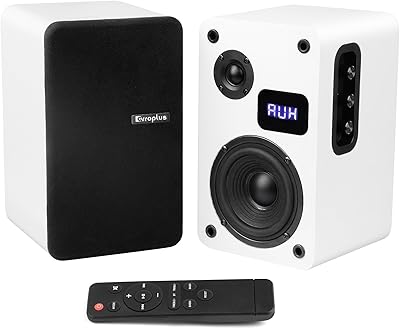
  • Input Indicators: Four dedicated LED indicator lights on the front panel correspond to each input mode, giving a clear visual confirmation of the currently active source.
  • Audio Configuration: The system operates as a 2.0 stereo pair with no built-in subwoofer channel or surround processing.
  • Included Accessories: The package includes one pair of speakers, a 1.2m power cable, a 2m inter-speaker connection cable, an infrared remote, and six rubber foot pads.
  • Woofer Diameter: The woofer driver diameter is 4 inches across both speakers in the pair.
  • Tweeter Diameter: The tweeter dome measures 1 inch in diameter on each speaker unit.
  • Warranty: LONPOO provides a limited warranty with this product; buyers should confirm the specific duration and coverage terms directly with the seller at time of purchase.

Related Reviews
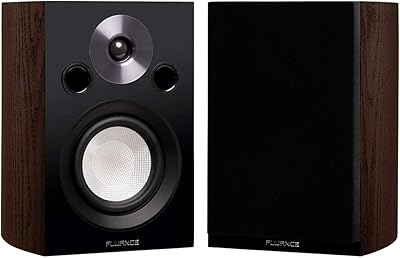
Fluance XL8SW Bookshelf Speakers
87%
90%
Sound Quality
84%
Bass Response
91%
Clarity of Midrange
87%
Ease of Installation
88%
Design & Build Quality
More
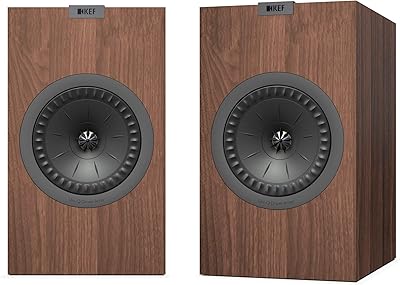
KEF Q350 Bookshelf Speakers
86%
93%
Sound Quality
80%
Bass Performance
88%
Build Quality
91%
Design and Aesthetics
85%
Ease of Setup
More
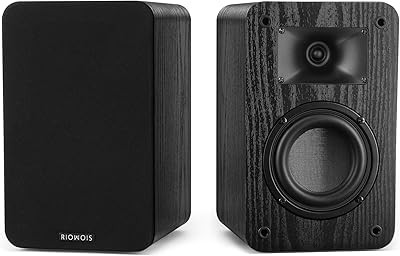
Riowois DS6800M Bookshelf Speakers
83%
85%
Sound Quality
90%
Ease of Installation
82%
Build Quality
88%
Space-Saving Design
78%
Bass Performance
More
KEF Q150 Bookshelf Speakers
87%
88%
Sound Quality
75%
Bass Performance
93%
Build Quality
90%
Design & Aesthetics
85%
Treble Clarity
More
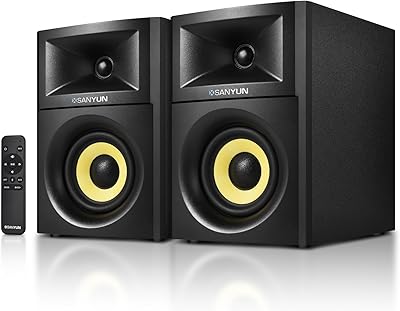
Sanyun SW208 3″ Bookshelf Speakers
86%
88%
Build Quality
84%
High-Frequency Clarity
91%
Mid-Range Warmth
78%
Bass Performance
93%
Control Ergonomics
More
Probox BT16 Bookshelf Speakers
75%
78%
Sound Clarity
54%
Bass Performance
84%
Bluetooth Stability
82%
USB DAC Quality
63%
Build Quality
More
Sanyun SW205
Sanyun SW205
78%
83%
Sound Quality
61%
Bass Performance
87%
Soundstage & Imaging
89%
Connectivity & Inputs
84%
Bluetooth Performance
More
MEVOSTO DS19 Bookshelf Speakers
85%
89%
Sound Quality
91%
Bass Performance
85%
Treble Clarity
88%
Bluetooth Connectivity
90%
Design & Aesthetics
More
Micca MB42X Bookshelf Speakers
84%
89%
Sound Quality
92%
Value for Money
85%
Ease of Setup
77%
Bass Performance
91%
Design & Aesthetics
More
Orroplus OR-02 Powered Bookshelf Speakers
77%
83%
Sound Clarity & Midrange
61%
Bass Performance
91%
Connectivity & Input Range
78%
Bluetooth Performance
72%
Setup & Ease of Use
More

FAQ

No, and that is one of the main reasons people choose this type of speaker. The LP42 pair has a built-in amplifier, so you connect your source directly — TV, laptop, turntable — and you are ready to go. No extra hardware, no extra cables beyond what is included.

Yes, and the optical (TOSLINK) input is the best way to do it. Optical carries a clean digital signal from your TV without the ground hum you sometimes get from an analog connection. If your TV does not have an optical output, the AUX or RCA inputs work as alternatives.

Honest answer: the bass is solid and well-controlled for mid-bass frequencies, which covers most music, podcasts, and dialogue well. If you listen to a lot of bass-heavy electronic music or want that physical low-end thump for movies, the 4-inch driver does hit a ceiling — it is a physical limitation, not a flaw. A subwoofer would complement this powered speaker set nicely if deep bass matters to you.

Bluetooth 5.3 is genuinely more stable than older versions, and most users report a solid connection throughout a standard room. Occasional re-pairing after the speakers have been off for a while is noted by some buyers, but mid-session dropouts are not a widespread complaint.

Yes, via the RCA input — but with an important caveat. If your turntable has a built-in phono preamp (many modern turntables do), you can connect it directly. If your turntable outputs a raw phono signal with no preamp, you will need an external phono preamp between the turntable and the speakers.

The active speaker is the main unit — it contains the built-in amplifier, all the inputs, the tone controls, and the power connection. The passive speaker connects to it via the included inter-speaker cable and receives its signal from the amplifier inside the active unit. You do not connect any source directly to the passive speaker.

For a small-to-medium living room, yes — the output is more than comfortable at moderate listening levels. In larger, open-plan spaces the volume ceiling becomes noticeable if you want to fill the room loudly. They are best matched to rooms up to roughly 20 square meters.

Absolutely — this is one of the most common use cases for this powered speaker set. Connect via AUX from your headphone output, via Bluetooth for wireless convenience, or via optical if your PC has a digital output. The compact footprint also works well on a typical desk setup.

The remote handles the most important day-to-day functions: volume up and down, input source switching, and basic tone adjustment. It is not a full-featured remote, but it covers what most people actually reach for a remote to do. The build quality is functional rather than premium, which is worth knowing upfront.

Yes — the power supply is rated for 110–240V at 50 or 60Hz, which covers the standard voltage ranges used in North America, Europe, the UK, Asia, and most other regions. You may still need a plug adapter depending on your country, but you will not need a voltage converter.