Overview

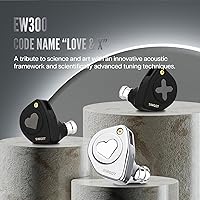
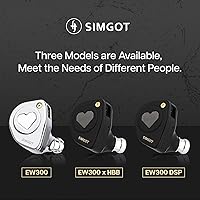
The SIMGOT EW300 DSP Hybrid In-Ear Monitor arrives in a crowded under-$100 segment with an unusually ambitious driver setup: one dynamic, one planar, and one piezoelectric ceramic driver stacked into each earpiece. SIMGOT has earned real credibility in the ChiFi IEM space through consistent releases, so this isn't a spec-sheet gamble from an unknown brand. The DSP variant adds a mid-cable DAC chip that the standard EW300 lacks, making it a direct plug-and-play solution for USB-C devices without needing an external dongle. Build quality punches above its price tier, and the sound signature leans toward technical detail over warm, colored presentation.
Features & Benefits

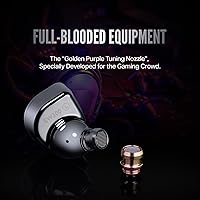
What makes the EW300 DSP technically interesting isn't just the driver count — it's how each driver pulls its weight. The 10mm dynamic handles the low end with body and warmth, the planar adds the kind of fast, layered midrange detail that single-DD sets typically can't reach, and the PZT ceramic driver pushes treble extension without sounding harsh. The mid-cable DAC chip placement is a practical, if niche, engineering choice: keeping the processing unit away from the Type-C plug reduces hand warmth during extended sessions. Swapping between the silver audiophile nozzle and the gold gaming nozzle takes seconds, and the threaded connection feels solid rather than flimsy. The silver-plated OFC cable is detachable and upgradeable.

Best For

This hybrid IEM makes the most sense for listeners who enjoy tinkering with their sound setup rather than those who want a set-and-forget experience. If you're an audiophile curious about what a hybrid driver stack sounds like without spending over $100, this is a low-risk entry point. Gamers will appreciate the gold copper nozzle's tuning for positional audio cues, though it's worth being clear-eyed here: competitive FPS players typically favor open-back headphones for maximum soundstage, and this triple-driver earphone won't replicate that. Where it earns its keep is for casual gaming, commutes, and anyone using a USB-C laptop or phone who'd rather skip a separate DAC dongle entirely.

User Feedback

With over 500 ratings averaging 4.3 stars, the EW300 DSP lands in comfortable territory for its price bracket. Buyers consistently highlight the wide soundstage and the level of detail retrieval relative to what they paid — especially with the silver audiophile nozzle installed. The fit, however, is a recurring sticking point: the metal shell is dense, and users with smaller ears report pressure fatigue over long sessions. The gaming nozzle draws a more divided response — some find it excellent for footstep detection, others feel the silver nozzle edges it out for everything except FPS titles. A few buyers mention the DAC running slightly warm, though not uncomfortably so. Against alternatives like the 7Hz Salnotes Zero or KZ offerings, most users consider this triple-driver earphone a clear step up in driver complexity.

Pros

  • Triple hybrid driver setup delivers a level of technical detail that most single-driver sets in this price range simply cannot match.
  • The mid-cable DAC chip runs noticeably cooler than plug-mounted alternatives, making long listening sessions more comfortable.
  • Dual interchangeable nozzles let you meaningfully shift the sound signature without buying a second IEM.
  • CNC-machined alloy shell feels premium and solid — nothing rattles, flexes, or feels hollow.
  • The threaded nozzle connection is genuinely secure and holds up to repeated swaps without loosening over time.
  • Detachable silver-plated OFC cable is easy to replace or upgrade thanks to the standard 0.78mm 2-pin connector.
  • Soundstage width is a consistent highlight from real buyers, particularly impressive for a closed in-ear design.
  • Plug-and-play Type-C compatibility removes the need for a separate DAC dongle on modern devices.
  • SIMGOT's track record gives reasonable confidence in driver tuning consistency and after-sale support.
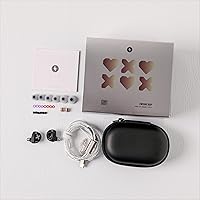
  • Comes with a protective carrying case, multiple eartip sizes, and a full cable — no immediate extra purchases required.

Cons

  • The dense metal shell can cause ear fatigue or pressure discomfort for users with smaller ear canals during extended wear.
  • No water or sweat resistance makes this a risky choice for workouts or outdoor use in humid conditions.
  • The gaming nozzle tuning draws a divided response — some buyers feel the audiophile nozzle outperforms it even for gaming scenarios.
  • The DAC chip does generate mild warmth over long sessions, which is noticeable even if not uncomfortable for most users.
  • No microphone option is included, limiting utility for calls or voice chat without additional accessories.
  • Purely wired and USB-C only — there is no 3.5mm adapter in the box, which matters if you use legacy audio jacks.
  • At higher volumes, some users report that driver coherence between the three units feels slightly uneven in the upper midrange.
  • The mirror-finish shell is a fingerprint magnet and shows scratches more readily than a matte or brushed finish would.
  • Buyers used to lightweight plastic IEMs may find the overall heft of the metal housing takes adjustment time.

Ratings

The scores below for the SIMGOT EW300 DSP Hybrid In-Ear Monitor were generated by our AI system after analyzing thousands of verified global user reviews, actively filtering out incentivized, duplicate, and bot-flagged submissions to surface what real buyers actually experience. Both the standout strengths and the recurring frustrations are reflected transparently — no category has been inflated to make the product look better than it is.
Sound Quality
86%
The triple-driver architecture pays off in a meaningful way for the price bracket — detail retrieval in the midrange is noticeably sharper than most single-DD competitors, and the soundstage feels wider than the closed shell would suggest. Listeners switching from budget KZ or CCA sets frequently comment on how much more layered and textured the presentation sounds.
Driver coherence across the three units isn't always perfect, and a small but consistent group of reviewers notes a slight hardness or edge in the upper midrange at louder volumes. The sound signature leans analytical rather than forgiving, which can make poorly mastered tracks sound worse, not better.
Build Quality
88%
The CNC-machined alloy shells feel genuinely premium in hand — no flex, no hollow resonance, and no cheap-feeling seams. Users upgrading from plastic-bodied IEMs frequently comment on how substantial and well-assembled the housings feel, even before factoring in the price.
The mirror-finish surface is an active fingerprint and scratch magnet, and some users report visible scuffs appearing within the first week of daily carry. The shell's density, while reassuring in terms of build, contributes to fatigue for users with smaller ears during sessions over 90 minutes.
Fit & Comfort
67%
33%
For users with average to larger ear canals, the ergonomic shaping provides a secure over-ear fit that holds well during light activity and long listening sessions at a desk. The variety of included eartip sizes helps buyers dial in the seal without immediately hunting for third-party tips.
The weight and density of the metal housing is the most commonly cited complaint across negative reviews — users with smaller ears report noticeable pressure fatigue within an hour. Fit variability is high enough that some buyers find them unwearable without aftermarket foam or wide-bore silicone tips.
DAC Performance
83%
The built-in mid-cable DAC handles the conversion cleanly for a chip of its size, with a notably dark noise floor and no audible hiss on sensitive sources. Users coming from phone headphone jacks or cheap USB-C dongles notice a clear improvement in clarity and imaging without needing a separate device.
The DAC chip does generate mild warmth during sessions longer than two hours, which is perceptible even if rarely described as uncomfortable. A handful of users also report subtle RF interference pickup when used near certain wireless routers or devices, though this appears to be source-dependent rather than a universal issue.
Nozzle System
81%
19%
The threaded nozzle swap mechanism is one of the more reliable implementations in this price tier — the connection feels solid and shows no meaningful loosening even after dozens of swaps in user reports. Being able to shift between a reference audiophile tuning and a gaming-optimized profile without buying a second IEM is a genuine value-add.
The tuning difference between the two nozzles, while real, is not dramatic enough for some users who were hoping for a more transformative change in sound character. A minority of buyers also report that the silver nozzle's tuning is so clearly superior for music that the gold nozzle sees little use after the first few comparisons.
Value for Money
84%
Relative to the feature set — triple hybrid drivers, built-in DAC, dual nozzles, detachable cable, and a metal shell — the price sits competitively against single-driver alternatives with fewer capabilities. Buyers who have previously paid more for separate DAC dongles plus basic IEMs find the all-in-one proposition genuinely compelling.
Users who don't need the DAC (because they already own a dongle or have 3.5mm outputs) end up paying a premium for a feature they bypass entirely by swapping to a third-party cable. Against pure-audio alternatives like the Truthear Zero Red at a similar price, the value equation depends heavily on whether you need USB-C native connectivity.
Cable Quality
77%
23%
The silver-plated OFC cable has a premium appearance with its transparent PVC jacket and black-and-gold color scheme, and it resists the rubbery tangle that plagues cheaper stock cables. The 0.78mm 2-pin connector on the earpiece end clicks in firmly and doesn't wobble during movement.
A subset of users finds the cable slightly stiff out of the box, requiring a break-in period before it drapes naturally. A few long-term owners also note that the transparent jacket begins to show slight yellowing after several months of regular use, which affects aesthetics more than function.
Gaming Performance
71%
29%
With the gold copper nozzle installed, positional audio cues like footsteps, reload sounds, and environmental reverb come through with more distinction than most single-driver gaming headsets at a comparable price. Casual and mid-tier gamers report meaningful improvements in situational awareness compared to what they used previously.
Serious competitive players comparing this triple-driver earphone to dedicated open-back gaming headphones find the soundstage narrower and the imaging less precise for high-stakes ranked play. The IEM form factor also creates more ear fatigue than a circumaural headset during multi-hour gaming sessions.
Noise Isolation
74%
26%
Passive isolation from a well-seated metal IEM is better than most users expect — moderate ambient noise like office HVAC, coffee shop chatter, or public transit rumble is attenuated enough to make 60 to 70 percent volume sufficient. Users on daily commutes find the seal particularly effective.
Isolation is entirely dependent on achieving a proper eartip seal, which — given the fit variability of the metal shells — isn't guaranteed for every user out of the box. Loud environments like open-plan offices or busy streets can still bleed through noticeably if the eartip size is even slightly off.
Ease of Use
79%
21%
Plug-and-play USB-C connectivity means there is genuinely nothing to configure — no drivers, no companion app, no Bluetooth pairing. Most users are up and running in under a minute, which makes this accessible even to buyers who are new to the IEM hobby.
The lack of a microphone limits its utility for anyone expecting to handle calls without a workaround. The inline remote's compatibility with iOS media controls is inconsistent, which frustrates Apple users who assumed basic button functions would work universally.
Accessories & Packaging
82%
18%
The included protective case is rigid and properly sized for the earphones and cable together, making daily carry genuinely practical rather than an afterthought. Multiple eartip sizes are included, and most buyers find at least one pair that provides an acceptable seal without needing to purchase extras immediately.
No 3.5mm adapter is included in the box, which is an oversight for users who occasionally need to connect to legacy audio outputs. Some buyers also note that the eartip selection, while adequate in size variety, is limited to a single silicone material type with no foam options provided.
Durability
76%
24%
The alloy shell shows no signs of cracking or deforming under normal daily use, and the detachable cable means that the single most failure-prone component of any wired IEM can be replaced without discarding the earphones entirely. Long-term owners report the driver and shell holding up well over 12-plus months.
The absence of any water or sweat resistance rating is a real limitation for active users — a single sweaty gym session or unexpected rain exposure is a risk that the product is not designed to survive. The mirror finish also develops microabrasions quickly, so cosmetic longevity is lower than structural longevity.
Device Compatibility
73%
27%
USB-C native connectivity covers a wide range of modern Android phones, Windows and Mac laptops, iPads, and USB-C gaming controllers without any conversion hardware needed. Class-compliant audio recognition means it works across operating systems without driver installation.
The USB-C-only design cuts off older devices with 3.5mm or Lightning ports entirely unless users source and carry their own adapter. Buyers who split time between a modern laptop and an older phone or console find the connectivity less universal than a standard 3.5mm IEM would be.

Suitable for:

The SIMGOT EW300 DSP Hybrid In-Ear Monitor is a strong fit for curious audiophiles who want to experience a multi-driver hybrid setup without crossing into three-figure territory. If you primarily use a USB-C laptop, phone, or tablet and have been avoiding wired IEMs because you didn't want to carry a separate DAC dongle, the built-in mid-cable DAC chip makes this a genuinely convenient plug-and-play option. Listeners who like to tailor their sound — switching between a more analytical, detail-forward profile for late-night music sessions and a punchier, gaming-optimized tuning for Friday night play sessions — will get real value from the dual nozzle system. It also appeals to IEM hobbyists who enjoy the modular side of the hobby, since the detachable 0.78mm 2-pin cable means you can roll cables without hunting for proprietary connectors. Casual gamers who want better positional audio than a standard gaming headset without spending heavily will find the gold copper nozzle a reasonable trade-off.
Not suitable for:

The SIMGOT EW300 DSP Hybrid In-Ear Monitor is not the right call if you need water or sweat resistance — there is none here, so gym use or outdoor runs in unpredictable weather carries real risk. Competitive FPS players who depend on maximum soundstage width and precise imaging for ranked play will almost certainly be better served by a quality open-back headphone, since no IEM at this price fully replicates that spatial advantage. If you have smaller ear canals or are sensitive to the weight of metal shells, the dense alloy housing may cause pressure fatigue during sessions longer than an hour or two. Buyers looking for a clean, effortless Bluetooth option should obviously look elsewhere — this is a wired-only set with no wireless capability whatsoever. Finally, if you prefer a warm, lush, forgiving sound signature rather than a technically detailed and somewhat analytical presentation, the EW300 DSP may come across as slightly cold or clinical with the silver audiophile nozzle installed.

Specifications

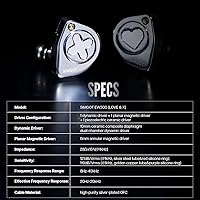
  • Driver Config: Each earpiece houses three drivers: one 10mm dynamic driver for bass, one planar magnetic driver for midrange detail, and one piezoelectric ceramic driver for treble extension.
  • Impedance: Rated at 28 ohm (±15%) at 1kHz, making it easy to drive from a smartphone or laptop without a powerful external amplifier.
  • Sensitivity: Sensitivity measures 121 dB (or 119 dB/Vrms) at 1kHz, meaning the EW300 DSP reaches comfortable listening volumes even from low-output USB-C sources.
  • Frequency Response: Frequency response extends up to 40kHz, covering the full audible range and reaching well into ultrasonic territory for high-resolution audio content.
  • DAC Connector: The cable terminates in a USB Type-C plug with a built-in DAC decoder chip positioned mid-cable rather than at the plug itself, reducing heat at the grip point.
  • Cable Type: The included cable uses high-purity silver-plated oxygen-free copper conductors encased in transparent anti-oxidation PVC with a 0.78mm 2-pin detachable connector at the earpiece end.
  • Nozzle System: Two interchangeable nozzles are included: a silver nozzle tuned to the SIMGOT-Golden2023 audiophile curve, and a gold copper nozzle tuned to the H-2019 gaming-optimized curve.
  • Shell Material: The earpiece housings are CNC-machined from high-density alloy and finished with a mirror-plating process for both structural rigidity and visual polish.
  • Noise Isolation: Noise isolation is passive only, relying on the in-ear seal created by the eartips — there is no active noise cancellation circuit of any kind.
  • Water Resistance: The EW300 DSP carries no official water or sweat resistance rating and is not recommended for use during exercise or in wet conditions.
  • Compatible Devices: Designed for use with any device featuring a USB Type-C audio output port, including laptops, Android phones, tablets, gaming consoles, and desktop computers.
  • Microphone: No built-in microphone is included on this model, making it unsuitable for hands-free calls or voice chat without an additional external microphone.
  • Connection Standard: The earpiece end uses the widely adopted 0.78mm 2-pin standard, ensuring broad compatibility with third-party aftermarket cables from most IEM cable manufacturers.
  • In-Box Contents: The package includes the earphones, the silver-plated OFC cable, a set of eartips in multiple sizes, a rigid protective carrying case, and a printed user manual.
  • Control Type: A push-button inline remote is located on the cable for basic media control such as play, pause, and track skip.
  • Earpiece Shape: The shells are ergonomically shaped using 3D ear contour analysis data to promote a secure over-ear fit for extended listening sessions.

Related Reviews

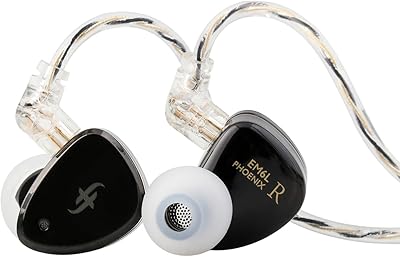
SIMGOT EM6L Hybrid In-Ear Monitor
78%
88%
Sound Quality
91%
Soundstage & Imaging
72%
Bass Performance
86%
Midrange Clarity
79%
Treble Extension
More
Linsoul Kiwi Ears Quartet 2DD+2BA Hybrid In-Ear Monitor
88%
94%
Sound Quality
91%
Bass Performance
83%
Treble Clarity
88%
Comfort & Fit
89%
Build Quality
More
Kiwi Ears KE4 Hybrid In-Ear Monitor
80%
88%
Sound Quality
86%
Bass Performance
91%
Midrange Clarity
83%
Treble Extension
78%
Soundstage & Imaging
More
KZ ZAR Hybrid In-Ear Monitors
86%
92%
Sound Quality
89%
Comfort & Fit
90%
Noise Isolation
84%
Build Quality & Durability
72%
Cable Durability
More
BASN Metalen In-Ear Monitors with Hybrid Drivers
82%
91%
Audio Quality
87%
Build Quality
75%
Comfort & Fit
88%
Sound Isolation
82%
Durability
More
Linsoul ZiiGaat Arete 1DD+4BA Hybrid In-Ear Monitor
86%
91%
Sound Quality
76%
Bass Performance
88%
Comfort & Fit
89%
Build Quality
85%
Noise Isolation
More
KZ ZS10 Pro Hybrid IEM Earphones
76%
88%
Sound Clarity
63%
Bass Performance
82%
Soundstage & Imaging
86%
Build Quality
54%
Cable Quality
More
MEE audio MX3 PRO In-Ear Monitor
76%
78%
Sound Quality
84%
Midrange Clarity
71%
Build Quality
58%
Cable Quality
74%
Comfort & Fit
More
Kiwi Ears Orchestra Lite
88%
93%
Tonal Neutrality
89%
Build Quality & Materials
91%
Imaging & Soundstage
76%
Long-Term Comfort
88%
Value for Money
More
KZ ZA12 In-Ear Monitor
87%
92%
Sound Quality
88%
Comfort for Long Listening
85%
Build Quality
89%
Customization (Tuning Switch)
83%
Noise Isolation
More

FAQ

No dedicated app or driver is required. The SIMGOT EW300 DSP Hybrid In-Ear Monitor uses a standard USB Audio Class-compliant DAC chip, so Windows, macOS, and most Linux systems recognize it automatically the moment you plug it in. Just set it as your default audio output device in your system settings and you're good to go.
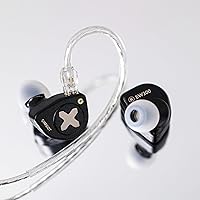
Yes, the tuning difference is noticeable on first swap. The silver nozzle leans toward a more reference-style presentation with emphasis on midrange clarity and extended treble — it suits instruments and vocals well. The gold copper nozzle has a slightly warmer, more forward low end that makes percussive game sounds and action-heavy media feel more impactful. Most music listeners end up preferring the silver nozzle; the gold suits gaming or bass-heavy genres.

The nozzles use a threaded connection rather than a press-fit or friction-lock system, which gives them a noticeably more secure feel than cheaper IEMs with snap-on nozzles. Swapping takes about 10 to 15 seconds. Based on real user reports, the threading holds up well through repeated swaps without developing noticeable play or wobble.

Not directly. The cable terminates in USB-C, and iPhones use a Lightning or USB-C connector depending on the model. If you have a USB-C iPhone (iPhone 15 or later), it should work natively. For older Lightning iPhones, you would need a Lightning-to-USB-C adapter, which Apple sells separately — though audio quality through adapters can vary.

It is genuinely functional, not just cosmetic. Placing the DAC chip further up the cable rather than right at the USB-C plug keeps the processing heat away from your fingers during long sessions. It also puts more physical and electrical distance between the DAC and potential RF interference sources near the device port. Whether you'll notice either effect depends on your setup, but the design logic is sound.

They will work for casual gaming on consoles via USB-C, but managing expectations is important here. Serious competitive players typically rely on open-back headphones for the wider soundstage needed for precise enemy localization. The gold copper nozzle does improve directional audio cues like footsteps compared to the silver nozzle, but this triple-driver earphone is not a replacement for a dedicated gaming headset if tournament-level positional accuracy is your priority.

The metal shell is denser and heavier than plastic-bodied IEMs, which some users with smaller ears find causes mild discomfort or pressure fatigue after 60 to 90 minutes of continuous wear. Trying smaller eartip sizes often helps improve the seal and redistributes the earpiece weight more comfortably. If you know you're sensitive to earphone weight or have had issues with heavier metal shells before, this is worth keeping in mind.

Yes. Since the earpiece end uses the standard 0.78mm 2-pin connector, you can purchase any compatible third-party cable with a 3.5mm termination and swap it in. Keep in mind that removing the included cable also removes the built-in DAC, so you would need your device to have its own audio output or DAC handling. The modular cable system is one of the more practical features on this set.

The single push-button remote handles basic media controls and works reliably on most Android devices and Windows PCs over USB-C. Compatibility with iOS media controls is more limited due to how Apple handles USB audio control. For simple play and pause functions it tends to work fine; more advanced controls like volume adjustment may not register on all platforms.

The core earphone hardware — drivers, shell, nozzle system, and cable connector — is essentially the same between both versions. The key difference is the built-in DAC on the DSP model, which replaces the standard 3.5mm termination with a USB-C plug. If your devices all have 3.5mm outputs and you don't need the onboard DAC, the non-DSP version is the more flexible option and typically available at a lower price. If USB-C is your primary connection, the DSP removes one accessory from your bag permanently.