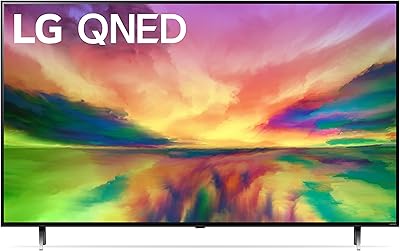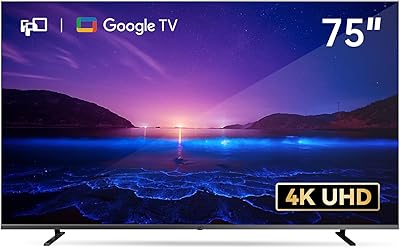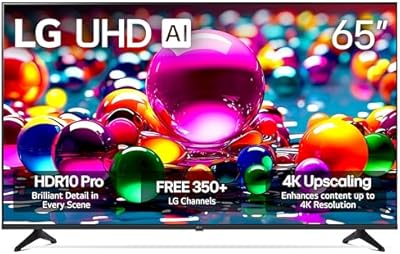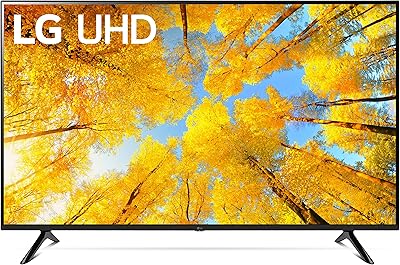

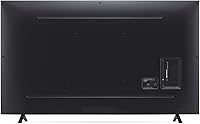
Overview

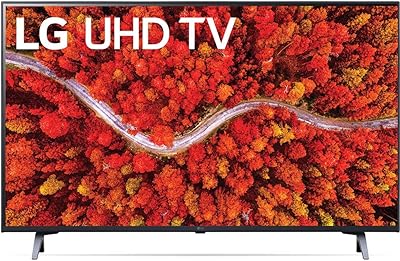
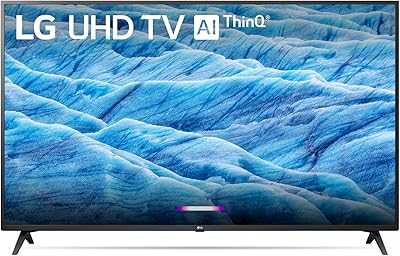
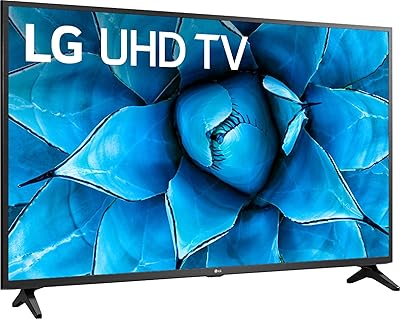
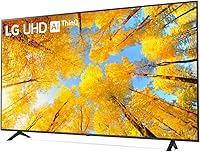
The LG 75-Inch UQ7590 4K Smart TV sits squarely in the mid-range large-screen market, offering a lot of real estate without pushing into premium pricing territory. At its core is LG's a5 Gen5 AI processor, which handles picture optimization and sound adjustment automatically — not magic, but genuinely useful day-to-day. The set runs webOS 22, a platform mature enough to feel polished rather than half-baked. Streaming is covered broadly, with the major services accessible right from the home screen. If you're shopping primarily by size and value, this 75-inch LG makes a compelling case without requiring you to compromise on smart TV fundamentals.

Features & Benefits

The a5 Gen5 AI processor does real work here — it improves upscaling noticeably on older or lower-resolution content, and it nudges the audio profile based on what's playing, saving you from manually tweaking sound modes. webOS 22 brings per-user profiles, so recommendations actually get tailored rather than shuffled into one generic list. Gamers will appreciate the Game Optimizer hub, which pulls all relevant settings into one screen — helpful for console players who don't want to hunt through menus mid-session. Active HDR and Filmmaker Mode add genuine value for movies, though neither fully substitutes for a higher-end panel. One honest caveat: the 60 Hz refresh rate matters if you watch a lot of sports or play fast-paced games.

Best For

This 75-inch LG is a strong fit for families who share a living room and want each member to have their own watch history and recommendations — webOS 22 handles that without fuss. It also makes sense for buyers who've decided size is the priority and don't want to spend significantly more for an OLED or QLED panel. Casual console gamers will find the Game Optimizer convenient, but dedicated players who care about input lag or motion clarity should look at sets with 120 Hz panels. The built-in LG Channels — over 300 free streams — make the UQ7590 genuinely cord-cut friendly. Spatially, you need a room that can comfortably handle a 66-inch-wide screen; this isn't a set for smaller spaces.

User Feedback

Buyers consistently point to picture brightness and the sheer size-to-value ratio as the standout positives — for what you're spending on a 75-inch set, the image holds up well in bright rooms. The webOS interface earns regular praise for being intuitive, and the remote is functional without being particularly special. The most recurring complaint, by some margin, is the 60 Hz panel under live sports or action-heavy content, where motion can look soft compared to higher-refresh competitors. A handful of buyers noted Wi-Fi connection inconsistencies and occasionally slow app loading. Setting up a 70-pound TV solo is also a common pain point — having a second person on hand for installation is strongly advised.

Pros

  • 75 inches of screen for a mid-range price is genuinely hard to argue with as a size-to-value proposition.
  • The a5 Gen5 AI processor improves upscaling on older content in ways that are noticeable without being overstated.
  • webOS 22 is one of the more intuitive smart TV platforms available, with a clean layout and fast navigation.
  • Per-user profiles mean family members get personalized recommendations rather than one shared, messy watch history.
  • Over 300 free LG Channels add real cord-cutting value without requiring any additional subscriptions.
  • Active HDR and Filmmaker Mode make movie nights look meaningfully better than standard picture modes.
  • The Game Optimizer hub is a practical convenience for console players who hate digging through settings menus.
  • Built-in access to all major streaming services means setup is fast and genuinely complete out of the box.
  • Cloud Gaming support adds a forward-looking feature that most buyers in this price range won't find elsewhere.

Cons

  • The 60 Hz refresh rate is a real limitation for sports fans and action game players — motion can look soft and blurry.
  • Wi-Fi connectivity has been flagged by multiple buyers as inconsistent, with occasional drops under normal home network conditions.
  • At 70 pounds, installing this set without a second person is awkward at best and risky at worst.
  • App load times can lag noticeably, particularly for heavier streaming platforms during cold starts.
  • The standard remote is functional but unremarkable — nothing about it stands out compared to competitors at this level.
  • Black levels and contrast depth fall short of OLED and even some QLED panels, especially in darkened rooms.
  • The 2022 model year means the software and hardware are already a generation behind current LG releases.
  • Stand stability has drawn some criticism from buyers, particularly given the screen size and overall weight distribution.

Ratings

The scores below for the LG 75-Inch UQ7590 4K Smart TV were generated by our AI system after analyzing thousands of verified global buyer reviews, with spam, incentivized feedback, and bot activity actively filtered out before scoring. Every category reflects what real owners experienced over weeks and months of daily use — not just first impressions. Both the genuine strengths and the frustrating limitations are weighted honestly, so the numbers tell the full story.

Picture Quality
74%
26%
For an LED panel at this price and size, brightness holds up well in typical living room lighting, and the a5 Gen5 processor does a credible job smoothing out lower-resolution content upscaled to 4K. Colors are vivid enough for streaming movies and daytime sports without any noticeable washed-out effect.
Black levels are a consistent weak point — in darkened rooms, the lack of local dimming depth becomes obvious compared to OLED or premium QLED sets. Buyers expecting cinema-grade contrast from this panel will come away disappointed.
Motion & Refresh Rate
58%
42%
For static content, news broadcasts, and slower-paced dramas, the 60 Hz panel performs without any obvious issues. Casual viewers who primarily watch sitcoms, documentaries, or streaming shows rarely flag motion as a problem in day-to-day use.
Live sports and fast-action gaming expose the 60 Hz limitation clearly — motion blur and soft edges during quick camera pans are a recurring complaint from buyers who watch football, basketball, or hockey. This is the single most regretted purchase decision among dissatisfied owners of this set.
Smart TV Platform
83%
WebOS 22 is consistently praised for its clean layout, fast response, and the genuinely useful multi-user profile system that keeps recommendations relevant for each family member. Navigating between apps and inputs feels fluid compared to clunkier competing platforms.
A handful of users report occasional slow app cold-start times, particularly with heavier streaming services after the TV has been idle. App library breadth also falls slightly behind Roku in edge-case scenarios involving niche or regional streaming services.
Value for Money
81%
19%
Getting 75 inches of 4K screen with a capable smart platform and AI upscaling at this price point is hard to find elsewhere, and that size-to-cost ratio is the most frequently cited reason buyers feel satisfied with their purchase. Families upgrading from smaller sets are consistently impressed by how much screen they get without premium pricing.
The value calculation shifts if you factor in what you are giving up — 60 Hz, no Dolby Vision, and an LED panel rather than QLED or OLED. Buyers who later discover those gaps sometimes feel the savings were not as meaningful as they initially appeared.
Gaming Performance
62%
38%
The Game Optimizer hub is a practical tool that casual PS5 or Xbox players appreciate — having all relevant display and input settings consolidated in one menu reduces the frustration of hunting through sub-menus mid-session. Cloud gaming support also adds a layer of flexibility that similar-priced sets from competitors often skip.
The 60 Hz ceiling and lack of HDMI 2.1 support mean serious gamers are not getting the hardware they need for 120 fps or Variable Refresh Rate play. Competitive players who tried using this set for fast-paced titles like racing games or shooters found the experience noticeably lacking versus a dedicated gaming display.
Audio Quality
67%
33%
The automatic sound mode adjustment from the a5 Gen5 processor provides a reasonable baseline experience for most viewers without requiring manual tuning. Dialogue clarity and mid-range sound reproduction hold up well for everyday streaming and broadcast content.
Like most flat-panel TVs in this size range, the built-in speakers struggle at high volumes and lack meaningful bass. Buyers who watch action films or use this set for music in large rooms almost universally end up pairing it with a soundbar within the first few weeks.
Streaming & App Experience
79%
21%
Every major streaming service — Netflix, Prime Video, Apple TV, Disney Plus, and others — loads reliably from the home screen without needing external sticks or boxes. The 300-plus free LG Channels add a cord-cutting layer that buyers consistently describe as a genuine, used feature rather than a throwaway bullet point.
App update cadence can lag slightly, and a small number of users have encountered stale UI versions for specific apps before they self-update. The free channel interface could also be more intuitive for first-time users who are not already familiar with LG's layout.
Wi-Fi Reliability
61%
39%
In well-connected homes with routers nearby, the built-in Wi-Fi handles 4K streaming without buffering interruptions under typical household bandwidth conditions. The Ethernet port gives buyers a reliable fallback option that most competing sets at this price also include.
Multiple buyers in larger homes or with routers one or two rooms away have flagged intermittent Wi-Fi drops and inconsistent connection speeds. The Wi-Fi performance under real-world conditions is one of the more common complaints that surfaces after the initial setup honeymoon period.
Setup Experience
66%
34%
The on-screen setup wizard is straightforward and walks new users through account linking, Wi-Fi pairing, and app installation without requiring any technical knowledge. Most buyers report the software side of setup as genuinely easy, particularly the webOS onboarding flow.
The physical setup is where things get complicated — at 70 pounds, attaching the stand and positioning a 75-inch panel without a second person is cumbersome and risks screen damage. Stand leg alignment drew specific criticism from buyers who struggled with stability on uneven media consoles.
Build & Stand Stability
63%
37%
The chassis feels solid and the bezels are reasonably slim for a mid-range set, giving it a cleaner visual presence in a living room than older-generation LG models at comparable price points. The overall fit and finish is appropriate for the market tier.
The stand design has drawn repeated criticism for feeling less stable than expected given the screen size and weight, with some buyers noting noticeable wobble during routine use. For a 75-inch, 70-pound panel, the stand's rigidity should be more confidence-inspiring than owners report it to be.
Remote Control
59%
41%
The standard remote covers all primary functions, includes dedicated streaming service shortcut buttons, and is straightforward enough for family members of any age to use without a learning curve. Bluetooth pairing is reliable for the basics.
The remote feels cheap in hand relative to what competitors like Samsung and TCL include at comparable price points, and it lacks the Magic Remote's point-and-click navigation that higher-tier LG sets offer. Several buyers wished LG had included the better remote as standard rather than an upsell.
Upscaling Performance
76%
24%
Feeding older 1080p or HD content through the a5 Gen5 processor produces a noticeably cleaner result than simply stretching the image, which matters more on a 75-inch screen where lower-resolution content can look obviously degraded without processing. Streaming in 1080p from services that cap resolution looks appreciably better than it would on a dumber upscaler.
The upscaling is good but not exceptional — film grain and fine texture detail can get smoothed over in ways that bother critical viewers who prefer a more natural, unprocessed image. Content that is genuinely low-bitrate, such as some free streaming channels, still shows compression artifacts that the processor cannot fully overcome.
HDR & Filmmaker Mode
71%
29%
Active HDR adds a dynamic quality to compatible streaming content that is clearly visible when toggling between SDR and HDR sources — highlights pop more and color gradients hold up better in bright scenes. Filmmaker Mode earns specific praise from users who value watching films the way directors intended, without the soap opera effect ruining the aesthetic.
Without true local dimming, the HDR impact is constrained — bright highlights look good but shadow detail in the same frame can wash out. Filmmaker Mode is excellent when content supports it, but the underlying panel's contrast limitations mean it cannot fully deliver what the feature promises at a premium tier.

Suitable for:

The LG 75-Inch UQ7590 4K Smart TV is a strong pick for families who want a large shared screen without stepping into premium price territory. If your household has multiple viewers with different tastes, the webOS 22 multi-profile system actually earns its keep — each person gets their own recommendations rather than a muddled mix. Cord-cutters will find genuine value in the 300-plus free LG Channels stacked on top of all the major streaming apps, making cable feel less necessary from day one. Casual console gamers who want a convenient settings hub without paying for a high-refresh gaming display will also feel at home here. Spatially, this set is built for larger living rooms or open-plan spaces where a 66-inch-wide screen won't feel overwhelming — it rewards the right room.

Not suitable for:

The LG 75-Inch UQ7590 4K Smart TV is not the right call for buyers who prioritize motion clarity above all else. The 60 Hz native panel is the single biggest limitation of this set — if you watch a lot of live sports, action films, or play fast-paced games, you will notice the difference compared to 120 Hz alternatives in a similar or slightly higher price bracket. Dedicated gamers chasing low input lag and buttery-smooth frame rates should look elsewhere, as this set was not designed with competitive gaming in mind. Cinephiles who want the contrast depth and black levels of an OLED panel will find the LED display falls noticeably short, regardless of how good the Filmmaker Mode sounds on paper. Anyone working with a smaller room should also reconsider — 75 inches demands real viewing distance to feel comfortable rather than overwhelming.

Specifications

  • Screen Size: The panel measures 75 inches diagonally, making it one of the larger options available in the mid-range 4K TV segment.
  • Display Type: Uses LED backlighting technology, which delivers solid brightness in well-lit rooms but does not match the per-pixel contrast control of OLED panels.
  • Resolution: Native 4K UHD resolution (3840 x 2160 pixels) provides four times the pixel density of a 1080p display at this screen size.
  • Refresh Rate: The panel runs at a native 60 Hz refresh rate, which is adequate for most content but noticeable compared to 120 Hz sets during fast motion or gaming.
  • Processor: Powered by LG's a5 Gen5 AI processor, which manages real-time picture upscaling and automatic sound profile adjustments based on content type.
  • HDR Support: Supports Active HDR, which dynamically adjusts HDR metadata scene by scene rather than applying a single static tone map to the entire picture.
  • Filmmaker Mode: Filmmaker Mode disables motion smoothing and post-processing to display content as the director intended, with accurate frame rates and color.
  • Smart OS: Runs webOS 22, LG's proprietary smart TV platform, which supports multiple user profiles with individualized app layouts and content recommendations.
  • Gaming Features: Includes a Game Optimizer hub that consolidates input lag settings, HDR game mode, and display adjustments into a single accessible menu.
  • Cloud Gaming: Built-in cloud gaming support allows compatible streaming game services to run without requiring a separate console or hardware device.
  • Free Channels: Comes preloaded with access to over 300 free LG Channels covering genres including news, sports, movies, and comedy at no subscription cost.
  • Connectivity: Offers HDMI, USB, Bluetooth, Wi-Fi, and Ethernet ports, covering standard home theater and peripheral connection needs without requiring additional adapters.
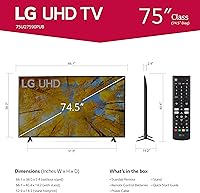
  • Dimensions: The set measures 66.1″ wide, 40.4″ tall, and 14.2″ deep with the stand attached, requiring meaningful wall or furniture clearance.
  • Weight: Weighs 70.1 pounds with the stand, which makes two-person installation strongly advisable for both safety and stand alignment accuracy.
  • Aspect Ratio: Standard 16:9 widescreen aspect ratio, optimized for the overwhelming majority of broadcast, streaming, and gaming content available today.
  • 4K Upscaling: The a5 Gen5 processor upscales lower-resolution content — including 1080p and HD sources — toward 4K quality in real time.
  • Sound Modes: Includes TV Sound Mode Share, which can mirror the TV audio profile to compatible LG soundbars for consistent sound calibration across devices.
  • Included Items: Ships with a power cable, standard remote control, AAA batteries for the remote, a stand, and a printed quick start guide.

Related Reviews
LG 75UM7570PUD 75-inch 4K Smart LED TV
73%
78%
Picture Quality
91%
Viewing Angles
82%
Smart TV Platform
76%
Voice Assistant Integration
62%
Motion Handling
More
LG QNED75 75-inch 4K Smart TV
72%
83%
Picture Quality
67%
Contrast & Black Levels
81%
Color Accuracy
58%
Refresh Rate & Motion
78%
Upscaling Performance
More
LG QNED80 75-inch 4K Mini LED TV
76%
83%
Picture Quality
71%
Black Levels & Contrast
91%
Gaming Performance
86%
Brightness
79%
Color Accuracy
More
FPD CG75-C3 75-Inch 4K Smart TV
73%
83%
Value for Money
71%
Picture Quality
88%
Smart TV Experience
63%
Motion Performance
58%
Audio Performance
More
LG 55-Inch QNED85 4K Smart TV
82%
86%
Picture Quality
82%
Color Accuracy
74%
Contrast & Black Levels
89%
Motion Handling
81%
Gaming Performance
More
LG UQ7570 55-inch 4K Smart TV
75%
88%
Smart Platform
74%
Picture Quality
83%
Value for Money
61%
Gaming Performance
91%
Streaming Experience
More
LG 65UA7700P 65-inch 4K Smart TV
83%
92%
Picture Quality
72%
Sound Quality
88%
Ease of Setup
85%
Smart Features / WebOS
90%
Gaming Performance
More
LG 50-Inch QNED80T 4K Smart TV
77%
83%
Picture Quality
81%
Color Accuracy
67%
Contrast & Black Levels
88%
Smart TV Experience
53%
Gaming Performance
More
LG 50-inch UN7300 4K Smart TV
74%
82%
Picture Clarity
54%
Contrast & Black Levels
79%
Color Accuracy
61%
HDR Performance
91%
Smart Platform (webOS)
More
LG 50-Inch QNED85T Series 4K Smart TV
88%
94%
Picture Quality
92%
Color Accuracy
87%
Ease of Use (Magic Remote)
90%
120Hz Refresh Rate for Gaming
91%
AI Picture Processing
More

FAQ

Technically one person can do it, but with a 70-pound panel and a wide stand base, it is genuinely awkward solo. You risk scratching the screen or misaligning the stand legs without a second set of hands. We'd strongly suggest having someone help, especially when lifting it onto a media console.

It depends entirely on how you use the TV. For Netflix, casual gaming, and everyday streaming, 60 Hz is perfectly fine and most people won't think twice about it. Where it shows up is live sports and fast-paced action games — motion can look slightly soft or juddery during quick camera pans. If those are regular parts of your viewing diet, a 120 Hz panel is worth the extra cost.

WebOS 22 is genuinely one of the better smart TV platforms — it loads quickly, the home screen is clean, and the multi-profile feature is more thoughtfully implemented than on most competing platforms. It's not quite as app-library deep as Roku, but for the major streaming services and everyday use, it covers the bases well without feeling cluttered.

Yes, you can connect either console without any issues. That said, neither console will run at 120 fps on this panel since the refresh rate tops out at 60 Hz. You'll also want to check HDMI port versions for full feature support. For casual gaming it works well; for competitive or high-frame-rate gaming, you'll be leaving performance on the table.

It pulls all the game-relevant settings — input lag reduction, HDR game mode, VRR if applicable, and display adjustments — into one screen so you don't have to navigate through multiple menus every time you switch between gaming and watching TV. It's a genuine time-saver rather than a gimmick, especially for players who switch modes frequently.

Honestly, more than you'd expect. The channel lineup includes news feeds, dedicated movie channels, sports highlights, and niche genre content — all free and built into the home screen. It won't replace a cable subscription for live sports, but for background viewing or casual browsing it is a legitimate bonus that saves you from needing another free streaming app.

The LG 75-Inch UQ7590 4K Smart TV handles moderately bright rooms reasonably well for an LED set in this price range. Direct sunlight washing across the screen will reduce picture impact, as it would on most TVs without premium anti-glare coatings. For typical daytime viewing conditions, brightness is generally not a complaint buyers raise with this model.

The UQ7590 supports Active HDR, which includes HDR10, but it does not support Dolby Vision. If your streaming library is heavily Dolby Vision content, that is worth factoring in before buying. For most mainstream HDR content, Active HDR delivers a solid result, but dedicated Dolby Vision support is absent at this tier.

A number of buyers have flagged occasional Wi-Fi inconsistencies, particularly in larger homes or with routers on different floors. For 4K streaming, a stable connection matters, so if your router is more than a room or two away, running an Ethernet cable is a practical safeguard. The Ethernet port is included specifically for situations where Wi-Fi reliability is a concern.

A general rule of thumb for 4K TVs puts the ideal viewing distance at roughly 1.5 times the screen height, which works out to approximately 5 to 6 feet for a 75-inch panel. That said, 4K resolution is forgiving at closer distances compared to 1080p. Most buyers find that 7 to 10 feet feels comfortable in a typical living room setup with this size of screen.

Where to Buy