Overview

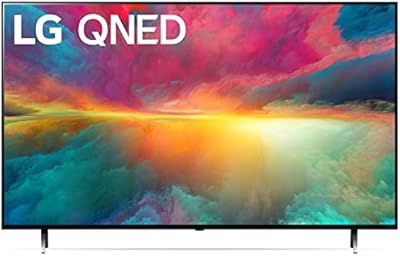
The LG 50-Inch QNED80T 4K Smart TV sits in that interesting middle ground where you get noticeably better picture technology than a basic LED set without paying OLED prices. For 2024, LG updated the QNED lineup with the seventh-generation a5 AI processor and extended the Re:New Program to cover five years of software updates — a genuinely useful commitment that most competitors don't match. At 50 inches, this screen fits comfortably in medium to large living rooms without overwhelming the space. Just be clear-eyed about what you're getting: this is a strong performer for its price tier, not a reference-grade display that will satisfy videophiles who obsess over perfect black levels.

Features & Benefits

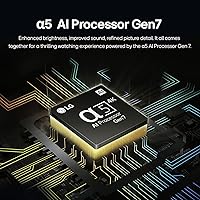
What makes this 50-inch QNED set stand out from a conventional LED panel is the combination of Quantum Dot and NanoCell filter technologies, which work together to produce purer, more saturated colors — reds look genuinely red, not orange-leaning. The a5 AI Processor Gen 7 does real work upscaling streamed HD content, so most Netflix or Disney+ shows look sharper than you'd expect. The Dimming Pro local dimming helps in mixed scenes, though it's edge-lit rather than full-array, so expect some blooming around bright objects against black backgrounds. The Magic Remote is genuinely one of the better TV remotes in this class — point-and-click navigation feels intuitive — and Alexa voice commands respond reliably. Built-in audio is passable for casual viewing, though Filmmaker Mode's virtual surround adds some width.

Best For

This 50-inch QNED set makes the most sense for households stepping up from an aging 1080p TV or a no-frills 4K budget set, where the jump in color accuracy and processing will be immediately obvious. It's well-matched to casual and mid-level streamers — anyone spending most of their TV time on Netflix, Disney+, or YouTube at 4K will get solid daily value from this screen. The software update commitment is a genuine perk that matters more than most buyers realize upfront; your TV won't feel abandoned after two years. If you're deep into console gaming and rely on 120Hz or VRR, look elsewhere. But for Alexa households or anyone who just wants a reliable, good-looking TV that won't need replacing soon, this LG QNED80T checks the right boxes.

User Feedback

Owners of the QNED80T tend to praise color vibrancy right out of the box — several buyers mention being surprised by how little calibration is needed compared to previous TVs they've owned. The webOS interface draws consistently positive comments for being responsive and easy to navigate. On the downside, the 60Hz ceiling comes up repeatedly from buyers who tried connecting a PlayStation 5 or Xbox for fast-paced gaming, and some users notice blooming around bright highlights during dark movie scenes. Speaker quality earns mixed marks — adequate for daily viewing, but the consensus is clear that a soundbar unlocks the full experience. Early 2024 buyers report that software updates have rolled out reliably, which bodes well for long-term usability.

Pros

  • Quantum Dot NanoCell technology produces noticeably richer, more accurate colors than typical LED sets in this price range.
  • The a5 AI Processor Gen 7 does a solid job of upscaling HD streaming content, so older shows and movies look sharper than expected.
  • LG's webOS platform is one of the most intuitive smart TV interfaces available — fast, clean, and easy to navigate.
  • The Magic Remote MR24 is a standout accessory; point-and-click navigation feels far more natural than a standard directional pad.
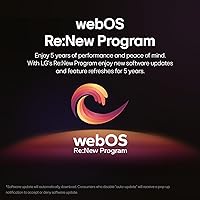
  • Five years of guaranteed software updates through the Re:New Program is a real long-term ownership advantage.
  • HDR10 Pro support adds visible punch to compatible 4K content, with highlights that feel dynamic rather than flat.
  • Alexa integration works reliably for voice-controlled playback, content searches, and smart home commands.
  • Setup is straightforward out of the box, and the default picture modes require minimal adjustment for most living room conditions.
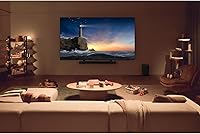
  • At 50 inches, the screen hits a practical size sweet spot — large enough for shared viewing, manageable for most room sizes.
  • Filmmaker Mode accurately reproduces the director's intended frame rate and color grading for supported content.

Cons

  • The 60Hz native refresh rate is a genuine dealbreaker for console gamers who rely on 120Hz or VRR for smooth gameplay.
  • Edge-lit Dimming Pro local dimming produces visible blooming around bright objects in dark scenes — a persistent limitation.
  • Built-in speaker quality is adequate but unremarkable; most users will want a soundbar to get satisfying audio.
  • The QNED80T lacks a full-array local dimming backlight, which puts it at a contrast disadvantage against competing sets at similar prices.
  • No 120Hz input support means next-gen console owners cannot take full advantage of their hardware.
  • Dimming transitions in mixed-lighting scenes can occasionally look inconsistent or slightly sluggish.
  • At 85 watts, power consumption is reasonable but not particularly efficient compared to some newer competing panels.
  • The virtual surround sound implementation adds some width but does not convincingly replicate a multi-speaker audio setup.

Ratings

The scores below reflect an AI-driven analysis of verified global user reviews for the LG 50-Inch QNED80T 4K Smart TV, with spam, incentivized, and bot-flagged submissions actively filtered out before scoring. Each category captures the honest consensus — strengths where buyers consistently agree, and friction points where real-world experience fell short of expectations. Nothing is glossed over.

Picture Quality
83%
Color saturation is the most praised attribute across verified reviews — buyers upgrading from older 1080p or entry-level 4K sets consistently describe the on-screen colors as punchy and natural at the same time. HDR10 Pro content on streaming services looks noticeably more dynamic than what most users were used to.
In truly dark viewing environments, the edge-lit backlight shows its limitations — blooming around bright elements like subtitles or logos against black backgrounds is a recurring complaint. Users who watch a lot of dark-scene-heavy films rate picture quality meaningfully lower than those who mostly watch sports or daytime content.
Color Accuracy
81%
19%
The NanoCell filter layer does genuine work here — reds, greens, and blues hold their saturation without bleeding into adjacent hues the way cheaper LED panels tend to do. Several reviewers specifically called out nature documentaries and animated films as looking noticeably more lifelike than on previous sets.
Factory calibration in the default Standard mode leans slightly cool, which mutes warm skin tones until the user adjusts the color temperature manually. Buyers who never dive into picture settings sometimes report colors feeling a touch artificial, which is a fixable issue but not an obvious one for less technically inclined users.
Contrast & Black Levels
67%
33%
Dimming Pro does add visible depth to mid-range contrast scenes — mixed lighting in sports broadcasts and action films looks more three-dimensional than on a standard LED set without any local dimming. For everyday content in normally lit rooms, most users find the contrast levels satisfying.
The edge-lit dimming architecture is the QNED80T's most consistent weak point among critical viewers — it simply cannot match the per-zone precision of a full-array panel. Anyone regularly watching cinema in a darkened room will notice haloing and uneven backlight distribution, which is a hard limitation of the hardware, not a calibration issue.
Smart TV Experience
88%
webOS is widely regarded as one of the cleaner, faster smart TV interfaces in its class — app load times are quick, the home screen layout is logical, and the content discovery features work without feeling intrusive. Buyers who switched from Roku or Samsung's Tizen frequently describe webOS as a pleasant upgrade.
A handful of reviewers report occasional app crashes with less popular streaming services, and the ad tiles on the home screen bother some users who prefer a cleaner interface. The LG Content Store also has a narrower app selection than Android TV, which matters for anyone relying on niche or regional streaming apps.
Gaming Performance
53%
47%
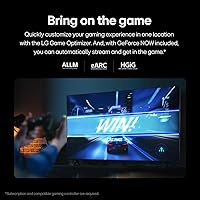
Game Mode measurably reduces input lag to levels that are acceptable for casual single-player gaming — buyers playing older-generation titles or RPGs on PS4 or Xbox One report no real complaints about responsiveness. The automatic Game Mode switching when a console is detected is a convenient touch.
The 60Hz native panel is the central dealbreaker for current-generation console gamers — it cannot accept 120Hz input, which means PS5 and Xbox Series X owners are locked out of one of those consoles' headline features. Competitive and fast-paced online players frequently cite this as a reason they wished they had chosen a different display.
Audio Quality
61%
39%
Dialogue clarity is solid for a built-in speaker system — news anchors, podcast-style content, and TV dramas come through cleanly at moderate volumes without needing external audio. The virtual 5.1 processing adds a modest sense of width during action sequences that most users appreciate compared to basic stereo output.
Bass is thin and the soundstage collapses at higher volumes, which becomes especially apparent during movie watching in larger rooms. The consensus in user feedback is clear: built-in audio is a temporary solution, and the majority of buyers who kept this TV long-term eventually paired it with a soundbar.
Remote Control
91%
The Magic Remote MR24 earns some of the most enthusiastic praise of any individual component — the point-and-click gyroscope navigation dramatically speeds up tasks like searching for content or adjusting settings compared to a traditional directional-pad remote. Voice command reliability through the Alexa button is consistently described as dependable and fast.
A small number of users report the gyroscope occasionally losing calibration after extended use, requiring a quick re-sync. The remote's button layout can feel busy for users who prefer minimalist designs, and the lack of dedicated number input buttons frustrates anyone who regularly types in channel numbers directly.
Setup & Installation
89%
Most buyers complete the physical setup and initial software configuration in under 30 minutes — the on-screen guided setup is straightforward, and connecting streaming accounts through the webOS wizard is faster than on many competing platforms. Stand assembly is tool-free and straightforward for a single person.
Some users report that the initial software update process after first boot takes longer than expected and cannot be skipped, which delays the first viewing session. Wi-Fi setup occasionally requires a second attempt in homes with dual-band routers that broadcast the same SSID for 2.4GHz and 5GHz networks.
Upscaling Performance
78%
22%
The a5 AI Processor Gen 7 handles upscaling of HD streaming content noticeably well — older TV shows in 720p or 1080p on Netflix or Disney+ look sharper and cleaner on this panel than the source resolution alone would suggest, which is appreciated by users with large streaming libraries of older content.
Upscaling is less impressive on highly compressed streaming content — buffered video at lower bitrates can look over-processed, with edge sharpening artifacts occasionally visible on faces and textured surfaces. Buyers who watch a lot of live TV through antenna or cable at compressed resolutions notice these artifacts more than streaming-only users.
Motion Handling
71%
29%
For broadcast sports and standard 24fps cinematic content with Filmmaker Mode enabled, motion looks natural and without unwanted processing artifacts. Most casual viewers find the default motion settings acceptable out of the box without needing to adjust TruMotion settings.
The soap-opera effect from TruMotion in its default settings is a frequently mentioned annoyance — many users were not aware of it until they noticed films looking unnaturally smooth. The 60Hz panel also means fast-panning shots in sports can show more judder than a 120Hz-native display would at the same price from competing brands.
Build Quality
77%
23%
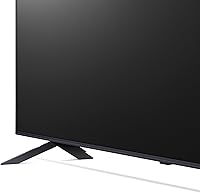
The chassis feels solid for a mid-range panel — the bezels are slim enough to look contemporary, and the stand provides a stable base without excessive wobble even on uneven furniture surfaces. Overall fit and finish is consistent with what buyers expect from LG's build standards at this tier.
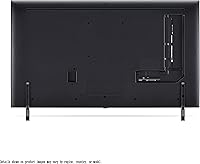
The rear panel uses a mix of textures that some reviewers describe as feeling less premium than the front suggests — visible cable management options are limited, which can make rear-facing installations look cluttered. A few buyers also noted that the stand footprint is wider than expected, which can be an issue on narrower TV consoles.
Connectivity
84%
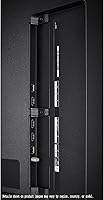
The port selection covers all practical bases — HDMI inputs, USB for local media playback, Ethernet for a wired network connection, and reliable dual-band Wi-Fi. Bluetooth connectivity lets users pair wireless headphones directly to the TV without needing a separate transmitter, which is a frequently praised feature.
The HDMI 2.1 bandwidth is not fully utilized given the 60Hz panel limitation — buyers who purchased this TV anticipating 4K at 120Hz were disappointed to find that HDMI 2.1 features like VRR and ALLM are present but the display ceiling prevents full exploitation of those capabilities.
Value for Money
79%
21%
For buyers whose priority is streaming-quality picture with a reliable smart platform and long software support, the price-to-performance ratio is competitive — the five-year webOS update commitment alone represents real long-term value that comparable sets from other brands do not offer. Color quality relative to cost is consistently praised.
Buyers who discover the 60Hz limitation after purchase often feel the value proposition weakens considerably — competing options at a similar price offer 120Hz panels, which some users feel is a more future-proof investment even at a marginal picture quality trade-off. The built-in audio quality also means most buyers will budget additionally for a soundbar.
Long-Term Reliability
76%
24%
Early 2024 adopters report consistent software updates rolling out through webOS Re:New Program, with the interface noticeably improving since launch — this gives the ownership experience a positive trajectory that users of older LG smart TVs were less accustomed to. No widespread hardware failure patterns have emerged in verified reviews so far.
The long-term panel durability record for this specific model year is still being established — there are not yet enough multi-year owners to draw firm conclusions about backlight longevity. A small percentage of users report webOS crashing requiring a full reboot within the first year, which does not inspire complete confidence in software stability.

Suitable for:

The LG 50-Inch QNED80T 4K Smart TV is a strong pick for households that want a meaningful picture upgrade without crossing into OLED territory on price. It fits naturally in living rooms and larger bedrooms where a 50-inch screen fills the space without dominating it, and where overhead or ambient lighting means perfect black levels are less of a priority. Families who stream the bulk of their content — Netflix, Disney+, YouTube, or similar services — will notice the improved color depth compared to a standard LED panel almost immediately. If you're already in the Alexa ecosystem, the voice integration feels natural rather than bolted on. Buyers who care about getting software updates for years rather than watching their smart TV platform stagnate will also appreciate LG's five-year Re:New Program commitment, which is genuinely rare at this price tier.

Not suitable for:

The LG 50-Inch QNED80T 4K Smart TV has clear limitations that certain buyers should weigh seriously before purchasing. Its 60Hz native refresh rate is a real constraint for anyone who games competitively or plays fast-paced titles on a PlayStation 5 or Xbox Series X — those consoles can push 120fps, and this TV simply cannot keep up, making motion look less sharp in demanding scenes. Cinephiles who prioritize reference-quality contrast and true black levels will also find the edge-lit local dimming underwhelming compared to full-array implementations found on competing sets like the TCL QM8 or even higher-tier Samsung QLEDs at a similar price point. If you're watching a lot of dark, high-contrast content — thriller films, sci-fi with starfields — blooming around bright elements against dark backgrounds will be noticeable. Those planning to use built-in audio as their primary sound system long-term may also feel underserved without pairing this TV with an external soundbar.

Specifications

  • Screen Size: The panel measures 50 inches diagonally, making it well-suited for living rooms or bedrooms with a viewing distance of roughly 6 to 10 feet.
  • Resolution: Native 4K Ultra HD (3840 x 2160 pixels) delivers four times the pixel density of a standard 1080p display.
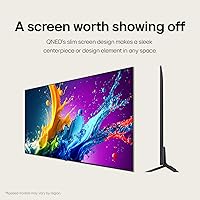
  • Display Technology: QNED combines Quantum Dot color filters with LG's NanoCell light-absorption layer on an LED backlit panel for broader color coverage than conventional LED-LCD sets.
  • Processor: The a5 AI Processor Gen 7 handles picture upscaling, noise reduction, and dynamic sound processing using deep-learning algorithms.
  • Refresh Rate: Native refresh rate is 60Hz, which supports standard cinematic and broadcast frame rates but does not support 120Hz input from gaming consoles.
  • HDR Support: Compatible with HDR10 Pro, HLG, and HDR10, enabling enhanced brightness and color depth on supported streaming content and physical media.
  • Local Dimming: Dimming Pro is an edge-lit local dimming system that dynamically adjusts backlight zones to deepen contrast, though it is not a full-array implementation.
  • Smart Platform: Runs webOS with LG's Re:New Program, guaranteeing software feature updates and security patches for five years from the original launch date.
  • Voice Assistants: Alexa is built directly into the TV, and ThinQ AI is available for LG ecosystem control; both are operable via the Magic Remote or external smart speakers.
  • Remote Control: Includes the Magic Remote MR24 with a point-and-click gyroscope, voice button, and Bluetooth pairing, powered by two AA batteries (included).
  • Connectivity: Ports and wireless options include HDMI, USB, Ethernet (LAN), Wi-Fi, and Bluetooth for comprehensive device compatibility.
  • Audio Output: Built-in speaker system delivers virtual 5.1 surround sound processing; the TV also supports Filmmaker Mode for accurate audio playback during cinematic content.
  • Special Modes: Filmmaker Mode disables motion smoothing and preserves the director's intended frame rate and color grading; Game Mode reduces input lag for connected consoles.
  • Power Draw: Rated at 85 watts of typical power consumption during normal operation.
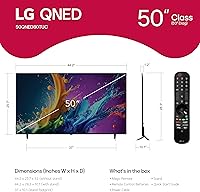
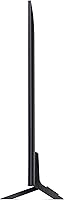
  • Dimensions: With the stand attached, the TV measures 44.2″ wide, 28.3″ tall, and 10.1″ deep.
  • Weight: The assembled unit with stand weighs 36.6 pounds, which is manageable for a two-person wall-mount installation.
  • Aspect Ratio: Standard 16:9 widescreen aspect ratio, compatible with all modern broadcast, streaming, and gaming content formats.
  • Model Number: The exact manufacturer model code is 50QNED80TUC, useful for verifying compatibility with third-party mounts, accessories, and service records.
  • Release Year: This unit was first made available in April 2024 as part of LG's refreshed QNED lineup for that model year.
  • In the Box: Package includes the TV, Magic Remote MR24 with AA batteries, attached power cable, and a printed quick-start guide alongside a digital e-manual.

Related Reviews
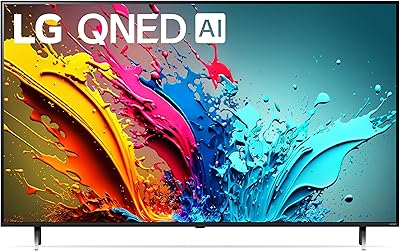
LG 50-Inch QNED85T Series 4K Smart TV
88%
94%
Picture Quality
92%
Color Accuracy
87%
Ease of Use (Magic Remote)
90%
120Hz Refresh Rate for Gaming
91%
AI Picture Processing
More
LG 50-inch UN7300 4K Smart TV
74%
82%
Picture Clarity
54%
Contrast & Black Levels
79%
Color Accuracy
61%
HDR Performance
91%
Smart Platform (webOS)
More
LG QNED75 50-Inch Mini-LED Smart TV
78%
83%
Picture Quality
71%
Local Dimming & Contrast
84%
Upscaling Performance
88%
Smart TV Experience
81%
Magic Remote Usability
More
LG 75UQ7590 75-Inch 4K Smart TV
88%
94%
Picture Quality
88%
Gaming Performance
81%
Sound Quality
90%
Ease of Setup
86%
Smart Features (WebOS 22)
More
LG 65UA7700P 65-inch 4K Smart TV
83%
92%
Picture Quality
72%
Sound Quality
88%
Ease of Setup
85%
Smart Features / WebOS
90%
Gaming Performance
More
LG 55-Inch QNED85 4K Smart TV
82%
86%
Picture Quality
82%
Color Accuracy
74%
Contrast & Black Levels
89%
Motion Handling
81%
Gaming Performance
More
Westinghouse 50-inch Xumo 4K Smart TV
69%
74%
Picture Quality
61%
Smart Platform (Xumo TV)
83%
Value for Money
52%
Audio Quality
88%
Setup & Ease of Use
More
LG UQ7570 55-inch 4K Smart TV
75%
88%
Smart Platform
74%
Picture Quality
83%
Value for Money
61%
Gaming Performance
91%
Streaming Experience
More
LG 75UM7570PUD 75-inch 4K Smart LED TV
73%
78%
Picture Quality
91%
Viewing Angles
82%
Smart TV Platform
76%
Voice Assistant Integration
62%
Motion Handling
More
LG 55UM7300PUA 55-Inch 4K Smart LED TV
82%
89%
Display Quality
85%
Smart Features
82%
Voice Control
92%
Value for Money
88%
Wi-Fi Connectivity
More

FAQ

Honestly, it depends on what kind of gaming you do. The QNED80T has a 60Hz native panel, so if you're playing fast-paced competitive titles on a PS5 or Xbox Series X and want 120fps, this isn't the right fit. Game Mode does reduce input lag to acceptable levels for casual play, but the 60Hz ceiling is a real hardware limit that no setting can override. For single-player story games or older-generation consoles, it performs fine.

Most buyers find the out-of-box picture genuinely pleasing without much tinkering. The default Eco or Standard mode can look a touch cool in color temperature for some, but switching to Cinema or Filmmaker Mode brings colors into a much more accurate range almost immediately. If you want to fine-tune further, the manual white balance and color management controls are accessible, but you won't feel forced to use them.

QNED stands for Quantum NanoEmitting Diode — in practical terms, it layers Quantum Dot color enhancement with LG's NanoCell filter technology over a standard LED backlight. The result is broader color coverage and more saturated, accurate hues compared to a conventional LED-LCD panel. It's not the same as OLED, which lights each pixel individually, but it is a meaningful step up from entry-level LED sets in terms of color richness.

For most content — sports, sitcoms, daytime dramas, nature documentaries — you won't notice any blooming at all. It becomes more apparent when you're watching something with a very dark scene and a single bright element, like subtitles over a black screen or a lamp in a pitch-dark room. If your viewing is mostly bright or mixed-light content, it's rarely distracting. Dark film enthusiasts will notice it more consistently.

The Magic Remote uses a built-in gyroscope so you can point it at the screen and move a cursor around, similar to a Wii remote. It also has a scroll wheel, a voice button, and direct app shortcut keys. In day-to-day use it's noticeably faster for navigating the webOS interface than a traditional directional-pad remote. Voice commands through the Alexa button are responsive and handle content searches, volume control, and smart home commands without much frustration.

Yes, this 50-inch QNED set is wall-mount compatible. It uses a 200 x 200mm VESA pattern, so any VESA-compatible mount rated for that hole spacing and the TV's 36.6-pound weight will work. The stand legs can be removed before mounting. A two-person installation is strongly recommended given the size and weight.

It means LG has committed to pushing software updates — including new features, UI improvements, and app support — to this TV for five years from its launch in 2024. For most smart TVs, software support quietly ends after two or three years, leaving the platform feeling stale. The Re:New Program is LG's answer to that complaint, and early 2024 buyers report that updates have been rolling out consistently so far.

The built-in speakers handle dialogue clearly and are adequate for casual watching, but they lack real bass and don't fill a large room convincingly. For news, sports, or background TV, they're fine. If you watch a lot of movies, action content, or music performances, the difference a soundbar makes is noticeable enough that most people who care about audio end up adding one eventually.

Yes — any HDMI port on the TV will accept a Fire Stick, Roku, Apple TV, or similar streaming device, and they'll work just as they would on any other display. That said, webOS is genuinely well-regarded among smart TV platforms and already includes Netflix, Disney+, Apple TV+, and most major apps natively, so most users don't feel the need to add an external streamer.

At 4K resolution on a 50-inch screen, the general guideline is a viewing distance of around 4 to 6.5 feet to appreciate the full pixel density. At typical living-room distances of 7 to 10 feet, the 4K advantage over 1080p becomes subtler, but you'll still benefit from improved color accuracy, HDR contrast, and upscaling on streamed content. The sweet spot for most setups is roughly 6 to 8 feet.