
Overview

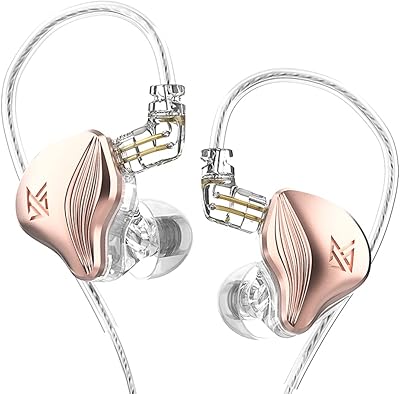
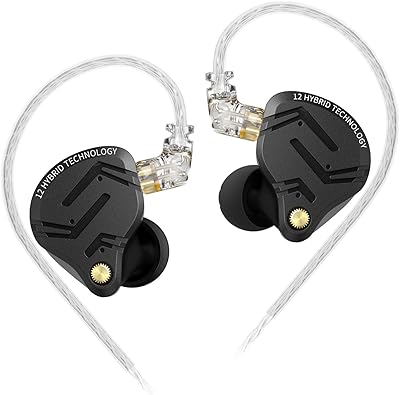
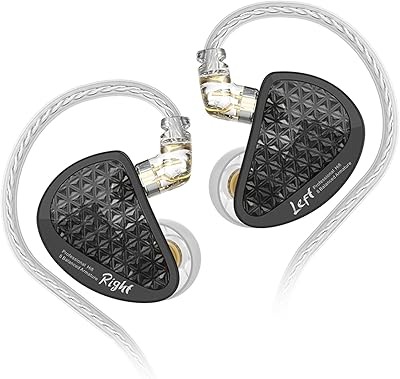
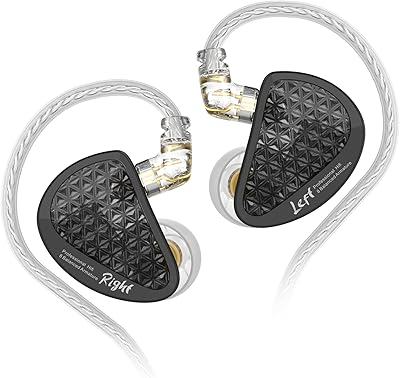
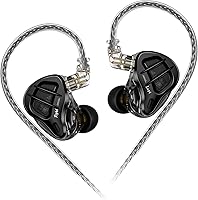
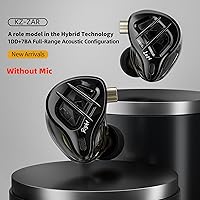
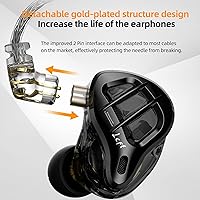
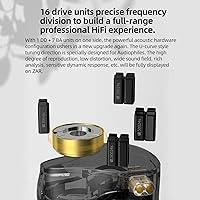
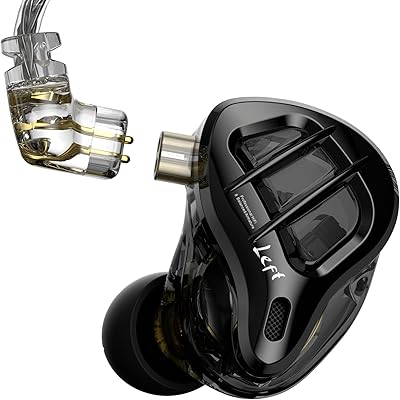
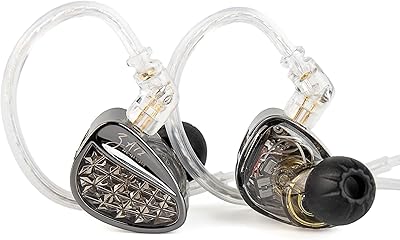
The KZ ZAR represents KZ's most ambitious push into professional monitoring territory, housing seven balanced armature drivers alongside a 10mm dynamic driver inside a precision-milled aluminum shell that feels genuinely solid in hand. These hybrid monitors occupy an interesting middle ground — priced accessibly enough to attract hobbyists, yet engineered with enough technical seriousness to earn a spot in working musicians' gear bags. The over-ear hook fit keeps things stable during long sessions, and the detachable 0.75mm 2-pin cable with a right-angle 3.5mm plug adds practical versatility. Bluetooth is not built in, but a compatible KZ adapter can be purchased separately.

Features & Benefits

The 7BA+1DD driver configuration covers the frequency spectrum from 20Hz to 40kHz with a level of layered detail that genuinely surprises at this price tier — highs are articulate without turning sharp, and the dynamic driver handles low-end weight in a way that pure balanced armature setups sometimes struggle with. At 16.5 ohms and 109dB sensitivity, this KZ IEM drives effortlessly from a phone or DAP with no amplifier needed. The passive noise isolation reaches up to 36dB thanks to deep-insertion silicone tips in three sizes, and the silver-plated cable resists the tangling and fraying that plagues cheaper wired earphones.

Best For

Stage musicians and studio engineers monitoring during tracking sessions will get the most out of the ZAR earphones — the isolation and driver precision are genuinely useful tools in those contexts. Audiophile hobbyists exploring the chi-fi space will appreciate the high driver count without the steep price usually attached to it. Commuters wanting strong passive isolation without active noise cancellation circuitry will also find this a capable daily companion. Gamers are a secondary audience here; while soundstage imaging is solid, the lack of a built-in microphone and the IEM form factor make this a niche gaming choice rather than a primary recommendation for that crowd.

User Feedback

Buyers consistently praise the instrument separation and high-frequency clarity, with several noting that the ZAR earphones outperform expectations for their price bracket. Build quality earns positive remarks too — the aluminum shells show no signs of wear after months of use according to long-term owners. The more common frustrations involve fit: deep-insertion IEMs are not universally comfortable, and some users with smaller ears report needing to experiment with third-party tips before getting a proper seal. A few buyers also consider the stock cable the weakest link in the package, opting for aftermarket upgrades relatively quickly. Overall, satisfaction is high, but ear anatomy plays a real role in how much someone will enjoy these.

Pros

  • The hybrid 7BA+1DD driver configuration delivers exceptional instrument separation at this price tier.
  • Aluminum billet shells feel premium and have proven durable across months of heavy daily use.
  • At 16.5 ohms, the ZAR earphones drive easily from a smartphone with no amplifier required.
  • Passive noise isolation is strong enough for noisy commutes and loud stage environments without any battery drain.
  • The detachable 0.75mm 2-pin cable extends the product lifespan significantly — a worn cable is easy to replace.
  • High-frequency clarity and extension are a genuine standout, especially for acoustic instruments and vocals.
  • The over-ear hook design locks in securely during movement, which performing musicians will appreciate immediately.
  • Wide frequency response from 20Hz to 40kHz covers the full range needed for professional monitoring work.
  • The minimalist aluminum aesthetic reads as professional and holds up visually next to more expensive IEMs.

Cons

  • Deep-insertion fit causes real discomfort for users with narrower or more sensitive ear canals after extended wear.
  • Stock silicone ear tips underperform — most serious users end up buying third-party foam or wide-bore alternatives.
  • The bundled cable produces noticeable microphonics when brushing against clothing during movement.
  • Bluetooth functionality requires a separately purchased adapter that is easy to overlook in the product listing.
  • The slightly bright tuning can cause listener fatigue when the source material is heavily compressed or harsh-sounding.
  • Sub-bass depth disappoints buyers coming from bass-emphasized consumer earbuds expecting a more impactful low end.
  • The 0.75mm 2-pin connector has fewer aftermarket cable options compared to MMCX-based competitors.
  • High sensitivity means background hiss is more audible when paired with lower-quality source components or budget dongles.

Ratings

The KZ ZAR earns its reputation as one of the more technically serious offerings in the accessible IEM market, and the scores below reflect exactly that — genuine strengths alongside honest shortcomings. Our AI-generated ratings are built by analyzing verified global user reviews, actively filtering out incentivized, spam, and bot-generated feedback, so what you see here mirrors what real buyers actually experienced. Both the highlights and the friction points are represented transparently.

Sound Quality
88%
The hybrid driver architecture consistently draws praise for its layered presentation — listeners picking apart dense orchestral arrangements or multi-tracked studio recordings frequently note how individual instruments hold their own space without bleeding into each other. High-frequency extension is a particular strength, with cymbals and acoustic strings coming through with clarity that many rivals at this tier muddy.
The tuning skews slightly bright for some listeners, which can cause upper-mid fatigue during very long critical listening sessions. A handful of buyers accustomed to warmer-voiced IEMs found the sound signature initially unforgiving on compressed streaming audio.
Bass Response
79%
21%
The 10mm dynamic driver genuinely adds body to the low end in a way that pure balanced armature setups rarely manage — kick drums feel physical rather than just audible, and bass guitar lines carry convincing weight during live recordings. Most users coming from consumer earbuds noted an immediate and satisfying improvement in low-end texture.
Sub-bass extension, while present, does not satisfy buyers who lean heavily toward bass-forward genres like EDM or hip-hop. The low-end tuning is accurate and controlled rather than punchy, which is ideal for monitoring but less exciting for casual listening.
Soundstage & Imaging
83%
For an in-ear monitor at this price point, the sense of width and positional accuracy is genuinely impressive — stage musicians reported being able to clearly locate each instrument in the mix without mentally straining, which is exactly the kind of feedback you want from a monitoring IEM. Gaming users also noted solid directional cues in open-world environments.
The soundstage, while wide for the category, still stops short of what open-back headphones deliver, which is an inherent IEM limitation. A few buyers upgrading from larger over-ear monitors found the depth of field somewhat shallow by comparison.
Build Quality
86%
The precision-milled aluminum shells are one of the first things buyers notice out of the box — they feel dense, well-finished, and far more substantial than the plastic housings common on competing IEMs in the same price range. Long-term owners frequently mention that the shells show no scratches, dents, or seam separation even after a year of daily use.
The nozzle area where the ear tip seats is entirely plastic, which feels inconsistent against the metal body and has drawn some criticism for looking like a cost-cutting measure. A couple of users also noted that the shell edges, while smooth, can feel slightly bulky in smaller ears.
Comfort & Fit
67%
33%
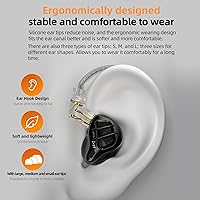
The over-ear hook design keeps these hybrid monitors locked in place during active use — vocalists and performers who move around on stage found the secure fit genuinely reliable without needing to readjust between songs. The included silicone tips in three sizes cover most ear anatomies reasonably well.
Deep-insertion IEMs are a polarizing format, and these are no exception. Users with narrower or more sensitive ear canals reported discomfort after 60 to 90 minutes, with some needing to purchase third-party foam tips before achieving a comfortable, lasting seal. This is probably the most common point of friction across buyer feedback.
Noise Isolation
84%
The passive isolation performs well in real-world noisy environments — commuters on subway trains and bus riders consistently reported being able to focus on music or reference tracks without needing to push volume uncomfortably high. The deep-insertion fit, once a proper seal is achieved, handles mid and high-frequency ambient noise particularly well.
Low-frequency rumble, like air conditioning hum or airplane cabin drone, bleeds through more than buyers often expect from a 36dB isolation claim. The figure represents optimal lab conditions, and real-world isolation with stock tips sits closer to 26 to 30dB for most users.
Cable Quality
62%
38%
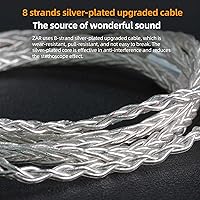
The 8-strand silver-plated cable is visually premium and feels noticeably more robust than the thin, rubbery cables bundled with budget competitors. Tangle resistance is good in practice, and the right-angle 3.5mm plug is a thoughtful choice for pocket or bag use.
This is where opinion splits most sharply — a meaningful portion of buyers consider the stock cable the weakest part of the package and swap it out within the first few weeks. Microphonics when the cable brushes against clothing are present enough to be distracting during walking or commuting use.
Value for Money
91%
Measured purely against the driver count, shell material, and monitoring performance delivered, these hybrid monitors represent exceptional value in the chi-fi space. Buyers who have owned IEMs costing two or three times as much frequently describe the ZAR earphones as a serious threat to more expensive options at the price.
Value perception drops if a buyer ends up needing to purchase third-party ear tips and an aftermarket cable shortly after buying — those additions push the real cost of ownership up by a noticeable margin and chip away at the initial value proposition.
Ease of Driving
93%
At 16.5 ohms and 109dB sensitivity, this KZ IEM runs beautifully from a smartphone headphone jack or a basic DAP with no external amplifier required. Studio engineers appreciated being able to plug directly into an audio interface output during tracking without volume headroom issues.
The high sensitivity does mean that hiss from noisy source components becomes more audible than with higher-impedance IEMs. Users pairing these with budget dongles or older smartphones occasionally reported background hiss at quiet listening volumes.
Ear Tip Selection
71%
29%
Three sizes of silicone tips are included, and the medium fit works well for the average ear without adjustment. The tips form a firm enough seal to support the noise isolation claims when properly seated, and the material is soft enough to wear for moderate listening periods.
The stock silicone tips are functional but not exceptional — they lack the grip and long-wear comfort of aftermarket options like foam or wider-bore silicone tips. Users who do not achieve a natural seal with any of the three included sizes have no fallback in the box.
Detachable Cable System
77%
23%
The 0.75mm 2-pin connector system is a practical design choice that extends the usable life of the IEM considerably — replacing a worn or damaged cable costs a fraction of replacing the whole unit. The connection feels secure with no noticeable wobble or signal dropout during normal use.
The 0.75mm 2-pin standard is less universal than the MMCX connectors found on some competing IEMs, which slightly limits aftermarket cable options. A few users also noted that the connector fit feels slightly loose compared to tighter-toleranced 2-pin implementations on pricier monitors.
Bluetooth Compatibility
58%
42%
The option to pair the ZAR earphones with KZ’s AZ09 Pro or AZ20 Bluetooth adapter is a genuine plus for users who want occasional wireless use without buying a separate product. The adapter concept works well in practice and the connection reliability is generally praised when used with compatible KZ modules.
The Bluetooth adapter is not included in the box, which catches some buyers off guard — the listing language around this feature is easy to misread as built-in wireless functionality. The added cost of the adapter is not negligible, and the setup adds bulk that undermines the low-profile aesthetic of the shells.
Aesthetics & Design
81%
19%
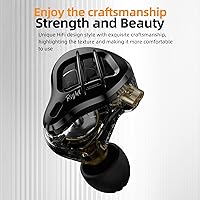
The minimalist aluminum shell design reads as understated and professional rather than flashy, which suits the monitoring-oriented positioning well. The overall look holds up next to much more expensive IEMs without appearing out of place on a recording session or live stage.
The design is deliberately restrained, which may disappoint buyers expecting the visual drama found in some competing IEMs with colorful faceplates or resin shells. Color options are limited, and the aesthetic prioritizes function over personalization.

Suitable for:

The KZ ZAR is built with a clear primary audience in mind: musicians, vocalists, and audio engineers who need a reliable, isolating in-ear monitor that tells the truth about what is happening in a mix. Stage performers especially benefit from the secure over-ear hook fit and the deep passive isolation, which keeps them locked into their monitor feed even in loud live environments. Home studio engineers doing reference listening or tracking will appreciate the hybrid driver setup's ability to resolve fine detail across the frequency range without the coloration that makes casual consumer earbuds unsuitable for critical work. Audiophile hobbyists who are curious about the chi-fi IEM space but are not ready to spend on boutique custom monitors will find this KZ IEM punches well above its price bracket in terms of technical capability. Commuters and frequent travelers who want strong passive noise blocking without the battery dependency of active noise cancellation will also get real practical value here, particularly on loud transit routes.

Not suitable for:

The KZ ZAR is a poor fit for buyers who prioritize comfort above all else, particularly those with narrower ear canals or sensitivity to deep-insertion IEM designs — the format simply does not suit every ear anatomy, and no amount of tip swapping fully resolves that for some users. Anyone expecting a warm, bass-heavy sound signature for casual listening to hip-hop or EDM will likely find the analytical tuning unrewarding; these hybrid monitors are voiced for accuracy, not euphonic excitement. Buyers who want true wireless convenience out of the box should look elsewhere — Bluetooth requires a separately purchased adapter, and that addition adds cost and physical bulk. If you need a microphone for calls, gaming chat, or content creation, these earphones offer nothing in that department. Finally, budget-conscious buyers who factor in the likely cost of third-party ear tips and a better cable should recalculate the real total spend before committing.

Specifications

  • Driver Config: Seven balanced armature drivers and one 10mm dynamic driver are housed in each earpiece, forming a hybrid configuration designed to cover the full audible frequency range with distinct driver responsibilities.
  • Impedance: Rated at 16.5Ω ±3 at 1kHz, making these hybrid monitors compatible with low-power sources like smartphones, laptops, and portable DAPs without requiring a dedicated headphone amplifier.
  • Sensitivity: Sensitivity measures 109dB/Vrms at 1kHz, meaning the earphones reach comfortable listening volumes at relatively low output levels from most consumer and professional source devices.
  • Frequency Response: The stated frequency response spans 20Hz to 40,000Hz, covering the full range of human hearing and extending into ultrasonic territory relevant to high-resolution audio formats.
  • Noise Isolation: Passive noise isolation is rated at up to 36dB, achieved through deep-insertion silicone ear tips that form a physical seal within the ear canal rather than using active electronics.
  • Cable: The included cable consists of 8 strands of silver-plated wire, measures approximately 3.93ft (1.2m) in length, and terminates in a 3.5mm right-angle plug.
  • Connector Type: The earphones use a 0.75mm 2-pin detachable connector system, allowing the cable to be replaced independently without retiring the earphone shells.
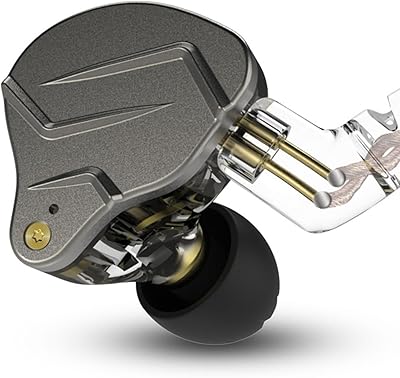
  • Shell Material: The outer earpiece housing is precision-milled from aluminum billet, with internal structural components made from plastic to manage overall weight.
  • Earpiece Shape: Both earpieces are contoured for an over-ear hook fit, with the cable looping over the top of the ear to stabilize the monitor during movement or performance.
  • Bluetooth: These earphones are not natively wireless but are compatible with the KZ AZ09 Pro and AZ20 Bluetooth adapter modules, which are sold separately and clip onto the 2-pin connector.
  • Ear Tips: Three pairs of silicone ear tips in small, medium, and large sizes are included in the box, all designed for deep-insertion canal fit.
  • Plug Type: The cable terminates in a 3.5mm stereo audio jack with a 90-degree right-angle profile, reducing stress on the connector during portable use.
  • Water Resistance: The earphones carry a water-resistant designation, providing basic protection against sweat and light moisture exposure during active use.
  • Weight: The complete unit including cable weighs approximately 3.84 ounces (109g), with the earpiece shells themselves being considerably lighter when measured without the cable.
  • Package Contents: Each unit ships with the earphones, one silver-plated cable, three pairs of silicone ear tips (S, M, L), and a printed user manual.
  • Model Name: The unit model is designated ZAR, representing one of KZ’s upper-tier releases within their in-ear monitor product line.
  • Audio Latency: The manufacturer lists a wired audio latency figure of 0.01 milliseconds, which is functionally imperceptible for both music listening and video-synchronized audio use.
  • Interface: The earphones connect via a standard 3.5mm analog audio jack, with no USB-C or Lightning native connectivity included.

Related Reviews
KZ ZAR Hybrid In-Ear Monitors
86%
92%
Sound Quality
89%
Comfort & Fit
90%
Noise Isolation
84%
Build Quality & Durability
72%
Cable Durability
More
KZ ZS12 PRO X
KZ ZS12 PRO X
89%
95%
Sound Clarity
91%
Bass Response
93%
Treble Detail
90%
Midrange Accuracy
88%
Noise Isolation
More
KZ ZEX Hybrid Earbuds
82%
91%
Sound Quality
88%
Comfort & Ergonomics
92%
Value for Money
87%
Build Quality & Durability
85%
Ease of Use
More
KZ ZA12 In-Ear Monitor
87%
92%
Sound Quality
88%
Comfort for Long Listening
85%
Build Quality
89%
Customization (Tuning Switch)
83%
Noise Isolation
More
KZ ZSN Pro in Ear Monitors
85%
91%
Sound Quality
85%
Comfort & Fit
88%
Build Quality
89%
Noise Isolation
82%
Durability
More
KZ Castor In-Ear Monitor Headphones
88%
91%
Sound Quality
87%
Comfort & Fit
94%
Noise Isolation
85%
Durability
92%
Customizability (Sound Profile)
More
KZ ZST X In-Ear Monitors
85%
91%
Sound Clarity
76%
Bass Performance
88%
Comfort & Fit
84%
Build Quality & Durability
70%
Cable Quality & Handling
More
KZ AS24 In-Ear Monitor Headphones
88%
93%
Sound Quality
89%
Customization/Adjustable Tuning
86%
Comfort and Fit
91%
Build Quality and Durability
75%
Ease of Use (Tuning System)
More
Kinboofi KZ AS16 In-Ear Monitor Earphones
84%
94%
Sound Quality
89%
Build Quality
78%
Comfort & Fit
85%
Cable Durability
91%
Frequency Range
More
KZ ZSN PRO X Wired Earbuds
84%
91%
Sound Quality
88%
Comfort & Fit
85%
Noise Isolation
82%
Build Quality
74%
Durability
More

FAQ

There is no built-in Bluetooth — the KZ ZAR is a wired IEM by default. If you want wireless capability, you need to purchase the KZ AZ09 Pro or AZ20 Bluetooth adapter separately, which attaches to the 2-pin connector on each earpiece. It is a functional solution but adds cost and a bit of extra bulk around the ear.

Not at all. At 16.5 ohms and 109dB sensitivity, these hybrid monitors are easy to drive from a standard smartphone, laptop headphone jack, or portable DAP. You will hit comfortable listening volumes without any additional amplification gear, though a dedicated DAC or amp can still improve the overall experience if you have one.

Fit is genuinely the most variable aspect of these earphones, and it is worth being honest about that. The over-ear hook design helps with stability, but the deep-insertion format does not suit every ear canal shape or size. If you found other IEMs of this style uncomfortable, there is a real chance you will need to experiment with third-party foam or wide-bore silicone tips to get a comfortable seal — or that the format simply may not work well for you regardless of tip choice.

The tuning leans analytical and slightly bright rather than warm or bass-heavy. Highs are extended and detailed, mids are present and relatively clear, and the low end is controlled and accurate rather than punchy or emphasized. It is a great monitoring signature for dissecting a mix, but buyers who prefer a more relaxed, bass-forward presentation for casual listening may find it a little clinical.

Yes — the 0.75mm 2-pin connector is a standard KZ format and cables are widely available from both KZ directly and numerous third-party accessory makers online. Replacing a worn cable is straightforward and far cheaper than replacing the entire unit, which is one of the more practical advantages of the detachable cable design.

No, the version listed here does not include a microphone. If you need hands-free call capability or a mic for gaming, you would need to either purchase the mic variant if one becomes available, or pair these with a separate clip-on microphone solution.

Quite well in practice, though the real-world isolation sits closer to 26 to 30dB for most people rather than the stated 36dB maximum, which represents ideal laboratory conditions. On a busy subway or bus, these hybrid monitors block enough ambient noise to let you listen at moderate volumes without competing with the environment around you.

They are genuinely useful for reference listening, tracking, and mixing checks — particularly for musicians and engineers who already prefer the IEM format over open-back headphones. The driver separation and frequency extension are real advantages for critical listening work. That said, most professional engineers would treat these as a complementary tool alongside other monitoring equipment rather than a sole reference source.

Long-term owners report very positive durability experiences — the aluminum billet shells resist scratching and show no structural wear after heavy daily use. The weakest point is actually the nozzle area, which uses plastic rather than metal and has drawn some criticism for feeling less premium than the rest of the shell.

The ZAR earphones do work for gaming — the soundstage imaging is solid enough for positional audio in open-world or tactical games. However, the lack of a built-in microphone is a real limitation for anyone playing online multiplayer where communication matters. If you primarily play single-player games and care about audio quality over chat functionality, these are a reasonable choice; otherwise, a headset with an integrated mic will serve you better.