Overview

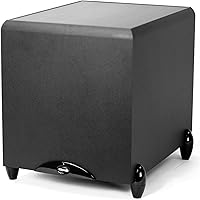
The Klipsch Sub-12HG 12-Inch Subwoofer sits in a comfortable middle ground — serious enough for a dedicated home theater setup, yet priced where real buyers actually shop. It belongs to Klipsch's Synergy Series, a lineup built around the idea that good audio should not require a specialist's budget. The 12-inch driver fires downward, letting the floor help disperse bass energy across the room rather than projecting it in one direction. Build quality feels appropriately solid, and the high-gloss black trim looks noticeably more polished than the flat-finish boxes common at this price range. That said, at 40 pounds and built to stand on the floor, this is not something you rearrange casually — plan its placement carefully before you commit.
Features & Benefits

The amplifier inside the Sub-12HG uses BASH technology, which blends Class A/B and Class D amplification to stay thermally efficient without giving up the dynamic headroom you notice during loud movie scenes. The result is 300 watts of continuous output — a figure that means far more than inflated peak watt claims. Its frequency response reaches down to 24Hz, which is the range where you physically feel an explosion or a deep bass drop before you consciously register it. A variable low-pass filter and switchable phase control let you tune the sub to blend naturally with existing speakers. Dual inputs — RCA and speaker-level — cover virtually any receiver, and the auto on/off function handles standby without any manual involvement.

Best For

This 12-inch sub makes the most sense for anyone building or upgrading a home theater in a small to medium-sized room. It is particularly well-suited to buyers who watch a lot of action films or play immersive games — the kind of content where physical bass presence genuinely changes what you experience. If you are already running Klipsch Synergy Series speakers, pairing this sub in brings tonal consistency that randomly matched components rarely deliver. It is also a meaningful step up for anyone coming from an 8- or 10-inch entry-level woofer. Larger open-plan spaces may find the output stretched thin at serious volume levels, so room size is worth factoring in before purchasing.

User Feedback

With over 600 ratings and a 4.5-star average accumulated across more than a decade on the market, the Sub-12HG has held up remarkably well in buyer opinion. Most satisfied owners cite the depth and punch of the bass as their top reason to recommend it, along with how readily it integrates into existing systems. On the critical side, the weight and bulk draw genuine complaints — getting it into position solo is no small task, and the glossy finish collects smudges and dust more than a matte surface would. Some buyers have flagged inconsistent auto on/off behavior, with the sub occasionally failing to wake from standby or shutting off too soon. Long-term durability feedback, however, skews positive for a product this age.

Pros

  • Bass extension down to 24Hz delivers physical, felt impact during movies and games — not just audible low end.
  • The BASH amplifier provides 300 watts of continuous, thermally stable power rather than inflated peak-watt figures.
  • Variable low-pass filter and phase control make it genuinely easy to blend with a wide range of existing speakers.
  • Accepts both RCA line-level and speaker-level inputs, so it works with nearly any receiver or amplifier on the market.
  • Auto on/off is a practical everyday convenience that eliminates the need to manually manage standby.
  • High-gloss black trim looks more premium than the utilitarian finishes common among competitors at this price point.
  • Down-firing driver orientation helps distribute bass more evenly across the room floor rather than focusing it directionally.
  • A 4.5-star average across over 600 ratings, accumulated over more than a decade, speaks to consistent long-term satisfaction.
  • Pairs particularly well with other Synergy Series speakers for buyers building a cohesive Klipsch system.
  • Owners frequently report the sub still performs reliably years after purchase, suggesting solid build durability.

Cons

  • At 40 pounds, solo setup and repositioning is a genuine physical effort — not ideal for single-person installations.
  • The high-gloss finish attracts fingerprints and dust noticeably faster than a matte or textured surface would.
  • Auto on/off behavior has been flagged as inconsistent by some users, occasionally sleeping too early or waking unreliably.
  • No wireless connectivity of any kind — buyers wanting a cleaner cable-free setup will need to look at newer options.
  • No built-in DSP or room correction means integration quality depends entirely on manual filter and phase adjustments.
  • Output can feel underwhelming in larger, open-plan rooms where the 12-inch driver has more space to fill than it handles comfortably.
  • The product design dates back to 2010, so it lacks features that have become common in newer subwoofers at similar price points.
  • Floor placement is the only real option, which limits flexibility in rooms where furniture arrangements are tight or unconventional.

Ratings

The scores below reflect our AI-driven analysis of verified global buyer reviews for the Klipsch Sub-12HG 12-Inch Subwoofer, with spam, bot-generated, and incentivized feedback actively filtered out before any scoring was applied. We evaluated over 600 real-world ratings across multiple purchase cohorts to surface what owners genuinely love and where frustrations consistently emerge. Both the highs and the legitimate pain points are represented honestly here — no score has been inflated to protect brand reputation.

Bass Performance
88%
Owners repeatedly describe the low-end output as physically felt rather than just audible — exactly the kind of impact that makes movie explosions and bass drops in music land with conviction. In small to medium rooms, the 24Hz floor of this sub's range adds a dimension that most entry-level woofers simply cannot reach.
In larger or open-plan rooms, several users note the bass starts to feel diluted at higher volumes, losing some of that chest-pressure quality. The down-firing orientation can also interact unpredictably with thick carpet, softening the output in ways that require repositioning to address.
Amplifier Quality
84%
The BASH amplifier runs clean and cool even during extended high-volume sessions — a meaningful advantage over conventional Class A/B designs that can throttle output when they overheat. Buyers upgrading from budget subs with generic amplifiers notice the improved dynamic control immediately during fast bass transients.
The amplifier's dynamic wattage figure gets marketed aggressively, which sets expectations some users feel the sub does not fully meet in real-world listening conditions. A handful of long-term owners have also reported amp-related issues appearing after several years of use, though this remains a minority experience.
Integration & Tuning
86%
The combination of a variable low-pass filter, switchable phase control, and dual input types gives this sub a level of system compatibility that many rivals at this price tier do not offer. Users running mixed-brand speaker setups consistently report being able to dial in a crossover point that blends naturally without a muddy overlap.
Getting the phase control right requires a bit of patience and ideally a test tone or calibration track — buyers who skip this step often end up with a sub that sounds disconnected from their mains. The manual tuning-only approach also means there is no automated assistance for those less confident with audio setup.
Build Quality
79%
21%
The cabinet feels solid and appropriately dense for a floor-standing sub at this price point, and the high-gloss black trim gives it a visual presence that punches above its weight class aesthetically. Long-term owners frequently comment that the unit still feels structurally tight after years of regular use.
The gloss finish, while attractive, is a fingerprint and dust magnet that frustrates owners who care about keeping their setup looking clean. A few buyers also noted minor cosmetic imperfections on the cabinet edges out of the box, suggesting quality control is good but not airtight.
Ease of Setup
67%
33%
Electrically, connecting the Sub-12HG is genuinely uncomplicated — the rear panel is clearly labeled, the dual inputs remove compatibility guesswork, and most buyers report being up and running within 20 minutes of unboxing. Users with basic AV knowledge find the controls intuitive enough to configure without referencing the manual.
The physical setup is a different story: at 40 pounds, solo installation into a tight media cabinet corner or under a TV stand is a real workout that catches buyers off guard. Several reviewers specifically recommend having a second person on hand, noting that the weight combined with the unit's bulk makes precision placement awkward alone.
Auto On/Off Reliability
61%
39%
When the auto on/off circuit functions as intended, it is a genuinely useful quality-of-life feature — the sub wakes when you start watching or listening and sleeps quietly when you stop, with no manual intervention needed. Buyers who listen at moderate to high volumes tend to report consistent, reliable behavior.
At lower listening volumes, the signal detection threshold becomes a real problem for a notable minority of users — the sub either stays asleep when it should wake, or drops out mid-session when the signal dips momentarily. This is a recurring enough complaint that prospective buyers who prefer quiet background listening should factor it into their decision.
Value for Money
82%
18%
Given the amplifier technology, driver size, and Klipsch's brand heritage, most buyers feel the Sub-12HG delivers a performance-to-cost ratio that holds up well against newer competitors at a similar price. The fact that units purchased years ago are still performing reliably adds weight to the long-term value argument.
The product's age means buyers are paying for a design that has not been meaningfully updated since 2010, and some newer rivals now offer room correction technology and wireless inputs at comparable prices. For buyers who prioritize features per dollar rather than pure acoustic output per dollar, the value calculation looks less favorable.
Room Compatibility
72%
28%
In its intended environment — a small to medium dedicated listening or home theater room — this 12-inch sub genuinely pressurizes the space in a satisfying way, giving movies and music a physical bass foundation that smaller drivers cannot match. Buyers who have matched it to appropriately sized rooms consistently rate their experience highly.
Place this sub in an open kitchen-living room layout or any space above roughly 350 square feet and the performance ceiling becomes apparent fairly quickly. Output that feels commanding in a closed room can feel thin and unconvincing when the bass has too much space to dissipate into.
Long-Term Durability
83%
For a product introduced in 2010, the volume of positive longevity feedback is genuinely reassuring — multiple reviewers specifically mention owning the sub for five or more years without performance degradation. Klipsch's reputation for building robust drivers contributes to buyer confidence in this area.
A small but consistent set of reviews report amplifier issues emerging after extended ownership, particularly in units driven hard over long periods. The limited warranty provides some initial protection, but buyers should understand that older units may be past coverage eligibility.
Connectivity Options
69%
31%
Supporting both RCA line-level and speaker-level inputs covers the practical needs of the vast majority of home theater and stereo receiver setups in use today, which is why compatibility complaints are rare among verified buyers. The dual-input design makes this sub accessible to users at different stages of their audio journey.
There is no wireless input of any kind, which is an increasingly visible limitation as competing products at similar price points begin to offer Bluetooth or Wi-Fi streaming capability. Cable management from a remotely placed receiver to a corner-positioned subwoofer is a minor but real inconvenience several users mention.
Finish & Aesthetics
74%
26%
The high-gloss black cabinet stands out in a product category where matte black boxes dominate, and many buyers specifically mention that it looks noticeably more premium than they expected given the price. It fits naturally into modern living room setups without looking like a utility appliance.
The glossy surface requires regular upkeep — smudges from routine handling and dust accumulation are visible from across the room under any decent lighting. Owners with pets or young children report the finish looking worn and fingerprint-covered within weeks of setup unless they are diligent about wiping it down.
Synergy Series Pairing
87%
Buyers who pair the Sub-12HG with other Klipsch Synergy Series speakers consistently report a tonal coherence that mixed-brand systems struggle to replicate — the crossover between the sub and the mains sounds natural rather than stitched together. This matched-system experience is one of the most praised aspects in multi-unit Klipsch setup reviews.
The benefit is essentially exclusive to Synergy Series owners — buyers who are not already in the Klipsch ecosystem do not gain any meaningful advantage from the series branding and should evaluate this sub purely on its standalone acoustic merits.
Gaming Performance
81%
19%
Console and PC gamers who connect via RCA to a stereo receiver frequently highlight how much the Sub-12HG adds to action titles and open-world soundscapes — rumble effects, distant explosions, and environmental bass cues gain a physicality that standard speaker setups completely miss. The compatibility with gaming consoles is straightforward and requires no special configuration.
Gamers in shared living situations or apartments may find the sub difficult to use at volumes where its performance truly shines, given how easily deep bass travels through walls and floors. The lack of a fine-grained volume preset or scene-based EQ also means manual adjustment is needed when switching between games and movies.
Noise & Distortion
76%
24%
At moderate to moderately high volume levels, the Sub-12HG tracks cleanly without noticeable port noise or driver strain — the BASH amplifier keeps output stable through dynamic peaks that would cause cheaper amps to clip. Buyers who watch a wide variety of content report consistent, distortion-free performance across different bass frequencies.
Pushing the sub to its upper volume limits in small rooms can introduce some cabinet resonance that more discerning listeners pick up on during quieter passages immediately following loud bass peaks. It is not a common complaint, but it does emerge in reviews from buyers who habitually listen at reference-level volumes.

Suitable for:

The Klipsch Sub-12HG 12-Inch Subwoofer is a strong match for home theater builders who want genuinely satisfying bass without pushing into audiophile-tier spending. It works especially well in dedicated media rooms or living rooms of small to medium size, where a 12-inch down-firing driver can fully pressurize the space. Movie fans who prioritize that chest-thumping impact during action sequences or sci-fi soundscapes will get real value here. Gamers running a console or PC through a stereo receiver will also find the dual input options make hookup straightforward. If you already own other speakers from the Klipsch Synergy Series, this sub slots in with tonal consistency that mismatched components rarely achieve. It also suits buyers upgrading from a budget 8- or 10-inch woofer who want a noticeable, immediate improvement in low-end depth.

Not suitable for:

The Klipsch Sub-12HG 12-Inch Subwoofer is not the right call for anyone furnishing a large, open-plan space — at higher volumes in bigger rooms, the output can feel stretched and lose some of the authority that makes it impressive in a contained environment. Apartment dwellers or anyone with thin walls and noise-sensitive neighbors should think carefully, because this sub is built to be heard and felt, and it does not have a subtle low-volume mode that satisfies in the same way. Buyers who move their audio setup frequently will find 40 pounds and a bulky footprint genuinely inconvenient. Those who prioritize a clean, dust-resistant finish in a busy household may also be frustrated, as the high-gloss surface shows every smudge. Finally, anyone expecting wireless connectivity or modern streaming-era features like DSP room correction will need to look elsewhere — this is a straightforward, wired subwoofer with no smart features.

Specifications

  • Driver Size: The subwoofer uses a 12-inch dynamic driver positioned to fire downward toward the floor.
  • Amplifier Type: A built-in BASH amplifier delivers 300 watts RMS of continuous power with up to 650 watts of dynamic headroom for transient peaks.
  • Frequency Response: The Sub-12HG covers a range of 24Hz to 120Hz within plus or minus 3dB, reaching into the sub-bass territory felt more than heard.
  • Low-Pass Filter: A variable low-pass filter lets you set the crossover point to match the rolloff of your existing main speakers.
  • Phase Control: A switchable 0-to-180-degree phase adjustment helps time-align the subwoofer's output with your other speakers for a coherent soundstage.
  • Inputs: Two connection types are supported: line-level RCA inputs and speaker-level inputs, covering the vast majority of home receivers and amplifiers.
  • Auto On/Off: The unit includes automatic standby activation and wake detection, powering up when it senses an audio signal and sleeping when the signal stops.
  • Dimensions: The cabinet measures 19.9 x 15 x 18 inches, requiring a dedicated floor footprint in your listening room.
  • Weight: The unit weighs 40 pounds, making solo unboxing and placement a physically demanding task for most users.
  • Finish: The exterior features a high-gloss black trim that distinguishes it visually from the flat-finish cabinets more common at this price tier.
  • Mounting Type: Designed exclusively for floor-standing placement; no wall-mount or shelf-mount option is supported.
  • Power Source: The amplifier is powered via a standard corded AC connection; no battery or wireless power option is available.
  • Surround Config: Fully compatible with 5.1 surround sound configurations, functioning as the LFE (low-frequency effects) channel in a home theater setup.
  • Woofer Direction: The driver faces downward, using the floor surface to help radiate bass energy outward in multiple directions around the unit.
  • Series: The Sub-12HG is part of Klipsch's Synergy Series, designed to integrate tonally with other speakers in that family.
  • Model Number: The official model designation is Sub-12HG, used consistently across Klipsch documentation and packaging.
  • Warranty: Klipsch covers this subwoofer under a limited warranty; buyers should confirm current terms directly with Klipsch or their retailer at purchase.
  • Connectivity: All connections are wired only; there is no Bluetooth, Wi-Fi, or any other wireless audio input available on this model.

Related Reviews
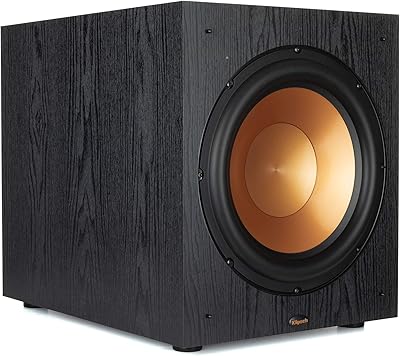
Klipsch SPL-120 12-inch Powered Subwoofer
80%
91%
Bass Performance
88%
Build Quality
89%
Amplifier Headroom
87%
System Integration
83%
Value for Money
More
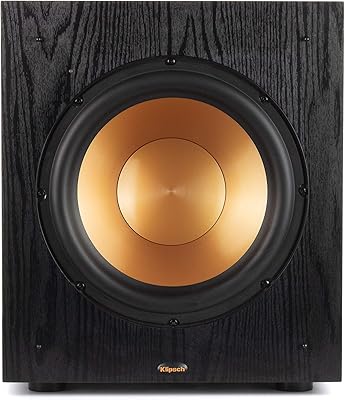
Klipsch Sub-120 12-inch Subwoofer
80%
88%
Bass Quality
91%
Build Quality
83%
Value for Money
93%
Ease of Setup
76%
Room Compatibility
More
Klipsch Sub-100 10-inch Subwoofer
80%
83%
Bass Performance
88%
Build Quality
91%
Value for Money
86%
Setup & Integration
87%
Placement Flexibility
More
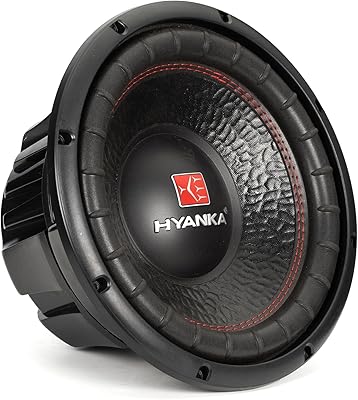
HYANKA BSC-12-2 12-Inch Car Subwoofer
70%
84%
Value for Money
79%
Bass Output & Low-End Extension
72%
Build Quality
81%
Magnet & Motor Strength
66%
Installation Experience
More
CT Sounds STRATO-12-D4 12-Inch Car Subwoofer
78%
89%
Bass Output & Volume
91%
Build Quality
88%
Thermal Durability
86%
Value for Money
74%
Installation Experience
More
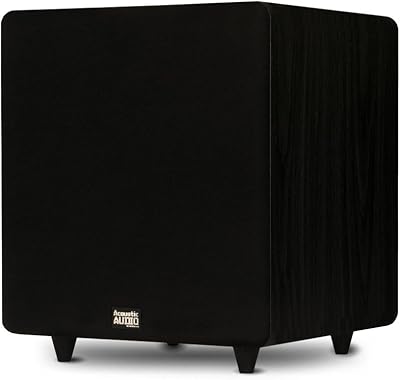
Acoustic Audio PSW500-12 12-Inch Powered Subwoofer
73%
83%
Bass Output for Price
88%
Ease of Setup
86%
Value for Money
67%
Build Quality
71%
Sound Quality
More
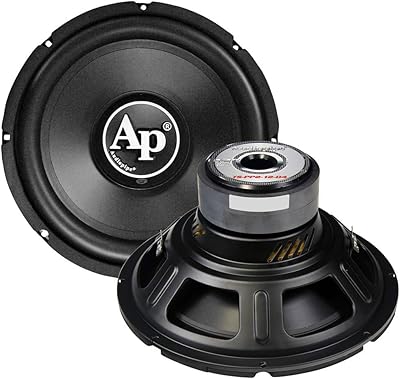
Audiopipe TS-PP2-12-D4 12-inch Car Subwoofer
70%
74%
Value for Money
71%
Bass Output
67%
Build Quality
58%
Power Handling
73%
Voice Coil Quality
More
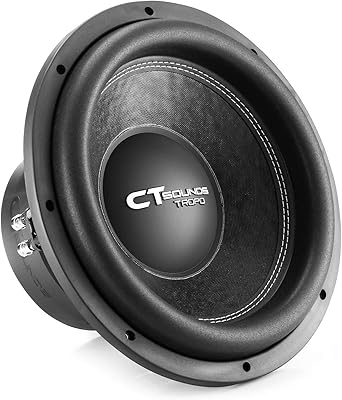
CT Sounds TROPO-12-D4 12-inch Car Subwoofer
77%
93%
Value for Money
81%
Bass Output Quality
86%
Build Quality
78%
Thermal Performance
84%
Installation Ease
More
CT Sounds STRATO-12-D2 12 Inch Dual 2 Ohm Car Subwoofer
86%
93%
Bass Performance
89%
Durability
91%
Power Handling
88%
Sound Clarity
84%
Ease of Installation
More
Crunch CRW12D4 12-inch Car Subwoofer
70%
83%
Value for Money
74%
Bass Output
67%
Build Quality
86%
Installation Ease
81%
Wiring Flexibility
More

FAQ

Yes, it will. The Sub-12HG includes speaker-level inputs specifically for receivers that do not have a dedicated subwoofer or LFE output. You simply run a connection from your receiver's speaker terminals into the sub's speaker-level input, and it handles the rest internally.

It performs best in small to medium-sized rooms — think a dedicated home theater space or a living room under roughly 300 to 350 square feet. In larger, open-plan areas, the output starts to feel thinner at higher volumes because the driver has more air to move than it is ideally sized for.

It is a legitimate concern that some owners have raised. The auto wake circuit depends on detecting an audio signal above a certain threshold, so at very low listening volumes it can occasionally stay in standby or drop out unexpectedly. If you tend to listen quietly, you may find it worth manually managing power until you settle on a sensitivity level that works with your setup.

Neither is categorically better — it depends on your room and floor surface. Down-firing woofers use the floor as a kind of acoustic boundary, which can help spread bass more evenly around the unit. On thick carpet, some of that energy can be absorbed, softening the output slightly. On hardwood or tile, it typically performs as intended.

That is actually the ideal pairing scenario. The Synergy Series was designed with internal tonal consistency in mind, and adding a matched sub from the same family tends to produce a much more natural crossover blend than mixing brands. You will still want to spend some time adjusting the low-pass filter and phase control, but the tonal character should integrate naturally.

Phase control adjusts the timing of the subwoofer's output relative to your main speakers. When they are out of sync, bass can sound muddy or weak even at high volume. Setting phase to 0 degrees or 180 degrees — or somewhere in between — helps the sub and your mains reinforce each other rather than partially cancel. It takes a few minutes of listening and adjusting to dial in, but it makes a meaningful difference.

Connecting the cables is genuinely straightforward — it is just RCA or speaker wire into the back panel. The harder part is the physical setup. At 40 pounds, moving this 12-inch sub into position, especially if you need to slide it under furniture or into a corner, is much easier with two people. Once it is placed, the electronic setup is not complicated.

Its age is worth acknowledging honestly. The driver and amplifier technology it uses is proven and still capable, and long-term owners generally report it holding up well mechanically. What it lacks compared to newer models is modern features like wireless connectivity or built-in DSP room correction. If raw acoustic performance in a wired setup is your priority, the age matters less. If smart features matter to you, newer competitors have the edge.

A soft microfiber cloth is your best tool — the glossy surface shows fingerprints and dust quickly, but it wipes off easily without scratching. Avoid abrasive cloths or household spray cleaners, which can dull or damage the finish over time. A light dry wipe every week or two is usually all it needs.

It works for music, though its character tends to suit bass-heavy genres — electronic, hip-hop, rock — better than it does acoustic or classical recordings where precision and restraint matter more. The variable low-pass filter helps you roll off the sub at a point that feels natural for music, but keep in mind that a 12-inch driver optimized for home theater output will always have a slightly bigger personality than a studio-tuned sub designed purely for music.