Overview

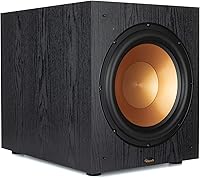
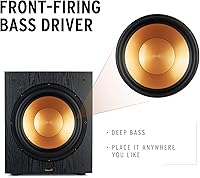
The Klipsch Sub-120 12-inch Subwoofer sits in a comfortable spot in the home theater market — credible brand heritage, real performance, and a price that does not require a second mortgage. Klipsch has been building speakers since 1946, and that experience shows in how this unit is engineered rather than just spec-listed. The front-firing driver is worth noting: unlike down-firing designs, it gives you more placement freedom, including against walls or inside entertainment units without smothering the output. This is a subwoofer built for someone who wants noticeable, room-filling bass without crossing into audiophile territory. It consistently ranks among the top home audio subwoofers on Amazon — a reasonable signal of broad buyer satisfaction.
Features & Benefits

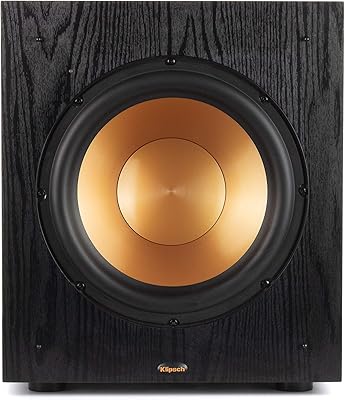
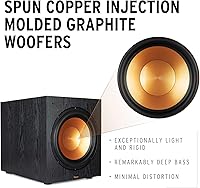
The heart of this 12-inch sub is its spun copper Cerametallic woofer — a cone material that is stiffer and lighter than standard paper or polypropylene, which means less flex under pressure and cleaner bass reproduction. Power ratings can confuse buyers: the 200W continuous figure reflects what the amplifier sustains during a long movie session, while the 400W dynamic number covers short, punchy bursts like an action sequence. Both matter depending on how you use it. The front-firing orientation means you are not locked into open-floor placement; against a wall works fine. Wired connectivity via line-level input keeps it compatible with virtually any AV receiver, regardless of brand. The removable grille and clean black finish make it easy to fit into a living room without looking industrial.

Best For

This Klipsch subwoofer makes the most sense for someone taking a real step up — not a first-time speaker buyer, but someone who has been living with a soundbar or a budget sub and wants genuine low-end impact. Medium-sized rooms around 200 to 400 square feet are where the 12-inch driver really does its best work; in a large open-plan space, it may start to feel underpowered. It pairs naturally with a 5.1 or 7.1 AV receiver, and the wired connection is actually a reliability plus in a setup you are not constantly reconfiguring. If wireless or smart home integration is on your checklist, this is not your sub. And if you live in an apartment with shared walls, the bass at volume will absolutely become a neighbor conversation.

User Feedback

Owners of the Sub-120 tend to highlight two things most consistently: how controlled and punchy the bass sounds, and how well it blends into a living room without dominating the space. The setup process draws minimal complaints — connecting it to a receiver is about as uncomplicated as it gets. That said, buyers with experience comparing multiple subs sometimes point out that the low end rolls off noticeably around 25 Hz, meaning truly subsonic film effects may not fully register. Long-term owners speak positively about durability, and Klipsch's brand reputation provides some reassurance around the limited warranty coverage. A fair portion of buyers flag that no wireless option exists as a genuine limitation for modern setups, which is a reasonable criticism worth acknowledging before purchase.

Pros

  • The spun copper Cerametallic cone produces noticeably tighter, cleaner bass compared to standard paper-cone drivers at this price tier.
  • Front-firing driver placement gives you real flexibility — against a wall, inside a cabinet, or in a corner all work without killing output.
  • Connects reliably with virtually any AV receiver brand via standard line-level input, making system integration straightforward.
  • The 400W dynamic power rating handles sudden bass peaks in action films without audible strain or distortion.
  • At 36 pounds and a compact footprint, the Sub-120 is manageable to move and position without needing a second person.
  • The removable grille and contemporary finish let it blend into a living room rather than dominating it visually.
  • Setup is genuinely simple — most buyers report being up and running within 15 minutes of unboxing.
  • Klipsch's brand longevity and warranty coverage provide reasonable confidence in long-term reliability.
  • Bass response is consistently described as punchy and controlled rather than boomy or one-note.
  • Ranks among the top-selling home audio subwoofers, which reflects a broad base of real-world satisfied buyers.

Cons

  • No wireless connectivity at all — Bluetooth or Wi-Fi integration is completely absent, which is a real gap in a modern setup.
  • Low-frequency extension rolls off noticeably around 25 Hz, meaning the deepest subsonic effects in films will not fully come through.
  • A single unit can feel underpowered in large open-plan rooms exceeding 400 square feet.
  • No built-in EQ, app control, or room correction features — tuning is limited to basic level and crossover knobs.
  • At 36 pounds, repositioning or experimenting with placement is more effort than lighter competing models.
  • The limited warranty may not fully satisfy buyers accustomed to more comprehensive multi-year coverage from competing brands.
  • Bass at higher volumes carries well through walls and floors, making this a poor fit for noise-sensitive living situations.
  • No auto-sensing power mode — some buyers find it does not wake and sleep as intelligently as newer competing designs.
  • The included documentation is minimal, which can frustrate buyers new to integrating a subwoofer into a surround system.
  • Buyers expecting to feel truly subsonic bass from dedicated bass-heavy music genres may find the output underwhelming at the low end.

Ratings

The scores below reflect our AI-driven analysis of verified global buyer reviews for the Klipsch Sub-120 12-inch Subwoofer, with automated filters applied to remove incentivized, bot-generated, and spam feedback before any scoring is calculated. Each category is evaluated independently to surface both genuine strengths and recurring frustrations, giving you a transparent picture of what real owners actually experience. No aspect is inflated to flatter the product — the numbers reflect the honest consensus.

Bass Quality
88%
Owners consistently describe the bass as punchy and well-defined rather than the loose, bloated rumble common in budget subs. During action film sequences and bass-heavy music, the Cerametallic cone responds quickly, producing clean transient hits that you feel in the seat rather than just hear.
Below around 25 Hz, the output rolls off noticeably, which means the deepest subsonic layers in dedicated bass content or specialized film tracks simply do not fully register. Buyers upgrading from higher-end subs in this size class sometimes find the bottom-end extension underwhelming by comparison.
Build Quality
91%
The cabinet feels genuinely solid — no flex, no hollow resonance when you knock on it, and the driver hardware is mounted without any of the rattles that plague cheaper units after a few months of use. Long-term owners frequently mention that the Sub-120 holds up well after years of regular home theater use.
The grille, while functional and easy to remove, feels slightly less premium than the cabinet itself and can develop minor warping over time in rooms with significant humidity shifts. A few buyers also noted that the power switch feels somewhat lightweight relative to the overall build.
Value for Money
83%
At its price point, this 12-inch sub delivers performance that buyers consistently describe as punching above its weight, especially when compared to no-name competitors at similar or even higher prices. The Klipsch brand heritage adds genuine confidence that you are not just paying for a logo.
Some buyers feel that a competing sub at a slightly higher price offers meaningfully better low-frequency extension and EQ flexibility, which makes the value proposition feel less clear-cut for anyone willing to stretch the budget a little further. You are partly paying for the brand, and that is worth acknowledging.
Ease of Setup
93%
The majority of buyers report being fully connected and producing bass within 15 minutes of opening the box — a single RCA cable from the receiver's sub output is all it takes to get started. The straightforward control layout of volume and crossover knobs removes any guesswork for first-time subwoofer buyers.
The included documentation is thin, offering little guidance on optimal crossover settings or room positioning strategies for buyers new to home theater configuration. Those without prior AV experience may need to look up basic setup guidance elsewhere to get the best results.
Room Compatibility
76%
24%
In medium-sized rooms between roughly 200 and 400 square feet, the Sub-120 pressurizes the space effectively and delivers the kind of immersive low-end presence that makes movie nights feel genuinely cinematic. The front-firing driver makes placement against a wall or inside an entertainment unit a practical option.
In larger open-plan spaces exceeding 500 square feet, buyers consistently report that the output starts to feel thin and insufficient, especially at the listening distances involved. It is not a large-room subwoofer, and pushing it hard to compensate in a big space is where the amp begins to show its limits.
Placement Flexibility
84%
The front-firing driver orientation is a practical advantage that down-firing competitors cannot match — owners regularly place the Sub-120 flush against a wall, inside a media console, or in a room corner without sacrificing meaningful output. This design choice genuinely expands where the sub can live in a real home.
While placement is more flexible than a down-firing design, the cabinet's 36-pound weight and rigid, cord-dependent power requirement still make repositioning an occasional chore for buyers who like to experiment with placement for optimal bass response. It is not something you casually slide around the room.
AV Receiver Compatibility
94%
Buyers across Denon, Yamaha, Sony, Marantz, and Onkyo setups all report clean, issue-free integration with zero configuration surprises — the standard RCA line-level input just works. This broad compatibility removes one of the more common anxieties around adding a subwoofer to an existing mixed-brand system.
There is no LFE or balanced XLR input option, which is not a problem for typical home theater use but may frustrate buyers coming from professional audio backgrounds or those using receivers with non-standard output configurations. The connectivity is dependable but strictly conventional.
Design & Aesthetics
87%
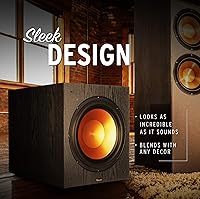
The contemporary matte black cabinet and flush removable grille allow the Sub-120 to sit in a living room without demanding visual attention, which several buyers specifically praised after years of tolerating boxy, industrial-looking subs. The exposed copper woofer, when the grille is off, actually draws compliments in a media room setting.
There is only one color option available, which limits buyers decorating around lighter or warmer furniture palettes. The cabinet shape is also a straightforward rectangular prism — functional and inoffensive, but without the sculpted cabinet designs some competitors offer at similar price points.
Connectivity Options
51%
49%
The wired line-level connection is rock-solid and introduces zero latency, which matters more than most buyers realize when lip-sync and film audio timing are involved. For buyers building a permanent, fixed home theater installation, wired reliability is a genuine advantage over wireless alternatives.
The total absence of Bluetooth, Wi-Fi, or any wireless input is a significant limitation in 2024, where competing subwoofers at the same price tier increasingly offer wireless connectivity as standard. Buyers who want to stream directly from a TV, phone, or wireless transmitter without a receiver in the chain are simply out of options here.
Low-Frequency Extension
67%
33%
For mainstream film soundtracks, streaming music, and general home theater use, the frequency response covers the range that the vast majority of content actually uses, delivering satisfying rumble during car chases, explosions, and concert playback without any audible gaps.
Buyers who specifically seek out ultra-low bass content — dedicated bass music, Blu-ray discs with especially deep LFE tracks, or pipe organ recordings — will notice the rolloff below 25 Hz as a real limitation. Competing subs at a modest price premium go meaningfully deeper, and enthusiasts chasing true sub-bass extension will feel the difference.
Volume & Dynamics
82%
18%
The 400-watt dynamic headroom handles sudden loud bursts — explosions, thunder, musical bass drops — without audible compression or distortion at reasonable listening levels. In practice, most owners never push the sub to its limits in a properly sized room.
At very high volumes in larger rooms, the amplifier begins to sound strained and some buyers report a slight hardness to the bass that is absent at moderate levels. It is capable enough for casual to enthusiastic home theater use, but it is not a sub built for high-SPL environments.
Noise & Vibration
79%
21%
Under normal listening conditions, the Sub-120 runs quietly without the hiss, hum, or amp noise that some budget subwoofers introduce into a quiet room between scenes. The cabinet is well-damped and does not rattle or resonate at typical home theater volumes.
A handful of owners report a low-level hum detectable in a completely silent room, which some traced to grounding issues with certain receivers and others could not fully resolve. Floor vibration transmission is also noticeable in multi-story homes, which can be an issue for anyone living below the listening room.
Long-Term Reliability
86%
Multi-year owners report that the driver and amplifier hold up well without degradation in sound quality, which aligns with Klipsch's broader reputation for building durable audio hardware. The brand's track record provides reasonable confidence that this is not a unit that will fail after 18 months of regular use.
The limited warranty coverage scope is not fully detailed at point of purchase, leaving some buyers uncertain about what is actually covered and for how long. A few long-term owners also noted that getting warranty service resolved required persistence with customer support, which is a recurring theme in Klipsch feedback generally.
Tuning & Adjustment Controls
58%
42%
The simple volume and crossover knob controls are intuitive to use and require no software, apps, or digital menus to navigate — which genuinely suits buyers who want to set it and forget it without ongoing tinkering.
Beyond those two basic knobs, there is nothing else to adjust — no phase fine-tuning beyond a two-position switch, no parametric EQ, no room correction, and no app-based control. For buyers who want to optimize bass response for their specific room acoustics, the control set feels dated compared to competitors that include DSP or auto-room correction.

Suitable for:

The Klipsch Sub-120 12-inch Subwoofer is a strong fit for home theater enthusiasts who are ready to move past the limitations of a soundbar or a bare-bones entry-level sub and want a tangible, audible upgrade. It works best in dedicated media rooms or living rooms in the 200 to 400 square foot range, where a 12-inch front-firing driver can actually pressurize the space and deliver the kind of low-end weight that action films and concert recordings demand. Buyers building or expanding a wired 5.1 or 7.1 surround system will find the broad AV receiver compatibility genuinely reassuring — there is very little chance it will not play nicely with whatever receiver you already own. It also suits households where aesthetics matter, since the clean black finish and removable grille make it easy to integrate without looking like a piece of studio equipment dropped into a living room. If you value a brand with a long track record and want a subwoofer that will hold up over years of regular use without requiring constant tweaking, this is a sensible, well-matched choice.
Not suitable for:

The Klipsch Sub-120 12-inch Subwoofer is not the right call for buyers who need wireless connectivity — there is no Bluetooth or Wi-Fi option, and if your setup requires cutting the cable, this one is a hard pass. Apartment dwellers or anyone sharing walls with neighbors should also think carefully; at moderate to high volumes, the bass output is substantial enough to become a genuine problem in close-quarters living situations. Serious bass enthusiasts chasing subsonic frequencies below 25 Hz — the kind that physically rattle a room during a film's deepest rumbles — may find the low-frequency extension falls short compared to competing units in a similar or slightly higher price bracket. If you are building a large open-plan home theater of 500 square feet or more, a single 12-inch sub at this power rating will likely feel underpowered before long. And buyers who want smart home integration, app control, or EQ customization through a companion app will need to look elsewhere, as this sub keeps things strictly analog and traditional.
Specifications

  • Driver Size: The front-firing woofer measures 12 inches in diameter, providing substantial cone area for moving the air needed to produce deep, impactful bass.
  • Driver Material: The cone is constructed from spun copper Cerametallic, a composite that is stiffer and lighter than paper or polypropylene, reducing flex and distortion under load.
  • Continuous Power: The built-in digital amplifier delivers 200 watts of continuous RMS power, reflecting real sustained output during extended listening or viewing sessions.
  • Dynamic Power: Peak dynamic power reaches 400 watts, covering short-burst transient demands such as explosive sound effects in action films.
  • Amplifier Type: An internal digital amplifier is used, which typically runs cooler and more efficiently than class AB designs at comparable power levels.
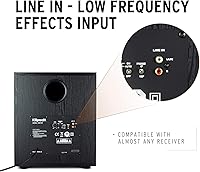
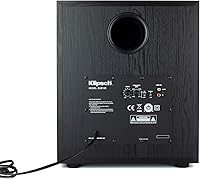
  • Connectivity: The subwoofer connects via a wired line-level (RCA) input, compatible with the subwoofer output found on virtually all modern AV receivers.
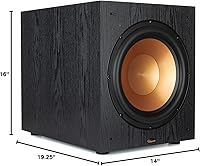
  • Dimensions: The cabinet measures 19.25″ deep by 14″ wide by 16″ tall, offering a manageable footprint relative to its 12-inch driver size.
  • Weight: The unit weighs 36.4 pounds, which is typical for a ported 12-inch subwoofer cabinet and requires a firm, level floor placement.
  • Mounting Style: The Sub-120 is designed exclusively for floor-standing placement and is not intended for wall or ceiling mounting.
  • Driver Orientation: The driver fires forward from the front face of the cabinet, which allows placement against walls or inside entertainment furniture without blocking output.
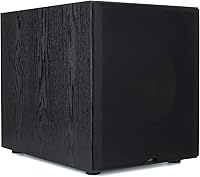
  • Grille: A flexible grille is included and is fully removable, allowing owners to choose between a finished look or direct driver exposure based on personal preference.
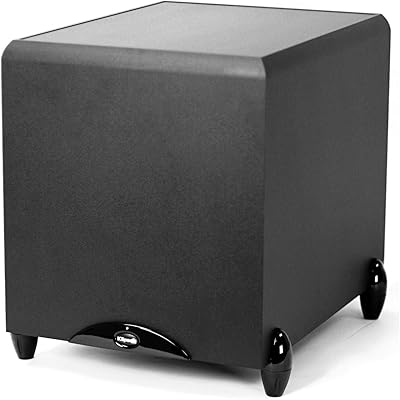
  • Finish: The exterior uses a contemporary matte black finish designed to integrate with a wide range of living room furniture styles and color schemes.
  • Wireless Support: There is no Bluetooth or Wi-Fi connectivity; the subwoofer operates exclusively through its wired line-level input.
  • Compatibility: The standard RCA line-level input makes the Sub-120 compatible with nearly all AV receivers that include a dedicated subwoofer output terminal.
  • Included Items: Each unit ships with the subwoofer, a power cord, and a printed owner's manual; no additional cables are included.
  • Warranty: Klipsch covers the Sub-120 under a limited manufacturer warranty; buyers should confirm current terms directly with Klipsch for duration and claim procedures.
  • Power Source: The subwoofer is powered by a standard corded electric connection and requires a nearby AC wall outlet for operation.
  • Color Option: The Sub-120 is available in a single color configuration: black, with no alternative finish variants offered in this model line.

Related Reviews
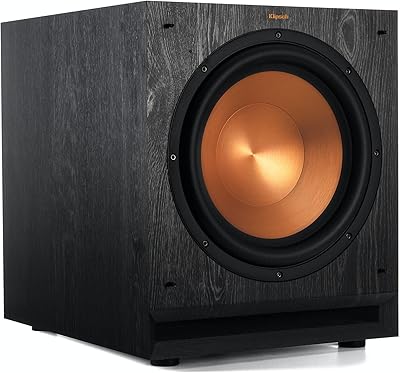
Klipsch SPL-120 Powered Subwoofer 12-inch
87%
92%
Bass Performance
89%
Sound Clarity
87%
Ease of Setup
91%
Value for Money
88%
Build Quality
More
Klipsch Synergy Sub-12HG 12-Inch Subwoofer
82%
94%
Bass Performance
88%
Ease of Integration
91%
Value for Money
85%
Build Quality
72%
Size and Weight
More
Klipsch Sub-100 10-inch Subwoofer
80%
83%
Bass Performance
88%
Build Quality
91%
Value for Money
86%
Setup & Integration
87%
Placement Flexibility
More
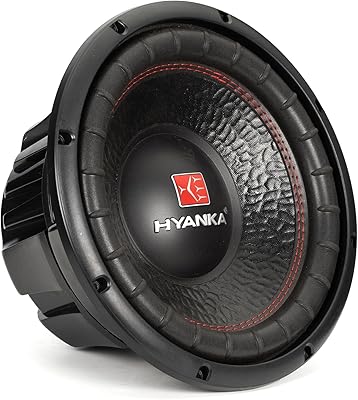
HYANKA BSC-12-2 12-Inch Car Subwoofer
70%
84%
Value for Money
79%
Bass Output & Low-End Extension
72%
Build Quality
81%
Magnet & Motor Strength
66%
Installation Experience
More
Audiopipe TS-PP2-12-D4 12-inch Car Subwoofer
70%
74%
Value for Money
71%
Bass Output
67%
Build Quality
58%
Power Handling
73%
Voice Coil Quality
More
CT Sounds STRATO-12-D4 12-Inch Car Subwoofer
78%
89%
Bass Output & Volume
91%
Build Quality
88%
Thermal Durability
86%
Value for Money
74%
Installation Experience
More
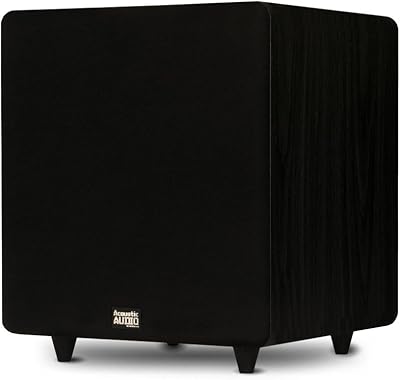
Acoustic Audio PSW500-12 12-Inch Powered Subwoofer
73%
83%
Bass Output for Price
88%
Ease of Setup
86%
Value for Money
67%
Build Quality
71%
Sound Quality
More
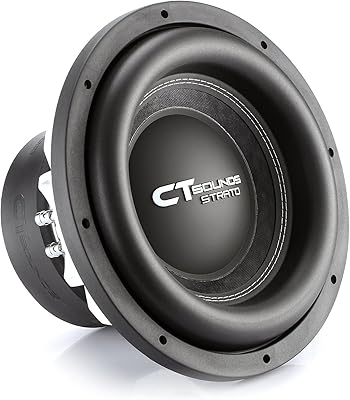
CT Sounds STRATO-12-D2 12 Inch Dual 2 Ohm Car Subwoofer
86%
93%
Bass Performance
89%
Durability
91%
Power Handling
88%
Sound Clarity
84%
Ease of Installation
More
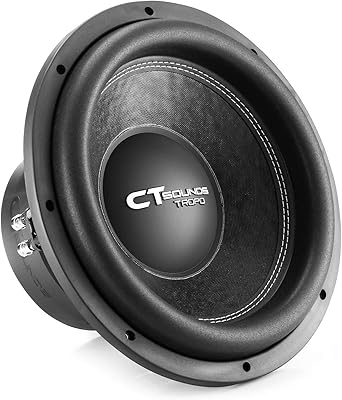
CT Sounds TROPO-12-D4 12-inch Car Subwoofer
77%
93%
Value for Money
81%
Bass Output Quality
86%
Build Quality
78%
Thermal Performance
84%
Installation Ease
More
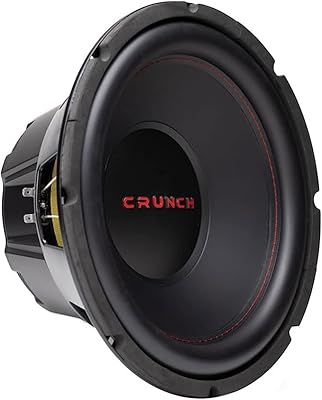
Crunch CRW12D4 12-inch Car Subwoofer
70%
83%
Value for Money
74%
Bass Output
67%
Build Quality
86%
Installation Ease
81%
Wiring Flexibility
More

FAQ

Yes, almost certainly. The Sub-120 uses a standard RCA line-level input, which matches the subwoofer pre-out found on virtually every modern AV receiver regardless of brand. Just run an RCA cable from your receiver's sub output to the subwoofer's input jack and you are connected.

The front-firing driver design actually makes wall placement a reasonable option. Because the cone faces forward rather than downward, placing the cabinet close to a wall or tucked into furniture does not significantly muffle the output the way a down-firing design would. That said, some open space around the sides still helps the cabinet breathe.

Most owners describe the bass as tight and defined rather than the loose, one-note rumble you get from cheaper subs. The Cerametallic cone is stiffer than paper, which helps it stop and start cleanly. It hits hard on movie effects without turning everything into mud.

No, there is no wireless connectivity of any kind. It is strictly a wired subwoofer. If you need Bluetooth or Wi-Fi integration for your setup, you will need to look at a different model entirely, because this one does not support it and there is no workaround.

At normal to moderate listening levels in a medium-sized room, distortion is not a common complaint. The digital amplifier handles dynamic peaks cleanly up to its rated output. Pushing it very hard in a large open space is where some buyers notice strain, which is more about the room size than a flaw in the driver itself.

It handles both reasonably well, though its character leans toward the punchy, impact-focused bass that benefits action films and bass-heavy music genres. For critical listening to acoustic music or genres where sub-bass texture matters more than raw impact, dedicated audiophile subwoofers at a higher price point may suit you better.

The controls are simple — a crossover frequency knob and a volume level knob. There is no app, no room correction, and no digital EQ. Most buyers find this straightforward rather than limiting: set the crossover around 80 Hz as a starting point, adjust level to taste, and fine-tune from there. Your AV receiver's bass management will do most of the heavy lifting.

Realistically, yes, it can. Bass at these output levels travels well through floors and shared walls, and at moderate to high volumes you will almost certainly be audible to neighbors below or beside you. If you are in an apartment building with typical construction, you should either plan for disciplined volume habits or consider whether a subwoofer of this size is practical for your living situation.

The bass extension is solid down to around 25 Hz under good conditions, which covers the vast majority of film soundtrack content and music. Below that, the output rolls off noticeably. For most people watching action films or listening to bass-heavy music, the physical impact is satisfying. If you are chasing the absolute deepest, most subsonic effects from specialized content, this sub has its limits and something with greater low-end extension would serve you better.

The grille attaches firmly and is not prone to falling off during normal use. It is designed to be removable on purpose, so it does come off cleanly when you want it to — but it is not so loose that it rattles or detaches by accident. Several owners keep it off entirely for aesthetics and find the exposed copper driver actually looks sharp in a media room.

Where to Buy