

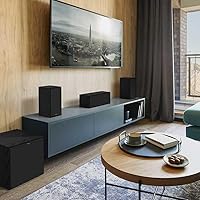
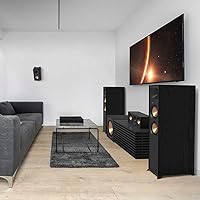
Overview

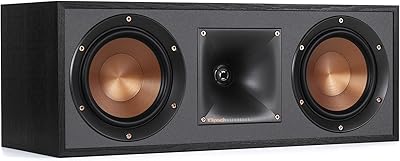
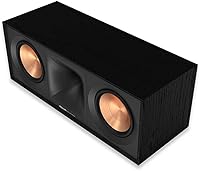
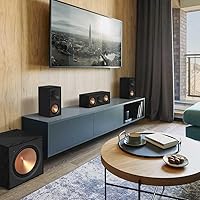
The Klipsch R-50C Center Channel Speaker is the brand's latest refresh of their Reference center channel lineup, replacing the older R-52C with updated drivers and a redesigned horn. Sitting in the mid-range price tier, it occupies an interesting space — more capable than entry-level options, but without the steep cost of audiophile-grade alternatives. At 7″ H x 18.75″ W x 8.2″ D, it fits comfortably on most TV stands or AV shelves without dominating the room. Klipsch has built its reputation on horn-loaded speaker design for decades, and this center channel carries that philosophy forward. Worth noting upfront: it is purpose-built for home theater dialogue, not music listening or standalone use.

Features & Benefits

The engineering behind the R-50C centers on a 90° Tractrix Horn that controls how high frequencies spread across the room — you get wider, more even coverage without the aggressive brightness cheaper horn designs can produce. A 1-inch aluminum tweeter with Kapton suspension handles fine detail retrieval with notably low distortion, while dual 5.25-inch spun-copper woofers with steeper cone angles smooth out the midrange where most voices live. The tapered array crossover is worth calling out specifically: it broadens horizontal dispersion, which matters a lot in rooms with seating spread wide. The cabinet is built from reinforced 3/4-inch MDF with internal bracing, keeping unwanted resonance out of the equation.

Best For

This center channel makes the most sense for anyone building or expanding a Klipsch Reference surround system. Timbre matching across your front soundstage is a real concern, and mixing speaker brands can introduce audible inconsistency — pairing this Klipsch speaker with Reference series left and right towers is the obvious path to a cohesive sound. It is also a strong choice for larger living rooms or open floor plans where multiple listeners sit at different angles; the wide horizontal dispersion keeps dialogue intelligible from the main couch to the side chair. If you are coming from the R-52C specifically, the updated driver technology and improved directional control make this a meaningful upgrade, not just a cosmetic refresh.

User Feedback

Among verified buyers, dialogue clarity is the most consistently praised quality — people who struggled to catch every line in action films or densely mixed TV shows report a noticeable improvement. That said, a fair number of listeners in untreated rooms note that the horn-loaded character can read as slightly forward or bright, especially at higher volumes. It is a real consideration if your space has a lot of hard surfaces. The magnetic grille gets positive marks for looks and easy removal, though a few owners mention it feels snug on initial fitting. On balance, owner satisfaction is high, and most who previously owned the R-52C consider this a worthwhile step forward in both build quality and sonic performance.

Pros

  • Dialogue clarity is a standout strength — voices cut through even during loud, chaotic action sequences.
  • Wide horizontal dispersion keeps sound intelligible from multiple seating positions across a large room.
  • The 90° Tractrix Horn delivers controlled high-frequency spread without the harshness found in cheaper horn designs.
  • Dual 5.25-inch woofers handle midrange frequencies with genuine smoothness and accuracy.
  • Low-profile magnetic grille and clean cabinet design integrate well into most living room setups.
  • Reinforced MDF cabinet construction keeps resonance well in check, even at higher listening volumes.
  • A natural upgrade path for existing Klipsch Reference owners who want consistent tonal character across all channels.
  • Noticeably more refined driver tech compared to the older R-52C, with improved directional control.
  • The 400-watt power handling gives it real headroom for dynamic film soundtracks without strain.

Cons

  • Horn-loaded character can come across as bright or forward in acoustically untreated rooms.
  • Best results require pairing with matched Klipsch Reference speakers — it is not a standalone purchase.
  • The grille fit is reported as snug by some buyers, which can feel fiddly during installation or cleaning.
  • Frequency response starts at 90 Hz, so it relies heavily on a capable subwoofer to fill in the low end.
  • Not a good fit for mixed-use setups where the center channel also handles music listening duties.
  • The asking price is hard to justify unless you are building or upgrading a dedicated surround sound system.
  • Buyers in smaller, reflective rooms may need acoustic treatment to get the most out of this center channel.

Ratings

Our AI-generated scores for the Klipsch R-50C Center Channel Speaker were produced by systematically analyzing verified global buyer reviews, with spam, bot-submitted, and incentivized feedback actively filtered out before scoring. The ratings reflect a balanced synthesis of what real owners praised and what genuinely frustrated them — nothing is smoothed over. Strengths in dialogue clarity and build quality are reflected honestly, as are the limitations around room sensitivity and system dependency.

Dialogue Clarity
93%
This is where the R-50C earns its reputation. Owners across a wide range of room sizes report that voices in films and TV shows come through with a level of precision and presence that budget center channels simply cannot match. Even during loud, layered action sequences, dialogue stays locked and intelligible.
A small number of listeners in very live, reflective rooms found that the forward-leaning midrange character occasionally made sibilant dialogue — particularly in poorly mastered streaming content — sound slightly edgy. This is less a flaw than a room-matching issue, but it is worth knowing going in.
Soundstage Width
88%
The 90° Tractrix Horn genuinely delivers on its promise of wide horizontal coverage. Buyers in larger living rooms with seating spread across the width of the space consistently note that the center image stays stable and clear regardless of where you sit, which is rare at this price tier.
Vertical dispersion is more limited by design, which is standard for horizontal center channels but means that listeners seated significantly above or below the speaker's axis — in tiered seating arrangements — may notice a drop in clarity compared to those seated at ear level.
Build Quality
91%
The reinforced MDF cabinet feels genuinely solid — there is no hollow knock or flex when you handle it, which gives an immediate impression of durability. The textured vinyl finish resists fingerprints and minor scratches well, and the hidden fastener design means the front face looks clean and intentional rather than utilitarian.
A handful of buyers noted that the magnetic grille fit is noticeably tight on initial installation, requiring firm and even pressure to seat correctly. While this is not a structural defect, it can feel fiddly and raised minor concerns among buyers who worried about damaging the finish during repeated grille removal.
High-Frequency Performance
84%
The 1-inch aluminum tweeter resolves fine detail — subtle ambient sounds, breath in vocal recordings, and the texture of string instruments in film scores — without the grainy distortion that plagues cheaper tweeters. Listeners who previously owned entry-level center channels frequently cite treble refinement as one of the most immediately noticeable improvements.
The horn-loaded design gives the high frequencies a distinctive character that leans brighter than neutral. Buyers coming from dome-tweeter competitors sometimes describe the treble as more prominent than they expected, and those with acoustically harsh rooms may find themselves dialing back the treble on their receiver's EQ to compensate.
Midrange Accuracy
89%
The dual TCP woofers handle the midrange — where virtually all vocal content lives — with real authority and smoothness. Owners frequently describe voices as sounding natural and full-bodied rather than thin or honky, which is a common complaint with less carefully engineered center channels in this size class.
At very high output levels, a small number of owners reported a subtle compression in the upper midrange under sustained loud passages. This is unlikely to affect typical listening levels, but those who regularly push their system hard for large-room parties or late-night loud sessions may occasionally notice it.
System Compatibility
72%
28%
The 8-ohm impedance and broad receiver compatibility mean this center channel works with essentially any modern AV receiver without any technical friction. Setup is purely mechanical — connect speaker wire, run receiver calibration, and you are done. No special configuration or unusual requirements.
The R-50C is voiced specifically for the Klipsch Reference ecosystem, and this creates a practical dependency that buyers should not underestimate. Mixed with non-Klipsch left and right speakers, the tonal character mismatch across the front soundstage is often clearly audible and cannot be fully corrected with receiver EQ alone.
Value for Money
78%
22%
For buyers already committed to a Klipsch Reference surround system, the pricing feels justified given the driver technology and build quality on offer. The improvement over the older R-52C is audible enough that returning buyers tend to rate the upgrade as worthwhile rather than marginal.
For buyers starting from scratch and evaluating this center channel without a matched system to pair it with, the value proposition is harder to defend. At this price point, the requirement to invest in a full Klipsch Reference setup to unlock the speaker's potential is a real financial consideration that the price tag alone does not communicate.
Cabinet Resonance
87%
The internal bracing design does its job noticeably well. Even at elevated volume levels, the cabinet stays quiet — there is no audible box coloration bleeding into the sound, which is something cheaper MDF enclosures often struggle with when driven hard. This contributes directly to the clean, focused midrange that owners praise.
A very small number of buyers in extremely high-volume setups reported minor vibration transmission to the shelf surface the speaker rests on. Adding a small rubber mat or isolation pad under the speaker resolves this entirely, but it is worth mentioning for those who run their system at reference listening levels.
Ease of Setup
86%
Installation is about as straightforward as home theater gets. The binding posts are well-spaced and clearly labeled, and the speaker's weight of 7 pounds makes positioning effortless. Most buyers report having the speaker connected and calibrated within 20 minutes, including running their receiver's automatic room correction cycle.
The grille's tight initial fit was flagged by enough buyers to be a recurring theme. While it is a minor inconvenience rather than a real setup barrier, first-time owners who are not familiar with magnetic grille systems sometimes struggle with removal and are unsure whether they are doing something wrong.
Room Sensitivity
63%
37%
In well-treated rooms — those with carpet, upholstered furniture, curtains, or dedicated acoustic panels — the R-50C sounds balanced, detailed, and completely at ease across a wide range of content. Buyers in these environments almost universally report long-term satisfaction with no fatigue.
This is one of the more room-dependent speakers at its price point. Hard-floored, sparsely furnished, or reflective rooms expose the brightness inherent in horn-loaded design, and the effect compounds at higher volumes. Buyers in acoustically challenging spaces may need to invest in basic room treatment or rely heavily on receiver EQ to tame it.
Aesthetics
82%
18%
The combination of hidden fasteners, edge-to-edge horn, and a low-profile magnetic grille gives the R-50C a noticeably more considered appearance than most center channels in its class. It reads as premium without being ostentatious, and the black finish integrates cleanly into both dark and neutral-toned entertainment setups.
The design is distinctly Klipsch — copper-accented drivers and the prominent horn are recognizable brand signatures. Buyers who prefer a more neutral, understated aesthetic may find the look slightly industrial compared to center channels from brands like KEF or Polk, where minimalism is more the default.
Upgrade Value vs R-52C
81%
19%
R-52C owners who made the switch are largely positive about the experience. The updated horn geometry and TCP woofer technology deliver audible improvements in high-frequency control and midrange smoothness that go beyond the kind of minor revisions that often accompany generation updates.
The improvements, while genuine, are incremental rather than transformative for buyers in smaller rooms or with modest source material. Owners who primarily stream compressed audio or use budget HDMI sources may not fully perceive the driver refinements, making the upgrade feel less impactful than the spec sheet suggests.

Suitable for:

The Klipsch R-50C Center Channel Speaker is the right call for anyone who is serious about home theater and already invested — or planning to invest — in the Klipsch Reference speaker ecosystem. Timbre matching across your front soundstage is not a minor detail, and this center channel slots in naturally alongside Reference series tower or bookshelf speakers without any tonal mismatch. It performs especially well in larger living rooms or open-plan spaces where listeners are spread across different seating positions, since the wide horizontal dispersion keeps dialogue clear from multiple angles. If your current setup leaves you frequently reaching for the remote to re-watch dialogue-heavy scenes, this center channel directly addresses that frustration. R-52C owners looking for a genuine hardware upgrade — not just a cosmetic refresh — will find the updated driver technology and improved high-frequency control to be a real and audible difference.

Not suitable for:

The Klipsch R-50C Center Channel Speaker is not the right fit for listeners who prefer a warmer, more laid-back sound signature. Horn-loaded speakers have a characteristic directness and presence in the upper midrange that some listeners find fatiguing over long sessions, particularly in rooms with bare walls, hardwood floors, or little acoustic treatment. This is also not a speaker to buy in isolation — it is designed to complement a matched surround system, and pairing it with non-Klipsch speakers or a budget receiver that cannot handle its dynamic range will leave performance on the table. Buyers looking for a center channel that doubles as a capable music speaker will want to look elsewhere; this one is purpose-built for film and TV dialogue, not stereo playback. Those on a tight budget may also find the asking price hard to justify without already owning the rest of a Reference-tier system to pair it with.

Specifications

  • Tweeter: A 1-inch aluminum Linear Travel Suspension (LTS) tweeter with Kapton suspension handles high-frequency reproduction with low distortion.
  • Woofers: Two 5.25-inch spun-copper Thermoformed Crystalline Polymer (TCP) woofers with steeper cone angles provide smooth, accurate midrange response.
  • Horn Design: A 90° x 90° Tractrix Horn controls high-frequency directivity over a wide bandwidth for even coverage across the listening area.
  • Frequency Response: This center channel reproduces frequencies from 90 Hz upward, requiring a subwoofer to cover low-end bass in a full surround system.
  • Power Handling: Maximum power handling is rated at 400 watts, giving it substantial headroom for dynamic film soundtracks.
  • Impedance: Nominal impedance is 8 ohms, making it compatible with virtually all standard AV receivers on the market.
  • Cabinet Material: The enclosure is built from reinforced 3/4-inch MDF with an internal bracing design to reduce resonance and unwanted vibration.
  • Finish: Exterior surfaces use a scratch-resistant, textured wood grain vinyl that integrates cleanly into most living room décors.
  • Dimensions: Physical dimensions measure 7″ H x 18.75″ W x 8.2″ D, sized to fit on standard AV shelves and TV stands.
  • Weight: The speaker weighs 7 pounds, making it easy to position and reposition during setup without assistance.
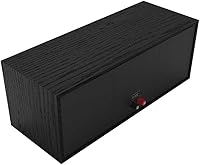
  • Grille: A low-profile magnetic grille attaches without visible fasteners, allowing for tool-free removal and a clean front appearance.
  • Mounting Type: Designed for shelf mounting in a horizontal orientation, which is the standard placement for center channel speakers.
  • Connectivity: Connection is made via wired binding posts, compatible with standard speaker wire gauges used in home theater installations.
  • Surround Config: Optimized for use as the center channel in 5.1 or 7.1 surround sound configurations.
  • Crossover: A tapered array crossover network improves midrange dispersion and sharpens dialogue intelligibility across horizontal seating positions.
  • Color: Available in black with a spun-copper driver aesthetic that is characteristic of the Klipsch Reference series.
  • Predecessor: This model directly replaces the Klipsch Reference R-52C, featuring updated drivers and a redesigned horn geometry.
  • Warranty: Backed by a limited warranty from Klipsch; buyers should confirm current warranty terms directly with the manufacturer or retailer.

Related Reviews
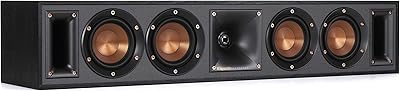
Klipsch R-30C Center Channel Speaker
79%
93%
Dialogue Clarity
88%
Soundstage Dispersion
74%
Tonal Balance
81%
Build Quality
91%
Efficiency & Receiver Compatibility
More
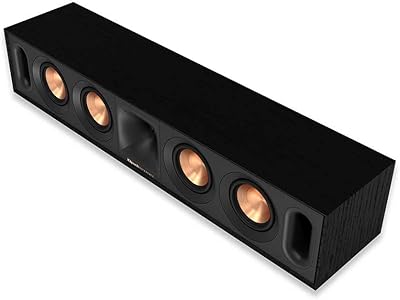
Klipsch R-52C Center Channel Speaker
80%
93%
Dialogue Clarity
88%
Sound Dispersion
89%
Build Quality
84%
Value for Money
81%
Receiver Compatibility
More
Klipsch R-34C Center Channel Speaker
89%
93%
Sound Clarity
89%
Dialogue Reproduction
84%
Bass Performance
90%
Build Quality
88%
Ease of Setup
More
Klipsch Reference R-25C Center Channel Speaker
87%
93%
Audio Performance
89%
Bass Response
91%
Clarity of Dialogue
85%
Build Quality
88%
Ease of Integration
More
Klipsch RP-250C Center Channel Speaker
87%
92%
Sound Clarity
91%
Dialogue Performance
85%
Bass Quality
90%
Build Quality
88%
Compatibility with Klipsch Systems
More
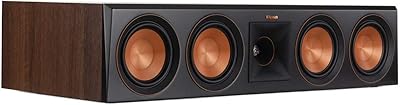
Klipsch RP-504C Center Channel Speaker
87%
91%
Sound Clarity
87%
Bass Response
90%
Build Quality
85%
Aesthetic Design
82%
Ease of Installation
More
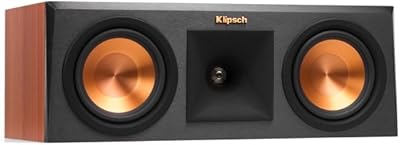
Klipsch RP-450C Center Channel Speaker
86%
92%
Sound Quality
88%
Build Quality
94%
Dialogue Clarity
84%
Bass Performance
87%
Ease of Integration
More
Klipsch RP-500C II Center Channel Speaker
82%
94%
Dialogue Clarity
91%
Sound Dispersion
88%
Build Quality
86%
System Integration
83%
Ease of Setup
More
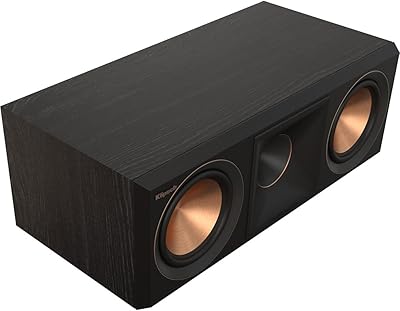
Klipsch RP-404C II Center Channel Speaker
83%
94%
Dialogue Clarity
91%
Build Quality
89%
Placement Versatility
74%
Value for Money
61%
Bass Performance
More
KEF T101 Satellite and Center Channel Speakers
80%
88%
Sound Clarity
91%
Build Quality
94%
Design & Aesthetics
89%
Dialogue Intelligibility
62%
Value for Money
More

FAQ

It works with virtually any AV receiver that supports 8-ohm speakers, which covers the vast majority of home theater receivers on the market. You do not need a Klipsch receiver or any brand-specific hardware — just make sure your receiver can handle the impedance and you connect it with standard speaker wire.

It is genuinely worth taking seriously. When your center channel has a different tonal character from your left and right speakers, voices and sound effects shift noticeably as audio pans across the front soundstage. The R-50C is voiced to match the Klipsch Reference series, so mixing it with speakers from a different brand or line can introduce a tonal inconsistency that is hard to EQ away. It will still function on its own, but you will get the best results in a matched system.

It depends heavily on your room. In a well-treated or carpeted room with soft furnishings, the horn-loaded character tends to sound clear and natural at all volumes. In a harder room with lots of reflective surfaces, some listeners do find the upper midrange a bit forward, especially at higher volumes. If you are sensitive to brightness, spending a little time with your receiver's EQ after installation can go a long way.

Most likely yes. At 7 inches tall and just over 18 inches wide, it fits on the majority of TV stand shelves and AV furniture. That said, measure your available space before buying — some ultra-slim TV stands have shallow shelves that may not accommodate the 8.2-inch depth.

A subwoofer is strongly recommended. The speaker's frequency response starts at 90 Hz, so anything below that — low-end explosions, rumbling music scores, deep bass effects — simply will not be reproduced. In a properly configured 5.1 or 7.1 system, your AV receiver will redirect those low frequencies to your subwoofer automatically.

The main improvements are in the horn geometry and driver technology. The updated Tractrix Horn offers better directional control across a wider frequency range, and the TCP woofers provide a smoother midrange response compared to the R-52C. If you are already happy with your current setup, the differences may be incremental rather than dramatic — but if you are building a new system or your R-52C is aging, the newer model is the better long-term investment.

Technically you can physically mount it vertically, but it is not recommended. Center channel speakers are specifically designed to be used horizontally, and the driver array and crossover are optimized for that orientation. Mounting it vertically will negatively affect how sound disperses in the room, particularly for dialogue.

Pretty straightforward. You connect speaker wire to the binding posts on the back, run the wire to your AV receiver, and configure the center channel settings in your receiver's speaker setup menu. Most receivers will walk you through this with an on-screen setup wizard. The magnetic grille snaps on and off easily, and the speaker itself just sits on a shelf — no special tools required.

A few buyers have noted the fit is tight initially, but it does loosen slightly with use. The magnetic attachment means there are no clips or fasteners to break. Just apply even, gentle pressure across the face of the grille when pulling it off rather than grabbing one corner, and you should be fine. The textured vinyl finish is reasonably durable against incidental contact.

It will play music, but it is really designed around film and TV dialogue reproduction. The horn-loaded character and tuning prioritize vocal clarity and midrange presence over the kind of balanced, full-range reproduction you would want for stereo music. If music is a significant part of how you use your system, a more neutral center channel speaker might serve you better for that specific use case.

Where to Buy