Overview

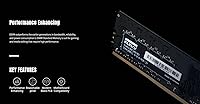
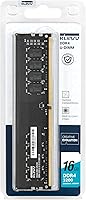
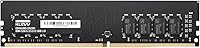
The KLEVV U-DIMM 16GB 3200MHz DDR4 Desktop RAM is Essencore's answer to builders who want SK Hynix-backed memory without paying RGB tax. KLEVV sits in a practical middle ground — real brand-name components, honest pricing, no theatrics. You get a single 16GB stick running at 3200MHz, which covers most desktop workloads comfortably without requiring any manual tuning out of the box. The matte black PCB is a small but appreciated touch; it looks clean inside a windowed case without demanding attention. This is not an enthusiast overclocker's kit. It is a dependable, straightforward module built for people who want their system to just work.
Features & Benefits

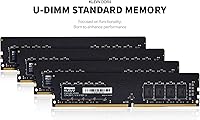
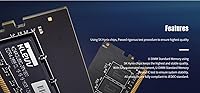
What sets this KLEVV memory stick apart from generic alternatives starts with the chips themselves. SK Hynix ICs have a well-earned reputation for consistent signal integrity, which translates to stable boots and fewer memory-related crashes over time. The module runs to the JEDEC spec at 3200MHz with CL22 timings — worth noting that CL22 is on the relaxed side for this speed tier, so if you are chasing ultra-tight latency, this is not your pick. That said, for everyday computing, gaming, and video work, the difference is negligible. Operating at 1.2V keeps power draw low, and the 288-pin UDIMM format means broad platform support across current AMD Ryzen and Intel Core boards, no adapter required.

Best For

This DDR4 module is a natural fit for first-time PC builders who want to skip the BIOS tweaking and just have things work from power-on. Budget builders putting together a capable daily-driver or light gaming rig will find the value proposition hard to argue with. Media editors handling 1080p footage or multitasking across browser tabs and productivity apps will run comfortably at 16GB without overspending. It is also a solid drop-in replacement if you are upgrading from 8GB or swapping a failed stick. One practical note: buying a single module now leaves your second slot open, making a dual-channel upgrade down the line as simple as adding a matching stick.

User Feedback

With a 4.6-star rating across around 240 reviews, the KLEVV U-DIMM kit earns mostly positive marks — but the picture is worth examining. The consistent praise centers on trouble-free installation and the kind of day-to-day stability that does not make headlines but matters a lot when you are three hours into a render. Some users flagged minor hiccups getting XMP profiles to activate on certain boards, which is not unusual for value-tier JEDEC memory. Reports on long-term reliability lean positive, with several buyers noting months of continuous use without issues. The 240-review sample is decent but not huge, so conclusions should be taken as encouraging rather than definitive.

Pros

  • SK Hynix chips provide quiet, consistent stability that keeps a system running reliably over the long term.
  • Runs at 3200MHz straight out of the box on most boards, with no manual BIOS tuning required.
  • The 288-pin UDIMM format works across a broad range of current AMD and Intel motherboards without compatibility headaches.
  • Running at just 1.2V, this DDR4 module draws minimal power — a real plus for always-on workstation or office setups.
  • Buying a single stick leaves the second slot free, making a dual-channel upgrade later as simple as adding a matching module.
  • Each stick passes automated IC testing before shipping, which gives buyers a reasonable baseline of quality assurance.
  • A 4.6-star average from real buyers offers credible, real-world backing for the reliability claims.
  • The matte black PCB looks clean and understated inside most windowed cases without demanding attention.
  • A practical, affordable choice for first-time builders who need a dependable 16GB foundation without overspending.

Cons

  • CL22 timings at 3200MHz are on the looser side — competing kits frequently offer tighter latency at comparable prices.
  • No XMP profile means enthusiasts have very limited options for pushing memory performance beyond the base JEDEC spec.
  • A single stick runs in single-channel mode by default, cutting available memory bandwidth roughly in half versus a dual-channel pair.
  • Some buyers reported needing manual BIOS intervention to get the stick running at its advertised 3200MHz on certain boards.
  • With around 240 reviews, the sample size is modest, making it harder to draw firm conclusions about long-term failure rates.
  • Buying two singles later to enable dual-channel typically costs more than purchasing a pre-matched dual-channel kit from the start.
  • The fixed 3200MHz speed ceiling gives builders little runway if they later decide to pursue a more performance-tuned system.

Ratings

The KLEVV U-DIMM 16GB 3200MHz DDR4 Desktop RAM was evaluated by our AI rating system after analyzing verified buyer reviews from global markets, with spam, bot activity, and incentivized feedback actively filtered out. Scores reflect the honest consensus — both the consistent strengths that make this DDR4 module a popular value pick and the real trade-offs that matter to different types of builders. Nothing is sugarcoated; the numbers below capture what actual users experienced after installing and living with this memory stick day to day.
Value for Money
88%
Buyers consistently cite affordability as the main reason they chose this DDR4 module — real SK Hynix ICs at an accessible price point is a genuinely hard combination to beat at this tier. For anyone building a capable everyday desktop on a tight budget, the cost-per-GB ratio holds up well against most alternatives.
A handful of buyers noted that slightly higher-spec kits with tighter CL16 timings occasionally appear at comparable prices, making the value case less clear-cut for shoppers who do thorough pre-purchase comparison research. The savings feel more substantial when competing kits are priced noticeably higher.
System Stability
91%
The SK Hynix ICs are the real differentiator here — users running this KLEVV memory stick through long editing sessions, overnight renders, and extended gaming marathons reported very few unexpected reboots or memory errors over time. The automated IC testing during production appears to be doing its job, based on how consistently buyers describe uneventful, reliable day-to-day operation.
A small number of users encountered POST failure or blue-screen issues early on, though these were rarely traced definitively to the memory itself rather than other system variables. With roughly 240 reviews, outlier failure stories carry more statistical weight than they would for a more widely reviewed product.
Installation Ease
93%
The overwhelming majority of buyers — including people who described themselves as first-time builders — reported a completely straightforward process: seat the stick, power on, and the system detects it immediately. No driver files, no configuration utilities, no guesswork involved at any stage.
A subset of users found their system defaulted to a slower memory speed after installation, requiring a manual BIOS adjustment to reach the rated 3200MHz. It is a minor and well-known DDR4 quirk, but worth knowing about ahead of time if you have never navigated a BIOS menu before.
Compatibility
86%
Buyers across a wide range of AMD Ryzen and Intel Core builds — from budget B450 boards to higher-end Z690 platforms — reported clean compatibility with no special setup required. The 288-pin UDIMM standard means there are essentially no surprises in terms of physical fit or initial detection.
A handful of users flagged compatibility quirks on specific older boards, particularly around achieving the rated 3200MHz without some manual configuration. Pairing this DDR4 module with a stick from a different brand in dual-channel mode also generated a few reports of instability that needed attention.
Memory Speed
74%
26%
At 3200MHz, the KLEVV U-DIMM kit lands in a sweet spot that most modern desktops can genuinely take advantage of — fast enough to avoid being a bottleneck in everyday gaming, media work, or multitasking, and widely supported without needing platform-specific tricks to activate.
3200MHz is no longer a standout speed in 2025; faster DDR4 kits at 3600MHz and beyond are readily available, sometimes at only a small premium. Users pushing their systems in memory-bandwidth-sensitive tasks may notice the ceiling relatively quickly compared to what competing options at a similar price can offer.
Latency Performance
61%
39%
For general desktop use — browsing, streaming, document work, and casual gaming — CL22 timings at 3200MHz deliver perfectly acceptable responsiveness that most users will never consciously notice. In everyday multitasking, the latency gap between CL22 and tighter alternatives is rarely perceivable without dedicated benchmarking tools.
CL22 is objectively on the loose end for 3200MHz DDR4; competing sticks at this speed tier routinely ship with CL16 or CL18 timings, which offer meaningfully lower memory latency in CPU-intensive and gaming workloads. Buyers who care about peak system responsiveness will find this module's latency profile a genuine limitation.
Long-term Reliability
84%
Among buyers who mentioned months of continuous use, the feedback leans positive — systems running this DDR4 module through daily workstation duties, repeated sleep-wake cycles, and extended gaming sessions reported no degradation in stability or performance over time. The SK Hynix chip origin gives this assessment more credibility than a generic no-name module would.
The review pool of around 240 buyers means long-term data is thinner than it would be for a kit with thousands of reviews, so multi-year reliability conclusions remain somewhat provisional. A small cluster of reviews mentioned early-failure experiences, though not at a statistically alarming frequency given the sample size.
Build Quality
79%
21%
The matte black PCB looks clean and professional, and buyers appreciated that it sits flush in most boards without the tall heatspreader profile that can sometimes interfere with large CPU coolers. For a no-frills module, it presents well inside a windowed case without demanding attention.
The absence of any heatspreader is a noticeable trade-off — some users felt the bare PCB looked unfinished compared to even mid-range kits that include a basic aluminum spreader. There is no tactile sense of premium build to speak of; the module is purely and unapologetically functional.
Thermal Performance
82%
18%
Running at 1.2V means heat generation is minimal under typical desktop workloads — buyers using this KLEVV memory stick in compact cases or builds with modest airflow reported no thermal throttling or heat-related instability. The low power draw also makes it a natural fit for always-on workstations or small-form-factor builds.
Without a heatspreader, there is no passive heat dissipation beyond ambient airflow, which could theoretically matter if the module were pushed hard in a poorly ventilated enclosure. No buyers specifically cited thermal issues, but the bare-PCB design does leave less margin in extreme or edge-case environments.
Upgrade Flexibility
83%
Shipping as a single stick is a quiet advantage for budget builders: one DIMM slot stays free, and dropping in a second identical module later unlocks dual-channel bandwidth with minimal effort. Several buyers explicitly mentioned purchasing this module as a deliberate starting point with a second stick planned for a future upgrade.
Buyers who want 32GB from day one will need to purchase two units, which can cost more than a purpose-built dual-channel kit sold as a matched pair. There is also no guarantee that a future identical stick will be available at the same price when the time comes to expand.
Brand Reputation
77%
23%
KLEVV has built a credible niche in the value memory space since 2014, and buyers who researched the brand before purchasing came away reassured by the SK Hynix connection. The association with a tier-one chip manufacturer carries meaningful weight for buyers who care about provenance and production standards.
Outside of enthusiast communities, KLEVV lacks the name recognition of Corsair, Kingston, or G.Skill, which made some buyers hesitant at first. Warranty and after-sales support experiences were mentioned infrequently in reviews, leaving some uncertainty about how the company handles issues when they do arise.
Documentation
67%
33%
For a straightforward JEDEC module, minimal documentation is understandable — installation is simple enough that most buyers never needed more than their motherboard manual. Buyers who contacted KLEVV support directly generally reported adequate, if not exceptional, response times.
Buyers looking for guidance on dual-channel pairing, BIOS configuration, or troubleshooting compatibility edge cases were largely left to find answers elsewhere. Online resources specific to KLEVV memory are thinner than those available for higher-profile brands, which matters most when something does not go according to plan.
Dual-Channel Behavior
78%
22%
Buyers who added a second matching stick and enabled dual-channel reported a noticeable improvement in memory bandwidth — exactly the kind of upgrade that benefits multitasking, content creation, and games sensitive to memory throughput. The single-stick starting point makes this a practical and budget-friendly staged upgrade path.
Users pairing this DDR4 module with a different brand or speed grade in dual-channel mode reported a higher rate of instability and BIOS troubleshooting, particularly on AMD platforms. Getting mismatched configurations to run stably at 3200MHz required patience that some buyers found genuinely frustrating.

Suitable for:

The KLEVV U-DIMM 16GB 3200MHz DDR4 Desktop RAM is a strong match for builders who prioritize reliability and real-world stability over spec-sheet bragging rights. First-time builders will appreciate that this DDR4 module runs at its rated speed straight out of the box, with no BIOS adjustments needed on most modern platforms. Anyone stepping up from 8GB — whether for smoother multitasking, lighter video editing, or simply keeping pace with browser-heavy workloads — will find 16GB a meaningful and practical upgrade without overextending a budget. Office and home workstation users who want clean, unobtrusive hardware that just stays out of the way will also be well served; the matte black PCB slots neatly into most cases without demanding visual attention. Budget-conscious gamers running titles at 1080p will get a solid, stable baseline, and the single-stick configuration leaves a second slot open for an easy dual-channel upgrade whenever the budget allows.
Not suitable for:

Builders chasing peak performance should weigh their options carefully before committing to the KLEVV U-DIMM 16GB 3200MHz DDR4 Desktop RAM. The CL22 timings at 3200MHz are on the looser end of what this speed class typically delivers — competing kits at similar or slightly higher price points often ship with CL16 or CL18 timings, which translates to meaningfully lower latency in memory-sensitive workloads. Dedicated overclockers will find little room to experiment, since this is a JEDEC-standard module with no published XMP profiles designed for aggressive tuning. Hardcore gamers optimizing for maximum frame rates or professionals running memory-intensive simulation and rendering pipelines will likely want a higher-spec kit with tighter timings and more headroom. Anyone who needs 32GB or more from day one, or who is buying into a pre-built dual-channel system that requires matched pairs, may also find the single-stick format more limiting than convenient.

Specifications

  • Capacity: Ships as a single 16GB stick, providing 16GB of total installed desktop memory.
  • Memory Type: DDR4 Unbuffered DIMM (UDIMM), the standard non-registered format used in mainstream consumer desktop systems.
  • Clock Speed: Rated at 3200MHz under the JEDEC specification, a widely supported speed tier on modern AMD and Intel platforms.
  • Latency Timings: Operates with primary timings of CL22-22-22-51 at 3200MHz, which sit on the relaxed end of the DDR4 3200 speed class.
  • Operating Voltage: Runs at 1.2V, consistent with the DDR4 standard and meaningfully more efficient than older DDR3 modules.
  • Form Factor: Uses a 288-pin DIMM connector, the universal physical standard for all DDR4 desktop motherboards.
  • Chip Manufacturer: Memory ICs are sourced directly from SK Hynix, one of the three largest DRAM manufacturers in the world.
  • PCB Design: Features a matte black PCB with no heatspreader and no RGB lighting, keeping the profile slim and visually understated.
  • Platform Support: Compatible with current AMD Ryzen and Intel Core desktop platforms that support DDR4 memory.
  • JEDEC Compliance: Fully compliant with JEDEC DDR4 standards, ensuring reliable plug-and-play behavior on compatible boards without manual tuning.
  • XMP Support: No XMP profile is included; the module runs at its rated speed via the JEDEC standard rather than an Intel XMP or AMD EXPO preset.
  • Speed Options: The same U-DIMM Standard Memory series is also available at 2666MHz for builders on platforms with lower speed ceilings.
  • Module Weight: Each stick weighs approximately 1.13 oz (about 32g), in line with standard bare-PCB DDR4 modules.
  • Quality Testing: Each unit undergoes automated IC testing during production to verify electrical stability before leaving the factory.
  • Brand Origin: KLEVV is a premium memory brand introduced by Essencore, a global memory solutions company that distributes SK Hynix ICs.
  • Release Date: First made available in February 2021, making it a mature product with a reasonably established real-world track record.

Related Reviews

Crucial 16GB DDR4 3200MHz Desktop RAM
78%
93%
Ease of Installation
88%
Compatibility Range
79%
Real-World Performance
91%
Long-Term Reliability
74%
Value for Money
More
Timetec 16GB KIT DDR4 3200MHz Desktop RAM
81%
88%
Value for Money
93%
Installation Ease
82%
Compatibility
86%
Stability & Reliability
62%
Latency Performance
More
DATO DDR4 Extreme 16GB Desktop RAM Kit
80%
91%
Value for Money
93%
Installation Ease
78%
Performance at Rated Speed
74%
Thermal Management
81%
Build Quality
More
Transcend JM3200HSB-16G 16GB DDR4 Laptop RAM
83%
88%
Value for Money
84%
Compatibility
92%
Installation Ease
86%
Performance Improvement
91%
Stability & Reliability
More
LIYI DDR4 16GB (2x8GB) 3200MHz RAM
82%
88%
Performance
94%
Ease of Installation
78%
Compatibility
91%
Value for Money
85%
System Responsiveness
More
Samsung 16GB DDR4 3200MHz SODIMM Laptop RAM
82%
93%
Reliability & Longevity
91%
Installation Ease
83%
System Compatibility
78%
Real-World Performance
84%
Value for Money
More
Samsung 8GB DDR4 3200MHz SO-DIMM Laptop RAM
83%
86%
Performance
79%
Compatibility
91%
Value for Money
93%
Installation Ease
89%
Reliability
More
A-Tech 128GB DDR4 3200MHz Desktop RAM Kit
87%
92%
Performance
88%
Installation Ease
81%
Compatibility with Systems
90%
Reliability and Stability
85%
Build Quality
More
Gigastone Game TURBO 16GB DDR4 Desktop RAM
74%
88%
Value for Money
91%
Installation Ease
86%
XMP Activation
78%
RGB Lighting Quality
54%
RGB Software Compatibility
More
KingSpec 32GB DDR4 3200MHz Desktop RAM
80%
91%
Value for Money
93%
Installation Ease
84%
Compatibility
87%
Stability & Reliability
78%
Performance at Rated Speed
More

FAQ

In most cases, yes. The 288-pin UDIMM format is the universal connector for DDR4 desktop motherboards, so this DDR4 module will physically fit and operate on virtually any current AMD Ryzen or Intel Core platform. If you want to be completely certain before buying, it is worth checking your motherboard manufacturer's QVL (qualified vendor list) on their website.

No, there is no XMP profile on this module. It runs at 3200MHz through the standard JEDEC spec, which most modern boards will detect and apply automatically. If you are looking for a kit you can push beyond rated speeds with a single BIOS toggle, a module with an XMP preset would be a better fit.

Yes, and it is one of the most practical aspects of buying a single stick now. Leaving the second DIMM slot empty means you can add a matching 16GB module down the road and immediately get the bandwidth benefits of dual-channel. For the smoothest experience, try to match the brand, model, and speed when you expand — mixing different sticks can occasionally cause instability that requires manual BIOS adjustments.

No. This KLEVV memory stick is a plain matte black PCB with zero lighting. If an illuminated, themed build is part of your plan, you will need to look at an RGB-equipped kit instead — this one is entirely focused on function over aesthetics.

For the vast majority of gaming situations, yes. Tighter timings like CL16 do offer measurably lower latency on paper, but in practical gaming benchmarks the real-world frame rate difference is usually small and often imperceptible. Unless you are chasing top-percentile performance in a highly competitive or memory-sensitive title, CL22 at 3200MHz is a perfectly capable baseline that most players will never feel limited by.

Usually not. Most modern boards will auto-detect and apply the 3200MHz speed without any manual configuration. However, some boards — particularly older ones — default to a conservative speed like 2133MHz or 2400MHz after a new stick is installed. If you notice the memory running slower than rated, a quick visit to your BIOS memory settings to manually select 3200MHz will sort it out immediately.

Chip origin is genuinely important for memory reliability. SK Hynix is one of the top three DRAM manufacturers globally, and their ICs have a strong reputation for consistent electrical performance and low defect rates. Memory built on real, first-party SK Hynix dies tends to boot reliably, run stably under sustained workloads, and hold up well over time — which matters far more in a daily-use machine than a spec sheet number.

No. This is a desktop UDIMM module with a 288-pin connector, and it will not physically fit a laptop. Laptops use SO-DIMM modules, which have a smaller 260-pin form factor. Always double-check whether your system needs a UDIMM or SO-DIMM before ordering.

The KLEVV U-DIMM 16GB 3200MHz DDR4 Desktop RAM sits right at the practical sweet spot for most desktop users in 2025. Modern games are broadly optimized for 16GB, and general tasks like web browsing, video streaming, and office applications run comfortably within that ceiling. If you regularly work with large video projects, 3D rendering, or virtual machines simultaneously, you may eventually want to step up to 32GB — but for the majority of everyday use-cases, 16GB remains a solid, future-resistant baseline.

Mixed-brand configurations often work fine, but they carry a small added risk of instability — particularly when running in dual-channel mode. If both sticks share the same speed, timings, and voltage, most boards will handle it without issue. For the safest outcome, pair it with an identical second stick. If you do mix brands, be prepared to spend a few minutes in BIOS aligning the speed and timing settings manually.