Overview

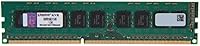
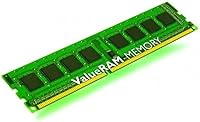
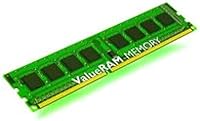
The Kingston ValueRAM 8GB DDR3 1600MHz ECC RAM is a no-frills workhorse designed for builders who need memory stability without breaking the budget. ECC — Error-Correcting Code — memory automatically detects and fixes single-bit errors before they cause a crash or corrupt data, which matters enormously in servers that run unattended for days. Kingston has been manufacturing memory since 1987, and that track record carries real weight when you're trusting a module with critical workloads. Yes, DDR3 is an older standard, but on legacy server platforms it remains the only option. Launched in 2012, this ECC memory module has years of real-world validation behind it — a mature product, not an obsolete one.
Features & Benefits

This server RAM runs at 1600MHz on the PC3-12800 bus — plenty of bandwidth for the kind of steady, sustained workloads ECC platforms typically handle. Each module delivers 8GB of capacity, which works as a functional starting point for light virtualization or can be paired with additional sticks to scale up. The unbuffered DIMM design keeps it compatible with a broad range of entry-level server and workstation boards, unlike registered or buffered modules that require specific controllers. CL11 latency is standard for this speed tier — you won't gain or lose anything versus comparable DDR3 ECC sticks. The lifetime warranty with free technical support from Kingston rounds things out nicely.

Best For

This Kingston DDR3 stick hits a sweet spot for a fairly specific crowd. Home lab builders running Proxmox, TrueNAS, or similar virtualization platforms will find it a cost-effective way to add ECC-protected memory to an older Xeon or Opteron setup. Small businesses that need to extend the life of aging workstations — rather than replace them outright — can swap in this ECC memory module without overhauling the whole system. IT departments managing file servers or print servers on minimal budgets will appreciate the price-to-stability ratio. Developers doing database work or heavy compilation on Linux can also benefit via the EDAC kernel error-reporting framework.

User Feedback

Across more than a hundred reviews spanning over a decade, the picture that emerges is one of quiet reliability. Most buyers report straightforward installation and solid compatibility with popular server boards from Supermicro and similar vendors. The lifetime warranty comes up repeatedly as a genuine reason buyers chose Kingston over cheaper, no-name alternatives. Where things go sideways is almost always a platform compatibility issue: ECC memory requires both the CPU and motherboard to support error correction, and consumer-grade boards typically do not. Several negative reviews trace back to this mismatch rather than any fault in the module itself. Recent feedback trends consistently positive, suggesting the module holds up well over time.

Pros

  • ECC error correction actively prevents single-bit memory errors from crashing your system or corrupting data.
  • Kingston's lifetime warranty means you are not left stranded if the module develops a fault years down the line.
  • Free technical support from Kingston is a genuine advantage over budget no-name alternatives.
  • The unbuffered DIMM design keeps this ECC memory module compatible with a wide range of entry-level server boards.
  • Broad compatibility with popular platforms like Supermicro makes sourcing and installation straightforward.
  • Years of real-world deployment give buyers confidence that this is a stable, well-understood product.
  • Works natively with Linux EDAC framework, enabling proactive memory error monitoring on supported systems.
  • 8GB per module is a practical starting point that can be scaled by adding more sticks as needed.
  • CL11 latency is on par with competing DDR3 ECC modules — no hidden performance penalty here.
  • Kingston's long manufacturing history means replacement and support channels are well established.

Cons

  • DDR3 is an aging standard; finding compatible ECC motherboards new is increasingly difficult.
  • Consumer-grade motherboards almost universally lack ECC support, making compatibility research mandatory before buying.
  • 8GB per module can feel limiting for heavier virtualization workloads that need 32GB or more.
  • No performance headroom for overclocking — this server RAM runs at its rated spec and nothing beyond.
  • The CL11 latency is not competitive for any workload where memory response time is critical.
  • DDR4 and DDR5 platforms have completely overtaken DDR3 in availability, pricing, and ecosystem support.
  • Buyers on non-Linux operating systems may not be able to surface or log ECC error reports easily.
  • Sourcing multiple matched modules for a multi-channel build adds up quickly at current ECC pricing.
  • The moderate overall rating can create hesitation, even though most complaints trace back to platform mismatches.
  • No RGB, heat spreader, or aesthetic features — a minor but real drawback if the build has a windowed case.

Ratings

Our AI scoring system analyzed verified global buyer reviews for the Kingston ValueRAM 8GB DDR3 1600MHz ECC RAM, actively filtering out incentivized, bot-generated, and spam submissions to surface what real users actually experienced. The scores below reflect a balanced synthesis of genuine praise and recurring frustrations, weighted toward recent feedback where the review pool spans multiple years. Both the strengths that keep buyers coming back and the pain points that cost stars are transparently represented in every category.

Reliability & Stability
91%
Across years of real-world deployments in home labs, small business file servers, and budget workstations, buyers consistently report that this ECC memory module simply stays running. Long-term owners frequently note zero crashes or unexplained reboots after installation, which is exactly the outcome ECC memory is designed to deliver.
A small subset of users running the module outside its intended server environment — particularly on consumer boards with partial or unofficial ECC support — report occasional instability that is difficult to diagnose. In those edge cases, it is rarely clear whether the module or the platform is at fault.
Compatibility
67%
33%
On qualified server platforms — Supermicro boards, workstation-class Intel Xeon systems, and certain AMD EPYC setups — this server RAM installs cleanly and is recognized without any BIOS intervention. IT admins replacing memory in known-good ECC environments report a smooth, predictable experience.
Compatibility is the single biggest source of negative reviews. ECC requires both CPU and motherboard support, and buyers who do not verify this in advance frequently find the module is not recognized correctly or that ECC is silently disabled. Consumer-grade boards are almost universally incompatible, and this catches a meaningful number of buyers off guard.
Value for Money
83%
For buyers who need genuine ECC protection on a DDR3 platform, this Kingston DDR3 stick sits at a competitive price point compared to alternatives from lesser-known brands. The lifetime warranty and Kingston's established support infrastructure make the effective long-term value stronger than the sticker price alone suggests.
Buyers who discover post-purchase that their platform does not support ECC end up with a module they cannot effectively use, making the purchase feel wasteful. Additionally, as DDR3 becomes increasingly scarce, pricing can fluctuate in ways that occasionally make the value proposition less compelling than it once was.
ECC Error Correction Performance
88%
Users running Linux with EDAC monitoring enabled report that the module actively logs and corrects single-bit errors without any manual intervention, exactly as ECC memory should behave. For Proxmox and TrueNAS builds where data integrity is critical, this error-correcting function has given administrators real peace of mind during long uptimes.
ECC correction introduces a marginal performance overhead compared to non-ECC DDR3 running at the same speed and latency. This trade-off is negligible for server workloads but is worth acknowledging — buyers expecting consumer-grade throughput numbers will not find them here.
Ease of Installation
89%
Buyers across skill levels — from seasoned IT administrators to first-time home lab builders — consistently report that physical installation is uncomplicated. The module seats firmly, is recognized at first boot on compatible platforms, and requires no special configuration beyond ensuring ECC is enabled in the BIOS.
The installation experience is only smooth when the platform is correctly chosen in advance. Users who discover mid-installation that their board lacks ECC support face a frustrating process of removal, research, and return shipping that colors their overall perception of the product.
Build Quality
84%
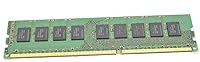
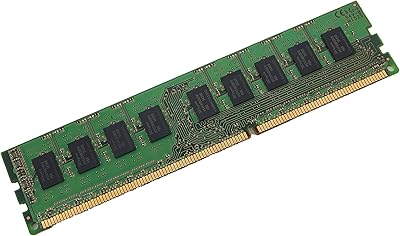
The bare PCB construction is clean, with components seated evenly and no visible quality control issues reported by the user base. Kingston's manufacturing consistency means individual modules from different purchase dates behave identically, which matters when sourcing matched pairs or sets over time.
There is no heat spreader on this module, which is a reasonable design choice for server RAM but means thermal management relies entirely on chassis airflow. In poorly ventilated enclosures running sustained workloads, this is worth factoring into your build planning.
Warranty & Support
92%
Kingston's lifetime warranty is frequently cited as a decisive factor for buyers choosing this ECC memory module over unbranded alternatives at a similar price. Free technical support is available and described by multiple reviewers as genuinely responsive, particularly useful for buyers troubleshooting compatibility questions.
The RMA process, while covered by the lifetime warranty, requires buyers to work directly with Kingston rather than through a retailer, which adds steps for some users. International buyers occasionally report longer turnaround times depending on their region.
DDR3 Platform Longevity
58%
42%
For users committed to DDR3-era server hardware — whether due to budget constraints, existing infrastructure, or the specific capabilities of older Xeon platforms — this server RAM keeps aging systems productive without requiring a full platform refresh. That use case remains legitimate and this module serves it well.
DDR3 as a standard is genuinely aging, and the ecosystem of compatible motherboards and CPUs is shrinking. Buyers planning a multi-year infrastructure build should weigh whether investing in DDR3 ECC memory today aligns with their upgrade roadmap, as DDR4 and DDR5 ECC options are now widely available.
Speed & Throughput
72%
28%
At 1600MHz with CL11 timings, this Kingston DDR3 stick delivers consistent, predictable bandwidth for the server workloads it targets — database queries, file serving, and light virtualization all run without memory becoming the bottleneck in typical configurations.
1600MHz DDR3 is a mid-range speed by any modern standard, and buyers expecting high-throughput performance for memory-intensive tasks like video encoding or large in-memory databases will find it limiting. This module was designed for stability, not peak throughput.
Module Capacity
74%
26%
8GB per module is a practical and sufficient starting point for file servers, print servers, and light Proxmox or TrueNAS installs. The ability to add more modules incrementally makes it a reasonable entry point for home lab builds with room to grow.
For heavier virtualization workloads, 8GB per module means you need multiple sticks to reach a useful total, and the cost adds up. Buyers with memory-hungry workloads who cannot find higher-capacity DDR3 ECC modules at reasonable prices may find this limiting.
Linux & EDAC Compatibility
87%
Linux users running server distributions like Ubuntu Server, Debian, or CentOS report that the EDAC subsystem detects this ECC memory module correctly and surfaces error counts through standard kernel interfaces. Tools like edac-util work out of the box, making proactive memory health monitoring straightforward.
Windows Server users do not have equivalent native tooling to surface ECC correction events without third-party software, meaning the error-monitoring benefit is less accessible on non-Linux platforms. This is a platform limitation rather than a module defect, but it affects the practical value for some buyers.
Brand Reputation
88%
Kingston's decades-long track record in the memory market translates into genuine buyer confidence that is hard to quantify but consistently shows up in reviews. Buyers frequently cite brand trust as the reason they chose this module over cheaper alternatives with no verifiable manufacturing history.
Brand reputation does not resolve platform compatibility issues, and a small number of frustrated buyers attribute their incompatibility problems to Kingston even when the root cause is their own board or CPU. The brand's reputation sets expectations that the product cannot always meet when buyers purchase without verifying ECC support.
Physical Form Factor
81%
19%
The standard 240-pin UDIMM form factor means this server RAM fits any DDR3 DIMM slot on a compatible board without adapters or modifications. The module's slim, heat-spreader-free profile also makes it easier to fit in tight server chassis with multiple populated slots.
The absence of a heat spreader means the module looks utilitarian compared to consumer memory, which is irrelevant for rack servers but occasionally a point of feedback from home lab builders who care about aesthetics in windowed cases.

Suitable for:

The Kingston ValueRAM 8GB DDR3 1600MHz ECC RAM is purpose-built for anyone running a DDR3-era server or workstation platform where memory reliability matters more than raw speed. Home lab enthusiasts spinning up Proxmox clusters, TrueNAS boxes, or small virtualization hosts on older Xeon or Opteron hardware will find this a practical, trustworthy fit. Small businesses that need to keep aging workstations productive without a costly hardware refresh can drop this ECC memory module in and extend the life of their machines with confidence. IT administrators managing file servers, print servers, or similarly low-intensity server roles on tight budgets will appreciate getting genuine ECC protection without paying a premium. Developers running Linux-based environments can take it a step further, using the EDAC kernel framework to actively monitor and log any corrected memory errors — a level of visibility that non-ECC RAM simply cannot offer.
Not suitable for:

The Kingston ValueRAM 8GB DDR3 1600MHz ECC RAM is a poor fit for anyone building a modern system or upgrading a consumer desktop. ECC memory requires explicit support from both the CPU and the motherboard — most mainstream consumer boards, even high-end gaming motherboards, do not support ECC at all, and plugging this stick into one will either result in non-ECC operation or outright failure to POST. If your platform uses DDR4 or DDR5, this server RAM is simply incompatible — there is no adapter or workaround. Buyers chasing maximum memory throughput or low latency for gaming or content creation workloads should also look elsewhere; ECC error-checking introduces a small but real overhead, and this module was never designed with performance as a priority. If 8GB per module is insufficient for your workload and your budget is tight, scaling up with multiple sticks adds cost quickly, so larger-capacity ECC modules may be a more economical path for memory-hungry applications.
Specifications

  • Capacity: Each module provides 8GB of DDR3 SDRAM, suitable as a standalone starting point or as part of a multi-module configuration.
  • Memory Type: This module uses DDR3 SDRAM technology, the standard for a wide range of server and workstation platforms released between roughly 2010 and 2015.
  • Speed: The module operates at 1600MHz, corresponding to the PC3-12800 bus standard, delivering adequate throughput for ECC-enabled server workloads.
  • Form Factor: The 240-pin Unbuffered DIMM (UDIMM) form factor ensures broad compatibility with entry-level server and workstation motherboards that support unbuffered ECC memory.
  • Error Correction: ECC (Error-Correcting Code) support allows the module to automatically detect and correct single-bit memory errors in real time, reducing the risk of data corruption and unplanned downtime.
  • Latency: The module carries a CL11 (CAS Latency 11) rating, which is the standard timing for DDR3 running at 1600MHz and carries no performance penalty versus comparable modules.
  • Voltage: Operating voltage is 1.5V, which is the standard for DDR3 and is not a low-voltage (1.35V) variant.
  • Model Number: The official Kingston part number is KVR16E11/8, which can be used to verify compatibility with your motherboard's qualified vendor list (QVL).
  • Dimensions: The module measures 13 x 4.5 x 0.1 inches (approximately 330 x 114 x 2.5mm), consistent with a standard full-height DIMM.
  • Weight: The module weighs 0.8 ounces, reflecting its bare PCB construction with no heat spreader.
  • Warranty: Kingston covers this module with a lifetime warranty, which applies to the original purchaser and covers manufacturing defects for the life of the product.
  • Technical Support: Free technical support is available directly from Kingston Technology, accessible via phone or their online support portal.
  • Compatible Devices: This server RAM is designed for use in desktop workstations and server platforms that explicitly support unbuffered ECC DDR3 memory.
  • Pin Count: The module uses a 240-pin interface, the standard connector configuration for DDR3 DIMMs on desktop and server motherboards.
  • Buffer Type: This is an unbuffered (unregistered) module and is not compatible with systems that require registered (RDIMM) or load-reduced (LRDIMM) memory.
  • Manufacturer: Produced by Kingston Technology, one of the longest-established independent memory manufacturers in the industry, founded in 1987.
  • First Available: This module was first made available in July 2012, giving it over a decade of deployment history across a wide range of server and workstation environments.

Related Reviews
Kingston ValueRAM 8GB 1333MHz DDR3 ECC DIMM
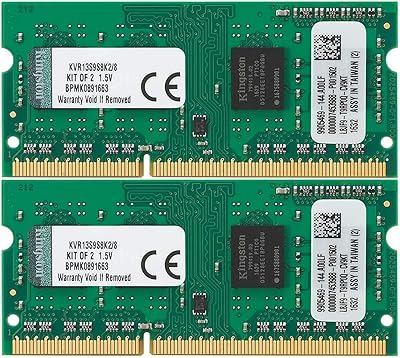
87%
88%
Performance for Servers
92%
Stability and Reliability
94%
Ease of Installation
90%
Compatibility with Workstations
86%
Energy Efficiency
More
A-Tech 64GB Kit DDR3 1600MHz ECC Registered RAM
88%
92%
Performance in Server Environments
89%
Compatibility with DDR3 Servers
94%
Stability and Reliability (ECC Features)
87%
Energy Efficiency (Low Voltage)
90%
Ease of Installation
More
Kingston ValueRAM 8GB DDR3 1333MHz Laptop RAM
74%
58%
Compatibility
74%
Value for Money
81%
Installation Ease
69%
Performance Uplift
77%
Build & Module Quality
More
A-Tech 16GB DDR3 1600MHz ECC Server RAM
79%
71%
Compatibility
88%
ECC Reliability
84%
Value for Money
73%
Installation Ease
83%
Build Quality
More
Kingston 16GB Kit (2 x 8GB) DDR3 1600MHz SODIMM Laptop Memory
88%
88%
Performance Boost
91%
Ease of Installation
85%
Compatibility with Laptops
92%
Energy Efficiency
80%
Build Quality
More
A-Tech 8GB DDR3 1600MHz RAM for Dell OptiPlex 9020 9010 7020 7010 3020 3010 XE2
88%
89%
Overall Performance
94%
Compatibility
91%
Ease of Installation
88%
System Stability
90%
Build Quality
More
Kingston ValueRAM 8GB DDR4-3200 Desktop RAM
80%
91%
Reliability & Stability
88%
Compatibility
86%
Value for Money
93%
Ease of Installation
78%
Performance for Everyday Use
More
NEMIX RAM 16GB DDR3 1600MHz SODIMM
86%
88%
Performance Boost
91%
Ease of Installation
85%
Compatibility
90%
Energy Efficiency
84%
Build Quality
More
PNY Performance 8GB DDR3 Desktop RAM
76%
88%
Compatibility
93%
Ease of Installation
86%
Value for Money
79%
System Performance Impact
84%
Long-Term Reliability
More
Kingston ValueRAM 8GB DDR4 2666MHz Laptop RAM
80%
88%
Value for Money
83%
Compatibility
92%
Ease of Installation
79%
Performance Gains
91%
Reliability
More

FAQ

Almost certainly not as ECC memory. Most consumer and gaming motherboards do not support ECC at all — even if the module physically fits the slot, the error-correction feature will either be silently disabled or the system may refuse to boot. You need a motherboard and CPU that explicitly list ECC support in their specifications before buying this ECC memory module.

Check your motherboard's manual or the manufacturer's product page and look specifically for the phrase 'ECC support' or 'ECC unbuffered DIMM.' Also verify your CPU — on Intel platforms, ECC support is typically found on Xeon processors, not Core i-series. AMD Ryzen Pro and EPYC processors generally support ECC, while standard Ryzen support varies by generation and board.

ECC stands for Error-Correcting Code. In practical terms, it means the memory module can detect and fix single-bit errors on the fly, before they cause a crash or corrupt a file. For a gaming PC, you probably don't need it. For a server, NAS, or any machine running unattended 24/7 with important data on it, ECC is worth serious consideration.

No — you should not mix ECC and non-ECC modules. Most server platforms that support ECC require all installed modules to be ECC. Mixing types can cause instability, prevent the system from booting, or silently disable ECC protection, which defeats the purpose entirely.

It depends entirely on your platform. If you are running a legacy server or workstation that uses DDR3, then yes — this Kingston DDR3 stick is a perfectly valid and cost-effective choice. If you are building a new system from scratch, DDR4 or DDR5 platforms will offer better performance, wider hardware support, and more upgrade headroom.

Yes, and it is a popular choice for exactly these use cases. Both TrueNAS and Proxmox run on Linux and work well with ECC memory on compatible hardware. If your server board and CPU support ECC, this module installs and operates like any other DIMM — no special configuration needed for the RAM itself.

Certain older Mac Pro models (particularly the 2010 and 2012 versions) do use DDR3 ECC memory, and Kingston modules are often compatible. That said, you should cross-reference the exact Mac Pro model year and memory slot specifications with Kingston's compatibility tool before purchasing, as slot counts and maximum supported capacity vary.

Linux includes the EDAC (Error Detection and Correction) kernel subsystem, which surfaces ECC error counts through the filesystem at /sys/devices/system/edac/. Tools like edac-util can give you a clean readout. If EDAC reports no ECC hardware found, your platform may not have ECC enabled in the BIOS, or your CPU and board may not support it.

Unbuffered ECC (UDIMM) and registered ECC (RDIMM) are electrically different and not interchangeable. UDIMMs connect directly to the memory controller and are used in workstations and entry-level servers. RDIMMs include a register chip that buffers signals, allowing higher module counts per channel — they are typically found in dual-socket enterprise servers. This server RAM is an unbuffered module, so your board must support UDIMM ECC specifically.

Kingston's lifetime warranty covers manufacturing defects for the life of the product. If this ECC memory module fails, you contact Kingston's support team directly, and they typically handle RMA replacements through their own channels. Free technical support is also available if you are unsure whether the issue is the module or something else in your system.