
Overview

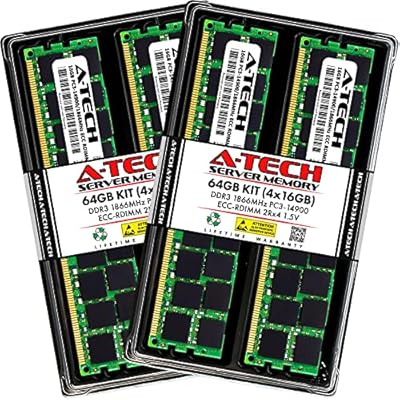
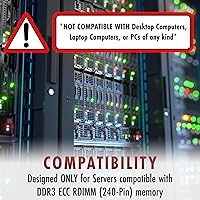
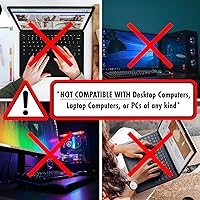
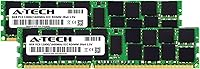
The A-Tech 16GB DDR3 1600MHz ECC Server RAM is built exclusively for server platforms — not desktops, not laptops, not workstations. If you're shopping for consumer memory, stop here; this is a different category entirely. ECC, or Error-Correcting Code, means the modules actively detect and fix single-bit memory errors in real time, which matters enormously in environments where data integrity is non-negotiable. The kit ships as two 8GB modules, which allows them to run in dual-channel configuration for better memory bandwidth. A-Tech has carved out a solid reputation in the aftermarket enterprise memory space, and this kit reflects that focus. Compatibility is intentionally narrow — that's the nature of registered server memory, not a shortcoming.

Features & Benefits

Running at 1600MHz on the PC3-12800R standard, this ECC RDIMM upgrade delivers reliable throughput while the error-correction layer catches single-bit faults before they can corrupt data — critical for databases, virtualization, and any workload where uptime actually costs money. The registered (buffered) design isn't just a label; it physically reduces the electrical burden on the memory controller, which is why servers can support more DIMMs per channel than consumer boards ever could. The 2Rx4 dual-rank layout improves interleaving, squeezing more sustained bandwidth out of each slot. At 1.5V over a standard 240-pin interface, it fits a broad range of OEM server hardware. The lifetime warranty rounds out a package built for long-term deployment.

Best For

This server memory kit makes the most sense for IT administrators and home lab operators who are keeping DDR3-era servers productive rather than replacing them entirely. If you're running a Dell PowerEdge, HP ProLiant, or a comparable rack server from that generation, and you need more headroom for virtualization guests, a database engine, or a file server under load, this is where the math works in your favor — solid ECC reliability without the cost of jumping to a newer platform altogether. It's not the right fit for anyone hoping to drop it into a desktop or workstation. But for budget-conscious server upgrades where reliability matters more than bleeding-edge speed, the A-Tech RDIMM kit is a practical, well-targeted option.

User Feedback

With a 4.2 out of 5 rating across more than 200 reviews, buyer sentiment leans positive but isn't without caveats. On the upside, users on verified compatible platforms consistently report clean POST, stable operation under sustained load, and no memory errors over extended periods — exactly what you want from ECC memory. The A-Tech support team also gets mentions for being genuinely helpful with pre-purchase compatibility questions. Where things go sideways is almost always a compatibility issue: buyers who skipped checking their server's qualified vendor list, or who tried mixing this with unbuffered or load-reduced DIMMs, ran into problems. The lesson is simple — verify before you buy, and this ECC RDIMM upgrade will likely perform exactly as expected.

Pros

  • Error-correcting memory catches and fixes single-bit faults in real time, keeping server data reliable under sustained load.
  • The registered (buffered) design allows servers to support more DIMMs per channel without overloading the memory controller.
  • Dual-channel 2x8GB configuration improves memory bandwidth compared to running a single large module.
  • JEDEC-compliant DDR3 1600MHz spec ensures predictable, validated compatibility across a wide range of enterprise server platforms.
  • A-Tech's lifetime warranty provides coverage well beyond the typical one- or two-year window offered by most memory vendors.
  • The support team is known for answering pre-purchase compatibility questions — a genuine rarity in the aftermarket memory space.
  • A 4.2-star rating from over 200 buyers confirms consistent real-world performance on correctly matched server platforms.
  • Priced well below OEM-branded equivalents, making it a practical choice for budget-conscious server memory upgrades.
  • Users on verified compatible servers consistently report clean POST and stable operation across extended workload periods.

Cons

  • Compatibility is strictly limited to DDR3 ECC Registered server platforms — it will not function in any consumer or desktop hardware.
  • Buyers who skip the qualified vendor list check before purchasing routinely report POST failures and a frustrating return experience.
  • Cannot be mixed with UDIMM, LRDIMM, or non-ECC modules, even within the same server chassis.
  • DDR3 is an aging standard; this kit offers no path to long-term scalability as infrastructure migrates to newer platforms.
  • Some users report needing back-and-forth communication with A-Tech support just to confirm compatibility before feeling confident enough to order.
  • The A-Tech 16GB DDR3 1600MHz ECC Server RAM offers absolutely no benefit to desktop, laptop, or workstation users.
  • Shrinking secondary market availability for DDR3-era servers limits how easily this memory can be redeployed if hardware changes.
  • 1600MHz speed may feel constraining for memory-bandwidth-sensitive workloads that would benefit from faster modern DDR4 or DDR5 standards.

Ratings

Our scores for the A-Tech 16GB DDR3 1600MHz ECC Server RAM were generated by an AI system trained to analyze thousands of verified buyer reviews from global markets, actively filtering out incentivized, duplicate, and bot-generated feedback to surface authentic user experiences. The ratings reflect a transparent picture of where this server memory kit genuinely excels and where real buyers have encountered friction. Both strengths and pain points are factored in so you can evaluate this ECC RDIMM upgrade against your specific deployment scenario with confidence.

Compatibility
71%
29%
On verified, QVL-confirmed server platforms, buyers consistently report drop-in installation with no driver configuration required. IT admins managing Dell PowerEdge and HP ProLiant fleets from the DDR3 era particularly praise how predictably the kit registers at the correct speed and passes memory diagnostics without any manual intervention.
The most persistent complaint across negative reviews is compatibility failure caused by buyers skipping the qualified vendor list check — a step that is easy to overlook but costly to learn. Mixing this RDIMM with unbuffered or load-reduced modules in the same chassis is another recurring issue that ends in POST failure every time.
ECC Reliability
88%
Users running databases and virtualization workloads consistently report zero uncorrectable memory errors over months of continuous operation, which is exactly the reliability benchmark for ECC server memory. The automatic single-bit error correction works silently in the background — the way data-sensitive server environments demand — and you should never notice it working at all.
ECC correction only addresses single-bit errors; multi-bit corruption events — though rare — are beyond what any standard ECC RDIMM can handle. A small number of buyers also noted that ECC logging visibility varies by server firmware, making it harder to audit correction events without dedicated management tools like iDRAC or iLO.
Value for Money
84%
For buyers upgrading aging DDR3 server hardware without committing to a full platform refresh, the price-per-gigabyte for ECC registered memory at this spec is genuinely competitive against OEM-sourced sticks. IT administrators managing tight budgets for home labs or small business server rooms consistently cite this ECC RDIMM upgrade as a cost-effective route to more reliable memory capacity.
Buyers who purchase without verifying compatibility and end up with an incompatible module face a return process that effectively wipes out the cost savings. As DDR3 server hardware continues to age out of mainstream use, total ecosystem value diminishes — this investment only makes sense if your server platform has several productive years remaining.
Installation Ease
73%
27%
For IT professionals who have already confirmed compatibility, physical installation is straightforward — standard 240-pin DIMM seating with no special tools or adapters required. Most verified buyers on compatible platforms report the server detecting both modules correctly on first boot with no BIOS-level manual configuration needed to reach full rated speed.
The research required before installation — cross-referencing server model, slot population rules, and ECC type requirements — adds meaningful friction for less experienced buyers. Users unfamiliar with server memory channel guidelines sometimes populate slots out of sequence, triggering degraded configurations that look like a hardware fault when they are simply a setup error.
Build Quality
83%
The modules are solidly constructed, consistent with what you expect from enterprise-grade components built to run continuously in rack environments. A-Tech's quality control process — which all Enterprise Series modules go through — holds up in practice, with very few buyers reporting dead-on-arrival or early-failure units across a substantial review base.
The modules ship bare with no heatspreader, which is standard for server RDIMMs and not a flaw, but worth knowing if you are used to consumer RAM aesthetics. A small subset of reviews mentions packaging that could be more protective, though no buyer attributed actual module damage to how the kit arrived.
Speed Performance
76%
24%
At 1600MHz, this server memory kit operates at the upper range of the DDR3 RDIMM speed tier, which is adequate for database, file server, and virtualization use cases it is designed for. The 2Rx4 dual-rank configuration also adds sustained throughput that single-rank modules at the same capacity simply cannot match during extended parallel workloads.
DDR3 at 1600MHz is a generationally aging standard, and buyers with memory-bandwidth-intensive workloads — dense VM environments or large in-memory analytics — may feel the ceiling more acutely than those running lighter server tasks. There is no speed advantage over DDR4 or DDR5 platforms, which matters if a generational infrastructure refresh is already on the horizon.
Dual-Channel Efficiency
79%
21%
Shipping as a matched 2x8GB pair is a meaningful design choice — running in dual-channel mode effectively doubles available memory bandwidth compared to a single 16GB stick, which matters in virtualization hosts juggling multiple simultaneous guest workloads. Buyers who populate slots correctly per their server's memory channel rules report capturing the full bandwidth benefit immediately.
The dual-channel benefit only materializes when slots are populated in the correct sequence per the server's memory channel architecture — a nuance that trips up buyers unfamiliar with server memory topology. Some platforms enforce specific slot pairing rules that are not immediately intuitive, and using the wrong pair first can silently drop the system into single-channel mode.
Warranty & Support
87%
A-Tech's Limited Lifetime Warranty is a genuine differentiator in the aftermarket server memory segment, where many competitors cap coverage at one to three years. The support team earns consistent praise in buyer reviews for being accessible and technically informed, particularly for pre-purchase compatibility consultations that help buyers avoid the most common and costly mismatches.
Warranty claims require demonstrating the issue is a genuine module defect rather than a compatibility or configuration problem — a distinction that can slow the resolution process for buyers who are unsure which category their issue falls into. Some reviewers also noted variable response times during peak periods, though most interactions were ultimately resolved to satisfaction.
Documentation & Guidance
63%
37%
A-Tech provides a compatibility checking resource and a reachable support team for pre-purchase questions, which has helped a meaningful share of reviewers sidestep the most common pitfalls. The product listing itself is reasonably explicit about the server-only, RDIMM-specific nature of the kit, setting expectations better than many competing listings in this category.
Less experienced buyers consistently describe being caught off guard by how narrow and non-negotiable the ECC type and memory channel requirements actually are, despite the listing warnings. No detailed printed installation guide ships in the box, leaving less technical buyers entirely dependent on their server documentation or A-Tech's online resources to get it right.
Platform Coverage
72%
28%
The 240-pin DDR3 RDIMM form factor and JEDEC-compliant 1.5V spec give this server memory kit a reasonably broad footprint across Dell PowerEdge, HP ProLiant, IBM System x, and Supermicro server platforms from the DDR3 generation. Buyers running well-known DDR3-era server models consistently find compatible configurations listed in A-Tech's compatibility database.
Coverage drops noticeably for less common or niche sub-variants of DDR3 server platforms, and buyers with unusual OEM configurations sometimes report dead ends in the compatibility database. The kit is entirely irrelevant for any server that has already been upgraded to DDR4 or later memory standards, which increasingly describes the current enterprise landscape.
Long-term Stability
86%
On confirmed-compatible platforms, buyers running this server memory kit through months of continuous 24/7 operation consistently report stable performance with no degradation, no correctable error spikes over time, and clean memory health diagnostics. This is precisely the reliability profile small business IT environments need when unplanned downtime carries a real operational cost.
Long-term stability data skews positive because incompatible configurations fail immediately rather than degrading gradually — meaning the long-term picture looks better than the compatibility score alone might suggest. The aging DDR3 platform also introduces a broader infrastructure longevity risk that is entirely outside the memory module's control.
Power Efficiency
81%
19%
Operating at 1.5V, this ECC RDIMM upgrade sits at the standard DDR3 server voltage and runs well within the power budget of any compatible DDR3 platform. Users managing dense server racks appreciate that the thermal output per module is low enough to have no meaningful impact on chassis cooling dynamics under normal operating conditions.
This kit runs at 1.5V rather than the 1.35V DDR3L low-voltage variant, meaning it draws slightly more power than the most efficient DDR3 server memory available. In power-sensitive data center environments with strict per-rack watt budgets, that distinction is worth noting — though for most home lab and small business deployments, it is entirely inconsequential.
POST Stability
82%
18%
Buyers installing this kit into correctly matched server platforms — verified against the QVL and populated per memory channel guidelines — report clean, first-attempt POST with both modules detected at full capacity and rated speed. This out-of-the-box boot reliability is one of the most consistently praised aspects across positive reviews.
POST failures are the most common negative experience reported, but the root cause is almost always a compatibility mismatch or incorrect slot population rather than a genuine module defect. The frustrating reality is that POST failure gives less experienced buyers almost no diagnostic information, making it genuinely difficult to self-diagnose whether the issue is the memory, the slot, or the configuration.

Suitable for:

The A-Tech 16GB DDR3 1600MHz ECC Server RAM is the right call for IT administrators and small business owners who need to extend the productive life of aging but still-capable DDR3 server hardware. If you are managing a Dell PowerEdge, HP ProLiant, or a comparable rack or tower server from that generation, and your workloads have outgrown the installed memory, this kit delivers a meaningful capacity bump without requiring a full platform refresh. Virtualization hosts, database servers, and file servers are the real sweet spot here — these are environments where reliable memory headroom translates directly into fewer bottlenecks and more consistent uptime. Home lab operators on a tight budget will also find it a compelling option, since ECC error-correction at this price tier is genuinely hard to match with OEM-sourced sticks. The dual-channel 2x8GB configuration means you capture both the capacity increase and the bandwidth benefits that come with running modules in tandem.

Not suitable for:

Anyone shopping for desktop, laptop, or standard workstation memory should stop here — the A-Tech 16GB DDR3 1600MHz ECC Server RAM is physically and electrically incompatible with consumer platforms, full stop. It also cannot be used in servers that require ECC Unbuffered (UDIMM) or Load-Reduced (LRDIMM) memory; mixing registered modules with either of those types causes POST failures, and this is the single biggest source of negative reviews for this kit. If your server infrastructure has already moved to DDR4 or DDR5, this is the wrong generation entirely — the connector pinouts differ and the two technologies simply cannot coexist. Buyers who have not confirmed their specific server model against a qualified vendor list or A-Tech's compatibility resources should absolutely do that homework before ordering, not after. And if your use case demands maximum raw memory throughput on current-generation hardware, DDR3 speeds will feel like a ceiling rather than a foundation.

Specifications

  • Total Capacity: This kit provides 16GB of total memory, delivered as two matched 8GB DDR3 SDRAM modules.
  • Memory Type: DDR3 SDRAM, the server memory generation widely deployed in enterprise hardware from the late 2000s through the mid-2010s.
  • Speed Rating: Rated at 1600MHz under the PC3-12800R standard, supporting up to 12,800 MB/s of theoretical peak bandwidth per module.
  • Form Factor: Standard 240-pin DIMM physical interface, the connector type used by the majority of DDR3-generation server motherboards.
  • Error Correction: ECC (Error-Correcting Code) technology automatically detects and corrects single-bit memory errors during live operation without software intervention.
  • Buffer Type: Registered (RDIMM) buffering places a hardware register between the memory controller and DRAM chips, reducing electrical load and enabling higher DIMM counts per server.
  • Rank Config: 2Rx4 dual-rank architecture allows the memory controller to interleave across two independent ranks per module, improving sustained memory throughput.
  • Voltage: Operates at the standard DDR3 server voltage of 1.5V, broadly supported across compatible rack and tower server platforms.
  • Compliance: Fully JEDEC DDR3-compliant, ensuring the modules meet industry-standard electrical, timing, and interface specifications for validated server platforms.
  • Compatibility: Designed exclusively for DDR3 ECC Registered (RDIMM) server platforms — incompatible with desktop computers, laptops, workstations, or any non-server hardware.
  • ECC Restriction: This RDIMM cannot be installed alongside ECC Unbuffered (UDIMM), Load-Reduced (LRDIMM), or non-ECC modules, even within the same server chassis.
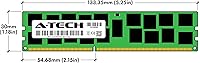
  • Dimensions: Each module measures 6.5 × 3.45 × 0.3 inches, fitting standard full-height server DIMM slots without modification.
  • Kit Weight: The complete two-module kit weighs approximately 1.5 oz, consistent with standard bare DDR3 server DIMM packaging.
  • Warranty: Covered by A-Tech's Limited Lifetime Warranty against defects in materials and workmanship for the usable life of the product.
  • Brand / Series: Manufactured by A-Tech under their Enterprise Series line, which targets the aftermarket server memory upgrade segment specifically.

Related Reviews
A-Tech 16GB DDR3 1600MHz Desktop RAM
79%
93%
Value for Money
88%
Compatibility
91%
Installation Ease
86%
System Stability
82%
Performance Uplift
More
A-Tech 64GB Kit DDR3 1600MHz ECC Registered RAM
88%
92%
Performance in Server Environments
89%
Compatibility with DDR3 Servers
94%
Stability and Reliability (ECC Features)
87%
Energy Efficiency (Low Voltage)
90%
Ease of Installation
More
A-Tech 32GB DDR3 1333MHz ECC Registered Server RAM Kit
87%
88%
Performance
91%
Ease of Installation
85%
Reliability
93%
Data Integrity (ECC)
89%
Stability Under Load
More
NEMIX RAM 16GB DDR3 1600MHz SODIMM
86%
88%
Performance Boost
91%
Ease of Installation
85%
Compatibility
90%
Energy Efficiency
84%
Build Quality
More
A-Tech 32GB DDR3 1600MHz Desktop RAM
78%
91%
Value for Money
74%
Compatibility Range
88%
Installation Experience
89%
System Stability
86%
Thermal Performance
More
NEMIX RAM 16GB (4x4GB) DDR3 1600MHz PC3-12800 Memory Kit
86%
94%
Installation Process
88%
Performance Boost
92%
Value for Money
85%
Build Quality
80%
Compatibility
More
A-Tech 64GB Kit DDR3 1866MHz ECC RAM for Mac Pro Late 2013
88%
92%
Performance
90%
Stability (ECC Functionality)
88%
Compatibility with Mac Pro Late 2013
85%
Installation Ease
91%
Customer Support & Warranty
More
OWC 64GB (4 x 16GB) DDR3 1600MHz SO-DIMM Memory RAM Upgrade
82%
91%
Performance Boost
75%
Ease of Installation
94%
Compatibility
89%
System Stability
80%
Energy Efficiency
More
A-Tech 16GB DDR3 RAM for Dell OptiPlex 9010/7010/3010/990/790/390
84%
88%
Performance Boost
94%
Ease of Installation
85%
Compatibility with Dell OptiPlex
91%
Value for Money
84%
System Stability
More
A-Tech 16GB DDR3 RAM Kit for Dell Latitude E7440 E7240 E6540 E6440 E5540 E5440
87%
88%
Performance Improvement
91%
Ease of Installation
94%
Compatibility with Dell Latitude Models
85%
Multitasking and Speed Boost
87%
Stability and Reliability
More

FAQ

No — this kit is built exclusively for server platforms that require DDR3 ECC Registered memory. It will not function in any desktop, laptop, or workstation regardless of how similar the slot appears. The electrical signaling and protocol requirements are fundamentally different from consumer DDR3, and the modules will either not seat correctly or fail to POST entirely.

The most reliable method is to look up your specific server model number in your manufacturer's qualified vendor list (QVL) and cross-reference it with A-Tech's compatibility database. If you're still uncertain, A-Tech's support team is well-regarded for answering pre-purchase compatibility questions directly — that extra step is worth the time and avoids a return.

ECC stands for Error-Correcting Code. The memory module continuously monitors data in transit and can automatically correct single-bit errors before they cause any problem. In consumer PCs, the occasional stray bit flip is annoying but rarely catastrophic. In a server running a database, a virtual machine host, or financial transactions, that same uncorrected error can silently corrupt data or crash a critical service.

A registered DIMM has an additional register chip on the module that buffers the signals between the memory controller and the DRAM chips. This reduces the electrical burden on the controller, which is exactly why enterprise servers can support far more memory slots than a typical desktop board. You trade a marginal amount of latency for dramatically better scalability and stability at high DIMM counts.

Only if the existing modules are also DDR3 ECC Registered (RDIMM) and your server supports mixing configurations — check your server's memory channel guidelines for details. You absolutely cannot combine this kit with UDIMM, LRDIMM, or non-ECC memory in the same system. That combination will typically result in POST failure or persistent system instability, and it is the most common cause of negative reviews for this product.

Many models in both of those lineups are compatible, but the specific server generation and model number matter significantly — not all DDR3 PowerEdge or ProLiant systems use the same memory type or support the same DIMM configurations. Always verify against your server's documentation or A-Tech's compatibility tool before ordering rather than assuming based on generation alone.

It stands for Dual Rank x4, meaning the module contains two independent ranks of DRAM chips that the memory controller can address in an interleaved pattern. In practice, this allows for better sustained memory throughput compared to a single-rank module of the same capacity, particularly under workloads that keep memory bandwidth consistently busy.

For most aftermarket upgrade scenarios, yes — OEM-branded server memory often carries a significant price premium for what are frequently the same underlying JEDEC-standard specs. The lifetime warranty on this kit provides meaningful long-term coverage, and A-Tech's tech support gives you a fallback if any issues arise. Just confirm compatibility first, as you would with any memory purchase.

In most cases the server will simply fail to POST or will not detect the module at all — it typically will not cause physical damage to the board or the module. That said, it means your server won't boot until the incompatible memory is removed. If you run into a situation like this, A-Tech's support team can help you work through whether it is a compatibility issue or a configuration problem.

No software or specialized tools are required. Installation means seating the two 8GB modules into the correct DIMM slots according to your server's memory channel guidelines — your server's documentation will tell you which slots to populate first. Just make sure the system is fully powered down and you're grounded before touching any memory module.