Overview

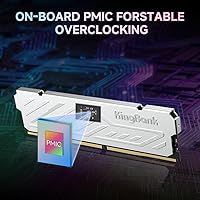
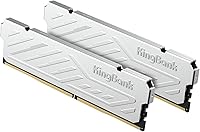
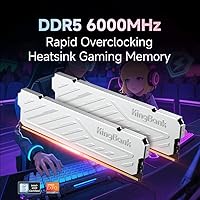
KingBank DDR5 6000 32GB Desktop RAM is one of those kits that enters a crowded market without a widely recognized brand name behind it — and that's both the challenge and the appeal. The brand has been building a quiet reputation in Asia's memory segment, but remains relatively unfamiliar to Western builders who habitually reach for Corsair or G.Skill. This 32GB dual-channel set targets the mainstream builder: someone who wants a current DDR5 platform running at 6000MT/s without paying a brand premium. Released in early 2025, it's positioned well for both Intel and AMD platforms. The silver heatsink is clean — functional over flashy.
Features & Benefits

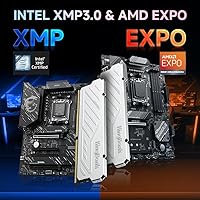
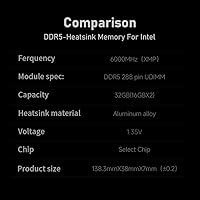
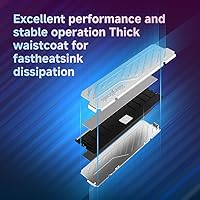
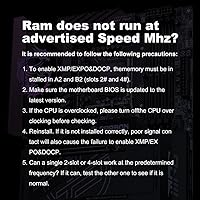
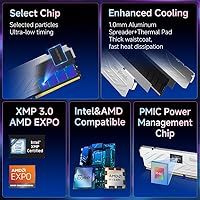
The headline spec is the dual-profile support — XMP 3.0 for Intel boards and AMD EXPO for Ryzen platforms. These are separate standards that achieve the same goal: automatic speed activation without manual tuning. One practical note most buyers overlook: you need to update your BIOS to the latest version before enabling either profile, or you may run into instability. At 6000MT/s with CL36, the latency is reasonable but not class-leading; tighter options exist, though they cost more. Running at 1.35V helps keep heat in check, and the thick alloy heatsink does its job quietly under sustained workloads. The multi-layer PCB and per-slot testing suggest real attention to build consistency.

Best For

This DDR5 kit makes most sense for mid-range gaming builds on current AMD Ryzen 7000 or 9000 series boards, or Intel 12th through 14th Gen platforms where DDR5 is native. It also suits anyone upgrading an office workstation who wants noticeably better multitasking bandwidth compared to DDR4. If you want to enable EXPO or XMP and forget about manual tuning, this 32GB dual-channel set delivers exactly that. Where it falls short is at the enthusiast end: if you want to push beyond 6000MT/s or need A-die chips for aggressive sub-timing tweaks, this kit is not the right tool. Stick with it for what it does well.

User Feedback

Early buyer sentiment around this KingBank memory is encouraging, sitting at 4.5 stars from 84 ratings as of mid-2025. The most consistent praise centers on hassle-free EXPO activation and solid out-of-the-box compatibility with popular motherboards. A few users flagged some BIOS sensitivity — mostly resolved by updating firmware before enabling profiles, which lines up with the manufacturer's own guidance. Customer service responses appear prompt and constructive based on reported interactions. That said, 84 reviews is a thin sample for a product launched just months ago, and long-term reliability remains an open question. Take the positive momentum as a good early signal, not a definitive verdict.

Pros

  • Supports both XMP 3.0 and AMD EXPO, covering Intel and AMD platforms without any manual tuning.
  • 6000MT/s is widely considered the sweet spot for DDR5 performance on current Ryzen platforms.
  • 32GB dual-channel configuration handles gaming, creative workloads, and heavy multitasking comfortably.
  • 1.35V operating voltage keeps thermals in check even during sustained, demanding sessions.
  • Thick alloy heatsink delivers functional heat dissipation, not just cosmetic bulk.
  • Multi-layer PCB with per-slot compatibility testing suggests more rigorous quality control than typical budget kits.
  • Clean silver heatsink design integrates easily into a wide range of build aesthetics.
  • Ranked #99 in Computer Memory on Amazon — strong early traction for a kit launched in early 2025.
  • Early buyer ratings average 4.5 stars, pointing to solid out-of-the-box compatibility for most users.
  • Priced meaningfully below equivalent kits from premium brands, offering real value for the specifications delivered.

Cons

  • KingBank carries limited brand recognition in Western markets, making warranty support harder to evaluate upfront.
  • Only 84 reviews as of mid-2025 — too small a sample to draw reliable long-term reliability conclusions.
  • CL36 latency is acceptable but not tight; competing kits at 6000MT/s offer better-tuned timings.
  • BIOS must be updated before EXPO or XMP activates properly — a real extra step that catches first-time builders off guard.
  • No A-die chips means a hard practical ceiling on overclocking headroom beyond the rated 6000MT/s.
  • Setup documentation appears sparse, which can frustrate builders who expect detailed installation guidance.
  • Customer support infrastructure outside Asia remains largely untested at any meaningful scale.
  • No widely available independent benchmark data for this specific kit makes pre-purchase performance comparisons difficult.

Ratings

Our editorial team trained an AI system to analyze verified global buyer reviews for the KingBank DDR5 6000 32GB Desktop RAM, actively filtering out incentivized, bot-generated, and unverified feedback to surface only genuine user experiences. The scores below reflect a transparent synthesis of real strengths and recurring pain points reported by builders across Intel and AMD platforms. Both where this DDR5 kit impresses and where it falls short are honestly represented.

Value for Money
88%
For buyers who want 32GB of DDR5 running at 6000MT/s without spending flagship-brand money, this kit lands in a genuinely compelling price tier. Most users feel they are getting close-to-premium performance specs at a noticeably lower cost than equivalent Corsair or G.Skill offerings, which resonates strongly with budget-conscious builders.
A small segment of buyers feels the value equation weakens if they factor in the uncertainty around long-term warranty support from a less established Western market brand. For buyers who prioritize peace of mind over upfront savings, the gap versus recognized brands narrows in perceived value.
Rated Speed Performance
84%
When running at the specified 6000MT/s under EXPO or XMP, users consistently report stable, predictable behavior during gaming sessions and productivity workloads alike. Bandwidth gains over DDR4 are tangible, particularly on Ryzen 7000 and 9000 series platforms where the 6000MT/s target aligns tightly with the processor's memory controller.
CL36 timings at this speed tier are functional but not class-leading — buyers who benchmarked this kit against tighter-latency alternatives found measurable differences in memory-sensitive workloads like compression and simulation tasks. For everyday gaming it is a non-issue, but synthetic memory tests expose the latency ceiling clearly.
XMP & EXPO Activation
86%
The dual-profile setup works as intended for the majority of buyers — enabling EXPO on AMD boards and XMP 3.0 on Intel platforms is a straightforward BIOS toggle for anyone who has kept their motherboard firmware current. Most users report landing at 6000MT/s on the first boot after activation with no instability or manual tuning required.
A recurring issue surfaces for builders with older or budget-tier motherboards running outdated firmware — profile activation can result in boot failures or automatic fallback to base JEDEC speeds. This is partly a motherboard problem, but the kit's sensitivity to BIOS version is higher than some buyers expect from a plug-and-play experience.
Overclocking Headroom
51%
49%
For users happy to run the kit at its rated 6000MT/s specification, there is nothing to complain about — it holds that target reliably. A handful of builders report minor sub-timing tweaks within the rated speed are achievable on cooperative boards without sacrificing stability.
Beyond 6000MT/s, this 32GB dual-channel set hits a real wall. The chip binning is optimized for the rated frequency, not for pushing headroom, and KingBank itself acknowledges this kit is not engineered for extreme overclocking. Users who purchased hoping to tune past 6400MT/s were largely disappointed and found stability degraded quickly.
Build Quality
79%
21%
The alloy heatspreader feels solid and well-attached, with no reports of loose or rattling hardware out of the box. The multi-layer PCB construction and per-slot factory testing signal a more deliberate manufacturing process than is typical at this price point, and most buyers find the physical quality reassuring on unboxing.
Long-term durability data is simply too thin at this stage — the kit only launched in early 2025 and has accumulated fewer than 100 reviews globally. Without a multi-year reliability track record, the build quality score is held back by justified uncertainty rather than any confirmed failure pattern.
Thermal Management
82%
18%
Running at 1.35V keeps heat output moderate, and the thick alloy heatspreader does a competent job of dissipating warmth during extended gaming or rendering sessions. Users with good airflow in their cases report no throttling concerns even after hours of sustained load.
In compact cases with restricted airflow, a few users noted the heatspreader feels warmer than expected under prolonged high-bandwidth workloads. The heatspreader performs adequately rather than exceptionally — thermal headroom is sufficient but not generous enough to stand out as a selling point against competing kits.
Installation Ease
73%
27%
For experienced builders, the physical installation is entirely standard — seat the sticks in slots A2 and B2, power on, enable EXPO or XMP in BIOS, and the kit runs at spec. Users familiar with DDR5 platforms found the process straightforward and reported no surprises during setup.
First-time builders or those upgrading from DDR4 platforms encounter more friction than expected. The BIOS update requirement is not clearly communicated in the included documentation, and several buyers had to troubleshoot boot issues caused by stale firmware before the profile activated successfully — a frustrating first experience for newcomers.
Dual-Channel Stability
83%
Once installed correctly in paired slots with EXPO or XMP active, the kit demonstrates consistent dual-channel operation with no spontaneous crashes or memory errors reported by the majority of buyers. Extended stress testing with tools like MemTest86 has returned clean results for most users who bothered to run validation.
A small number of users encountered intermittent instability on certain B-tier motherboards at full 6000MT/s speed, requiring them to dial back to 5600MT/s for reliable operation. These cases appear platform-specific rather than a kit defect, but they are a genuine risk for buyers pairing this memory with less premium boards.
Gaming Performance
81%
19%
In gaming workloads, buyers on Ryzen platforms report noticeable frame-rate consistency improvements over their previous DDR4 setups, particularly in CPU-limited scenarios where memory bandwidth directly affects frame delivery. Titles with large open worlds and frequent asset streaming benefit measurably from the 6000MT/s throughput.
For GPU-bound gaming at high resolutions, the performance difference between this kit and tighter-latency DDR5 alternatives is effectively invisible in real gameplay. The CL36 timing means memory-sensitive competitive games at lower settings see slightly less benefit than they would from a CL30 or CL32 alternative at similar speeds.
Productivity Performance
78%
22%
Users who upgraded office workstations or creative editing rigs to this DDR5 kit report genuine multitasking improvements — browser-heavy workflows, spreadsheet processing, and light video editing all feel more fluid with 32GB of DDR5 bandwidth available. The capacity jump alone makes a practical difference for users coming from 16GB DDR4.
In more demanding creative applications like 4K video exports or complex Lightroom catalog processing, the CL36 latency becomes a mild bottleneck compared to premium alternatives. Users in data-intensive professional workflows may find the performance ceiling reached sooner than they expected from a 6000MT/s-rated kit.
Brand Recognition
62%
38%
Among buyers who researched KingBank independently before purchasing, the general conclusion is that the brand has a credible manufacturing background and a solid reputation in its home market. Those who looked past the unfamiliar name typically felt confident enough in the early review data and Amazon ranking to proceed.
Western buyers consistently flag the unfamiliarity of KingBank as a hesitation point, and rightfully so — there is little independently published third-party validation of this brand's quality compared to Corsair, G.Skill, or Kingston. For buyers who rely on brand reputation as a proxy for reliability, this kit requires more research than most alternatives.
Documentation & Support
58%
42%
The few buyers who contacted customer support directly report reasonably responsive service, with representatives engaging helpfully on compatibility questions and offering guidance on BIOS configuration. Response times appear acceptable for a brand at this market tier.
The included printed documentation is sparse at best — no detailed setup guide, no QR code to online resources, and no explicit mention of the BIOS update requirement that catches so many buyers off guard. A more thorough quick-start guide would eliminate the most common support inquiries this kit generates.
Aesthetics
76%
24%
The clean silver heatspreader integrates naturally into a broad range of build color schemes without demanding attention. Builders going for an all-silver, white, or neutral build particularly appreciate having a memory option that does not clash with their theme or require RGB to look intentional.
Buyers who want addressable RGB lighting or a more distinctive design will need to look elsewhere — this KingBank memory is deliberately understated. There is no software control, no lighting ecosystem compatibility, and no visual customization of any kind, which is a genuine dealbreaker for builders who prioritize aesthetics alongside performance.
Out-of-Box Compatibility
67%
33%
On mainstream X670E, B650, Z790, and Z690 boards running current firmware, this 32GB dual-channel set slots in without issue and activates its speed profile reliably. Users pairing it with first-tier motherboard brands like ASUS, MSI, or Gigabyte report a high success rate on the first boot.
Compatibility with budget B-series boards and older BIOS revisions is meaningfully less consistent, with some users needing multiple BIOS updates or manual frequency adjustments to stabilize the kit. KingBank's recommendation to use first-tier motherboard brands is not marketing caution — it reflects a real sensitivity that buyers with lower-end boards should take seriously.

Suitable for:

The KingBank DDR5 6000 32GB Desktop RAM is a strong fit for mainstream PC builders who want modern DDR5 performance without overpaying for a brand name. If you are assembling a gaming rig on AMD Ryzen 7000 or 9000 series hardware, or an Intel 12th through 14th Gen platform, this kit hits the target spec range cleanly. The dual-profile support — EXPO for AMD boards and XMP 3.0 for Intel — means both camps can activate full-speed operation through a single BIOS toggle, no manual memory tuning required. It also works well for office workstation builders upgrading from DDR4, where the added bandwidth makes a real difference in day-to-day multitasking responsiveness. For anyone who wants 32GB of current-gen DDR5 capacity without stretching the build budget, this is a pragmatic, well-positioned choice.
Not suitable for:

The KingBank DDR5 6000 32GB Desktop RAM is not the right pick for enthusiasts who want to push memory frequencies significantly past 6000MT/s or manually configure aggressive sub-timings. The kit's chips are competent at their rated spec but lack the headroom that A-die modules provide for serious overclocking. Buyers who lean heavily on established brand reputations — Corsair, G.Skill, Kingston — may find the relative unfamiliarity of KingBank difficult to look past, especially given how little long-term reliability data exists for a product barely a few months old. If your motherboard is running older firmware and you are uncomfortable updating BIOS before installation, the setup experience could be rougher than you expect. Anyone running a mission-critical, memory-intensive workstation around the clock would be better served waiting for this kit to accumulate a more substantial track record first.
Specifications

  • Capacity: The kit includes two 16GB DDR5 DIMMs for a total of 32GB operating in dual-channel configuration.
  • Memory Type: Built on DDR5 technology, offering higher bandwidth and improved power efficiency compared to previous-generation DDR4 modules.
  • Speed: Rated at 6000MT/s when the XMP 3.0 or AMD EXPO profile is activated through the motherboard BIOS.
  • Latency: Operates at CL36 timings, which is a standard and broadly competitive latency rating for the 6000MT/s DDR5 speed tier.
  • Voltage: Runs at 1.35V, a moderate operating voltage that supports manageable thermal output during sustained workloads.
  • OC Profiles: Both XMP 3.0 for Intel platforms and AMD EXPO for Ryzen boards are stored on the module, enabling one-click speed activation.
  • Form Factor: Standard desktop DIMM form factor, designed exclusively for full-size motherboard DIMM slots and not compatible with laptop SO-DIMM slots.
  • Heatsink: Equipped with a thick alloy heatspreader engineered for effective thermal conductivity under continuous and demanding use.
  • PCB Design: Constructed on a multi-layer PCB that undergoes individual per-slot compatibility testing as part of the manufacturing process.
  • Color: The heatspreader is finished in silver, offering a clean and neutral aesthetic that integrates with a wide range of PC builds.
  • Weight: The complete two-stick kit weighs 3.84 ounces, which is lightweight for a dual-stick set fitted with alloy heatspreaders.
  • Dimensions: Packaged dimensions measure 5.94 x 4.84 x 0.67 inches for the full dual-stick retail unit.
  • Brand: Manufactured by KingBank, a memory brand with a growing presence particularly in the Asian market during the DDR5 generation.
  • Release Date: First made available in March 2025, timed to the broader mainstream adoption of DDR5 platforms across Intel and AMD ecosystems.
  • Market Rank: Holds a Best Sellers Rank of #99 in the Computer Memory category on Amazon as of mid-2025, with 84 ratings averaging 4.5 stars.

Related Reviews

Silicon Power Value Gaming DDR5 32GB RAM
76%
84%
Value for Money
81%
Performance at Rated Speed
58%
Compatibility
89%
XMP & EXPO Activation
83%
Thermal Management
More
Skytech Gaming Azure 3 Desktop PC, Ryzen 7 7700X, NVIDIA RTX 5070 12GB, 32GB DDR5 RAM, 1TB SSD
86%
94%
Gaming Performance
88%
Build Quality
91%
Cooling Efficiency
85%
Value for Money
89%
Ease of Setup
More
Skytech Gaming O11 Vision Desktop PC, Ryzen 7 9800X3D, AMD RX 9070 XT, 32GB DDR5 RAM, 2TB SSD
87%
94%
Gaming Performance
93%
Graphics Quality
88%
Build Quality
96%
Ease of Setup
85%
Cooling Performance
More
Skytech Gaming Chronos 3 Gaming Desktop PC
77%
91%
GPU Performance
78%
Value for Money
93%
Out-of-Box Experience
72%
CPU Performance
88%
RAM & Memory Speed
More
A-Tech 32GB DDR5 5600MHz RAM
87%
93%
Performance
91%
Ease of Installation
89%
Reliability
78%
Compatibility
94%
Gaming Performance
More
DATO 32GB DDR5 4800MHz Desktop RAM
71%
74%
Value for Money
88%
Installation Ease
79%
System Stability
71%
Memory Speed
63%
Latency Performance
More
Crucial 32GB DDR5 SODIMM Laptop RAM
83%
88%
Platform Compatibility
91%
Installation Experience
71%
Real-World Performance Gains
83%
Value for Money
93%
Long-Term Reliability
More
Acclamator DDR5 32GB 4800MHz Desktop RAM Kit
75%
88%
Value for Money
91%
Installation Ease
86%
System Stability
74%
Compatibility
41%
Overclocking Headroom
More
Corsair Vengeance DDR5 32GB (2x16GB) 7200MHz RAM
89%
93%
Performance
94%
Speed and Responsiveness
88%
Ease of Installation
90%
Overclocking Stability
91%
Compatibility with Modern Motherboards
More
A-Tech 32GB DDR3 1600MHz Desktop RAM
78%
91%
Value for Money
74%
Compatibility Range
88%
Installation Experience
89%
System Stability
86%
Thermal Performance
More

FAQ

You will need to enter your BIOS after installation and manually enable either XMP 3.0 (for Intel boards) or AMD EXPO (for Ryzen boards). By default, DDR5 modules boot at a lower JEDEC base frequency until you activate the stored profile. Before doing that, make sure your motherboard firmware is updated to the latest version — outdated BIOS is the most common reason these profiles fail to load cleanly.

XMP 3.0 is Intel's memory speed standard, and AMD EXPO is AMD's equivalent for Ryzen platforms. They serve the same purpose — letting the board automatically configure the memory at its rated speed — but are implemented differently at the hardware level. This DDR5 kit has both profiles stored on the module itself, so there is no Intel version versus AMD version to pick at purchase. You simply select the appropriate profile in BIOS for whichever CPU you are running.

It should be compatible with any desktop DDR5 motherboard, including those based on Intel Z690, Z790, B760, AMD X670, B650, and X870 chipsets. That said, KingBank specifically recommends pairing with a reputable first-tier brand motherboard for best stability. If you have an older board, updating your BIOS to the latest version before installing is not optional — it is a necessary step to ensure full profile compatibility.

For Ryzen 7000 and 9000 series processors, 6000MT/s is widely considered the practical sweet spot. It aligns closely with the processor's memory controller frequency in a way that maximizes real-world bandwidth efficiency. Pushing to 6400MT/s or beyond often produces modest benchmark gains at the cost of more tuning effort and occasional stability trade-offs. Unless you enjoy manual overclocking, 6000MT/s is a sensible ceiling for most Ryzen builds.

The KingBank DDR5 6000 32GB Desktop RAM is not designed for aggressive overclocking beyond its rated frequency. KingBank's own guidance notes that users seeking extreme memory overclocking should look at kits built specifically on A-die chips, which carry meaningfully more headroom for pushing frequencies and tightening timings. This kit is optimized for reliable operation at its specified speed, not for chasing maximum overclock potential.
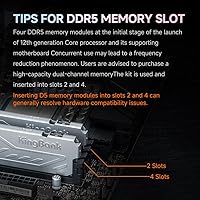
On most four-slot motherboards, the recommended dual-channel slots are labeled A2 and B2 — typically the second and fourth slots from the CPU socket. Installing both sticks side by side in slots 1 and 2 is a common mistake that forces the system into single-channel mode, cutting memory bandwidth roughly in half. Always check your motherboard manual's memory population diagram before seating the sticks, as slot labeling can vary by manufacturer.

The alloy heatspreader on this 32GB dual-channel set sits at a fairly standard height and should not conflict with most tower air coolers or AIO liquid cooling solutions. If you are running a particularly wide air cooler with fan brackets that extend low over the DIMM area, it is worth double-checking the cooler manufacturer's published DIMM clearance spec. This is a general caution for any heatspreader-equipped memory, not a specific concern with this kit.

KingBank has a more established presence in Asian markets than in North America or Europe, which explains the lower name recognition here. Early buyer feedback on Amazon skews positive, with users noting responsive customer service and solid out-of-the-box compatibility. That said, with this product only a few months old, there is genuinely limited long-term reliability data available yet. Verifying warranty terms and the returns process before purchasing is a smart step with any less-established brand.

For gaming, 32GB is more than sufficient for every current title and will stay that way for the foreseeable future. For content creation — video editing, graphic design, light 3D work — 32GB handles most mid-range project demands comfortably. Only heavy professional workloads like large-format video production or complex 3D scene rendering consistently push past that threshold. For the vast majority of buyers, 32GB is the right call.

No, this KingBank memory ships without RGB lighting or any software component. The silver heatspreader is a straightforward functional and aesthetic element — there are no addressable LEDs and nothing to install beyond enabling your chosen profile in BIOS. If RGB synchronization with your other components matters to your build, you would need to consider a different kit from a brand offering that feature.