Overview

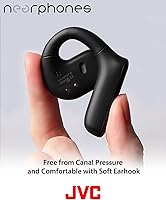
The JVC HANP35TW Open Ear Wireless Headphones occupy an interesting niche — sitting somewhere between traditional earbuds and bone conduction headphones without quite being either. Instead of sealing your ear canal or vibrating your skull, these nearphones rest near your ear and let ambient sound flow in naturally. That makes them a practical pick for commuters, joggers, and remote workers who simply cannot afford to tune out the world entirely. At a mid-range price point, buyers reasonably expect solid build quality and reliable daily performance. With over 1,100 ratings averaging 3.6 stars, the real-world picture is nuanced — this is a product with clear strengths and some genuine trade-offs worth understanding before buying.
Features & Benefits

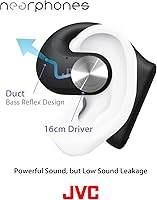
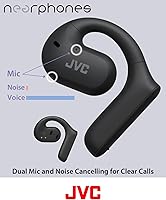
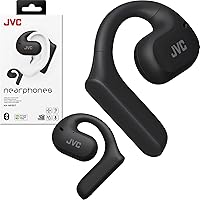
The 16mm dynamic drivers are the headline spec here, and they do deliver a noticeably richer sound than what you would expect from most open-ear designs. Because nothing plugs your ear canal, music and the world around you coexist rather than compete. Each earbud carries dual microphones with a mute toggle, which proves genuinely useful during back-to-back video calls. Battery life stretches up to 17 hours, and the included wireless charging case means you rarely scramble for a cable. Bluetooth 5.1 keeps the connection stable across a respectable range, and both iOS and Android voice controls work without any meaningful setup friction.

Best For

The JVC open-ear buds are a natural fit for runners and cyclists who want music without losing track of traffic around them — ambient awareness is the whole point of the design. Remote workers logging long hours on calls will find the lightweight, pressure-free fit far easier to tolerate than a clamped-on headset. Anyone who finds traditional in-ear tips uncomfortable will notice the relief almost immediately. They also suit commuters who want to stay socially present on a train rather than fully zoned out. Each earbud works solo, so you can keep one in and stay engaged with the room. Bass purists and intense gym-goers needing a locked-in fit, however, should probably look elsewhere.

User Feedback

Owner reviews paint a familiar picture: all-day comfort is the most praised quality, with many buyers noting they forget they are wearing them after an hour. The trade-offs surface consistently too. Sound leakage at higher volumes is a real issue in quiet environments — coworkers or fellow passengers will hear your music. Bass response divides opinions; the drivers perform well for the format, but anyone accustomed to in-ear sound will find the low end underwhelming. Call quality in noisy outdoor settings gets flagged despite the dual-mic setup. The single-earbud mode earns steady appreciation as a practical everyday convenience, while fit stability during high-intensity workouts remains a recurring complaint.

Pros

  • The open-ear fit lets you hear traffic, announcements, and conversations without removing an earbud.
  • Up to 17 hours of battery life covers even the longest travel days without worry.
  • These nearphones are noticeably more comfortable than traditional in-ear buds during extended wear sessions.
  • The wireless charging case is a practical convenience that removes cable clutter entirely.
  • Each earbud functions independently, so single-ear use is genuinely flexible and not a workaround.
  • Bluetooth 5.1 delivers a stable, low-dropout connection across a wide range.
  • The built-in mute function on calls is a small but genuinely useful feature for remote workers.
  • Touch controls are responsive and easy to operate without pulling out your phone.
  • Compatible with both iOS and Android voice assistants right out of the box.
  • The 16mm drivers produce a fuller, more balanced sound than most competing open-ear designs.

Cons

  • Sound leakage at higher volumes is noticeable and can disturb people in quiet spaces.
  • Bass response is thin by conventional earbud standards, which will disappoint audio enthusiasts.
  • Call quality degrades meaningfully in windy or high-noise outdoor environments.
  • The plastic build feels utilitarian rather than premium, especially compared to rivals at a similar price.
  • Fit stability during intense physical activity is inconsistent and has frustrated a number of buyers.
  • Microphone pickup in loud outdoor settings falls short of what the dual-mic spec might suggest.
  • Touch controls can register accidental inputs during vigorous movement or adjustment.
  • The open design means audio immersion is always limited — focus listening is not what these are built for.

Ratings

Our AI scoring system analyzed verified global buyer reviews for the JVC HANP35TW Open Ear Wireless Headphones, actively filtering out incentivized, bot-generated, and outlier feedback to surface what real everyday users consistently experience. The scores below reflect both the genuine strengths and the recurring pain points that surface across thousands of honest purchases. Nothing is sugar-coated — where these nearphones shine, the scores show it, and where they fall short, that is reflected just as clearly.

Wearing Comfort
88%
Long-session comfort is the single most praised aspect of these nearphones across buyer reviews. Because nothing enters the ear canal and there is no clamping pressure, many users wear them for four, six, even eight hours without the fatigue that traditional earbuds or over-ear headphones create. Office workers and remote employees in particular mention forgetting they are wearing them at all.
The comfort story is not universal — a meaningful minority of buyers with smaller or unusually shaped ears find the resting position slightly unstable, requiring occasional repositioning. During vigorous head movement, the fit can shift enough to become distracting, which pulls the comfort score down from what might otherwise be an even higher mark.
Ambient Awareness
93%
Keeping users connected to their surroundings is the core purpose of the open-ear design, and by that measure these buds genuinely deliver. Cyclists report hearing approaching cars clearly, commuters catch train announcements without removing an earbud, and parents can monitor kids in the next room while still listening to a podcast. This is where the product earns its keep.
The awareness benefit does have a flip side — in very loud environments like busy roads or construction zones, ambient noise can overwhelm the audio output entirely, forcing users to choose between turning the volume up uncomfortably high or simply not hearing their content. That ceiling is a design reality, not a defect, but it is worth knowing about.
Sound Quality
61%
39%
Relative to the open-ear category, the 16mm drivers produce a respectable mid-range presence that handles vocals, podcasts, and acoustic music reasonably well. Listeners who primarily use these for spoken content — audiobooks, calls, news — tend to report satisfaction with overall clarity at moderate volumes.
Anyone expecting the sound profile of a quality pair of sealed earbuds will be let down. Bass is thin and lacks body, and the soundstage is naturally limited by the open design. Reviewers who came from traditional in-ear headphones consistently flag audio depth as a shortcoming, and this is probably the most common source of disappointment in critical reviews.
Battery Life
86%
Seventeen hours of playback is a legitimate headline number, and real-world user reports largely back it up for moderate-volume listening. Commuters and all-day remote workers especially appreciate not worrying about mid-afternoon charges. The wireless charging case adds further convenience for those already running a Qi pad on their desk.
Battery performance does taper at higher volume levels, so users who push the earbuds loud will not reliably hit 17 hours. A handful of buyers also note that the case itself takes a while to fully replenish from empty, which can be inconvenient if both earbuds and case are drained simultaneously.
Call Quality
58%
42%
In calm indoor environments — home offices, quiet meeting rooms — the dual-microphone setup handles voice calls with acceptable clarity. The mute function is a practical touch that remote workers genuinely use during video meetings, and voice transmission in still conditions is generally described as clean and intelligible.
Step outside, and the picture changes considerably. Wind interference, street noise, and ambient urban sound all expose the limits of the microphone pickup, with callers on the other end frequently reporting muffled or unclear audio. For anyone who takes a significant share of calls while walking or commuting outdoors, this is a meaningful limitation.
Fit Stability
62%
38%
For low-to-moderate activity — light jogging, walking, cycling at a steady pace — most users find the earbuds stay in place without constant adjustment. The lightweight build works in favor of passive stability, and buyers who use these primarily for commuting or desk work rarely mention fit as a concern at all.
Intense physical activity is a different story. High-impact workouts, sprint intervals, and dynamic movement regularly surface in negative reviews as scenarios where the earbuds shift or fall out entirely. There is no ear hook or wing tip option to address this, so the design has a real ceiling for athletic use cases.
Sound Leakage
54%
46%
At lower listening volumes — roughly 50 percent or below — sound leakage is minimal enough that nearby people in an office or quiet carriage are unlikely to notice. Users who keep their volume conservative report no complaints from those around them, which makes the open-ear format workable in semi-public settings.
Push the volume past the midpoint and leakage becomes a genuine social issue. Library users, open-plan office workers, and late-night listeners report that people nearby can clearly hear their audio. This is an unavoidable consequence of the open design rather than a manufacturing flaw, but it limits where and how loudly the earbuds can practically be used.
Bluetooth Connectivity
81%
19%
Bluetooth 5.1 provides a noticeably stable connection in everyday use — walking through a home, commuting on transit, or sitting at a desk with a laptop nearby. Pairing with both iOS and Android devices is straightforward, and users rarely report dropout issues during normal, close-range listening.
At the extremes of the stated 100-meter range, reliability naturally drops, and a small number of users report occasional dropouts in environments with heavy wireless interference such as crowded public spaces or older office buildings with dense signal traffic.
Microphone Versatility
63%
37%
Having dual microphones in each earbud and a functioning mute button covers the basic needs of most remote workers effectively. The independent earbud mode means you can take a call with just one bud in — a practical flexibility that users working from home with family around tend to mention positively.
The mute control, while useful, requires learning the touch gesture, and a few users report accidental muting during calls due to touch sensitivity. The microphone performance gap between indoor and outdoor conditions is wide enough that the dual-mic spec can feel misleading to buyers who expected consistent quality in all environments.
Build Quality
66%
34%
The earbuds feel solid enough for daily handling, and the hard plastic charging case provides reasonable protection during commutes and travel. Nothing about the construction feels immediately fragile, and the water-resistant finish adds a layer of durability reassurance for outdoor use.
At this price tier, the all-plastic build stops short of feeling premium. The case in particular draws comments about feeling hollow and cheap compared to alternatives in the same category. Buyers upgrading from budget earbuds may not notice, but those coming from a more polished product likely will.
Ease of Use
79%
21%
Touch controls are intuitive after a short adjustment period, and the single or dual earbud switching requires no app or settings change — it just works. Both iOS and Android voice assistant integration activates without configuration, which keeps the setup experience clean and beginner-friendly.
Touch sensitivity can be a mixed experience — some users find the controls occasionally unresponsive or prone to registering accidental taps during physical activity. There is no companion app, which means no EQ customization or control remapping for users who want more personalization.
Value for Money
71%
29%
For buyers specifically seeking an open-ear nearphone experience — not a sealed earbud replacement — the pricing sits reasonably given the battery life, wireless charging case, and dual-mic feature set. Compared to bone conduction alternatives at similar price points, the audio quality holds up well.
Buyers who weigh these against sealed true wireless earbuds at the same price will feel the open-ear trade-offs more acutely, particularly around sound quality and bass. For a general-purpose listener, better audio value can be found elsewhere at this tier — these are worth the price only if ambient awareness is genuinely the priority.
Single Earbud Mode
84%
The ability to use one earbud completely independently — no pairing tricks, no primary/secondary complications — is a feature that earns consistent positive mentions in real buyer reviews. Commuters, parents, and professionals who need one ear free throughout the day treat this as a standout practical benefit.
There is no formal mono mixing when using a single earbud, so stereo audio plays as a single channel only, which can feel lopsided on content mixed with hard stereo separation. It is a minor technical note, but listeners who are particular about audio presentation in single-ear mode may find it mildly frustrating.
Charging Case Design
73%
27%
Wireless charging support on the case is a genuine convenience upgrade at this price, allowing users to drop the case on a Qi pad at night without hunting for a USB cable. The hard shell provides meaningful drop and crush protection compared to soft-pouch alternatives.
The case is on the bulkier side relative to competing options, making it slightly less pocketable for users who prefer minimal carry. The plastic finish also picks up scratches visibly over time, which contributes to the perception that the product ages less gracefully than its initial impression suggests.

Suitable for:

The JVC HANP35TW Open Ear Wireless Headphones are genuinely well-matched to people whose daily routines demand both audio and situational awareness at the same time. Runners and cyclists are the most obvious fit — being able to hear an approaching car or a cyclist calling out while still listening to a podcast is a real safety advantage that sealed earbuds simply cannot offer. Remote workers who spend hours on video calls will appreciate the pressure-free fit; there is no ear fatigue from silicone tips, no canal pressure, and no sense of isolation from the room around you. Commuters who ride public transit and want to stay socially present — noticing their stop, hearing announcements, catching a conversation — will find these nearphones match their lifestyle better than noise-isolating alternatives. The long battery life also makes these a practical choice for anyone with unpredictable schedules who cannot afford to babysit a charge level throughout the day.

Not suitable for:

The JVC HANP35TW Open Ear Wireless Headphones are a poor match for listeners who prioritize deep, rich audio above everything else. The open-ear format is physically incapable of delivering the bass weight or soundstage depth that sealed in-ear or over-ear headphones produce, and no driver size changes that fundamental reality. Anyone working in a quiet shared office should also think carefully — at moderate to high volumes, people nearby will hear what you are playing, which can quickly become a source of friction. Outdoor athletes doing high-intensity training, like HIIT workouts or trail running on technical terrain, may find the fit less secure than they need when movement becomes more aggressive. Those who rely heavily on call clarity in loud outdoor environments — busy streets, construction zones, windy conditions — should be aware that the dual-microphone setup has limitations under those demanding conditions. Finally, buyers expecting premium audio build quality or a substantial in-hand feel may find the all-plastic construction underwhelming at this price.
Specifications

  • Driver Size: Each earbud uses a 16mm dynamic driver, which is larger than most open-ear competitors and contributes to a fuller mid-range sound.
  • Bluetooth Version: The headset connects via Bluetooth 5.1, offering improved stability and lower latency compared to older Bluetooth standards.
  • Battery Life: The earbuds deliver up to 17 hours of continuous playback on a single charge under typical listening conditions.
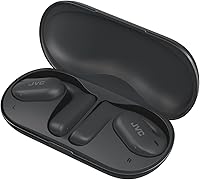
  • Charging Case: The included hard plastic case supports wireless charging, eliminating the need for a dedicated cable in most daily scenarios.
  • Bluetooth Range: The stated wireless range extends up to 100 meters in open, unobstructed conditions.
  • Microphones: Each earbud is equipped with dual microphones and a dedicated mute function for use during calls and online meetings.
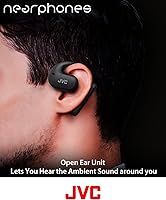
  • Ear Placement: The open-ear nearphone design rests beside the ear canal rather than inside or over it, preserving full ambient sound awareness.
  • Water Resistance: These earbuds carry a water-resistant rating, providing basic protection against sweat and light rain during outdoor use.
  • Weight: The total package, including both earbuds and case, weighs approximately 5.9 ounces.
  • Impedance: The earbuds operate at 16 Ohm impedance, which is well-suited for direct pairing with smartphones and tablets.
  • Frequency Response: The stated frequency response range spans 20Hz to 20,000Hz, covering the full range of human hearing.
  • Controls: Playback, call management, and voice assistant activation are handled through touch controls on each earbud.
  • Single Earbud Use: Each earbud operates fully independently, allowing single-ear use without needing to pair or reset the device.
  • Compatibility: The earbuds support voice assistant controls for both iOS (Siri) and Android (Google Assistant) devices natively.
  • Case Material: The carrying and charging case is constructed from hard plastic, offering rigid protection for the earbuds during transport.
  • Earbud Material: The earbud housings are made from plastic with a rounded tip shape designed to sit comfortably near the outer ear.
  • Included Contents: The package includes both earbuds, an eartip accessory, and the wireless charging case as standard contents.
  • Connectivity Type: The device connects exclusively via Bluetooth — there is no wired or 3.5mm connection option available.

Related Reviews
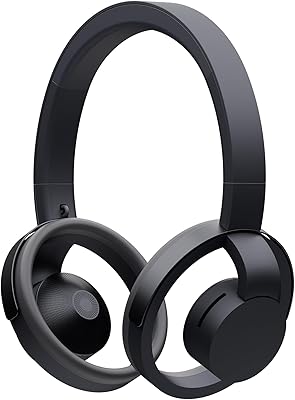
Nothing Ear (Open) Open-Ear Earbuds
79%
91%
Wearing Comfort
83%
Workout Stability
74%
Sound Quality
77%
Call Quality
49%
Sound Leakage
More
nwm ONE
nwm ONE
84%
94%
Comfort & Ergonomics
89%
Microphone & Call Clarity
88%
Sound Leakage Control
86%
Sound Quality (Mids & Highs)
62%
Bass Response
More
DARONGFENG G303S
DARONGFENG G303S
78%
91%
Wearing Comfort
67%
Sound Quality
83%
Battery Life
71%
Call Quality
94%
Situational Awareness
More
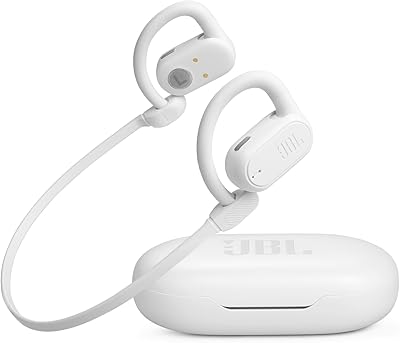
AfterShokz Aeropex Open-Ear Bone Conduction Headphones
78%
93%
Comfort & Wearability
96%
Situational Awareness
61%
Sound Quality
54%
Sound Leakage
84%
Build Quality & Durability
More
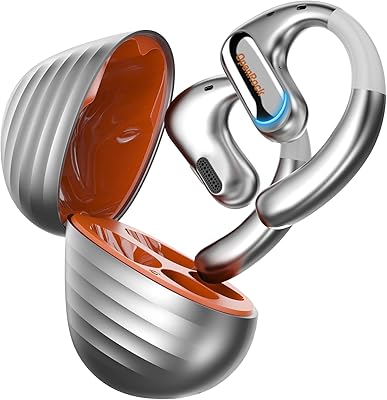
JBL SoundGear Sense True Wireless Open-Ear Headphones
85%
80%
Sound Quality
87%
Comfort and Fit
90%
Battery Life
92%
Quick Charging Feature
85%
Build Quality
More
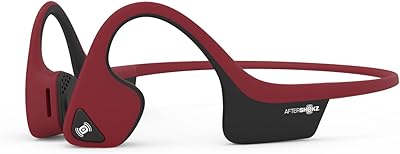
OpenRock Pro Bluetooth 5.2 Wireless Open-Ear Headphones
85%
83%
Sound Quality
91%
Comfort for Long Use
90%
Battery Life
88%
Water Resistance (IPX5)
75%
Fit and Stability During Exercise
More
AfterShokz Air AS650 Bone Conduction Headphones
75%
91%
Wearing Comfort
94%
Situational Awareness
54%
Audio Quality
88%
Secure Fit During Activity
58%
Sound Leakage
More
Sony Float Run Open-Ear Sport Headphones
77%
91%
Wearing Comfort
94%
Situational Awareness
83%
Fit Stability
61%
Audio Quality
78%
Battery Life
More
Monster AC100 Open-Ear Bluetooth Headphones
76%
88%
Battery Life
79%
Comfort & Fit
67%
Sound Quality
83%
Bluetooth Stability
71%
Call Quality
More
OJW Open Ear Wireless Sport Headphones
80%
93%
Battery Innovation
88%
Wearing Comfort
86%
Waterproofing
84%
Workout Stability
74%
Audio Clarity
More

FAQ

Fit stability during running is one of the more debated aspects of the JVC HANP35TW Open Ear Wireless Headphones. For light jogging and casual outdoor walks, most users report a secure enough hold. However, during high-intensity movement — think sprinting, jump training, or technical trail running — a number of buyers have found the fit less reliable. If your workouts are intense, it is worth keeping that in mind before committing.

Sound leakage is a real consideration with these nearphones. At moderate volumes, most people nearby will not notice much. Turn the volume up past around 70 percent, though, and people in close proximity — fellow commuters, coworkers, family members — can likely hear what you are listening to. For quiet office environments or crowded transit, keeping the volume in check is advisable.

Yes, each earbud operates completely independently, so you can pop one in and leave the other in the case without any complicated setup. This is one of the features that real buyers mention positively — it works cleanly and without fuss.

Indoors or in reasonably quiet environments, the dual-microphone setup on the JVC open-ear buds performs well enough for clear voice calls and video meetings. Outdoors in windy conditions or noisy urban settings, however, the microphones can struggle to isolate your voice from background noise. If most of your calls happen outside in loud areas, the performance may occasionally disappoint callers on the other end.

The wireless charging case is a genuinely useful convenience, especially if you already have a Qi-compatible charging pad at home or on your desk. There is no cable required, which simplifies the routine. That said, the case itself is hard plastic and feels fairly utilitarian — functional rather than luxurious.

The open-ear nearphone approach and bone conduction headphones share the same goal — keeping your ears free so you can hear the world — but they get there differently. Bone conduction transmits sound through your cheekbones and tends to involve a wraparound band. These JVC buds rest near your ear canal and use conventional air conduction, which typically delivers better audio fidelity and avoids the buzzing sensation some people experience with bone conduction. For most casual users, the nearphone format is easier to get used to.

Because the design is intentionally open, ambient noise will mix with your music rather than being blocked out. In a busy coffee shop or on a loud train, you will likely need to raise the volume to hear your audio clearly, which in turn increases leakage. It is an inherent trade-off of the format — situational awareness and audio immersion genuinely compete with each other here.

Several users with glasses report wearing these nearphones comfortably for extended periods, which makes sense given that nothing hooks over the ear or applies pressure around the temple area. The open-ear resting position generally avoids the conflict points that glasses wearers often experience with over-ear headphones. Individual fit will vary depending on your frame style, but the design is not inherently glasses-unfriendly.

The 16mm drivers do produce more low-end presence than smaller open-ear alternatives, but expecting deep, punchy bass is setting yourself up for disappointment. The open design physically cannot build the acoustic pressure needed for powerful bass response. What you get is a reasonably balanced mid-forward sound — adequate for podcasts, vocals, and casual listening, but not satisfying for listeners who live for bass.

JVC lists a charging time of approximately 17 hours in total for the combined earbud and case system, though the earbuds themselves charge faster than that figure suggests for the full case capacity. In practice, most users find the earbuds are ready for a full day of use after a few hours in the case. Exact charge times can vary depending on whether you are using wireless or a wired pad connection to the case.

Where to Buy