Overview

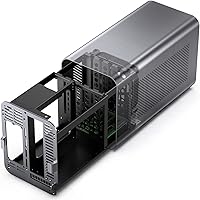
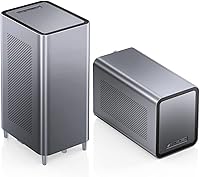
The Jonsbo N1 Mini-ITX NAS Case is one of the few purpose-built enclosures that takes home lab and small office storage seriously. Where most compact cases treat NAS as an afterthought, this NAS chassis is designed around drives from the ground up — aluminum body, steel-reinforced panels, and a dense but organized interior. It can stand vertically or lie flat, a small but genuinely useful detail when desk or shelf space is tight. At its price point, it sits comfortably in mid-range territory for dedicated NAS builds — not the cheapest option, but a clear step up in fit and finish from budget plastic enclosures.
Features & Benefits

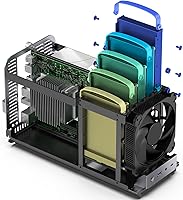
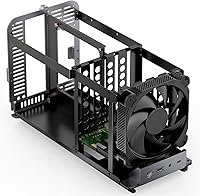
The five 3.5-inch bays come with a hot-swap backplane that lets you pull and replace drives without powering down — a real convenience when adding capacity or swapping a failing disk. There is also a dedicated 2.5-inch SSD slot, handy for keeping your OS drive separate from your storage pool. The built-in 140mm fan runs quietly under normal loads, which matters when this sits on a desk. Two constraints are worth knowing upfront: the N1 enclosure accepts only SFX power supplies up to 150mm, and CPU coolers must stay under 70mm tall. Miss either of these, and your build stops before it starts.

Best For

This mini-ITX NAS build is a natural fit for anyone running TrueNAS, Unraid, or OpenMediaVault who wants the flexibility of a custom system without the bulk of a rack unit. Small home offices that need centralized file sharing will appreciate how tidily it fits on a shelf. It also suits enthusiasts stepping up from a consumer NAS box who want more control over hardware choices. That said, be realistic about the constraints — if you plan to add a discrete GPU or rely on a standard ATX supply, this chassis simply is not configured for that. It rewards builders who plan their components around it.

User Feedback

Across verified purchases, the N1 enclosure earns its 4.5-star rating mostly through build quality that feels premium rather than merely adequate — buyers consistently note the aluminum finish holds up and the drive trays slide in and out cleanly. The hot-swap backplane draws particular praise, though a few users flag that confirming drive compatibility beforehand is worthwhile rather than assuming everything works out of the box. The recurring frustration is not a design flaw — it is the SFX and cooler restrictions catching people off guard after purchase. Cable routing inside the compact interior also requires patience. Buyers who go in prepared tend to be very satisfied.

Pros

  • Five 3.5-inch hot-swap bays make adding or replacing drives genuinely painless without powering down.
  • The aluminum and steel construction feels premium and holds up well over time.
  • A dedicated 2.5-inch SSD bay keeps your OS drive cleanly separated from your storage pool.
  • The built-in 140mm fan runs quietly under typical NAS workloads, which matters on a desk.
  • Vertical or horizontal placement gives you real flexibility depending on your setup.
  • The PCB hot-swap backplane is a hardware-grade feature not commonly found at this price tier.
  • Front USB-C (20-pin) and USB 3.0 ports are practical for quick transfers without reaching around back.
  • The compact footprint delivers serious storage density without rack equipment.
  • Build quality consistently impresses buyers who expected less given the size and price.
  • The drawer-style drive mechanism is smooth and well-engineered for frequent access.

Cons

  • SFX-only PSU support locks you into a narrower and often pricier power supply market.
  • The 70mm CPU cooler height limit rules out many popular coolers and requires advance planning.
  • Cable routing inside the tight interior can be genuinely frustrating during the initial build.
  • Hot-swap backplane compatibility should be verified per drive model — it is not universally guaranteed.
  • Only one low-profile expansion slot limits networking or HBA card options for more advanced builds.
  • The single USB 3.0 front port feels sparse for a chassis aimed at active storage users.
  • No included SFX PSU bracket or adapter; sourcing compatible components adds extra research time.
  • Heavier drives combined with the aluminum body make the finished build less portable than the size implies.
  • Limited cooler clearance makes passive or near-passive cooling builds difficult to configure.
  • Users unfamiliar with SFX components may find the compatibility research time-consuming before purchase.

Ratings

The Jonsbo N1 Mini-ITX NAS Case has been scored by our AI system after analyzing verified purchase reviews from buyers worldwide, with spam, bot activity, and incentivized feedback actively filtered out before any score was calculated. The results reflect a nuanced picture — genuine strengths in build quality and storage engineering sit alongside real frustrations around component compatibility constraints. Both sides are represented transparently in the category breakdowns below.
Build Quality
93%
The aluminum body with steel plate reinforcement consistently earns high praise from builders who have handled a lot of PC hardware — it feels closer to a professional appliance than a hobbyist enclosure. Panels align cleanly, there is no flex in the chassis, and the silver finish holds up without scratching easily during assembly.
A small number of buyers noted minor cosmetic inconsistencies on panel edges out of the box, though these were largely superficial. At this size and weight, the chassis is not something you will reposition often, which slightly limits the practical payoff of its durability for some users.
Hot-Swap Functionality
88%
The PCB backplane hot-swap system is the feature most frequently called out in positive reviews — builders running Unraid or TrueNAS genuinely appreciate being able to swap a drive mid-operation without a shutdown. The tray mechanism slides smoothly and locks with confidence, which matters when you are handling drives regularly.
Hot-swap reliability depends heavily on your software stack and HBA card, and a handful of users found that certain drive and motherboard combinations did not behave as expected without additional configuration. Verifying backplane compatibility with your specific drives before committing to a build is strongly advised.
Storage Capacity Design
91%
Fitting five 3.5-inch bays plus a dedicated 2.5-inch SSD slot into a chassis this compact is a genuine engineering achievement — it lets builders keep their OS or cache drive cleanly separated from the main storage pool without sacrificing any spinning disk slots. For a desk-side NAS, this layout is nearly ideal.
Five bays is generous for a mini-ITX form factor but will still feel limiting to anyone coming from a larger tower NAS with eight or more slots. Builders planning aggressive storage expansion over time may find themselves outgrowing this chassis sooner than expected.
PSU Compatibility
54%
46%
For builders who already own or have budgeted for an SFX power supply, the bottom-mount configuration is clean and keeps cables reasonably managed. The 150mm length cap covers the majority of quality SFX units from Seasonic, Corsair, and SilverStone without issue.
This is the single most common source of buyer frustration — the hard SFX-only requirement catches people off guard, especially those with a spare ATX unit they assumed would work. SFX power supplies also cost meaningfully more than ATX equivalents at the same wattage, which adds unplanned expense to the build.
CPU Cooler Clearance
58%
42%
The 70mm height ceiling is workable for builders who plan ahead — low-profile coolers like the Noctua NH-L9i or Thermalright AXP90 are well-established options that fit without issue and perform adequately for the low-TDP CPUs typically used in NAS builds.
Seventy millimeters is a tight restriction that eliminates most mid-range and all high-performance coolers without exception. Builders who already own a cooler taller than this will need to purchase a replacement, and those targeting slightly warmer-running CPUs may find thermal headroom uncomfortably slim in a sealed environment.
Thermal & Airflow Performance
79%
21%
The stock 140mm front fan moves enough air to keep spinning drives at safe operating temperatures during sustained read and write activity, and at typical NAS workloads it runs quietly enough to sit on a desk without being distracting. Builders in moderate climates report consistently healthy drive temperatures.
In warmer ambient environments or under heavier sustained workloads, the single-fan setup shows its limits — a few users in hotter climates reported drive temperatures creeping higher than comfortable. There is no exhaust fan by default, so heat management depends almost entirely on that one 140mm unit.
Noise Level
83%
Under typical home NAS workloads — background backups, media streaming, occasional file transfers — the N1 enclosure runs quietly enough that most users report forgetting it is on. The large 140mm fan diameter allows it to move adequate air at lower, quieter RPMs compared to smaller fans.
Drive noise, particularly from spinning HDDs during active reads and writes, is more noticeable than fan noise in a quiet room. The chassis does not include any vibration dampening for drive trays, so mechanical hard disk activity is transmitted through the aluminum body more than some users would prefer.
Assembly Experience
67%
33%
The 270-degree opening design and drawer-style drive mechanism make drive installation genuinely easy, and the overall layout is logical once you understand the component flow. Builders with prior mini-ITX experience generally describe the process as manageable and well-thought-out for the size.
Cable routing inside the compact interior is consistently described as the most tedious part of the build — short modular SFX cables help significantly, but the space leaves little room for error or iteration. First-time small-form-factor builders may need more time and patience than they expect.
Front I/O Usability
72%
28%
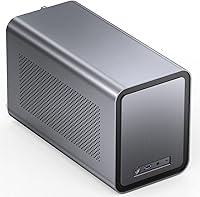
Having a USB-C port with a 20-pin header alongside USB 3.0 and a combo audio jack on the front panel is genuinely practical for a NAS chassis — quick drive transfers and headphone connections without reaching behind the case are small but real quality-of-life wins.
A single USB 3.0 port feels sparse for users who regularly connect external drives or peripherals directly to the NAS. The USB-C port also requires a motherboard with a 20-pin internal USB-C header, which not all Mini-ITX boards include, potentially leaving it unused.
GPU & Expansion Options
47%
53%
The single low-profile PCIe slot is well-suited for a 10GbE network card or a basic HBA for additional drive connectivity, both of which are popular and practical upgrades for this type of build. Within that narrow use case it performs exactly as intended.
One low-profile slot is a hard ceiling on expandability — builders who want to add both a network upgrade card and an HBA simultaneously are simply out of room. Anyone hoping to install a capable GPU for transcoding or compute tasks will be disappointed by the dimensional and slot restrictions.
Orientation Flexibility
84%
Genuine support for both vertical and horizontal placement without any adapter or modification is a practical advantage for a chassis that often lives on a shelf or tucked beside a desk. Builders in tighter setups appreciate the option to reorient without compromising airflow or access.
Switching orientation requires some care to ensure drives are properly seated and cables are not strained by the change in angle. The flexibility is real but not quite as effortless as simply tipping the case — a few minutes of cable checking is advisable before committing to a new position.
Value for Money
81%
19%
At its price point, this mini-ITX NAS build delivers a level of material quality and storage-focused engineering that is difficult to find in competing enclosures. Buyers who compared it to similarly priced plastic alternatives consistently felt the aluminum construction alone justified the premium.
The total cost of ownership rises noticeably once you factor in a compatible SFX power supply and a low-profile CPU cooler, both of which may need to be purchased specifically for this build. For buyers who did not anticipate those added costs, the overall value proposition feels less straightforward.
Documentation & Setup Guidance
61%
39%
The physical assembly steps for the chassis itself are clear enough that experienced builders rarely need to consult the manual. The drawer-style drive mechanism and backplane installation are intuitive once you have the unit in hand.
Documentation around component compatibility — particularly PSU length, cooler height, and backplane drive compatibility — is not prominently communicated, and this is where a disproportionate number of buyer frustrations originate. Better pre-purchase guidance from the manufacturer would meaningfully reduce post-purchase regret.
Aesthetic Design
86%
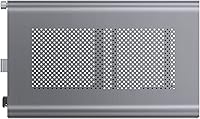
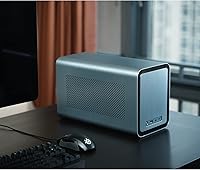
The brushed aluminum silver finish looks professional and understated — it fits naturally on a desk or media shelf without drawing attention or clashing with other equipment. Buyers frequently comment that it looks more expensive than its price suggests, which is a genuine compliment for a storage-focused enclosure.
There are no color or finish variants available, so buyers who want something other than silver have no options within this product line. The understated aesthetic, while broadly appealing, also means there is no visual differentiation between a powered-on and powered-off unit without looking closely at the front I/O indicators.

Suitable for:

The Jonsbo N1 Mini-ITX NAS Case is built for a specific kind of builder, and if you fit the profile, it is hard to beat at this size. Anyone running TrueNAS, Unraid, or OpenMediaVault on custom hardware will appreciate having five hot-swap drive bays in a chassis that can sit on a desk without looking like a repurposed server. Home office users who want centralized file storage and media serving — without committing to rack equipment — will find the form factor genuinely practical. It also suits enthusiasts who have outgrown a consumer NAS appliance and want to choose their own CPU, RAM, and networking hardware. The dual-orientation support means it adapts to whatever shelf or desk layout you are working with, which is a small but real quality-of-life benefit.
Not suitable for:

The Jonsbo N1 Mini-ITX NAS Case has firm constraints that will rule it out for a meaningful portion of buyers, and it is worth being direct about them. The requirement for an SFX power supply — no longer than 150mm — immediately excludes anyone with a standard ATX unit already on hand, and SFX options can cost noticeably more than ATX equivalents. The 70mm CPU cooler height ceiling is equally strict; many popular low-profile coolers fit, but anything taller is a hard no, so check your cooler specs before purchasing. If you were hoping to add a discrete graphics card for transcoding or compute tasks, only a single low-profile card up to 180mm is supported, which rules out most modern GPUs. Anyone who wants a flexible general-purpose mini-ITX build for gaming or workstation use should look elsewhere — this chassis was designed around storage, not versatility.
Specifications

  • Form Factor: Supports Mini-ITX motherboards only, making it a dedicated small-form-factor build platform.
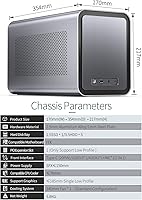
  • Dimensions: The chassis measures 170mm wide, 354mm deep, and 217mm tall (approximately 6.69″ x 13.94″ x 8.54″).
  • Weight: Net weight is 3.8kg (approximately 8.4 lb) without components installed.
  • Material: The body is constructed from aluminum with steel plate reinforcement for added rigidity.
  • Drive Bays: Includes five 3.5-inch HDD bays and one dedicated 2.5-inch SSD bay for a total of six storage slots.
  • Hot-Swap: All five 3.5-inch bays connect through an included PCB transfer backplane that supports tool-free hot-swap drive changes.
  • Power Supply: Accepts SFX form factor power supplies only, with a maximum length of 150mm; ATX units are not compatible.
  • CPU Clearance: CPU cooler height is strictly limited to 70mm or less to fit within the low-profile interior.
  • GPU Support: Accommodates a single low-profile expansion card up to 180mm in length via one PCIe slot.
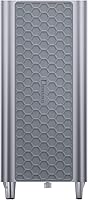
  • Cooling: A 140mm fan is pre-installed at the front of the chassis to provide airflow across the drive bays.
  • Front I/O: Front panel includes one USB-C port (20-pin header), one USB 3.0 port, and one combined headphone and microphone jack.
  • Orientation: The chassis supports both vertical (tower) and horizontal (flat) placement to suit different desk or shelf setups.
  • Expansion Slot: One low-profile PCIe expansion slot is available, suitable for a network card or HBA with compatible card dimensions.
  • Color: Available in silver, reflecting the natural finish of the aluminum exterior panels.
  • Motherboard: Compatible with Mini-ITX motherboards only; no support for Micro-ATX or larger form factors.
  • Manufacturer: Designed and produced by Jonsbo, manufactured by Sibo Sitong Industrial.
  • Release Date: First made available in March 2022, with consistent availability since launch.

Related Reviews
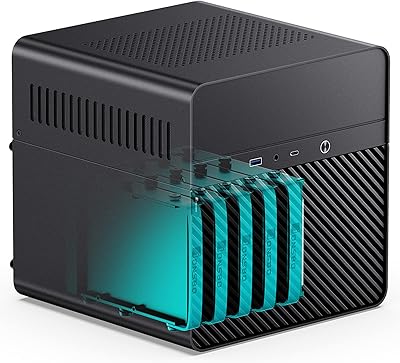
Jonsbo N2 Mini-ITX NAS Case
72%
91%
Build Quality
93%
Storage Density
54%
Cable Management
68%
Cooling Performance
57%
CPU Cooler Compatibility
More
JONSBO N3 Mini-ITX NAS PC Chassis
82%
88%
Build Quality
84%
Cooling Performance
90%
Ease of Assembly
87%
Space Efficiency
82%
Storage Flexibility
More
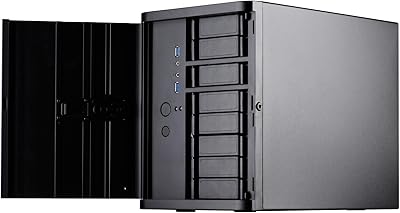
SilverStone DS380B Mini-ITX NAS Case
69%
93%
Drive Bay Capacity
88%
Hot-Swap Functionality
76%
Build Quality
41%
Cable Management
57%
Thermal Performance
More
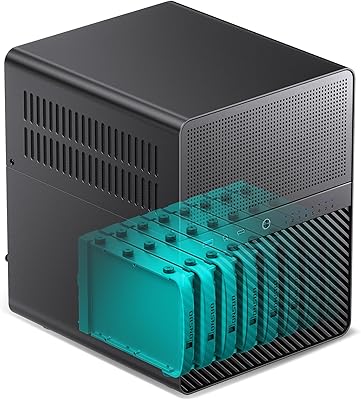
Jonsbo N4 NAS PC Case
73%
83%
Build Quality
91%
Aesthetic Design
88%
Storage Flexibility
84%
Hot-Swap Functionality
47%
CPU Cooler Clearance
More
Cooler Master NR200 Mini-ITX Case
85%
91%
Build Quality
88%
Cooling Performance
94%
GPU Compatibility
84%
Ease of Assembly
86%
Airflow Efficiency
More
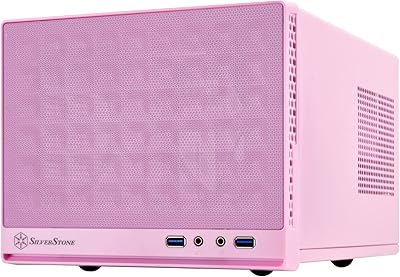
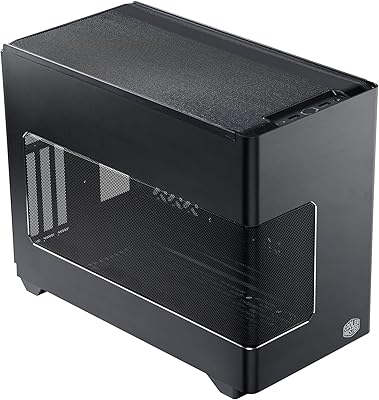
SilverStone Technology SG13P Mini-ITX Case
85%
89%
Build Quality
87%
Cooling Performance
91%
Storage Flexibility
95%
Size & Portability
65%
Cable Management
More
KXRORS S300 Mini-ITX PC Case
71%
88%
Build Quality & Materials
84%
Portability & Handling
67%
Airflow & Thermal Performance
53%
CPU Cooler Compatibility
72%
GPU Compatibility & Fit
More
Jonsbo C6 Mini MATX Mesh PC Case
84%
91%
Airflow Performance
95%
Ease of Assembly
87%
Build Quality
88%
Cooling System Customization
65%
Cable Management
More
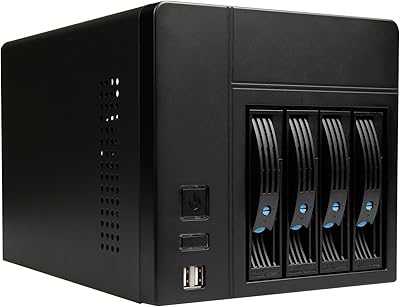
Thermaltake TR100 Mini-ITX SFF Case
77%
91%
Component Compatibility
78%
Build Quality
86%
Value for Money
67%
Thermal Performance
72%
Cable Management
More
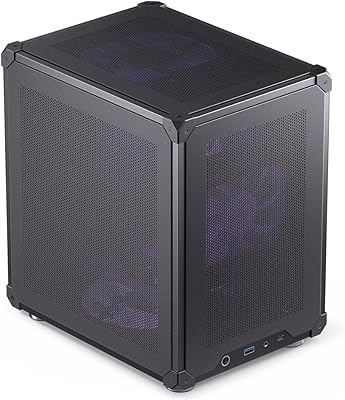
AUDHEID K3 4-Bay Mini-ITX NAS Case
70%
83%
Build Quality
78%
Value for Money
81%
Drive Compatibility
67%
Thermal Performance
54%
Cable Management
More

FAQ

The five 3.5-inch bays connect through a PCB backplane that is designed for true hot-swap operation, meaning you can pull and insert drives while the system is running. That said, whether your OS actually supports hot-swap depends on your software setup — TrueNAS and Unraid handle it well, but you should confirm your motherboard and HBA also support it before relying on it in production.

Any SFX unit at or under 150mm in length should fit. Popular options that builders use include the Seasonic Focus SGX, the Corsair SF series, and the SilverStone SX series. Just double-check the exact length spec of your chosen unit before buying, since SFX-L variants can sometimes exceed the limit.

Unfortunately no. The clearance limit is a hard 70mm, and there is no flexibility there given how tightly the interior is laid out. You will need a low-profile cooler designed specifically for compact builds. Options like the Noctua NH-L9i or Thermalright AXP90 are commonly paired with builds in this chassis.

No — the N1 enclosure only fits a single low-profile card up to 180mm long. Most modern dedicated GPUs are full-height and will not physically fit. If hardware transcoding is your goal, you are better off relying on a CPU with built-in graphics, such as an Intel processor with Quick Sync support.

Yes, it uses a standard 140mm mounting footprint, so swapping it for a quieter aftermarket fan is straightforward. Most builders report the stock fan is already reasonably quiet at typical NAS workloads, but if you are sensitive to fan noise, replacing it with a quality low-noise 140mm fan is a common and easy upgrade.

The chassis itself is OS-agnostic — it is just a case. TrueNAS, Unraid, and OpenMediaVault will all work fine as long as your chosen motherboard, CPU, and HBA card are compatible with your preferred OS. The hot-swap backplane integrates at the hardware level, so software compatibility depends on your component selection, not the chassis.

It is compact, and you should go in with realistic expectations. Builders who plan their cable routing before installing components tend to have a much smoother experience. Using short or modular SFX PSU cables helps significantly. It is not impossibly tight, but it does reward patience and a bit of planning during assembly.

The bay physically accepts any 2.5-inch drive, so a 2.5-inch HDD would fit mechanically. In practice, most builders use it for a 2.5-inch SSD as the OS or cache drive, since that is what it is designed for, but there is no technical barrier to using a 2.5-inch hard drive there.

Yes, the single low-profile PCIe slot is exactly the right fit for a low-profile 10GbE card, and this is one of the most popular upgrades builders make in this chassis. Just confirm your chosen card is both low-profile height and under 180mm in length before purchasing.

It depends entirely on what you value. A pre-built NAS appliance is simpler to set up and has dedicated vendor support, but you are locked into their hardware and software ecosystem. This chassis lets you choose your own CPU, RAM, and networking stack, which gives you more headroom for performance and customization. If you are comfortable building a PC and want that flexibility, the custom route through this enclosure tends to offer more value per dollar at comparable storage capacities.