Overview

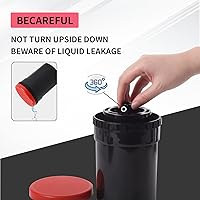
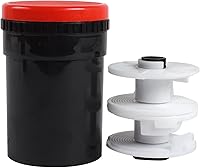
The Jian Cheng 2DT Film Developing Tank is an accessible entry point for anyone stepping into home film development for the first time — or picking it back up after years away from the darkroom. It handles 120, 135, 126, and 127 format films, covering the most common analog formats in both black-and-white and color. Plastic construction means it is lighter and less expensive than stainless steel tanks, though it requires more careful handling around heat. One critical limitation to understand before you buy: no inversion agitation is possible here. The red cap is not watertight, so flipping this plastic film tank upside down during development is not an option — that changes your workflow meaningfully.
Features & Benefits

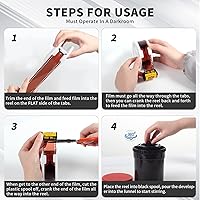
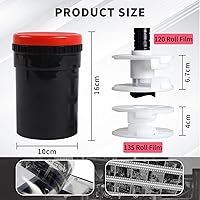
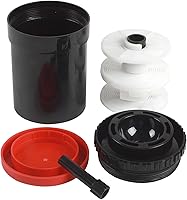
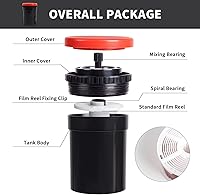
This developing tank ships with two multi-format self-feed spirals, which is genuinely useful for anyone new to the process. Self-feed spirals let you load film in the dark without manually threading it through the reel — a real advantage when working under a changing bag. You can run two rolls of 35mm at once or one roll of 120, giving some flexibility depending on what you shot that week. The rotating and undulating motion moves chemistry evenly around the film without any inversion needed. A practical touch: chemical volume markings on the tank base remove guesswork from mixing. At just over one pound, it is comfortable to handle through an entire development cycle.

Best For

This developing tank makes the most sense for photographers just getting started with home processing and not ready to invest in a steel setup before knowing the hobby will stick. It also works well for occasional analog hobbyists who develop a few rolls here and there and prefer something straightforward without a steep learning curve. If you shoot 35mm or medium format 120 and want to handle your own chemistry — whether color or black-and-white — this plastic film tank covers that range without overcomplicating things. Just go in knowing the rotary agitation workflow is non-negotiable here. If inversion development is central to how you work, look elsewhere.

User Feedback

Across 82 reviews, this developing tank holds a 4.2 out of 5 star rating — decent, though opinions genuinely vary. Beginners tend to be the most enthusiastic, frequently citing how much easier the self-feed spiral loading is compared to traditional stainless reels, which can be notoriously fiddly in the dark. The value for what you pay also earns consistent praise. On the less positive side, some experienced developers report minor leakage issues around the lid seal over time, and a few flag that spiral fit can feel imprecise after repeated use. Rotary agitation, when applied correctly, appears to produce acceptably even development for most users — though the technique does take some getting used to.

Pros

  • Self-feed spirals make loading film in the dark far more forgiving than traditional stainless reels.
  • Handles 120, 135, 126, and 127 film formats, covering virtually every common analog shooting format.
  • Two spirals included out of the box — no separate reel purchases needed to get started.
  • Chemical volume markings on the tank base remove guesswork for beginners mixing developer for the first time.
  • Compact and lightweight enough to store almost anywhere, including small apartments and shared spaces.
  • Rotary agitation mechanism distributes chemistry evenly without requiring manual inversion or constant attention.
  • Plastic construction keeps the cost accessible for beginners unwilling to invest heavily before committing to the hobby.
  • The opaque body reliably blocks light throughout loading and processing, protecting film from fogging.

Cons

  • The red cap is not watertight, making inversion agitation completely impossible without spilling chemistry.
  • Spiral fit quality is inconsistent across units — some buyers report looseness that can cause film misalignment.
  • Plastic components show signs of warping after repeated exposure to developer and fixer over several months.
  • No instruction sheet is included in some units, leaving absolute beginners without basic guidance.
  • High-temperature processing risks warping the tank body in a way stainless alternatives simply would not.
  • Capacity is limited to two 35mm rolls or one 120 roll — a real bottleneck for prolific analog shooters.
  • Photographers trained in inversion development face a genuine relearning curve to get consistent results here.
  • Long-term durability does not match what a steel tank offers, meaning replacement costs could accumulate over time.

Ratings

The Jian Cheng 2DT Film Developing Tank has been rated across the categories below using an AI-driven analysis of verified global buyer reviews, with spam, bot activity, and incentivized feedback actively filtered out before scoring. Ratings reflect what real photographers — from first-time home developers to returning darkroom hobbyists — actually experienced after putting this plastic film tank through its paces. Both the genuine strengths and the recurring frustrations are reflected honestly in every score.
Value for Money
88%
For photographers testing the waters of home film development, the price-to-functionality ratio here is hard to argue with. Getting two self-feed spirals and a fully functional developing tank in one package, at a fraction of what premium steel alternatives cost, makes the entry barrier feel genuinely low.
A handful of buyers who later upgraded to stainless steel tanks felt the savings came at a hidden cost in longevity. If you develop frequently, the long-term value calculation shifts — replacing plastic components adds up over time.
Ease of Use for Beginners
83%
The self-feed spiral design is the standout usability win here. New developers who have struggled with traditional stainless reels in the dark consistently praise how much more forgiving the loading process feels — less fumbling, fewer ruined rolls.
The rotary-only agitation requirement has a learning curve for anyone used to standard inversion techniques. Beginners who do not realize this upfront sometimes encounter uneven development on their first few rolls before adjusting their approach.
Sealing & Leakage Prevention
51%
49%
The main tank body itself holds chemistry reasonably well during normal rotary agitation, and most users report no spills when the tank is kept upright throughout the development cycle.
The red cap is openly acknowledged as non-watertight — this is not a flaw that went unnoticed by buyers. Several reviewers reported minor seepage around the lid seal, especially after extended use or when the cap develops minor warping. It is the single most cited source of frustration in the review pool.
Film Format Compatibility
91%
Supporting 120, 135, 126, and 127 formats in a single tank covers the realistic shooting range of most analog photographers today. Being able to run two rolls of 35mm simultaneously, or switch to a roll of medium format 120, gives this plastic film tank genuine day-to-day flexibility.
The simultaneous capacity is limited to two 35mm rolls or one 120 roll — not both at once. High-volume shooters developing multiple medium format rolls per session will find this a bottleneck compared to larger or multi-tank setups.
Agitation Performance
72%
28%
When used correctly, the rotating and undulating spiral motion distributes developer fairly evenly across the film surface. Experienced reviewers who adapted their technique to rotary agitation report consistent, well-developed negatives with minimal banding.
Rotary agitation produces subtly different results from inversion — particularly with certain developers that are sensitive to continuous agitation. Photographers with established inversion workflows found the transition frustrating and noted some inconsistency in their early results.
Build Quality & Durability
63%
37%
The plastic body feels reasonably solid for occasional use and handles normal temperature ranges without issue. The opaque construction does its job protecting film from light, and the tank shows no signs of flex or cracking under typical handling during a standard development session.
Long-term durability is where plastic inevitably shows its limits. Repeated chemical exposure and temperature cycling cause minor warping in some units over months of use, and spiral guides can become slightly looser with frequent loading — enough to affect film alignment.
Spiral Reel Quality
74%
26%
The included multi-format spirals are the component buyers comment on most positively. The self-feed mechanism genuinely works as described, and the ability to load different film widths on the same reel without swapping equipment is a practical convenience that saves time.
Fit precision is inconsistent across units. Some users report spirals that seat firmly and perform well from the start, while others describe a looser fit that requires careful placement to avoid film slippage during the agitation cycle — a quality control issue more than a design flaw.
Chemical Measurement Guidance
82%
18%
Printing chemical volume requirements directly on the tank base is a small but genuinely thoughtful feature for beginners. It removes one variable from an already unfamiliar process and means you do not have to cross-reference instructions while working in low light.
The markings cover standard volumes but do not account for all possible developer ratios or film-specific requirements. More experienced users will likely ignore them entirely in favor of their own measured amounts.
Size & Storage Convenience
86%
At under seven inches in any dimension and just over a pound in weight, this developing tank fits comfortably on a shelf, inside a cabinet, or in a camera bag alongside other darkroom essentials. The compact footprint is a genuine plus for photographers working in small apartments or shared spaces.
The size works well for individual or occasional use but is not scalable. Anyone who wants to develop larger batches or keep multiple tanks ready for different chemistry will need additional storage solutions regardless.
Light-Tightness of Tank Body
89%
The opaque plastic body reliably blocks light throughout loading and processing, which is its most fundamental job. Reviewers across different lighting environments — from basement darkrooms to closet setups — report no fogging attributable to light leaks through the tank walls.
The red cap remains the weak point in the light-tight chain. While catastrophic light exposure through the cap is rare, users who develop in brightly lit rooms occasionally note that cap integrity warrants closer attention than the tank body itself.
Inversion Agitation Support
18%
82%
There is effectively no positive case to make here — this limitation is inherent to the design. The only silver lining is that the manufacturer discloses the restriction openly rather than obscuring it, allowing informed buyers to plan their workflow accordingly before purchase.
The inability to invert the tank is a hard stop for many established development workflows. Photographers who rely on periodic inversion agitation — a widely taught and commonly practiced technique — simply cannot use this plastic film tank as a direct replacement for their current setup.
Heat Resistance
67%
33%
The tank handles the temperature ranges typical of standard darkroom chemistry without deforming or discoloring. Processing at normal development temperatures — generally between 20 and 24 degrees Celsius — poses no issues in user-reported experience.
High-temperature processes, such as certain E-6 slide film steps, push plastic construction closer to its limits. A small number of reviewers noted slight warping after sustained exposure to hotter chemistry, something a stainless steel tank would simply shrug off.
Package Completeness
79%
21%
The box includes everything needed to start developing immediately: the tank body and two spirals. There are no missing accessories or confusing partial kits to navigate, which matters when you are buying your first piece of darkroom equipment and do not know what to expect.
No instruction sheet is included in some units according to buyer reports, which is a meaningful gap for absolute beginners. The tank also ships without a funnel or cap wrench, items that are not strictly necessary but would have added practical value at this price point.

Suitable for:

The Jian Cheng 2DT Film Developing Tank is a practical starting point for anyone who has just picked up their first film camera and wants to develop at home without spending heavily before they know the hobby will stick. It fits naturally into the workflow of casual analog shooters who develop a roll or two every few weeks — people who want a functional setup without dedicating a full shelf of equipment to it. If you shoot 35mm or medium format 120 film, this plastic film tank covers both without requiring separate hardware, and the self-feed spirals make the loading process significantly less intimidating for newcomers who have never loaded a reel in the dark before. Photographers who are comfortable learning rotary agitation — or who have no prior attachment to inversion-style development — will find this tank handles the job without unnecessary complication. It also suits hobbyists returning to darkroom work after a long break who want to ease back in at a modest cost before committing to more serious equipment.
Not suitable for:

Anyone whose development workflow depends on inversion agitation should look elsewhere before considering the Jian Cheng 2DT Film Developing Tank — the red cap is openly not watertight, and flipping the tank upside down will spill chemistry. This is not a minor quirk to work around; it fundamentally changes how you agitate, and experienced photographers who have spent years building muscle memory around inversion technique will find the adjustment genuinely disruptive. High-volume film shooters who develop multiple rolls per session will also hit capacity limits quickly, since the tank handles only two 35mm rolls or one 120 roll at a time. Photographers who regularly run high-temperature processes — such as E-6 slide film chemistry — should consider a stainless steel tank instead, as sustained heat exposure can cause plastic components to warp over time. Similarly, anyone expecting long-term durability comparable to a steel tank will likely find themselves replacing this developing tank within a year or two of regular use.
Specifications

  • Brand: Manufactured by Jian Cheng under model number 2DT.
  • Compatible Formats: Supports 120, 135, 126, and 127 film formats in both black-and-white and color chemistry.
  • Included Contents: Each package includes one developing tank body and two multi-format self-feed spirals.
  • Film Capacity: Accommodates two rolls of 35mm film simultaneously, or one roll of 120 medium format film per cycle.
  • Body Material: Constructed from opaque, light-tight plastic that is heat-resistant and watertight across the main tank body.
  • Cap Seal Status: The red cap is explicitly not watertight and does not form a liquid-tight seal, preventing inversion use.
  • Agitation Method: Uses rotary agitation via simultaneous rotating and undulating spiral movement to distribute chemistry evenly.
  • Package Dimensions: Packaged dimensions measure 6.73 x 4.57 x 4.57 inches for storage and shipping reference.
  • Item Weight: Complete packaged unit weighs 1.08 pounds, with the tank itself coming in at approximately 0.49 kilograms.
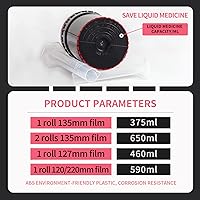
  • Volume Guidance: Required chemical solution volumes for each film format are printed directly on the base of the tank.
  • Spiral Type: Both included spirals are multi-format and self-feed design, compatible with the supported film widths without manual threading.
  • Light Protection: The opaque plastic body blocks all ambient light during daylight loading and throughout the full processing cycle.
  • Market Ranking: Holds a Best Sellers Rank of number 24 in the Darkroom Film Processing Equipment category on Amazon.
  • User Rating: Carries a 4.2 out of 5 star average based on 82 verified customer ratings.
  • Availability Date: First made available for purchase in July 2018 and remains active as of the current date.
  • Inversion Support: Inversion agitation is not supported due to the non-watertight red cap seal — the tank must remain upright during processing.

Related Reviews

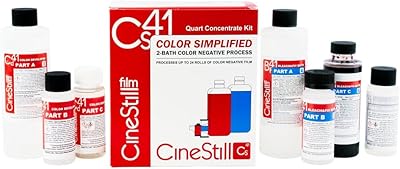
CineStill CS41 32oz C-41 Film Developing Kit
84%
88%
Ease of Use
91%
Color Accuracy
89%
Value for Money
86%
Process Reliability
84%
Kit Completeness
More
D-UP ORISHIKI Eyelid Skin Film
83%
89%
Effectiveness of Eyelid Lift
91%
Natural Look and Finish
85%
Ease of Application
88%
Longevity of Results
72%
Skin Sensitivity and Tolerance
More
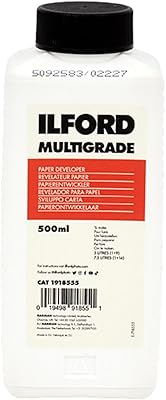
Ilford Multigrade Paper Developer 500ml
84%
94%
Result Consistency
91%
Tonal Range & Contrast
88%
Archival Stability
89%
Ease of Use
71%
Value for Volume
More
KOSPET Tank S2 Smart Watch
85%
93%
Build Quality & Durability
88%
GPS Accuracy
90%
Waterproof Performance
85%
Battery Life
87%
Comfort & Wearability
More
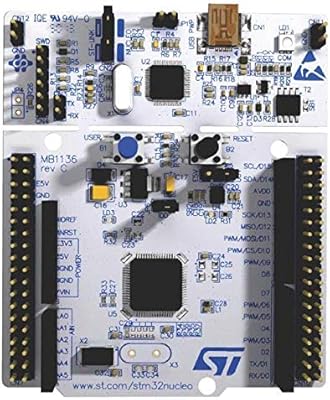
STMicroelectronics NUCLEO-L476RG
82%
93%
Onboard Debugger Quality
91%
Value for Money
88%
Low-Power Performance
84%
IDE & Toolchain Compatibility
86%
Build Quality & Durability
More
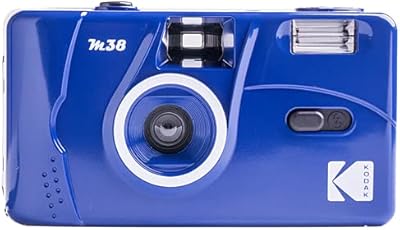
Kodak M38 35mm Film Camera
76%
93%
Ease of Use
81%
Value for Money
74%
Image Quality
78%
Flash Performance
62%
Build Quality
More
KOSPET Tank M3 Ultra Smartwatch
77%
91%
Build Quality
83%
Battery Life
74%
GPS Accuracy
89%
Waterproofing
86%
Display Clarity
More
Kodak M35 35mm Reusable Film Camera
79%
93%
Ease of Use
61%
Image Quality
67%
Build Quality
88%
Value for Money
71%
Flash Performance
More
RETO Reto3D 35mm Film Camera
76%
83%
3D Wigglegram Effect Quality
88%
Ease of Use
71%
App Experience
63%
Build Quality
74%
Value for Money
More
DEVMO Recesky TLR Camera Kit 2-Pack
74%
78%
Assembly Experience
44%
Instruction Clarity
81%
Value for Money
53%
Image Quality
51%
Build Quality & Durability
More

FAQ

No, not simultaneously. The Jian Cheng 2DT Film Developing Tank lets you load either two rolls of 35mm or one roll of 120 medium format film per session — not a mix of both at once. You would need to run them as separate development cycles.
No, and this is the most important thing to understand before buying. The red cap on this tank is not watertight, which means flipping it upside down will spill your chemistry. You are limited to rotary agitation — rolling the tank on a flat surface — throughout the entire development process.

Rotary agitation means you roll or spin the tank on a flat surface in a back-and-forth motion rather than inverting it. The internal spirals rotate and undulate as you do this, moving the chemical around the film. Most users get consistent, even development this way once they get the timing and motion right — it just takes a couple of practice rolls to build the feel for it.

This is genuinely one of this developing tank's stronger points. The self-feed spirals are designed to guide film onto the reel without you having to manually thread it, which makes the loading process much more forgiving than traditional stainless steel reels. Most beginners find the learning curve noticeably shorter here than with steel alternatives.

It works with both. The tank is compatible with color negative chemistry as well as standard black-and-white developers. Just be mindful that color processes like C-41 run at higher temperatures — 38 degrees Celsius — which is within range for normal use, but sustained heat cycling over time can stress the plastic body more than cooler black-and-white processing would.

Technically the spirals and tank body can hold slide film, but E-6 processing involves multiple high-temperature steps and precise temperature control that can be challenging with a plastic tank. The heat involved over repeated E-6 cycles puts more stress on the plastic than standard C-41 or black-and-white processing does, so a stainless steel tank is a safer long-term choice for slide film work.

The required chemical volumes for each film format are printed on the base of the tank, which is a helpful touch if you are just starting out. That said, always cross-reference with your developer's specific instructions, as dilution ratios vary between products and some developers need more or less volume than the tank markings suggest.

The main tank body is watertight during normal upright rotary use, and most users report no leaking when the tank stays horizontal. The problem area is the red cap, which some users report can seep slightly over time or if the seal develops minor warping from repeated chemical exposure. Keeping the tank upright and checking the cap fit before each session helps avoid surprises.

For occasional use — a roll or two per week — this plastic film tank should hold up well for a year or more. If you develop frequently or with warmer chemistry, some users report minor plastic warping and spiral loosening after extended use. It is a capable everyday tank at this price point, but heavy-volume developers will likely want to upgrade to stainless steel eventually.

The tank and spirals are included, but you will still need chemistry (developer, stop bath, and fixer), a thermometer, a measuring cylinder, a changing bag or darkroom for loading, and a timer. A film squeegee and drying clips are also useful for the post-development stage. None of these are included in the package, so budget for them separately before your first session.