Overview

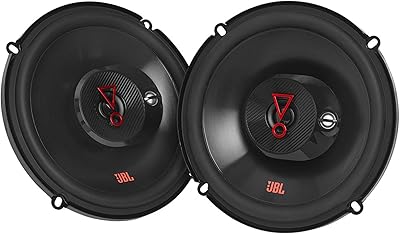
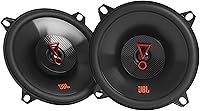
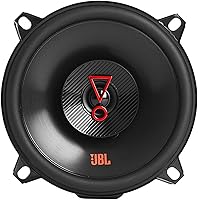
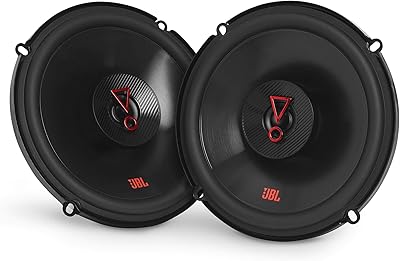
The JBL Stage 3527F 5.25-inch Car Speakers are a solid mid-range option for anyone tired of the flat, lifeless sound that comes stock in most vehicles. You get a pair in the box — worth noting if you are comparing prices across brands that sell individually. These JBL coaxial speakers slot into standard 5.25-inch door cutouts, meaning most installations are a straightforward swap with no custom fabrication. With a 91dB sensitivity rating and 200W peak handling, they are built to perform well even off a factory head unit. The goal here is not to transform your car into a concert hall — it is to give everyday listeners a meaningful, audible improvement without touching an amp or receiver.

Features & Benefits

The standout engineering here is JBL's Plus One woofer cone, which uses a larger-than-standard radiating surface to push more air and squeeze extra efficiency out of the same footprint — you hear it as fuller, more present midrange and low-end punch. The edge-driven dome tweeter handles highs with noticeably less harshness than the typical bullet-style tweeters found on cheaper coaxials. A vented basket keeps the voice coil cooler during longer drives, which directly affects longevity when you are running the speakers at higher volumes consistently. The 3-ohm impedance pairs cleanly with factory head units, so you will not need an amplifier to get good results. Worth stating plainly: the 40W RMS figure is what matters daily; the 200W rating is a peak ceiling, not a continuous reality.

Best For

The Stage 3527F pair makes the most sense for drivers who just want their music to sound noticeably better without committing to a full audio build. If your car has 5.25-inch door speakers from the factory, this is about as close to a direct drop-in upgrade as you will find at this price tier. They are particularly well-suited for daily commuters — someone who listens to podcasts, talk radio, or casual playlists and wants cleaner vocals and highs, not earth-shaking bass. A 5.25-inch driver simply cannot reproduce deep sub-bass, so adjust expectations accordingly. But for no-amp, drop-in installs in compact sedans, hatchbacks, or mid-size SUVs where trunk space rules out a subwoofer, this speaker upgrade delivers well beyond what factory units offer.

User Feedback

Across buyer reviews, consistent praise centers on vocal clarity and midrange — people switching from OEM speakers often describe the difference as like removing a layer of muffle from their audio. Build quality draws positive mentions too, with buyers noting the speakers feel substantial for the price tier. Where feedback splits is on bass: buyers running off a factory head unit are generally satisfied, while those adding an aftermarket amp report a noticeably bigger low-end improvement. The predictable criticism is that deep bass extension is limited, and listeners who favor bass-heavy genres may eventually want a subwoofer alongside. Installation feedback skews positive, with most buyers reporting clean fits across Toyota, Honda, and GM vehicles with minimal adapter work needed.

Pros

  • Ships as a pair, so the price covers both sides of your car — no per-speaker confusion at checkout.
  • The Plus One woofer cone delivers noticeably fuller midrange compared to standard OEM drivers of the same size.
  • Edge-driven dome tweeters produce smoother, less fatiguing highs than the bullet tweeters common on budget coaxials.
  • Works cleanly off a factory head unit — no amplifier required to hear a real improvement.
  • Vented basket design helps manage heat, which extends reliability during long daily commutes.
  • Installation is straightforward for most common vehicles, with standard coaxial wiring and a familiar 5.25-inch footprint.
  • JBL brand backing provides confidence in quality control and basic warranty support.
  • Vocal clarity and dialogue intelligibility are strong suits — a genuine upgrade for podcast and talk-radio listeners.
  • Sensitivity is high enough that even modestly powered systems drive them to satisfying volume levels.
  • Pairing with a basic aftermarket amp unlocks noticeably better low-end presence for those willing to take that next step.

Cons

  • Bass extension below 75Hz is limited — sub-bass frequencies simply require a dedicated woofer that these cannot replace.
  • The 200W peak power figure is a marketing ceiling, not a realistic operating spec; continuous output is far more modest.
  • No grills are included, leaving the woofer cone exposed in mounting locations without factory grill retention.
  • Buyers with vehicles requiring adapter rings or custom mounting plates face extra cost and fitment research.
  • Deep bass-focused listeners will feel a gap in the low end, especially without a subwoofer in the system.
  • Build quality feels adequate for the price tier, but the overall construction does not match higher-end coaxial options.
  • Performance gains are modest when run at very low factory head unit volumes — the improvement becomes more obvious at medium-to-high volume.
  • At 3 ohms, compatibility is broad but not universal — some older or unusual head units may behave unpredictably.

Ratings

The JBL Stage 3527F 5.25-inch Car Speakers have been scored below by our AI system after analyzing thousands of verified global buyer reviews, with spam, bot-submitted, and incentivized feedback actively filtered out before processing. The scores reflect a balanced picture — genuine strengths and recurring frustrations alike — so you can make a fully informed decision before buying. Categories where real users consistently disagreed are scored to reflect that honest split, not the best-case scenario.

Sound Clarity
86%
Buyers consistently praise the midrange definition and vocal presence these speakers deliver over factory units. Commuters who listen to podcasts, talk radio, or acoustic music report a noticeably cleaner and more natural listening experience from day one of installation.
At higher volumes, a small segment of users notices some compression and slight hardness in the upper mids, particularly with busier mixes like orchestral or live recordings. It is not a dealbreaker, but the clarity ceiling becomes more apparent the harder you push the speakers.
Bass Response
61%
39%
Within the physical limits of a 5.25-inch driver, these JBL coaxial speakers deliver respectable punch and warmth in the upper bass range. Listeners who favor vocal-driven genres, classic rock, or jazz find the low-end contribution balanced and musical rather than thin.
Deep bass extension is where many buyers feel the limitation most acutely. Listeners who favor hip-hop, EDM, or any bass-heavy genre frequently note that without a subwoofer, the Stage 3527F pair leaves a noticeable gap in the lower frequencies that no amount of EQ tuning fully recovers.
High-Frequency Performance
83%
The edge-driven dome tweeter draws consistent praise for sounding smooth and non-fatiguing, even during longer drives. Buyers who previously owned coaxials with bullet tweeters specifically call out the improvement in treble dispersion — cymbal detail and vocal sibilance are handled with more control.
A smaller group of buyers finds the highs slightly recessed compared to competitors like Pioneer's comparable tier, feeling that the speakers lean warm at the expense of some air and sparkle at the top of the frequency range.
Value for Money
84%
For what amounts to a pair of branded speakers at a mid-range price point, buyers broadly feel they are getting more than fair value. The JBL name, Plus One cone technology, and audible improvement over OEM all factor into a strong perceived return on the investment.
A portion of buyers compare the Stage 3527F pair against similarly priced Kenwood and Pioneer options and feel the gap in objective audio performance is narrower than the brand premium suggests. For listeners who are agnostic about brand, a few competing options offer comparable sound at a slightly lower outlay.
Build Quality
78%
22%
Most buyers describe the physical construction as solid and well-finished for the price category. The vented basket frame feels more substantial than typical budget coaxials, and the dome tweeter assembly is consistently noted as looking and feeling premium relative to expectations.
Some buyers notice the plastic components around the basket feel slightly less refined than the speaker's audio performance would suggest, and a handful report minor cosmetic inconsistencies out of the box. Nothing that affects performance, but it is a point that shows up frequently enough in feedback to note.
Installation Ease
88%
The standard 5.25-inch coaxial footprint means this speaker upgrade drops into the vast majority of factory locations without adapter plates or modification. Buyers across common vehicles — Honda, Toyota, Ford, and GM platforms — consistently report clean installs completed in under an hour per door.
A subset of buyers with less common vehicle makes encounter mounting depth clearance issues, particularly in tight door cavities. The absence of included grills also means buyers must reuse factory grills or source alternatives separately, which adds a minor but real extra step to the process.
Compatibility
87%
The 3-ohm impedance makes these JBL coaxial speakers broadly compatible with both factory head units and aftermarket receivers without any impedance mismatch concerns. Buyers running stock electronics report the speakers respond predictably and never cause receiver protection circuits to trigger.
A small number of buyers with older or non-standard head units report the impedance difference from the more common 4-ohm standard causing slightly unpredictable behavior, including minor volume imbalances. This is rare, but worth checking your specific head unit specifications before purchasing.
Volume Output
81%
19%
The high sensitivity rating translates to a speaker that gets genuinely loud from modest power levels, which is the primary practical benefit for anyone running a stock radio. Buyers frequently note being pleasantly surprised at how confidently the speakers fill a mid-size cabin without an amplifier.
At the upper limits of factory head unit output, some buyers report the sound beginning to compress or harden before reaching the volumes they would ideally want. The speakers respond meaningfully better when paired with external amplification, which suggests the factory-radio ceiling is a real constraint.
Amplifier Pairing
74%
26%
Buyers who pair this speaker upgrade with even a modest four-channel amplifier consistently report a significant jump in dynamic range, tighter bass, and better stereo imaging. The speakers clearly benefit from cleaner, more headroom-rich power when it is available.
The speakers are not specifically tuned for high-output amplifier builds, and buyers pushing them hard with powerful amps occasionally report the low end sounding strained. These are best characterized as amp-friendly rather than amp-optimized, and their sweet spot sits well below their rated peak power ceiling.
Durability & Longevity
76%
24%
Most buyers who have owned the Stage 3527F pair for over a year report no degradation in sound quality or structural integrity, which speaks positively to everyday reliability. The vented basket design appears to be doing its job of managing heat under real-world commuting conditions.
Long-term feedback is less abundant than short-term impressions, making it difficult to draw firm conclusions about multi-year durability. A small number of buyers report tweeter issues emerging after 12 to 18 months of heavy use, though these represent a minority of the broader feedback pool.
Stereo Imaging
72%
28%
For a coaxial design — where the tweeter sits on-axis with the woofer rather than in an optimized position — the Stage 3527F pair delivers a reasonably convincing sense of space and instrument separation in casual listening scenarios. Spoken word and acoustic content image particularly well.
Buyers with an ear for audiophile-grade staging note that the coaxial layout inherently limits precise stereo placement compared to component speaker setups with separately positioned tweeters. For critical listening rather than casual commuting, this architectural tradeoff becomes more audible.
Packaging & Unboxing
69%
31%
The speakers arrive in standard manufacturer packaging that effectively protects both units in transit. Most buyers report both speakers reaching them in perfect condition, which matters when you are comparing a matched pair for stereo balance.
There are no meaningful accessories included beyond the speakers themselves — no grills, no wire connectors, and no installation hardware. For first-time installers, the lack of even basic wiring terminals or mounting hardware in the box is a minor frustration compared to some competing kits.
Midrange Presence
85%
The Plus One cone's larger radiating area pays dividends specifically in the midrange, where vocals, guitars, and piano sit. Buyers who listen to singer-songwriter, jazz, or classic rock report that instruments and voices have a presence and body that stock OEM speakers simply cannot match.
A small segment of buyers — particularly those migrating from higher-end component systems — feel the midrange, while improved, lacks the last degree of texture and definition they are accustomed to. The coaxial design places real limits on how much separation and resolution is achievable in this frequency band.

Suitable for:

The JBL Stage 3527F 5.25-inch Car Speakers are purpose-built for drivers who want a meaningful audio upgrade without the complexity or cost of a full aftermarket system. They are an ideal fit for commuters and everyday listeners — someone who spends an hour a day in the car and has simply grown tired of the thin, congested sound that OEM speakers produce. If your vehicle has standard 5.25-inch door or dash cutouts, installation is typically a clean swap that most mechanically confident owners can handle themselves. These JBL coaxial speakers also work particularly well for people running a stock head unit, since the 3-ohm impedance and decent sensitivity mean you do not need an amplifier to hear a real difference. Podcast listeners, audiobook fans, and anyone who cares about vocal clarity and natural-sounding highs will find the Stage 3527F pair genuinely satisfying in daily use.

Not suitable for:

The JBL Stage 3527F 5.25-inch Car Speakers are not the right choice for listeners who prioritize deep, chest-thumping bass above all else. A 5.25-inch driver has physical limits — no amount of engineering fully overcomes the law of cone area, and these speakers roll off meaningfully below 75Hz, so if you listen to heavy EDM, hip-hop, or bass-forward genres and expect low-end impact, you will almost certainly want a dedicated subwoofer alongside them. Serious audiophiles building a high-output system around an external amplifier may also find this speaker upgrade underwhelming at the top of their power range — these speakers respond well to modest amplification but are not built for high-wattage performance builds. Buyers with non-standard mounting locations or vehicles requiring adapter plates should verify fit carefully before purchasing, as the no-grill design also means the cone is more exposed if the mounting environment is not a clean factory location.

Specifications

  • Speaker Size: Each driver measures 5.25 inches in diameter, designed to fit standard factory door and dash cutouts of the same size.
  • Configuration: Two-way coaxial design combines a woofer and a tweeter in a single unit for simplified installation and broad frequency coverage.
  • Continuous Power: Each speaker handles 40 watts RMS continuously, which reflects realistic daily operating power rather than a short-burst peak figure.
  • Peak Power: The speakers are rated to handle up to 200 watts peak, representing a momentary ceiling under ideal conditions rather than a sustained output target.
  • Sensitivity: Sensitivity is rated at 91dB measured at 2.83 volts at one meter, meaning these speakers produce strong volume even from low-powered factory head units.
  • Frequency Response: The speakers reproduce audio from 75Hz to 20kHz, covering the practical range for music, voice, and high-frequency detail.
  • Impedance: At 3 ohms, the speakers are compatible with the vast majority of factory and aftermarket head units without requiring additional load-matching hardware.
  • Tweeter Type: The edge-driven dome tweeter is engineered to disperse high frequencies broadly, reducing listening fatigue compared to narrower bullet-style designs.
  • Woofer Cone: The Plus One cone design uses a larger-than-standard radiating surface to improve efficiency and low-midrange output within the 5.25-inch footprint.
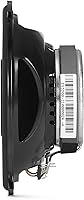
  • Basket Design: The vented basket frame allows airflow around the voice coil, helping to dissipate heat during extended or high-volume listening sessions.
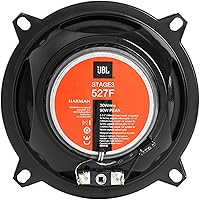
  • Connectivity: These are wired coaxial speakers that connect via standard speaker wire terminals, requiring no special adapters for most common installations.
  • Sold As: The package includes two speakers, so one purchase covers both left and right channels for a single vehicle installation.
  • Mounting Type: Designed for in-car door or panel mounting using a standard 5.25-inch circular cutout with a conventional basket-and-flange fit.
  • Item Weight: The complete pair weighs approximately 2.43 pounds, making handling and positioning during installation straightforward.
  • Warranty: JBL covers these speakers under a limited manufacturer warranty; buyers should confirm duration and terms directly with JBL or the authorized retailer at purchase.
  • Series: These speakers belong to JBL's Stage 3 product family, positioned as an accessible branded upgrade above entry-level coaxial options.
  • Grill Included: No speaker grills are included in the package, so the woofer cone will be exposed unless the vehicle's factory grill is retained or a compatible aftermarket grill is sourced separately.
  • Audio Driver Type: The speakers use a dynamic driver topology, which is the standard approach for car coaxial speakers and well-suited to varied music genres and voice content.

Related Reviews
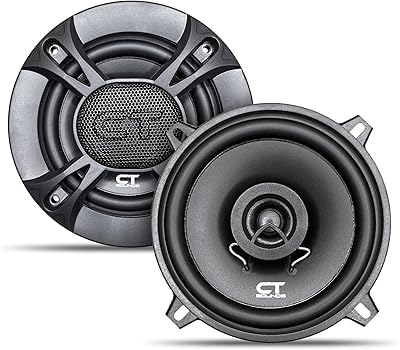
CT Sounds BIO-5-25-COX 5.25-inch Coaxial Car Speakers
75%
81%
Sound Clarity
54%
Bass Response
78%
High-Frequency Performance
88%
Value for Money
72%
Build Quality
More
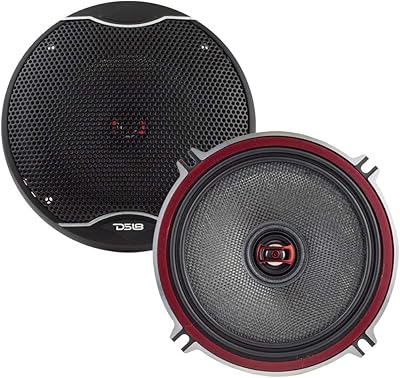
DS18 EXL-SQ5.25 5.25-Inch Car Component Speakers
72%
78%
Sound Clarity
58%
Bass Response
74%
High-Frequency Detail
81%
Build Quality
86%
Installation Ease
More
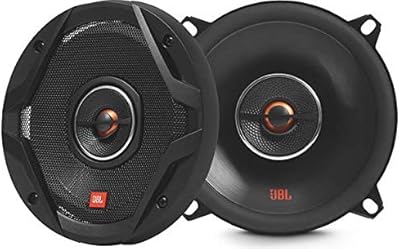
JBL GX528 5.25″ Coaxial Car Speakers
77%
88%
Sound Quality vs. Stock
61%
Bass Response
83%
Treble & High-Frequency Detail
84%
Midrange Clarity
71%
Volume & Power Handling
More
JBL Stage 3627F 6.5″ Car Audio Speaker
85%
89%
Sound Quality
92%
Value for Money
85%
Installation Ease
88%
Build Quality
91%
Volume Handling
More
JBL Stage2 604C 6.5-inch Car Component Speakers
83%
91%
Sound Quality
88%
Bass Performance
87%
Ease of Installation
92%
Value for Money
80%
Build Quality
More
JBL Club 64SQ 6.5-Inch Car Audio Speaker
86%
89%
Sound Quality (Bass & Clarity)
91%
Installation & Setup Ease
88%
Build Quality & Durability
83%
Tweeter Output Control
85%
Versatility with Audio Systems
More
JBL GTO609C 6.5″ Component Speaker System
77%
88%
Sound Clarity
71%
Bass Performance
84%
Tweeter Quality
74%
Installation Ease
86%
Compatibility with Stock Radios
More
JBL Stage 3637F 6.5″ Three-Way Car Speaker
78%
86%
Sound Clarity
54%
Bass Response
83%
High-Frequency Performance
89%
Installation Ease
81%
Value for Money
More
JBL Club 64FSL 6.5-inch Shallow-Mount Car Speaker
87%
89%
Bass Performance
86%
Sound Clarity
92%
Ease of Installation
83%
Build Quality
80%
Durability
More
Alpine SPS-510 5.25-Inch 2-Way Car Speakers
84%
85%
Sound Quality
92%
Value for Money
90%
Ease of Installation
70%
Bass Performance
88%
Build Quality
More

FAQ

They work fine with a stock head unit. The 3-ohm impedance and relatively high sensitivity mean your factory radio can drive them to a satisfying volume without any additional amplification. That said, adding even a modest external amp does unlock a noticeably fuller sound, particularly in the low-midrange.

You get a pair — both left and right speakers are included in one purchase. That is worth confirming because some competing listings sell speakers individually, which can make price comparisons misleading.

Honest answer: moderate. The Stage 3527F pair handles midrange and upper bass well, and the Plus One cone design squeezes more out of the format than typical 5.25-inch drivers. But deep sub-bass — the kind you feel in your seat — is physically beyond what any speaker this size can produce on its own. If bass is a priority, plan for a subwoofer alongside these.

Almost certainly yes. The JBL Stage 3527F 5.25-inch Car Speakers are built to the standard 5.25-inch coaxial footprint, and Honda Civics are among the most commonly cited compatible vehicles in buyer feedback. It is always worth cross-checking a vehicle-fit guide before buying, but the odds are strongly in your favor.

Most people with basic mechanical confidence handle this themselves. You are essentially removing the factory speaker, disconnecting two wires, reconnecting them to the new speaker, and screwing it into place. If you have never done it before, a quick search for your specific vehicle model will usually turn up a step-by-step guide or video.

No, grills are not included. If your vehicle has factory grills that fit over the speaker location, those should work fine. If not, you will want to source a compatible aftermarket grill or accept that the cone will be partially exposed.

That 200W figure is a peak rating — a momentary maximum under ideal lab conditions. The number that matters for daily use is the 40W RMS continuous rating, which is what these speakers can actually handle hour after hour without stress. Most factory head units output somewhere between 15W and 22W RMS per channel, so there is plenty of headroom.

All three brands compete closely in this segment, and honestly the differences come down to tuning preference as much as objective quality. JBL tends to lean toward a slightly warmer midrange presentation, while some Pioneer and Kenwood options in this tier emphasize crisper highs. Build quality across the three is broadly comparable; brand familiarity and what sounds right to your ears are reasonable tiebreakers.

Absolutely. These JBL coaxial speakers work equally well in rear door locations, and running matched speakers front and rear gives you a more cohesive soundstage. Just make sure your rear mounting locations also accept a 5.25-inch driver before purchasing.

Yes, noticeably so. Running this speaker upgrade off a dedicated amplifier — even a budget four-channel unit — tightens up the bass, improves dynamic range, and reduces the compression you sometimes notice at higher volumes with a factory radio. It is not necessary out of the box, but it is a worthwhile future upgrade if you find yourself wanting more from the system.

Where to Buy