Overview

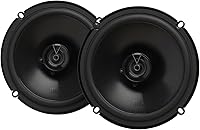
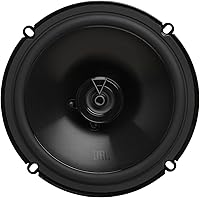
The JBL Club 64FSL 6.5-Inch Car Speakers solve a problem most upgrade guides gloss over: what do you do when your door panels are too shallow for a standard replacement driver? These sit in JBL's mid-range Club lineup — a step above generic store-brand swaps, but not demanding the budget or complexity of a full component system. The coaxial two-way design keeps installation approachable; tweeter and woofer arrive as one unit, no crossover wiring required. One honest note on power: the 165W peak figure is a lab ceiling, not your daily reality. The 55W RMS rating is what actually matters for sustained, distortion-free listening. Out of the box, build quality feels solid for the price tier.
Features & Benefits

JBL's Plus One cone technology is probably the most practically meaningful spec here — it gives these 6.5-inch JBL coaxials a wider effective cone area than most competitors at this size, which translates to noticeably more low-end presence without bolting in a subwoofer. The roughly 1-inch mounting depth is the real headline for anyone wrestling with tight door cavities in modern sedans or compact SUVs. The polypropylene cone handles heat and moisture well, which matters if you park outside in a humid climate. The lower 3-ohm impedance is worth understanding: it draws a bit more current from your head unit, which often results in louder, cleaner output from factory radios that otherwise struggle to drive standard 4-ohm speakers. Sensitivity is high enough that even modest stock stereos can push these to satisfying volumes.

Best For

These JBL Club shallow-mount speakers are the right call if your current factory speakers have gone flat or distorted and you want a genuine improvement without touching the wiring harness or buying an amp. They're also the logical choice for vehicles with shallow door panels — think newer Hondas, Toyotas, or Mazdas where a standard-depth driver simply won't clear the window regulator. If you mostly care about cleaner vocals and crisper midrange on your daily commute, these will deliver that noticeably. They're less suited for someone building a dedicated audio system who plans to run a 4-channel amp and a subwoofer — in that scenario, stepping up to a full component set makes more sense. For everyone else, this is a practical weekend upgrade that requires no specialized tools or expertise.

User Feedback

At 4.6 stars from over 160 ratings, the Club 64FSL earns its score honestly. Buyers repeatedly highlight improved vocal clarity and the ease of fitment in vehicles where deeper speakers had previously been a non-starter. Several owners specifically call out successful installs in Toyotas and Honda CR-Vs. On the flip side, a handful of reviewers note that the tweeter can get a bit bright at higher volumes, and a few mention the grille tabs don't line up perfectly with every factory opening. Low-star reviews almost always trace back to either a mismatch with an underpowered receiver or buyers expecting subwoofer-level bass from a coaxial driver — neither is a product flaw. Running these off a proper aftermarket deck or modest amp seems to resolve most complaints outright.

Pros

  • Fits in shallow door cavities where most standard 6.5-inch replacements physically cannot — a genuine solution, not a workaround.
  • The Plus One cone delivers noticeably more bass presence than competing coaxials at the same size.
  • Works well directly off a factory head unit thanks to the low impedance and high sensitivity pairing.
  • Polypropylene cone resists UV and humidity, holding up better than paper-cone competitors in hot or coastal climates.
  • Installation is straightforward: one box, two speakers, all necessary hardware included, no crossover wiring required.
  • Midrange clarity and vocal reproduction show a clear, audible step up from worn factory drivers.
  • The Club 64FSL earns a strong 4.6-star rating across a meaningful number of real-world buyer reviews.
  • Backed by JBL brand reliability and a limited warranty, offering reasonable long-term confidence for the price tier.

Cons

  • Bass output has real physical limits — do not expect subwoofer-level low-end from these 6.5-inch JBL coaxials.
  • The included tweeter can sound a bit harsh or bright at high volume levels, particularly on treble-heavy tracks.
  • Grille tabs may not align cleanly with every factory speaker opening, requiring minor trimming in some vehicles.
  • Not waterproof, ruling out convertibles, marine applications, or any install exposed to direct moisture.
  • The 3-ohm impedance, while useful for stock radios, can behave unpredictably with older amplifiers not rated for low-impedance loads.
  • Sustained power handling is moderate — pairing these with a high-output amp long-term is not recommended.
  • No built-in grille included, so buyers who want a finished look may need to source covers separately.
  • Fitment in certain European or older domestic vehicles may require adapter rings not always included in the standard kit.

Ratings

Our AI rating engine analyzed verified global buyer reviews for the JBL Club 64FSL 6.5-Inch Car Speakers, actively filtering out incentivized, bot-generated, and unverified submissions to surface what real drivers actually experience. Scores reflect a balanced synthesis of consistent praise and recurring pain points — nothing is inflated, and no legitimate complaint has been smoothed over. The result is an honest, category-by-category picture of where these shallow-mount coaxials genuinely deliver and where they fall short.

Sound Clarity
88%
Midrange reproduction and vocal clarity are consistently the most praised qualities across buyer feedback. Drivers upgrading from aging OEM speakers on daily commutes describe the difference as immediately obvious — voices in podcasts and lead instruments in music cut through with noticeably more definition and presence.
At higher volumes, some buyers find the tweeter introduces a slightly harsh edge on cymbals and sibilant vocals, particularly with treble-heavy EQ settings. This isn't universal, but it does show up often enough in critical listening feedback to be worth flagging.
Bass Performance
71%
29%
For a coaxial driver without a dedicated subwoofer, the low-end output is a genuine step up from factory equipment. The Plus One cone's larger radiating area gives the Club 64FSL more audible body on bass-forward tracks than most competing 6.5-inch coaxials at the same price tier.
Buyers expecting deep, room-filling bass will be disappointed — shallow-mount coaxials have real physical limits on cone excursion, and these are no exception. Several low-star reviews trace directly to this misaligned expectation rather than any product defect.
Fitment & Compatibility
91%
The shallow mounting depth is the single biggest reason buyers choose these over competitors, and it delivers reliably. Owners report clean, no-modification installs across a wide range of vehicles — Toyotas, Hondas, and Mazdas with notoriously tight door pockets are frequently cited as successful fits.
A small but consistent group of buyers note that the adapter rings don't align perfectly with every factory cutout, requiring minor trimming. A handful of European vehicle owners also report that the mounting hole pattern required extra adapter work not covered by the included hardware.
Ease of Installation
89%
The coaxial design removes the most intimidating part of a speaker upgrade — separate crossover wiring — making this a realistic weekend DIY project for anyone comfortable removing a door panel. The included hardware kit covers most common factory configurations without a trip to the hardware store.
First-time installers occasionally struggle with door panel removal specific to their vehicle, which has nothing to do with the speaker itself but does generate negative reviews. The instructions included in the box are minimal, so a quick video lookup for your specific car model is genuinely recommended.
Factory Head Unit Compatibility
86%
The 3-ohm impedance and high sensitivity work together unusually well with stock radios, pulling more usable output from low-wattage OEM electronics than a standard 4-ohm driver would. Many buyers specifically report upgrading without an amp and still hearing a clear, satisfying improvement in everyday listening.
The 3-ohm load can behave unpredictably with older aftermarket amplifiers that specify a 4-ohm minimum, occasionally causing thermal protection to kick in during extended high-volume sessions. Buyers running vintage amps should verify compatibility before purchasing.
Build Quality
79%
21%
Physical construction feels solid and purposeful for a mid-range car speaker — the magnet assembly has noticeable heft, and the polypropylene cone resists flex when handled. Buyers in hot climates and coastal areas specifically mention that the UV-resistant material holds up better than paper-cone alternatives they'd used previously.
The plastic tweeter housing and grille mounting tabs feel noticeably less premium than the woofer assembly, and a few buyers report the tabs bending or not seating flush out of the box. It's not a durability dealbreaker, but it does undercut the otherwise solid first impression.
Value for Money
84%
For buyers replacing flat or distorted factory speakers and not wanting to invest in a full component system, the price-to-performance ratio holds up well. The JBL brand carries genuine acoustic credibility at this tier, and most owners feel the improvement over OEM drivers justifies the spend without hesitation.
Buyers who compare these against higher-end component sets with external crossovers naturally find the value case less compelling. If your budget extends meaningfully beyond this tier, the incremental quality jump from a dedicated component setup is real enough to consider.
Treble Balance
73%
27%
For moderate listening volumes and typical music genres — pop, rock, spoken word — the tweeter handles high frequencies with decent accuracy and air. Most buyers running standard factory EQ settings describe the treble as natural and non-fatiguing over long drives.
Push the volume hard on electronic music or tracks with aggressive high-hat presence, and the tweeter brightness becomes a recurring issue in buyer feedback. It's manageable with EQ adjustments, but it does suggest the tweeter crossover point could be tuned more conservatively.
Durability Over Time
77%
23%
The UV-stable polypropylene cone and robust magnet assembly give these a solid foundation for long-term use in demanding environments. Buyers in warm climates who previously dealt with warped or cracked paper cones within a year or two specifically call out the material durability as a noticeable upgrade.
Long-term reports beyond 18 months are relatively limited given the product's release date, so durability data is still accumulating. A small number of buyers report tweeter distortion developing after extended high-volume use, though it's unclear whether improper power matching is a contributing factor.
Packaging & Unboxing
82%
18%
The box arrives with a genuinely complete hardware kit — adapter rings, speed clips, screws, and a foam gasket — which signals that JBL designed this for real-world installation rather than just bench testing. Most buyers express pleasant surprise at how thoroughly the install hardware is covered straight out of the box.
The printed instruction sheet inside is sparse, offering just enough to orient a confident installer but leaving beginners without enough context for a smooth first attempt. A QR code linking to a vehicle-specific install guide would significantly improve the experience.
Grille & Aesthetic Fit
63%
37%
In vehicles where the door panel trim fully conceals the speaker, aesthetics are a non-issue — the speaker sits flush and the install looks factory-clean. Buyers doing behind-panel installs in Hondas and Toyotas consistently describe the finished result as tidy and professional.
No grilles are included, which is a legitimate frustration for buyers doing exposed installs or replacing speakers in visible locations. The mounting tab geometry also draws repeated complaints about misalignment with certain factory openings, leaving visible gaps that require workarounds.
Weather Resistance
58%
42%
The UV-resistant cone material and humidity-stable construction offer meaningfully better environmental tolerance than paper-cone alternatives, which matters for vehicles that experience significant temperature swings or coastal air exposure. Several buyers in Florida and similar climates report no degradation after a full year of use.
These are not waterproof by any measure — JBL confirms it outright — so any application involving direct moisture contact, convertibles with leaky seals, or marine environments is simply not appropriate. Buyers who overlooked this detail and experienced water damage account for a notable share of the negative reviews.
Amplifier Pairing Flexibility
68%
32%
When paired with a modern 4-channel amp that handles low-impedance loads correctly, buyers report a substantial jump in dynamic range and low-level detail. The speakers respond well to clean amplified power, suggesting the drivers themselves have more capability than a factory radio can fully unlock.
The 3-ohm impedance narrows compatibility with older or budget amplifiers, and buyers who didn't check their amp's minimum impedance rating before purchasing ran into protection mode cutouts and frustration. It's an avoidable issue, but it contributes to a real subset of negative user experiences.

Suitable for:

The JBL Club 64FSL 6.5-Inch Car Speakers are the practical choice for drivers whose biggest obstacle isn't sound quality preference — it's physical space. If your vehicle has shallow door cavities, as many modern sedans, compact crossovers, and Japanese-market cars do, these are often the only 6.5-inch upgrade that will actually fit without cutting or fabricating a custom mount. They're equally well-matched for anyone running a stock head unit who doesn't want to rewire anything: the 3-ohm impedance pulls more usable power from factory radios, and the high sensitivity means you'll hear a real improvement in volume and clarity without adding an amplifier. DIY-friendly buyers will appreciate that everything needed for a clean install arrives in the box, and the coaxial design means no separate crossover wiring to puzzle over. If your goal is noticeably better midrange, cleaner vocals, and a modest low-end improvement over tired OEM drivers — all on a weekend afternoon — these deliver exactly that.
Not suitable for:

The JBL Club 64FSL 6.5-Inch Car Speakers are not the right tool if you're building a serious audio system and plan to push real amplifier power. At their sustained RMS rating, they're tuned for a moderate power range, and throwing significantly more wattage at them long-term risks premature wear. Bass enthusiasts who expect deep, room-filling low-end from a 6.5-inch coaxial without a subwoofer will be disappointed — shallow-mount drivers have genuine physical limits on cone excursion, and no amount of JBL branding changes that acoustic reality. These also aren't waterproof, so open-air vehicles, boats, or installations exposed to direct moisture are off the table. Buyers who need to replace 6x9-inch or component setups with separate tweeters already mounted in A-pillars won't find a direct match here either. And if you're after the last word in high-resolution audio reproduction for a dedicated listening environment, a full component system with an external amp and proper sound deadening will outperform these in ways that matter to a critical ear.
Specifications

  • Speaker Size: Each driver measures 6.5 inches (160mm) in diameter, fitting the most common OEM door speaker opening in passenger vehicles.
  • Design Type: Shallow-mount coaxial two-way configuration integrates the tweeter and woofer into a single unit for simplified installation.
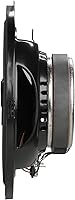
  • Mounting Depth: Approximately 1 inch of rear clearance is required, making these compatible with door panels that standard-depth drivers cannot fit.
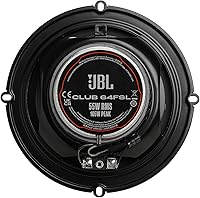
  • RMS Power: Continuous RMS power handling is rated at 55W per speaker, representing the sustained output level the driver handles without distortion.
  • Peak Power: Peak power handling reaches 165W per speaker, a short-term ceiling measured under controlled lab conditions rather than typical listening use.
  • Sensitivity: Rated at 92dB at 2.83V, meaning these drivers produce strong output volume even when driven by a low-wattage factory head unit.
  • Impedance: Nominal impedance is 3 ohms, which draws slightly more current from a head unit and often yields louder, cleaner playback compared to standard 4-ohm speakers.
  • Frequency Response: Covers 55Hz to 20kHz, spanning usable low-end bass through the full treble range expected from a two-way coaxial design.
  • Cone Material: Woofer cone is constructed from UV-resistant, acoustically damped polypropylene designed to withstand heat, humidity, and prolonged sun exposure.
  • Cone Technology: JBL's patented Plus One cone architecture (US patent 7,548,631) provides a larger effective radiating area than competing drivers of the same nominal size.
  • Mounting Type: Flush-mount installation using the included multi-hole adapter rings and speed clips to seat securely against a variety of factory panel cutouts.
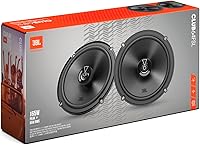
  • Included Hardware: Each package contains 2 speakers, 16 screws, 1 foam gasket, 2 plastic multi-hole adapter rings, and 8 speed clips.
  • Weight: The complete package weighs 4.3 pounds, with individual speaker units being lightweight enough for straightforward single-person installation.
  • Waterproofing: These speakers are not waterproof and are intended for enclosed door panel installations only, away from direct moisture exposure.
  • Warranty: Covered by a JBL limited warranty; buyers should register the product and retain proof of purchase to facilitate any future warranty claims.
  • Connectivity: Wired coaxial connection using standard speaker wire terminals; no Bluetooth or wireless capability is present in this passive driver.

Related Reviews
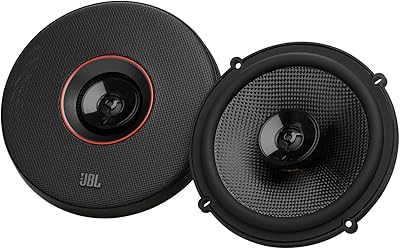
JBL Club 64SQ 6.5-inch Car Coaxial Speakers
81%
88%
Sound Clarity
71%
Bass Performance
86%
Tweeter Quality
91%
Sensitivity & Efficiency
83%
Build Quality
More
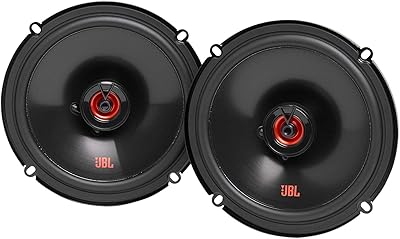
JBL Club 630F 6.5″ 2-Way Car Speakers
78%
86%
Sound Clarity
58%
Bass Performance
74%
Shallow-Mount Fitment
81%
Installation Experience
79%
Value for Money
More
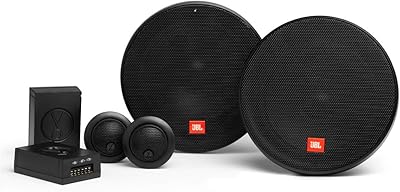
JBL Stage2 604C 6.5″ Component Car Speakers
77%
88%
Sound Clarity
57%
Bass Performance
83%
Tweeter Quality
81%
Ease of Installation
84%
Value for Money
More
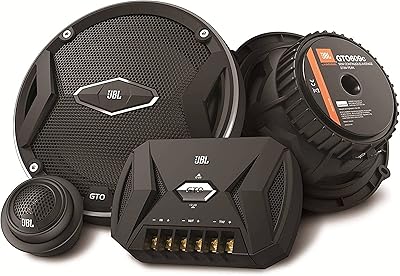
JBL GTO609C 6.5″ Component Speaker System
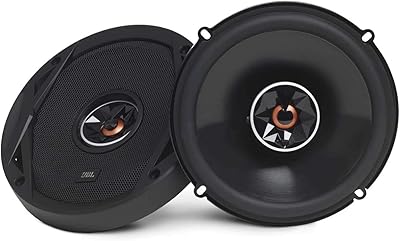
77%
88%
Sound Clarity
71%
Bass Performance
84%
Tweeter Quality
74%
Installation Ease
86%
Compatibility with Stock Radios
More
JBL CLUB6520 6.5″ Coaxial Car Speakers
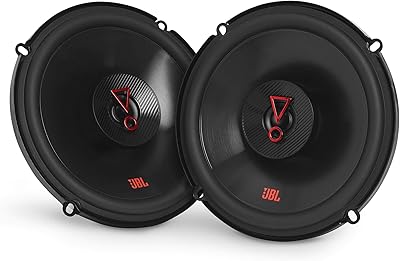
77%
84%
Sound Clarity
61%
Bass Response
88%
Sensitivity & Volume Output
86%
Installation Ease
79%
Build Quality
More
Pyramid WX65X 6.5-inch Car Woofer Speaker
70%
83%
Value for Money
74%
Bass Output
67%
Sound Clarity
88%
Installation Ease
62%
Build Quality
More
JBL Stage 3627F 6.5-inch Car Speakers
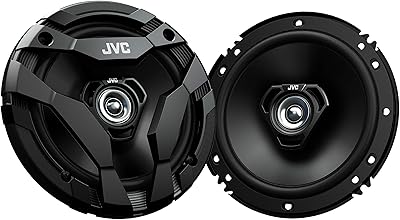
78%
88%
Sound Clarity
61%
Bass Performance
91%
Installation Ease
84%
Value for Money
73%
Build Quality
More
JVC CS-DR621 6.5-inch Car Speakers
78%
83%
Sound Clarity
58%
Bass Performance
79%
Tweeter Quality
76%
Build Quality
91%
Installation Ease
More
JVC CS-DF620 Car Speakers 6.5 Inch
85%
84%
Sound Quality
88%
Bass Performance
91%
Ease of Installation
85%
Build Quality
92%
Value for Money
More
CT Sounds Meso-6.5-D4 6.5 Inch Dual 4 Ohm Car Subwoofer
83%
90%
Bass Performance
85%
Power Handling
88%
Build Quality
65%
Installation Ease
92%
Cooling System Effectiveness
More

FAQ

In most cases, yes — the roughly 1-inch mounting depth is specifically designed to clear the thin door cavities found in modern sedans and compact SUVs. The included adapter rings handle a wide range of factory cutout diameters. That said, it's worth measuring your door pocket depth before purchasing, since a small number of vehicles with unusually restricted clearance behind the panel may still present a challenge.

You can absolutely run them off a stock head unit — that's honestly one of the strongest use cases for the Club 64FSL. The 3-ohm impedance pulls more usable current from factory radios than a standard 4-ohm speaker would, and the high sensitivity means you'll hear noticeably better volume and clarity without any extra hardware. Adding an amp will improve things further, but it's not a requirement for a solid upgrade.

More than your factory speakers, but don't expect subwoofer territory. The Plus One cone does give these a larger effective cone area than most competing 6.5-inch drivers, which helps with low-end presence. For daily music listening — pop, hip-hop, rock — the bass improvement over worn OEM speakers is real and noticeable. If heavy bass is a priority, pairing these with even a small powered subwoofer will make a significant difference.

Not at all for a reasonably handy person. The coaxial design means no separate crossover wiring — you connect two speaker wires per driver and you're done. JBL includes adapter rings and speed clips to handle most common factory mounting configurations. Plan for about one to two hours if it's your first time pulling door panels, less if you've done it before.

Owners report clean, no-modification installs in a range of popular models including Toyota Camry, Honda CR-V, Mazda CX-5, and various Honda Civic generations — all vehicles known for tighter-than-average door cavity depth. The shallow-mount design was built with exactly these cars in mind. If your vehicle isn't on a common fitment list, measuring the available mounting depth and comparing it to the roughly 1-inch requirement is the safest approach.

Grilles are not included in the standard package. Most buyers either reuse their factory grilles or go without them when the door panel trim covers the speaker opening anyway. If you need standalone grilles for an exposed install, JBL and third-party sellers offer compatible options separately.

A minority of buyers do mention the tweeter can get a little sharp on treble-heavy tracks when pushed hard. It's worth noting this is more common with certain head unit EQ settings than with the speakers themselves. Pulling down the treble a touch on your stereo typically resolves the issue, and at moderate listening volumes most people find the treble balance perfectly acceptable.

For the vast majority of modern factory and aftermarket head units, 3 ohms is fine. Most OEM and aftermarket receivers are designed to handle loads between 2 and 8 ohms. Where you do need to be careful is with older amplifiers that explicitly specify a 4-ohm minimum load — running a 3-ohm speaker on those can cause overheating over time. Check your amp's specs if you're running external amplification.

Better than most entry-level alternatives. The polypropylene cone is specifically formulated to resist UV degradation and humidity, which matters in warm, sunny, or coastal environments where paper-cone speakers tend to deteriorate fairly quickly. Long-term durability in extreme heat is a genuine strong suit for these 6.5-inch JBL coaxials.

You get two speakers, a foam gasket, two plastic multi-hole adapter rings, sixteen screws, and eight speed clips — essentially a complete hardware kit for a clean factory-style install. Speaker wire and a head unit are obviously not included, but you won't need to make a separate hardware store run just to get the speakers mounted.

Where to Buy